
Is Your Building Ready for a 3-Phase Switchboard Upgrade?
A 3 phase switchboard upgrade is one of the most impactful electrical improvements you can make for a modern commercial, industrial, or high-demand residential property. Here's a quick summary of what you need to know:
| Question | Quick Answer |
|---|---|
| What is it? | Replacing a single-phase panel with a 3-phase system that distributes power across three separate lines |
| Who needs it? | Buildings running heavy machinery, EV chargers, solar systems, or multiple high-draw appliances simultaneously |
| Key benefit | Handles up to 3x more load with better balance, fewer outages, and improved safety |
| Typical cost | $3,000 to $6,000+ depending on existing infrastructure |
| Typical downtime | 3 hours to 2 days depending on project complexity |
| Do you need a licensed electrician? | Yes — always. This is not a DIY job |
Most buildings constructed more than 20 years ago were designed around a simple reality: appliances were smaller, fewer, and less power-hungry. That reality no longer exists.
Today's facilities run EV chargers, ducted HVAC systems, solar inverters, and industrial equipment — often all at once. A single-phase panel simply wasn't built for this. When your system is pushed past its limits, the warning signs show up fast: flickering lights, tripped breakers, warm panels, and in worst cases, fire risk.
A 3-phase system solves this by splitting the electrical load across three separate power lines, keeping demand balanced and your operation running smoothly.
I'm Ed Sartell, President of Sartell Electrical Services, Inc., and with nearly four decades of hands-on electrical experience across Massachusetts, I've helped countless commercial and residential clients evaluate and complete a 3 phase switchboard upgrade that meets both their current demands and future growth. In this guide, I'll walk you through everything you need to make a confident, informed decision.
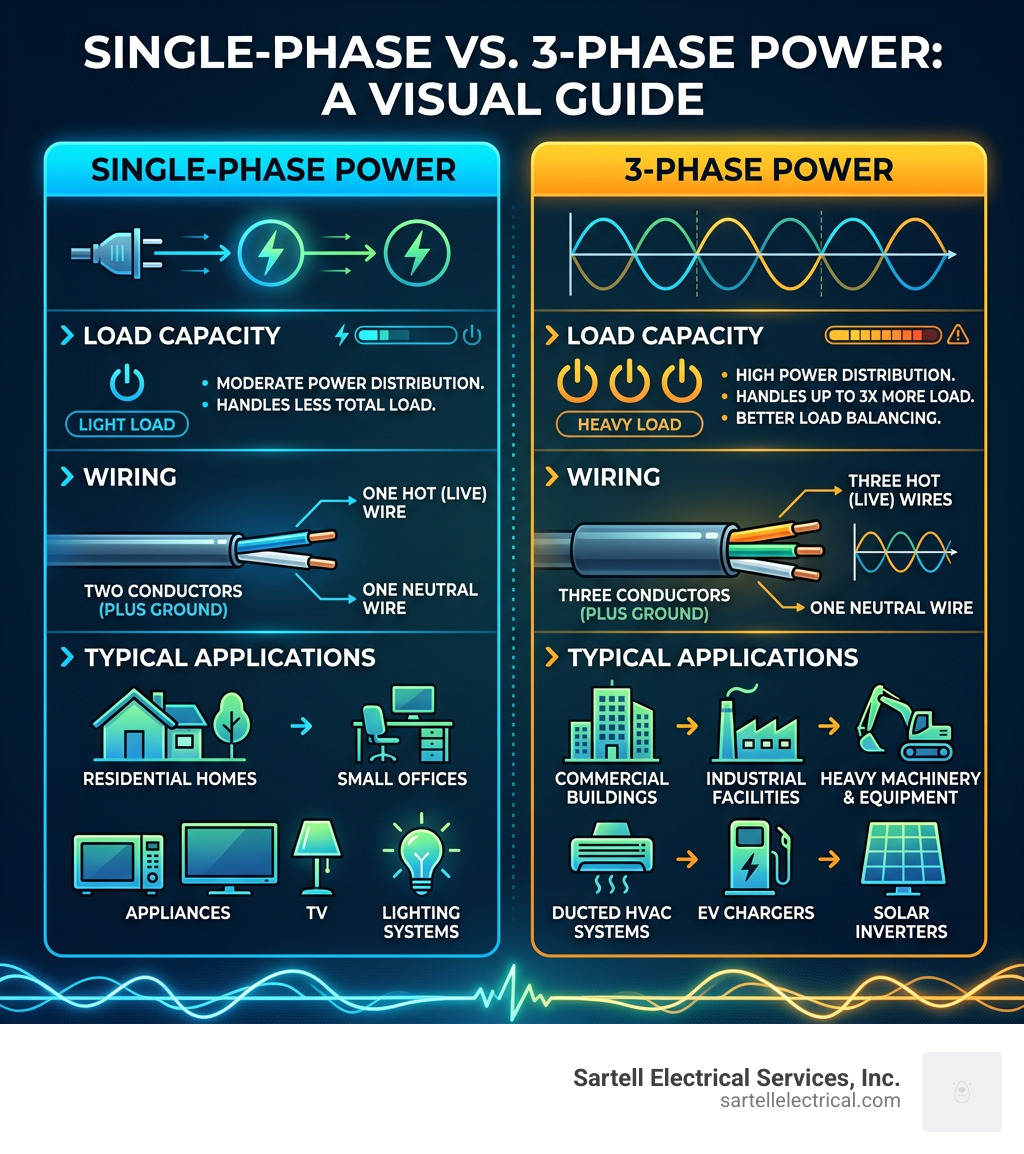
3 phase switchboard upgrade terms to know:
Understanding the 3 Phase Switchboard Upgrade
To understand why a 3 phase switchboard upgrade is such a game-changer, we have to look at the physics of how power enters your building. A standard single-phase system uses two wires: one "active" wire and one neutral. It’s like a single-lane highway. It works fine for a few cars, but as soon as rush hour hits, everything grinds to a halt.
A 3-phase system, by contrast, uses three active wires and one neutral. These three "phases" deliver alternating current (AC) in three distinct waves, each offset by 120 degrees. This means that while one wave is dropping in voltage, another is rising. The result? A much more consistent, stable, and powerful flow of electricity.
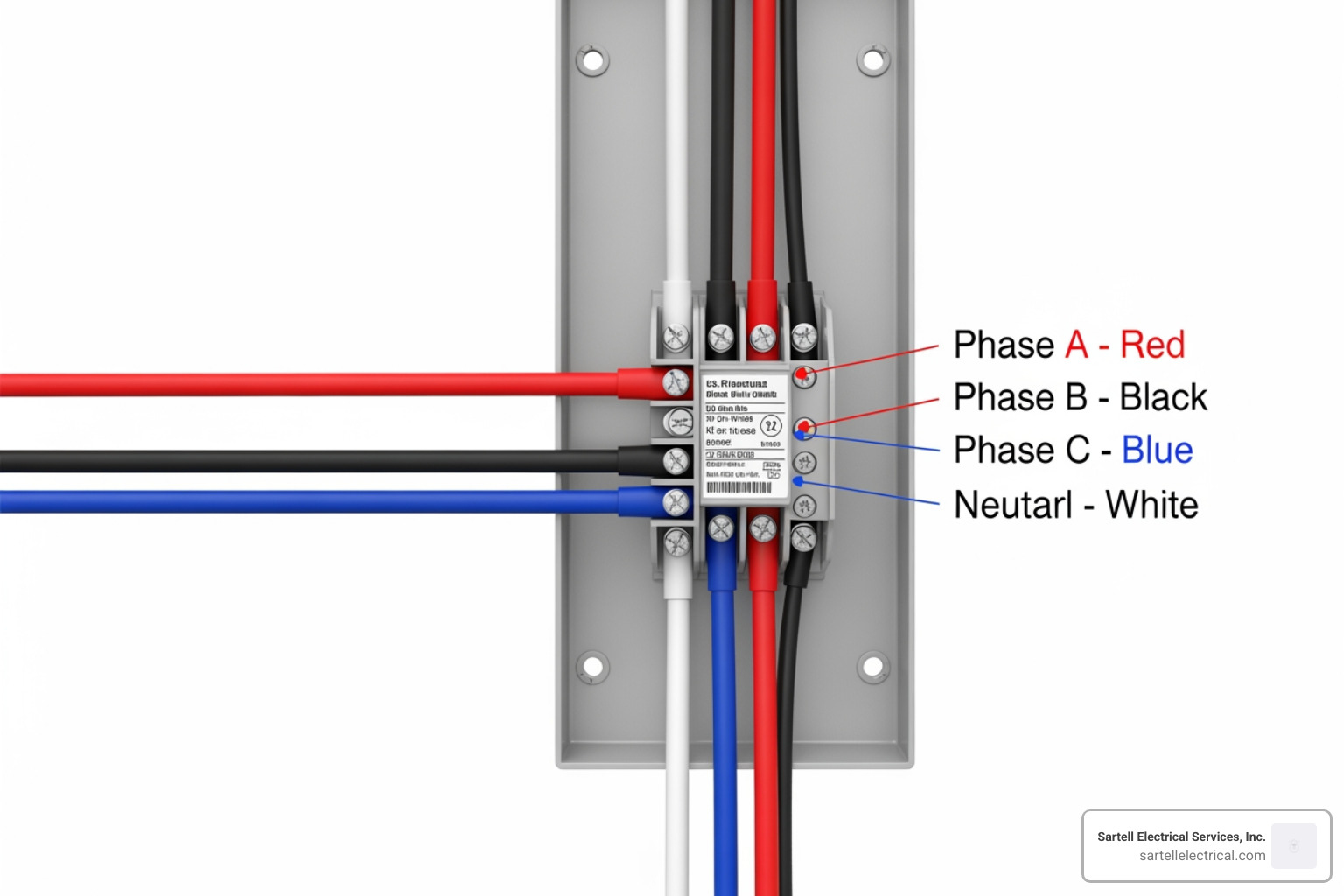
When we perform a Main Electrical Panel Upgrade Complete Guide, we are essentially expanding your "highway" to four lanes. This 120-degree phase difference ensures that the power supply never drops to zero, which is vital for the smooth operation of large motors and sensitive electronics. For businesses and large homes, What a Three Phase Switchboard Upgrade Means for Homes is a shift from "just getting by" to having a robust, industrial-grade power supply that can handle anything you throw at it.
Single-Phase vs. 3-Phase Capacity
The difference in capacity is staggering. In many regions, a standard single-phase connection maxes out at around 63 Amps, which translates to roughly 14kW of continuous demand. While that sounds like a lot, consider this: a single high-speed EV charger can pull 7kW to 11kW on its own. Add a ducted air conditioner and a commercial oven, and you’ve already exceeded your limit.
| Feature | Single-Phase | 3-Phase |
|---|---|---|
| Active Wires | 1 | 3 |
| Voltage | 120V / 240V | 120V / 208V or 277V / 480V |
| Max Capacity (Typical) | ~14kW (63A) | 42kW+ (Shared across phases) |
| Efficiency | Lower for large motors | High (uses less conductor material) |
| Wiring Weight | Heavier for high loads | Lighter and more efficient |
By upgrading, you aren't just getting "more" power; you're getting more efficient power. Because the load is split across three wires, 3-phase systems actually use less conductor material (copper or aluminum) to transmit the same amount of power as a single-phase system. This makes it the standard choice for Commercial Electric Panel Complete Guide projects where efficiency and high-amperage limits are non-negotiable.
Signs Your Property Requires a 3-Phase Transition
How do you know if your current system is waving a white flag? Most of the time, your building will tell you—you just have to know what to listen for. We often see clients in Middlesex and Essex County reach out when they notice their lights dimming every time the refrigerator or AC kicks on. This is a classic sign of voltage drop caused by an overloaded single-phase circuit.
Other red flags include:
- Frequent Tripping: If your circuit breakers are popping like popcorn, they are doing their job—preventing a fire—but they’re also telling you the demand is too high.
- Warm Switchboard: If you touch your panel and it feels noticeably warm, or if you detect a faint burning smell, you have a serious problem that requires immediate attention.
- Outdated Components: If your building still uses ceramic fuses (common in pre-1970s structures), you are at a significantly higher risk. These fuses don't always cut power when they overheat, which is a major fire hazard.
- The "One-at-a-Time" Rule: If you have to tell your staff or family members not to use the microwave while the dryer is running, your capacity is officially tapped out.
Our Electrical Service Upgrades Complete Guide highlights that these issues aren't just inconveniences—they are safety warnings. Ignoring them can lead to equipment damage or electrical fires.
Supporting Modern Technology with a 3 Phase Switchboard Upgrade
The push toward a 3 phase switchboard upgrade is often driven by the "Green Revolution." We are seeing a massive influx of requests for 200 Amp Service Upgrade and 3-phase transitions specifically to support:
- EV Charging: While a standard outlet can charge a car, it takes forever. A 22kW 3-phase charger can top up a vehicle in a fraction of the time. However, you need the infrastructure to support it.
- Solar Integration: Large solar arrays often require 3-phase inverters to feed power back into the grid efficiently.
- Heavy Machinery: If you run a workshop in Reading or a commercial kitchen in Boston, your welders, lathes, and industrial ovens likely require 3-phase power to operate at peak torque and efficiency.
- Smart Building Systems: Modern HVAC units, especially ducted systems, run much more quietly and efficiently on 3-phase power.
Even if you're working in a tight spot, there are solutions. For instance, knowing How to upgrade a LV switchboard in a crowded electrical substation? is a specialized skill we bring to commercial clients who need more power but have limited square footage.
The Benefits of Upgrading Your Electrical Infrastructure
Upgrading your switchboard is an investment that pays dividends in safety, functionality, and even property value. When we install a modern, organized 3-phase panel, we aren't just swapping boxes; we’re giving your building a new lease on life.
- Future-Proofing: You might only need 100 Amps today, but what about five years from now? A 3-phase upgrade ensures you won't have to touch your electrical system again for decades, even if you add more tech.
- Property Value: For commercial real estate, having 3-phase power is a major selling point. It tells potential buyers or tenants that the building is ready for high-capacity operations.
- Energy Efficiency: Because 3-phase motors are more efficient and the load is balanced, you often see a reduction in "vibration" and heat loss in your equipment, extending the life of your expensive appliances.
- Insurance Compliance: Many insurance providers now require modern panels and safety switches to maintain coverage, especially in older Massachusetts homes. Checking the Home Electrical Panel Upgrade Cost now is much cheaper than dealing with a denied claim later.
Enhanced Safety Features in a 3 Phase Switchboard Upgrade
Safety is the #1 reason we recommend an upgrade. Modern 3-phase switchboards come equipped with technology that simply didn't exist 30 years ago.
- RCDs (Residual Current Devices): These are life-savers. They detect tiny leaks in electricity (the kind that causes shocks) and shut off the power in milliseconds.
- Surge Arrestors: With the amount of sensitive electronics we use today, surge protection is mandatory. A 3-phase surge protector guards your entire building against lightning strikes and grid spikes.
- Asbestos Removal: Many older switchboards in the Boston area were mounted on asbestos panels. A professional upgrade includes the safe, certified removal of these hazardous materials.
- Arc Fault Detection: Modern breakers can sense the "sparking" that happens inside a wall before a fire even starts.
According to our Electrical Panel Upgrade Cost Guide 2025, moving to a modern system brings you into full compliance with the National Electrical Code (NEC), which is the gold standard for fire prevention and shock protection.
The Installation Process: What to Expect
At Sartell Electrical Services, Inc., we pride ourselves on a "no surprises" process. A 3 phase switchboard upgrade is a complex logistical dance that requires coordination between us, you, and the utility company (like National Grid or Eversource).
- Initial Assessment: We start by calculating your total potential load. We don't just look at what you’re using now; we ask what you plan to add in the next 10 years.
- Utility Coordination: We handle the paperwork to get a 3-phase service line brought from the street to your building if it isn't already there.
- Shutdown Planning: We work with you to find a time—often a weekend or a slow period—to safely disconnect the power.
- The Install: We remove the old equipment, address any asbestos or outdated wiring, and install the new 3-phase board.
- Testing and Grounding: We verify every circuit, ensuring the load is perfectly balanced across all three phases and that the grounding system is rock-solid.
- Final Inspection: A local Massachusetts inspector will sign off on the work, ensuring everything is up to code.
Whether you're doing a 200 Amp Service Upgrade or a full industrial overhaul, we aim for precision and speed.
Costs, Timelines, and Downtime
We know the biggest concern for any business or homeowner is: How much and how long?
- Costs: A 3 phase switchboard upgrade typically ranges from $3,000 to $6,000+. Factors that influence this include the distance to the street power lines, whether you need a new meter box, and the complexity of your interior wiring.
- Timeline: The physical installation of the switchboard usually takes 3 to 5 hours. However, the entire project (including permits and utility work) can take several weeks of lead time.
- Downtime: For most residential projects, the power is off for a single day. For complex commercial sites, we often schedule weekend shutdowns to ensure your business isn't interrupted during work hours.
For more details on commercial pricing, see our Commercial Electric Panel Complete Guide.
Frequently Asked Questions about 3-Phase Upgrades
Is a 3-phase upgrade necessary for residential homes?
Not every home needs it, but it's becoming increasingly common. If you have a large property in Andover or Lynnfield with a pool, multiple AC units, a workshop, and two EVs, a single-phase system will likely struggle. Upgrading to 3-phase ensures you never have to worry about which appliances you can run at the same time.
How long does the power need to be off during installation?
For a standard upgrade, expect the power to be off for about 4 to 8 hours. For large-scale commercial projects, we may perform the work in stages or over a weekend. We always provide a clear schedule so you can plan accordingly.
Can I just add a second single-phase board instead?
In some cases, yes. If your demand is only slightly higher than your current limit, a second board or a sub-panel might be a cost-effective alternative. However, this doesn't provide the efficiency or motor-starting benefits of a true 3-phase system. We can help you weigh the ROI of both options.
Conclusion
Your electrical system is the heart of your building. If it’s struggling to keep up with modern demands, it’s not just an inconvenience—it’s a bottleneck for your growth and a potential safety risk. Whether you are managing a commercial facility in Boston or a high-tech home in Reading, a 3 phase switchboard upgrade provides the capacity, safety, and efficiency you need for the 21st century.
At Sartell Electrical Services, Inc., we’ve spent over 30 years serving the Massachusetts community, from Middlesex to Norfolk County. Our team of licensed experts is ready to help you navigate the complexities of power distribution with a focus on excellence and customer service.
Don't wait for a total system failure or a dangerous overload. Schedule your 3-phase switchboard upgrade today and let us help you power your future with confidence.
Commercial electrician Boston MA: Expert 24/7
Powering Boston's Businesses
Finding a Commercial electrician Boston MA businesses can trust means securing a licensed professional who understands complex electrical systems, handles permits and inspections, maintains code compliance, and delivers projects on time and within budget. Here's what you need to know: Quick Answer: What to Look for in a Commercial Electrician in Boston:- Valid Massachusetts electrician license (verify at mass.gov)
- Commercial experience with your property type (office, retail, industrial, etc.)
- 24/7 emergency service availability
- Full insurance and liability coverage
- Knowledge of Massachusetts Electrical Code (MEC) and National Electrical Code (NEC)
- References and completed project portfolio
- Ability to handle permits, inspections, and coordination with other trades
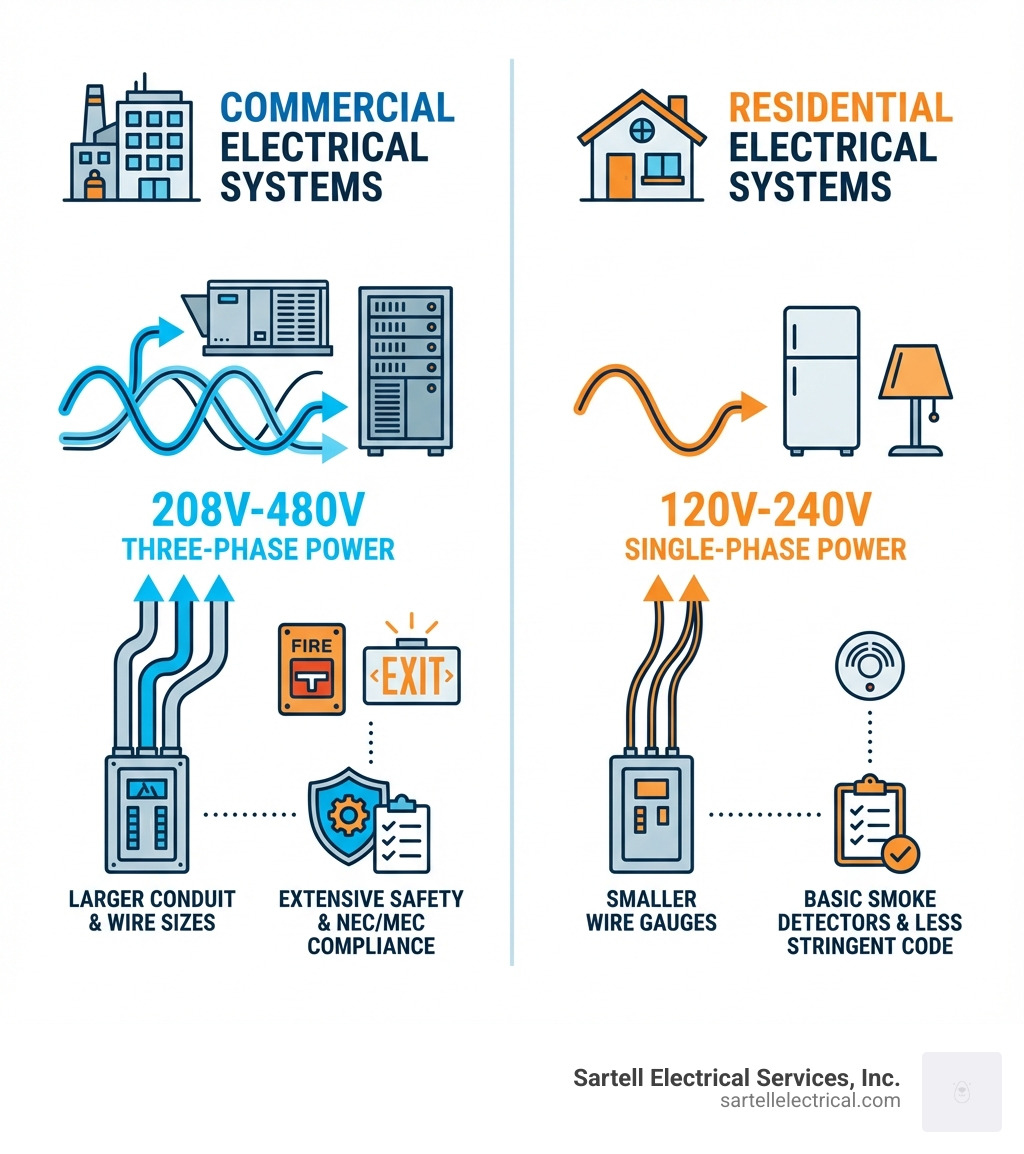
Comprehensive Services Offered by a Commercial Electrician in Boston MA
When it comes to powering Boston's diverse business landscape, a commercial electrician offers a vast array of services far beyond simply changing a light bulb. Our teams are equipped to handle everything from initial design and installation in new constructions to complex upgrades, routine maintenance, and emergency repairs across various commercial and industrial settings. Our goal is always to provide solutions that improve operational efficiency, ensure safety, and support your business's growth.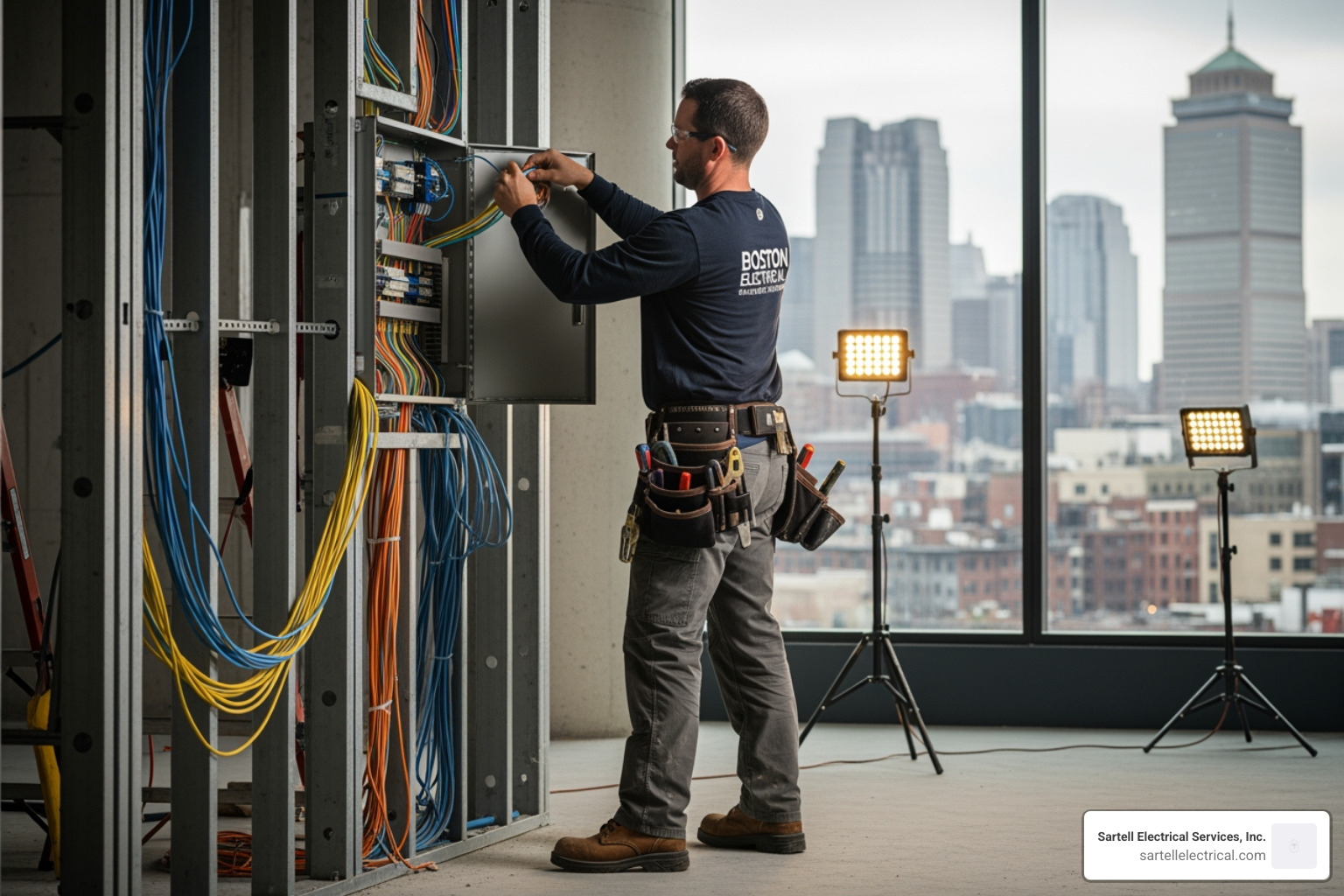
Installations for New Builds and Tenant Fit-Outs
The foundation of any successful commercial venture is a robust and reliable electrical system. For new construction projects in Boston, our electrical teams provide comprehensive wiring design, load calculations, and installation services from the ground up. This includes everything from the main service entrance to every outlet, switch, and fixture. We ensure that the entire electrical infrastructure is perfectly custom to the building's purpose and future needs. Tenant fit-outs are another significant area of expertise. Whether it's changing a shell space into a vibrant retail store, a busy restaurant kitchen, or a modern office environment, we work closely with project managers and business owners to implement electrical systems that align with specific operational requirements and aesthetic visions. This often involves specialized wiring for equipment, lighting, data networks, and security systems. Our experience covers a wide range of properties, including new condo and townhouse complexes, and even the conversion of existing mill buildings into apartments, requiring meticulous planning for wiring and fire alarm systems.Upgrades, Retrofits, and Energy Efficiency
Boston is a city that blends historic charm with modern innovation. This means many commercial properties, especially older ones, require electrical upgrades and retrofits to meet contemporary demands and energy efficiency standards. Outdated electrical systems can lead to frequent power outages, tripped breakers, and even safety hazards. We specialize in upgrading these systems, including panel replacements and service upgrades to handle increased power loads. For instance, in one of our projects, we installed a new 1200 amp service for a 5-story commercial building in Charlestown, showcasing our capability to modernize large-scale infrastructure. Energy-efficient solutions are increasingly critical for businesses looking to reduce operational costs and their environmental footprint. We help businesses achieve this through LED lighting retrofits, which not only cut energy consumption but also improve illumination quality. We also install smart controls for lighting and HVAC systems, and increasingly, EV charging stations to support the growing electric vehicle infrastructure. These upgrades are not just about saving money; they are about future-proofing your business and enhancing its competitive standing. We can also provide specialized electrical services for sophisticated systems in industrial warehouses and plants, ensuring efficient design and installation to prevent breakdowns and revenue loss. Here is a list of common commercial electrical services we provide:- New Construction Wiring & Tenant Fit-Outs
- Energy-Efficient Lighting Upgrades (LED)
- Electrical Panel & Service Upgrades
- Backup Generator Installation
- Fire Alarm & Security System Integration
- Data, Network & Telephone Cabling
- EV Charging Station Installation
The Critical Role of Licensing, Codes, and Safety
Hiring a licensed and experienced Commercial electrician Boston MA businesses can trust is not just a recommendation; it's a necessity. Electrical work, especially in commercial settings, carries inherent risks. Improper installation or maintenance can lead to fires, electrocution, costly downtime, and severe legal liabilities.Why You Need a Licensed Commercial Electrician in Boston MA
In Massachusetts, electricians must hold specific licenses, such as a Journeyman or Master Electrician license, demonstrating their training, knowledge, and adherence to industry standards. This licensing ensures they understand complex electrical theory, practical application, and, crucially, the Massachusetts Electrical Code (MEC) and National Electrical Code (NEC). We are proud to employ licensed professionals who bring this essential expertise to every project. A licensed electrician will also steer the permitting process, ensuring that all work complies with local regulations and passes necessary inspections. This protects your business from potential fines, forced re-work, and insurance complications. Furthermore, reputable commercial electricians often offer a workmanship warranty, providing peace of mind that the job is done right. Many commercial electricians in the Boston area are also unionized, often through Local 103 of the International Brotherhood of Electrical Workers (IBEW). This affiliation often signifies a commitment to rigorous training, safety standards, and ongoing professional development, ensuring a high level of skill and reliability. You can always check an electrician's licensing status with the Massachusetts Board to confirm their credentials. Check electrician licensing status with the Massachusetts BoardEnsuring Your Business is Up to Code
Compliance with electrical codes, both the NEC and the Massachusetts-specific MEC, is paramount for commercial properties. These codes are not merely bureaucratic problems; they are comprehensive guidelines designed to ensure the safety of occupants and the integrity of the building. Non-compliance can lead to serious safety risks, such as electrical fires or shock incidents, which can have devastating consequences for your business, employees, and customers. A qualified commercial electrician will conduct thorough electrical safety audits and ensure that all installations and upgrades meet or exceed current code requirements. This includes proper wiring, grounding, overcurrent protection, and the correct installation of fire alarm and security systems. By regularly checking and maintaining your electrical systems, we help you avoid fines, reduce insurance premiums, and, most importantly, create a safe environment. This proactive approach is essential in preventing large electrical problems and outages down the road.The Commercial Electrical Project Process: From Consultation to Completion
Starting on a commercial electrical project, whether it's a minor upgrade or a major new installation, involves a structured process to ensure efficiency, safety, and successful outcomes. Our approach is designed to be transparent and collaborative, keeping you informed at every step. The journey typically begins with an initial consultation where we discuss your needs, goals, and any challenges you might be facing. This is followed by a comprehensive site assessment where our experienced personnel evaluate your existing electrical infrastructure or the requirements of your new space.
Based on this assessment, we develop a detailed design and proposal. This includes outlining the scope of work, recommended solutions, timelines, and a transparent cost estimate. We pride ourselves on providing free estimates and clear communication throughout this phase. Once the proposal is approved, we handle the necessary permitting with local authorities, ensuring all work is compliant before it even begins.
Project execution involves our skilled electricians bringing the design to life. This phase emphasizes safety, efficiency, and minimal disruption to your ongoing operations. Throughout the project, we coordinate closely with general contractors, property owners, and other trades, managing schedules and ensuring seamless integration. Regular progress updates keep you in the loop.
Finally, upon completion, the work undergoes rigorous inspections by both our team and local code officials. A final walkthrough with you ensures that every aspect of the project meets your expectations and our high standards for quality and safety. Our commitment extends from the design and planning stages right through to completion.
The journey typically begins with an initial consultation where we discuss your needs, goals, and any challenges you might be facing. This is followed by a comprehensive site assessment where our experienced personnel evaluate your existing electrical infrastructure or the requirements of your new space.
Based on this assessment, we develop a detailed design and proposal. This includes outlining the scope of work, recommended solutions, timelines, and a transparent cost estimate. We pride ourselves on providing free estimates and clear communication throughout this phase. Once the proposal is approved, we handle the necessary permitting with local authorities, ensuring all work is compliant before it even begins.
Project execution involves our skilled electricians bringing the design to life. This phase emphasizes safety, efficiency, and minimal disruption to your ongoing operations. Throughout the project, we coordinate closely with general contractors, property owners, and other trades, managing schedules and ensuring seamless integration. Regular progress updates keep you in the loop.
Finally, upon completion, the work undergoes rigorous inspections by both our team and local code officials. A final walkthrough with you ensures that every aspect of the project meets your expectations and our high standards for quality and safety. Our commitment extends from the design and planning stages right through to completion.
What Types of Properties Need Commercial Electrical Work?
Boston's economic diversity means a wide range of commercial properties rely on specialized electrical services. From the towering structures of the financial district to the busy kitchens of local eateries, each type of property has unique electrical demands.- Office Buildings: Require robust data cabling, efficient lighting, and reliable power for numerous workstations, servers, and HVAC systems. Electrical upgrades are crucial to reliably power computers, printers, and other equipment.
- Retail Stores: Need dynamic lighting for product display, secure point-of-sale (POS) systems, digital signage, and often specialized wiring for security and inventory management. Upgrades help keep stores running smoothly and safely, preventing power outages and electrical fires.
- Restaurants & Hospitality: Depend on high-capacity wiring for kitchen appliances, ambient lighting for guest experience, and reliable power for refrigeration and climate control. Robust electrical systems prevent service interruptions.
- Biotech & Medical Facilities: Demand the highest level of electrical reliability and redundancy for life-saving equipment, sensitive laboratory instruments, and critical data systems. Upgrades are vital for powering life-saving equipment like ventilators and surgical tools, ensuring reliability during emergencies.
- Industrial Warehouses & Factories: Require heavy-duty wiring for machinery, specialized lighting, and robust power distribution systems to support production automation equipment.
- Data Centers: These facilities are power-hungry, requiring massive, uninterrupted power supplies, advanced cooling systems, and redundant electrical infrastructure.
- Apartment Complexes & Multi-Unit Dwellings: While residential in nature for tenants, the main electrical services, common areas, fire alarm systems, and infrastructure often fall under commercial electrical expertise. We have extensive experience with large-scale apartment and housing complexes.
Proactive Maintenance and 24/7 Emergency Response
In the commercial environment of Boston, unexpected electrical issues can lead to significant downtime, lost revenue, and even safety hazards. That's why proactive maintenance and immediate emergency response are crucial for any business.Preventing Downtime and Ensuring Business Continuity
We believe that prevention is always better—and often cheaper—than a cure. Regular preventative electrical maintenance is key to identifying potential problems before they escalate into costly outages. Our maintenance services include routine inspections, testing, and servicing of your electrical systems to ensure every component operates correctly and efficiently. This extends the lifespan of your equipment, reduces the likelihood of breakdowns, and keeps your business running smoothly. One of our specialized maintenance services includes infrared thermography scans on electrical panels. This advanced diagnostic tool can detect overheating components or loose connections invisible to the naked eye, allowing us to address issues before they cause failures. Businesses that invest in preventative maintenance often avoid the headache of unexpected power disruptions, which can decrease productivity and profitability. Losing power for even a few hours can mean thousands of dollars in lost revenue, spoiled goods, and turned-away customers.Handling Emergency Electrical Situations
Despite the best preventative measures, electrical emergencies can still occur. When they do, you need a Commercial electrician Boston MA businesses can count on for rapid and effective response. We offer 24/7 emergency electrical services, including weekends and holidays, because we know that electrical problems don't adhere to a 9-to-5 schedule. Our emergency teams are equipped to handle a wide range of critical situations, from power outages and short circuits to equipment failures. We prioritize prompt troubleshooting and power restoration to minimize your business's downtime. For instance, we've provided emergency power restoration by installing new service after existing systems were damaged by water, restoring power within 24 hours. We also specialize in the installation and maintenance of backup generators, which can provide a competitive advantage by keeping your business operational during grid failures. Our 24/7/365 electrical emergency response ensures that our customers' facilities and businesses can continue to run smoothly, no matter what.How to Choose and Budget for Your Boston Electrician
Selecting the right Commercial electrician Boston MA businesses need is a critical decision that impacts safety, budget, and operational efficiency. It's about more than just finding someone to fix a problem; it's about partnering with a reliable expert.Key Factors for Choosing a Commercial Electrician in Boston MA
When you're evaluating commercial electricians, consider these essential factors:- Experience & Specialization: Look for a company with a proven track record in commercial projects, particularly those similar to yours. Our team, with over 58 years of experience, specializes in commercial, industrial, telecom, and healthcare electrical services.
- References & Portfolio: A reputable electrician should be able to provide references and showcase a portfolio of successfully completed projects. This offers tangible proof of their capabilities and the quality of their work.
- Safety Record (OSHA): Commercial electrical work demands strict adherence to safety protocols. Inquire about their safety record and commitment to OSHA guidelines. Safety is always our key priority.
- Communication & Project Management: Effective communication is vital for keeping a project on track and within budget. Choose an electrician who is upfront, communicative, and provides regular updates. Our project management from design to completion with continuous client updates is a cornerstone of our service.
- Availability for Emergencies: As discussed, 24/7 emergency service is a non-negotiable for commercial operations. Ensure your chosen electrician offers this critical support.
- Licensing and Insurance: Always verify that the electrician is fully licensed in Massachusetts and carries comprehensive insurance to protect your business from liability.
| Factor | MA License Verification | Proof of Insurance | Years of Commercial Experience | 24/7 Emergency Service | Project Portfolio |
|---|---|---|---|---|---|
| Why it Matters | Ensures legal compliance, technical competence, and adherence to state electrical codes (MEC). Essential for safety and avoiding fines. | Protects your business from financial liability in case of accidents, damages, or injuries on your property during electrical work. | Indicates a deep understanding of complex commercial systems, problem-solving abilities, and efficiency in project execution across various property types. | Crucial for minimizing downtime and lost revenue during unexpected electrical failures, especially for businesses with critical operations. | Provides tangible evidence of past successful projects, demonstrating the electrician's capabilities, quality of work, and ability to handle projects similar to yours. |
| What to Look For | Verify license with the Massachusetts Board of State Examiners of Electricians. Look for Journeyman or Master Electrician licenses. | Request a certificate of insurance (COI) from their provider, confirming adequate general liability and workers' compensation coverage. | Ask for specific examples of commercial projects they've completed, their role in those projects, and the types of commercial properties they've worked on (e.g., retail, office, industrial, biotech). | Confirm their response time, availability (including holidays), and the procedures for dispatching emergency teams. | Review detailed case studies, testimonials, and photos of completed commercial electrical installations, upgrades, and maintenance work. |
| Sartell Electrical Services | We employ fully licensed and certified electricians in Massachusetts, ensuring all our work meets the highest standards and local code requirements. | We carry comprehensive insurance coverage to provide complete peace of mind and protection for all our clients and projects. | With over 58 years of experience, we have a deep and diverse portfolio of commercial, industrial, telecom, and healthcare electrical projects across Massachusetts. | We understand the critical nature of commercial operations and strive to provide prompt and dependable service, minimizing disruption. | Our extensive history includes successful projects ranging from office fit-outs in Boston to complex industrial installations throughout Massachusetts. |
Understanding Cost Considerations for Your Project
Cost is always a significant factor, but it's important to differentiate between price and value. While the average hourly rate for a commercial electrician in Boston is around $35-$45 per hour, the total cost of a project will depend on several variables:- Project Scope and Complexity: A simple lighting upgrade will naturally cost less than a full electrical system overhaul or new construction wiring. The complexity of the design and the required load calculations also play a role.
- Material Costs: The type and quality of materials used (e.g., LED fixtures vs. traditional, specific types of wiring, panel brands) will impact the overall expense.
- Labor Rates: These vary based on the electrician's experience, licensing, and any specialized skills required.
- Permit Fees: Local permits are mandatory for most commercial electrical work and come with associated fees.
- Emergency vs. Scheduled Work: Emergency services typically incur higher rates due to the immediate dispatch and after-hours nature of the work.
Conclusion: Your Partner in Power and Productivity
Choosing the right Commercial electrician Boston MA businesses can rely on is a decision that underpins the very foundation of your operations. From ensuring the safety of your employees and customers to maintaining seamless productivity and adhering to stringent electrical codes, the expertise of a qualified electrical partner is indispensable. At Sartell Electrical Services, we bring nearly six decades of experience to every project, delivering comprehensive solutions across Massachusetts, including the vibrant business landscape of Boston. Our commitment to excellence, leadership, and customer service ensures that your electrical systems are not just functional, but optimized for your business's success. We understand the unique demands of commercial properties, from the critical infrastructure of biotech facilities to the intricate lighting designs of retail spaces. We are more than just electricians; we are your partners in power and productivity, dedicated to keeping your business running safely and efficiently. Find your expert commercial electrical contractor in the Reading, MA areaElectric Meter Upgrade: The Ultimate 200-Amp Guide
Why Understanding Your Electric Meter Upgrade Matters
An electric meter upgrade can mean two things: a utility-mandated swap to a smart meter, or a major service upgrade for modern power demands. Here's what you need to know: Quick Answer:- Smart Meter Swap - Your utility replaces your old analog meter with a digital one. It takes 10-15 minutes, is usually free, and involves a brief power interruption.
- 200-Amp Service Upgrade - A full electrical system upgrade by a licensed electrician. It replaces the meter base, panel, and service entrance to handle EV chargers, heat pumps, and modern appliances. This requires permits and utility coordination.
- Key Difference - A smart meter swap offers the same power capacity, while a service upgrade increases it.
The Smart Meter Revolution: Understanding the New Standard
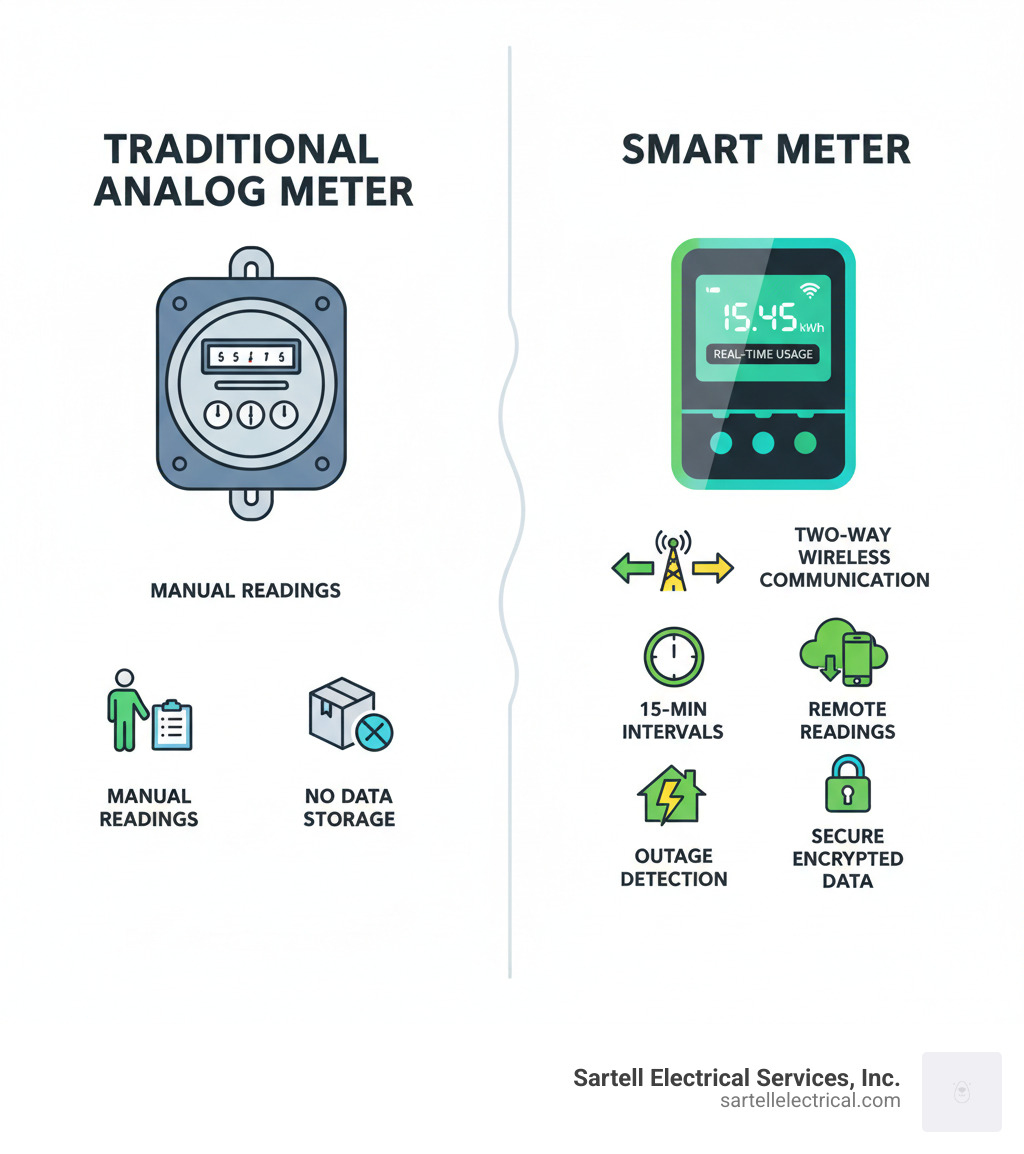
The old analog electric meter, with its spinning dial, is a relic of the past. For over a century, utility workers had to read these meters manually. Those days are quickly disappearing. Today's smart meters—also called Advanced Metering Infrastructure (AMI) devices—represent a fundamental shift. These digital meters feature two-way communication technology, sending your usage information to the utility almost instantly and receiving information back. The digital display shows your service status, cumulative usage (kWh), and current demand (kW). It's not just a meter swap—it's a window into your home's energy personality.Benefits for Consumers
For homeowners, smart meters provide access to detailed energy information previously unavailable. Instead of a single number on a monthly bill, you can see usage in 15-minute intervals. Many utilities offer online portals (like AEPOhio.com/Usage) to track when your electricity use spikes, helping you understand consumption patterns and make smarter choices. Another key benefit is accurate billing. Smart meters send real-time readings to the utility, eliminating the estimated bills and surprise "make-up" charges common with old meters. You're billed only for what you use.How Smart Meters Help Save Money
Smart meters enable flexible pricing plans that can save you money. Utilities may offer hourly pricing or peak-time rebates for reducing electricity use during high-demand hours. This means you can save by running appliances like dishwashers or charging your EV during off-peak times. Many utilities also provide budget alerts and personalized energy-saving tips via online dashboards. Resources like Energy Made Easy show how consumers use this data to compare plans and make informed choices. Knowledge is power, and with smart meters, that power can be cheaper.Grid Modernization and Improved Reliability
Smart meters are a key part of grid modernization efforts in Massachusetts and across the country. When a storm hits, smart meters instantly notify the utility of an outage, enabling faster outage detection and quicker restoration. Utilities no longer have to wait for customer calls to identify problem areas. These meters also help utilities monitor power quality and reroute electricity to prevent blackouts, creating a more resilient grid as advocated by groups like For A Better Grid. Furthermore, remote readings lead to greener utility operations by reducing truck rolls and fuel consumption, benefiting both reliability and the environment.Safety and Privacy Concerns
Let's address the common questions about safety and privacy. Smart meters use radio frequency (RF) emissions—the same technology in your cell phone and Wi-Fi router. However, they transmit data for only a few seconds per day, with emissions well below federal health and safety limits. As for privacy, utilities use data encryption and secure networks to protect your information, similar to how banks protect financial data online. Your usage information is transmitted securely for billing and operational purposes. Smart meter technology has been rigorously tested and deployed to millions of homes. Utilities design these systems with safety and security as top priorities, ensuring the benefits of an electric meter upgrade to smart technology are significant.The Smart Meter Installation: What to Expect from Your Utility Company
If you've received a notice about a smart meter installation, you're part of a nationwide grid modernization effort. Utilities like FirstEnergy, AEP Ohio, and ComEd are rolling out these devices, with programs approved by the Public Utilities Commission of Ohio and similar bodies. Your local Massachusetts utility handles the entire electric meter upgrade process in your area.The Installation Process
Your utility will notify you by mail, phone, or a door knock, often providing a time window or letting you schedule an appointment. The swap is quick, taking only 10 to 15 minutes. Your power will be out for a few minutes during the changeover. You don't need to be home if your meter is accessible. However, always verify the credentials of anyone claiming to be from the utility. Legitimate workers have proper ID badges and drive company-marked vehicles. If you're unsure, call your utility to confirm.
Costs and Opt-Out Policies
For most homeowners, there is no direct cost for a standard smart meter installation; it's covered by the utility's infrastructure program. However, most utilities offer an opt-out option with fees. For example, AEP Ohio charges customers who refuse a smart meter about $24 per month to keep their old meter. If a smart meter is already installed and you want it removed, expect a one-time fee of around $43, plus the recurring monthly charge. Opting out also means you may receive estimated bills instead of accurate ones, leading to frustrating "catch-up" charges. In some cases, opting out isn't possible. If your old meter is failing or unsafe, the utility may require a replacement and could disconnect service for refusal. You also can't opt out if you're in programs like net metering for solar panels or time-of-use rates. For most Massachusetts homeowners, accepting the free, quick smart meter installation is the simplest path to better energy management.Beyond the Swap: Planning a Full Electric Meter Upgrade
Here's something many homeowners don't realize: a smart meter swap from your utility company doesn't actually increase your home's electrical capacity. It's like getting a new speedometer when what you really need is a bigger engine. If your lights flicker when the air conditioning kicks on, or your breakers trip every time you run the microwave and toaster together, you're experiencing the symptoms of insufficient electrical service. Many Massachusetts homes—and homes across the country—still run on 100-amp service. That was plenty back in the 1970s when the biggest power draws were a refrigerator, a TV, and maybe an electric stove. But today? Not so much. You might find yourself daisy-chaining power strips and extension cords just to plug everything in. That's not just inconvenient—it's a red flag that your electrical system is overloaded. Our Residential Electrical Upgrades Guide walks through these warning signs in detail.What is a 200-Amp Service Upgrade?
A 200-amp service upgrade is the real deal—a complete overhaul of your home's main electrical entry point. We're talking about replacing everything from the meter base on the outside of your house all the way through to your main electrical panel inside. It's not just swapping out one component; it's upgrading the entire pipeline that delivers electricity to your home. Think of it this way: if your home's electrical system is a highway, you're widening it from two lanes to four. A 200-amp upgrade essentially doubles the electrical capacity available to your home, which is why it's become the standard for new construction and major renovations across America. So when do you need one? Modern life is the short answer. Electric vehicle chargers are probably the most common trigger these days. A Level 2 home EV charger typically needs a dedicated 40-50 amp circuit. If you're already running close to your 100-amp limit, there's simply no room for that kind of draw. But EVs aren't the only culprit. Heat pumps are gaining popularity as efficient heating and cooling solutions, and they draw significant power. Central air conditioning, modern kitchen appliances with all their bells and whistles, that home addition you've been planning—they all add up. Even dozens of smart home devices, each drawing a little power, contribute to the load. Beyond just meeting your current needs, a 200-amp upgrade is an investment in your home's value. Potential buyers increasingly expect homes to support modern technology. You're essentially future-proofing your property and making it significantly more attractive on the market.The process for a 200-amp electric meter upgrade
An electric meter upgrade to 200-amp service isn't something that happens in an afternoon. It's a carefully orchestrated process that typically takes a full day and involves multiple parties working in coordination. It starts with hiring a licensed electrician—and here in Massachusetts, that means someone who knows both the National Electrical Code (NEC) and our state's specific requirements inside and out. We'll pull the necessary permits from your local building department, which ensures all work meets current safety standards and building codes. Next comes coordination with your utility company. This is crucial: they're the ones who disconnect the power at the meter before we begin work. Nobody—and I mean nobody—should be working on an electrical service while it's still energized. The utility company controls that connection, and they'll reconnect it after everything is installed and inspected. During the upgrade itself, we replace several key components. Your old meter socket gets swapped for a new 200-amp rated version. The service entrance cable—that's the thick cable running from your meter to your panel—gets upgraded to handle the increased capacity. The weather head at the top of your service mast is replaced to ensure proper protection from the elements. Your grounding system is upgraded to meet current code requirements. And finally, your old electrical panel is replaced with a new 200-amp panel that has room for all your circuits, plus space to grow. Once everything is installed, a local inspector comes out to verify the work meets code. Only after that inspection passes will the utility company restore your power. The whole process typically takes between four and eight hours, during which you'll have a planned power outage. To get a sense of what this investment might look like, check out our Main Panel Upgrade Cost guide.Why a major electric meter upgrade is not a DIY job
I need to be absolutely clear about this: upgrading to 200-amp service is not, under any circumstances, a DIY project. I don't care how many YouTube videos you've watched or how handy you are with home projects. This is dangerous work that can kill you. We're talking about high-voltage electricity here. The risk of severe burns, electric shock, and electrocution is very real for anyone without proper training and experience. Working with live electrical systems has killed plenty of people who thought they knew what they were doing. But let's say you somehow manage not to electrocute yourself. There's still the matter of code compliance. The National Electrical Code, along with Massachusetts-specific electrical codes, lays out precise requirements for every aspect of this work—wire sizing, grounding methods, bonding procedures, proper component installation, and dozens of other technical details. Get any of it wrong, and you've created a fire hazard that could burn your house down. And here's the kicker: incorrect electrical work can void your homeowner's insurance. If a fire starts because of faulty electrical work, your insurance company may refuse to pay. No inspector will approve work that doesn't meet code, which means you'll be paying twice—once for your DIY attempt, and again to have a professional fix it. This work requires specialized tools and years of training in electrical theory and practice. As the Occupational Safety and Health Administration's guide on electrical safety makes clear, electrical work demands specific expertise and strict adherence to safety protocols. This is exactly why licensing requirements exist for electricians. Trust me on this one: call a licensed professional. Your life and your home are worth it.Key components replaced during a 200-amp service upgrade
When we perform a 200-amp service upgrade, we're replacing or upgrading several critical components of your home's electrical system. Each one plays a vital role in safely delivering power throughout your home. The meter socket (also called a meter base) is the weatherproof enclosure on your home's exterior where the electric meter plugs in. Your old one gets replaced with a new unit rated for 200 amps, with the proper connections to handle that increased capacity. The service entrance cable is perhaps the most important upgrade. This is the main cable that carries all the power from your meter into your home's electrical panel. We upgrade this to a much thicker gauge wire—typically aluminum or copper—that can safely carry 200 amps without overheating. Often, we're also converting from an older 3-wire system to a modern 4-wire system, which separates the neutral and ground conductors. That separation is a major safety improvement and required by current code. At the top of your service mast (the vertical pipe that extends up from your meter), we install a new weather head. This simple but important component keeps rain and snow from running down into your service conduit, preventing water damage and corrosion. Your grounding system gets a complete upgrade too. Modern code typically requires two copper ground rods, each driven eight feet into the earth and spaced at least six feet apart. These are connected with proper gauge wire to your electrical system, providing a safe path for fault currents and protecting your home from lightning strikes and other electrical surges. Finally, we replace your old 100-amp main electrical panel with a new 200-amp panel. This gives you not only the increased capacity but also more physical space for circuit breakers. No more trying to squeeze in one more circuit or settling for tandem breakers because you've run out of room. For a detailed look at what goes into choosing the right panel, our guide on Electrical Panel Box for Home covers all the essentials. All these components work together as a system, safely and efficiently delivering electricity from the utility grid to every outlet, switch, and appliance in your home. It's a comprehensive upgrade that sets your home up for decades of reliable electrical service.Frequently Asked Questions About Your Electric Meter Upgrade
How long does an electric meter upgrade take and will I lose power?
The time and power interruption really depends on which type of electric meter upgrade you're getting. If your utility company is swapping out your old analog meter for a smart meter, you're looking at a quick 10-15 minute visit. Your power will be off for just a few minutes during the swap. Most utilities will let you know ahead of time, and the best part? You don't even need to be home for it. Now, a full 200-amp service upgrade is a different story altogether. This is comprehensive electrical work that typically takes between 4 to 8 hours, though more complex installations can take longer. You'll experience a planned power outage for the entire duration of the work. We coordinate this carefully with both you and your utility company, so you'll know exactly when to expect the outage and can plan accordingly. It's a good day to take the family out for lunch and maybe catch a movie!Can I refuse a mandatory smart meter upgrade from my utility?
You can usually refuse a smart meter installation, but it's worth understanding what that decision means. Most utility companies in Massachusetts have opt-out policies, but they come with some strings attached. First, there's typically a monthly fee—often around $24—to cover the cost of sending someone out to read your meter manually. That's $288 per year, which adds up quickly. You'll also likely receive estimated bills instead of precise readings, which can lead to those frustrating "catch-up" bills when the actual reading finally happens. In some situations, utilities may even reserve the right to disconnect service if you refuse both the smart meter and the opt-out option, particularly if your existing meter is old, failing, or poses a safety risk. And here's something many people don't realize: opting out might disqualify you from certain energy-saving programs or special rate plans like net metering for solar panels or time-of-use rates that can save you money. Before making this decision, I'd recommend reaching out to your specific utility provider to understand their current policies and what it will actually cost you in the long run.Does upgrading my panel to 200 amps automatically upgrade my service?
This is probably the most common question we get, and the answer surprises a lot of homeowners: no, upgrading your panel doesn't automatically give you 200-amp service. Think of it this way: your electrical panel is like a distribution center. You can absolutely install a larger 200-amp panel to give yourself more space for circuit breakers and future expansion. But the actual electrical service capacity coming into your home? That's determined by the size of the wires running from the utility connection through your meter and into your panel. The main breaker in your new panel has to match the amperage rating of your incoming service. So if you're still receiving 100-amp service from the utility, your shiny new 200-amp panel will have a 100-amp main breaker installed to protect the system. You'll have more circuit slots available, which is great for adding new circuits, but you won't have any more total power capacity. To truly upgrade to 200-amp service, you need a complete electric meter upgrade that includes replacing the meter base, upgrading the service entrance conductors (those thick wires from the meter to the panel), and potentially even the service drop from the utility pole. This requires a licensed electrician working hand-in-hand with your utility company. It's a comprehensive upgrade, not just a panel swap. Many homeowners install a larger panel as a smart first step, knowing they'll complete the full service upgrade later. That's perfectly fine—just understand that the increased capacity doesn't happen until all the components are upgraded. Our guide on What is the Standard Residential Electrical Service Size? breaks down these distinctions in more detail if you'd like to learn more.Conclusion: Powering Your Home for Today and Tomorrow
 Think of your electric meter upgrade as two completely different conversations. One is about modernizing how your utility company reads your meter—that's the smart meter swap. The other is about giving your home the power it actually needs to run everything you plug in, turn on, and charge—that's a full service upgrade to 200 amps.
Smart meters bring real benefits. You get accurate billing instead of estimates. You can track your usage in real-time and maybe even save money with time-of-use plans. Your utility can spot outages faster and get your power back on sooner. For most Massachusetts homeowners, this swap happens quickly, costs nothing, and requires just a brief power interruption.
But here's what a smart meter won't do: it won't stop your breakers from tripping when you run the dryer and the microwave at the same time. It won't give you the capacity to install that Level 2 EV charger you've been eyeing. It won't prepare your home for a heat pump or a home addition. That's where a 200-amp service upgrade comes in—replacing your meter base, service entrance cable, weather head, grounding system, and main electrical panel to genuinely increase your home's electrical capacity.
And we can't stress this enough: major electrical work is dangerous. We're talking about high voltage that can cause serious injury or death. There are complex code requirements for a reason. Fire hazards aren't hypothetical—they're real consequences of improper wiring. This is work that requires specialized tools, extensive training, and a license. As the Occupational Safety and Health Administration's guide on electrical safety makes clear, electrical work demands professional expertise.
Since 1985, we've been helping Massachusetts homeowners and businesses throughout Essex County, Middlesex County, Norfolk County, Suffolk County, and Greater Boston understand their electrical needs and execute upgrades safely. We know the local codes, we coordinate with your utility company, and we make sure your electric meter upgrade—whether it's a panel replacement or a complete service overhaul—is done right the first time.
Your home should support the way you actually live, not hold you back. Ready to assess your home's electrical capacity? Our Main Electrical Panel Upgrade Complete Guide has all the details you need to move forward with confidence.
Think of your electric meter upgrade as two completely different conversations. One is about modernizing how your utility company reads your meter—that's the smart meter swap. The other is about giving your home the power it actually needs to run everything you plug in, turn on, and charge—that's a full service upgrade to 200 amps.
Smart meters bring real benefits. You get accurate billing instead of estimates. You can track your usage in real-time and maybe even save money with time-of-use plans. Your utility can spot outages faster and get your power back on sooner. For most Massachusetts homeowners, this swap happens quickly, costs nothing, and requires just a brief power interruption.
But here's what a smart meter won't do: it won't stop your breakers from tripping when you run the dryer and the microwave at the same time. It won't give you the capacity to install that Level 2 EV charger you've been eyeing. It won't prepare your home for a heat pump or a home addition. That's where a 200-amp service upgrade comes in—replacing your meter base, service entrance cable, weather head, grounding system, and main electrical panel to genuinely increase your home's electrical capacity.
And we can't stress this enough: major electrical work is dangerous. We're talking about high voltage that can cause serious injury or death. There are complex code requirements for a reason. Fire hazards aren't hypothetical—they're real consequences of improper wiring. This is work that requires specialized tools, extensive training, and a license. As the Occupational Safety and Health Administration's guide on electrical safety makes clear, electrical work demands professional expertise.
Since 1985, we've been helping Massachusetts homeowners and businesses throughout Essex County, Middlesex County, Norfolk County, Suffolk County, and Greater Boston understand their electrical needs and execute upgrades safely. We know the local codes, we coordinate with your utility company, and we make sure your electric meter upgrade—whether it's a panel replacement or a complete service overhaul—is done right the first time.
Your home should support the way you actually live, not hold you back. Ready to assess your home's electrical capacity? Our Main Electrical Panel Upgrade Complete Guide has all the details you need to move forward with confidence.
Commercial electrical installation Boston: Seamless 2025
Why Your Boston Business Needs Expert Commercial Electrical Installation
Commercial electrical installation Boston services are the backbone of any successful business. When you're searching for a qualified contractor, here's what to look for:- Licensed Master Electricians with Massachusetts state certification
- Local expertise with Boston's unique building codes and permitting process
- Comprehensive services including design-build, installation, and ongoing maintenance
- Proven experience with commercial, institutional, and industrial projects
- Safety certifications meeting NFPA and OSHA standards
- Emergency service availability for rapid power restoration
Navigating Boston's Electrical Landscape: Key Considerations & Compliance
 Boston's unique blend of historic and modern buildings creates distinct challenges for any Commercial electrical installation Boston project. From historic townhouses to cutting-edge developments, we have the experience to get the job done right.
The Massachusetts Electrical Code (MEC) is the foundation, but Boston has specific amendments and a thorough permitting process through its Inspectional Services Department. Our strong relationships with local inspectors, built over decades, mean fewer delays and smoother project approvals.
Beyond local codes, every Commercial electrical installation Boston must meet NFPA fire safety standards and OSHA safety regulations. Our licensed Master Electricians stay current on all requirements to ensure safety and protect your business.
Boston's unique blend of historic and modern buildings creates distinct challenges for any Commercial electrical installation Boston project. From historic townhouses to cutting-edge developments, we have the experience to get the job done right.
The Massachusetts Electrical Code (MEC) is the foundation, but Boston has specific amendments and a thorough permitting process through its Inspectional Services Department. Our strong relationships with local inspectors, built over decades, mean fewer delays and smoother project approvals.
Beyond local codes, every Commercial electrical installation Boston must meet NFPA fire safety standards and OSHA safety regulations. Our licensed Master Electricians stay current on all requirements to ensure safety and protect your business.
Special Considerations for Boston Properties
Working in Boston means understanding that no two buildings are alike.- Historic building upgrades require creative solutions to integrate modern electrical systems while respecting architectural integrity.
- High-rise electrical systems involve complex vertical power distribution and life safety equipment, demanding meticulous planning and precision.
- Mixed-use facilities are common in Boston, housing retail, office, and residential units in one building. Each space has unique electrical and safety requirements that need to be met.
- Urban density logistics in Boston mean tight quarters, limited staging areas, and strict ordinances. Local experience is crucial for navigating these challenges and keeping projects on schedule. Learn more about our comprehensive Electrical Wiring Services Boston.
Ensuring Code Compliance for Your Commercial Electrical Installation Boston
Code compliance is about protecting lives and property. Our licensed Master Electricians bring decades of combined experience with local regulations. They understand how Boston applies codes in real-world situations, ensuring your project is designed correctly from the start. Working with city inspectors is an art. We've built relationships based on quality work and mutual respect, which leads to faster inspections and easier approvals. We speak the same language as Boston's inspectors because we've worked alongside them for decades. Understanding Boston's unique infrastructure means knowing how the city's electrical grid works, where capacity constraints exist, and how utility coordination fits into your project timeline. Our commitment to thorough Electrical Project Management ensures compliance is built into every phase of your project, from design through commissioning.A Spectrum of Services: Common Commercial Electrical Installations
Boston's diverse business landscape demands a full range of Commercial electrical installation Boston services. We provide electrical systems custom to your unique operational needs, whether you're breaking ground, fitting out a new space, or renovating an older structure.- New construction projects allow us to use our design-build expertise to create electrical systems that are efficient and scalable for future growth.
- Tenant fit-outs involve creating entirely new electrical systems within an existing structure, whether for a law firm needing data infrastructure or a restaurant requiring heavy-duty power.
- Building renovations and system upgrades are necessary when your current system is outdated or overloaded. We specialize in modernizing older Boston buildings' electrical systems.
Core Infrastructure and Power Distribution
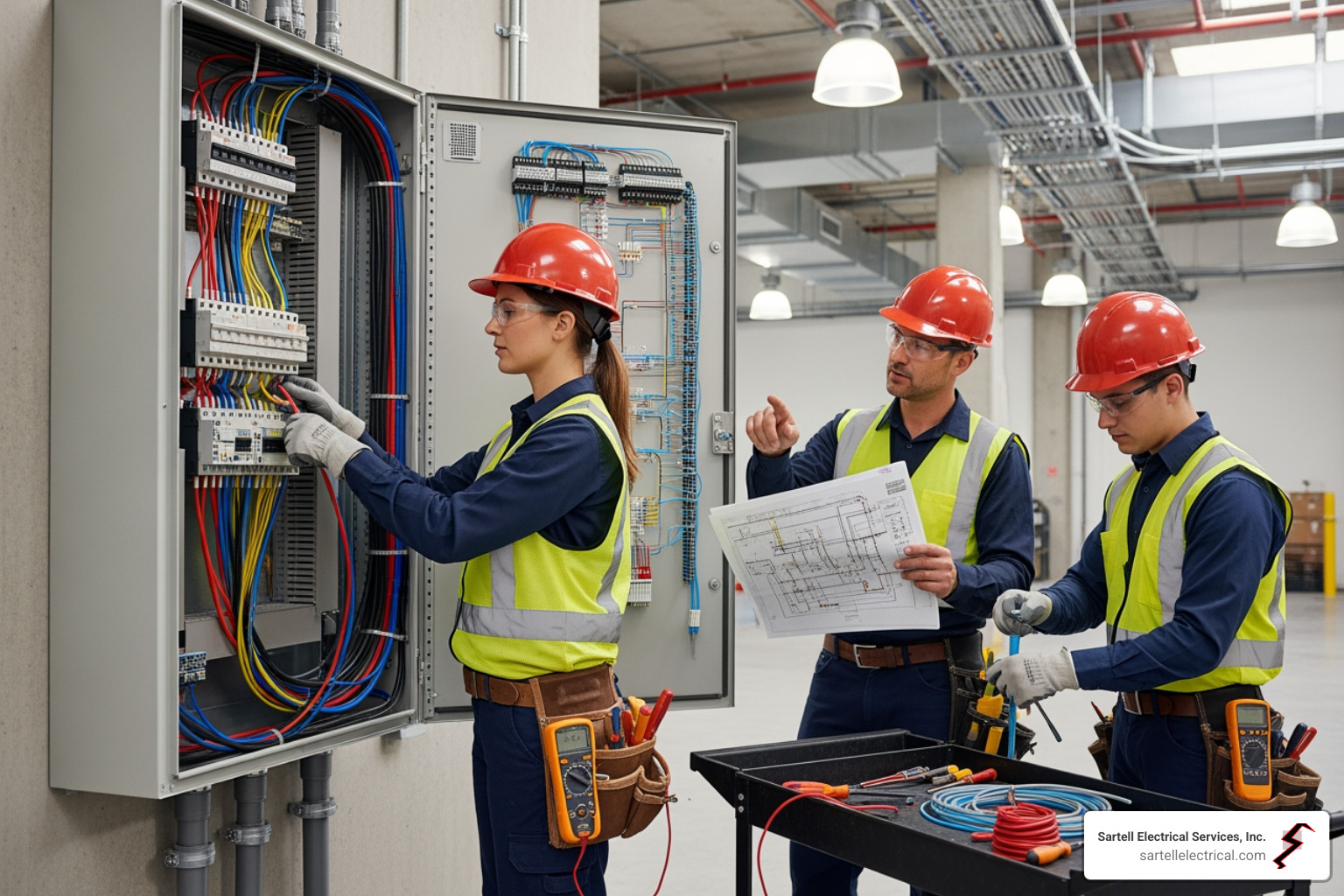
Core infrastructure is the foundation of your electrical system. We install electrical panels and switchgear that act as the control center, directing power safely and protecting against overloads. Service upgrades are common as businesses grow, and we handle complete upgrades to align your electrical capacity with your needs. Transformer installations are essential for many commercial applications, stepping voltage up or down to meet specific equipment requirements. Downtime can be catastrophic. We install backup power solutions, including commercial generators for seamless operation during outages and UPS systems for instant backup of sensitive equipment. These systems can be the difference between a minor inconvenience and a major disaster. Our expertise in Residential and Commercial Electrical Systems ensures your business stays powered and protected.Specialized Systems and Low-Voltage Installations
Modern buildings depend on a world of specialized systems that keep you safe, connected, and secure.- Fire alarm systems are a non-negotiable requirement for protecting lives. We design and install comprehensive fire alarm and life safety systems.
- Security and surveillance systems, including access control, CCTV, and intrusion detection, are designed to match your specific risk profile.
- Data cabling is critical for modern business. We install structured cabling systems for voice, data, and networking that are reliable and scalable. Our Data Cabling Installation Boston service ensures your connectivity is future-proof.
- AV systems are essential for operations, from conference room video conferencing to retail digital signage and integrated audio systems.
- Control wiring for building automation is the backbone of smart buildings, allowing lighting, HVAC, and other systems to coordinate, reducing energy costs and improving comfort.
The Blueprint for Success: Your Commercial Electrical Installation Boston Project
A Commercial electrical installation Boston project requires a solid blueprint, the right team, and clear communication. We guide Boston businesses through a proven path to keep projects on schedule, on budget, and aligned with business goals.
The Typical Project Process
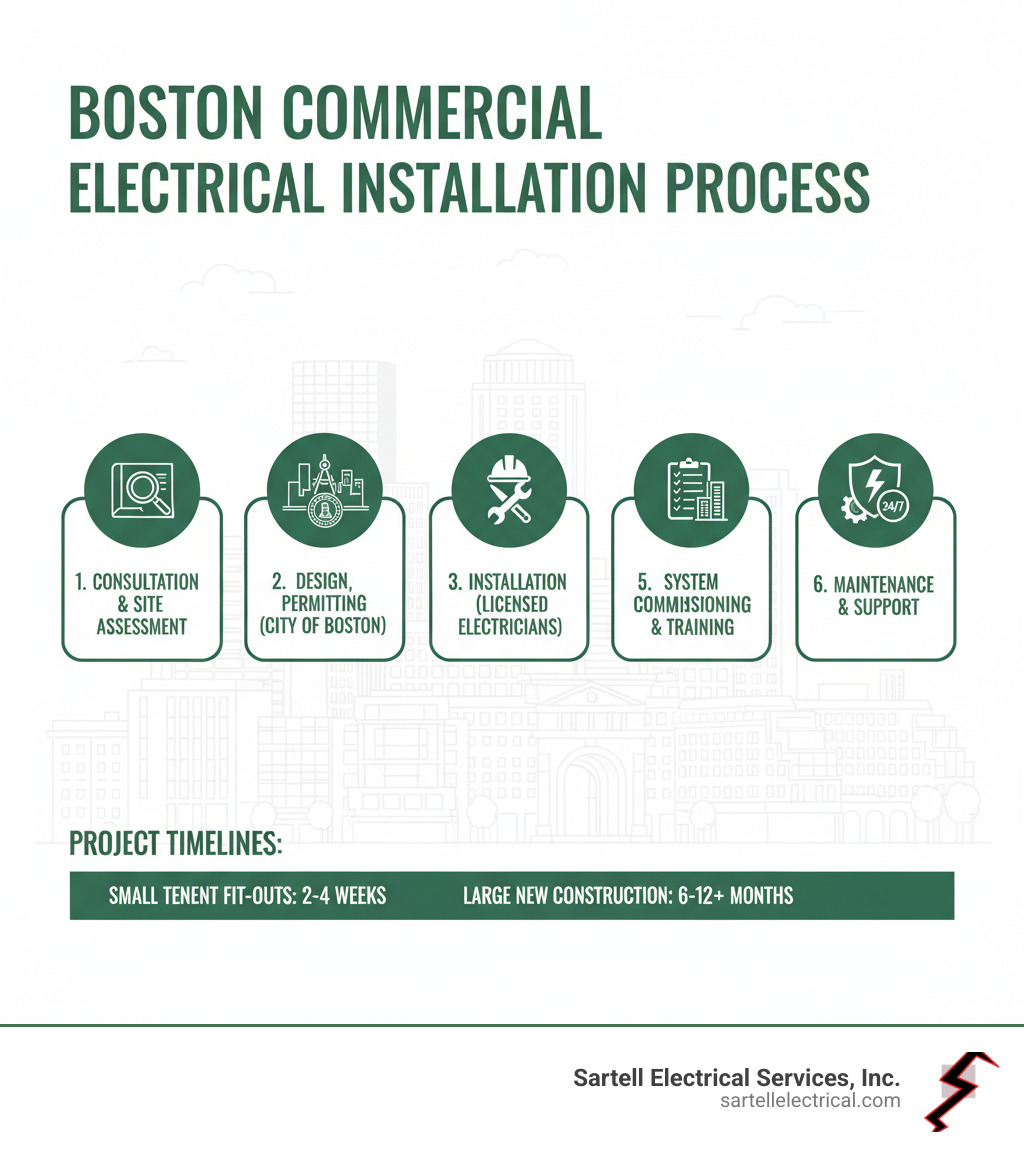
Every successful project follows a logical sequence:- Initial Consultation: We meet to understand your goals, power needs, and what success looks like for your business.
- Site Assessment: Our team inspects the existing infrastructure to identify potential obstacles and prevent future surprises.
- Design & Planning: Our Design Build Electrical Services create a customized solution that fits your needs, budget, and Boston's requirements.
- Permitting: We handle all paperwork with the City of Boston, leveraging our local knowledge to steer the process efficiently.
- Installation & Construction: Our electricians execute the plan with precision, coordinating with other trades and minimizing disruption.
- Final Inspections: We schedule and attend city inspections to verify that all work meets code.
- System Commissioning: We test every circuit and connection, and we train you on your new systems. The project isn't complete until you're satisfied.
How to Prepare Your Business for an Installation
A little advance planning goes a long way.- Define your project scope clearly. The more specific you are about current and future needs, the better we can design a long-term solution.
- Establish a clear budget. We provide transparent pricing and discuss options to align with your financial goals.
- Communicate with staff and tenants. Let people know about potential disruptions like noise or power interruptions to prevent frustration.
- Plan for operational adjustments. We can work with you to schedule noisy work after hours or install temporary power to keep critical systems running.
Understanding the Cost Factors
Every Commercial electrical installation Boston project is different, and costs reflect that. Here’s what drives the investment:- Project scale and complexity is the biggest factor. A small tenant fit-out differs greatly from ground-up construction with specialized systems.
- Quality of materials affects upfront cost but can save money long-term through energy efficiency and durability.
- Labor rates reflect the team's expertise. Our certified, experienced electricians, including union professionals from IBEW Local 103, ensure work is done safely and correctly.
- Permit fees from the City of Boston are a necessary part of any compliant installation and vary by project scope.
| Feature | Union Labor (e.g., IBEW Local 103) | Non-Union Labor |
|---|---|---|
| Training | Rigorous, standardized apprenticeships; ongoing education | Varies widely; often less formalized |
| Certifications | High levels of certification; often required for specialized work | May have certifications, but less consistent |
| Safety Standards | Strict adherence to safety protocols; strong safety culture | Varies by company; less collective oversight |
| Experience | Extensive, often on large, complex projects | Can be experienced, but project diversity varies |
| Labor Cost | Generally higher hourly rates due to training and benefits | Often lower hourly rates |
| Benefits | Comprehensive benefits (health, pension) | Benefits vary; often less comprehensive |
| Project Quality | Consistent, high-quality workmanship | Can vary; depends heavily on individual contractor |
| Reliability | Strong track record of project completion and professionalism | Can be reliable, but less collective accountability |
The Boston Advantage: Local Expertise and Modern Solutions
Choosing a local contractor for your Commercial electrical installation Boston means partnering with a team that understands the city's unique character and regulations. We've served Greater Boston for decades, and our deep-rooted local connection makes a difference.
Why Choose a Local Boston Contractor?
We are intimately familiar with the Massachusetts Electrical Code and Boston's specific inspection processes, ensuring smoother permit approvals. Our relationships with local inspectors help resolve issues quickly. Being based in Reading, MA, allows for rapid response times. When you need a Commercial Electrician Near Me, we're ready. Hiring us also means you're investing in the local economy and supporting Massachusetts jobs.Trends and Technologies in Commercial Electrical Installations
Boston businesses are embracing smarter, more efficient electrical systems. Popular upgrades include:- Energy-efficient LED lighting: Provides lower energy bills, better light quality, and longer-lasting fixtures.
- Smart lighting controls: Automatically adjust lighting based on daylight or occupancy to further cut costs.
- Building automation systems: Integrate HVAC, lighting, and security into one platform for improved control and real-time energy monitoring.
- EV charging station installation: An essential investment for attracting customers and offering a valuable employee perk.
The Value of Union Electricians and Emergency Services
We believe in quality, which is why we value highly trained professionals. Union electricians from IBEW Local 103 complete rigorous apprenticeships, ensuring work is done safely, efficiently, and to the highest standards. Our Commitment to safety is fundamental to how we operate. Electrical emergencies don't wait for business hours, which is why we offer 24/7 emergency service. Losing power costs your business money. Our rapid response team is ready around the clock to diagnose issues, restore power, and get your operations back on track. Our comprehensive Commercial Electrical Service and Repair ensures your business stays productive.Frequently Asked Questions about Commercial Electrical Installations in Boston
Here are straightforward answers to common questions we hear from Boston business owners about a Commercial electrical installation Boston project.How long does a typical commercial installation take?
Project timelines for a Commercial electrical installation Boston vary by scope. A small tenant fit-out may take 2 to 4 weeks. A more extensive renovation could run several months. Large new construction projects can take 6 to 12 months or longer. We provide detailed scheduling to coordinate all phases and keep you informed, ensuring no surprises or missed deadlines.What's the difference between commercial and industrial electrical work?
While both require expertise, they serve different environments. Commercial electrical installations are for people-focused spaces like offices, retail stores, and restaurants, emphasizing comfort and functionality. Industrial electrical work is for manufacturing plants and warehouses, demanding heavier power loads for machinery and robust infrastructure for harsh conditions. As a leading Commercial and Industrial Electrician, we are experienced in the unique requirements of both.Do I need a permit for my commercial electrical project in Boston?
Yes, nearly every Commercial electrical installation Boston that involves new or modified wiring requires a permit from the City of Boston Inspectional Services Department. This process ensures your project complies with the Massachusetts Electrical Code and is safe. As your licensed electrical contractor, we handle the entire permitting process for you, from application to final inspection. It's a critical step we've managed successfully since 1985.Powering Your Business Forward
Your electrical system is the heartbeat of your business. In Boston, where downtime is costly, a safe, reliable, and compliant infrastructure is essential. This guide has outlined the keys to a successful Commercial electrical installation Boston project—from navigating Boston's unique building landscape to planning for future growth. Success depends on partnership. For over 30 years, Sartell Electrical Services has been that partner for Massachusetts businesses. Our commitment to safety, efficiency, and quality work remains unchanged. Whether your project is in the North End, Financial District, or the Seaport, you need a local contractor who anticipates challenges and provides immediate support, including 2 AM emergencies. We don't just install electrical systems; we build lasting relationships. Your success is our success, and keeping your business running smoothly is our primary goal. Ready to move forward with your project? Let's talk about how we can help. Contact a leading Commercial Electrical Contractor in Boston MA and find what decades of experience, local expertise, and genuine dedication can do for your business. We're here to power your vision forward.Commercial electrical design build: Elite 2025 Success
Understanding the Design-Build Advantage for Your Boston Commercial Project
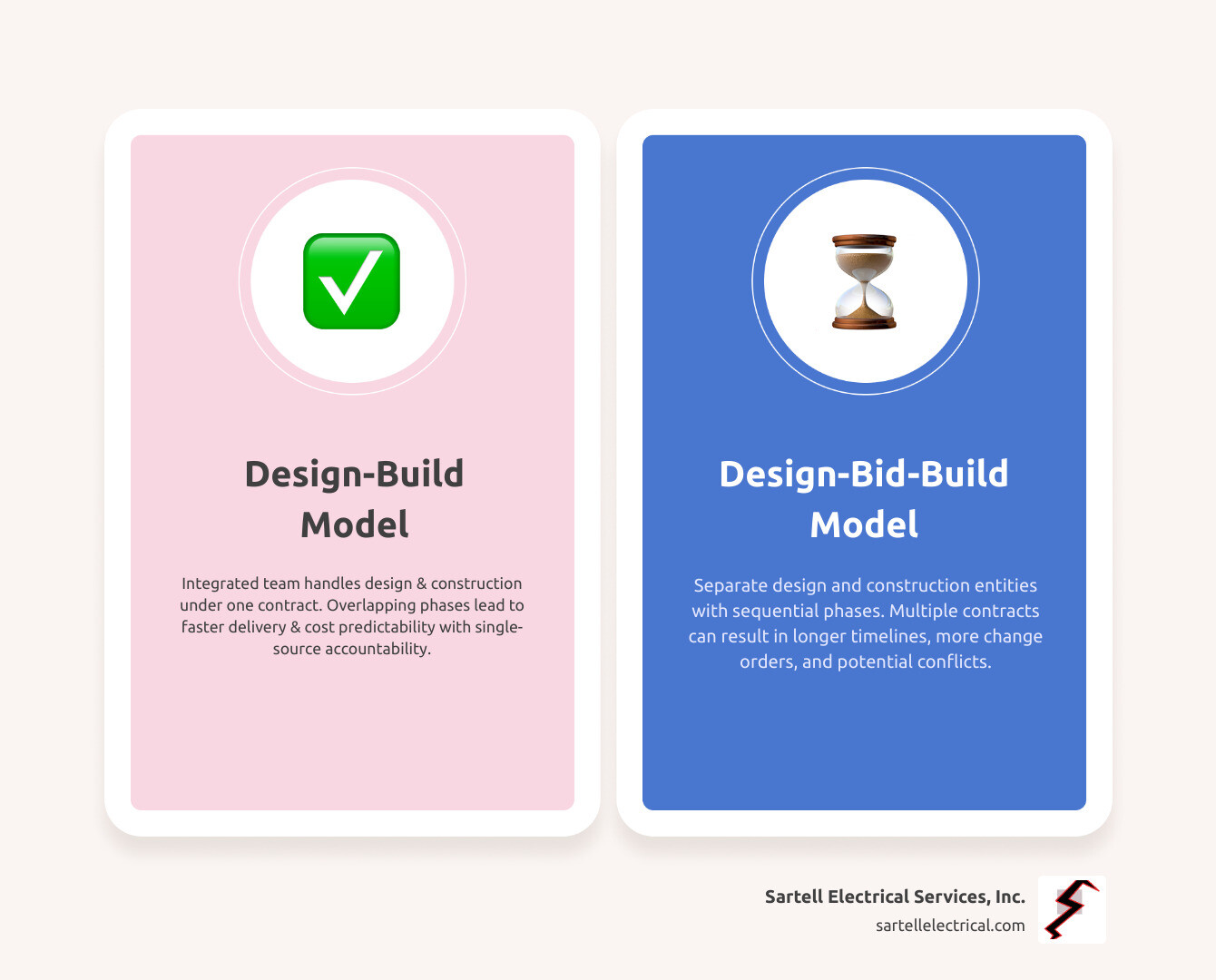
Commercial electrical design build is a project delivery method where a single contractor manages both the design and construction of your electrical systems under one contract. This integrated approach contrasts with the traditional design-bid-build model, where separate teams handle design and construction sequentially. Quick Overview: Commercial Electrical Design Build- Single contract, single team – One contractor handles design, engineering, procurement, and installation.
- Faster timelines – Overlapping design and construction phases can reduce project duration by up to 30%.
- Cost predictability – Fewer change orders and accurate early budgeting minimize financial surprises.
- Single-source accountability – One point of contact eliminates conflicts between designers and builders.
- Improved collaboration – Engineers, project managers, and electricians work together from day one.
The Core Advantages: Why Boston Businesses Choose the Design-Build Model
Business owners and facility managers in Boston often face frustrating project delays, budget overruns, and conflicts between designers and builders. The Commercial electrical design build model changes that. This integrated approach delivers significant benefits in speed, cost, and quality, making it a strategic choice for modern construction projects throughout Massachusetts.Streamlined Timelines and Cost Predictability
Design-build projects typically finish about 30% faster than traditional methods—a significant advantage when opening a new facility. The secret is overlapping the design and construction phases. While our engineers refine details for one area, our electricians can already be working in another. This parallel approach slashes your timeline without cutting corners. Cost predictability is another key benefit. Because we're involved from day one, we implement value engineering from the start, reviewing lighting schedules, equipment selections, and layouts before they are locked in. This proactive approach catches potential cost issues early, when changes are inexpensive. The result is a dramatic reduction in change orders. According to the Design-Build Institute of America (DBIA), this model minimizes the budget-busting surprises that plague traditional projects. When one team handles both design and construction, there are fewer miscommunications that lead to costly fixes. Early budgeting becomes genuinely accurate because we know exactly what it will take to build what we're designing. Our team produces engineered drawings early, which also speeds up permitting with local Boston authorities. For more insights, check out our approach to Electrical Project Management.Single-Source Accountability and Improved Quality
With Commercial electrical design build, the nightmare scenario of designers blaming installers is eliminated. You have one contract with one team responsible for everything: design, engineering, procurement, installation, and commissioning. If an adjustment is needed, you make one call. This single point of contact removes the conflicts that arise when separate companies have competing interests. When the people designing your electrical system are the same people installing it, they design with constructability in mind. Our electricians aren't left with impossible-to-build designs, because our engineers work alongside them. This unified approach narrows the margin for error. Nothing gets lost in translation between firms. When a field condition requires a design adjustment, our team handles it internally, often resolving issues before they become problems. The improved quality assurance is built into every phase because the entire team shares the same goal and accountability. Learn more about our comprehensive approach on our Electrical Contractor Service page.Fostering Collaboration and Innovation
The real magic of Commercial electrical design build is collaboration. When engineers, project managers, and electricians work as a cohesive team from day one, creative problem-solving becomes the norm. Our design engineers are in constant dialogue with the electricians who will be pulling wire and mounting panels. This means we can identify the most efficient installation methods during the design phase, not after construction has started. This flexibility allows our team to pivot quickly if the scope needs to adjust, without the delays of a traditional project. This collaborative environment also sparks innovation. By bringing different perspectives together early, we find better solutions—systems that are easier to maintain, more energy-efficient, and better suited to your specific operational needs. We design with your long-term success in mind. Meet the team that makes it all happen on our About page.The Commercial Electrical Design Build Process: From Concept to Commissioning
A successful Commercial electrical design build project follows a refined, collaborative process. Here’s how we bring your vision to reality in Boston and across Massachusetts.Phase 1: Pre-Construction and Integrated Design
Before any work begins, we invest significant time in the pre-construction phase to build a foundation for success. We start with concept development and scope definition, sitting down with you to understand your facility's needs, power loads, and operational goals. With that clarity, we move into budgeting and scheduling, providing accurate early estimates and realistic timelines that account for equipment lead times and permitting.
Next, we assemble a custom team for your project, including licensed engineers, experienced project managers, and master electricians who know Boston's building landscape. Our engineers then begin schematic design and permitting research, developing preliminary plans while researching local codes to avoid delays. This thorough pre-design process identifies potential trouble spots before they become problems. For more details on this initial phase, visit our Design Build Electrical Services page.
We start with concept development and scope definition, sitting down with you to understand your facility's needs, power loads, and operational goals. With that clarity, we move into budgeting and scheduling, providing accurate early estimates and realistic timelines that account for equipment lead times and permitting.
Next, we assemble a custom team for your project, including licensed engineers, experienced project managers, and master electricians who know Boston's building landscape. Our engineers then begin schematic design and permitting research, developing preliminary plans while researching local codes to avoid delays. This thorough pre-design process identifies potential trouble spots before they become problems. For more details on this initial phase, visit our Design Build Electrical Services page.
Phase 2: The Role of Technology and Procurement
Modern Commercial electrical design build leverages technology to prevent problems and ensure timely material delivery. Building Information Modeling (BIM) and 3D modeling are game-changers. We create detailed digital models of your electrical system, allowing for virtual construction and clash detection. Our software identifies conflicts between electrical components and other building systems (HVAC, plumbing) on a screen, not on-site. This is combined with detailed AutoCAD drafting for precise, coordinated plans. Where it makes sense, we use pre-fabrication to build assemblies in our controlled shop environment, which improves quality and reduces on-site installation time. Material planning and lead time management are also critical. Our integrated team has complete visibility into the project schedule, allowing us to order long-lead-time items like switchgear and generators at exactly the right moment to avoid project delays or storage costs. Learn more about these techniques on our Commercial Electrical Services page.Phase 3: Construction, Testing, and Turnover
With planning complete, we move into the physical installation and commissioning of your new electrical system. Installation and on-site coordination benefit enormously from the design-build approach. The electricians doing the work have been part of the conversation from the start, so they understand the why behind every decision. This leads to fewer questions, less rework, and smoother coordination with other trades. Throughout construction, we maintain strict quality control checks to ensure all work meets design specifications and code. Once installed, we begin system commissioning, methodically testing every circuit, connection, and safety feature to validate that everything works correctly and safely. Finally, project close-out and turnover includes providing complete documentation, such as as-built drawings, operational manuals, and maintenance guidelines. We also offer training for your staff on the new systems. You get a fully operational system and the knowledge to maintain it for years to come. Learn about our ongoing support on our Commercial Electrical Service and Repair page.Navigating Complexities: Specialized Applications and Considerations
The Commercial electrical design build model excels in specialized environments that demand technical expertise and creative problem-solving, handling complexity far better than traditional methods.Unique Challenges in Industrial Electrical Design-Build
Industrial facilities in Massachusetts present unique electrical challenges, from manufacturing plants to distribution centers.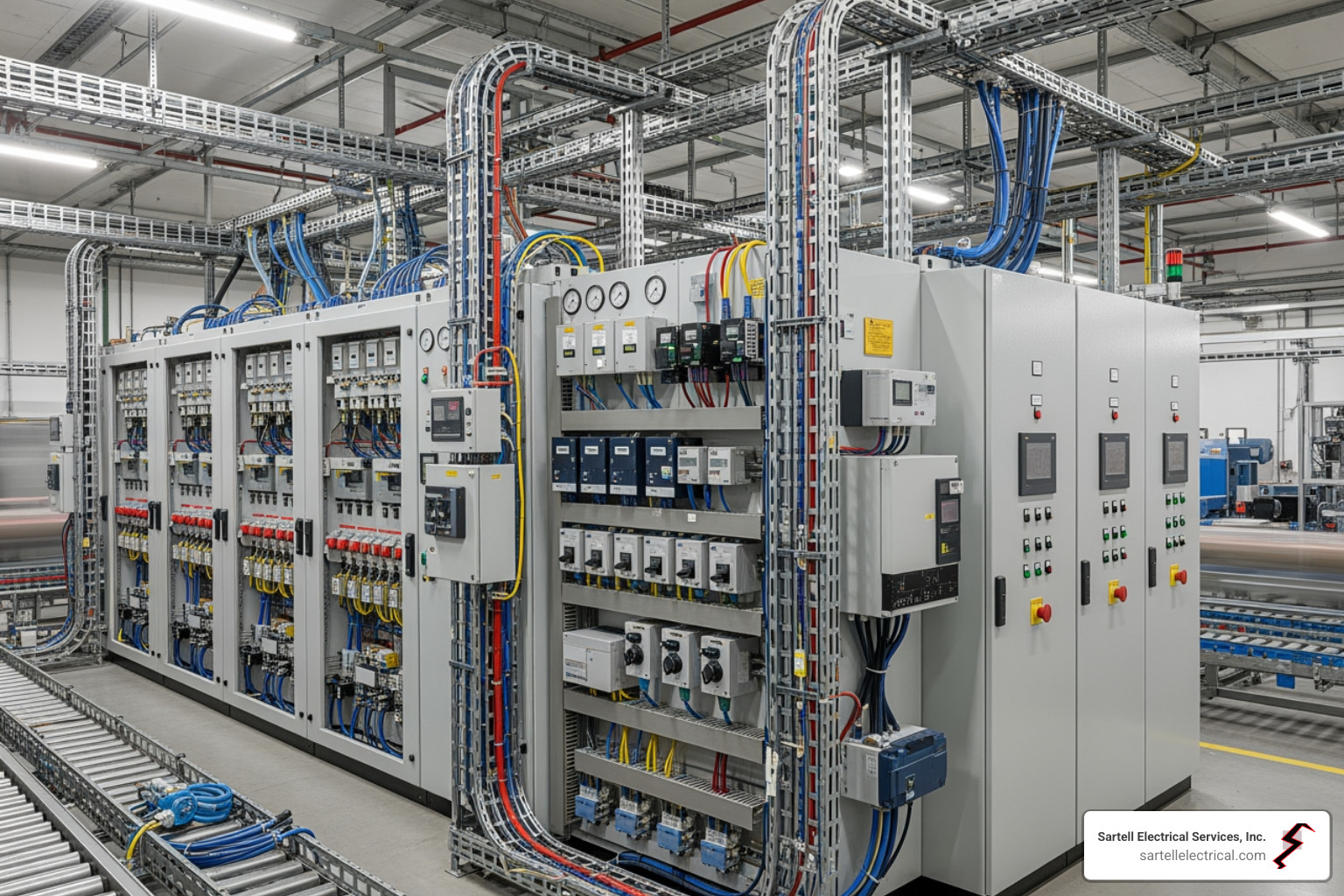 These projects involve high-voltage power distribution for heavy machinery, Motor Control Centers (MCCs), and PLC and SCADA systems for process control. The real complexity is in process integration—ensuring the electrical design works seamlessly with mechanical and automation systems. Our design-build approach allows designers and installers to collaborate, spotting conflicts early and creating systems that work in the real world.
Industrial environments also demand specialized safety features. Hazardous locations require explosion-proof equipment, while emergency power and backup generators are essential for uptime. Proper arc flash protection and grounding systems protect workers from deadly faults. These are not issues to be solved sequentially; they require the integrated thinking that design-build provides. Learn more on our Commercial and Industrial Electrician page.
These projects involve high-voltage power distribution for heavy machinery, Motor Control Centers (MCCs), and PLC and SCADA systems for process control. The real complexity is in process integration—ensuring the electrical design works seamlessly with mechanical and automation systems. Our design-build approach allows designers and installers to collaborate, spotting conflicts early and creating systems that work in the real world.
Industrial environments also demand specialized safety features. Hazardous locations require explosion-proof equipment, while emergency power and backup generators are essential for uptime. Proper arc flash protection and grounding systems protect workers from deadly faults. These are not issues to be solved sequentially; they require the integrated thinking that design-build provides. Learn more on our Commercial and Industrial Electrician page.
Safety and Code Compliance in the Design-Build Framework
Electrical codes are complex and non-negotiable. The good news is that safety and compliance are easier to achieve with an integrated design-build approach. We conduct hazard assessments and perform arc flash studies during the design phase, not as an afterthought. We design with lockout/tagout procedures in mind for safe maintenance. Our work strictly adheres to OSHA and NFPA 70E standards and NFPA 70 (the National Electrical Code). With decades of experience in Massachusetts, we know local Boston codes inside and out. Because compliance is baked into every decision, permitting is faster and there are fewer delays from code violations during construction.Projects Best Suited for the Design-Build Model
While versatile, Commercial electrical design build is especially effective for projects with complexity, tight timelines, or specialized needs. Ideal applications include:- New commercial construction and tenant improvements/retrofits
- Manufacturing facilities with automation, robotics, and heavy machinery
- Distribution and logistics hubs requiring sophisticated controls and lighting
- Data centers with redundant power and zero tolerance for downtime
- Healthcare facilities with life-safety systems and specialized equipment
- Multi-family residential buildings with complex systems and tight schedules
- Educational institutions and other specialized facilities like auto dealerships or cultivation operations
Selecting Your Boston Design-Build Partner
Choosing the right Commercial electrical design build partner in Boston is critical for your project's success. Here’s what to look for to separate a great partner from an average one.Key Qualifications for a Commercial Electrical Design-Build Contractor
When evaluating partners, you're choosing a team that will be deeply involved from start to finish. Key qualifications include:- A proven track record with projects similar to yours in the Boston area.
- In-house engineering and design capabilities, with licensed engineers and designers working alongside the construction team.
- Licensed and certified electricians who know Massachusetts and local Boston codes.
- Strong project management to keep timelines, communication, and coordination on track.
- Financial stability and proper insurance coverage to protect your investment.
- A strong safety record, reflected in their Experience Modification Rate (EMR).
- Deep knowledge of Massachusetts codes and permitting processes to streamline approvals.
Questions to Ask Potential Contractors
If a contractor is uncomfortable with detailed questions, that's a red flag. Here’s what you should ask to find a truly qualified partner:- "Can you show me examples of similar projects you've completed in the Boston area?" Ask to speak with past clients.
- "How do you keep clients informed, and who will be my main point of contact?" Look for clear answers on communication and reporting.
- "What are your BIM and 3D modeling capabilities?" These tools save time and money by preventing on-site conflicts.
- "What's your approach to budgeting, and how do you prevent cost overruns?" The answer should include value engineering and transparent pricing.
- "What is your process for handling scope changes or unforeseen issues?" A good partner can adapt without derailing the project.
- "Can you detail your safety program and provide your EMR?" Safety should be non-negotiable.
- "Can I have client references from recent Massachusetts projects?" Then, call them and ask about their experience.
Frequently Asked Questions about Commercial Electrical Design-Build
Is design-build more expensive than the traditional design-bid-build method?
No, Commercial electrical design build is often more cost-effective. The integrated process drastically reduces costly change orders that plague traditional projects. We implement value engineering from the start, and the accelerated schedule translates directly into savings by reducing overhead and financing costs. By working as one team, we continuously analyze cost and practical details, eliminating the miscommunications and rework that lead to budget overruns. We are all working toward the same goal: delivering your project on budget without compromising quality.How much control does the client have in a design-build project?
Clients have significant control and are integral members of the team. The collaborative nature of Commercial electrical design build ensures your vision, budget, and operational goals drive every decision from concept through commissioning. Instead of being handed a completed design, you are part of the conversation from the beginning. You can make adjustments to layouts, plan for future expansion, or optimize for energy efficiency when it matters most—during the design phase. You maintain control over the details while gaining the benefit of a single, accountable team acting as your advocate.Can design-build be used for smaller commercial projects?
Absolutely. The Commercial electrical design build model is scalable. The benefits of efficiency, cost control, and single-source accountability apply whether you're building a massive distribution center or upgrading a small retail space. We have successfully used this approach for projects of all sizes across Massachusetts. A smaller project still benefits from having an electrician involved during design to optimize layouts, identify code issues early, and ensure the electrical system supports the business without being overbuilt. The streamlined process and faster completion times make a difference on any budget.Conclusion: Building Boston's Future with Integrated Electrical Solutions
 After three decades of electrical work in Massachusetts, I know the best projects happen when everyone works together. That's the essence of Commercial electrical design build.
This integrated approach delivers faster timelines, predictable costs, and higher quality through single-source accountability. No more surprise change orders or conflicts between designers and builders. Just one team with one vision: getting your project done right.
The design-build model adapts to your needs, whether you're managing a large industrial facility, a tenant fit-out in downtown Boston, or a new healthcare clinic. It brings your entire project team together from day one to solve problems creatively and build systems that work for your business.
At Sartell Electrical Services, we build strategic partnerships. Since 1985, we've helped Boston-area businesses create electrical infrastructure that's not just reliable today, but ready for tomorrow. The commercial landscape in Boston is constantly evolving, and your electrical systems need a partner who understands both the technical complexities and your business goals.
Ready to see what true collaboration looks like on your next electrical project? We'd love to discuss your vision and show you how our design-build approach can make it a reality. Learn more about our commercial electrical contractor services in Boston, MA and let's start building something brilliant together.
After three decades of electrical work in Massachusetts, I know the best projects happen when everyone works together. That's the essence of Commercial electrical design build.
This integrated approach delivers faster timelines, predictable costs, and higher quality through single-source accountability. No more surprise change orders or conflicts between designers and builders. Just one team with one vision: getting your project done right.
The design-build model adapts to your needs, whether you're managing a large industrial facility, a tenant fit-out in downtown Boston, or a new healthcare clinic. It brings your entire project team together from day one to solve problems creatively and build systems that work for your business.
At Sartell Electrical Services, we build strategic partnerships. Since 1985, we've helped Boston-area businesses create electrical infrastructure that's not just reliable today, but ready for tomorrow. The commercial landscape in Boston is constantly evolving, and your electrical systems need a partner who understands both the technical complexities and your business goals.
Ready to see what true collaboration looks like on your next electrical project? We'd love to discuss your vision and show you how our design-build approach can make it a reality. Learn more about our commercial electrical contractor services in Boston, MA and let's start building something brilliant together.
Electrical service upgrades: 5 Crucial Signs
Why Modern Homes Need More Electrical Capacity
Electrical service upgrades are essential for increasing your home's power capacity, improving safety, and handling modern technology. Here's what you need to know: Top Benefits of an Electrical Service Upgrade:- Safety: Reduces risk of electrical fires, shocks, and overloaded circuits
- Capacity: Powers modern appliances like EV chargers, heat pumps, and smart home devices
- Home Value: Increases property resale value and appeal to buyers
- Compliance: Meets current electrical codes and insurance requirements
- Future-Proofing: Prepares your home for increasing electrical demands
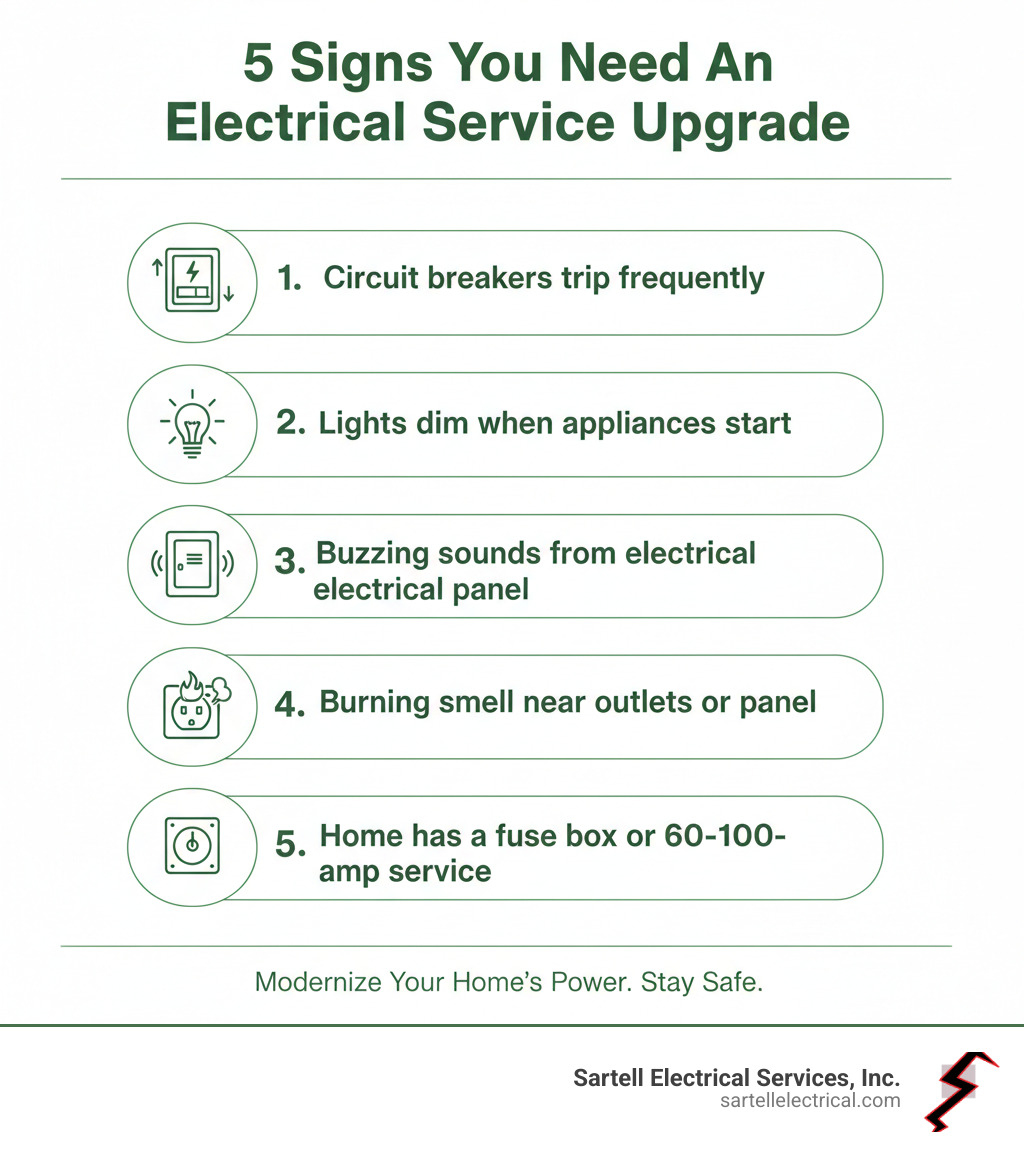
Why Your Home Might Need More Power: Signs and Triggers for an Upgrade
Our homes have changed dramatically. Where we once had a few appliances, we now have home offices, EV chargers, and sophisticated kitchen equipment. The electrical systems in older homes simply weren't built for this demand. Recognizing the signs that your system is overwhelmed is crucial for your family's safety.Common Reasons for Electrical Service Upgrades
An electrical service upgrade is usually triggered by a specific need. Here are the most common drivers we see:- Home Electrification: Adding an EV charger or a heat pump significantly increases your electrical needs. A Level 2 EV charger alone can use nearly half the capacity of a 100-amp service.
- Renovations and Additions: A kitchen remodel, basement finishing, or a new addition requires new circuits for lighting and appliances, often exceeding an old panel's capacity.
- Age: Electrical panels should be replaced every 20-30 years. If your home is over 25 years old, its system likely lacks modern safety features and wasn't designed for today's power loads.
- Unsafe Panels: Certain brands like Federal Pacific Electric or Zinsco are known fire hazards and require immediate replacement. Our team can help assess your system with our Home Electrical Panel Upgrade services.
- Cumulative Load: The combined power draw of gaming systems, multiple computers, and smart home devices can collectively strain an older electrical system.
Telltale Signs an Upgrade is Necessary
Your home will tell you when its electrical system is struggling. Look for these warning signs:- Flickering or Dimming Lights: A classic sign your system can't distribute power evenly, especially when large appliances turn on.
- Frequently Tripped Breakers: If you're constantly resetting breakers, your circuits are overloaded.
- Buzzing or Crackling Sounds: A healthy panel is silent. Any noise from your panel indicates a problem that requires immediate professional attention.
- Burning Smells: An emergency signal of overheating wires near outlets or your panel. This is an immediate fire risk; call an electrician right away.
- Outdated Fuse Box: Fuse boxes lack the safety features and capacity of modern breaker panels and should be upgraded.
- Overheating Outlets or Panel: Outlets or a panel that are warm to the touch are dangerously overloaded.
- Reliance on Extension Cords: A constant need for power strips suggests your home has insufficient outlets, which can overload circuits.
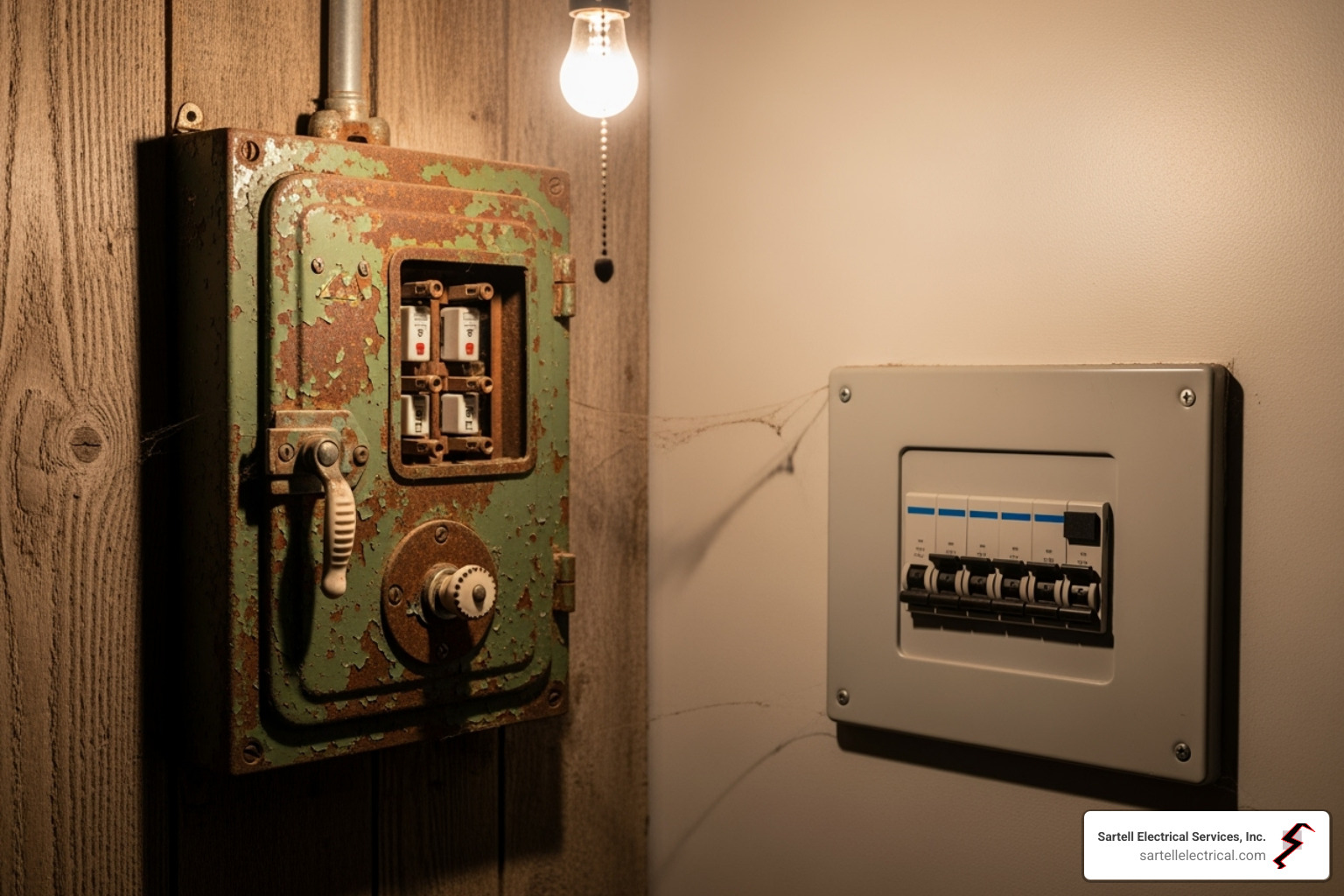 If you're experiencing any of these issues, it's time for a professional assessment. An electrical service upgrade is an investment in protecting your home and family.
Decoding Your Options: Amperage, Panels, and Associated Costs
When considering electrical service upgrades, it's helpful to understand the basics. Think of your electrical service as a highway to your home: amperage is the number of lanes, and the panel directs traffic. The first step is an electrical load calculation, where we determine how many lanes you need for your current and future power consumption. You can learn more about Residential Electrical Service Amps and how they impact your home.100-Amp vs. 200-Amp Service: What's Right for You?
Your service's amp rating determines the maximum electrical current that can flow into your home.- 60-Amp Service: This is completely outdated, unsafe, and requires an immediate upgrade.
- 100-Amp Service: Once the standard, this may still work for smaller homes with mostly gas appliances. However, adding a modern appliance like an EV charger or heat pump will push it to its absolute limit.
- 200-Amp Service: This is the modern standard for most homes. It comfortably handles all-electric appliances, hot tubs, and future technologies like solar panels. It's what we recommend for most upgrades.
- 400-Amp+ Service: Necessary for very large homes or properties with extensive electrical demands, such as multiple EV chargers or large workshops.
| Service Amperage | Typical Home Size | Appliance Load | Future Tech Suitability |
|---|---|---|---|
| 60-Amp | Very Small (Outdated) | Very Limited | None (Requires Upgrade) |
| 100-Amp | Small to Medium | Gas Appliances | Limited (Careful Planning) |
| 200-Amp | Most Modern Homes | All-Electric, Hot Tubs | Excellent (Standard) |
| 400-Amp+ | Very Large Homes | Extensive Demands | Superior |
Factors Influencing the Cost of Electrical Service Upgrades
A typical 200-amp service upgrade in Massachusetts costs between $2,000 and $4,500, but several factors affect the final price:- Labor and Location: Rates vary based on geographic area and job complexity.
- Panel Accessibility: Hard-to-reach panels in crawl spaces or finished walls increase labor time and cost.
- Underground Service: Upgrading can require expensive trenching and landscaping repairs.
- Additional Work: An upgrade often reveals the need for rewiring, a new grounding system, or whole-house surge protection.
- Permits and Utility Fees: Local permits are required. The utility company may also charge fees, especially if their transformer needs an upgrade, which can add significantly to the cost.
Modern Alternatives: Smart Panels and Load Management
While a full electrical service upgrade is the best long-term solution, some technologies can help manage existing capacity. Smart panels let you monitor usage and prioritize circuits, automatically pausing non-essential loads like an EV charger during peak demand. Simpler load management devices can also prevent overloads by allowing two appliances to share a circuit, but not run simultaneously. These are useful workarounds for adding a single large appliance, but they don't increase your home's total power—they are a temporary fix, not a cure for an undersized service.
The Anatomy of an Electrical Service Upgrade Project
An electrical service upgrade is a coordinated project involving your electrician, the utility company, and local inspectors. It typically takes 1-2 days of on-site work, with a planned power outage of several hours. This temporary inconvenience leads to decades of safer, more reliable power.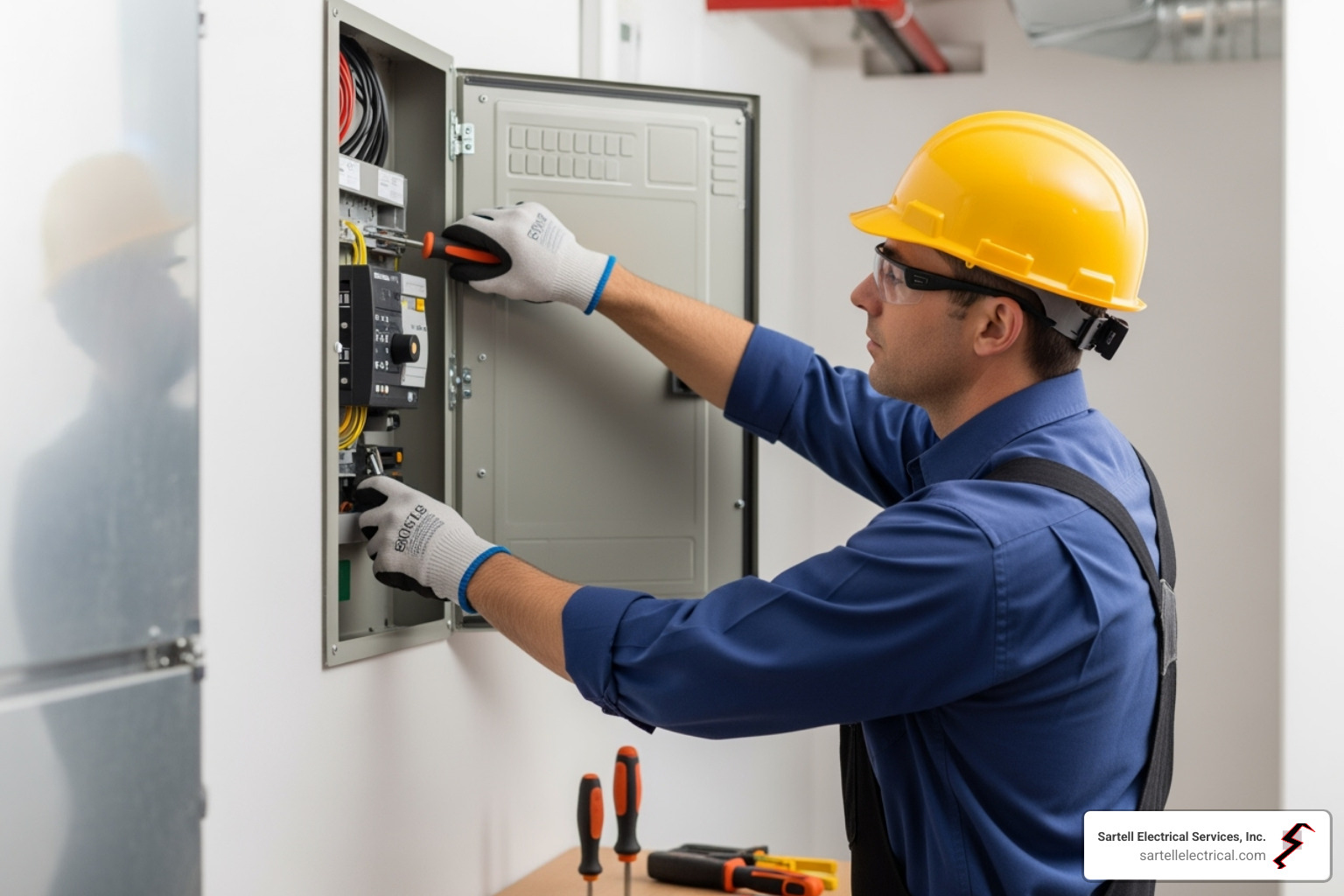
Preparing for the Upgrade: A Homeowner's Checklist
Preparation is key to a smooth project. Here’s what you can do:- Consult a Licensed Electrician: Start with a professional assessment of your current and future needs. Our Licensed Home Electrician team provides detailed, transparent estimates.
- Plan for Downtime: Your power will be out for several hours. Charge your devices, plan no-cook meals, and have flashlights ready.
- Clear the Work Area: Ensure the electrician has safe, unobstructed access to the panel and outdoor meter. Protect nearby furniture from dust.
- Bundle Projects: Consider adding other electrical work, like dedicated circuits or surge protection, at the same time to save on costs. We offer comprehensive Electrical Project Management to keep everything running smoothly.
Navigating Permits and Utility Company Coordination
A professional electrician handles the complex coordination for you. This includes:- Utility Company Coordination: We work with your utility (like Eversource or National Grid in Massachusetts) to schedule the safe disconnection and reconnection of power. They must approve the upgrade, and in some cases, may need to upgrade their own equipment, which can affect the project timeline and cost.
- Permits and Inspections: We obtain all necessary permits from your local building department. This ensures the work is done to code. After installation, a municipal inspector must approve the work before the utility company will finalize the new service. This process guarantees your new system is safe and legal.
The Professional's Role: Why DIY is Not an Option
An electrical service upgrade is absolutely not a DIY project. The risks are life-threatening and include electrocution and fire. Here's why you must hire a professional:- Extreme Danger: Professionals use specialized safety gear and follow strict protocols to manage high-voltage electricity safely.
- Code Complexity: A licensed electrician ensures your project complies with the complex and ever-changing National Electrical Code (NEC) and local regulations.
- Insurance & Liability: DIY electrical work can void your homeowner's insurance. Unpermitted work creates major legal and financial issues when you sell your home.
- Guaranteed Work: Professionals like our team at Sartell Electrical Services are licensed, insured, and provide warranties on labor and materials, giving you long-term peace of mind. Our MA Electricians Complete Guide highlights our commitment to quality.
The Long-Term Payoff: How an Upgrade Improves Your Home
An electrical service upgrade is an investment in your home's future. The benefits extend far beyond simply powering a new appliance.- Improved Safety: Modern panels include Arc Fault (AFCI) and Ground Fault (GFCI) protection to prevent shocks and fires. Replacing old, worn components eliminates hidden hazards, which may even lower your homeowner's insurance premiums.
- Increased Home Value: An updated 200-amp service is a major selling point for buyers. It signals a well-maintained home that is ready for modern technology like EVs and smart devices.
- Future-Proofing: The world is electrifying. Heat pumps, induction cooktops, and electric vehicles are becoming standard. A service upgrade prepares your home for these technologies without needing another major overhaul later. Learn more about the move toward home electrification.
- Enabling Renewables: If you're considering solar panels or battery storage, an upgraded panel is often a prerequisite to handle the additional electrical loads and integration points.
- Improved Efficiency: Old, inadequate wiring creates resistance, wasting electricity as heat. A new system with modern components runs more efficiently.
Frequently Asked Questions about Electrical Upgrades
After three decades of performing electrical service upgrades in Massachusetts, we've heard every question. Here are answers to the most common ones.How long does an electrical service upgrade take?
The on-site work at your home typically takes 1 to 2 days. The power outage itself is usually concentrated to just several hours on one of those days. However, the entire project timeline, from the initial consultation to the final inspection, can take several weeks. This is due to the time required for permit processing and coordinating schedules with your local utility company.Can an electrical upgrade lower my homeowner's insurance?
Yes, it often can. Insurance companies view outdated electrical systems as a significant fire risk. When you upgrade to a modern, code-compliant panel, you reduce this risk, which can lead to lower premiums. We recommend you contact your agent before the project to ask about potential discounts and provide them with the final inspection certificate afterward.What is a subpanel and do I need one?
A subpanel is a smaller, secondary electrical panel that gets power from your main panel. It's used to add more circuit breaker slots for a specific area, like a finished basement, workshop, or home addition. However, a subpanel does not increase the total amount of power coming into your home. If your main service is already overloaded, you need a full electrical service upgrade, not just a subpanel. We can help you determine the right solution, whether it's a subpanel or a full Breaker Panel Upgrade.Conclusion
An electrical service upgrade is a crucial investment in your home's safety, value, and future-readiness. In a world of EVs, heat pumps, and smart technology, your home needs an electrical system that can keep up safely. This guide has shown the warning signs of an overloaded system and explained the process and benefits of an upgrade. The most important takeaway is that this work protects your family and prepares your home for decades to come. For homeowners throughout Massachusetts, Sartell Electrical Services offers expert Residential Electrical Services backed by nearly 40 years of experience. We ensure your home is powered safely and reliably. Don't wait for a minor issue to become a major hazard. Contact our team of expert electrical contractors in the Boston, MA area today! Let's create a solution that gives you the power and peace of mind you deserve.200 Amp Service Upgrade: Essential for 2025
Why Your Home's Electrical System Matters More Than Ever
 A 200 amp service upgrade involves replacing your home's main electrical panel and service cables to increase its electrical capacity from a lower amperage (like 100 amps) to 200 amps. This upgrade enables your home to safely power modern appliances, EV chargers, and smart home devices simultaneously, preventing overloaded circuits and tripped breakers.
Quick Answer: Is a 200 Amp Service Upgrade Right for You?
You likely need a 200 amp service upgrade if:
A 200 amp service upgrade involves replacing your home's main electrical panel and service cables to increase its electrical capacity from a lower amperage (like 100 amps) to 200 amps. This upgrade enables your home to safely power modern appliances, EV chargers, and smart home devices simultaneously, preventing overloaded circuits and tripped breakers.
Quick Answer: Is a 200 Amp Service Upgrade Right for You?
You likely need a 200 amp service upgrade if:
- Your breakers trip frequently when running multiple appliances
- You're adding an EV charger, hot tub, or other high-power equipment
- Your home has an outdated fuse box or 60-100 amp panel
- You're planning a major renovation or home addition
- Your lights dim when large appliances turn on
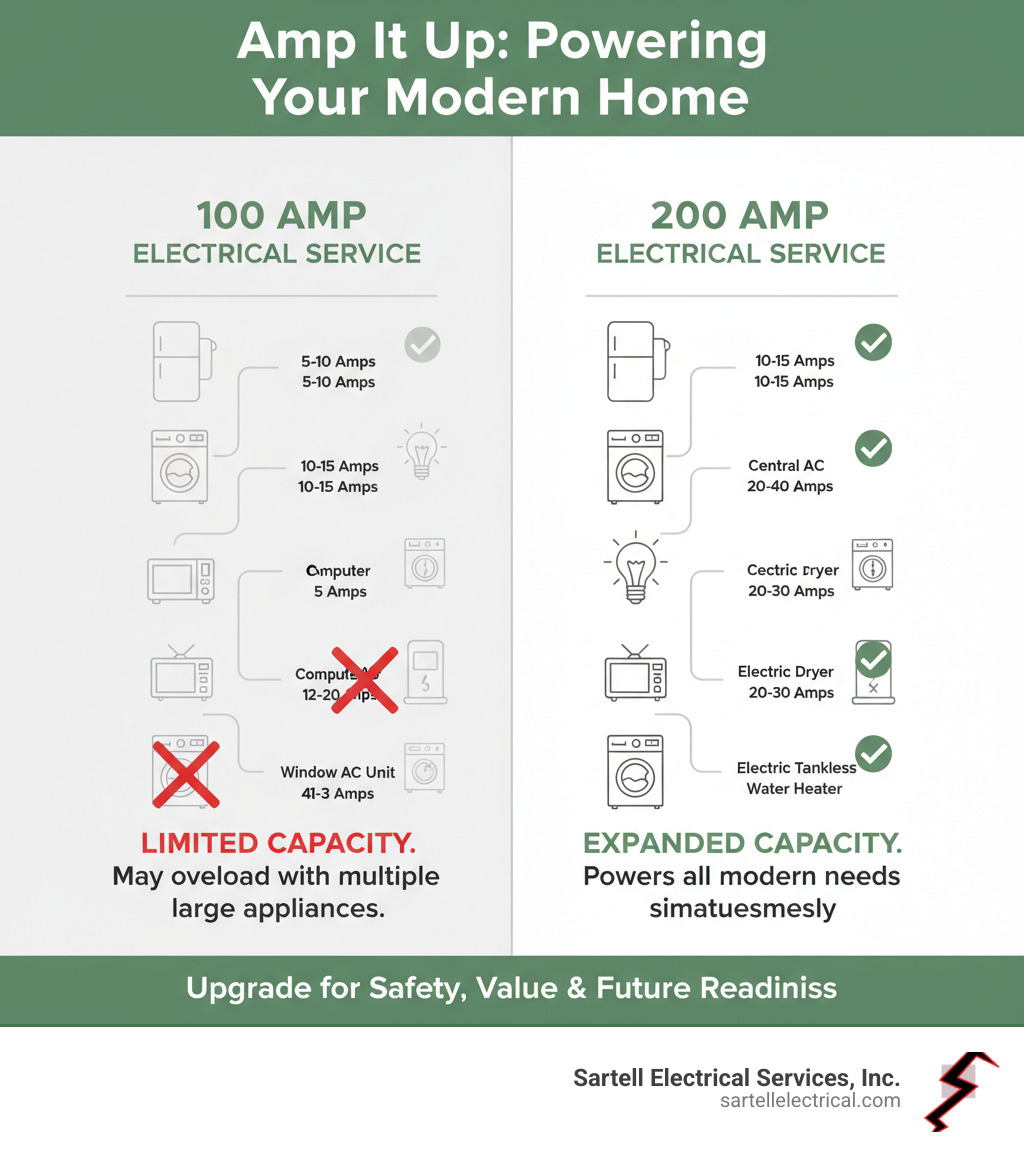
Understanding 200-Amp Service: The New Standard for Modern Homes
Amperage, or "amps," measures the flow of electrical current into your home. Think of it like a water pipe: a bigger pipe allows more water through. A 200 amp service upgrade essentially doubles the size of your home's electrical "pipe" from the old 100-amp standard. A 100-amp service provides about 24,000 watts of power, which was sufficient for homes in the 1980s. Today, with high-demand appliances, that's often not enough. A 200-amp service delivers 48,000 watts, providing ample power for modern needs. For example, a Level 2 EV charger can use 40-50 amps, an electric dryer 30 amps, and central air 20-30 amps. These can quickly max out a 100-amp system. That's why 200 amps is the new standard. It's not a luxury; it's a necessity for meeting today's electrical demands and future-proofing your home for additions like solar panels or backup generators. A 200 amp service upgrade provides the capacity to grow. For a detailed look at the investment, see our guide on Home Electrical Panel Upgrade Cost.Signs Your Current Electrical Service is Insufficient
Your home will give you warning signs when its power capacity is too low. Don't ignore them:- Frequent breaker trips: If running the microwave and toaster at the same time causes a trip, your panel is overloaded.
- Flickering or dimming lights: When large appliances turn on and lights dim, it means your system is strained.
- Outdated fuse box: Fuse boxes are obsolete technology and lack modern safety features. A Fuse Box Replacement is a critical safety upgrade.
- Overheating outlets or switches: Outlets that are hot to the touch or show scorch marks are a serious fire hazard.
- Buzzing sounds from your electrical panel: A properly working panel is silent. Buzzing can indicate loose connections or an overloaded circuit.
- Reliance on extension cords: If you depend on power strips because you lack outlets, your electrical infrastructure is outdated.
- Planning major additions: An EV charger, hot tub, or home addition requires a capacity assessment. You can use this residential load calculator to assess your needs and see where you stand.
Key Benefits of Upgrading
 A 200 amp service upgrade offers more than just convenience. Here are the key benefits:
- Increased Capacity: Run multiple high-power appliances simultaneously without worry. No more "appliance roulette."
- Improved Safety: Modern 200-amp panels include advanced safety features like Arc Fault (AFCI) and Ground Fault (GFCI) circuit interrupters, which protect against electrical fires and shock.
- Fire Risk Reduction: Upgrading an old, undersized panel is one of the most effective ways to reduce the risk of an electrical fire in your home.
- Increased Home Value: A modern 200-amp service is a major selling point for homebuyers, signaling that a home is well-maintained and ready for their needs.
- Energy Efficiency: A properly sized system distributes power more effectively and allows for the seamless integration of energy-saving technologies.
- Code Compliance: An upgrade brings your home's electrical system up to the current National Electrical Code (NEC) standards, which is important for insurance, permits, and safety.
The Anatomy of a 200 Amp Service Upgrade
A 200 amp service upgrade is a complex job that must be performed by a licensed electrician to comply with the National Electrical Code (NEC) and ensure your family's safety. At Sartell Electrical Services, we've been performing these upgrades in Massachusetts for over 30 years, adhering to the highest standards. For a deeper dive, see our Main Electrical Panel Upgrade Complete Guide.
Step 1: Professional Assessment and Planning
A successful upgrade begins with a thorough plan. Our process includes:- Initial Consultation: We discuss your current electrical issues and future plans, like adding an EV charger or finishing a basement.
- Load Calculation: We perform a precise calculation of your home's total electrical load to confirm that 200 amps is the right size for your needs. You can get a preliminary idea using this residential load calculator.
- System Evaluation: We inspect your existing panel, meter, service cables, and grounding system to identify any outdated or unsafe components.
- Panel Location Assessment: We determine the best location for the new panel based on accessibility and code requirements.
- Service Type Review: We identify whether you have overhead or underground service, as this impacts the scope and cost of the project.
- Challenge Identification: We look for potential issues, like old wiring or structural constraints, to ensure a smooth installation. A full review of your Residential Electrical Service is key.
Step 2: Permits, Inspections, and Utility Coordination
We handle all the administrative work for you. This is a critical part of the process that ensures your upgrade is safe and legal.- Permitting: A 200 amp service upgrade requires a permit from your local Massachusetts building department. We manage the entire application process to ensure full compliance. An electrician who suggests skipping permits is a major red flag.
- Utility Coordination: We work directly with your utility company to schedule a power disconnection on the day of the upgrade. This appointment can take 2-4 weeks to schedule, so planning ahead is essential. The power will be off for 4-8 hours during the installation. The utility may also need to assess their equipment to support the increased load.
Step 3: The Upgrade Process
On installation day, our team executes the plan efficiently and safely.- Power Shut-Off: The utility company disconnects power to your home to ensure a safe work environment.
- Old Panel Removal: We carefully remove your old panel and label every circuit.
- New 200-Amp Panel Installation: We install the new, modern panel, which includes advanced safety features like AFCI and GFCI breakers.
- Service Entrance Cable Replacement: We replace the old, smaller wires with new, larger cables rated for 200 amps.
- Meter Base Upgrade: We often replace the meter base to accommodate the higher amperage and meet current codes.
- Grounding System Update: We upgrade your home's grounding system to meet modern safety standards, protecting against shock and fire.
- Final Inspection & Reconnection: A local electrical inspector must approve the work. Once it passes, we coordinate with the utility company to restore your power.
Cost and Value: What to Expect
Let's talk numbers. A 200 amp service upgrade is an investment, and you deserve to understand what goes into the cost. Nationally, most homeowners pay between $1,500 and $4,000 for a complete upgrade, though complex situations can push costs higher. What makes one upgrade cost more than another? Several factors come into play. Labor costs represent a large portion of the bill, covering the licensed electricians with specialized training to work safely. Material costs include the new 200-amp panel, breakers, and cables. Permit fees vary by municipality, and the complexity of your job (like having underground service) also affects the price. For a detailed breakdown, check out our guide on Change Electrical Panel from 100 to 200 Cost.| Cost Factor | Typical Range | Notes |
|---|---|---|
| Total Project Cost | $1,500 - $4,000+ | Varies significantly based on job complexity |
| Labor | $800 - $2,500 | Licensed electrician rates, includes utility coordination |
| Materials | $400 - $1,200 | Panel, breakers, cables, meter base, grounding equipment |
| Permits & Inspections | $150 - $400 | Varies by Massachusetts municipality |
| Service Type | Varies | Underground service typically costs more than overhead |
| Additional Wiring | $500 - $2,000+ | If existing wiring needs updates to handle new capacity |
How an Upgrade Boosts Home Value and Safety
This upgrade is about more than just cost; it's about adding tangible value and protection.- Improved Safety: The primary benefit is eliminating the fire risk associated with overloaded, outdated electrical systems. Modern panels include AFCI and GFCI protection to prevent fires and electrical shock.
- Return on Investment: Real estate experts agree that an upgraded electrical system increases home value. It's a key feature for today's homebuyers, who expect a home to be ready for EV chargers and smart technology.
- Increased Buyer Appeal: A 200-amp panel signals to potential buyers that your home is modern, safe, and move-in ready, which can lead to a faster sale at a better price.
- Insurance Benefits: Many insurance companies offer lower premiums for homes with updated, code-compliant electrical systems and may even require an upgrade for coverage on older homes.
Why Your Home's Electrical System Matters More Than Ever
A 200 amp service upgrade increases your home's electrical capacity (typically from 60–100 amps to 200 amps) by replacing the main panel and service entrance cables. The result is safer, reliable power for modern loads like EV chargers, HVAC, and smart home tech—without nuisance trips. Quick Answer: Is a 200 Amp Service Upgrade Right for You?- Breakers trip when multiple appliances run
- You're adding an EV charger, hot tub, or other high-power equipment
- Your home has a fuse box or 60–100 amp panel
- You're planning a renovation or addition
- Lights dim when large appliances start
Understanding 200-Amp Service: The New Standard for Modern Homes
Amperage is the amount of electrical current your home can draw—more amps mean more available power. Moving from 100 amps (about 24,000 watts) to 200 amps (about 48,000 watts) is now the practical standard, especially with EV chargers, electric dryers, central air, and other high-demand appliances. For costs, see Home Electrical Panel Upgrade Cost.Signs Your Current Electrical Service is Insufficient
- Frequent breaker trips or the need to juggle appliances
- Dimming/flickering lights when large loads start
- Outdated fuse box (consider a Fuse Box Replacement)
- Warm or scorched outlets/switches; buzzing at the panel
- Heavy reliance on power strips/extension cords
- Planning an EV charger, hot tub, or addition
- Not sure? Use this residential load calculator to assess your needs and see where you stand: https://douglashelmer.com/calculators/electrical/residential-service/index.htm
Key Benefits of Upgrading
- Increased capacity for simultaneous high-demand use
- Modern safety (AFCI/GFCI) and reduced fire risk
- Higher buyer appeal and potential home value boost
- Better integration of energy-saving and smart-home tech
- Code compliance today and flexibility for tomorrow
The Anatomy of a 200 Amp Service Upgrade
A 200 amp service upgrade is not DIY. It involves high-voltage work, strict National Electrical Code (NEC) compliance, permits, and utility coordination. For a full overview, see our Main Electrical Panel Upgrade Complete Guide.Step 1: Professional Assessment and Planning
- Initial consultation: current issues and future plans (EVs, additions)
- Load calculation to confirm 200 amps is right for your home
- System evaluation: panel, meter, service cables, grounding
- Panel location checked for accessibility and code compliance
- Service type review (overhead vs. underground) and scope/cost impacts
- Identify challenges (space constraints, old wiring, etc.)
- Learn more about your Residential Electrical Service
Step 2: Permits, Inspections, and Utility Coordination
- We obtain required permits and schedule inspections
- We coordinate with your utility to disconnect/reconnect service
- Typical outage is 4–8 hours on installation day; scheduling may take 2–4 weeks
- For panel specifics, visit our Breaker Panel Upgrade page
Step 3: The Upgrade Process
- Utility shut-off for safe work conditions
- Remove old panel, label circuits, install the new 200-amp panel
- Replace service entrance cables and upgrade meter base if needed
- Update grounding and bonding to current code
- Pass inspection, then restore power with the utility
- For wiring details, see Residential Main Panel Wiring
Cost and Value: What to Expect
Most homeowners spend $1,500–$4,000 for a complete 200 amp service upgrade, depending on labor, materials, permits, access, and whether the service is overhead or underground. For a deeper breakdown, see Change Electrical Panel from 100 to 200 Cost. Typical cost components:- Labor: largest portion of the project
- Materials: 200-amp panel, breakers, cables, meter base, grounding
- Permits/inspections: varies by municipality
- Complexity: underground service, long meter-to-panel runs, or remediation of outdated wiring increase costs
How an Upgrade Boosts Home Value and Safety
- Safety: modern AFCI/GFCI protection and reduced fire risk
- Buyer appeal: move-in-ready capacity for EVs and smart tech
- Insurance: updated, code-compliant systems may improve eligibility and rates
- Future-proofing: room for renovations, solar, backup power
Industrial electrician Lowell: Powering Your 2025 Future
Why Industrial Electrical Work Requires Specialized Expertise
When you need an Industrial electrician Lowell, you're dealing with complex electrical systems that go far beyond typical residential or commercial work. Industrial facilities require specialized knowledge of high-voltage systems, heavy machinery, and strict safety protocols. Key Industrial Electrical Services in Lowell:- Motor control systems and industrial equipment wiring
- High-voltage power distribution and panel upgrades
- Preventative maintenance programs for manufacturing equipment
- Emergency electrical repairs with 24/7 availability
- Energy efficiency upgrades and LED factory retrofits
- Backup generator installation and maintenance
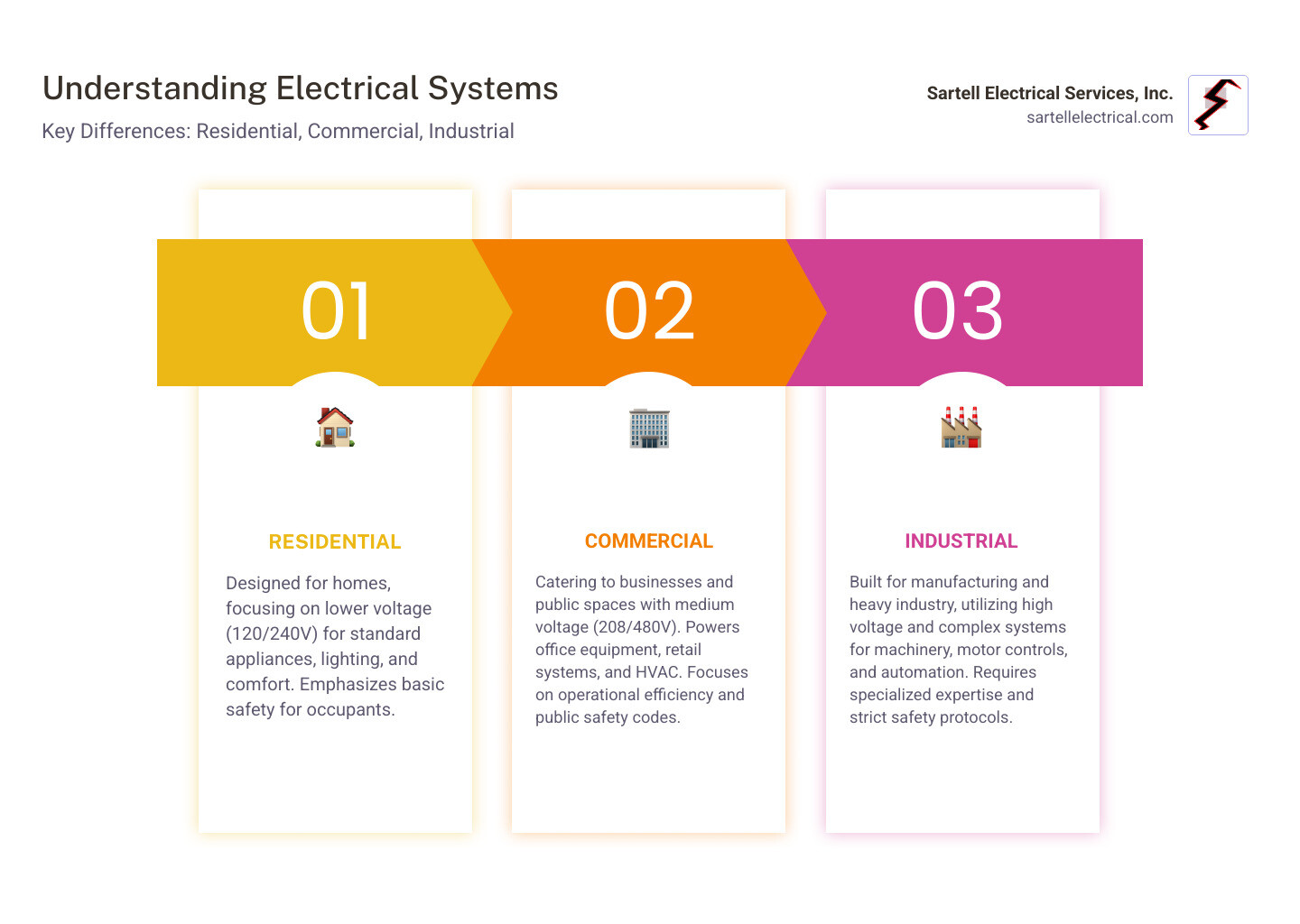 Glossary for Industrial electrician Lowell:
Core Industrial Electrical Services for Lowell Facilities
When it comes to industrial electrical needs in Lowell, we understand that "one size fits all" simply doesn't apply. Industrial facilities, whether they are manufacturing plants, warehouses, or processing centers, have unique demands that require a specific skill set and extensive experience. Our services are custom to keep your operations running smoothly, efficiently, and safely. At the heart of any industrial operation are the machines that drive production. This means we are experts in heavy equipment wiring, ensuring that your machinery receives the precise power it needs to function optimally. This includes everything from installing new production lines to rerouting power for existing heavy-duty equipment. We handle the complex wiring that powers your entire facility, from the smallest motor to the largest piece of industrial machinery.
Motor controls and repair are another cornerstone of our industrial expertise. Industrial motors are the workhorses of many Lowell businesses, and when they falter, production grinds to a halt. We provide comprehensive services for motor control systems, including installation, calibration, troubleshooting, and repair. Our goal is to minimize downtime and extend the lifespan of your critical equipment, ensuring that your industrial motors are always operating at peak performance. For example, local experts have highlighted the importance of industrial motor repair as a key service in the Lowell area, underscoring the common need for such specialized attention.
Power distribution systems are the circulatory system of your industrial facility. We design, install, and maintain robust power distribution networks that can handle the significant loads and complex demands of industrial operations. This includes everything from main service panels and transformers to sub-panels and circuit breakers. We ensure that power is distributed evenly and safely throughout your facility, preventing issues like voltage drops and surges that can damage sensitive equipment.
In today's advanced industrial landscape, automation and control systems are increasingly vital. These systems rely on intricate electrical connections and precise programming. We have the technical know-how to install, integrate, and maintain these complex systems, from programmable logic controllers (PLCs) to supervisory control and data acquisition (SCADA) systems. Our expertise helps you leverage automation to boost efficiency and productivity.
Beyond reactive repairs, we strongly advocate for preventative maintenance programs. Regular maintenance is not just a good idea; it's a necessity for industrial electrical systems. These programs involve routine inspections, testing, and proactive repairs to identify and address potential issues before they escalate into costly breakdowns. This approach extends the life of your equipment, reduces unexpected downtime, and ensures continuous operation. For a comprehensive look at how we can support your facility, explore our range of Industrial Electrical Services.
At the heart of any industrial operation are the machines that drive production. This means we are experts in heavy equipment wiring, ensuring that your machinery receives the precise power it needs to function optimally. This includes everything from installing new production lines to rerouting power for existing heavy-duty equipment. We handle the complex wiring that powers your entire facility, from the smallest motor to the largest piece of industrial machinery.
Motor controls and repair are another cornerstone of our industrial expertise. Industrial motors are the workhorses of many Lowell businesses, and when they falter, production grinds to a halt. We provide comprehensive services for motor control systems, including installation, calibration, troubleshooting, and repair. Our goal is to minimize downtime and extend the lifespan of your critical equipment, ensuring that your industrial motors are always operating at peak performance. For example, local experts have highlighted the importance of industrial motor repair as a key service in the Lowell area, underscoring the common need for such specialized attention.
Power distribution systems are the circulatory system of your industrial facility. We design, install, and maintain robust power distribution networks that can handle the significant loads and complex demands of industrial operations. This includes everything from main service panels and transformers to sub-panels and circuit breakers. We ensure that power is distributed evenly and safely throughout your facility, preventing issues like voltage drops and surges that can damage sensitive equipment.
In today's advanced industrial landscape, automation and control systems are increasingly vital. These systems rely on intricate electrical connections and precise programming. We have the technical know-how to install, integrate, and maintain these complex systems, from programmable logic controllers (PLCs) to supervisory control and data acquisition (SCADA) systems. Our expertise helps you leverage automation to boost efficiency and productivity.
Beyond reactive repairs, we strongly advocate for preventative maintenance programs. Regular maintenance is not just a good idea; it's a necessity for industrial electrical systems. These programs involve routine inspections, testing, and proactive repairs to identify and address potential issues before they escalate into costly breakdowns. This approach extends the life of your equipment, reduces unexpected downtime, and ensures continuous operation. For a comprehensive look at how we can support your facility, explore our range of Industrial Electrical Services.
Specialized Installations and Upgrades
The industrial sector is constantly evolving, requiring electrical systems that can keep pace with new technologies and demands. We offer a range of specialized installations and upgrades to modernize your facility and improve its capabilities. High-voltage systems are common in industrial settings, powering heavy machinery and large operations. Our team is trained and equipped to safely work with and install these powerful systems, ensuring compliance with all safety protocols and regulations. We understand the intricacies of managing and distributing high-voltage power efficiently and securely. To protect your operations from unexpected power outages, we provide backup generator installation services. Whether you need a small standby generator for critical systems or a large-scale solution to power your entire facility during an outage, we can design and install a system that meets your specific needs. Many electrical contractors emphasize generator installations, highlighting their importance for business continuity. Industrial lighting retrofits are a smart investment for many Lowell businesses. Upgrading to energy-efficient LED lighting can significantly reduce energy consumption, improve visibility, and improve safety within your facility. We specialize in designing and implementing these retrofits, helping you cut operational costs and create a brighter, more productive environment. Industrial lighting upgrades and LED factory retrofits are common services offered in the area, demonstrating the need and benefit of these services. As the world shifts towards sustainable transportation, EV charging stations for commercial fleets are becoming increasingly relevant for industrial facilities. If your business operates a fleet of electric vehicles or plans to in the future, we can install the necessary charging infrastructure to support your operations. This includes everything from standard Level 2 chargers to rapid DC fast chargers, designed to handle the demands of commercial use. This is a growing area, with many electrical contractors now providing EV charging station installations. Finally, in an age of data-driven operations, reliable data and telecom wiring is crucial. We provide expert installation and maintenance of low-voltage wiring for your communication networks, ensuring seamless connectivity for your industrial processes, IT infrastructure, and security systems. Many electrical service providers highlight data and phone installations as part of their comprehensive commercial services, emphasizing their importance in modern facilities.Common Electrical Challenges in Lowell's Industrial Sector
If you've ever managed an industrial facility in Lowell, you know that electrical problems don't announce themselves politely. One day everything's running smoothly, and the next day you're dealing with a production line shutdown that's costing you thousands of dollars per hour. System overloads are probably the most frustrating challenge we see in Lowell's industrial facilities. As businesses grow and add new equipment, their electrical systems often can't keep up with the increased demand. What starts as an occasional circuit breaker trip quickly becomes a daily headache. These overloads aren't just inconvenient - they're dangerous. Overloaded systems can overheat, damage expensive equipment, or even start fires. Many of Lowell's industrial buildings have been around for decades, which brings us to another major issue: outdated infrastructure. While these sturdy buildings have served businesses well, their electrical systems often haven't kept pace with modern technology. Old wiring, aging panels, and obsolete components create a perfect storm of inefficiency and risk. It's like trying to run today's high-tech equipment on yesterday's electrical foundation. Power quality issues might sound technical, but they have very real consequences for your bottom line. Voltage sags, swells, and harmonics can make your sensitive industrial equipment act up in ways that are hard to predict. Your machinery might malfunction, wear out faster, or produce inconsistent results. The worst part? These problems often happen gradually, so you might not realize what's causing your productivity issues. Safety compliance gaps keep facility managers up at night - and for good reason. Industrial environments must meet strict electrical codes and OSHA standards. Even well-intentioned businesses sometimes miss specific requirements or fail to keep up with code updates. Non-compliance puts your workers at risk and can result in hefty fines that nobody wants to explain to upper management. Then there's inefficient energy use, which is like having a leak in your budget that never gets fixed. Outdated lighting, inefficient motors, and poorly maintained electrical systems consume far more energy than necessary. With today's energy costs, these inefficiencies add up to real money over time. Frequent breaker trips are often the symptom that finally gets our phone ringing. Whether caused by overloads, short circuits, or ground faults, these interruptions bring operations to a grinding halt and signal that bigger problems are brewing beneath the surface.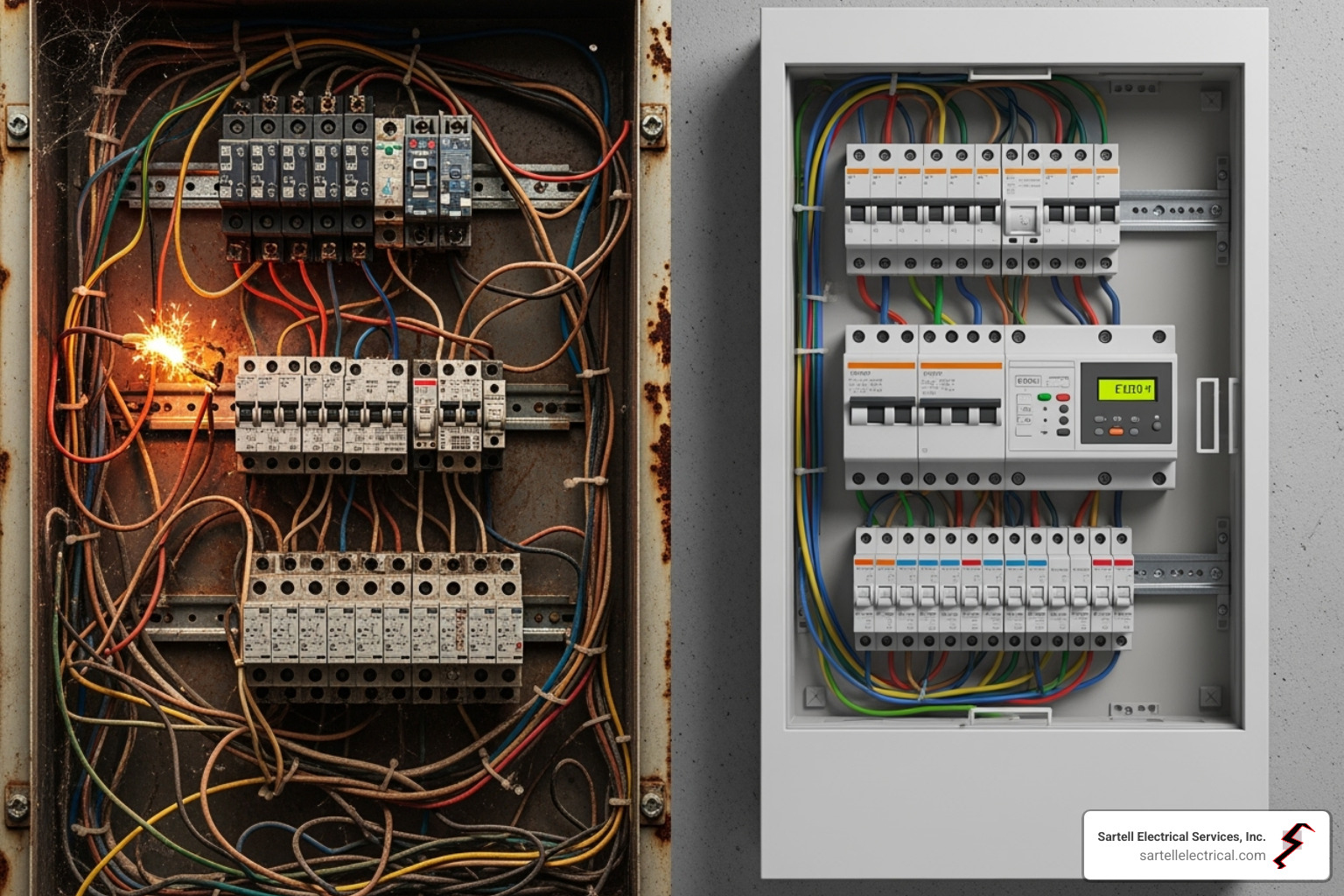
How a Professional Industrial Electrician in Lowell Solves These Issues
When electrical problems start affecting your operations, it's tempting to look for quick fixes. But industrial electrical issues require a systematic approach that addresses root causes, not just symptoms. That's where an experienced Industrial electrician Lowell makes all the difference. We start every project with electrical system audits because you can't fix what you don't understand. During these comprehensive inspections, we examine everything from your main service entrance to individual machine connections. This detective work helps us identify the real culprits behind problems like overloads, power quality issues, and energy waste. It's amazing how often what seems like a simple problem turns out to have multiple contributing factors. Panel upgrades and replacements are often the foundation of solving industrial electrical problems. Modern panels handle higher loads more safely and efficiently than older systems. When we upgrade your electrical panel, we're essentially giving your facility a stronger backbone that can support current operations and future growth. It's an investment that pays dividends in reliability and safety. For equipment that needs consistent, uninterrupted power, we install dedicated circuits. This prevents your critical machinery from competing with other equipment for power, eliminating those frustrating trips and ensuring stable operation when you need it most. Power factor correction might sound complicated, but it's actually a straightforward way to improve both energy efficiency and power quality. This is especially valuable for facilities with lots of large motors. By optimizing your power factor, we reduce energy waste, lower utility bills, and improve overall system performance. We're always looking for energy-efficient solutions that make sense for your specific operation. This goes beyond just LED lighting upgrades to include optimizing motor controls, installing variable frequency drives, and implementing smart energy management systems. These improvements not only save money but also create a more sustainable operation that you can feel good about. Every facility presents unique challenges, and we take pride in developing solutions that work for your specific situation. Whether it's a complex retrofit or a complete system overhaul, our goal is to deliver lasting improvements to your operational efficiency and safety. You can see examples of how we've tackled similar challenges by visiting Our Projects.Ensuring Safety and Compliance: A Priority for Your Industrial Electrician in Lowell
When you're running an industrial facility in Lowell, safety isn't something you can take lightly. We've seen how quickly things can go wrong in industrial settings – and the consequences are always serious. That's why adherence to codes forms the backbone of everything we do as your Industrial electrician Lowell. Think about it: your facility likely has high-voltage systems, heavy machinery, and dozens of workers depending on safe electrical systems every single day. One electrical fault could mean injured employees, damaged equipment worth thousands of dollars, or even a complete production shutdown. We don't just want to prevent these scenarios – we're committed to making them virtually impossible. Our approach centers on risk mitigation from the very beginning of any project. Before we even pick up a tool, we're thinking about potential hazards and how to eliminate them. This means proper grounding systems, appropriate safety devices, and wiring methods that meet the highest standards. We're not just fixing today's problems; we're preventing tomorrow's disasters. Protecting assets and personnel goes hand in hand with smart electrical design. Your expensive manufacturing equipment needs clean, stable power to operate correctly. Your workers need systems they can trust. We design and install electrical systems that deliver both, giving you peace of mind and reliable operation. Here's something many facility managers overlook: proper documentation and permitting isn't just bureaucratic red tape. It's your legal protection and proof that your systems meet all safety requirements. We handle all the paperwork, inspections, and documentation so you can focus on running your business while staying completely compliant.Navigating Electrical Codes and Regulations
The world of electrical codes can feel overwhelming, especially when you're trying to run a business. Between federal standards, state requirements, and local regulations, it's easy to miss something important. That's where our expertise really shines. The National Electrical Code (NEC) is our starting point for every project. This comprehensive standard covers everything from basic wiring methods to complex industrial installations. We don't just meet NEC requirements – we exceed them whenever possible. The code gets updated every three years, and we stay current with every change so your facility benefits from the latest safety improvements. OSHA standards add another crucial layer of protection, focusing specifically on workplace safety. These regulations cover electrical safety programs, proper training requirements, and the personal protective equipment your workers need. We work closely with your team to ensure everyone understands these requirements and follows them consistently. Don't forget about local Lowell permitting requirements. While the NEC provides national standards, your local municipality may have additional requirements or specific procedures you need to follow. We know Lowell's permitting process inside and out, which means no delays or surprises during inspections. One area we take especially seriously is Lockout/Tagout procedures. These protocols prevent accidental equipment startup during maintenance work – a critical safety measure that has prevented countless injuries over the years. We'll train your maintenance team on proper procedures and help you develop systems that protect everyone working on or around electrical equipment. For detailed information about the licensing requirements that ensure your electrician has the proper training and credentials, you can check the Massachusetts electrician licensing requirements. These standards help guarantee that the person working on your critical systems has the knowledge and experience to do the job safely and correctly.Why Hire a Local, Experienced Professional?
When your industrial facility needs electrical work, you might wonder whether it matters who you call. The truth is, choosing a local, experienced Industrial electrician Lowell makes all the difference in the world – and we're here to show you why. Picture this: it's 2 AM on a Tuesday, and your main production line just went dark. Every minute that passes means lost revenue, missed deadlines, and frustrated customers. This is exactly when you'll appreciate having a local team that can respond quickly. Being Massachusetts-based means we can get to your Lowell facility fast, whether it's an emergency or routine maintenance.
There's something invaluable about familiarity with local infrastructure that you simply can't get from an out-of-town contractor. We know Lowell's industrial landscape like the back of our hand – from the quirks of older mill buildings to the specific challenges of newer manufacturing facilities. We understand how the local power grid behaves, what types of electrical issues are common in the area, and how to steer the unique characteristics of New England's industrial buildings.
When you hire us, you're also supporting the local economy. We're not just passing through town looking for quick jobs – we're invested in this community. Our success depends on building lasting relationships with Lowell businesses, which means we're motivated to do exceptional work that keeps you coming back.
All of this local knowledge translates directly into superior project efficiency. We know the local suppliers, understand the permitting process, and can anticipate potential challenges before they become problems. This means your projects get completed faster, smoother, and often at a better value.
Picture this: it's 2 AM on a Tuesday, and your main production line just went dark. Every minute that passes means lost revenue, missed deadlines, and frustrated customers. This is exactly when you'll appreciate having a local team that can respond quickly. Being Massachusetts-based means we can get to your Lowell facility fast, whether it's an emergency or routine maintenance.
There's something invaluable about familiarity with local infrastructure that you simply can't get from an out-of-town contractor. We know Lowell's industrial landscape like the back of our hand – from the quirks of older mill buildings to the specific challenges of newer manufacturing facilities. We understand how the local power grid behaves, what types of electrical issues are common in the area, and how to steer the unique characteristics of New England's industrial buildings.
When you hire us, you're also supporting the local economy. We're not just passing through town looking for quick jobs – we're invested in this community. Our success depends on building lasting relationships with Lowell businesses, which means we're motivated to do exceptional work that keeps you coming back.
All of this local knowledge translates directly into superior project efficiency. We know the local suppliers, understand the permitting process, and can anticipate potential challenges before they become problems. This means your projects get completed faster, smoother, and often at a better value.
The Value of Experience for an Industrial Electrician in Lowell
Here's something we've learned after more than 30 years in this business: there's no substitute for experience when it comes to industrial electrical work. Every sparking panel, every mysterious power outage, and every complex installation has taught us something valuable. Complex problem-solving is where experience really shines. When you're dealing with industrial electrical systems, problems rarely have simple solutions. That weird humming sound from your motor control panel? The intermittent power loss that only happens on Wednesdays? These are the puzzles that require someone who's seen it all before. Our decades of experience mean we can often diagnose issues that would stump less experienced contractors. Experience also means we can give you accurate project estimates from the start. We've done enough industrial installations to know exactly what's involved – from the obvious parts to the little details that inexperienced contractors often miss. This means fewer surprises, no hidden costs, and projects that actually finish on budget. Our established supplier network is another advantage that comes with time in the business. We've built relationships with trusted vendors who provide quality materials at competitive prices. When you need specialized industrial components, we know exactly who to call and how to get them quickly. At Sartell Electrical Services, our commitment to excellence, leadership, and customer service isn't just a tagline – it's what we've been delivering for over three decades. We handle projects of all sizes across our service areas, and every job gets the same careful attention to detail. The bottom line? Experience matters, especially when your business depends on reliable electrical systems. We've earned our expertise one project at a time, and we're ready to put that knowledge to work for your Lowell facility.How to Choose the Right Contractor for Your Project
Choosing the right Industrial electrician Lowell for your facility is a really big decision. It directly impacts your safety, how smoothly things run, and even your bottom line. With so many choices out there, it can feel a bit overwhelming to know who to pick. But don't worry! We're here to help you understand what truly matters. When you're looking for a partner who can meet your industrial electrical needs, here are the key qualifications we recommend keeping an eye out for:- Licensing and Insurance Verification: This is absolutely essential. Make sure the contractor you choose is fully licensed to do electrical work here in Massachusetts. They should also carry comprehensive liability insurance. This isn't just a formality; it protects both their team and your business in case of any unexpected accidents or issues. It gives you peace of mind.
- Proven Industrial Project Portfolio: You want a contractor who has actually walked the walk in industrial settings. Ask them to share examples of similar projects they've successfully completed. Pay special attention to work involving heavy machinery, high-voltage systems, or complex automation. This shows they truly understand the unique demands of a facility like yours.
- Strong Safety Record: In industrial environments, safety isn't just a buzzword – it's a way of life. Ask about their safety protocols, how they train their teams, and their track record for incidents. A contractor who genuinely cares about safety will always put the well-being of their workers and your employees first.
- Client Testimonials and References: A trustworthy contractor will be happy to connect you with their past industrial clients. Don't hesitate to reach out to these references. They can give you real-world insights into what it's like to work with the contractor, covering everything from project management and communication to how timely and high-quality their work truly is.
- Comprehensive Service Offerings: While you might have one specific electrical need right now, it's smart to think long-term. A contractor who offers a full range of industrial electrical services – like preventative maintenance, emergency repairs, energy efficiency upgrades, and specialized installations – can become an invaluable partner. This means you won't have to juggle multiple contractors for different tasks.
- Experience and Expertise: As we've talked about, experience in the industrial sector is incredibly valuable. Look for a team with Master Electricians and technicians who truly specialize in industrial systems. This ensures they have the deep knowledge needed to tackle complex challenges and bring innovative solutions to your facility.
Conclusion: Powering Your Lowell Facility's Future
Your industrial facility's electrical systems are the backbone of your entire operation. Without reliable power distribution, properly functioning motor controls, and safe electrical infrastructure, even the most advanced manufacturing equipment becomes useless. That's why choosing the right Industrial electrician Lowell isn't just about fixing problems – it's about building a foundation for your facility's long-term success. Throughout this guide, we've walked through the essential services that keep Lowell's industrial facilities running smoothly. From heavy equipment wiring and motor controls to power distribution systems and automation controls, each component plays a critical role in your daily operations. We've also explored how preventative maintenance programs can save you thousands in unexpected downtime costs. The challenges facing Lowell's industrial sector are real and complex. Outdated infrastructure, system overloads, and power quality issues don't just cause headaches – they directly impact your bottom line. But here's the good news: these problems have proven solutions. Electrical system audits, panel upgrades, and energy-efficient retrofits can transform an aging facility into a modern, reliable operation. Safety and compliance aren't just regulatory requirements – they're essential for protecting your most valuable assets: your employees and your equipment. Our commitment to following the National Electrical Code, OSHA standards, and local Lowell permitting requirements means you can focus on running your business while we handle the technical complexities. When electrical emergencies strike, having a local partner makes all the difference. Faster response times, deep familiarity with Lowell's infrastructure, and the ability to source materials quickly can mean the difference between a brief interruption and days of costly downtime. At Sartell Electrical Services, we've spent over 30 years solving complex electrical challenges for Massachusetts businesses. We understand that every facility is unique, and cookie-cutter solutions simply don't work in the industrial world. Whether you're dealing with an aging electrical panel, planning a major equipment installation, or simply want to improve your facility's energy efficiency, we bring the expertise and dedication needed to get the job done right. Your facility's future depends on reliable, safe, and efficient electrical systems. Don't let electrical problems hold back your productivity or put your team at risk. Contact us to discuss your industrial electrical needs and find how we can help power your Lowell facility's success for years to come.Breaker Panel Upgrade Cost: Top 5 Smart Tips
Why Understanding Electrical Panel Costs Matters for Your Property
Breaker panel upgrade cost typically ranges from $1,200 to $4,500 for most residential and commercial properties, with the final price depending on several key factors: Quick Cost Breakdown:- 100-amp upgrade: $850 - $2,000
- 200-amp upgrade: $1,300 - $3,500
- 400-amp upgrade: $2,000 - $6,000+
- Labor costs: $400 - $1,920 (4-8 hours with electricians)
- Permits & inspections: $200 - $500
- Additional costs: Rewiring, panel relocation, or code updates
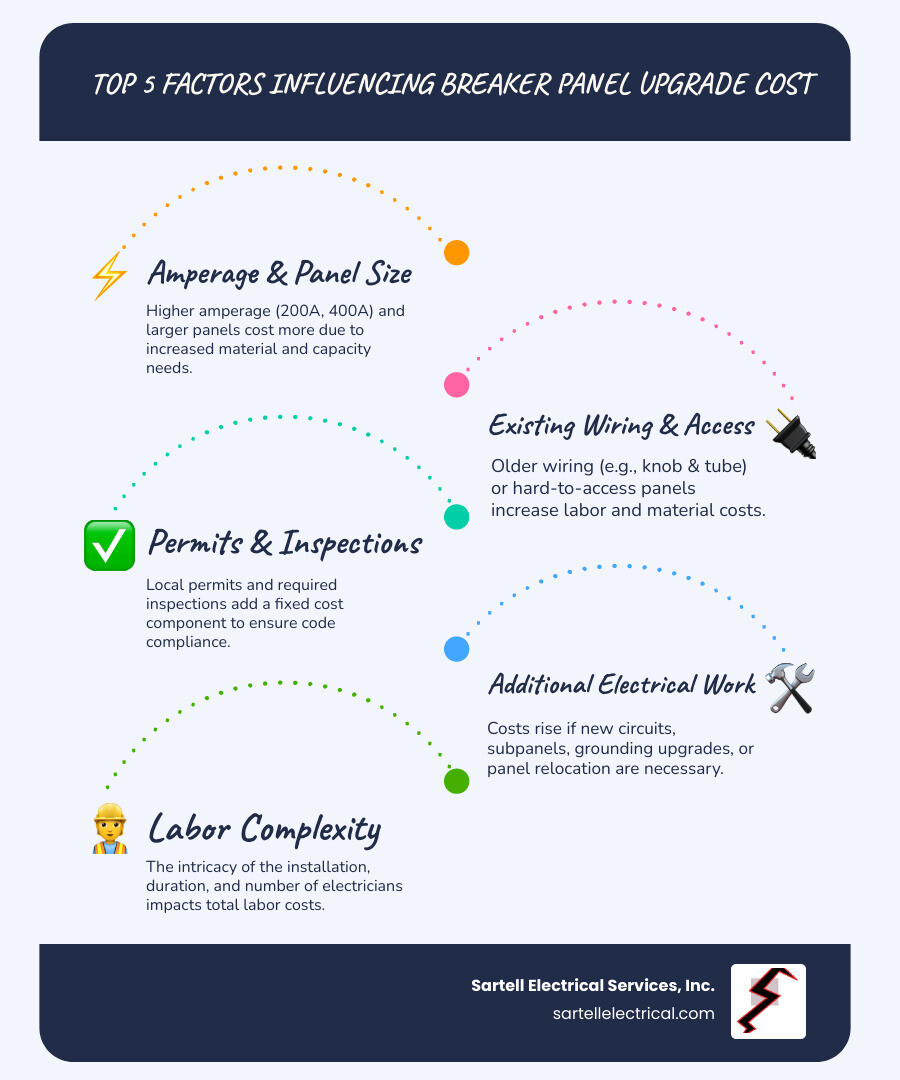 Important breaker panel upgrade cost terms:
When and Why to Upgrade Your Electrical Panel
Take a moment to count the electrical devices you use daily. Your smartphone charger, laptop, coffee maker, microwave, washing machine, air conditioning – the list goes on and on. Now imagine trying to run all of this through the same electrical system that powered homes in the 1960s. That's exactly what many homeowners are doing, and it's a recipe for trouble. Modern life demands more electricity than ever before. We're adding smart home devices, electric vehicle chargers, heat pumps, and energy-efficient appliances that require dedicated circuits. Meanwhile, many homes are still running on electrical panels designed for a much simpler time.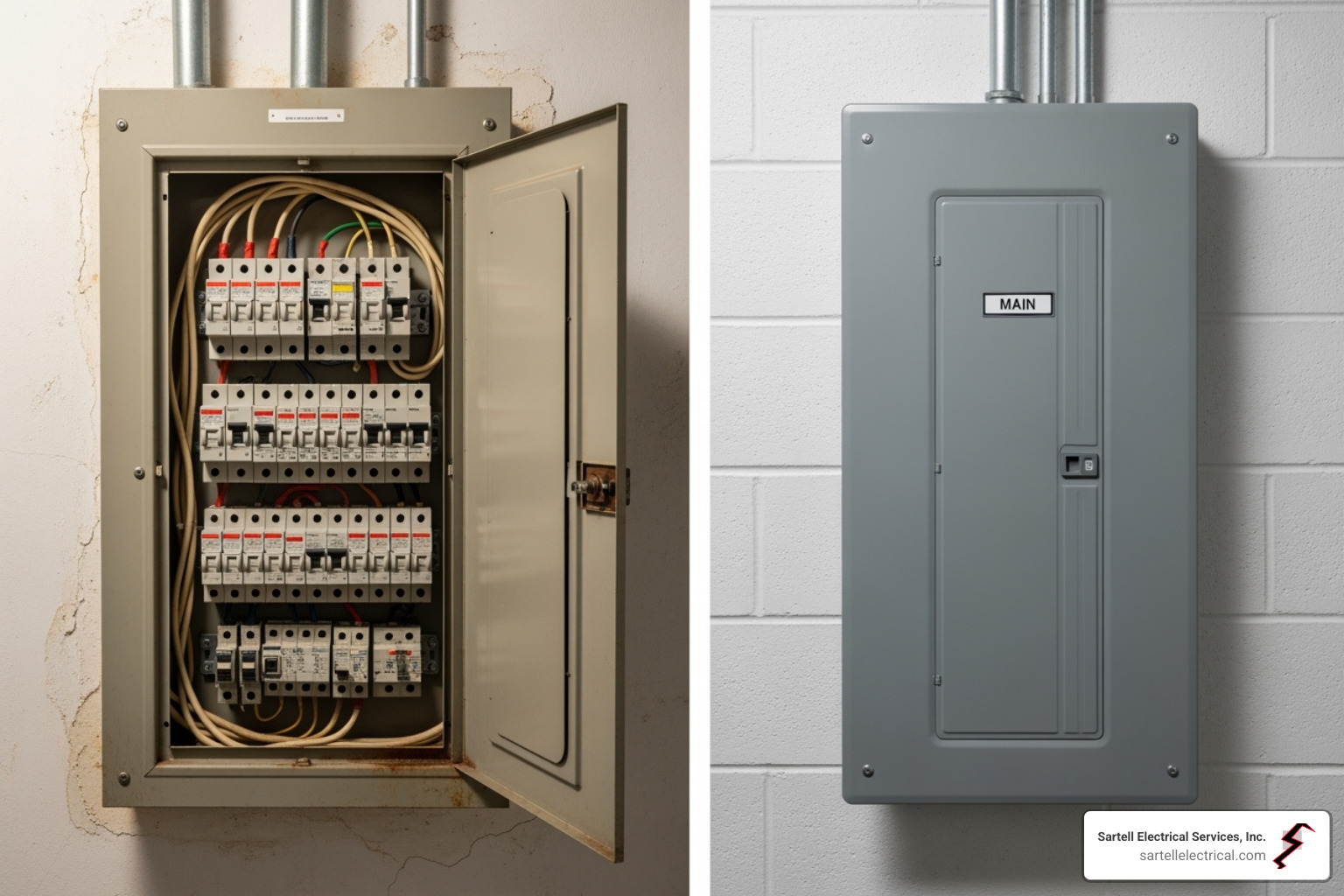 When your electrical panel can't keep up, it doesn't just create inconvenience – it creates real safety risks. Those flickering lights when your air conditioner kicks on? That's your system crying for help. Tripping breakers that send you to the basement multiple times a week? Your panel is working overtime to protect you from an overload.
The typical electrical panel has a lifespan of 25 to 40 years, but today's electrical demands can push older systems beyond their limits much sooner. That mysterious buzzing sound coming from your panel isn't normal – it's a warning sign that shouldn't be ignored.
Beyond safety, upgrading your electrical panel brings real value to your property. A modern electrical system increases home value significantly and provides crucial safety improvements that protect your family and your investment. As electrification trends continue – think EV charging stations and efficient heat pumps – an upgraded panel transforms from a nice-to-have into an absolute necessity.
Understanding the breaker panel upgrade cost early in your planning helps you make informed decisions about when and how to upgrade your system.
For comprehensive support with your electrical upgrade needs, explore our Residential Electrical Services.
When your electrical panel can't keep up, it doesn't just create inconvenience – it creates real safety risks. Those flickering lights when your air conditioner kicks on? That's your system crying for help. Tripping breakers that send you to the basement multiple times a week? Your panel is working overtime to protect you from an overload.
The typical electrical panel has a lifespan of 25 to 40 years, but today's electrical demands can push older systems beyond their limits much sooner. That mysterious buzzing sound coming from your panel isn't normal – it's a warning sign that shouldn't be ignored.
Beyond safety, upgrading your electrical panel brings real value to your property. A modern electrical system increases home value significantly and provides crucial safety improvements that protect your family and your investment. As electrification trends continue – think EV charging stations and efficient heat pumps – an upgraded panel transforms from a nice-to-have into an absolute necessity.
Understanding the breaker panel upgrade cost early in your planning helps you make informed decisions about when and how to upgrade your system.
For comprehensive support with your electrical upgrade needs, explore our Residential Electrical Services.
Signs Your Panel is Outdated or Overloaded
Your electrical system has its own way of communicating, and learning its language can save you from serious problems down the road. After three decades in this business, I've seen the same warning signs over and over again. If you still have an old fuse box instead of modern circuit breakers, you're living with 1950s technology in a 2020s world. Fuse boxes simply weren't designed for today's electrical appetite. They're inconvenient when fuses blow, and they lack the safety features of modern breaker panels. Many older homes operate on 60-amp service, which is like trying to fill a swimming pool with a garden hose. Today's homes typically need at least 100 amps, with most families finding 200 amps more realistic for their needs. If you're constantly dealing with insufficient power for your daily activities, your amperage is probably too low. Breakers that trip frequently are your electrical system's way of protecting you, but they're also telling you that your circuits are overloaded. This isn't just annoying – it's potentially dangerous. Similarly, if you notice a burning smell around your electrical panel or outlets, stop what you're doing and call a professional immediately. Corrosion or rust on your panel indicates moisture problems or aging components that compromise safety. Melted wiring or heat damage around outlets and switches are serious red flags that demand immediate attention. According to the National Fire Protection Association, electrical failures are a leading cause of home fires. These warning signs aren't just inconveniences – they're your home's way of asking for help before a serious problem develops.Benefits of a Modern Electrical Panel
Upgrading your electrical panel isn't just about fixing problems – it's about changing how your home handles electricity. The benefits extend far beyond simply keeping the lights on. Improved safety tops the list of reasons to upgrade. Modern circuit breakers respond instantly to electrical faults, cutting power before damage occurs. This protection extends to your family, your appliances, and your home itself. There's real peace of mind in knowing your electrical system can handle whatever you throw at it. Increased capacity means no more choosing between running the air conditioner and the washing machine. Modern panels provide the power your lifestyle demands, whether that's charging an electric vehicle, powering a home office, or running multiple appliances simultaneously. Future-proofing your home has become essential as we accept electrification trends. That heat pump you're considering for next year? The EV charger you'll want when you upgrade your car? A modern electrical panel makes these additions simple instead of complicated. The higher energy efficiency of modern electrical systems reduces waste and strain on your components. While the panel itself doesn't directly save energy, an efficient system runs more smoothly and lasts longer. Insurance compliance matters more than many homeowners realize. Insurance companies increasingly require updated electrical systems, especially in older homes. A modern panel can even qualify you for lower premiums by demonstrating your commitment to safety. Finally, increased property resale value makes this upgrade an investment rather than just an expense. Home buyers recognize the value of a modern, code-compliant electrical system. It signals that your home is well-maintained and ready for contemporary living.Understanding the Breaker Panel Upgrade Cost
Planning for an electrical panel upgrade can feel overwhelming, especially when you're trying to figure out what you'll actually spend. The truth is, breaker panel upgrade cost isn't a simple answer because every home and situation is unique.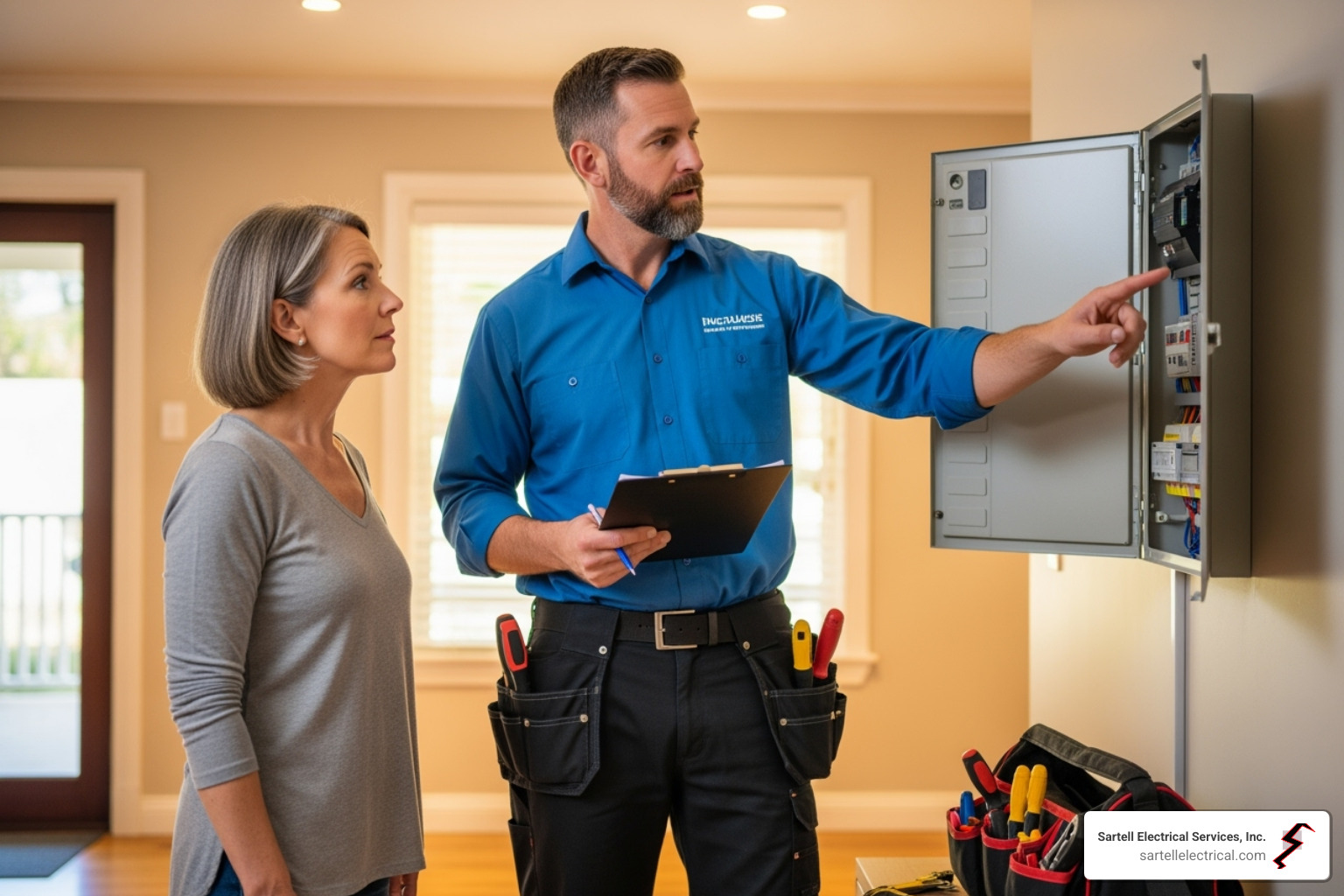 When I sit down with homeowners to discuss their electrical panel upgrade, I break down the costs into clear categories so they understand exactly what they're paying for. Labor costs typically make up the biggest chunk of your investment, and for good reason. This work requires years of training and expertise to do safely. You're paying for skilled craftsmanship that protects your family and property.
Material costs include your new electrical panel, circuit breakers, wiring, and all the components needed for a safe installation. The quality of these materials directly impacts the longevity and reliability of your electrical system.
Then there are the permit fees and inspection fees. I know some homeowners wonder if these are necessary, but they absolutely are. These fees ensure your upgrade meets all safety codes and protects you legally. Think of them as insurance for your investment.
The amperage you choose has a huge impact on your final cost. A 100-amp panel serves basic needs, while a 200-amp panel gives you room to grow. Your home size and the condition of your existing wiring also play major roles in determining the final price tag.
When I sit down with homeowners to discuss their electrical panel upgrade, I break down the costs into clear categories so they understand exactly what they're paying for. Labor costs typically make up the biggest chunk of your investment, and for good reason. This work requires years of training and expertise to do safely. You're paying for skilled craftsmanship that protects your family and property.
Material costs include your new electrical panel, circuit breakers, wiring, and all the components needed for a safe installation. The quality of these materials directly impacts the longevity and reliability of your electrical system.
Then there are the permit fees and inspection fees. I know some homeowners wonder if these are necessary, but they absolutely are. These fees ensure your upgrade meets all safety codes and protects you legally. Think of them as insurance for your investment.
The amperage you choose has a huge impact on your final cost. A 100-amp panel serves basic needs, while a 200-amp panel gives you room to grow. Your home size and the condition of your existing wiring also play major roles in determining the final price tag.
Key Factors Influencing Your Breaker Panel Upgrade Cost
Over my 30+ years in this business, I've learned that several key factors can significantly impact your breaker panel upgrade cost. Understanding these upfront helps you budget realistically and avoid surprises.| Amperage | Typical Cost Range | Use Cases |
|---|---|---|
| 100-amp | $850 - $2,000 | Smaller homes, minimal electrical demands, replacing older 60-amp panels. |
| 200-amp | $1,300 - $3,500 | Standard for most modern homes, accommodates typical appliances, AC, and some future expansion. |
| 400-amp | $2,000 - $6,000+ | Large homes (4,000+ sq.ft.), homes with multiple high-demand appliances (EV chargers, electric heating, hot tubs, workshops). |
Average Breaker Panel Upgrade Cost by Amperage
Let me walk you through the real-world costs for different amperage upgrades, since this is usually the biggest factor in determining your breaker panel upgrade cost. 100-amp upgrades typically cost between $850 and $2,000. This is perfect for smaller homes or when you're replacing an old 60-amp system. It handles basic electrical needs without breaking the bank, though it doesn't leave much room for future expansion. 200-amp upgrades are what I recommend for most homeowners, ranging from $1,300 to $3,500. This gives you plenty of capacity for modern appliances, air conditioning, and leaves room for future additions like EV chargers or smart home systems. It's the sweet spot for most families. 400-amp upgrades are for homes with serious electrical demands, costing $2,000 to $6,000 or more. These are typically needed for very large homes or properties with multiple high-draw appliances like EV chargers, electric heating systems, or extensive workshop equipment. Here's something that surprises many homeowners: replacing an old panel with the same amperage doesn't save you much compared to upgrading to higher capacity. Most of your cost comes from labor, permits, and ensuring everything meets current codes, regardless of the panel size. Beyond the main panel work, you might encounter additional costs, such as:- Drywall repair: $1.50 to $3 per square foot if we need to open walls.
- New circuit installation: $100 to $250 per circuit.
- Utility fees: $250 to $700 for disconnecting and reconnecting power.
- Specialty breakers: Modern AFCI and GFCI units cost more than standard breakers but are often required by current electrical codes.
Permits, Inspections, and Other Fees
I always tell my clients that permits and inspections aren't red tape – they're your protection. These typically add $200 to $500 to your project, but they ensure everything is done safely and legally. Here in Massachusetts, we follow specific electrical code requirements that must be met for every installation. Our team knows the Massachusetts Electrical Code inside and out. We handle all the paperwork and coordinate with local authorities so you don't have to worry about compliance issues. Final inspections are crucial because they verify that your new panel meets all safety standards. Utility company fees for disconnection and reconnection are standard practice, ensuring our electricians can work safely without power to your home. These coordination fees typically range from $250 to $700, but they're essential for everyone's safety. I've seen too many DIY attempts or unlicensed work create major problems down the road. Skipping permits can lead to hefty fines, insurance complications, and serious issues when you try to sell your home. It's simply not worth the risk when proper permitting protects your investment and your family's safety.The Upgrade Process and Hiring a Professional
Starting on an electrical panel upgrade might feel overwhelming at first, but when you work with experienced professionals, the process becomes surprisingly straightforward. Think of it like having a trusted guide who knows every step of the journey.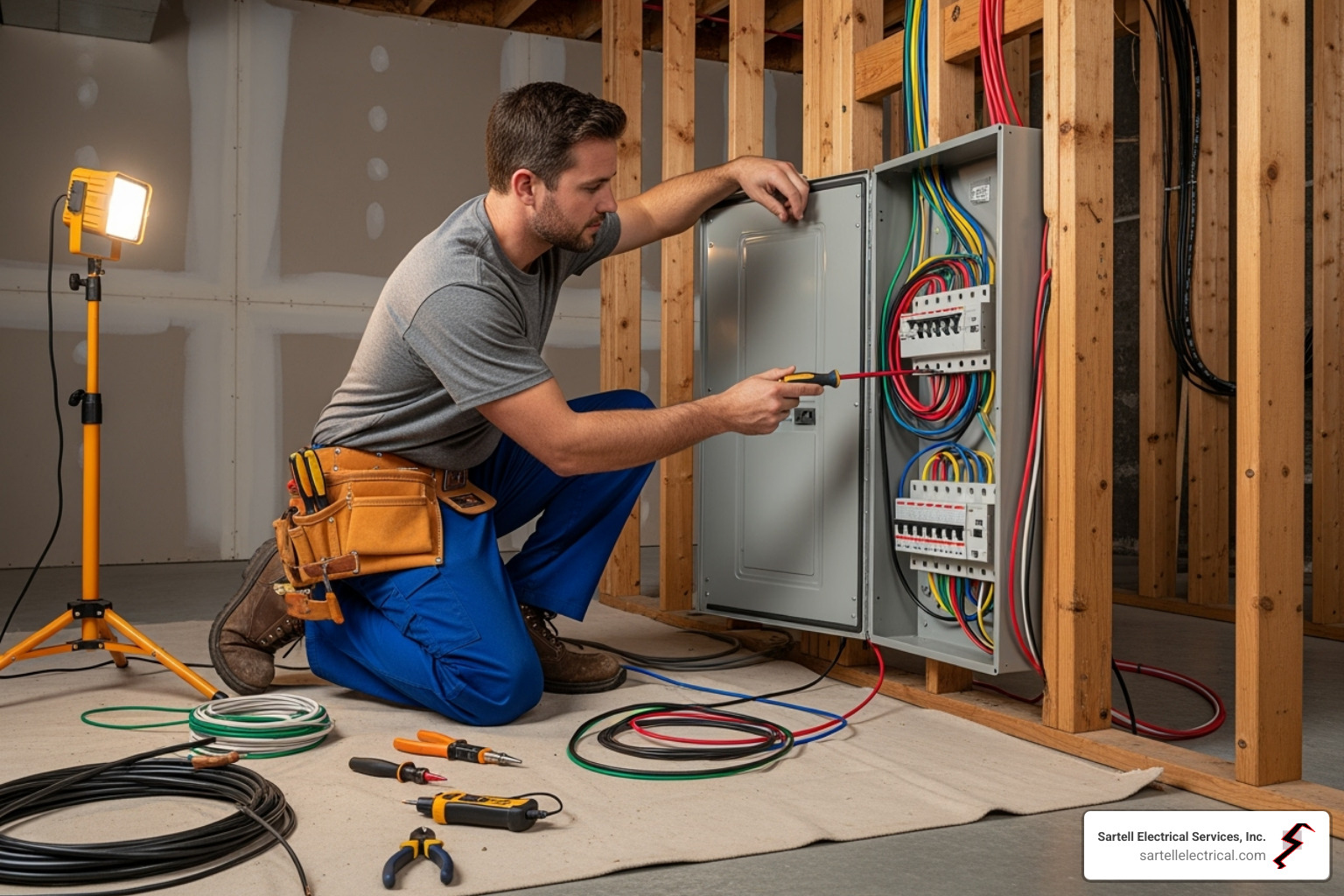 The upgrade process follows a logical sequence that protects both you and your property. We begin with a comprehensive assessment of your current electrical system, examining everything from your existing panel's condition to your home's power demands. This isn't just a quick glance - we're looking for signs of wear, calculating your electrical load, and identifying any potential challenges that could affect your breaker panel upgrade cost.
Next comes the detailed quoting phase, where we provide you with a transparent breakdown of all anticipated costs. No hidden surprises, no vague estimates - just honest numbers you can count on. While we're preparing your quote, we're also handling the permitting process with your local municipality, taking that administrative burden off your shoulders.
Installation day is when everything comes together. We coordinate with your utility company for the necessary power shutdown, ensuring everyone's safety during the work. Our licensed electricians then carefully install your new panel, upgrade any necessary wiring, and conduct thorough testing before the final inspection by municipal authorities confirms everything meets code.
The upgrade process follows a logical sequence that protects both you and your property. We begin with a comprehensive assessment of your current electrical system, examining everything from your existing panel's condition to your home's power demands. This isn't just a quick glance - we're looking for signs of wear, calculating your electrical load, and identifying any potential challenges that could affect your breaker panel upgrade cost.
Next comes the detailed quoting phase, where we provide you with a transparent breakdown of all anticipated costs. No hidden surprises, no vague estimates - just honest numbers you can count on. While we're preparing your quote, we're also handling the permitting process with your local municipality, taking that administrative burden off your shoulders.
Installation day is when everything comes together. We coordinate with your utility company for the necessary power shutdown, ensuring everyone's safety during the work. Our licensed electricians then carefully install your new panel, upgrade any necessary wiring, and conduct thorough testing before the final inspection by municipal authorities confirms everything meets code.
How to Hire a Licensed Electrician
Choosing the right electrician for your panel upgrade is one of the most important decisions you'll make in this process. Your electrical panel is essentially the heart of your home's power system, and you want someone with the right skills and credentials working on it. Always verify licensing and insurance first. This isn't just a formality - it's your protection against liability if something goes wrong. In Massachusetts, electrical work must be performed by licensed professionals, and that license should be current and in good standing. Insurance coverage protects you from potential accidents or property damage during the work. Reviews and testimonials tell the real story of how an electrician treats their customers. Look beyond just star ratings and read what people actually say about their experience. Did the electrician show up on time? Was the work area left clean? Were there any unexpected issues, and how were they handled? Getting multiple written quotes is essential, but don't just look at the bottom line. Compare what each electrician includes in their scope of work, their timeline, and their approach to permits and inspections. Be cautious of quotes that seem too good to be true - they often are. Experience specifically with panel upgrades matters tremendously. While all licensed electricians can handle basic electrical work, panel upgrades require specialized knowledge of service entrance equipment, load calculations, and coordination with utility companies. At Sartell Electrical Services, we've been performing these critical upgrades for over 30 years, giving us deep expertise in handling projects of all complexities across Massachusetts. You can learn more about our qualifications and our commitment to excellence, leadership, and customer service that has served our community for decades.What to Expect During the Installation
Installation day is when months of planning come together in a carefully orchestrated process. Understanding what happens helps you prepare and ensures everything goes smoothly. The day starts with preparation and safety measures. Our team arrives with all necessary equipment and materials, sets up protective coverings for your property, and walks you through the day's schedule. We'll answer any last-minute questions and make sure you're comfortable with the process. The power shutdown is the most critical phase. We coordinate with your utility company to safely disconnect power to your home, which means you'll be without electricity for several hours - typically the full duration of the installation. This is a good time to charge your devices beforehand, have flashlights ready, and unplug sensitive electronics to protect them from power surges when service is restored. Removing the old panel and installing the new one requires precision and expertise. We carefully disconnect and remove your existing electrical panel, then mount and wire the new upgraded panel. This involves connecting main service lines, installing new circuit breakers, and methodically connecting every circuit from your home to the appropriate breaker in the new panel. System testing and inspection happen before power restoration. We test every circuit to ensure proper operation and safety, check all connections, and verify that your grounding system meets current code requirements. Only after our internal quality checks do we coordinate with the utility company to restore power to your home. The final municipal inspection provides official confirmation that your upgrade meets all local electrical codes and safety standards. We also take time to label each circuit clearly in your new panel, so you'll know exactly what each breaker controls - no more guessing games when you need to turn something off. The entire process typically takes 8 to 10 hours, depending on your home's specific requirements and any unexpected issues we encounter with existing wiring. Our goal is always to minimize disruption to your daily routine while ensuring the work is completed safely and efficiently.Frequently Asked Questions about Electrical Panel Upgrades
Over the years, we've helped thousands of homeowners steer their breaker panel upgrade cost decisions. These are the questions that come up most often during our consultations, and I want to make sure you have clear, honest answers.How long does an electrical panel typically last?
Here's the good news: a modern electrical panel typically lasts between 25 to 40 years when it's properly installed and maintained. That's a solid investment in your home's safety and functionality. But here's what many homeowners don't realize: individual components like breakers can fail sooner than the panel itself. If your breakers are constantly tripping or you're dealing with an overloaded system, those components might wear out faster than expected. We strongly recommend regular inspections for any panel over 20 years old. Think of it like getting your car serviced - a little preventive care goes a long way toward avoiding bigger problems down the road. During these inspections, we can spot early warning signs and help you plan for an upgrade before you're dealing with an emergency.Can I upgrade my electrical panel myself?
I'm going to be direct here: absolutely not. This isn't like replacing a light fixture or installing a ceiling fan. We're talking about working with high-voltage electricity that can seriously injure or kill you. Electrical panel work requires a licensed professional for several critical reasons. First, the safety risks are enormous - one mistake can lead to electrocution, fires, or worse. Second, this work involves complex code requirements that change regularly. Third, you'll need permits and inspections that only licensed electricians can properly handle. Attempting a DIY panel upgrade can void your homeowner's insurance, create serious fire hazards, and lead to expensive fines from your local authority. When we're talking about your family's safety and your home's protection, this is definitely not the place to try to save money.Does upgrading my electrical panel qualify for any tax credits?
Yes, and this is one of those pleasant surprises that can help offset your breaker panel upgrade cost! You may qualify for the Energy Efficient Home Improvement Credit, which can be a real game-changer for your budget. This federal credit covers up to 30% of your project's cost, and for an electric panel upgrade, the credit is capped at $600. While $600 might not cover your entire upgrade, it's certainly a welcome reduction in your overall investment. The tax credit landscape changes regularly, so I always recommend checking with a tax professional or reviewing the latest information on government websites. What qualifies this year might be different next year, and there may be additional state or local incentives available in Massachusetts that could further reduce your costs.Conclusion
Upgrading your electrical panel is one of the smartest investments you can make in your property. Think of it as the heart of your home's electrical system—when it's working properly, everything else can function safely and efficiently. A modern panel doesn't just keep your lights on; it protects your family from electrical fires, supports all those power-hungry devices we can't live without, and prepares your home for whatever the future brings. The breaker panel upgrade cost might seem significant upfront, but consider what you're getting in return. You're buying peace of mind, knowing your electrical system can handle modern demands without breaking a sweat. You're investing in your property's value—buyers love seeing a recently upgraded electrical panel because it means one less major expense they'll face. And you're future-proofing your home for electric vehicles, smart home technology, and whatever innovations come next. We've seen too many homeowners try to squeeze just a little more life out of an aging panel, only to face flickering lights, tripped breakers, and the constant worry about safety. Don't wait until your electrical system forces your hand with an emergency situation that could have been prevented. For homeowners and businesses throughout Massachusetts, choosing the right electrical contractor makes all the difference. At Sartell Electrical Services, we've been helping families and businesses upgrade their electrical systems for over three decades. We've seen every type of panel, handled every kind of challenge, and we know exactly what it takes to get the job done right the first time. Our commitment goes beyond just installing a new panel. We take the time to understand your specific needs, explain your options clearly, and handle every detail from permits to final inspection. When we're finished, you'll have a modern, code-compliant electrical system that's ready to serve you reliably for decades to come. Ready to take the next step? Contact us today for a professional assessment of your residential electrical needs. Let's work together to ensure your electrical system is safe, reliable, and ready for whatever the future holds. After all, when it comes to your family's safety and your property's value, you deserve nothing less than excellence.Data cabling installation Boston: Best Services 2025
Introduction: The Digital Lifeline of Your Boston Business
Data cabling installation Boston services are the foundation that keeps your business connected and competitive. Whether upgrading or building new, the right cabling determines how efficiently data flows through your organization, impacting everything from cloud computing to video conferencing. Quick Answer for Data Cabling Installation Boston:- Cat6/Cat6a cabling - Most common for business networks (1-10 Gbps speeds)
- Fiber optic cabling - Best for high-speed backbone connections and long distances
- Professional installation - Ensures compliance with ANSI/TIA standards and optimal performance
- Structured cabling systems - Organized approach that supports voice, data, video, and security
- Typical timeline - 1-5 days depending on project size and complexity
- Cost factors - Building size, cable type, existing infrastructure, and site accessibility
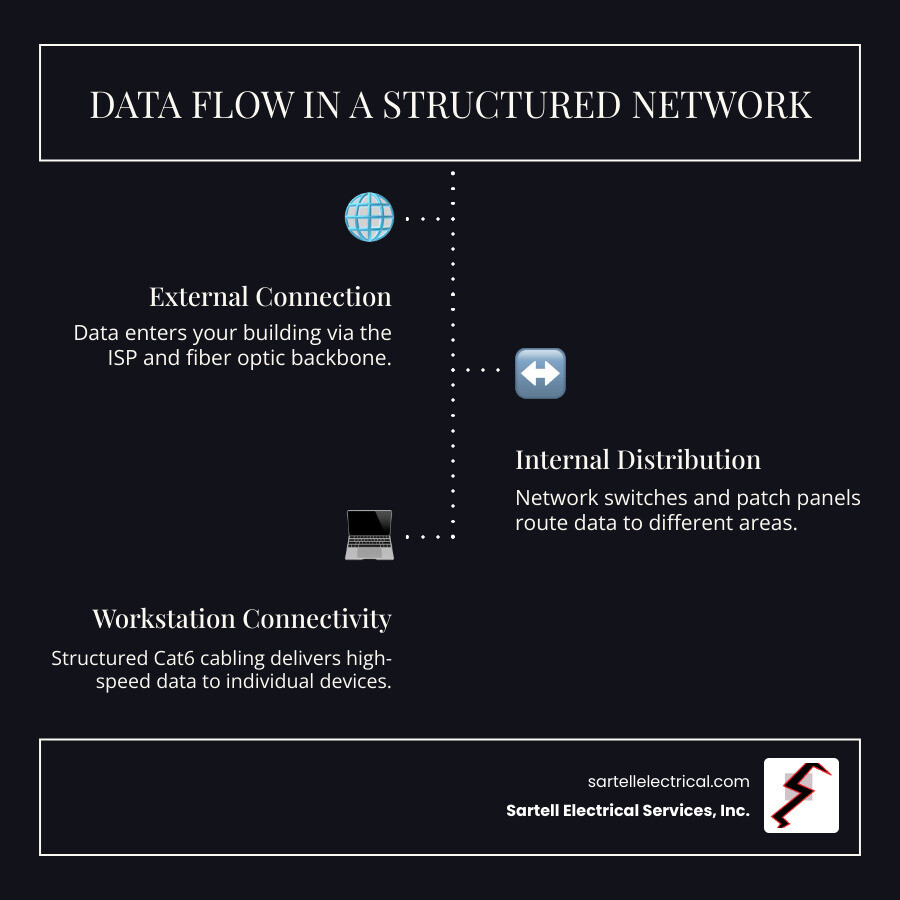
Understanding Structured Cabling: The Backbone of Modern Networks
Think of your business network like Boston's subway system. It needs organized tracks and clear connections to move data efficiently. That's what structured cabling provides—an organized subsystem that acts as the central nervous system for all your communication needs, from voice and data to security and AV. Unlike the old point-to-point method that creates a tangled mess, structured cabling is a long-term investment. It's a future-proof foundation designed to handle today's demands and tomorrow's technology, ensuring optimal network performance, reliability, and scalability. Our expertise in Telecommunications Electrical Services ensures your system is a reliable backbone for growth.Why a Structured System is Crucial for Performance
A structured system provides clear pathways for data, which translates to better business performance:- Improved Speed and Bandwidth: Properly installed and certified cables allow data to travel at maximum speed, handling heavy traffic from video streaming and cloud applications without bottlenecks.
- Reduced Downtime: An organized system is less prone to physical damage and connection errors. When issues arise, troubleshooting is faster, minimizing costly interruptions.
- Simplified Management: With every cable documented and labeled, tracing problems is simple. This makes repairs and upgrades far less disruptive.
- Future-Ready: The flexible design makes it easy to add new phones, security cameras, or wireless access points without a complete network overhaul.
The Difference Between Structured and Point-to-Point Cabling
The contrast is stark. Point-to-point cabling is a messy, reactive approach where cables are run directly between devices as needed. This "spaghetti" wiring is difficult to manage, troubleshoot, and scale. Structured cabling, on the other hand, is a systematic design following industry standards like ANSI/TIA-568. Cables follow pre-planned, organized routes to consolidation points like patch panels. This clean, hierarchical system makes it easy to manage connections and expand your network, changing it into a long-term asset that supports decades of technological evolution.A Guide to Data Cabling Installation Boston Services
Understanding your options is key to building a reliable network. Professional data cabling installation Boston services create the digital backbone that powers your entire business, from daily emails to critical applications.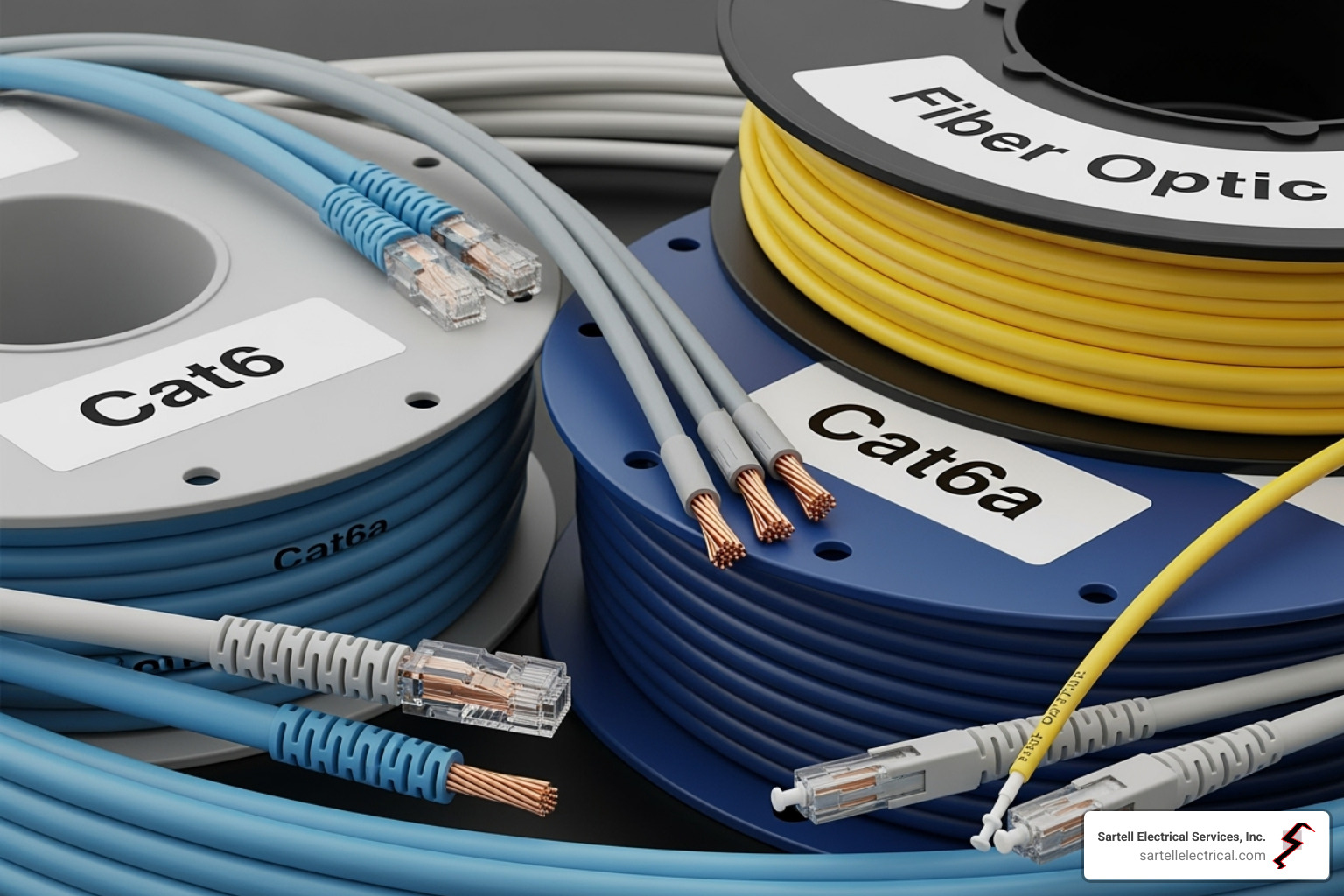
Common Types of Data Cables
Choosing the right cable depends on your speed, distance, and budget requirements.- Cat5e: An older standard for basic voice and data up to 1 Gbps. Generally phased out for new installations.
- Cat6: The standard for most businesses, supporting 1 Gbps reliably and 10 Gbps over shorter distances (up to 55 meters). It offers a great balance of performance and cost.
- Cat6a: An "augmented" cable that maintains 10 Gbps speeds over the full 100-meter distance, making it ideal for high-demand applications and future-proofing.
- Cat7: A high-performance option for specialized applications requiring extreme speeds, though less common due to cost.
- Fiber Optic: Uses light pulses for superior bandwidth, speed, and immunity to interference. It's perfect for network backbones and long-distance connections. Learn about Fiber Optics Installation in Boston.
- Coaxial: Still used for specific applications like CCTV security systems and video.
Integrated Low-Voltage and Telecommunications Services
Modern businesses need integrated solutions where voice, data, and security systems work together. A structured cabling system can support:- VoIP and Business Phone Systems: Ensuring crystal-clear calls and scalability.
- WiFi and Wireless Access Points: Providing a reliable wired backbone for consistent wireless coverage.
- Security, CCTV, and Access Control Systems: Delivering power and data for cameras, card readers, and other security devices.
- Audio Visual (AV) Systems: Powering conference rooms for seamless presentations.
- Sound Masking Systems: Improving office acoustics and privacy.
The Professional Advantage: Why Expertise Matters
Your business network is too important to leave to chance. For data cabling installation Boston, the difference between amateur and professional work can make or break your operations. A professional job isn't about a higher price—it's about doing it right the first time to avoid costly future problems.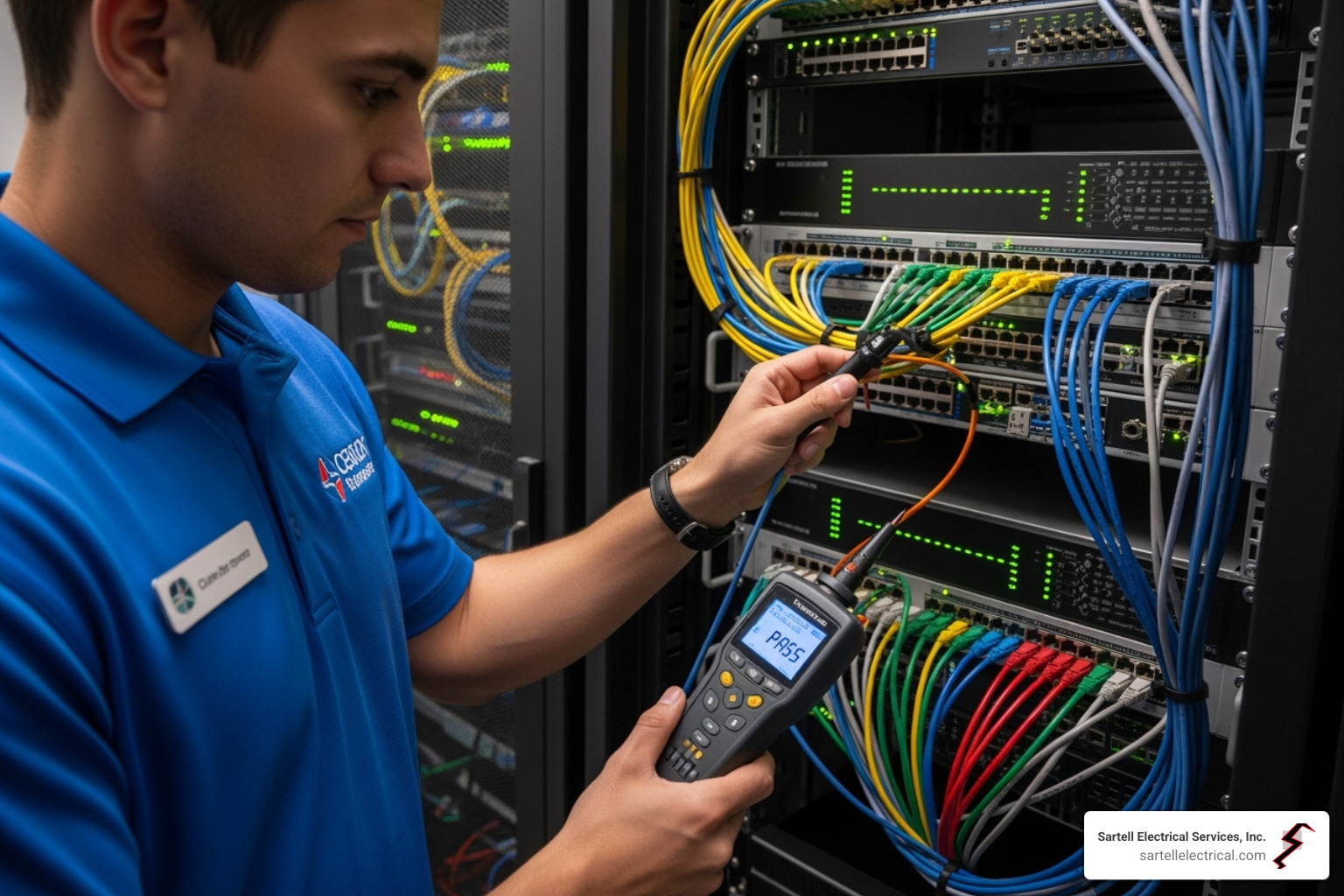
Key Benefits of Professional Installation
- Compliance and Safety: Professionals adhere to ANSI/TIA/EIA-568 standards and OSHA safety protocols, ensuring your network is reliable, compatible with future tech, and installed safely, especially in Boston's unique buildings.
- Expert Project Management: We coordinate with other contractors and plan around your schedule to ensure a smooth, predictable process with minimal disruption to your business.
- High-Quality Materials: We use commercial-grade cables and hardware that reduce failures and support higher speeds, saving you money in the long run.
- Testing and Certification: Every cable is tested and certified to verify performance. You receive detailed documentation that is invaluable for future upgrades and troubleshooting.
- Minimal Disruption: Our Commercial Electrical Service and Repair team works efficiently, often during off-hours, to keep your business running without extended downtime.
Essential Certifications and Qualifications to Look For
Specialized knowledge is non-negotiable for data cabling. Look for a contractor who is:- Licensed and Insured: This is the baseline for protection and proof of meeting state requirements.
- BICSI Certified: BICSI sets global standards for telecommunications. Certification demonstrates proven expertise in structured cabling systems.
- RCDD (Registered Communications Distribution Designer): An RCDD on staff brings high-level design expertise to create a system that supports long-term growth.
- Manufacturer Certified: Certifications from top brands ensure installers are current with the latest products and can offer extended warranties.
- Experienced: Since 1985, our team of Commercial Electricians has handled projects of all sizes. This experience helps us anticipate challenges and deliver successful outcomes.
The Installation Process: From Consultation to Completion
A successful data cabling installation Boston project is a well-orchestrated process. We've refined our approach over three decades to ensure harmony between your business needs and our technical execution.
Step 1: Consultation, Site Survey, and Design
This initial phase is about understanding your vision. We conduct a thorough needs analysis, assessing your current infrastructure, daily operations, and future growth plans. We then create a detailed design and proposal that maps out every cable run and connection point. You receive a clear roadmap of the project with no technical jargon or hidden surprises.Step 2: Professional Installation
Our skilled technicians execute the plan with precision and professionalism. We adhere strictly to the project schedule, coordinating with other trades as needed to prevent delays. Our clean installation practices mean cables are neatly bundled, secured in logical pathways, and work areas are kept tidy. We prioritize minimal disruption, often scheduling work during off-hours to keep your business running smoothly.Step 3: Testing, Certification, and Documentation for your Data Cabling Installation in Boston
After installation, we verify the quality of our work. Every connection is subjected to rigorous performance testing with sophisticated equipment to ensure it meets or exceeds industry standards. This system certification protects your investment and often activates extended manufacturer warranties. We provide a comprehensive documentation package, including clear labeling of all components and as-built drawings. This "instruction manual" for your network makes future management and troubleshooting simple. Our thorough process ensures your Electrical Services deliver a reliable, high-performance network built to last.Choosing the Right Data Cabling Partner in Boston
Choosing a partner for your data cabling installation Boston project is about more than the lowest bid; it's about finding a team that will deliver a reliable, future-proof network. A "bargain" installation often leads to expensive headaches, so choosing expertise over price saves money in the long run.Key Factors for Your Data Cabling Installation in Boston
When evaluating partners, look for these crucial qualities:- Experience and Specialization: With over 30 years of experience since 1985, we understand the unique needs of commercial, healthcare, and industrial environments.
- Proven Track Record: A strong project portfolio and positive customer testimonials demonstrate a history of success and reliable service.
- Comprehensive Services: A partner who can handle everything from design to ongoing maintenance simplifies the process and ensures accountability.
- Warranties and Support: Reputable contractors stand behind their work with comprehensive warranties and offer long-term support for moves, additions, and changes. Learn more about our commitment on our Electrical Companies Near Me page.
- Proactive Communication: You should be kept informed at every stage of the project.
| Feature | Professional Electrical Contractor (Sartell Electrical Services) | General Handyman |
|---|---|---|
| Expertise & Certifications | RCDD, BICSI certified, licensed, insured, 30+ years experience | Limited or no specialized certifications |
| Compliance | Adheres to ANSI/TIA/EIA standards, local codes | May overlook critical standards, potential code violations |
| Planning & Design | Detailed site surveys, future-proofing, comprehensive proposals | Basic, often reactive, minimal long-term planning |
| Installation Quality | Clean, organized, tested, labeled, high-quality materials | Untidy, unorganized, untested, lower quality materials |
| Network Performance | Optimized speed, reliability, scalability, reduced downtime | Potential for bottlenecks, intermittent issues, poor performance |
| Documentation | As-built drawings, test results, certification | Little to no documentation |
| Warranty & Support | Comprehensive warranties, ongoing support, service contracts | Limited or no warranty, difficult to get support |
| Risk & Liability | Fully insured, minimizes liability for client | Higher risk of damage, poor safety, client liability |
Frequently Asked Questions about Data Cabling
Here are answers to some of the most common questions we receive about data cabling installations in the Boston area.How much does data cabling installation cost in Boston?
The cost of a data cabling installation Boston project varies based on several factors:- Project Size: The number of cable drops needed.
- Cable Type: Cat6 is more affordable than Cat6a or fiber optic cable.
- Building Complexity: Historic buildings or difficult-to-access areas can increase labor costs.
- Existing Infrastructure: Using existing pathways can reduce costs, while creating new ones adds to the investment.
- Labor Rates: Professional, certified installers ensure a quality job that prevents costly future repairs.