Residential Electrical Upgrades: Essential 2025 Guide
Why Residential Electrical Upgrades Matter
Investing in
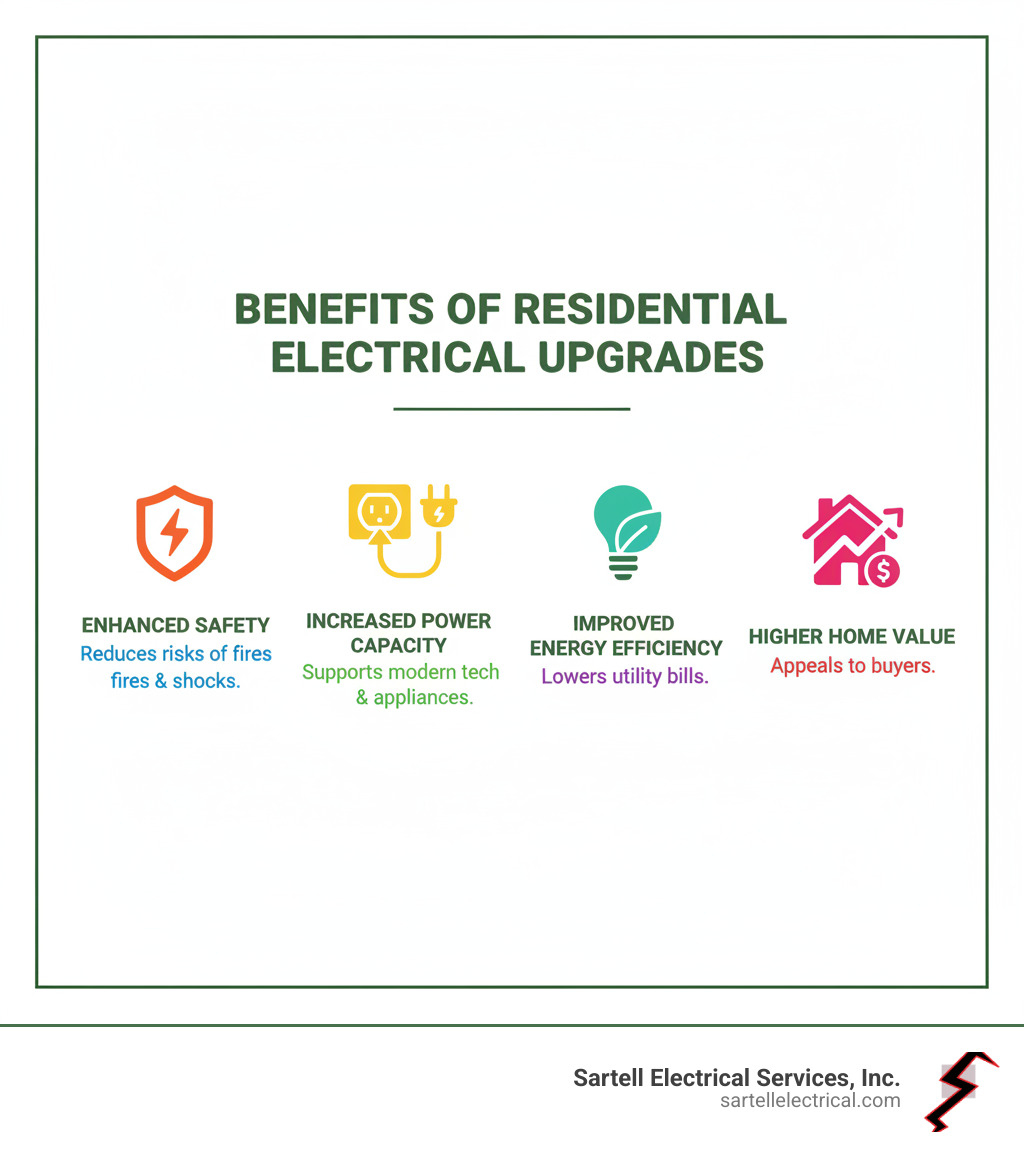
Residential Electrical Upgrades improves your home's safety and prepares it for the future. These improvements are essential for handling the demands of modern living and offer several key benefits:
- Improved Safety: Reduces risks of electrical fires and shocks.
- Increased Power Capacity: Supports modern appliances and technology.
- Improved Energy Efficiency: Can lower utility bills.
- Higher Home Value: Makes your property more attractive to buyers.
- Code Compliance: Ensures your home meets current safety standards.
Outdated electrical systems struggle with today's power demands, creating safety hazards and limiting your use of modern tech. Upgrading is a wise investment in safety, convenience, and long-term property value. This guide will help you make informed decisions for a safer, more efficient home.
As President of Sartell Electrical Services since 1985, I’ve led our team in delivering expert
Residential Electrical Upgrades across Massachusetts. With nearly four decades of experience, we are committed to craftsmanship, safety, and customer satisfaction.
Why Your Home Might Need an Electrical Upgrade
Your home's electrical system ages, and systems in older homes often weren't designed for modern power demands. Recognizing the signs of an outdated system is key to ensuring your family's safety with timely
Residential Electrical Upgrades.
Telltale Signs Your Electrical System is Outdated
Your home often signals when its electrical system is strained. Pay attention to these warnings:
- Flickering or Dimming Lights: Lights that dim when an appliance like a microwave starts indicate that your circuits are overloaded.
- Frequently Tripped Circuit Breakers: Breakers are safety devices that trip to prevent overheating. If they trip often with normal appliance use, your system is at its limit.
- Burning Smells from Outlets or Switches: This is a serious red flag indicating overheating wires. This requires immediate professional attention.
- Buzzing or Crackling Sounds: Unusual noises from outlets, switches, or your electrical panel can signal hazardous loose wiring.
- Outlets are Hot to the Touch: A warm or hot outlet is a clear sign of faulty wiring or excessive current, posing a significant fire risk.
Is your home’s electricity trying to tell you something? Learn More Is your home’s electricity trying to tell you something?
Common Electrical Issues in Older Homes
Older homes, especially those built before the 1970s, have electrical systems ill-equipped for today's devices.
- Outdated Wiring (Knob-and-Tube, Aluminum):
- Knob-and-Tube Wiring: Found in early 20th-century homes, it lacks a ground wire, making it unsafe for modern three-pronged plugs and prone to overheating.
- Aluminum Wiring: Used in the 1960s and 70s, it can cause loose connections over time, leading to overheating and fire risks. Many insurers are hesitant to cover homes with unaddressed aluminum wiring.
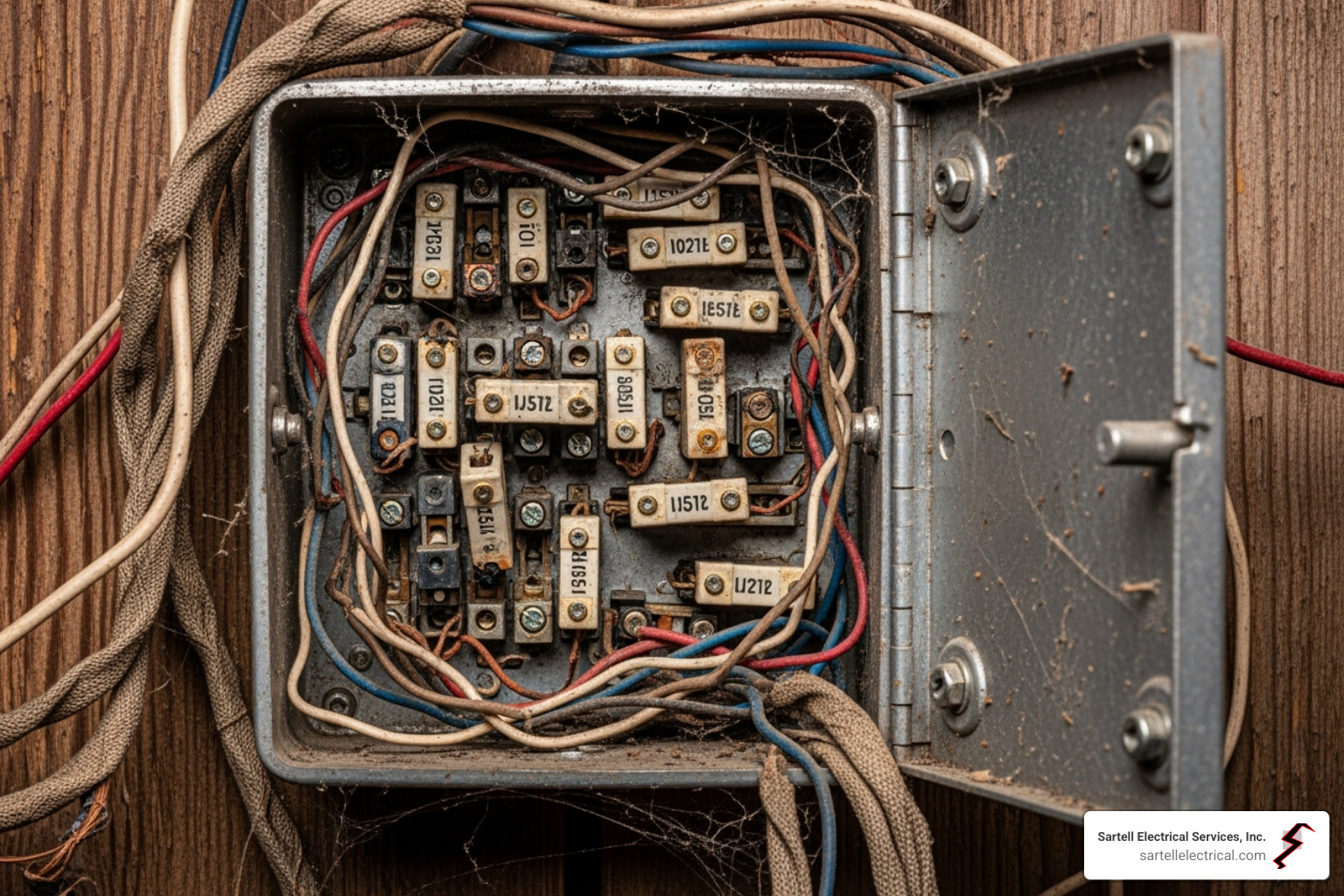
- Fuse Boxes: Older homes often have fuse boxes instead of modern circuit breakers. They offer less protection and are inconvenient. A Fuse Box Replacement is a crucial safety and capacity upgrade.
- Insufficient Number of Outlets: Fewer outlets in older homes lead to the overuse of extension cords, which can overload circuits and create fire hazards.
- Lack of Grounded (Three-Prong) Outlets: Two-prong outlets lack a ground wire, a critical safety feature that protects against shock and damage to electronics.
- 60-Amp Service Limitations: Common in pre-1950s homes, 60-amp service is inadequate and unsafe for modern electrical loads.
The Dangers of Outdated Electrical Systems
Ignoring these issues poses serious threats to your home and family.
- Increased Risk of Electrical Fires: Electrical failures are a leading cause of home fires. Outdated wiring, overloaded circuits, and old fuse boxes can generate heat and sparks that ignite materials within walls. Electrical Industry Newsweek reports that improved safety measures are reducing electrical fires, highlighting the importance of modern standards.
- Shock and Electrocution Hazards: Ungrounded wiring and faulty components increase the risk of severe electrical shock, especially near water sources like kitchens and bathrooms.
- Inability to Get or Keep Homeowner's Insurance: Many insurers refuse to cover homes with outdated systems (knob-and-tube, aluminum wiring, fuse boxes) or charge much higher premiums. They may require Residential Electrical Upgrades before issuing a policy.
- Damage to Appliances and Electronics: Voltage fluctuations and power surges from old systems can damage sensitive electronics and expensive appliances.
- Non-Compliance with Current Building Codes: Older systems rarely meet current National Electrical Code (NEC) standards, which can cause problems during renovations, inspections, or when selling your home. Ensuring your home has Standard Residential Electrical Wiring is essential for safety and legal compliance.
Understanding Your Home's Electrical System
Before planning specific
Residential Electrical Upgrades, it’s helpful to understand the basic parts of your home's electrical system and what they do.
Electrical Service vs. Electrical Panel: What's the Difference?
Though often used interchangeably, these terms refer to different parts of your electrical setup.
Your
Electrical Service is what brings electricity from the utility grid to your home. It includes the power lines, the meter, and the main wires entering your house. A service upgrade increases the total amount of power available to your home.
The
Electrical Panel (or breaker box) is the distribution hub inside your house. It takes the main power and splits it into various circuits that go to your lights, outlets, and appliances. A
Residential Main Electrical Panel upgrade improves this internal distribution system, often to handle the increased capacity from a service upgrade.
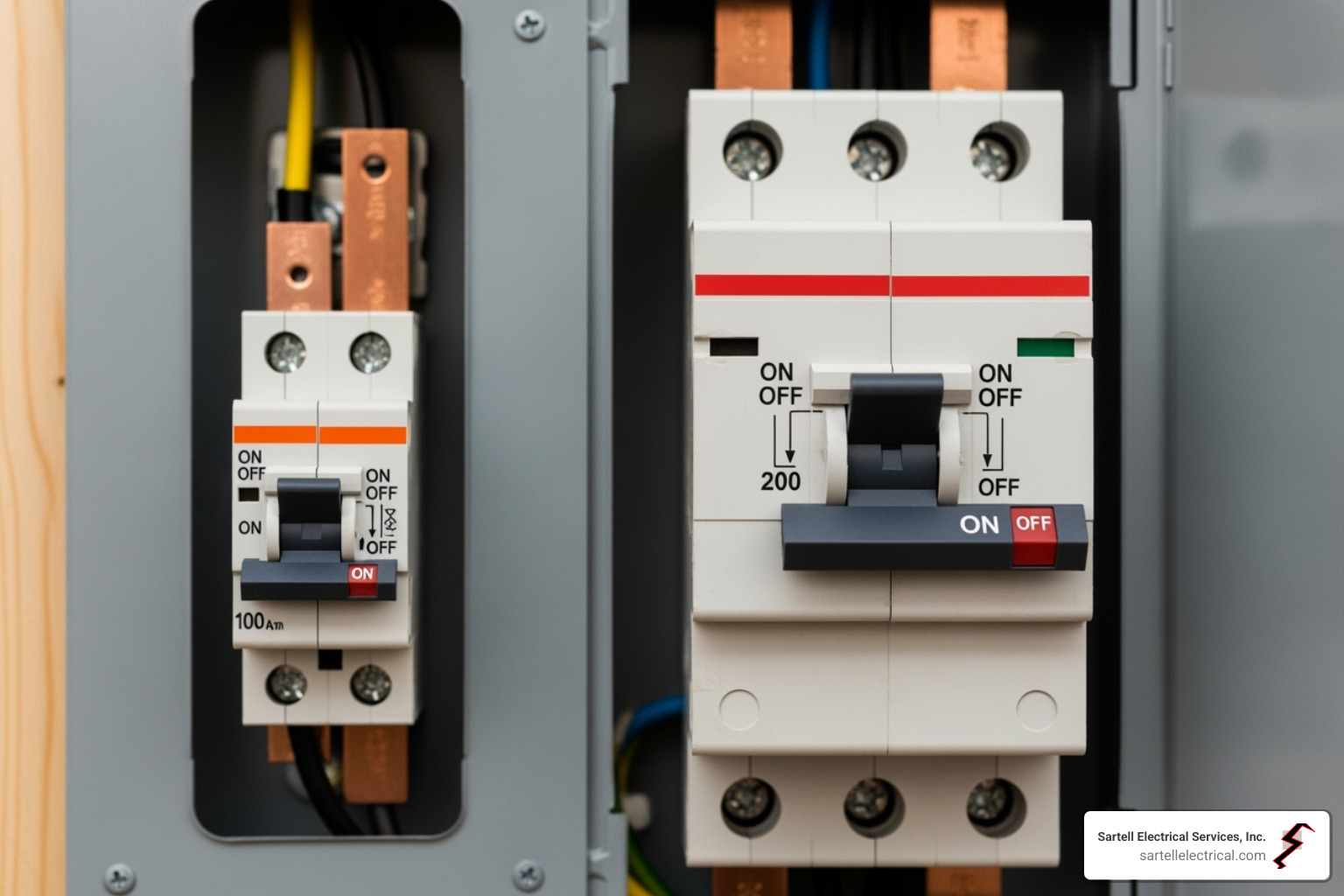
Decoding Amperage: 60, 100, and 200-Amp Service
"Amperage" (amps) measures the total amount of electricity your system can handle.
- 60-Amp Service: Found in homes built before the 1950s, this capacity is now obsolete and unsafe for modern needs. It leads to constant overloads and safety issues. An upgrade is essential.
- 100-Amp Service: Once the minimum standard, 100-amp service can be easily overloaded by modern appliances, central air, or an EV charger. It may struggle to meet the demands of a typical household today.
- 200-Amp Service: This is the current standard for new homes and is highly recommended for major renovations. It provides ample power for modern appliances, EV chargers, and smart home systems, effectively future-proofing your home.
You can usually find your service size labeled on the main breaker in your electrical panel. For more details, see our guide on
What Is The Standard Residential Electrical Service Size?.
Essential Residential Electrical Upgrades for Modern Homes
As homes become more technologically advanced, your electrical system must keep pace. These essential
Residential Electrical Upgrades improve safety, efficiency, and prepare your home for the future.
The Foundation: Electrical Panel and Service Upgrades
Upgrading your electrical panel—the heart of your system—is often the most impactful improvement. A
Breaker Panel Upgrade allows you to
safely power modern appliances without overloading circuits. It also significantly
reduces fire risk, as new panels offer superior protection against overloads and short circuits compared to old fuse boxes.
An upgraded panel also
future-proofs your home for heat pumps and EVs. As we transition to cleaner energy, technologies like heat pumps and EV chargers are becoming standard. An upgraded panel ensures your home is ready. You can
Make Your Home Electric Ready and learn about
Home Electrification and Electric Panel Upgrades. Finally, a modern panel
increases your home's resale value, signaling to buyers that it is safe and well-maintained.
An
electrical service upgrade is needed when your total power demand exceeds what the utility connection can provide, such as when adding a home addition, EV charger, hot tub, or converting to all-electric appliances.
Enhancing Safety with GFCI and AFCI Protection
Specialized outlets and breakers add crucial layers of safety.
GFCI (Ground Fault Circuit Interrupter) protection is your first line of defense against electrical shock. GFCIs monitor electrical current and instantly cut power if they detect an imbalance, preventing serious injury. They are required by code in areas near water, such as kitchens, bathrooms, laundry rooms, garages, and outdoor outlets. If you have issues with these devices, our team can help with
Ground Fault Repair.
AFCI (Arc Fault Circuit Interrupter) protection prevents electrical fires caused by arcing—when electricity jumps across damaged or loose wiring.
AFCIs automatically disconnect the power to prevent fires by detecting these dangerous arcs. They are typically required in living areas and bedrooms. Modern electrical codes continually expand requirements for both GFCI and AFCI protection due to their proven effectiveness.
Smart and Efficient Residential Electrical Upgrades
Modern upgrades also offer convenience, energy savings, and protection for your electronics.
- A whole-home surge protector, installed at your electrical panel, safeguards all connected devices from power surges, extending the life of your appliances and electronics.
- Switching to energy-efficient LED lighting is a simple, effective upgrade. LEDs use up to 75% less energy and last much longer than incandescent bulbs. Options like recessed lighting and Dimmer Switch Wiring offer flexible solutions.
- Smart home integration, including smart panels and outlets, provides automated control and monitoring for improved convenience and energy management.
- EV charging station installation is becoming essential. A dedicated 240-volt circuit ensures faster, more efficient charging than a standard 120-volt outlet, making EV ownership practical.
The Upgrade Process: What to Expect
Understanding the process for
Residential Electrical Upgrades can help you prepare for the work ahead.
Planning Your Upgrade: Process and Timeline
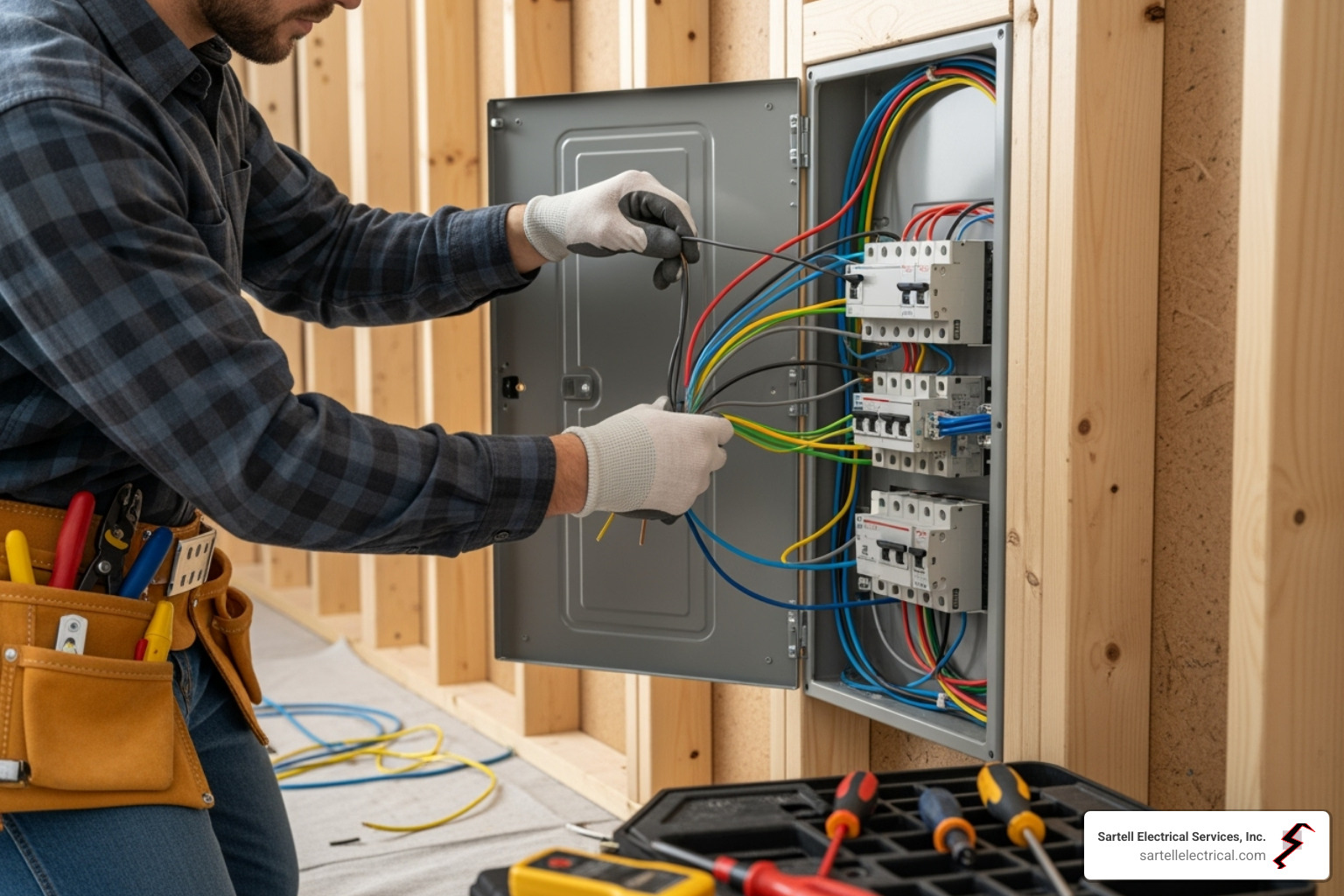
Every successful upgrade begins with careful planning. The process starts with an in-home assessment, where we examine your current system and perform a load calculation to determine your present and future power needs.
Based on this assessment, we create a customized upgrade plan and provide a detailed proposal. We then handle the entire permitting process with your local municipality to ensure all work meets safety codes.
The installation of a new electrical panel typically takes about one day, during which your power will be off for several hours. We schedule this at your convenience. The entire process, from consultation to final inspection, generally takes one to two weeks. After a final inspection and approval from a municipal inspector, your new system is ready. For more details, see our
Main Electrical Panel Upgrade Complete Guide.
Budgeting for Residential Electrical Upgrades: Costs and Value
The cost of
Residential Electrical Upgrades varies. An
electrical service upgrade typically ranges from
$1,600 to $3,100. A standalone
electrical panel upgrade generally costs between
$1,200 and $1,600. For a detailed breakdown, see our
Breaker Panel Upgrade Cost Guide.
Factors affecting the final price include your current and desired amperage, the type of existing wiring, panel accessibility, and local labor rates.
This investment adds significant value. An updated electrical system makes your home more attractive to buyers, can make it easier to insure, and may lead to lower premiums. Federal incentives can also help offset costs. For example,
federal incentives for installing an EV charging station can cover up to 30% of the cost (max $1,000). Some panel upgrades may also qualify for tax credits under the Inflation Reduction Act.
Why You Must Hire a Licensed Electrician
Electrical work is not a DIY project due to the high risk of injury, electrocution, or fire. Even small mistakes can have devastating consequences.
Licensed electricians have critical knowledge of complex, evolving electrical codes (like the NEC), ensuring your project is safe, compliant, and will pass inspection. They have the proper tools, carry insurance to protect you from liability, and provide warranties for their work. At Sartell Electrical Services, our team of
Licensed Residential Electricians Near Me has served Massachusetts homeowners for over three decades, ensuring every job is done right.
Frequently Asked Questions about Residential Electrical Upgrades
It’s normal to have questions when considering
Residential Electrical Upgrades. Here are answers to some common queries we receive from homeowners.
How long does an electrical panel upgrade take?
The physical installation of a new panel is usually completed in
a single day, during which your home's power will be temporarily turned off for safety. The entire process—from consultation and permitting to the final inspection—typically spans
one to two weeks, depending on local inspection schedules.
Can I add a subpanel instead of upgrading my main panel?
A subpanel can be a good solution if your main panel is full but your home's overall electrical service (amperage) is sufficient. It adds more slots for circuits in a specific area, like a garage or addition. However, a subpanel
does not increase your home's total power capacity. If your system is already overloaded, a full main service upgrade is necessary. We can perform a load calculation to determine the right option for you.
Will my homeowner's insurance require an electrical upgrade?
In many cases, yes. Insurers are concerned about the fire risk associated with outdated systems like
60-amp fuse boxes,
knob-and-tube wiring, or
aluminum wiring. They may refuse to offer coverage, charge significantly higher premiums, or mandate an upgrade as a condition of your policy. Proactively completing
Residential Electrical Upgrades ensures your home is safe and insurable.
Conclusion: Powering Your Home for the Future
Investing in
Residential Electrical Upgrades is a vital commitment to your family's safety, your home's functionality, and its long-term value. An outdated electrical system simply can't meet modern demands and can pose serious safety hazards. By upgrading, you prevent fire risks and prepare your home for future innovations like EV chargers and smart home technology.
Here in Massachusetts, trust is essential when it comes to your home's electricity. Sartell Electrical Services, Inc. has over 30 years of experience providing expert assessments and high-quality
Residential Electrical Upgrades to homeowners across Greater Boston and surrounding counties. Our commitment to excellence ensures every project delivers lasting peace of mind.
Don't let an old electrical system hold your home back. Let's work together to power your home for a brighter, safer future.
Contact us today to discuss your residential electrical service needs.