Fuse box replacement: 3 Shocking Truths
Why Understanding Fuse Box Replacement Is Critical for Your Property
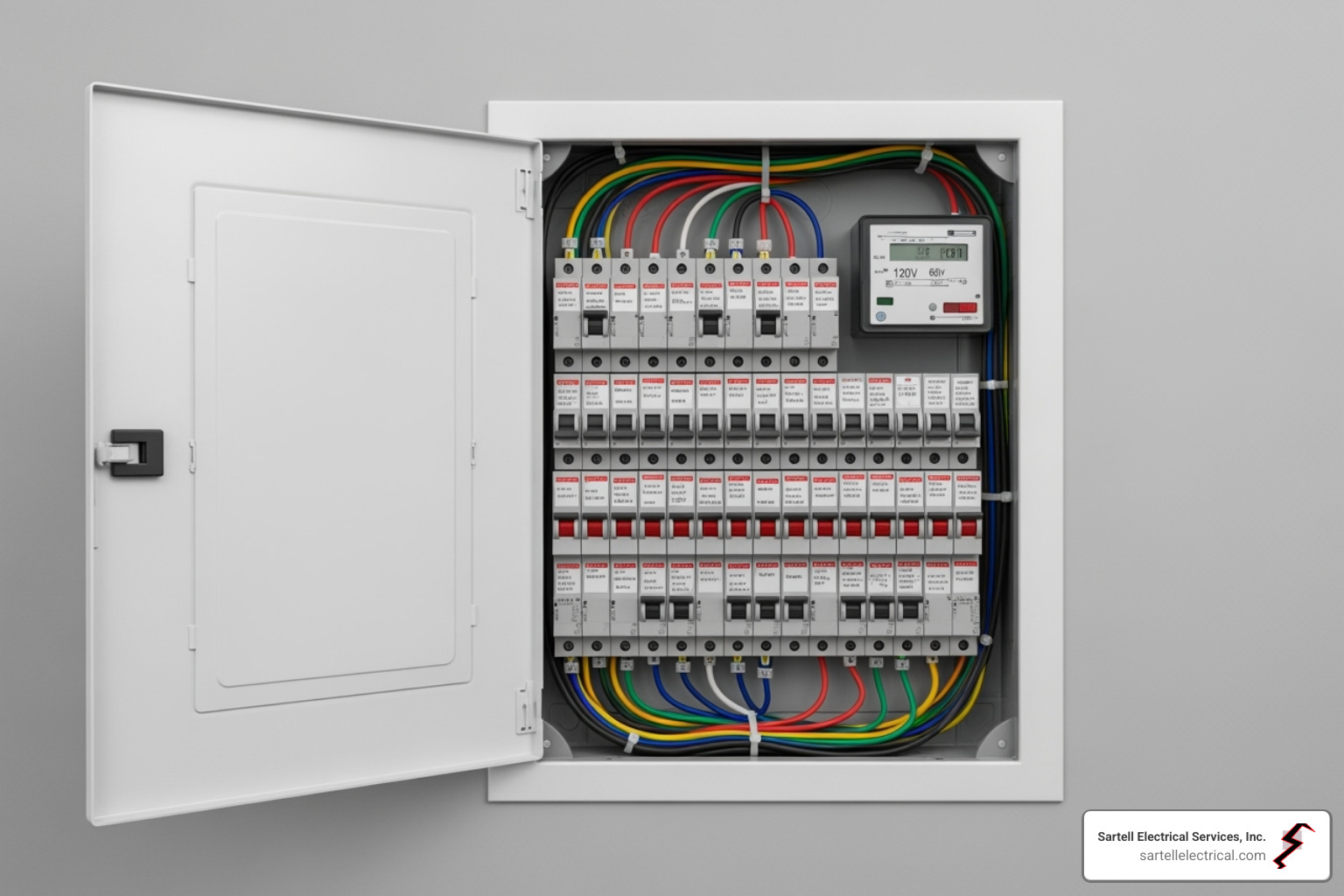
Fuse box replacement is the process of upgrading an outdated electrical system to a modern circuit breaker panel. This project typically costs between $1,400 and $4,000, depending on your home's needs.
Quick Overview: Fuse Box Replacement Process
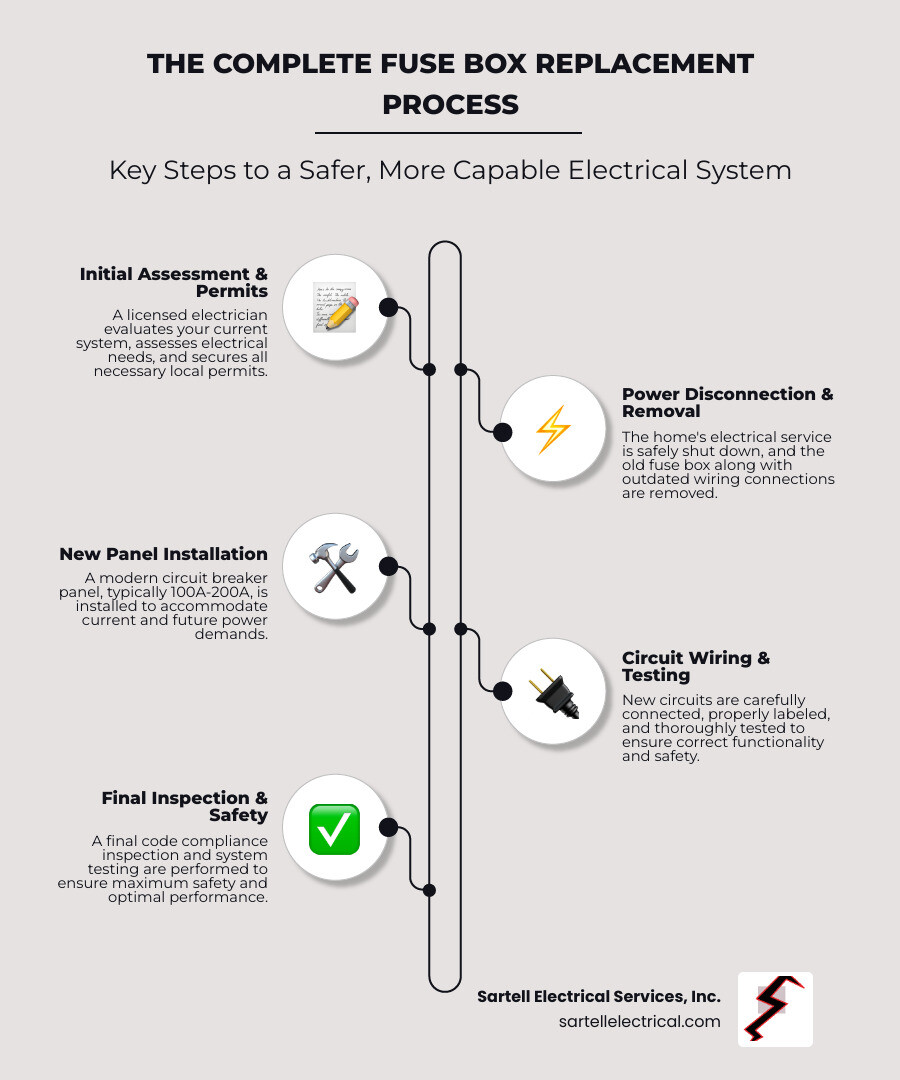
- Assessment - A licensed electrician evaluates your current system and electrical needs.
- Permits - We obtain all required electrical permits from local authorities.
- Power Shutdown - Electrical service is safely disconnected at the meter.
- Removal - The old fuse box and outdated wiring connections are removed.
- Installation - A new circuit breaker panel (typically 100A-200A) is installed.
- Connection - New circuits are wired and all connections are tested.
- Inspection - A final code compliance inspection and system test are performed.
Most homes with fuse boxes are over 50 years old and rated at just 60 amps, which is insufficient for modern households. Your current fuse box likely can't handle today's demands from EV chargers, smart home systems, and high-efficiency appliances. This upgrade isn't just about convenience—it's about safety.
I'm Ed Sartell, President of Sartell Electrical Services. Since 1985, I've helped Massachusetts property owners with fuse box replacement projects. I've seen how upgrading to a modern breaker panel transforms a property's safety and functionality.
Related content about Fuse box replacement:
Why Your Old Fuse Box Is a Ticking Time Bomb
If you're constantly dealing with blown fuses, your home is telling you it's time for a fuse box replacement. Old fuse boxes were not designed for modern life. Most max out at 60 amps, which is inadequate for today's power demands from smart TVs, home offices, and EV chargers. This isn't just an inconvenience; it's a serious safety risk.
Flickering lights and burning smells near your electrical panel are urgent warning signs that your system is dangerously overloaded.
Signs You Need a Fuse Box Replacement
Watch for these clear indicators that an upgrade is necessary:
- Constantly Blown Fuses: If you're frequently replacing fuses, your system is overloaded.
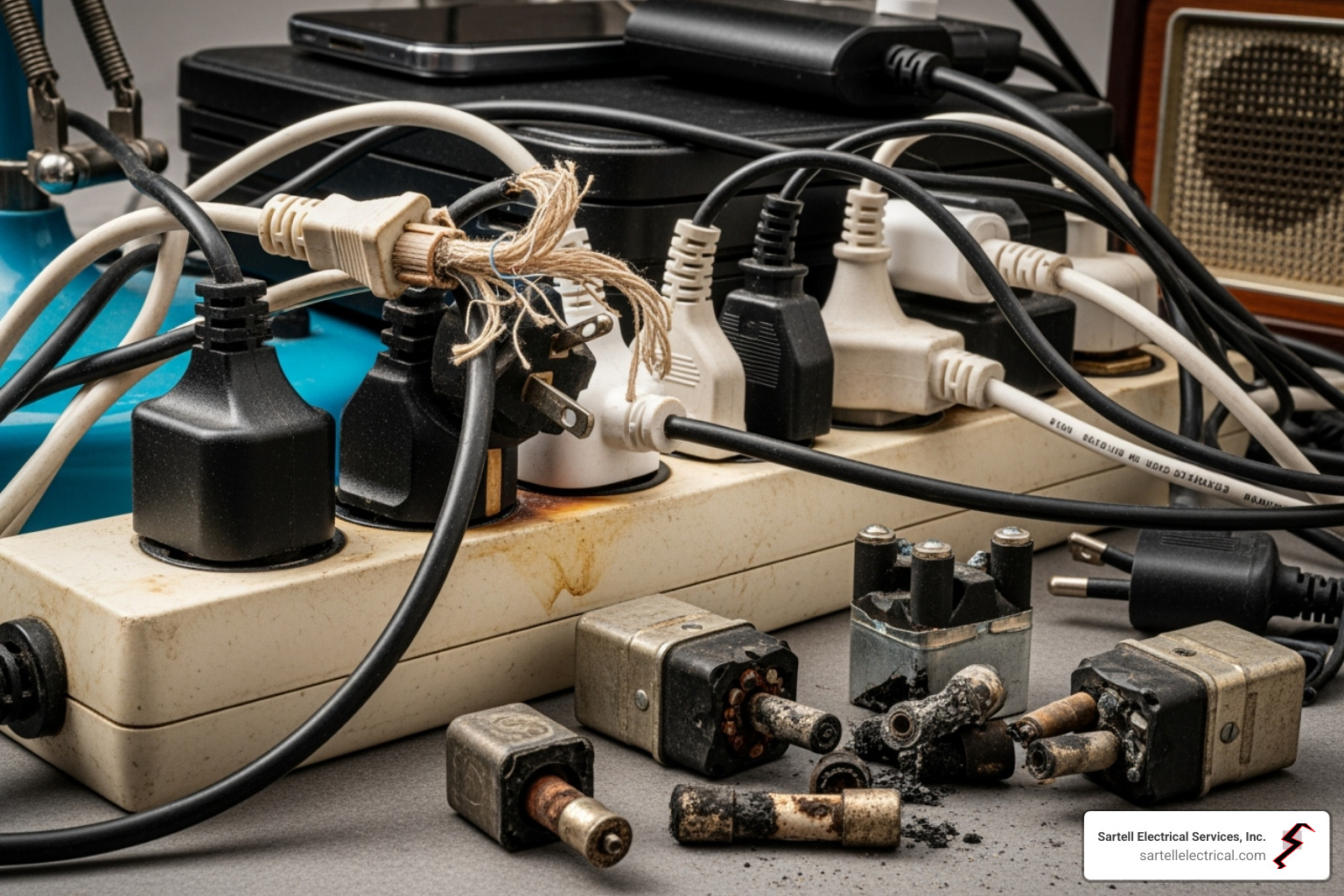
- Burning Smell or Overheating: Any burning odor or discoloration from heat near the fuse box requires immediate professional attention.
- Melted Wires: This indicates dangerous overheating within your electrical system.
- Appliances Lack Full Power: If your toaster or vacuum seems weak, it could be due to an insufficient electrical supply.
- Home Renovations or Power Strips: If you're planning an addition or rely on multiple power strips, your fuse box likely can't handle the new load safely.
The Hidden Dangers of Outdated Fuse Boxes
The most significant risks are the ones you can't see:
- Incorrect Fuse Sizing: Homeowners sometimes install oversized fuses to stop them from blowing. This dangerous practice removes the primary safety feature, allowing wires to overheat and creating a severe fire risk.
- No Modern Safety Features: Old fuse boxes lack Ground Fault Circuit Interrupters (GFCI) to prevent electrical shock in wet areas and Arc-Fault Circuit Interrupters (AFCI) to stop electrical arcs that cause fires.
- Insurance and Property Value Issues: Many insurance companies charge higher premiums or deny coverage for homes with fuse boxes. An outdated panel can also lower your property value and deter potential buyers.
An old fuse box is a safety concern that affects your family and your home's value daily.
Fuse Box vs. Modern Circuit Breaker Panel: A Clear Winner
Comparing a fuse box to a modern circuit breaker panel is like comparing a rotary phone to a smartphone. While both do the basic job, the modern option is superior in every way that matters for today's homes. The upgrade is about safety and capacity, not just convenience.
Capacity and Functionality Differences
The difference in capability is dramatic. A fuse box offers limited power, while a modern panel provides ample electricity for all your needs.
| Feature | Old Fuse Box | Modern Circuit Breaker Panel |
|---|---|---|
| Amperage | Typically 30-60 Amps | Commonly 100, 200, or even 400 Amps |
| Reset Method | Replace a blown fuse | Flip a switch to reset the breaker |
| Safety Features | Basic overload protection (fuse blows) | Overload, Short Circuit, GFCI, AFCI, and often Surge Protection |
| Suitability for Modern Homes | Inadequate for current electrical demands | Designed to handle high electrical loads and modern appliances |
Modern panels start at 100-200 amps, easily handling the load of a modern home. Resetting a tripped circuit is as simple as flipping a switch—no more fumbling for replacement fuses in the dark. Modern panels also allow for better circuit isolation, meaning you can have dedicated lines for high-demand appliances, preventing overloads and flickering lights.
Advanced Safety Features of Breaker Panels
This is where fuse box replacement is most critical. Modern panels include safety technology that old fuse boxes lack.
- Ground Fault Circuit Interrupters (GFCI): These devices prevent electrocution by shutting off power in milliseconds if they detect a fault, which is crucial in areas like kitchens and bathrooms.
- Arc-Fault Circuit Interrupters (AFCI): AFCIs are essential for fire prevention. They detect dangerous electrical arcs caused by damaged wiring and shut down the circuit before a fire can start.
- Surge Protection: Whole-home surge protection can be integrated into the panel, safeguarding all your expensive electronics and appliances from power surges.
- Faster Trip Times: Breakers react to overloads much faster than fuses, reducing stress on your home's wiring and minimizing fire risk.
Upgrading to a modern breaker panel provides the electrical safety and reliability your family deserves.
More info about our electrical services
The Complete Fuse Box Replacement Process
A fuse box replacement is a complex project that requires a qualified professional to ensure it's done safely and to code. Our process at Sartell Electrical Services has been refined over decades to be efficient and thorough.
Step 1: Hiring a Qualified Electrician
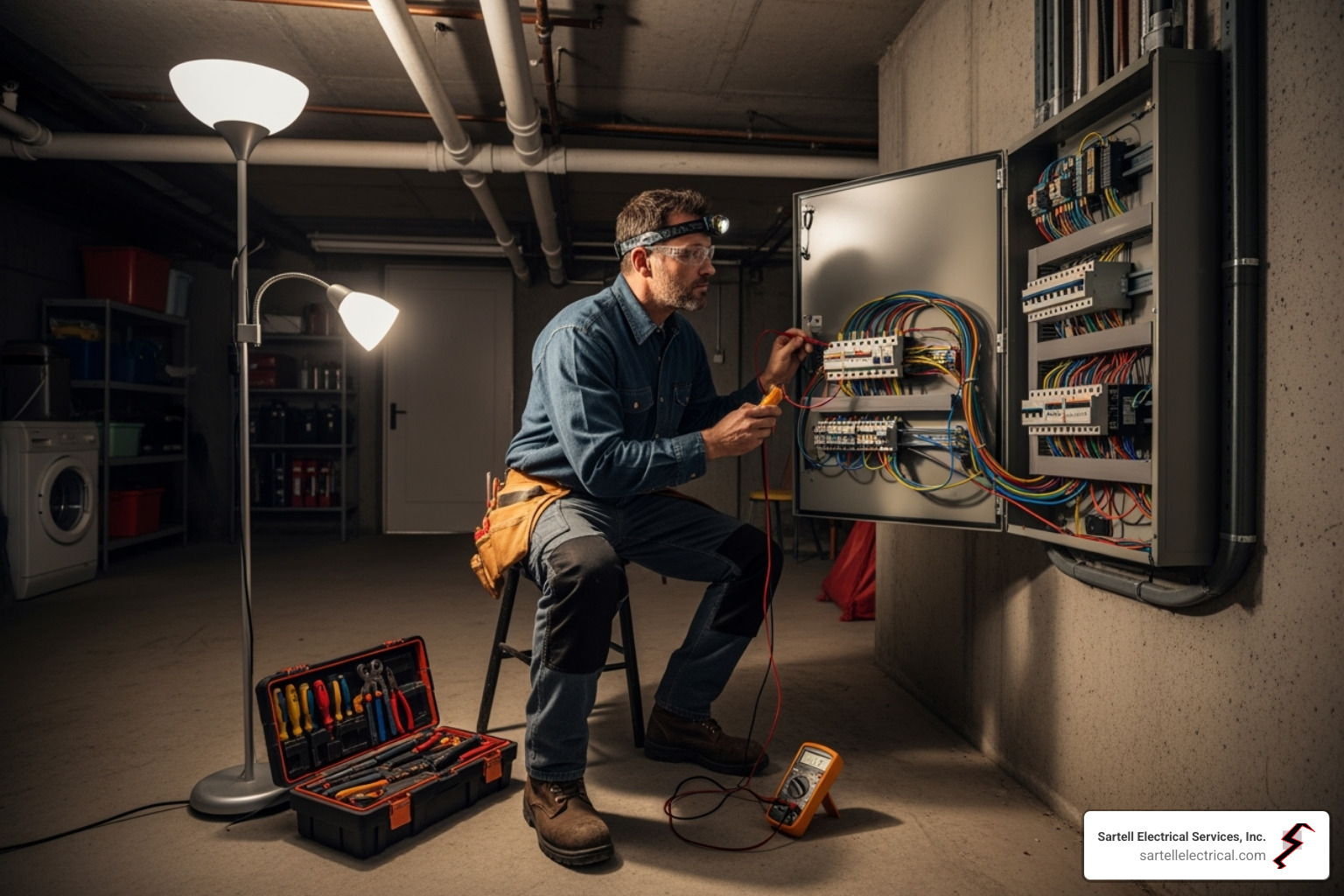
Choosing the right electrician is the most critical step. An unqualified person can create fire hazards, electrocution risks, and expensive code violations. Here's what to look for:
- Licenses and Insurance: Verify the electrician has proper Massachusetts licensing, liability insurance, and worker's compensation. This protects you from liability. You can learn more about how to check an electrician is qualified.
- Panel Upgrade Experience: Ask for their track record with fuse box replacements. An experienced electrician will have completed hundreds of similar jobs.
- Multiple Quotes: Get at least three detailed estimates to understand the market and what's included (permits, labor, materials).
- References: A reputable electrician will provide references. Call them to ask about professionalism, quality, and timeliness.
- Permitting Knowledge: The electrician must handle all local permits and inspections, as this is required by law.
At Sartell Electrical Services, we are fully licensed and insured, with deep knowledge of local codes across Massachusetts. Find licensed residential electricians near you
Step 2: The On-Site Replacement
The replacement process follows a strict safety protocol:
- Power Shutdown: The main power is shut down at the meter before any work begins.
- Old Fuse Box Removal: We carefully disconnect and remove the old fuse box, inspecting the existing wiring as we go.
- New Panel Installation: The new, modern circuit breaker panel is securely mounted.
- Circuit Connection: Each circuit in your home is precisely connected to a new breaker, ensuring proper load balancing.
- Labeling Circuits: Every breaker is clearly labeled (e.g., "Kitchen Outlets," "Master Bedroom") for your convenience.
- System Inspection and Testing: We test every circuit before restoring power. A final inspection by a local official verifies the work meets all codes.
The DIY vs. Professional Fuse Box Replacement Debate
Let me be clear: fuse box replacement is not a DIY project. The risks are severe and the work is legally required to be done by a licensed professional in Massachusetts.
- Safety Risks: You face lethal voltages that can cause electrocution. Incorrect wiring is a leading cause of house fires.
- Legal and Code Requirements: This work requires permits and deep knowledge of complex electrical codes, including load calculations, grounding, and GFCI/AFCI requirements.
- Long-Term Problems: DIY work can void your homeowner's insurance, create code violations that make it hard to sell your home, and put your family at risk.
For your safety and your home's value, always trust a fuse box replacement to qualified professionals like our team at Sartell Electrical Services.
Decoding Your Fuse Box Replacement Cost Estimate
The cost of a fuse box replacement is a primary concern for homeowners. While the national average is typically between $1,400 and $4,000, the final price for your project depends on several key factors.
Key Factors That Influence the Final Price
Understanding these variables will help you interpret your estimate:
- Panel Amperage: Upgrading to a 100-amp panel is the baseline. A 200-amp service, which we often recommend for modern homes, costs more but provides greater capacity. A 400-amp service is the high-end option for large homes or those with significant power needs.
- Main Service Upgrades: If your existing service line from the utility pole can't support the new panel, the mast, meter socket, and entrance wires will also need to be upgraded.
- Number of Circuits: More circuits require more labor and materials, which increases the cost.
- Existing Wiring Condition: Old, brittle, or non-compliant wiring finded during the replacement may require additional work to ensure the entire system is safe.
- Permit and Labor Costs: Fees vary by town in Massachusetts. Labor costs are based on the project's complexity.
Why a Higher Amperage Panel is a Smart Investment
Opting for a higher amperage panel, like 200 amps, is a wise long-term investment.
- Future-Proofing: It prepares your home for future technologies like EV chargers, solar panels, and smart home systems.
- Handles Modern Demands: A 200-amp panel can easily power a modern kitchen, home office, and other high-demand areas without issue.
- Supports Renovations: If you plan to add a home addition, finish a basement, or install a hot tub, you'll have the electrical capacity ready.
- Increases Home Value: A modern, high-capacity electrical panel is a significant selling point for potential buyers, signaling that the home is updated and safe.
A proper fuse box replacement is an investment in your home's safety, functionality, and value.
More info about residential electrical work
Frequently Asked Questions about Fuse Box Upgrades
Here are answers to the most common questions we receive about fuse box replacement projects in Massachusetts.
How long does a fuse box replacement take?
Most projects take one to three days to complete. The actual on-site electrical work is typically done in one full day, with the power being off for about 4 to 8 hours. The overall timeline can be affected by factors like the condition of your existing wiring, the need for a main service upgrade (which requires utility company coordination), and the local permit and inspection schedule.
Can upgrading my panel reveal other wiring problems?
Yes, it's common. Opening the panel gives us the first clear look at wiring that may be decades old. We often find issues like brittle insulation, outdated aluminum wiring, or other code compliance issues that need to be addressed for safety. Finding these problems during the upgrade is beneficial, as it allows us to correct them and ensure your entire system is safe, rather than connecting a new panel to faulty wiring.
Will a new breaker panel lower my home insurance?
Yes, it often can. Insurance companies view old fuse boxes as a high fire and shock risk. Upgrading to a modern breaker panel with GFCI and AFCI protection significantly reduces this risk, which can lead to lower premiums. Many insurers offer safety discounts of 5-15% for an updated electrical system. Some may even require an upgrade as a condition of coverage for an older home. After the work is complete and has passed inspection, provide the documentation to your insurance agent to see if you qualify for a discount.
Secure Your Home's Electrical Future
Your home's electrical system is its foundation. Relying on an old fuse box is a risk you don't have to take. Upgrading through fuse box replacement is a smart investment in your property's safety, capacity, and peace of mind.
A modern circuit breaker panel with GFCI and AFCI protection drastically reduces the risk of fire and shock. It provides the power you need for modern life, from kitchen appliances to EV chargers, and eliminates the frustration of blown fuses. This upgrade also boosts your property value, showing potential buyers that your home is safe and well-maintained.
Here in Massachusetts, from Reading to Andover and across Essex, Middlesex, and Suffolk Counties, homes need reliable power. At Sartell Electrical Services, Inc., we've helped families make this critical upgrade for over three decades. We understand that a fuse box replacement is about protecting what matters most. Our team handles every detail, from permits to final inspection, ensuring your project meets all safety standards.
Don't let an outdated fuse box compromise your family's safety. Secure your home's electrical future today.