Design Build Electrical Services: 5 Insider Tips
Why the Design-Build Model is Changing Electrical Project Delivery
 Design build electrical services
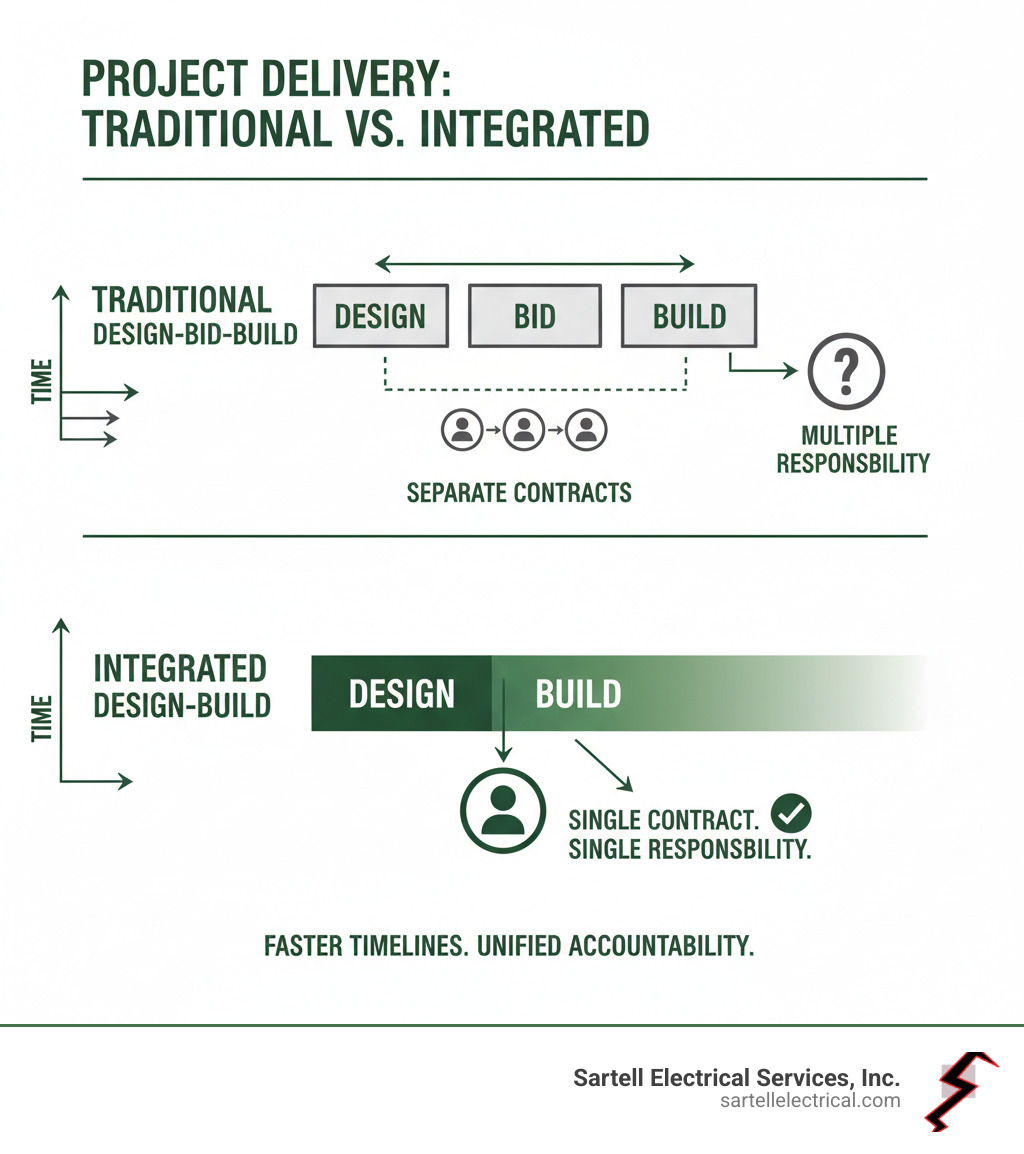
 represent an integrated project delivery method where a single contractor handles both the design and construction phases under one unified contract. Unlike traditional models that separate design from construction, this approach offers:
- Single-source responsibility - One team accountable from concept to completion
- Faster project timelines - Overlapping design and construction phases
- Cost savings - Reduced administrative burden and fewer change orders
- Streamlined communication - No miscommunication between separate design and construction teams
- Risk reduction - Design flaws addressed early, before they become expensive problems
The design-build approach has proven so effective that
over 50% of non-residential construction projects now use this method, according to industry research. This shift isn't surprising when you consider the statistics: design-build is
proven to outperform traditional methods in both unit cost and cost growth, while delivering projects faster.
For business owners, facility managers, and institutional clients managing complex electrical projects, finding the right design-build partner can mean the difference between a project that stays on budget and schedule versus one that spirals into costly delays and change orders. But
how do you identify a truly qualified design-build electrical contractor among the many companies claiming to offer these services?
The answer lies in knowing what to look for. Not every electrical contractor has the in-house engineering capabilities, project management expertise, or proven track record needed to deliver on the promises of the design-build model. Some firms simply subcontract the design work or lack the integrated team structure that makes design-build so effective.
I'm Ed Sartell, President of Sartell Electrical Services, and I've spent nearly four decades delivering design build electrical services to commercial and industrial clients across Massachusetts. Throughout my career, I've seen how the right design-build partner can transform a complex electrical project into a streamlined success story.
Important
design build electrical services terms:
Tip 1: Verify Their Integrated Expertise and In-House Capabilities
The single most important factor when choosing a
design build electrical services provider? Making sure they actually have all the pieces under one roof. I can't tell you how many times I've seen companies claim to offer design-build services, only to find they're just subcontracting the engineering work to outside firms. That defeats the entire purpose.
True design-build means having a complete, integrated team working together from the first conversation about your project. That means
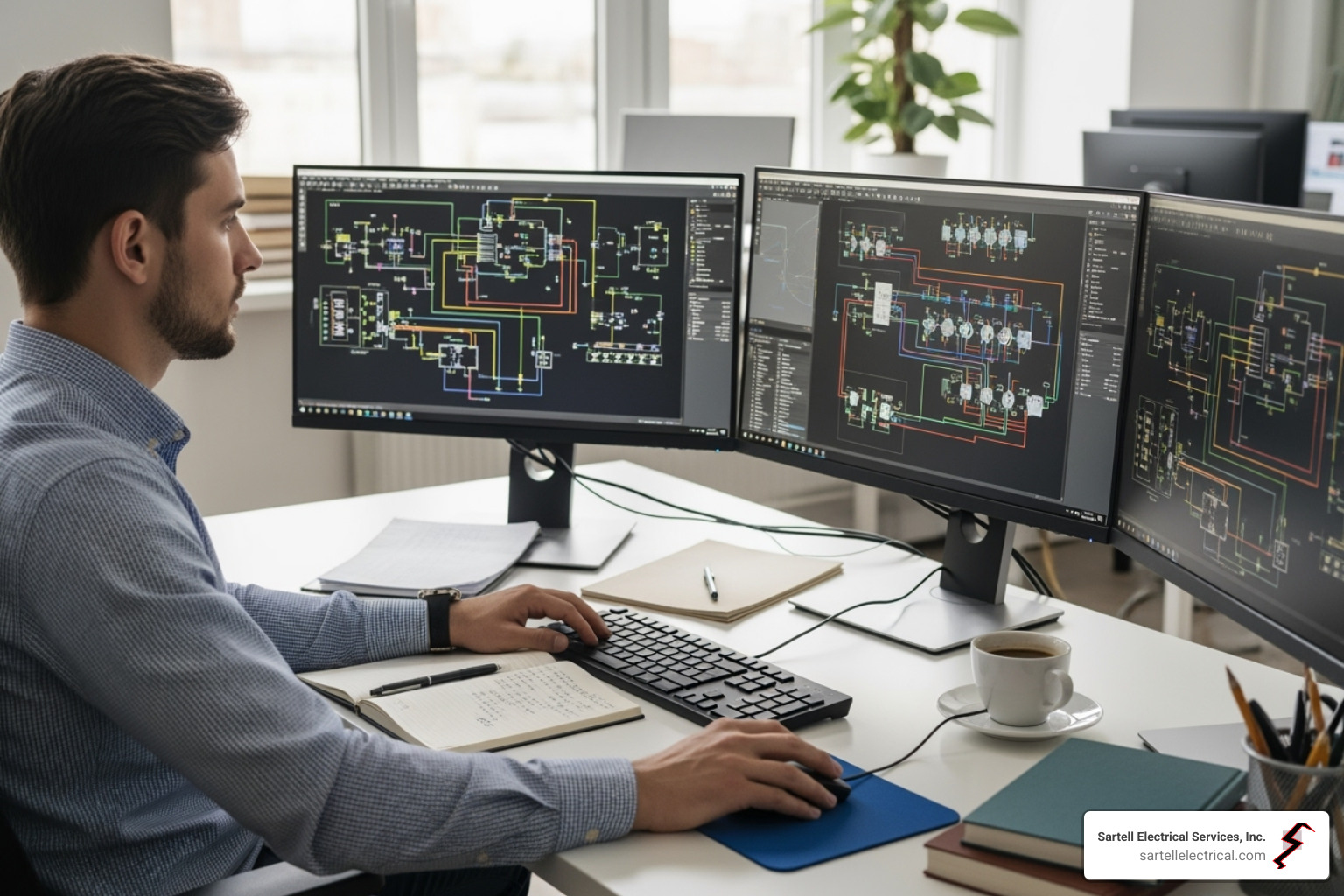
in-house electrical engineers, experienced project managers, and licensed electricians all collaborating under the same roof. When these professionals are cross-trained and familiar with each other's work, they speak the same language and share the same commitment to your project's success.
This unified approach gives you access to CAD and BIM capabilities, constructability reviews before a single wire is pulled, and value engineering that can save you thousands. Problems get solved in real-time because the people who designed the system are working alongside the people who'll install it. For more about how our integrated team works together, visit
our company page.
The Power of a Single, Unified Team
Picture this: the electrician finds an issue during installation and walks down the hall to talk directly with the engineer who designed that section. Within an hour, they've worked out a better solution together. That's the beauty of a unified team.
In traditional project delivery, that same scenario might involve phone calls between separate companies, finger-pointing about who's responsible, and days or weeks of delays while everyone protects their own interests.
With design-build, everyone shares the same goal because everyone works for the same company. There's no blame game, no communication breakdowns between separate firms, and no adversarial relationships slowing things down.
This seamless collaboration means faster decision-making when it matters most. Your project keeps moving forward because the designer and builder aren't just working together—they're actually on the same team, with the same priorities and the same accountability. The synergy between these professionals eliminates the friction that typically bogs down construction projects.
Why In-House Engineering is Crucial for Design-Build Electrical Services
Here's where the rubber meets the road.
In-house engineering isn't just a nice bonus—it's absolutely essential for quality design build electrical services. These are the professionals who handle your load calculations, design your power distribution system, plan your lighting layout, and ensure every detail meets current code requirements.
When engineers are part of your contractor's team rather than an outside firm, they're thinking about constructability from day one. They understand what's actually practical to build, not just what looks good on paper. They can perform value engineering throughout the design process, finding ways to meet your needs more efficiently without sacrificing quality or safety.
Our engineers work with advanced CAD and BIM software to create detailed, stamped engineered drawings that leave no room for guesswork. They conduct thorough constructability reviews and evaluate opportunities for pre-assembly that can speed up your project timeline.
Most importantly, having engineers in-house means budget control starts at the design phase, not after the plans are already set in stone and expensive changes become necessary.
This integration of design and construction expertise under one roof is what makes the design-build model work. Without true in-house engineering capabilities, you're just getting traditional design-bid-build with a different label slapped on it.
Tip 2: Analyze Their Project Management and Accountability
When you're evaluating providers of
design build electrical services, one of the most important factors to consider is how they handle project management and accountability. This isn't just about having someone to call when things go wrong—it's about having a partner who takes complete ownership of your project from start to finish.
The design-build model fundamentally changes the accountability equation. Instead of juggling multiple contracts and trying to determine who's responsible when issues arise, you have a single entity managing everything. This single point of contact becomes your advocate, shepherding your project through every phase while keeping a watchful eye on timelines and budgets.
What makes this approach so powerful? When the same team that designs your electrical system is also responsible for installing it, they have every incentive to get things right the first time. This naturally leads to proactive problem-solving rather than reactive finger-pointing. Design flaws get caught and corrected during the planning phase, not when you're halfway through construction and facing costly delays.
Let me paint you a picture of what project management looks like in a traditional setup: You're coordinating between an engineering firm, a general contractor, and various subcontractors. Each has their own priorities, timelines, and interpretation of the plans. When something doesn't align, you become the referee, trying to piece together who said what and who's responsible for fixing it.
Now contrast that with
design build electrical services done right. You have one dedicated project manager who knows every detail of your project because their team handled both the design and the construction planning. This unified workflow means you're getting consistent updates from someone who genuinely understands the full scope of what's happening.
Your administrative burden drops dramatically. Instead of multiple meetings with different teams, you have streamlined communication with people who are all working from the same playbook. When decisions need to be made, you're not waiting for information to filter through multiple organizations. The team can respond quickly because everyone is already in sync.
This cohesive approach ensures that your project vision stays intact from concept to completion. There's no "lost in translation" moment where the installers misinterpret what the designers intended, because they're the same organization working toward shared goals.
How Accountability Minimizes Risk and Change Orders
Here's where the design-build model really shines: accountability without excuses. When one entity is responsible for both design and construction, there's simply no one else to blame when challenges arise. This might sound like a minor point, but it fundamentally changes how problems get solved.
In traditional projects, design flaws often don't surface until construction is underway. At that point, you're looking at change orders, delays, and disputes about who should pay for the fixes. With
design build electrical services, the team that created the design is the same team building it. They have every reason to ensure the design is constructable, code-compliant, and practical before breaking ground.
This integrated responsibility leads to fewer surprises and better cost control. Industry data consistently shows that design-build projects outperform traditional delivery methods when it comes to controlling cost growth. Why? Because potential issues get identified and resolved during the design phase, when changes are relatively inexpensive, rather than during construction when they can derail your budget and timeline.
The guaranteed performance you get from a single, invested entity provides real peace of mind. You're not navigating a maze of contracts trying to figure out who's on the hook for what. One team, one contract, one clear line of accountability—that's the design-build difference.
To learn more about how we structure our project management approach to maximize accountability and minimize risk, visit our page on
Electrical Project Management.
Tip 3: Evaluate Their Experience with Your Project Type
Here's something I've learned after three decades in this business: not all electrical projects are created equal. When you're choosing a provider for
design build electrical services, you need more than someone who simply offers the service. You need a partner who's already walked the path you're about to take.
The electrical demands of a pharmaceutical clean room are worlds apart from those of a manufacturing facility or a commercial office building. A contractor who truly understands your industry brings more than technical skills—they bring insights into the unique challenges you'll face, the regulations you must meet, and the efficiencies that can save you money.
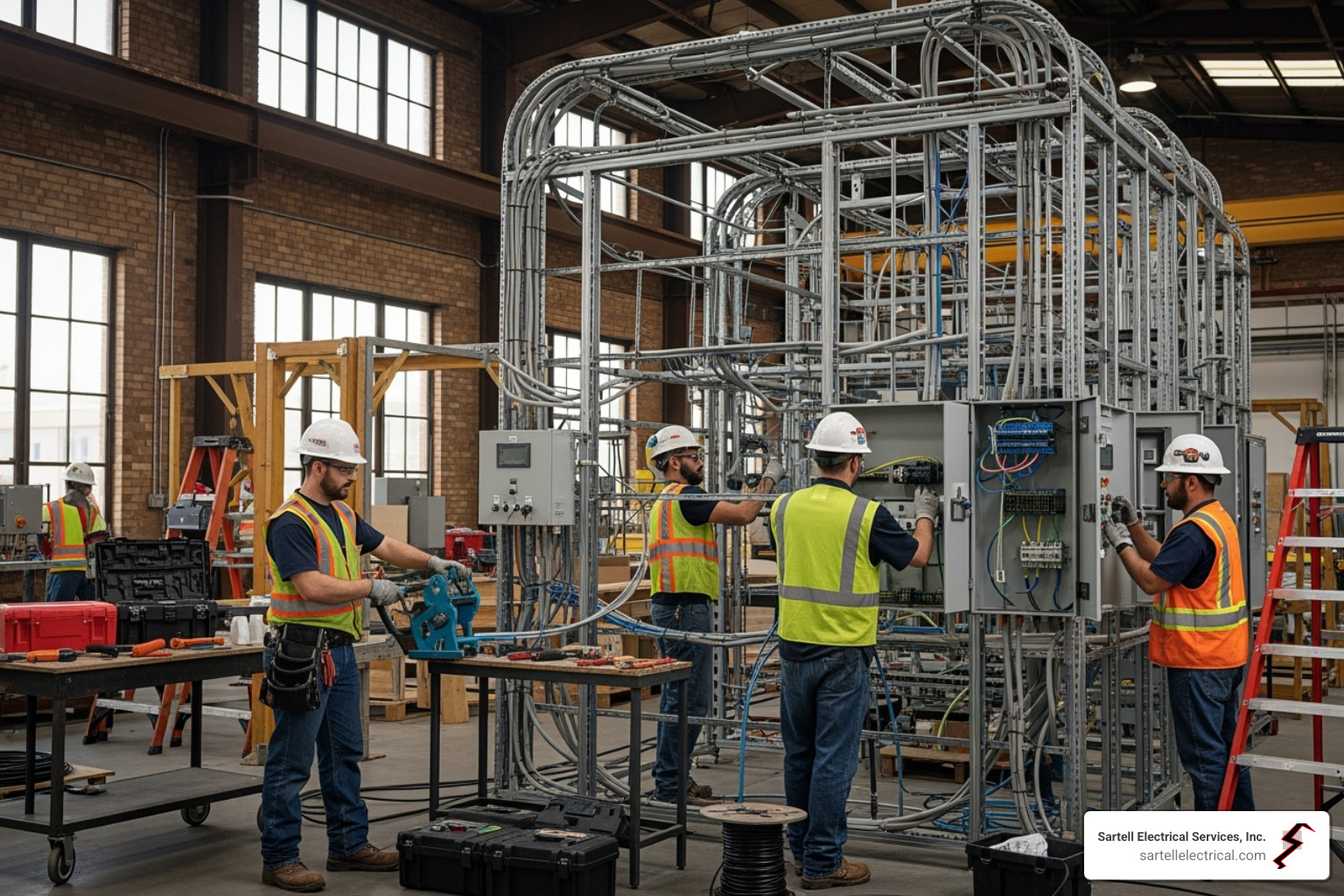
Before you sign on the dotted line, take time to review a contractor's portfolio. Look for projects that mirror yours in complexity and scale. Read through client testimonials—not just for glowing praise, but for specifics about how the contractor handled challenges similar to what you might face. Ask direct questions about their industry specialization. This homework pays dividends when your project gets underway.
To see the breadth of work we've completed across Massachusetts,
view our past Projects.
Industries That Benefit Most from Design-Build
The collaborative nature of
design build electrical services truly shines when projects get complex. Some industries are particularly well-suited to this approach, and chances are, yours is among them.
Commercial buildings like office towers and retail spaces need sophisticated power distribution and lighting systems that balance efficiency with aesthetics.
Industrial facilities—whether you're running a manufacturing plant, processing food and beverages, or operating a distribution center—require robust electrical solutions that keep production lines humming without interruption.
Data centers represent a specialized challenge altogether. These facilities demand critical power infrastructure with redundancy built into every layer, along with backup generator systems that kick in without a hiccup.
Healthcare institutions and
pharmaceutical plants have similar needs for reliability, plus stringent requirements for life safety systems and power quality that can't be compromised.
Educational institutions need adaptable systems that can evolve as technology changes and student populations grow.
Manufacturing facilities benefit from our expertise in industrial automation and control panel fabrication. We've also worked extensively with
water treatment facilities, both municipal and industrial, where specialized electrical solutions keep essential services running.
What ties these industries together? They all have complex electrical requirements, strict timelines, and a need for systems that can scale as their operations grow. That's exactly where design-build excels.
Matching Experience to Your Design-Build Electrical Services Needs
Your electrical project represents a significant investment in your facility's future. Getting it right means matching your specific needs with a contractor's proven experience in similar work.
If your project involves
complex electrical requirements—think integrated power distribution, sophisticated lighting controls, automation systems, and comprehensive safety systems—you need a team that's orchestrated these elements before. They'll know how these systems interact and where potential conflicts might arise before they become problems.
For
fast-track projects where time is money, experience matters even more. A seasoned design-build partner knows how to overlap design and construction phases safely, procure materials early, and keep everyone moving forward without sacrificing quality. The same applies to
budget-critical projects, where value engineering expertise can identify cost savings without compromising performance.
And if you're thinking about tomorrow—planning for future growth or anticipating technology upgrades—a contractor experienced in designing for
scalability becomes invaluable. They'll build flexibility into your electrical infrastructure from day one, saving you from costly retrofits down the road.
We've built our reputation on handling diverse, complex projects across Massachusetts. For specific industrial applications, explore
our Industrial Electrical Solutions to see how we've helped facilities like yours.
Tip 4: Scrutinize Their Approach to Cost, Schedule, and Quality
When you're evaluating providers of
design build electrical services, one of the most important things to examine is how they handle the delicate balance between cost, schedule, and quality. The beauty of the design-build model is that it's designed to optimize all three simultaneously—but this only happens when your contractor has a solid, proven approach to managing them.
What sets design-build apart from traditional methods is the
overlapping of design and construction phases. This isn't just a scheduling trick—it's a fundamental shift in how projects are delivered. Unlike the old-school approach where design must be 100% complete before anyone can even think about breaking ground, design-build allows construction to begin while design refinements are still happening. This creates a natural flow that dramatically speeds up delivery while reducing administrative overhead and building in quality checks from day one.
The result? Your project moves faster, costs less, and maintains the high standards you expect. But don't just take my word for it—the numbers back this up consistently.
Opening up Faster Timelines and Significant Cost Savings
Let me paint you a picture of how this actually works on the ground. With effective
design build electrical services, your construction team can start work even while the design team is putting the finishing touches on certain elements. This parallel workflow means we can begin procuring materials early, avoiding those frustrating supply chain delays that can bring traditional projects to a grinding halt.
And here's where it gets really interesting: independent research has proven that design-build projects statistically outperform traditional methods in both unit cost and cost growth. This isn't marketing fluff—it's documented fact. The reason is simple. When your design and construction teams work together from the start, they can spot value engineering opportunities that might never surface in a traditional setup. Maybe there's a more cost-effective way to route conduit, or perhaps a different lighting layout achieves the same results with fewer fixtures. These insights only emerge when designers and builders are collaborating, not working in isolation.
This integrated approach also minimizes rework, which is one of the biggest budget killers in traditional projects. When the people installing the system are involved in designing it, they catch potential issues before they become expensive problems. The construction team can provide real-world feedback on constructability while there's still time to adjust plans without costly change orders.
The reduced administrative costs are another hidden benefit. Instead of managing separate contracts, coordinating between multiple parties, and mediating disputes, you're working with one unified team. This streamlined structure means less time spent on paperwork and meetings, and more time focused on actually completing your project.
If you want to dive deeper into the methodology and research behind these benefits, the Design-Build Institute of America has excellent resources:
Learn about the Design-Build method.
To help you see the differences clearly, here's how design-build stacks up against the traditional design-bid-build approach:
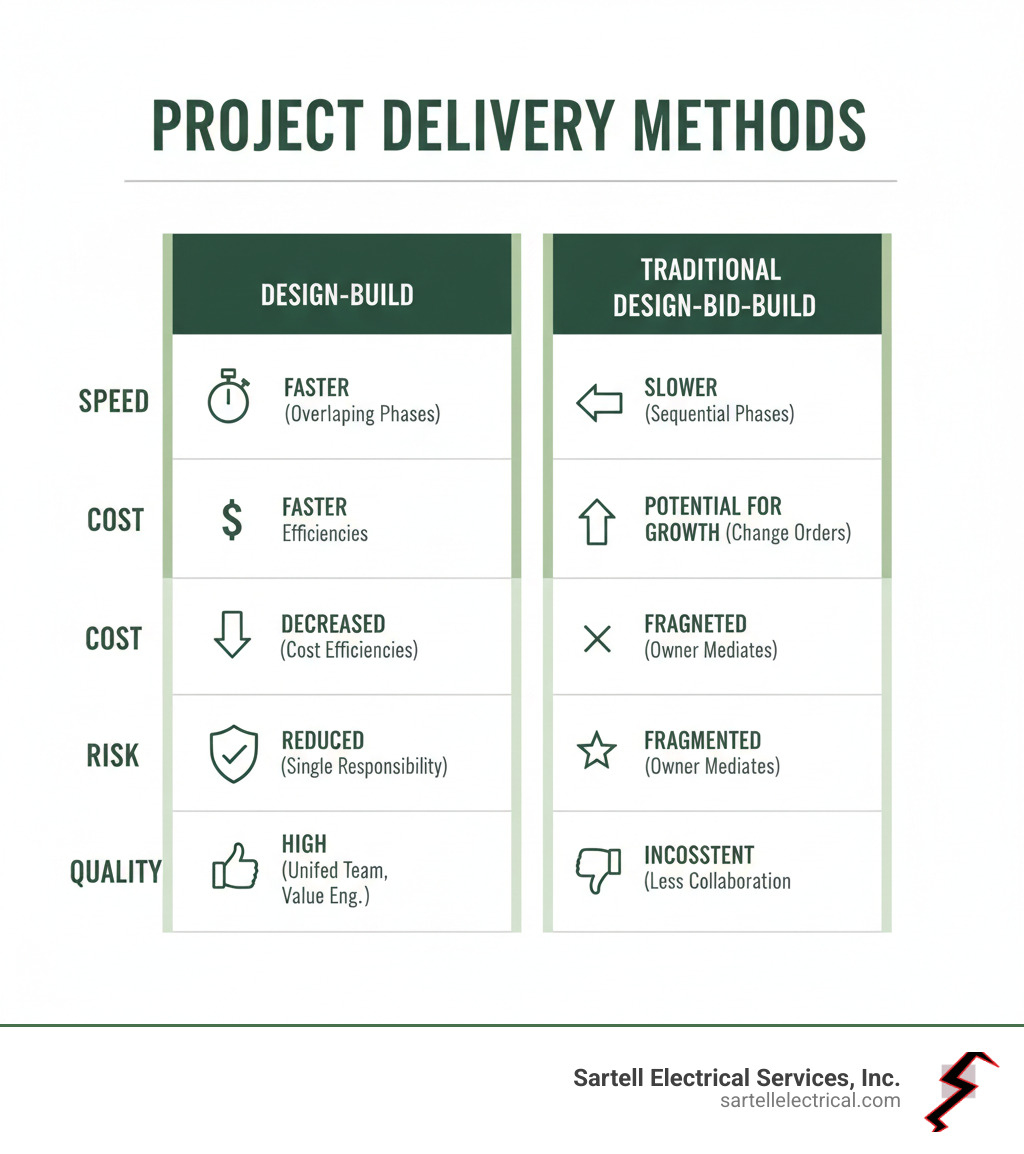
| Feature |
Design-Build |
Traditional Design-Bid-Build |
| Speed |
Faster (overlapping phases, construction starts early) |
Slower (sequential phases, design 100% complete before bidding/construction) |
| Cost |
Decreased (cost efficiencies, fewer surprises, statistically proven better cost growth) |
Higher potential for growth (separate entities, misinterpretation, change orders) |
| Risk |
Reduced (single entity responsible, design flaws addressed early, minimizes change orders) |
Fragmented (owner mediates disputes, liability gaps between designer/contractor) |
| Quality |
High (unified team, open communication, value engineering, constructability reviews) |
Can be inconsistent (less collaboration, potential for adversarial relationships) |
| Accountability |
Single point (one entity, one contract) |
Divided (multiple contracts, owner mediates) |
| Communication |
Streamlined (integrated team, collaboration) |
Siloed (separate design and construction teams) |
The bottom line? When you choose a design-build partner with a proven approach to managing cost, schedule, and quality, you're not just getting your project done faster—you're getting it done smarter, with better cost control and fewer headaches along the way.
Tip 5: Confirm Their Commitment to Innovation and Sustainability
When you're choosing a partner for
design build electrical services, their commitment to innovation and sustainability tells you a lot about how they'll serve you both now and in the future. This isn't just about checking a "green" box—it's about creating electrical systems that work smarter, cost less to operate, and adapt as technology evolves.
The best design-build electrical contractors don't just install wiring; they think about your building's energy footprint from day one. They understand that sustainability and profitability go hand in hand. A well-designed, energy-efficient electrical system can dramatically reduce your operating costs while positioning your facility as an environmental leader.
Look for a contractor with experience in
LEED certified projects and
net-zero buildings. These aren't just buzzwords—they represent a deep understanding of how to design electrical systems that minimize energy consumption while maximizing performance. A contractor who has successfully delivered these types of projects knows how to steer the complex requirements and deliver systems that actually perform as promised.
Energy efficiency audits should be part of their toolkit. A thorough audit identifies where your facility is wasting energy and provides a roadmap for improvements. This might include
LED lighting retrofits that cut your lighting costs by 50% or more, or
power factor correction systems that reduce demand charges on your utility bill. These solutions pay for themselves over time while reducing your environmental impact.
With electric vehicles becoming mainstream,
EV charging station installation expertise is no longer optional—it's essential. Whether you're a business looking to provide charging for employees and customers, or an institution planning for a fleet of electric vehicles, your design-build partner should be able to design and install charging infrastructure that meets your current needs and scales for future growth.
Solar systems and other renewable energy integration represent another frontier where innovation meets sustainability. A forward-thinking contractor will design your electrical infrastructure to accommodate solar panels, battery storage, and other alternative energy sources, even if you're not installing them immediately. This
future-proofing design approach ensures you're not locked into outdated technology and can adapt as energy options evolve.
The integration of these green energy solutions into your project from the design phase—rather than as an afterthought—is what separates truly innovative
design build electrical services from conventional approaches. When sustainability is baked into the design process, you get systems that work together seamlessly, deliver better performance, and provide a clear return on investment through reduced operating costs and improved property value.
Frequently Asked Questions about Design-Build Electrical Contracting
We know that choosing
design build electrical services is a significant decision, and you likely have questions about how this approach differs from what you might be familiar with. Over my years at Sartell Electrical Services, I've had countless conversations with clients who are curious about the design-build model. Here are the questions I hear most often:
What is the main difference in contracts between design-build and traditional methods?
The contract structure is where you'll notice the most dramatic difference. In traditional project delivery, you're juggling multiple relationships and contracts. You'll have one contract with an architect or engineer who designs your electrical system, and then a completely separate contract with a contractor who builds it. If something goes wrong or there's a disagreement between the designer and builder, guess who gets stuck in the middle? You do.
With
design build electrical services, everything changes. You sign a single contract with one team that handles both design and construction. That's it. One relationship to manage, one entity responsible for the entire project from start to finish. The legal and administrative structure becomes wonderfully simple because there's just one point of accountability. When design and construction are unified under one contract, you're not mediating disputes or trying to figure out who's responsible for what. It's all under one roof, and that makes your life considerably easier.
How does the design-build model facilitate problem-solving?
This is where the design-build approach really proves its worth. When engineers and electricians work together from day one, magic happens. There's open communication flowing naturally between the people designing your system and the people who will actually install it. No walls between departments, no "that's not my problem" attitudes.
This collaborative mindset means potential issues get spotted early, often before they ever make it to the construction site. Our engineers might propose a solution, and our field electricians can immediately weigh in on the practical aspects. Sometimes the best innovations come from this teamwork—a designer suggests something clever, an electrician offers a refinement based on field experience, and together they create something better than either could have alone.
The result? Fewer conflicts, more innovative solutions, and practical design choices that actually work in the real world. Instead of adversarial relationships where designers and contractors blame each other, you get a unified team solving problems together. After 30 years in this business, I can tell you that this collaborative approach consistently delivers better outcomes.
What are the key steps in a typical design-build electrical project?
Every project is unique, but most
design build electrical services projects follow a similar path. It starts with an
initial consultation and scope development where we sit down with you to really understand what you need. We're not just talking about electrical specs—we want to know your vision, your goals, and what success looks like for you.
Next comes
collaborative design and budgeting. Our engineers and designers work hand-in-hand with you to develop the electrical design, and here's the crucial part: we're analyzing costs as we go. No surprises later about what things will actually cost. Once we've nailed down the design together, we handle all the
permitting and plan submission to ensure everything meets code requirements.
Then we get to the phase where design-build really shines:
overlapping design refinement and construction. While we're fine-tuning some design details, construction is already underway on other parts of the project. This overlap is what accelerates your timeline significantly compared to traditional methods.
During
installation and commissioning, our licensed electricians install everything according to the approved designs, followed by thorough testing to ensure your system performs flawlessly. Finally, at
project close-out, we provide you with complete as-built drawings—a detailed record of exactly what was installed, which becomes invaluable for future maintenance and modifications.
Throughout all these steps, you have a single point of contact managing everything, keeping you informed, and ensuring the project stays on track.
Conclusion
Finding the right electrical contractor for your project isn't just about checking boxes on a list—it's about finding a partner you can trust to bring your vision to life. Throughout this guide, we've walked through five essential tips that will help you identify a provider of
design build electrical services who can truly deliver on the promises this innovative approach offers.
Let's recap what matters most: First, look for integrated expertise with genuine in-house capabilities—a unified team of engineers, project managers, and electricians working under one roof. Second, ensure they offer strong project management with clear accountability and a single point of contact. Third, verify they have proven experience with projects like yours. Fourth, examine how they approach the critical balance of cost, schedule, and quality. And finally, confirm they're committed to innovation and sustainability for the long term.
The beauty of the design-build model lies in its ability to deliver faster timelines, significant cost savings, superior quality, and dramatically reduced risk. But these benefits only materialize when you choose a contractor with the right experience, capabilities, and commitment to excellence.
At Sartell Electrical Services, these five principles aren't just guidelines—they're the foundation of how we've operated for over 30 years. Serving commercial and industrial clients across Massachusetts, we've built our reputation on taking ownership of every project, acting as your advocate, and delivering solutions that don't just meet expectations but exceed them. When you work with us, you're not hiring a contractor; you're gaining a partner who's invested in your success from the first blueprint to the final inspection.
Your next electrical project deserves more than a transactional relationship. It deserves a team that understands your goals, anticipates challenges, and brings decades of expertise to every decision. That's what we bring to the table, and that's what sets true
design build electrical services apart from the rest.
Ready to experience the difference that a trusted, experienced design-build partner can make?
Explore our Commercial Electrical Services and let's start a conversation about changing your vision into reality. We're here to make your electrical project not just successful, but remarkably smooth from start to finish.