Breaker panel upgrade: Top 5 Smart Moves
Why Your Electrical Panel Might Need an Upgrade
A
breaker panel upgrade is a critical safety and capacity improvement for any home. If you're evaluating whether you need an upgrade, here are the key indicators:
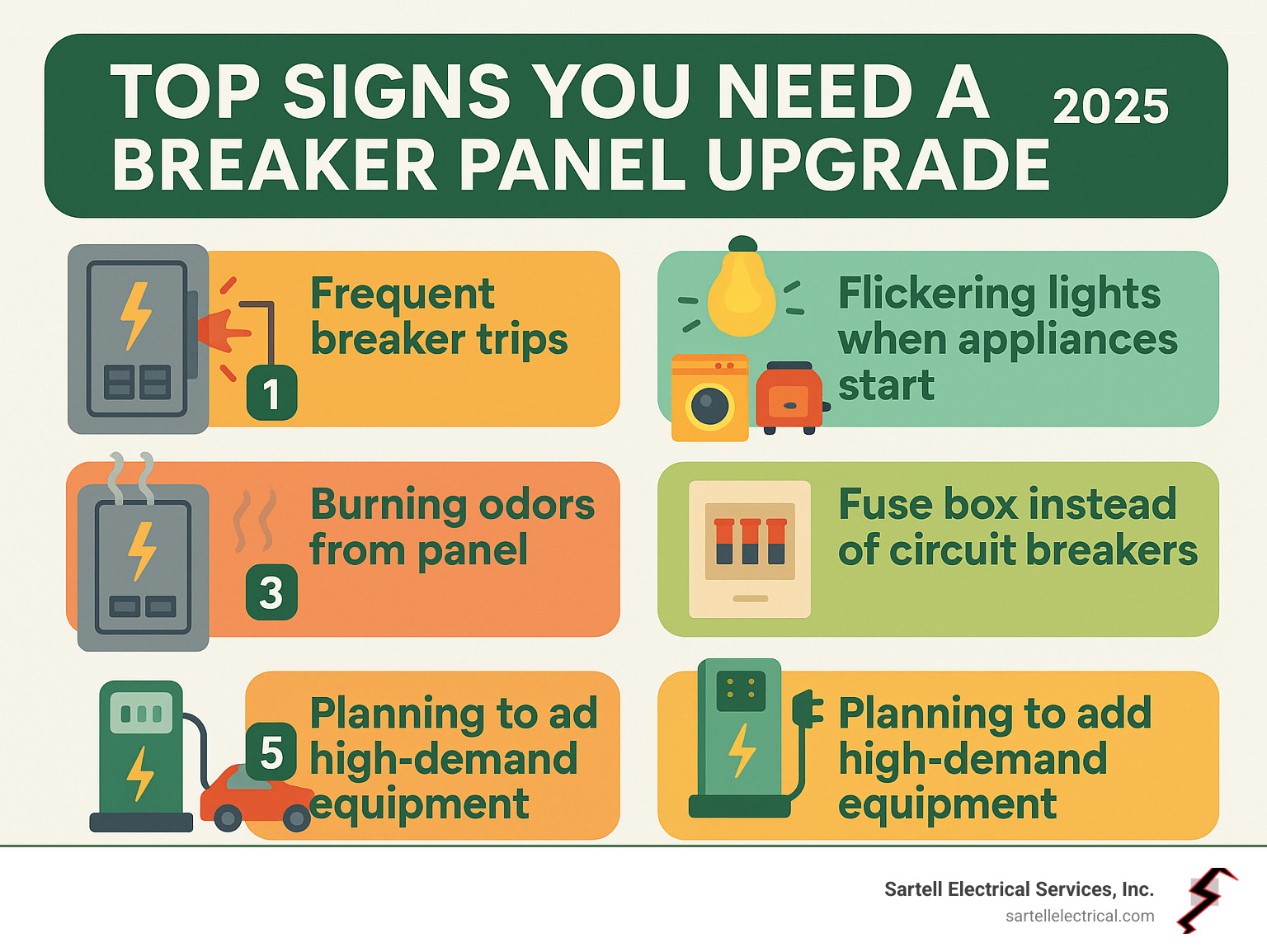
Top Signs You Need a Breaker Panel Upgrade:
- Frequent breaker trips - circuits shutting off repeatedly
- Flickering or dimming lights when appliances turn on
- Burning smells or warm panels to the touch
- Fuse box instead of breakers - especially in buildings over 40 years old
- Planning major additions like EV chargers, heat pumps, or solar panels
- Insufficient capacity for modern electrical demands
The typical cost ranges from
$1,500 to $4,000 for most upgrades, with 200-amp panels being the current standard for modern homes.
Modern electrical demands have grown dramatically. A 60-amp panel from the 1960s is no longer adequate for today's high-efficiency HVAC systems and electric vehicle charging stations, which often require 200 to 400 amps.
With nearly four decades of experience serving Massachusetts, our team at Sartell Electrical Services, led by President Ed Sartell, has seen how a proper
breaker panel upgrade improves both safety and functionality for homeowners.
Common
breaker panel upgrade vocab:
Is It Time for an Upgrade? Key Signs and Reasons
Dimming lights when the A/C kicks on or a tripped breaker from using the microwave are more than minor annoyances—they're signs your home's electrical system is struggling. An outdated or overloaded panel isn't just inconvenient; it's a serious safety hazard.
For homes built before 1980, the existing electrical panel is likely outdated and due for a
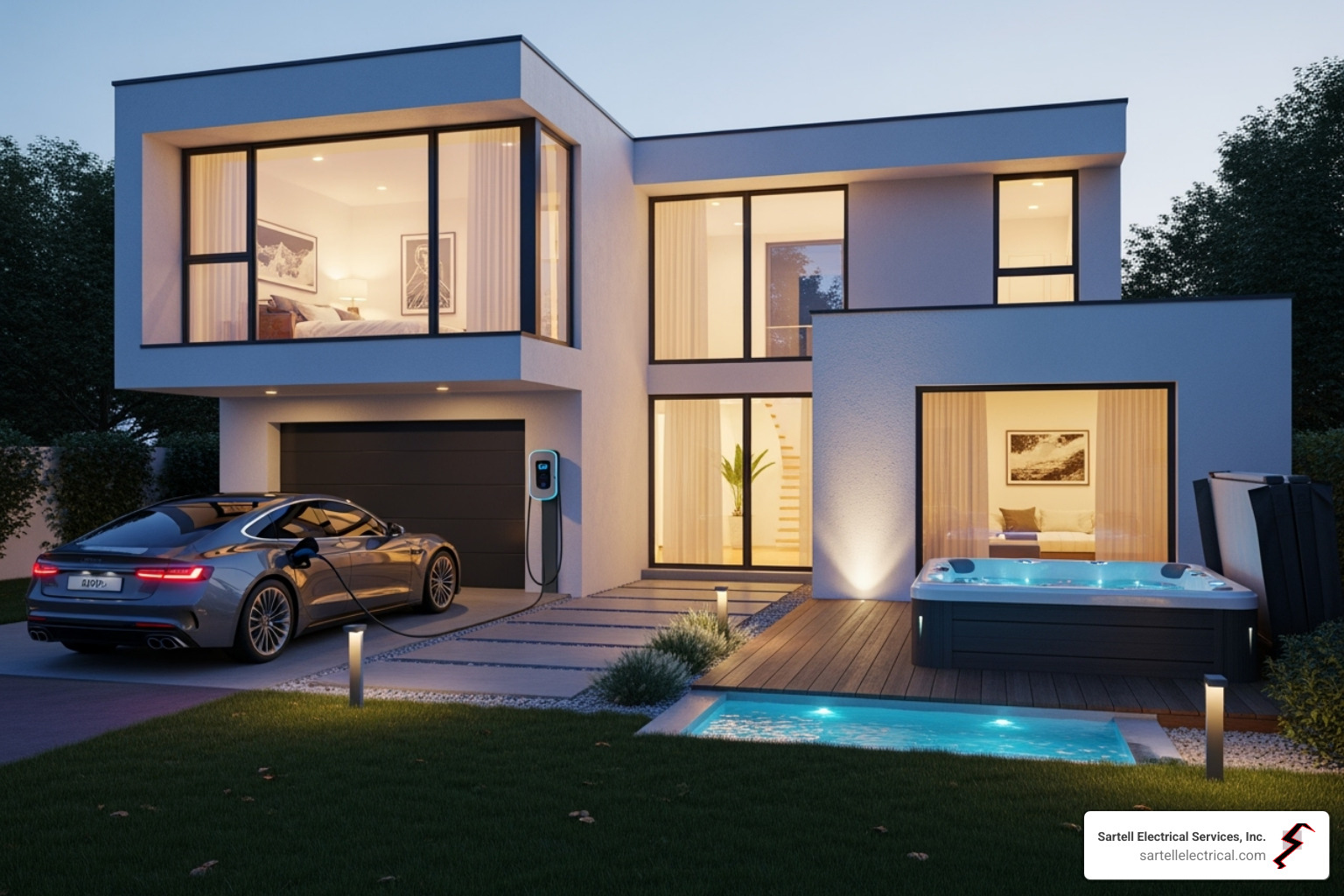
breaker panel upgrade. Today's homes are filled with power-hungry devices, from HVAC units and entertainment systems to electric vehicle chargers. These innovations demand significantly more power than older systems were designed for. If you're adding major appliances like an EV charger or hot tub, a panel upgrade is often necessary to safely meet the increased power needs.
Fuses vs. Circuit Breakers
Many older homes still rely on fuse boxes. While they served their purpose, modern circuit breakers offer significant advantages in safety, convenience, and capacity.
| Feature |
Fuse Box |
Circuit Breaker Panel |
| Operation |
Uses metal fuses that melt and break circuit when overloaded; must be replaced once "blown." |
Uses switches that trip (flip off) when overloaded; can be reset. |
| Lifespan |
Average 25-40 years (with maintenance) |
Average 30-40 years (for breakers themselves) |
| Safety |
Can be fire hazard if wrong fuse installed; less protection against modern electrical issues. |
Offers superior protection against overloads and short circuits; modern panels include AFCI/GFCI options. |
| Convenience |
Requires physical replacement of fuse each time circuit trips. |
Simple flip of a switch to restore power. |
| Capacity |
Typically lower amperage (60-100 Amps); limited capacity for modern demands. |
Higher amperage (100-400+ Amps); designed for multiple high-demand circuits. |
| GFCI Compatibility |
Generally not compatible with modern GFCI/AFCI outlets. |
Fully compatible with modern safety breakers (GFCI, AFCI). |
| Insurance |
May lead to higher insurance premiums or difficulty securing coverage. |
Often results in lower premiums due to improved safety. |
Fuse boxes lack the safety and convenience of a modern circuit breaker panel. Finding parts for old 60-amp fuse boxes can be difficult, and they are incompatible with modern safety requirements like GFCI outlets. Upgrading from a fuse box to a circuit breaker panel is a highly recommended
breaker panel upgrade that improves home safety and functionality.
Telltale Signs Your Panel is Overloaded or Outdated
Your electrical system often gives hints that it's struggling. Ignoring these can lead to serious problems, including electrical fires. Pay attention to these warning signs:
- Frequent Breaker Trips: A breaker that constantly trips is a clear sign of an overloaded circuit.
- Flickering or Dimming Lights: This indicates your electrical system isn't delivering consistent power, especially when a major appliance turns on.
- Burning Smell: A burning odor from your panel or outlets is a critical warning of overheating wires. Turn off your main power immediately and call a professional.
- Warm or Hot Panel: An electrical panel that is warm to the touch indicates excessive heat buildup, a potential fire hazard.
- Scorch Marks: Discolored outlets or scorch marks around your panel are clear signs of electrical arcing or overheating.
- Buzzing or Crackling Noises: Loud buzzing or crackling from your panel suggests loose connections or damaged components.
- Insufficient Outlets: Heavy reliance on extension cords and power strips is a strong indicator that your home's electrical capacity is inadequate.
- Old Age of Home: If your home is over 40 years old, your panel is likely past its prime, as breakers have an average lifespan of 30-40 years.
If you observe any of these signs in your Boston, Reading, or Andover home, it's time to consider a professional assessment for a
breaker panel upgrade.
Understanding the Breaker Panel Upgrade Process
The thought of a
breaker panel upgrade can feel overwhelming, but with a professional team, it's a well-orchestrated process that's less disruptive than you might think.
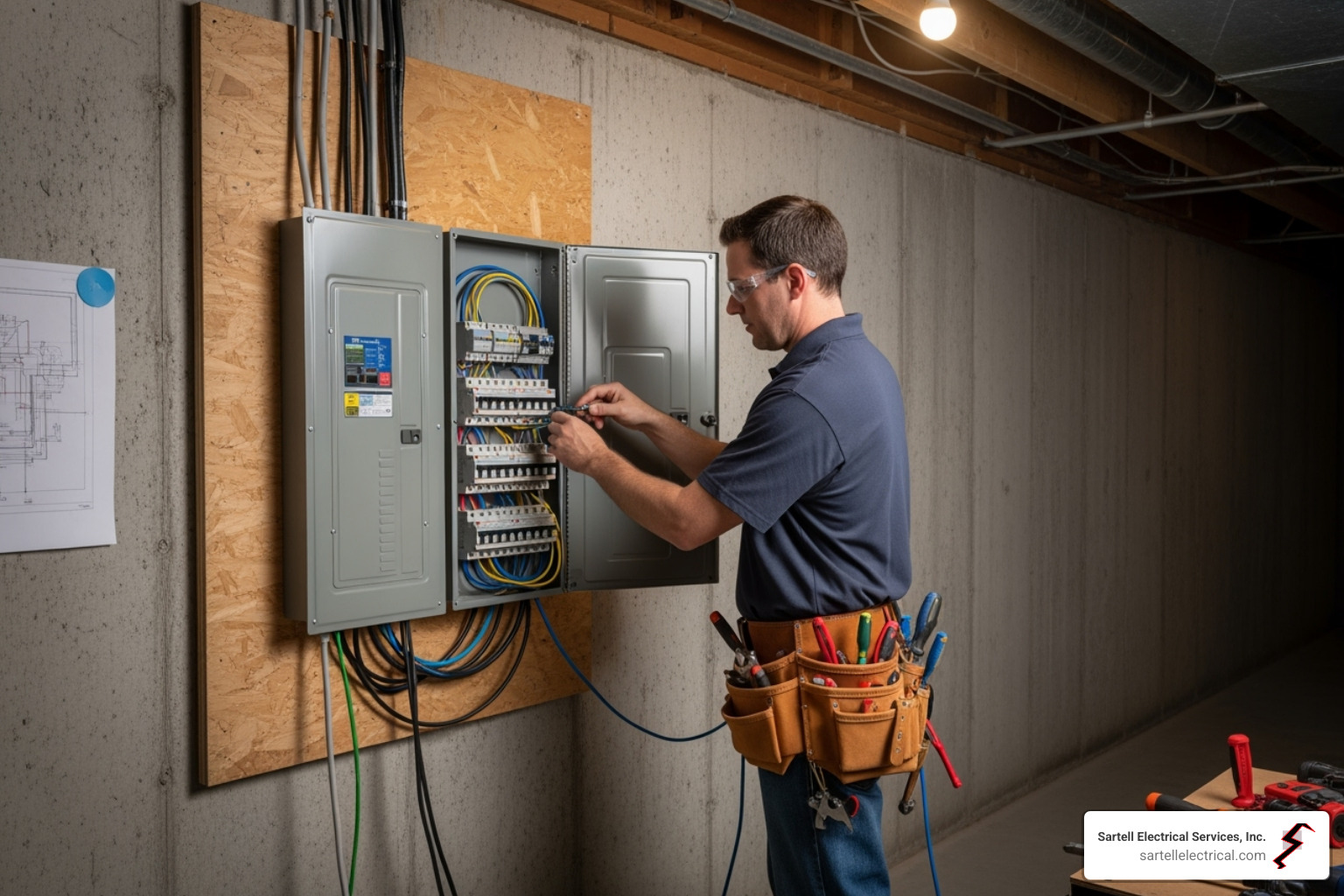
At Sartell Electrical Services, we've refined our
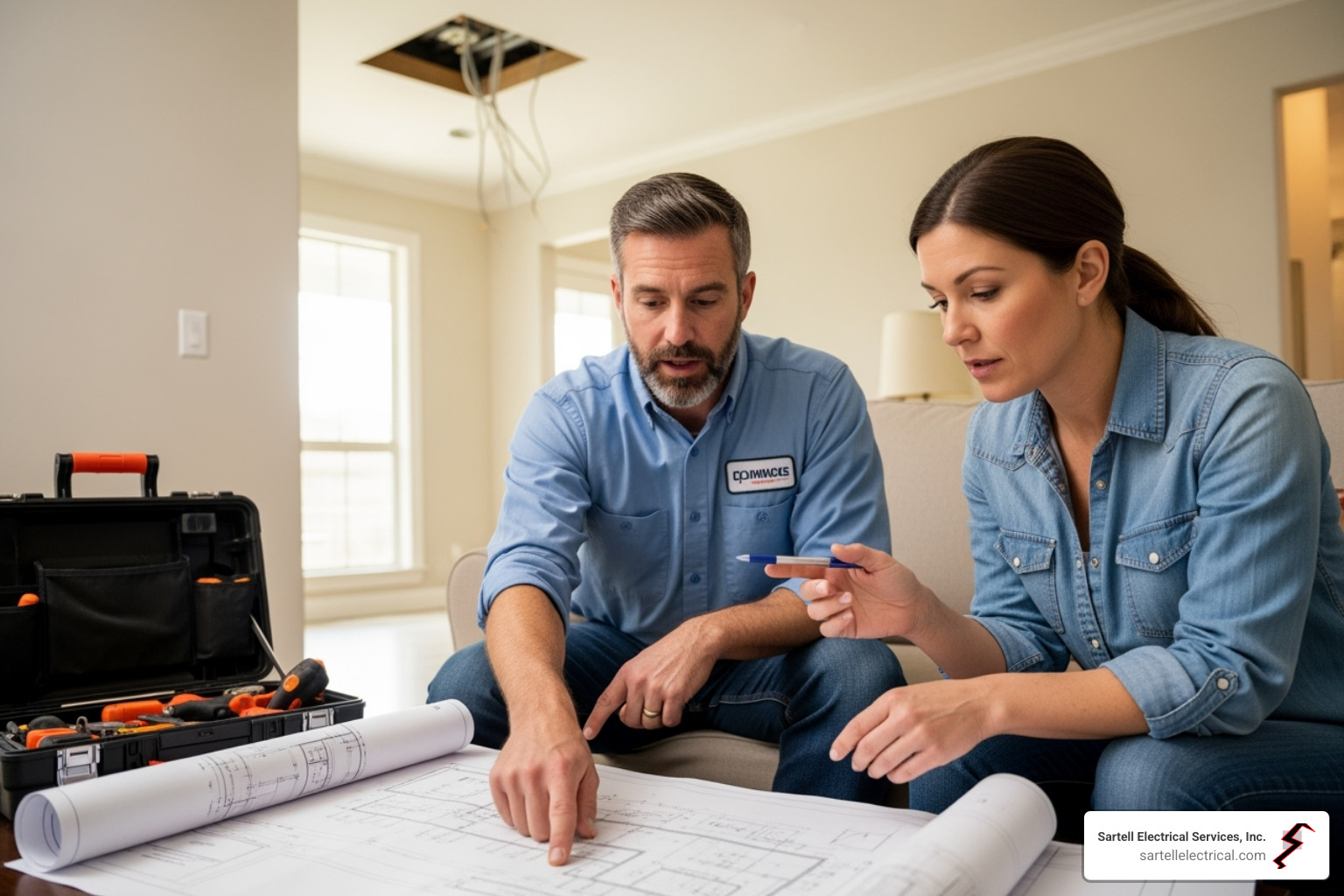
breaker panel upgrade process over decades of serving Massachusetts homeowners. Every project starts with thorough planning—we assess your current and future needs, like a planned EV charger. We also handle all permitting with your municipality and utility company. Our deep knowledge of strict Massachusetts electrical codes ensures your project stays on track and passes inspection the first time.
We keep you informed about timing and what to expect. Most upgrades follow a predictable timeline that we'll outline clearly before we begin. You can learn more about
our process and our reputation for reliability.
What to Expect During Your Breaker Panel Upgrade
Here’s a breakdown of what happens during a typical
breaker panel upgrade.
- Detailed Assessment: We start with a thorough evaluation of your current system, including wire conditions and load calculations.
- Power Shutdown: For safety, we must turn off your main power. We coordinate this with your schedule to minimize disruption and work efficiently to restore power as quickly as possible.
- Old Panel Removal: We methodically disconnect and remove your old fuse box or breaker panel, ensuring proper disposal of all components.
- New Panel Installation: We install your new, modern panel, designed to handle today's electrical demands with room for future growth. We may recommend relocating the panel for better access or safety, which would be discussed during planning.
- Wiring Connections: Our licensed electricians carefully connect each circuit to the new panel. If existing wires are too short, we install proper junction boxes to safely extend them per Massachusetts electrical code.
- Circuit Labeling: We create clear, detailed labels for each circuit, so you know exactly what each breaker controls.
- Final Inspection: We conduct our own quality check and coordinate the required municipal inspection. We test every circuit and verify all safety features are working correctly before considering the job complete.
How Long Does an Upgrade Take?
For a standard
breaker panel upgrade, the work is typically completed in
four to eight hours, meaning your power will likely be restored the same day.
However, timing can be affected by a few factors.
Complex projects, such as those involving damaged wiring or panel relocation, may take longer. We prioritize doing the job right over rushing and compromising safety.
Service upgrades, which involve upgrading the main electrical line from the utility, are more involved. These projects require coordination with the utility company and can span several days, though the on-site work time is similar. Our goal is always to minimize disruption by planning carefully and communicating clearly about the timeline.
Costs vs. Benefits: What to Expect Financially
While the cost of a
breaker panel upgrade is a primary concern for homeowners, it's best viewed as an investment in your home's safety, value, and future-readiness.
A modern electrical panel
increases your home's value and makes it more attractive to buyers. More importantly, it dramatically
reduces the risk of electrical fires. An upgraded panel also
improves energy efficiency by ensuring your appliances receive consistent power, which can lower utility bills. Many insurance companies also offer discounts for homes with updated electrical systems. Learn more about how our
Residential Electrical Services can improve your home's safety and value.
Key Factors Influencing Your Breaker Panel Upgrade Cost
The cost of a
breaker panel upgrade in Massachusetts typically ranges from
$1,500 to $4,000. Several factors influence the final price:
- Panel Amperage: A basic 100-amp panel may meet code, but a 200-amp panel is the modern standard, capable of handling EV chargers and other high-demand appliances. Larger homes may need a 400-amp panel, which increases the cost.
- Location and Accessibility: Difficult-to-access panels in cramped spaces can increase labor time and complexity.
- Wiring Complexity: Older homes may have wiring that needs to be updated or extended to meet current codes, adding to the time and material costs.
- Labor and Permits: Our rates reflect the expertise of licensed electricians. Permit fees, required for inspection and code compliance, are also part of the total cost.
- Service Upgrade: If the main service line from the utility also needs an upgrade, this involves coordination with the utility and can significantly increase the project cost, with fees ranging from $250 to over $25,000 in complex cases.
The Long-Term Benefits of a New Panel
A
breaker panel upgrade pays dividends for decades.
- Improved Safety: Modern panels with AFCI and GFCI breakers actively prevent electrical fires and shock hazards.
- Increased Electrical Capacity: Run multiple appliances, charge your EV, and use modern technology without worrying about overloading circuits or dimming lights.
- Future-Proofing: An upgraded panel prepares your home for future technologies, from smart home devices to next-generation electric vehicles.
- Insurance Savings: Many insurance companies offer discounts for homes with updated, safer electrical systems.
- Supports Modern Technology: Stable, clean power protects your sensitive electronics from damage caused by power surges.
- Increased Home Value: An updated electrical system is a major selling point, signaling to buyers that a home is safe and well-maintained.
A professionally installed panel can serve your family reliably for
twenty years or more, making it one of the most cost-effective improvements for your home.
Choosing a Qualified Electrician in Massachusetts
Choosing the right electrician for your
breaker panel upgrade is critical for your family's safety. This isn't a job for an amateur; it requires a licensed, experienced professional.
In Massachusetts, any electrician working on your home must hold a valid state
license and carry sufficient
insurance (at least $1,000,000 in liability coverage).
Experience is also crucial for this specialized work. At Sartell Electrical Services, we have been serving the Greater Boston area for over 30 years.
Always vet contractors by checking references and reading online reviews. We are proud of our track record, which you can see in
our customer testimonials.
Why This is Not a DIY Project
While DIY projects can be satisfying, a
breaker panel upgrade is a job exclusively for professionals for several key reasons:
- High-Voltage Dangers: Electrical panels carry lethal voltage. This work is extremely dangerous without the proper training and safety equipment.
- Fire Risk: A single wrong connection or incorrectly sized breaker can lead to a devastating electrical fire.
- Code Compliance: Massachusetts electrical code requirements are complex, specific, and exist to ensure your safety. Professionals are up-to-date on all current codes.
- Professional Expertise: Licensed electricians can identify potential issues, recommend the right equipment, and have the specialized tools for the job.
- Insurance Coverage: Most homeowner's insurance policies will not cover damage resulting from unpermitted, DIY electrical work.
Questions to Ask Your Electrical Contractor
Before hiring an electrician, ask these important questions:
- "Are you licensed and insured in Massachusetts?" Ask for their license number (ours is ESA/ECRA #7014477) and proof of insurance.
- "Can you provide a detailed written contract?" The contract should outline the scope of work, materials, timeline, total cost, and warranty information.
- "Who purchases the materials?" We prefer to source materials ourselves to ensure we use reliable, high-quality brands.
- "What is the project timeline?" Get an honest assessment. A standard upgrade usually takes 4-8 hours, but complex jobs can take longer.
- "Who handles permits and inspections?" A professional contractor should manage all paperwork and coordination with local inspectors.
- "Can I speak with recent customers?" A reputable contractor will be happy to provide references for similar work.
The right electrician will make the process feel manageable, explaining everything clearly and leaving you with a safer, more capable electrical system.
Frequently Asked Questions about Electrical Panel Upgrades
After nearly four decades in the business, we at Sartell Electrical Services have answered countless questions about
breaker panel upgrades. Here are some of the most common ones.
Can you upgrade an electrical panel without rewiring the house?
Yes, in most cases. A
breaker panel upgrade and a full house rewiring are two separate projects. We can typically connect your existing wiring to a new, higher-capacity panel without major intrusive work.
However, rewiring may be necessary in certain situations for safety. If your home has outdated and unsafe wiring, such as
knob and tube or certain types of
aluminum wiring, those circuits must be replaced. We also may need to run new, heavier-gauge wire for high-demand appliances like an EV charger.
If we find damaged or undersized wiring during the upgrade, we will discuss your options to ensure the system is safe.
What is the average lifespan of a new breaker panel?
A quality
breaker panel upgrade, installed by licensed professionals, should last
30 to 40 years on average. The longevity of a panel depends on professional installation, environmental conditions (like humidity), and usage patterns.
Proper installation is the most critical factor, as secure connections and correctly rated components prevent premature failure. A properly sized panel will not be under constant stress from overloaded circuits, further extending its life. Unlike other home systems, a new panel requires no regular maintenance beyond occasional professional inspections.
Do I need an upgrade to install an EV charger or solar panels?
Yes, an upgrade is almost always necessary, especially if your current panel is 100 amps or less.
EV chargers are power-intensive. A standard Level 2 charger requires a dedicated 40-amp or 50-amp circuit. A 100-amp panel that is already supporting an entire household often lacks the capacity to handle this additional load safely. We typically recommend upgrading to a
200-amp panel to provide ample power for EV charging and future needs.
Solar panel installations also almost always require a panel upgrade. The electrical panel is the connection point between your solar array, your home, and the utility grid. Older panels often lack the bus bar capacity, breaker space, and modern safety features required by local codes and utility companies for a solar interconnection. A
breaker panel upgrade is a foundational step for home electrification projects.
Conclusion: Power Your Home Safely for the Future
A
breaker panel upgrade is a crucial investment in your home's safety, value, and future. It's a project that replaces daily electrical worries—like tripping breakers or flickering lights—with confidence and peace of mind.
The key benefits are clear:
improved safety from electrical fires,
increased capacity for modern life, and
future-proofing for new technologies like electric vehicles. When you consider that a new panel will serve your family reliably for 30 to 40 years, the long-term value is undeniable.
By upgrading your electrical system, you are preparing your home for whatever comes next, whether it's a new home office, a smart home ecosystem, or technologies we haven't even imagined yet.
At Sartell Electrical Services, we have guided Massachusetts homeowners through this process for over three decades. Serving families throughout Boston, Reading, Andover, and surrounding communities, we understand that every home has unique needs. We take the time to assess your situation, explain your options, and ensure every
breaker panel upgrade meets the highest standards of safety and quality.
Don't let an outdated electrical system put your family at risk. Let our experienced team help you power your home safely for the future.
Contact us for your residential electrical needs