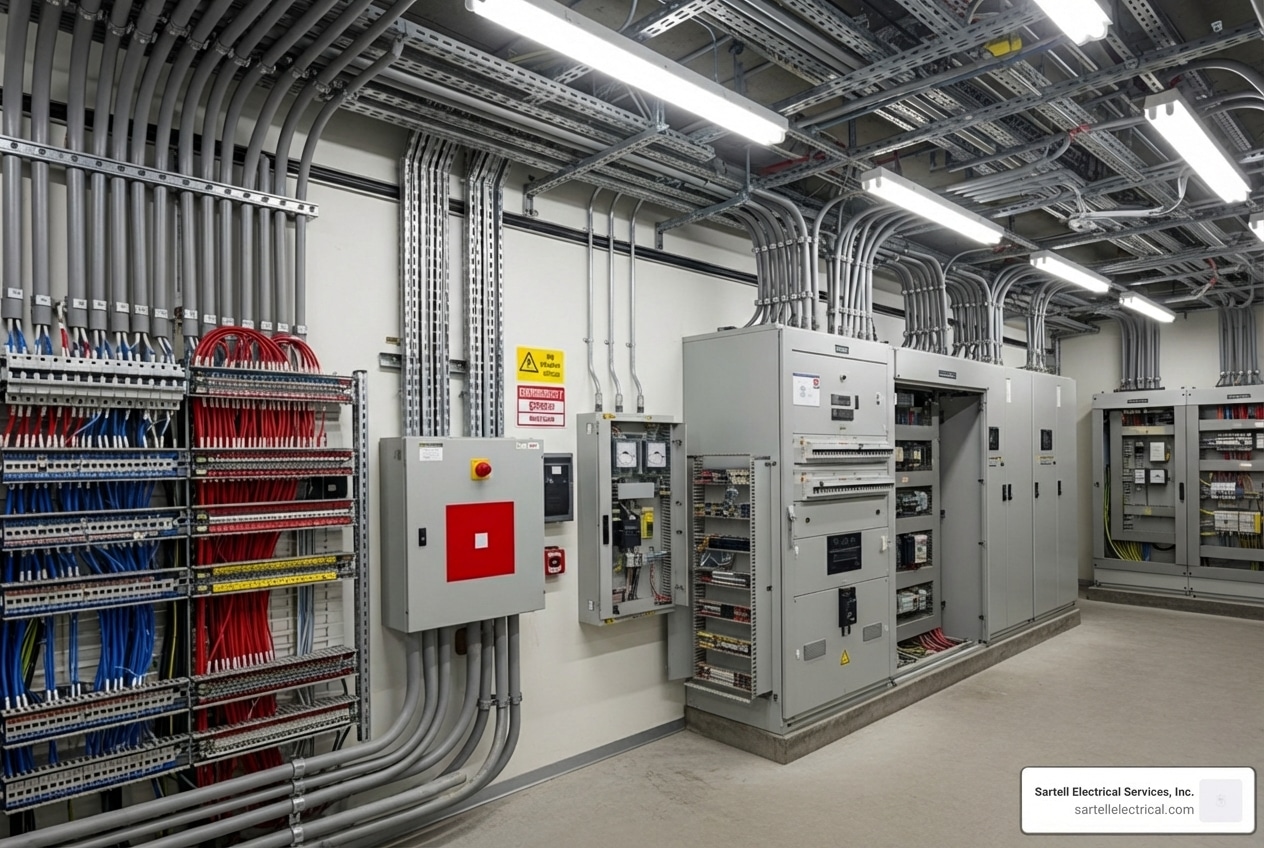
Understanding Commercial Building Wiring: Your Essential Guide
Commercial building wiring is the intricate network of electrical systems that power businesses, factories, and offices. Unlike residential wiring, it handles:
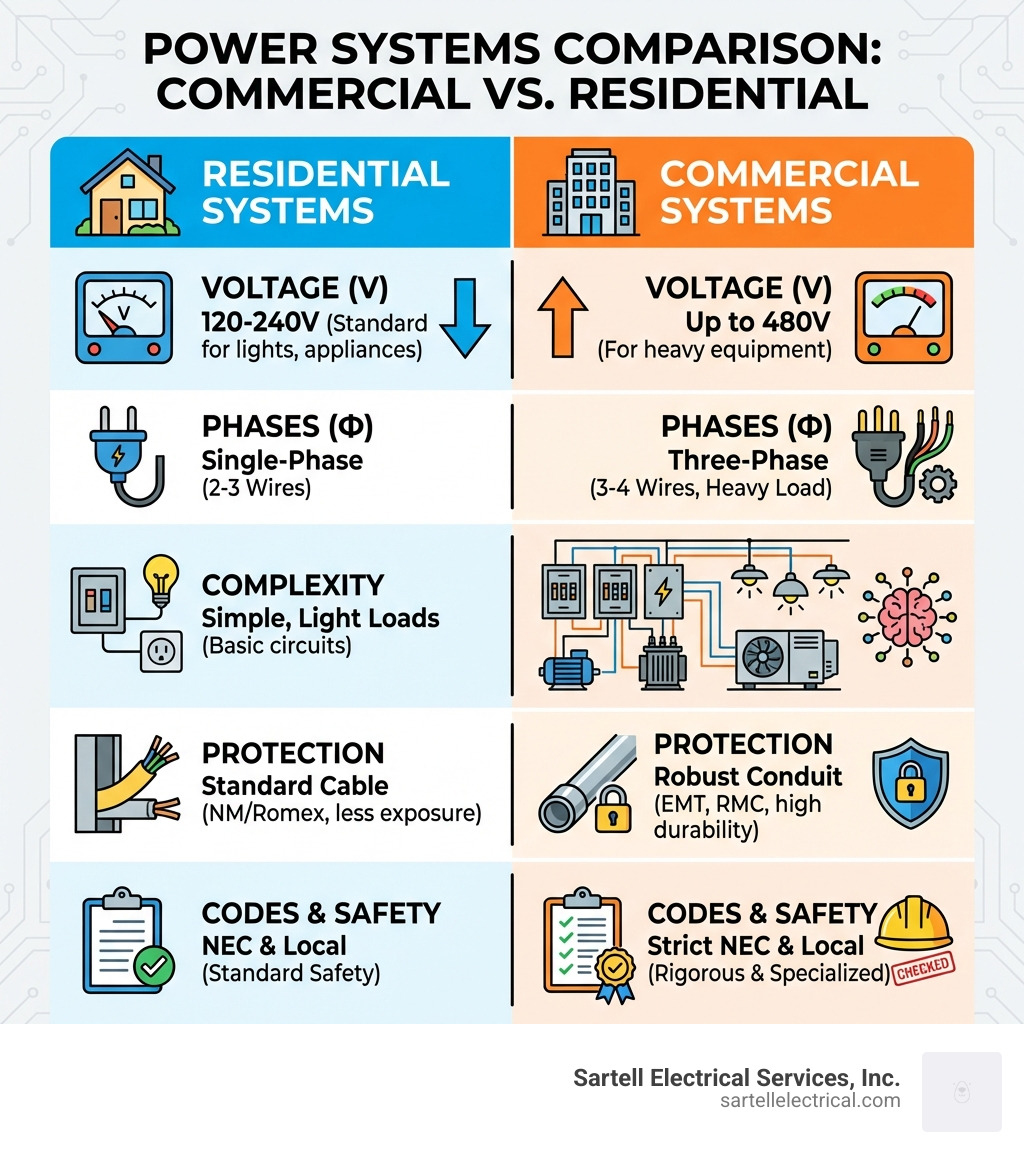
- Higher Voltage: Typically up to 480V, compared to 120-240V in homes.
- Three-Phase Power: Essential for heavy machinery and large equipment.
- Complex Systems: Designed for greater loads and diverse equipment.
- Robust Protection: Often uses conduit (EMT, RMC) for durability and safety.
- Strict Codes: Must meet rigorous NEC and local safety standards.
Every business relies on a robust and reliable electrical foundation, and at its heart is
commercial building wiring. This intricate system is much more than just wires and outlets. It's the backbone that ensures your operations run smoothly, safely, and efficiently.
From powering complex machinery in factories to lighting up retail spaces and keeping office equipment running, commercial wiring is vital. It's designed to handle much greater demands than residential systems, supporting heavy loads and critical infrastructure.
But with this complexity comes a critical need for precision, safety, and strict adherence to codes. Understanding the basics of these systems is key for any business owner or facility manager.
As President of Sartell Electrical Services since 1985, I've spent nearly four decades leading our team in delivering high-quality
commercial building wiring solutions. My commitment is to craftsmanship, safety, and customer satisfaction in every project. This guide will walk you through the essential aspects of commercial electrical wiring.
Key terms for
Commercial building wiring:
Commercial vs. Residential Wiring: Understanding the Core Differences
When it comes to electricity, our homes and our businesses have vastly different needs. Think of it this way: a residential electrical system is like a family car, designed for everyday commutes and moderate loads. A commercial electrical system, however, is more like a heavy-duty truck, built to haul significant power and endure demanding operational schedules. These differences are fundamental to understanding
commercial building wiring.
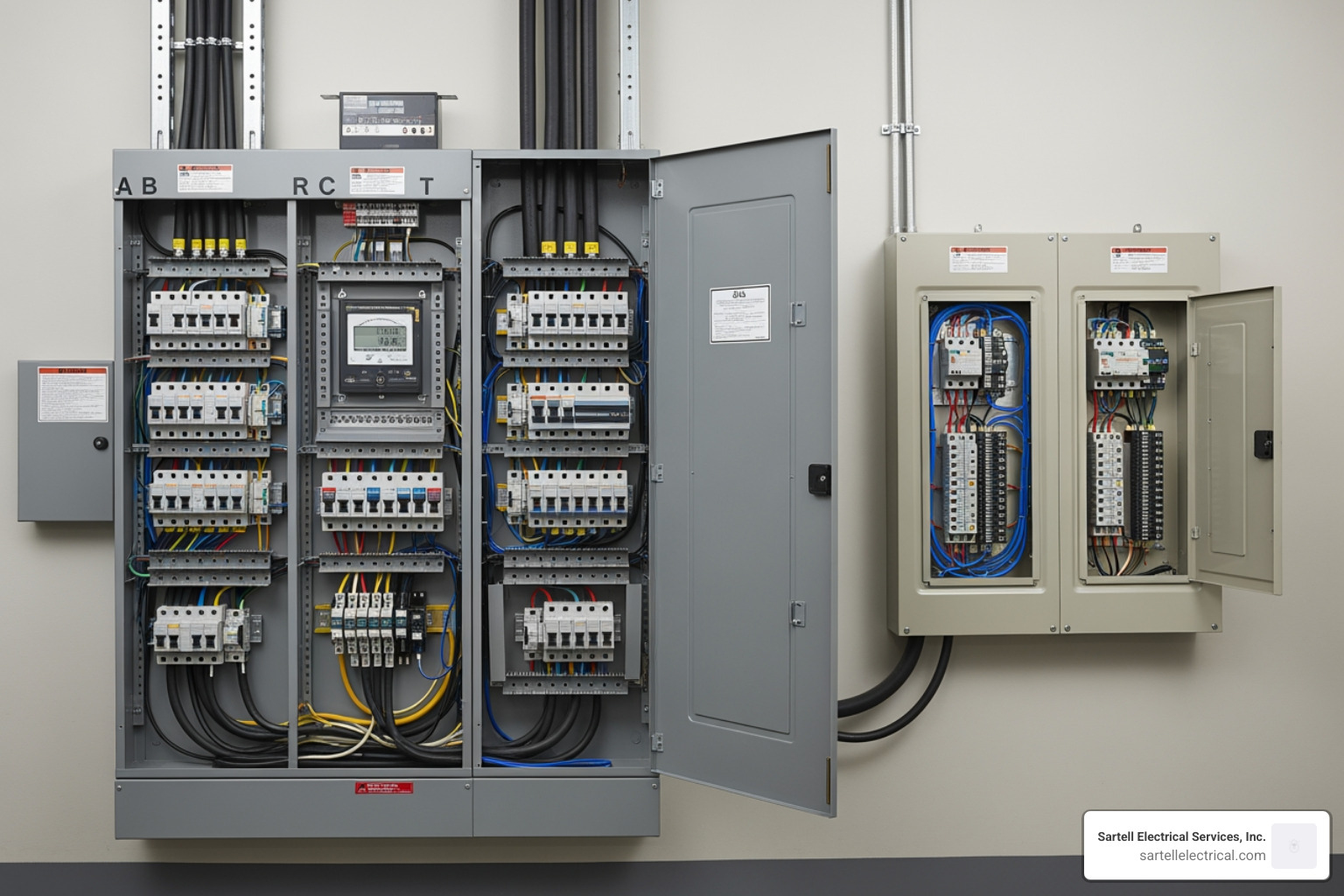
The distinctions between commercial and residential electrical setups are profound, influencing everything from the initial design to the materials used and the maintenance required. While both aim to deliver safe and reliable power, the scale and complexity of commercial operations necessitate a far more robust and specialized approach.
| Characteristic |
Residential Wiring |
Commercial Wiring |
| Voltage Levels |
120V to 240V |
Up to 480V (and sometimes higher) |
| Power Phases |
Primarily single-phase |
Primarily three-phase |
| Load Capacity |
Lower, for appliances and lighting |
Much higher, for heavy machinery, extensive lighting, HVAC |
| System Complexity |
Simpler, standardized |
Highly complex, custom-designed, integrated systems |
| Wiring Protection |
Often plastic sheathing (Romex), no conduits |
Often in conduits (EMT, RMC), exposed wiring allowed |
| Durability |
Moderate |
High, designed for continuous operation |
| Codes & Standards |
NEC, but often less stringent local amendments |
NEC, more stringent local amendments, higher safety focus |
| Maintenance |
Less frequent, often reactive |
Regular, proactive, preventative maintenance |
Electrical Load and Power Phases
One of the most significant differences lies in the sheer volume and type of power required. Commercial buildings typically use three-phase wiring, a sophisticated system capable of delivering much larger amounts of power efficiently. This is a stark contrast to the single-phase wiring commonly found in residential homes. Why the difference? Commercial settings are packed with powerful equipment: industrial ovens, large HVAC systems, extensive lighting arrays, and countless computers, servers, and heavy machinery. These devices demand substantial and stable power.
For instance, a commercial electrician will often deal with voltages up to 480V, whereas residential electricians typically work with 120V to 240V. This higher voltage is crucial for powering the heavy machinery and hardware systems that drive business operations. The load requirements in commercial settings are usually much greater due to the higher density of electrical devices and systems.
Consider the detailed planning involved in commercial electrical installations. Before we even lay a single wire, we carefully calculate the building's needs, such as
understanding building power requirements for different spaces. This includes applying specific demand factors for various occupancies as outlined by the NEC. For example:
- A hospital's general lighting load might use a demand factor of 40% for the first 50,000VA and 20% for the remainder, reflecting continuous but varied usage.
- Hotels or motels might see demand factors of 50% for the first 20,000VA, dropping to 30% for the remainder in guest rooms.
- Warehouses often have a 100% demand factor for the first 12,500VA and 50% for the remainder.
- Even general-use receptacle outlets in non-dwelling occupancies are calculated at 180VA per yoke.
These precise calculations ensure that the electrical system is adequately sized to handle all expected loads without overloading, guaranteeing both safety and operational efficiency.
Physical Installation and Protection
The physical installation of
commercial building wiring is also fundamentally different. In commercial properties, wiring is typically placed within tube-like conduit systems for protection. These conduits, made from materials like Electrical Metallic Tubing (EMT) or Rigid Metal Conduit (RMC), offer robust safeguarding against physical damage, moisture, and chemical vapors. EMT is favored for its durability and ease of installation, while RMC is used in locations where maximum protection is required, such as exposed outdoor installations or areas prone to physical impact. This approach allows for wires to be set in open spaces, ensuring accessibility for future maintenance, upgrades, or troubleshooting.
In contrast, residential wiring often uses non-metallic sheathed cable (NM Cable), commonly known as Romex, which has a plastic wrap around thinner wires and generally lacks conduits. While affordable and easy to install in less hazardous residential environments, Romex does not offer the same level of protection or durability required for commercial applications. For us, ensuring the longevity and safety of your commercial electrical infrastructure means prioritizing these robust protection methods. Our commitment to excellence is evident in every
Commercial Electrical Installation Boston project we undertake, where we rigorously adhere to these higher standards.
Anatomy of a Commercial Electrical System: A Guide to Commercial Building Wiring
A commercial electrical system is a complex symphony of components working in harmony to deliver power where and when it's needed. Understanding its anatomy is crucial for appreciating the depth of expertise required for proper installation and maintenance. From the main service entrance to the smallest outlet, every piece plays a vital role in the overall functionality and safety of your business. We approach every project with meticulous
Electrical Project Management, ensuring every component is perfectly integrated.
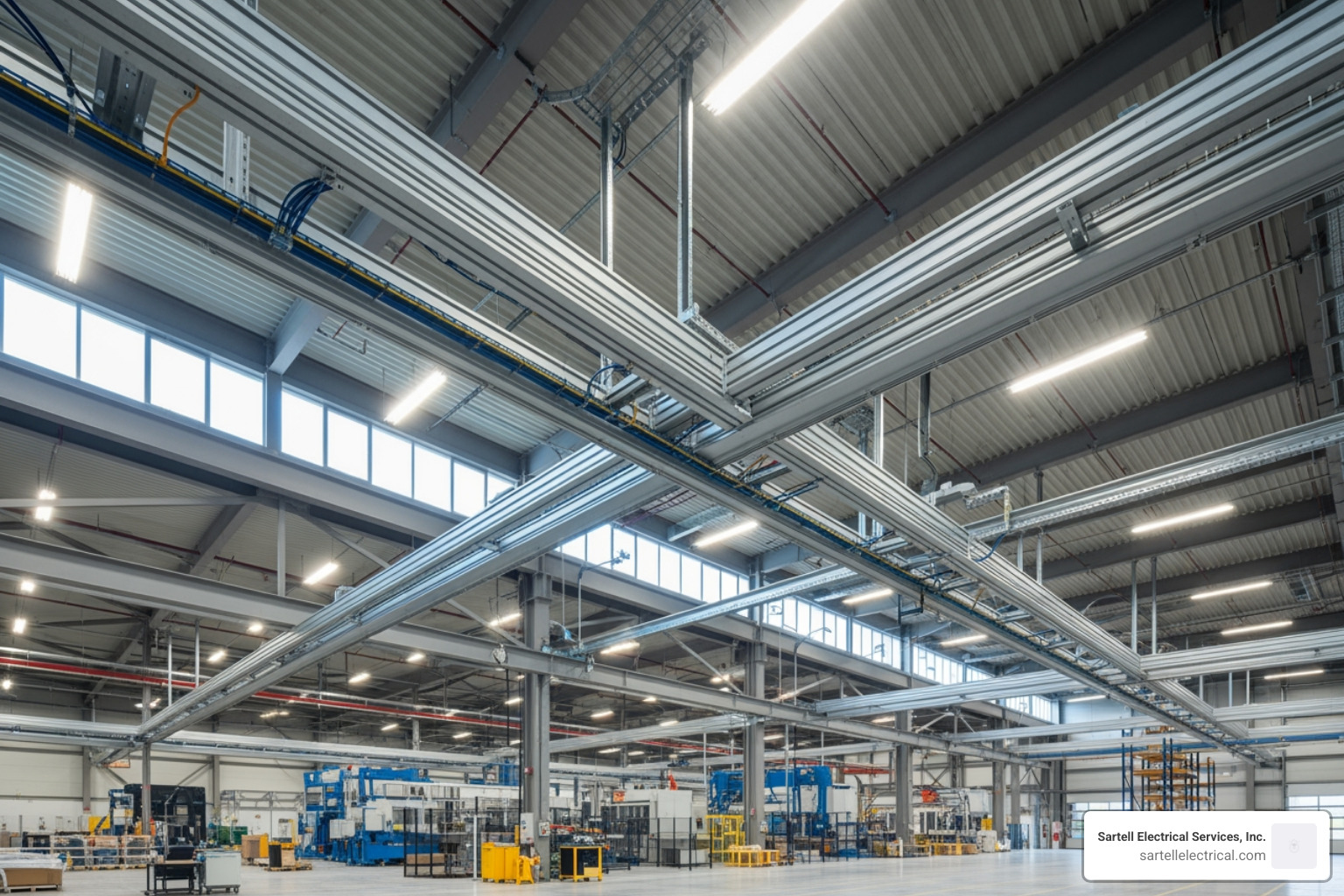
Primary Wiring Methods: Pros and Cons
Choosing the right wiring method is paramount in
commercial building wiring. Each method offers distinct advantages and disadvantages, making application-specific choices essential for optimizing cost, protection, and flexibility.
- Raceways (Conduits):
- Description: These are protective enclosures (tubes) for electrical conductors. Common types include Rigid Metal Conduit (RMC), Intermediate Metal Conduit (IMC), Flexible Metal Conduit (FMC), Electrical Metallic Tubing (EMT), and Polyvinyl Chloride (PVC) conduit.
- Advantages: Offer maximum protection against physical damage, moisture, and chemical exposure. They allow for easy wire replacement or upgrades without tearing down walls. RMC is ideal for harsh environments, while EMT is lightweight and easy to install for general commercial use. PVC is excellent for underground installations.
- Disadvantages: Can be more expensive and time-consuming to install than other methods. PVC softens in high temperatures and is a poor electrical insulator.
- Conductors: Often house THHN/THWN (thermoplastic high heat-resistant nylon jacket/thermoplastic heat and water-resistant nylon jacket) or XHHW (XLPE high heat-resistant and water-resistant) conductors, typically made of copper, but aluminum is also used for feeders. More on THHN/THWN conductors provides further details.
- Cable Assemblies (e.g., MC Cable):
- Description: These are factory-assembled cables with multiple insulated conductors enclosed within a protective sheath or armor. Examples include Armored Cable (AC), Metal-Clad Cable (MC), Mineral-Insulated (MI) cable, and Nonmetallic Sheathed Cable (NM Cable).
- Advantages: Minimal one-time installation costs and faster installation time compared to conduits. MC Cable with an outer PVC jacket can be suitable for direct burial. MI cable is fire-resistant (up to 30 minutes at over 1230 degrees Fahrenheit) and highly durable, often used in utility settings. Armored cable (BX Cable) offers improved protection against moisture, fire hazards, and impact damage.
- Disadvantages: Less flexible for modifications after installation. Requires frequent support intervals. Non-metallic sheathed cable (Romex) is generally restricted to less hazardous environments and specific applications in commercial buildings, primarily due to its lack of robust physical protection.
- Busways (Bus Ducts):
- Description: Designed with a metal enclosure containing pre-mounted bus bars (conductors). They distribute power efficiently across long distances.
- Advantages: Compact size, high performance, and reliability. They are a cost-effective option for existing buildings, offering flexibility to add load takeoffs (plug-in types) and less voltage drop impact compared to multiple conduits for the same load. Available in large ampere ratings, typically between 60 and 4,000 Amps.
- Disadvantages: Cannot be used in locations subject to physical damage. Limited space for bus plugs in vertical racks.
Key Components of a Commercial Building Wiring System
Beyond the wiring methods themselves, several other components are critical to a functional and safe commercial electrical system:
- Electrical Panels: These are the control centers of your electrical system, managing and distributing power throughout the building. They house circuit breakers that protect against overloads and short circuits. Understanding your Commercial Electric Panel Complete Guide is essential for safe operation.
- Transformers: Often used to step down higher utility voltages to usable levels within the building (e.g., from 480V to 208/120V).
- Switchgear: High-voltage equipment used for switching, controlling, and protecting electrical circuits and equipment.
- Grounding and Bonding: These are fundamental safety practices. Grounding safely channels electrical faults to the earth, preventing dangerous voltage buildup. Bonding ensures all metallic parts of the electrical system have the same electrical potential, reducing the risk of electric shocks. These are not merely suggestions; they are critical for protecting personnel and equipment.
- Conductors: As mentioned, THHN/THWN and XHHW are common types of insulated wires used inside raceways, primarily copper for branch circuits and aluminum for feeders due to its cost-effectiveness for larger gauge wires.
The Blueprint: Installation, Design, and Modern Practices
The success of any
commercial building wiring project begins long before the first wire is pulled. It starts with a comprehensive blueprint—a detailed plan that considers every aspect of the building's electrical needs, regulatory compliance, and future growth. Our team excels in
Electrical Pre-Construction Planning, ensuring a seamless process from concept to completion.
Critical Steps for a Successful Installation
A commercial electrical installation is a multi-step process demanding precision and expertise. Here's how we ensure a successful outcome:
- Initial Rough-In: This phase involves installing the conduit systems, electrical boxes, and initial wiring runs before walls are closed up. It requires careful coordination with other trades like plumbing and HVAC to avoid conflicts.
- Device and Fixture Installation: Once the rough-in is complete, we install all electrical devices, including outlets, switches, light fixtures, and specialized equipment connections. Proper mounting and secure connections are paramount.
- Grounding and Bonding: These crucial safety procedures are carefully performed to protect the electrical system against faults and prevent dangerous voltage differences.
- Final Connections and Labeling: All connections are made in panels and devices. Clear and accurate labeling of each circuit is then applied in the electrical panels. This is vital for safety, troubleshooting, and future maintenance.
- Power-Up and Testing: After all connections are secure, the system is powered up. We then conduct thorough functional tests to confirm that all devices and fixtures operate as intended and that the system is stable.
- Final Inspection: The Authority Having Jurisdiction (AHJ) will perform a final inspection to verify code compliance and proper installation.
- Quality Control and Compliance Checks: Throughout the process, our team implements rigorous quality control measures and continuous compliance checks to ensure adherence to established codes and standards.
This systematic approach, detailed in our
Electrical Installation and Maintenance services, minimizes errors and ensures the long-term reliability and safety of your electrical infrastructure.
Best Practices and Emerging Trends in Commercial Building Wiring
The electrical industry is constantly evolving, and staying ahead of the curve is crucial for delivering optimal solutions. We accept best practices and integrate emerging trends to future-proof your commercial electrical systems:
- Modular and Prefabricated Wiring: These systems streamline installation, reduce labor costs, and minimize errors by preparing components off-site. This approach is gaining traction for its efficiency and consistency.
- Smart Controls and Building Automation: Integrating smart controls improves system functionality and energy efficiency. From intelligent lighting systems that adjust to ambient light and occupancy to automated HVAC controls, these technologies lead to significant energy savings and improved user convenience.
- Digital Collaboration Tools: Modern projects benefit immensely from digital collaboration platforms that allow architects, engineers, and electricians to share blueprints and updates in real-time. This improves coordination and reduces costly rework.
- Energy Efficiency: Beyond smart controls, we focus on designs that reduce energy consumption, such as LED lighting retrofits and efficient motor controls. This not only lowers operating costs but also contributes to environmental sustainability.
- Future-Proofing: Our designs anticipate future needs, ensuring that your electrical infrastructure can accommodate technological advancements, business expansion, and increased power demands without requiring costly overhauls. This includes ample capacity and flexible routing options.
Our expertise in
Design Build Electrical Services means we can integrate these modern practices from the earliest stages of your project, delivering a cutting-edge and efficient electrical system.
The Rulebook: Safety, Codes, and Regulatory Compliance
In
commercial building wiring, safety is not just a priority—it's the law. Adherence to safety standards, codes, and regulatory compliance is non-negotiable. It protects your employees, your property, and your business from legal liabilities and operational disruptions. We prioritize
Electrical Safety Checks at every stage of our work.
The Role of the National Electrical Code (NEC)
At the heart of electrical safety in the United States is the National Electrical Code (NEC), also known as NFPA 70. This comprehensive standard dictates the minimum requirements for safe electrical installations in both commercial and residential buildings.
NFPA 70: National Electric Code (Chapter 3) specifically outlines the "General Requirements for Wiring Methods and Materials," covering everything from securing and supporting conductors to proper grounding and bonding techniques.
The NEC is updated every three years, reflecting advancements in technology and lessons learned from electrical incidents. Staying current with these updates is critical. Every electrical project must be reviewed and approved by the Authority Having Jurisdiction (AHJ), typically a local electrical inspector, who ensures that the installation meets all NEC requirements. This rigorous process is designed to mitigate risks like electrical fires, shocks, and equipment failure.
Massachusetts and Local Code Compliance
While the NEC provides the national baseline, individual states and municipalities often adopt their own amendments and specific regulations. In Massachusetts, for example, we have our own electrical code amendments that work in tandem with the national standards. These state-specific rules are designed to meet unique safety, environmental, and operational needs within the Commonwealth.
For property owners in Massachusetts and the Greater Boston area, understanding these local nuances is crucial. The permitting process for electrical projects, for instance, has specific requirements. Applications must be filed with the local wire inspector, and projects must be completed within a 12-month validity period. We ensure every project we undertake secures all necessary permits and adheres to all local regulations, from Essex County to Suffolk County.
Ensuring compliance involves:
- Familiarity with Massachusetts-specific amendments (e.g., GFCI protection requirements for certain appliances).
- Proper permit application and completion notification processes.
- Securing necessary inspections from the local wire inspector.
This meticulous attention to detail helps us steer the complexities of local codes, ensuring your installation passes inspection and provides a safe operating environment. For a deeper dive into the inspection process, our
Commercial Electrical Inspection Guide offers valuable insights.
System Longevity: Maintenance and Service Upgrades
Even the most robust
commercial building wiring system requires ongoing attention to ensure its long-term reliability and safety. Just like a well-oiled machine, your electrical infrastructure benefits immensely from preventative maintenance. This proactive approach not only extends the lifespan of your system but also minimizes unexpected downtime and ensures continued safety. We understand that effective
Building Electrical Maintenance is key to your business's uninterrupted operation.
What Commercial Electrical Maintenance Involves
Regular maintenance is not just about fixing problems when they arise; it's about preventing them. Our comprehensive commercial electrical maintenance typically involves several key components:
- Routine Inspections: Regular visual checks of panels, wiring, and connections to identify any signs of wear, damage, or overheating.
- Thermal Scanning: Using infrared cameras to detect hot spots in electrical panels and connections, which can indicate loose connections or overloaded circuits before they lead to failure.
- Panel Cleaning and Tightening: Dust and debris can accumulate in electrical panels, leading to overheating. We clean panels and re-tighten connections to ensure optimal conductivity and prevent arcing.
- Circuit Testing: Verifying the integrity of circuits, breakers, and protective devices to ensure they function correctly under fault conditions. This includes testing ground-fault circuit interrupters (GFCIs) and arc-fault circuit interrupters (AFCI).
- Documentation Updates: Keeping accurate records of all maintenance performed, including any changes, repairs, or upgrades. This provides a valuable history for future troubleshooting and compliance.
By adhering to a proactive maintenance schedule, as outlined in our
Commercial Electrical System Maintenance services, we help businesses in Massachusetts avoid costly repairs and operational disruptions.
When to Consider an Electrical Service Upgrade
While regular maintenance keeps your current system running, there comes a time when an upgrade becomes necessary. Ignoring the signs can lead to frequent outages, safety hazards, and inefficiency. Here are key indicators that it might be time to consider an electrical service upgrade:
- Outdated Systems: If your building is older, its electrical system may not have been designed to handle the demands of modern technology. Outdated wiring can pose a significant fire hazard.
- Business Growth: As your business expands, adding new equipment, machinery, or even more employees, your power demands increase. An existing system might struggle to keep up, leading to overloaded circuits and frequent breaker trips.
- Increased Power Demands: The introduction of heavy machinery, specialized IT equipment, or an expansion of production capabilities will necessitate a review of your electrical capacity.
- Renovations: Any significant renovation or remodeling project is an ideal time to assess and upgrade your electrical system. It's often more cost-effective to make upgrades while walls are open.
- Code Updates: Electrical codes are regularly updated for improved safety. If your system no longer meets the latest NEC and Massachusetts electrical code requirements, an upgrade is essential for compliance and safety.
An electrical upgrade is an investment in the future of your business, ensuring it remains safe, efficient, and capable of supporting your operations. Our
Electrical Service Upgrades Complete Guide provides comprehensive information to help you make informed decisions.
Frequently Asked Questions about Commercial Wiring
We often receive questions about the intricacies of
commercial building wiring. Here are some of the most common inquiries we address:
What are the most common types of conduit used in commercial buildings?
In commercial buildings across Massachusetts, we primarily rely on a few key types of conduit.
EMT (Electrical Metallic Tubing) is widely used for its durability and ease of installation in dry, indoor locations like office spaces and retail. It's lightweight and cost-effective, making it a popular choice for general wiring.
RMC (Rigid Metal Conduit) provides maximum physical protection and is used in more demanding environments, such as exposed outdoor installations, industrial settings, or areas prone to physical impact. For underground runs or locations where corrosion is a concern,
PVC (Polyvinyl Chloride) conduit is frequently chosen due to its resistance to moisture and chemicals. Each type serves a specific purpose, selected based on the environment and protection requirements.
How is the electrical load calculated for a commercial building?
Electrical load calculation for a commercial building is a highly detailed process governed by the National Electrical Code (NEC). It's far more complex than residential calculations because commercial buildings have diverse and heavier demands. We start by determining the total power required for general lighting, based on specific VA per square foot guidelines for different occupancy types (e.g., offices, factories, retail spaces). Then, we account for all receptacles (typically 180VA per yoke), specific equipment (HVAC, machinery, kitchen appliances, etc.), and any special loads like exterior signs or show-window lighting. Critically, we apply demand factors, which reduce the calculated load based on the likelihood that all loads will not operate simultaneously. These demand factors vary significantly by occupancy type, ensuring the system is adequately sized without being unnecessarily oversized. This meticulous planning is crucial for both safety and efficiency.
Why can't I use residential-grade wiring like Romex in most commercial applications?
In most commercial applications, particularly here in Massachusetts, residential-grade wiring like Non-Metallic Sheathed Cable (NM Cable or Romex) is generally not permitted or recommended. This is primarily due to the stricter requirements for safety, durability, and fire resistance in commercial settings. Commercial building codes typically mandate that wiring be installed within a robust conduit system. Conduits provide superior physical protection against damage, are designed to prevent the spread of fire, and offer an improved grounding path. While NM cable is affordable and easy to install in less hazardous residential environments, it lacks the robust protection needed for the higher power demands, potential for physical impact, and more complex environments of commercial properties. There might be very specific, protected areas where NM cable could be used in some commercial structures, but conduit systems are the standard for the vast majority of
commercial building wiring.
Conclusion
The electrical infrastructure of your commercial property is more than just a utility; it's a strategic asset that underpins your entire operation. From the critical differences distinguishing it from residential systems to the intricate components and the rigorous compliance required,
commercial building wiring demands specialized expertise.
We've explored the diverse wiring methods, the meticulous steps of installation, and the vital role of ongoing maintenance and timely upgrades. Above all, we hope you've gained a deeper appreciation for the paramount importance of safety, adherence to the National Electrical Code, and compliance with Massachusetts-specific regulations.
At Sartell Electrical Services, with nearly 40 years of experience serving businesses across Massachusetts, we pride ourselves on our commitment to excellence, leadership, and unparalleled customer service. We understand that a robust, safe, and efficient electrical system is crucial for your success.
Don't leave the heart of your business to chance. Partner with a team that has the knowledge, experience, and dedication to power your operations reliably and safely.
Contact us for professional commercial electrical services today, and let us help you build a brighter, more secure future for your business.