Residential and commercial electrical systems: #1 Essential
Understanding the Power Behind Modern Buildings
Residential and commercial electrical systems form the backbone of our daily lives, powering everything from the lights in your home to the complex machinery in manufacturing facilities. While both systems deliver electricity, they differ dramatically in their design, capacity, and complexity.
Key Differences Between Residential and Commercial Electrical Systems:
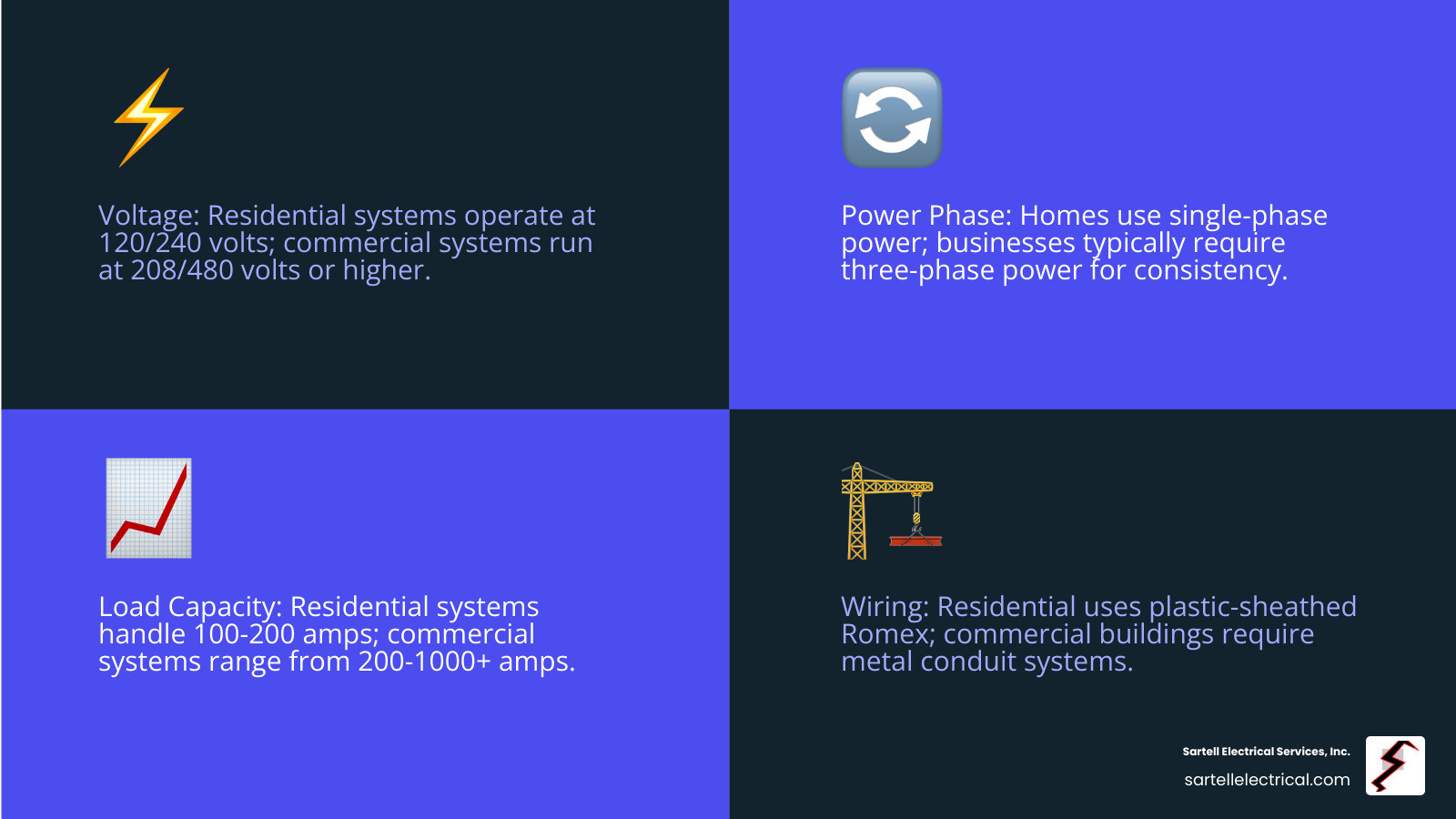
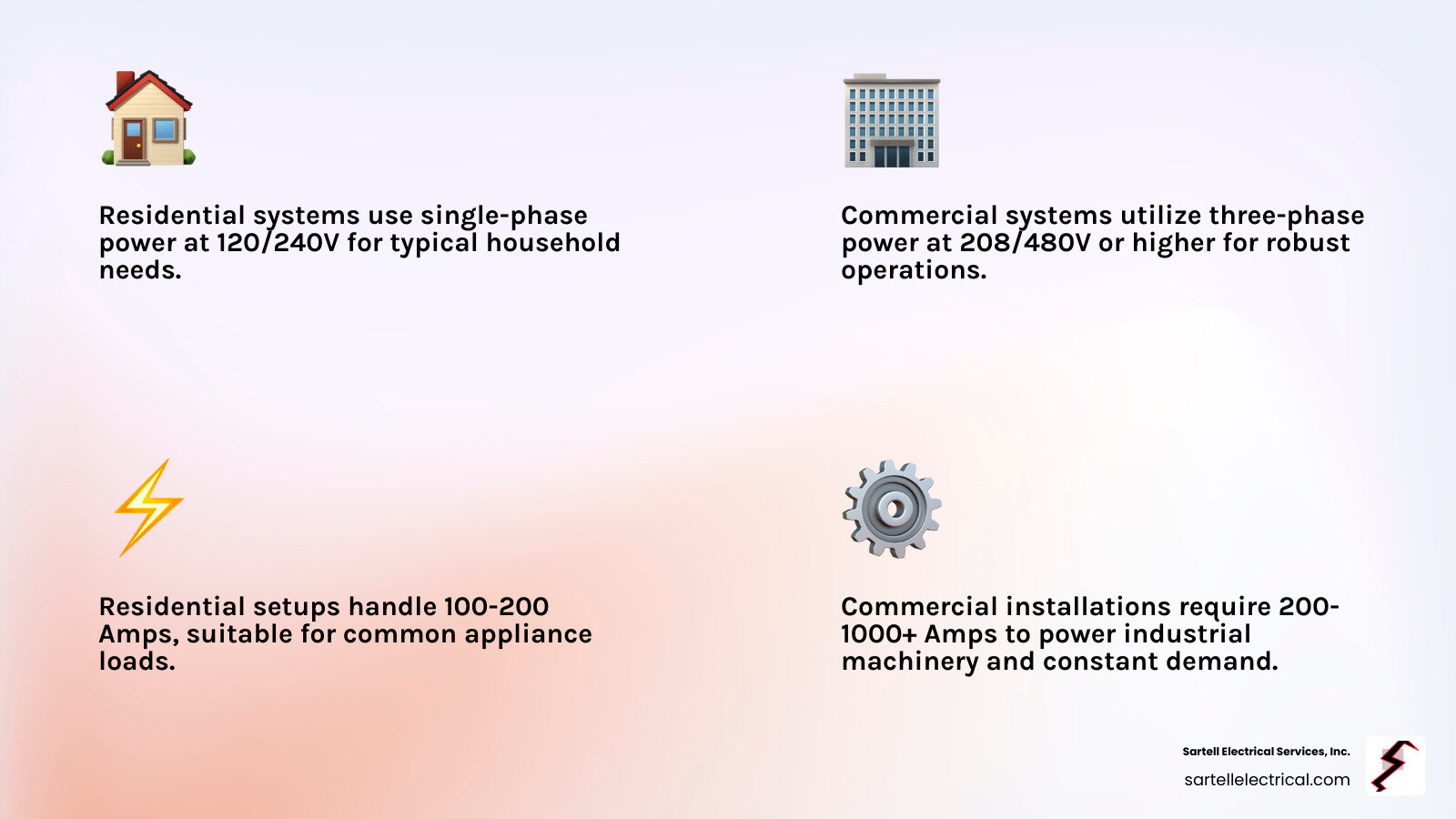
- Voltage: Residential systems operate at 120/240 volts, while commercial systems run at 208/480 volts or higher
- Power Phase: Homes use single-phase power; businesses typically require three-phase power for consistency
- Load Capacity: Residential systems handle 100-200 amps; commercial systems range from 200-1000+ amps
- Wiring: Homes use plastic-sheathed cable (Romex); commercial buildings require metal conduit systems
- Regulations: Commercial systems face stricter safety codes and compliance requirements
Whether you're a facility manager planning a major renovation, a business owner expanding operations, or an institutional client managing critical infrastructure, understanding these electrical fundamentals helps you make informed decisions about your power needs.
The complexity jumps significantly when moving from residential to commercial applications. As one electrical expert noted,
"Any electrician can power up a building with enough time and equipment. That's what they say until you give them the blueprints for a multi-story mall or office building."
Commercial and industrial facilities require specialized expertise, advanced safety protocols, and comprehensive project coordination - especially when dealing with critical timelines and budget constraints that can't afford electrical failures or delays.
Learn more about
residential and commercial electrical systems:
The Anatomy of a Residential Electrical System
When we talk about
residential electrical systems, we're typically referring to the setup found in single-family homes, multi-family apartment buildings, and condos. These systems are designed to safely deliver power for everyday household needs, from lighting up a room to charging our devices.
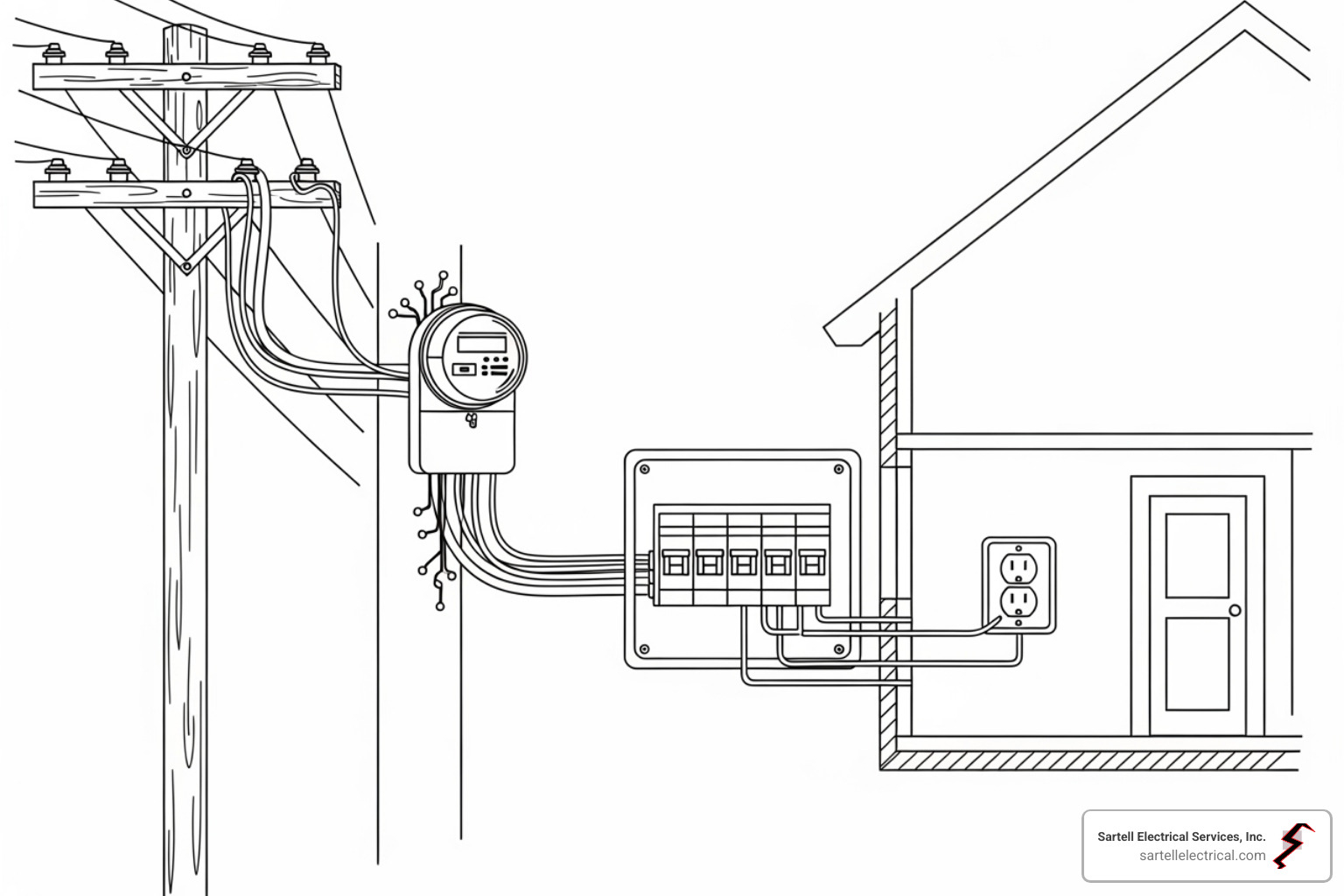
The journey of electricity into your home begins at the
service entrance, often an overhead line or underground cable from the utility pole. This power first passes through your
electric meter, which precisely measures your consumption. From there, it enters the heart of your home's electrical system: the
main service panel, often called the breaker box. This panel is the central distribution point, equipped with
circuit breakers (or sometimes fuses in older homes) that regulate the flow of electricity and protect against overloads and short circuits.
Residential electrical systems typically operate at
120/240 volts in the United States, utilizing
single-phase power. This means the power is delivered through one alternating current, sufficient for most household appliances. The wiring commonly used inside homes is
Romex wiring, a non-metallic sheathed cable that's ideal for indoor residential applications. Power is then distributed to various
outlets and switches throughout your home, ready to power your devices and control your lighting.
Safety is paramount in residential electrical systems. Modern homes are equipped with crucial
safety devices like
Ground Fault Circuit Interrupters (GFCIs), which protect against electrical shock in areas prone to moisture (like kitchens, bathrooms, and outdoors), and
Arc Fault Circuit Interrupters (AFCIs), designed to prevent electrical fires caused by arcing faults in wiring. A typical residential electrical system ranges from 100 amp to 200 amp service, though older homes might have smaller 150 amps or fewer. For reliable and safe residential electrical services, including installations, upgrades, and maintenance, we are here to help.
Residential Electrical Services by Sartell Electrical Services, Inc.
Common Household Electrical Loads and Design
Our homes are busy hubs of electrical activity. The electrical loads in a residential setting primarily consist of
lighting, a wide array of
appliances (refrigerators, washers, dryers, microwaves),
HVAC systems for heating and cooling, and numerous
home entertainment devices. With the rise of electric vehicles,
EV chargers are also becoming a significant electrical load for many homeowners.
When designing a residential electrical system,
aesthetics play a crucial role. We want our wiring to be unobtrusive and blend seamlessly into the home's design, which is why
hidden wiring is standard practice. Energy efficiency is also a growing concern, with homeowners increasingly opting for
energy-efficient LED lighting and smart devices to reduce consumption. Understanding these loads helps us ensure the system is appropriately sized and safely distributed.
Homeowner responsibility extends to understanding basic electrical safety practices, such as not overloading outlets and recognizing when professional help is needed.
Maintenance and Common Residential Repairs
Even the most robust residential electrical systems require maintenance. Common issues we encounter include
flickering lights, which can indicate loose connections or overloaded circuits, and frequently
tripped breakers, often caused by too many devices drawing power from a single branch circuit.
Outlet repairs are also common, addressing issues like loose receptacles or non-functioning outlets.
For older homes,
panel upgrades are frequently necessary to meet modern power demands, as older panels may only offer 150 amps or fewer. It's crucial to avoid
overloading circuits, as this can lead to tripped breakers or, worse, electrical fires. The
importance of professional inspections cannot be overstated, especially for older homes or before significant renovations, to identify potential hazards and ensure compliance with current codes. If you notice any signs of frayed or damaged wiring, or frequent power surges, it's crucial to have a qualified electrician inspect and repair the wiring promptly.
The Powerhouse: Understanding Commercial Electrical Systems
Moving from the cozy confines of a home to the sprawling environment of a commercial building, we step into a different electrical field.
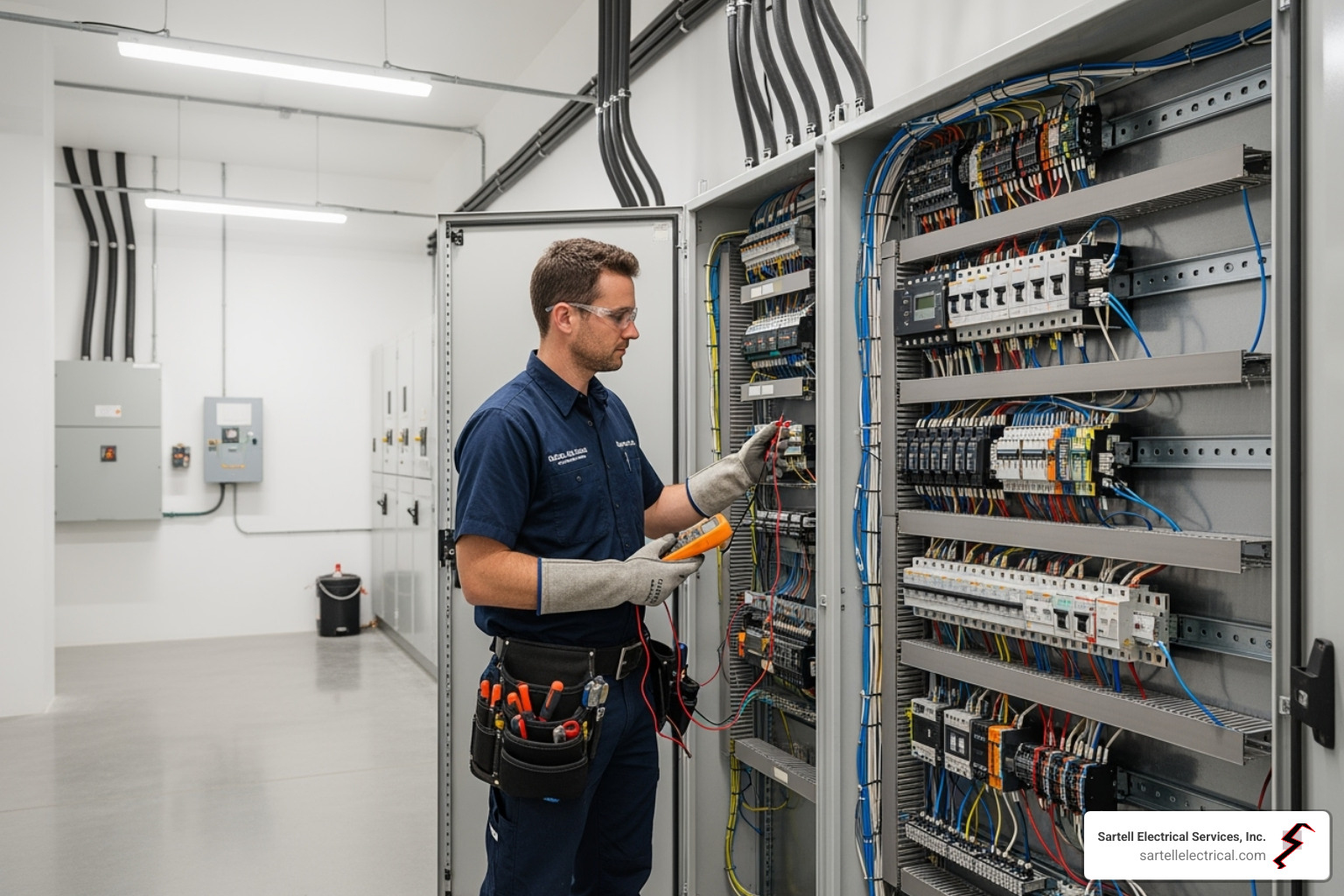
Commercial electrical systems are designed to handle significantly higher power demands, complex machinery, and diverse operational needs.
A defining characteristic of commercial systems is their use of
three-phase power, which provides a more consistent and efficient power delivery, crucial for heavy machinery and continuous operations. These systems operate at much
higher voltage levels, typically ranging from
208/480V in the United States, with some specialized systems going up to
600V.
To manage these higher voltages and currents, commercial electrical systems often incorporate large
transformers to step down or step up voltages as needed, and robust
generators for backup power. Unlike residential wiring, commercial installations predominantly use
conduit wiring, where individual wires are run inside protective metal or plastic tubes. This method offers superior physical protection and allows for easier future upgrades or repairs, emphasizing
accessibility for maintenance and overall
scalability. Commercial power supplies can range dramatically, from 200 amp services for smaller businesses to 1000 amp services or more for large industrial facilities. For comprehensive commercial electrical services, designed for efficiency and reliability, we are your trusted partner.
Commercial Electrical Services by Sartell Electrical Services, Inc.
Diverse Loads and Demands in Commercial Spaces
The electrical loads in commercial spaces are incredibly diverse and often far more demanding than in residential settings. Imagine the power required for a busy office building with hundreds of computers and servers (
office equipment), or a manufacturing plant running heavy-duty machinery and assembly lines (
industrial machinery). Large-scale
HVAC systems in commercial buildings consume substantial power, as do various
specialized equipment unique to specific industries, like medical devices in healthcare facilities or specialized lighting in retail stores.
Data centers, in particular, represent an extreme example of high-density electrical loads, requiring constant, reliable power. Retail spaces also have significant demands for
retail lighting and point-of-sale systems. The key here is the need for
constant power demand and the ability to handle large, fluctuating loads without interruption.
Here are some typical commercial electrical components that facilitate this intricate power distribution:
- Switchgear: High-voltage equipment used to control, protect, and isolate electrical equipment, typically used in large commercial and industrial applications.
- Panelboards: Distribute electricity to various circuits within a building, similar to residential breaker boxes but on a larger, more complex scale.
- Transformers: Essential for stepping up or stepping down voltage to meet the specific requirements of different equipment and areas.
- Busways: Prefabricated electrical distribution systems that are an alternative to traditional wiring, often used for high-current applications in industrial settings.
Backup Power and System Reliability
In the commercial world, electrical reliability isn't just about convenience; it's about business continuity and safety. Power outages can lead to significant financial losses, data corruption, and even danger in certain environments. This is why
backup power systems are non-negotiable for many commercial operations.
Emergency power systems, primarily powered by
generators, ensure that critical functions can continue uninterrupted during a utility outage. For sensitive electronics and immediate power transfer,
Uninterruptible Power Supplies (UPS) provide instantaneous battery backup, allowing systems to shut down gracefully or switch to generator power without interruption. These systems are vital for maintaining
business continuity and protecting
critical infrastructure, especially in sectors like healthcare or data management. Furthermore, robust
data and communication cabling systems, often integrated with the main electrical infrastructure, are essential for modern commercial operations.
Key Differences Between Residential and Commercial Electrical Systems
Have you ever stopped to think about what makes the electrical system in your cozy home different from the one powering a busy office building or a busy factory? While both
residential and commercial electrical systems deliver that essential spark, they're actually built on very different foundations. Understanding these distinctions isn't just for electricians; it's crucial for ensuring safety, boosting efficiency, and staying compliant with important rules.
Think of it this way: a bicycle and a semi-truck both move things, but they're designed for vastly different loads and purposes. The same goes for how electricity flows in different environments!
| Feature |
Residential Electrical Systems |
Commercial Electrical Systems |
| Voltage |
120/240V |
208/480V, some up to 600V |
| Phase |
Single-phase |
Three-phase |
| Load Capacity |
100-200 Amps |
200-1000+ Amps |
| Wiring Type |
Non-metallic sheathed cable (Romex), plastic sheathing |
Individual wires in metal conduit, robust sheathing |
| Installation |
Concealed, aesthetics prioritized, less accessible |
Exposed (in utility spaces), accessibility prioritized, durable |
| Key Regulations |
National Electrical Code (NEC), local building codes |
NEC, local building codes, OSHA, specialized industry standards |
| Maintenance Focus |
Safety, basic repairs, homeowner comfort |
Business continuity, efficiency, advanced diagnostics, scalability |
Power Phase and Voltage: The Fundamental Distinction
The biggest difference you'll find when comparing
residential and commercial electrical systems is all about power phase and voltage. In your home, you're usually working with
single-phase systems. Imagine electricity flowing like a single, steady wave. This is perfect for things like your toaster, TV, and lights, which typically use 120V or 240V. It's simple, efficient for smaller needs, and gets the job done for everyday life.
Now, step into a commercial or industrial space, and you'll almost certainly encounter
three-phase systems. Instead of one wave, think of three waves of electricity, all working together but a little out of sync. This creates a much more powerful and consistent flow.
It's like the difference between a single-cylinder engine and a V8 – more power, less vibration! This constant, balanced power is absolutely vital for
powering heavy machinery, large motors, and big data centers. It allows for much higher voltages (like 208V, 480V, or even 600V) to move huge amounts of electricity efficiently over longer distances, meeting the intense demands of commercial equipment. This also helps with
load balancing, making sure the power is distributed smoothly across the whole system.
Understanding residential and commercial electrical systems wiring
Another key difference comes down to the wires themselves and how they're protected. In homes, you'll often find
plastic sheathing (Romex). This type of cable is like a convenient, all-in-one package with wires inside a protective plastic jacket. It's easy to run through walls and attics, keeping everything hidden and tidy, which is great for home aesthetics. Since it's generally safe from physical bumps and scrapes inside your walls, it works perfectly for
residential electrical systems.
For commercial setups, the wiring needs to be much tougher. Here, individual wires are usually threaded through
metal conduit. Think of this conduit as heavy-duty armor for the wires. It provides top-notch protection against physical damage, moisture, and even fire. This method also makes future updates or repairs much simpler, because you can pull out old wires and pull in new ones without tearing down walls. This focus on
accessibility for repairs and extreme
durability requirements is crucial in busy commercial environments. Plus, commercial systems often need thicker
wire gauge and higher
insulation ratings to safely handle the larger currents and voltages.
Safety codes for residential and commercial electrical systems
Perhaps the most important distinction of all is in the
safety codes for residential and commercial electrical systems. While both types of properties
must follow the
National Electrical Code (NEC) – which sets the baseline for safe electrical work across North America – commercial systems face much, much
stricter commercial compliance rules and additional regulations. On top of the NEC,
local building codes add their own specific requirements, custom to the area. For commercial and industrial buildings, rules from
OSHA regulations (Occupational Safety and Health Administration) are a huge deal, making sure workplaces are safe.
These codes are tougher for a good reason: commercial spaces often have more people, bigger electrical loads that could increase fire risk, and complex machinery that employees operate. This means commercial electricians need a deeper knowledge of these codes and must stay incredibly up-to-date. They also have strict requirements for
personal protective equipment (PPE), ensuring their own safety. The
permitting process for commercial projects is typically more involved, with detailed plans and multiple inspections needed to guarantee everything meets these high safety standards. For instance, in Massachusetts, our work adheres to the specific state electrical code, which includes amendments to national standards for wiring installation and permits. It's all about keeping everyone safe!
Beyond the Basics: Specialized Electrical Applications
We've explored the fascinating world of
residential and commercial electrical systems, from the lights in your living room to the hum of a busy office. But electricity's story doesn't end there! Beyond these common setups, there's a whole field of highly specialized applications. These environments don't just need power; they demand unique solutions, super strict safety rules, and a deep understanding of what makes
that industry tick.
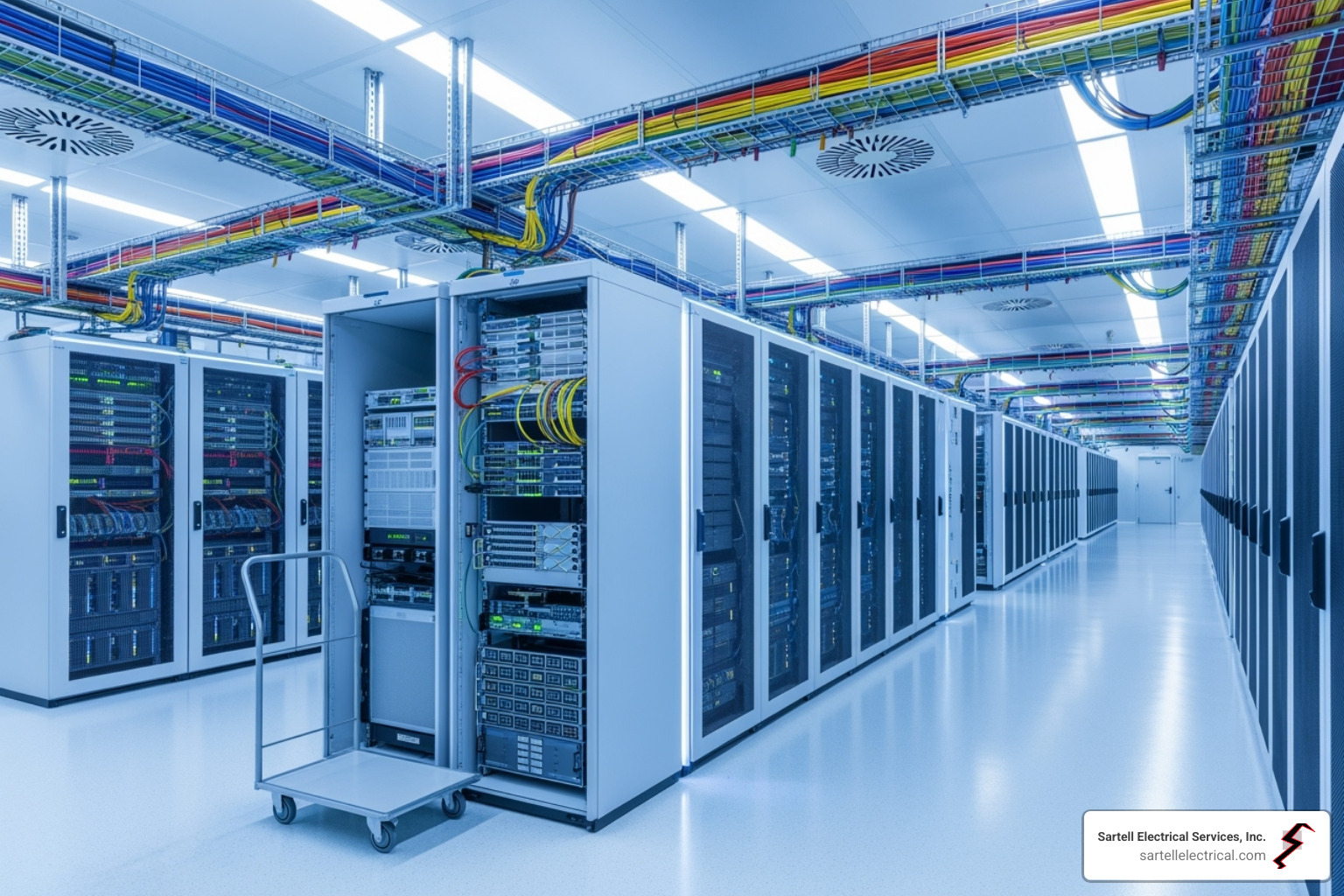
Think about places where even a tiny power flicker could be catastrophic. These specialized electrical systems go way
beyond the basics. They involve incredibly intricate designs, cutting-edge equipment, and often, multiple backup power sources. Why? To make sure everything runs smoothly, no matter what. At Sartell Electrical Services, Inc., we pride ourselves on providing expert solutions for even the most complex scenarios.
Explore All Electrical Services by Sartell Electrical Services, Inc.
Industrial and Manufacturing Electrical Needs
Step onto the floor of an
industrial setting or a busy
manufacturing plant, and you'll see electrical systems working overtime. Here, the main goal is to power massive
heavy machinery. This often means high-voltage connections and super precise
motor controls that keep production lines humming and specialized equipment running perfectly. We're talking about large-scale
high-voltage distribution systems designed to send huge amounts of power across vast facilities with incredible efficiency.
Today's factories also rely heavily on
automation systems. This means the electrical setup has to be engineered to talk to and power robotic arms, conveyor belts, and all sorts of automated processes. Because these environments can be tough,
durability and resilience are absolutely key. Industrial electrical systems need to stand up to vibrations, dust, extreme temperatures, and constant use, all while staying safe and performing at their best.
Industrial Electrical Services by Sartell Electrical Services, Inc.
Critical Systems in Healthcare and Telecommunications
Now, imagine a hospital or a major data center. In sectors like
healthcare and telecommunications, electrical systems aren't just important; they're truly
life-critical. For hospitals and medical facilities,
redundant power is a must-have. Why? To support
life-support systems and other essential medical equipment without a single hiccup. Plus, sensitive equipment like MRI machines needs perfectly
clean power; even a tiny fluctuation could mess with their accuracy.
In telecommunications, keeping your data safe and connected depends entirely on rock-solid, uninterrupted power supplies. Servers, network equipment, and communication hubs need constant juice to ensure
data integrity. Both these sectors also use a lot of
low-voltage wiring for things like data, communication networks, security cameras, and fire alarm systems. All of this needs to be seamlessly connected with the main power. Designing and installing systems in these critical environments demands incredible attention to detail, strict adherence to specialized codes, and a deep understanding of what could happen if the power ever failed.
Healthcare Electrical Services by Sartell Electrical Services, Inc.
Telecommunications Electrical Services by Sartell Electrical Services, Inc.
Frequently Asked Questions about Electrical Systems
When it comes to
residential and commercial electrical systems, we hear the same questions over and over again. These are the ones that keep property owners, facility managers, and curious homeowners up at night. Let's explore the answers that matter most.
What is the difference between single-phase and three-phase power?
Think of
single-phase power like a bicycle with one pedal – it gets the job done, but there's a natural up-and-down rhythm to the power delivery. This is what you'll find in homes and small businesses, delivering power through one alternating current at 120/240 volts. It's perfectly fine for your refrigerator, lights, and most household appliances.
Three-phase power, on the other hand, is like having three cyclists pedaling in perfect coordination – when one is at the bottom of their stroke, the others are at different points, creating a much smoother, more consistent power flow. This system delivers three alternating currents that work together to provide higher, more stable power.
Why does this matter? Large motors, industrial equipment, and heavy machinery need that consistent power to run efficiently. A three-phase motor will run smoother, last longer, and use energy more efficiently than trying to power the same equipment with single-phase power. It's the difference between a gentle hum and a constant struggle.
Why are commercial electrical codes stricter than residential ones?
The stakes are simply higher in commercial settings. When you're dealing with
residential and commercial electrical systems, the commercial side carries much more responsibility and risk.
Consider the numbers: a residential fire might affect a family of four, but a commercial building fire could impact hundreds of employees, customers, or patients. Commercial buildings handle much larger electrical loads – we're talking about systems that might draw 1000 amps or more compared to a home's typical 200 amps.
Then there's the workplace safety factor.
OSHA regulations kick in for commercial properties because employers have a legal duty to protect their workers. This means stricter requirements for
personal protective equipment (PPE), more detailed safety procedures, and more frequent inspections.
Commercial systems also tend to be more complex, with high-voltage equipment, emergency power sources, and specialized machinery that can pose unique hazards. The
permitting process reflects this complexity – commercial projects require detailed plans, multiple inspections, and often involve coordination between different trades and safety officials.
Can a commercial electrician work on a house?
Absolutely! A licensed commercial electrician is like a surgeon who can also handle a simple check-up. Their training on complex
residential and commercial electrical systems means they're well-equipped to handle the simpler residential work.
Commercial electricians are trained to work with higher voltages, more complex three-phase systems, intricate motor controls, and sophisticated safety protocols. When they encounter a home's single-phase system and standard 120/240-volt circuits, it's familiar territory – just on a smaller, less complex scale.
However, the reverse isn't always true. A residential electrician might be perfectly skilled at wiring outlets and replacing panels in homes, but they may not have the training, licensing, or experience to handle a 480-volt commercial system or the specialized equipment found in industrial settings. It's not just about skill – it's about specific training in commercial codes, safety protocols, and the unique challenges of larger electrical systems.
At Sartell Electrical Services, our electricians are trained across both residential and commercial applications, so whether you need help with your home's electrical panel or a complete commercial facility upgrade, we've got the expertise to handle it safely and efficiently.
Conclusion
Phew! We've journeyed through the fascinating world of electricity, from the cozy circuits of your home to the powerful grids of commercial giants. Understanding the distinct differences between
residential and commercial electrical systems isn't just about technical jargon; it's absolutely crucial for ensuring safety, maintaining compliance, and boosting efficiency in any building.
Think about it: the gentle hum of your home's appliances and the roaring machinery of an industrial plant demand completely different approaches. Each system truly requires specialized knowledge, specific tools, and a strict adherence to very different codes. It's like comparing a bicycle to a big rig – both move, but they operate on entirely different principles!
Whether you're dealing with straightforward home wiring or the intricate demands of a complex industrial setup, having the right expertise is key. It's what guarantees a reliable, safe, and smoothly flowing power supply. That's where Sartell Electrical Services, Inc. shines. We're proud to provide expert solutions for projects of all shapes and sizes, always ensuring excellence from start to finish.
Ready to see our work in action?
View Our Electrical Projects
For expert guidance on your next big venture, especially if it involves the mighty world of commercial power, we invite you to explore our dedicated services:
For expert guidance on your next project, explore our
Commercial Electrical Services.