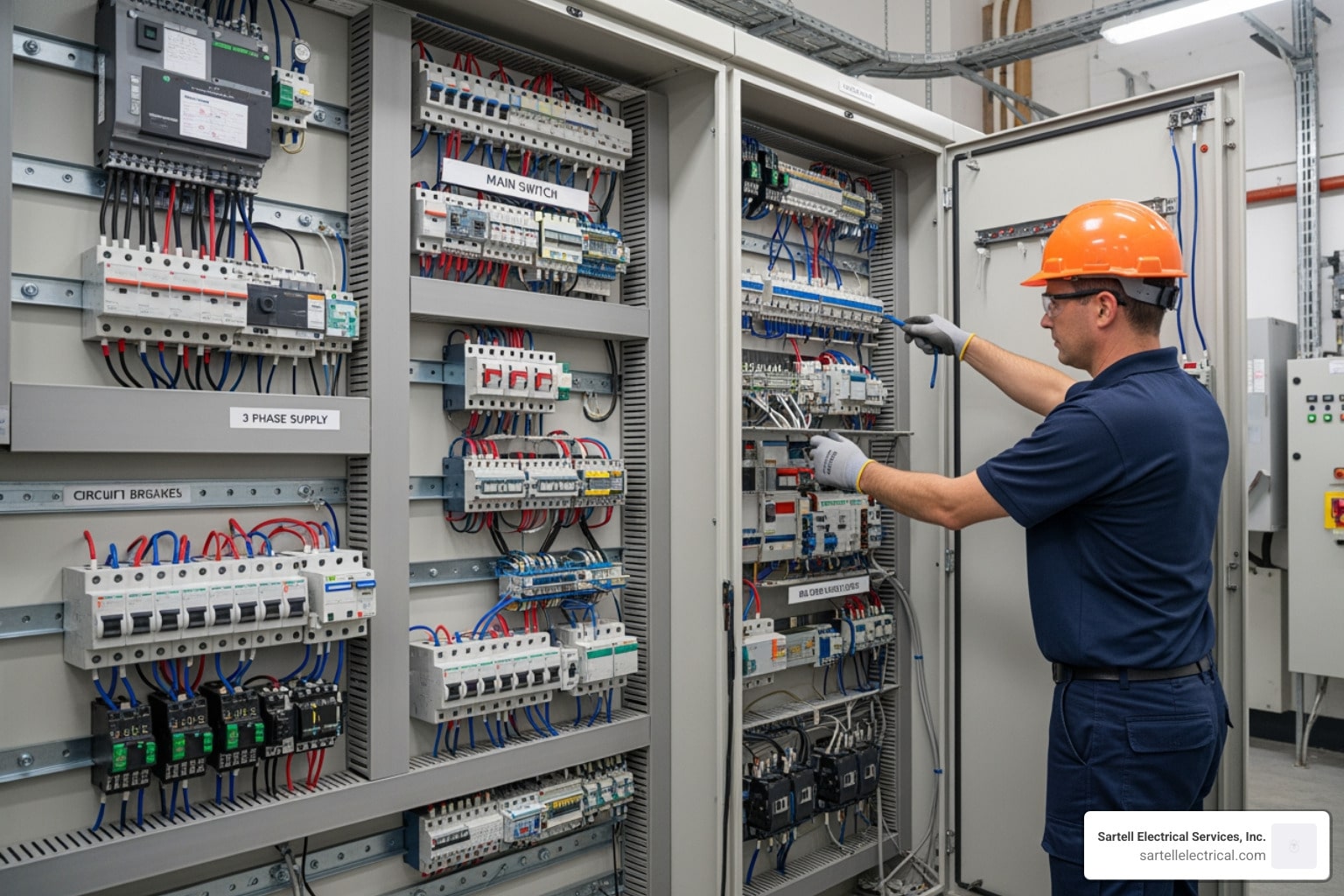
Electric Meter Upgrade: The Ultimate 200-Amp Guide
Why Understanding Your Electric Meter Upgrade Matters
An
electric meter upgrade can mean two things: a utility-mandated swap to a smart meter, or a major service upgrade for modern power demands. Here's what you need to know:
Quick Answer:
- Smart Meter Swap - Your utility replaces your old analog meter with a digital one. It takes 10-15 minutes, is usually free, and involves a brief power interruption.
- 200-Amp Service Upgrade - A full electrical system upgrade by a licensed electrician. It replaces the meter base, panel, and service entrance to handle EV chargers, heat pumps, and modern appliances. This requires permits and utility coordination.
- Key Difference - A smart meter swap offers the same power capacity, while a service upgrade increases it.
Your home's electrical needs have grown. Electric vehicle chargers, central air, heat pumps, and smart devices all compete for power. Many older homes with 100-amp service can't keep up.
At the same time, utilities nationwide are rolling out smart meters, including in Ohio, Illinois, and Massachusetts. These digital meters measure usage in real-time and send data wirelessly to your provider.
But here's the common confusion:
a smart meter installation doesn't increase your electrical capacity. If your lights dim when the AC kicks on or breakers trip, you need more than a meter swap—you need a full service upgrade.
This guide explains both scenarios, covering what to expect from a utility-led installation, when you might need a 200-amp service upgrade, and why major electrical work is never a DIY project.
I'm Ed Sartell, and since 1985, I've guided Massachusetts homeowners through
electric meter upgrades and service expansions. Whether you're getting an EV charger or just received a notice from your utility, I'll explain what to expect.
The Smart Meter Revolution: Understanding the New Standard
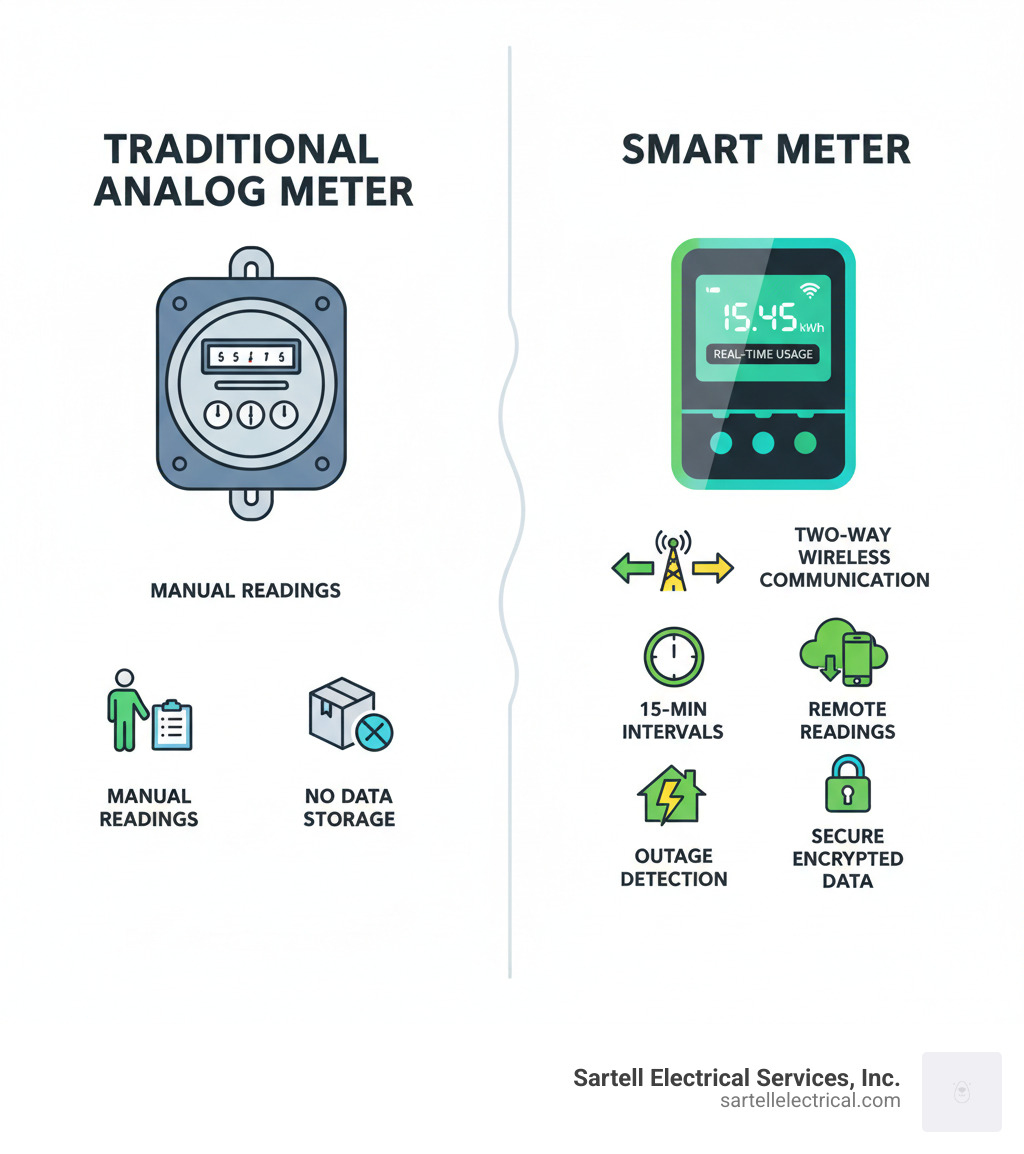
The old analog electric meter, with its spinning dial, is a relic of the past. For over a century, utility workers had to read these meters manually. Those days are quickly disappearing.
Today's
smart meters—also called Advanced Metering Infrastructure (AMI) devices—represent a fundamental shift. These digital meters feature
two-way communication technology, sending your usage information to the utility almost instantly and receiving information back. The
digital display shows your service status, cumulative usage (kWh), and current demand (kW).
It's not just a meter swap—it's a window into your home's energy personality.
Benefits for Consumers
For homeowners, smart meters provide
access to detailed energy information previously unavailable. Instead of a single number on a monthly bill, you can see usage in 15-minute intervals. Many utilities offer online portals (like
AEPOhio.com/Usage) to track when your electricity use spikes, helping you understand consumption patterns and make smarter choices.
Another key benefit is
accurate billing. Smart meters send real-time readings to the utility, eliminating the estimated bills and surprise "make-up" charges common with old meters. You're billed only for what you use.
How Smart Meters Help Save Money
Smart meters enable
flexible pricing plans that can save you money. Utilities may offer hourly pricing or
peak-time rebates for reducing electricity use during high-demand hours. This means you can save by running appliances like dishwashers or charging your EV during off-peak times.
Many utilities also provide
budget alerts and personalized energy-saving tips via online dashboards. Resources like
Energy Made Easy show how consumers use this data to compare plans and make informed choices. Knowledge is power, and with smart meters, that power can be cheaper.
Grid Modernization and Improved Reliability
Smart meters are a key part of
grid modernization efforts in Massachusetts and across the country. When a storm hits, smart meters instantly notify the utility of an outage, enabling
faster outage detection and quicker restoration. Utilities no longer have to wait for customer calls to identify problem areas.
These meters also help utilities monitor power quality and reroute electricity to prevent blackouts, creating a more resilient grid as advocated by groups like
For A Better Grid. Furthermore, remote readings lead to
greener utility operations by reducing truck rolls and fuel consumption, benefiting both reliability and the environment.
Safety and Privacy Concerns
Let's address the common questions about safety and privacy.
Smart meters use
radio frequency (RF) emissions—the same technology in your cell phone and Wi-Fi router. However, they transmit data for only a few seconds per day, with emissions well below federal health and safety limits.
As for privacy, utilities use
data encryption and
secure networks to protect your information, similar to how banks protect financial data online. Your usage information is transmitted securely for billing and operational purposes.
Smart meter technology has been rigorously tested and deployed to millions of homes. Utilities design these systems with safety and security as top priorities, ensuring the benefits of an
electric meter upgrade to smart technology are significant.
The Smart Meter Installation: What to Expect from Your Utility Company
If you've received a notice about a smart meter installation, you're part of a nationwide grid modernization effort. Utilities like
FirstEnergy,
AEP Ohio, and
ComEd are rolling out these devices, with programs
approved by the Public Utilities Commission of Ohio and similar bodies. Your local Massachusetts utility handles the entire
electric meter upgrade process in your area.
The Installation Process
Your utility will notify you by mail, phone, or a door knock, often providing a time window or letting you schedule an appointment. The swap is quick, taking only
10 to 15 minutes. Your power will be out for a few minutes during the changeover.
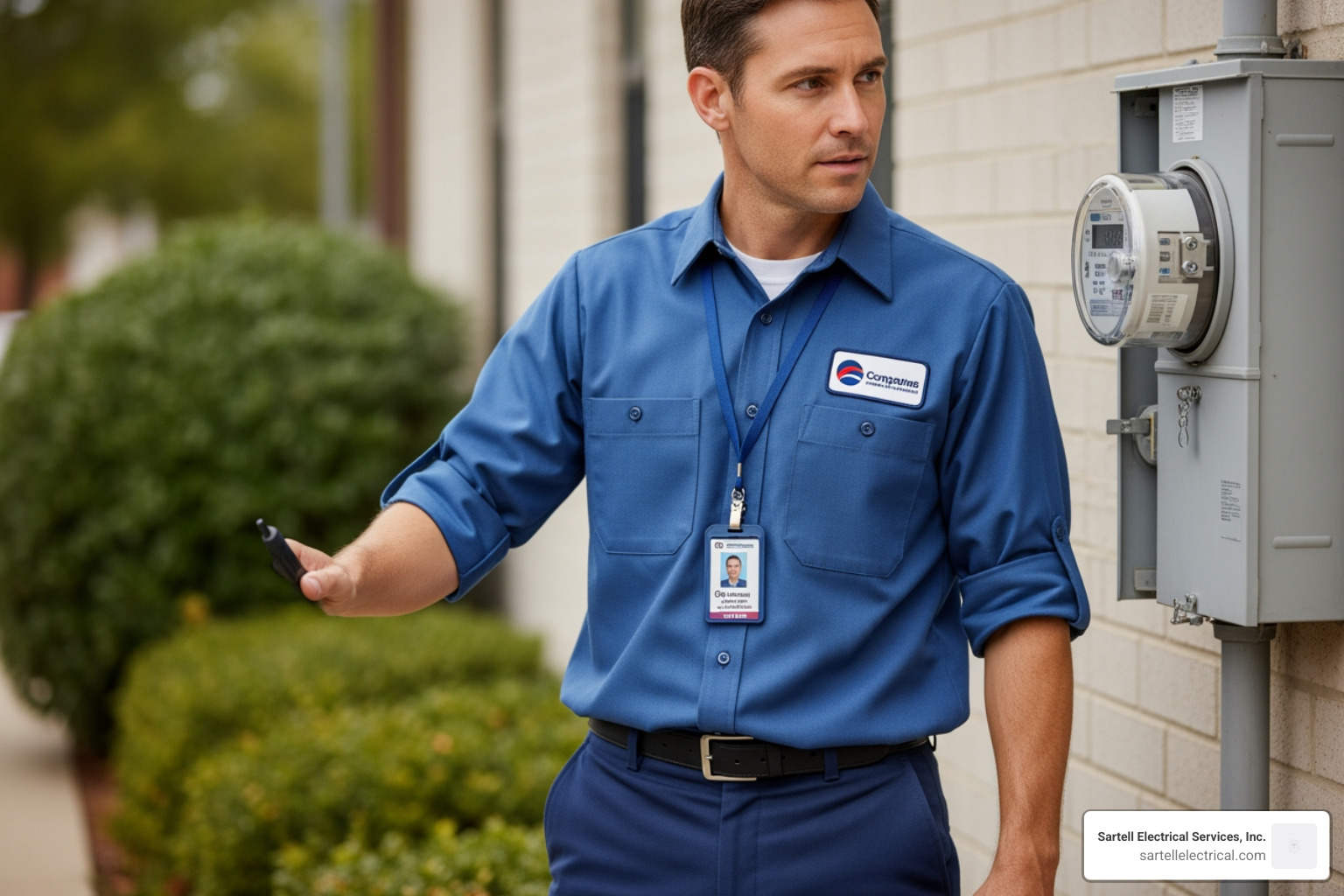
You don't need to be home if your meter is accessible. However, always verify the credentials of anyone claiming to be from the utility. Legitimate workers have
proper ID badges and drive
company-marked vehicles. If you're unsure, call your utility to confirm.
Costs and Opt-Out Policies
For most homeowners, there is
no direct cost for a standard smart meter installation; it's covered by the utility's infrastructure program.
However, most utilities offer an opt-out option with fees. For example,
AEP Ohio charges customers who refuse a smart meter about
$24 per month to keep their old meter. If a smart meter is already installed and you want it removed, expect a one-time fee of around
$43, plus the recurring monthly charge.
Opting out also means you may receive
estimated bills instead of accurate ones, leading to frustrating "catch-up" charges. In some cases, opting out isn't possible. If your old meter is failing or unsafe, the utility may require a replacement and could
disconnect service for refusal. You also can't opt out if you're in programs like net metering for solar panels or time-of-use rates.
For most Massachusetts homeowners, accepting the free, quick smart meter installation is the simplest path to better energy management.
Beyond the Swap: Planning a Full Electric Meter Upgrade
Here's something many homeowners don't realize: a smart meter swap from your utility company doesn't actually increase your home's electrical capacity. It's like getting a new speedometer when what you really need is a bigger engine.
If your lights flicker when the air conditioning kicks on, or your breakers trip every time you run the microwave and toaster together, you're experiencing the symptoms of insufficient electrical service. Many Massachusetts homes—and homes across the country—still run on 100-amp service. That was plenty back in the 1970s when the biggest power draws were a refrigerator, a TV, and maybe an electric stove. But today? Not so much.
You might find yourself daisy-chaining power strips and extension cords just to plug everything in. That's not just inconvenient—it's a red flag that your electrical system is overloaded. Our
Residential Electrical Upgrades Guide walks through these warning signs in detail.
What is a 200-Amp Service Upgrade?
A
200-amp service upgrade is the real deal—a complete overhaul of your home's main electrical entry point. We're talking about replacing everything from the meter base on the outside of your house all the way through to your main electrical panel inside. It's not just swapping out one component; it's upgrading the entire pipeline that delivers electricity to your home.
Think of it this way: if your home's electrical system is a highway, you're widening it from two lanes to four. A 200-amp upgrade essentially doubles the electrical capacity available to your home, which is why it's become the standard for new construction and major renovations across America.
So when do you need one? Modern life is the short answer. Electric vehicle chargers are probably the most common trigger these days. A Level 2 home EV charger typically needs a dedicated 40-50 amp circuit. If you're already running close to your 100-amp limit, there's simply no room for that kind of draw.
But EVs aren't the only culprit. Heat pumps are gaining popularity as efficient heating and cooling solutions, and they draw significant power. Central air conditioning, modern kitchen appliances with all their bells and whistles, that home addition you've been planning—they all add up. Even dozens of smart home devices, each drawing a little power, contribute to the load.
Beyond just meeting your current needs, a 200-amp upgrade is an investment in your home's value. Potential buyers increasingly expect homes to support modern technology. You're essentially future-proofing your property and making it significantly more attractive on the market.
The process for a 200-amp electric meter upgrade
An
electric meter upgrade to 200-amp service isn't something that happens in an afternoon. It's a carefully orchestrated process that typically takes a full day and involves multiple parties working in coordination.
It starts with hiring a licensed electrician—and here in Massachusetts, that means someone who knows both the National Electrical Code (NEC) and our state's specific requirements inside and out. We'll pull the necessary permits from your local building department, which ensures all work meets current safety standards and building codes.
Next comes coordination with your utility company. This is crucial: they're the ones who disconnect the power at the meter before we begin work. Nobody—and I mean nobody—should be working on an electrical service while it's still energized. The utility company controls that connection, and they'll reconnect it after everything is installed and inspected.
During the upgrade itself, we replace several key components. Your old meter socket gets swapped for a new 200-amp rated version. The service entrance cable—that's the thick cable running from your meter to your panel—gets upgraded to handle the increased capacity. The weather head at the top of your service mast is replaced to ensure proper protection from the elements. Your grounding system is upgraded to meet current code requirements. And finally, your old electrical panel is replaced with a new 200-amp panel that has room for all your circuits, plus space to grow.
Once everything is installed, a local inspector comes out to verify the work meets code. Only after that inspection passes will the utility company restore your power. The whole process typically takes between four and eight hours, during which you'll have a planned power outage. To get a sense of what this investment might look like, check out our
Main Panel Upgrade Cost guide.
Why a major electric meter upgrade is not a DIY job
I need to be absolutely clear about this: upgrading to 200-amp service is not, under any circumstances, a DIY project. I don't care how many YouTube videos you've watched or how handy you are with home projects. This is dangerous work that can kill you.
We're talking about high-voltage electricity here. The risk of severe burns, electric shock, and electrocution is very real for anyone without proper training and experience. Working with live electrical systems has killed plenty of people who thought they knew what they were doing.
But let's say you somehow manage not to electrocute yourself. There's still the matter of code compliance. The National Electrical Code, along with Massachusetts-specific electrical codes, lays out precise requirements for every aspect of this work—wire sizing, grounding methods, bonding procedures, proper component installation, and dozens of other technical details. Get any of it wrong, and you've created a fire hazard that could burn your house down.
And here's the kicker: incorrect electrical work can void your homeowner's insurance. If a fire starts because of faulty electrical work, your insurance company may refuse to pay. No inspector will approve work that doesn't meet code, which means you'll be paying twice—once for your DIY attempt, and again to have a professional fix it.
This work requires specialized tools and years of training in electrical theory and practice. As
the Occupational Safety and Health Administration's guide on electrical safety makes clear, electrical work demands specific expertise and strict adherence to safety protocols. This is exactly why licensing requirements exist for electricians.
Trust me on this one: call a licensed professional. Your life and your home are worth it.
Key components replaced during a 200-amp service upgrade
When we perform a 200-amp service upgrade, we're replacing or upgrading several critical components of your home's electrical system. Each one plays a vital role in safely delivering power throughout your home.
The
meter socket (also called a meter base) is the weatherproof enclosure on your home's exterior where the electric meter plugs in. Your old one gets replaced with a new unit rated for 200 amps, with the proper connections to handle that increased capacity.
The
service entrance cable is perhaps the most important upgrade. This is the main cable that carries all the power from your meter into your home's electrical panel. We upgrade this to a much thicker gauge wire—typically aluminum or copper—that can safely carry 200 amps without overheating. Often, we're also converting from an older 3-wire system to a modern 4-wire system, which separates the neutral and ground conductors. That separation is a major safety improvement and required by current code.
At the top of your service mast (the vertical pipe that extends up from your meter), we install a new
weather head. This simple but important component keeps rain and snow from running down into your service conduit, preventing water damage and corrosion.
Your
grounding system gets a complete upgrade too. Modern code typically requires two copper ground rods, each driven eight feet into the earth and spaced at least six feet apart. These are connected with proper gauge wire to your electrical system, providing a safe path for fault currents and protecting your home from lightning strikes and other electrical surges.
Finally, we replace your old 100-amp
main electrical panel with a new 200-amp panel. This gives you not only the increased capacity but also more physical space for circuit breakers. No more trying to squeeze in one more circuit or settling for tandem breakers because you've run out of room. For a detailed look at what goes into choosing the right panel, our guide on
Electrical Panel Box for Home covers all the essentials.
All these components work together as a system, safely and efficiently delivering electricity from the utility grid to every outlet, switch, and appliance in your home. It's a comprehensive upgrade that sets your home up for decades of reliable electrical service.
Frequently Asked Questions About Your Electric Meter Upgrade
How long does an electric meter upgrade take and will I lose power?
The time and power interruption really depends on which type of
electric meter upgrade you're getting.
If your utility company is swapping out your old analog meter for a smart meter, you're looking at a quick 10-15 minute visit. Your power will be off for just a few minutes during the swap. Most utilities will let you know ahead of time, and the best part? You don't even need to be home for it.
Now, a full 200-amp service upgrade is a different story altogether. This is comprehensive electrical work that typically takes between 4 to 8 hours, though more complex installations can take longer. You'll experience a planned power outage for the entire duration of the work. We coordinate this carefully with both you and your utility company, so you'll know exactly when to expect the outage and can plan accordingly. It's a good day to take the family out for lunch and maybe catch a movie!
Can I refuse a mandatory smart meter upgrade from my utility?
You can usually refuse a smart meter installation, but it's worth understanding what that decision means. Most utility companies in Massachusetts have opt-out policies, but they come with some strings attached.
First, there's typically a monthly fee—often around $24—to cover the cost of sending someone out to read your meter manually. That's $288 per year, which adds up quickly. You'll also likely receive estimated bills instead of precise readings, which can lead to those frustrating "catch-up" bills when the actual reading finally happens.
In some situations, utilities may even reserve the right to disconnect service if you refuse both the smart meter and the opt-out option, particularly if your existing meter is old, failing, or poses a safety risk. And here's something many people don't realize: opting out might disqualify you from certain energy-saving programs or special rate plans like net metering for solar panels or time-of-use rates that can save you money.
Before making this decision, I'd recommend reaching out to your specific utility provider to understand their current policies and what it will actually cost you in the long run.
Does upgrading my panel to 200 amps automatically upgrade my service?
This is probably the most common question we get, and the answer surprises a lot of homeowners:
no, upgrading your panel doesn't automatically give you 200-amp service.
Think of it this way: your electrical panel is like a distribution center. You can absolutely install a larger 200-amp panel to give yourself more space for circuit breakers and future expansion. But the actual electrical service capacity coming into your home? That's determined by the size of the wires running from the utility connection through your meter and into your panel.
The main breaker in your new panel has to match the amperage rating of your incoming service. So if you're still receiving 100-amp service from the utility, your shiny new 200-amp panel will have a 100-amp main breaker installed to protect the system. You'll have more circuit slots available, which is great for adding new circuits, but you won't have any more total power capacity.
To truly upgrade to 200-amp service, you need a complete
electric meter upgrade that includes replacing the meter base, upgrading the service entrance conductors (those thick wires from the meter to the panel), and potentially even the service drop from the utility pole. This requires a licensed electrician working hand-in-hand with your utility company. It's a comprehensive upgrade, not just a panel swap.
Many homeowners install a larger panel as a smart first step, knowing they'll complete the full service upgrade later. That's perfectly fine—just understand that the increased capacity doesn't happen until all the components are upgraded. Our guide on
What is the Standard Residential Electrical Service Size? breaks down these distinctions in more detail if you'd like to learn more.
Conclusion: Powering Your Home for Today and Tomorrow

Think of your
electric meter upgrade as two completely different conversations. One is about modernizing how your utility company reads your meter—that's the smart meter swap. The other is about giving your home the power it actually needs to run everything you plug in, turn on, and charge—that's a full service upgrade to 200 amps.
Smart meters bring real benefits. You get accurate billing instead of estimates. You can track your usage in real-time and maybe even save money with time-of-use plans. Your utility can spot outages faster and get your power back on sooner. For most Massachusetts homeowners, this swap happens quickly, costs nothing, and requires just a brief power interruption.
But here's what a smart meter won't do: it won't stop your breakers from tripping when you run the dryer and the microwave at the same time. It won't give you the capacity to install that Level 2 EV charger you've been eyeing. It won't prepare your home for a heat pump or a home addition. That's where a 200-amp service upgrade comes in—replacing your meter base, service entrance cable, weather head, grounding system, and main electrical panel to genuinely increase your home's electrical capacity.
And we can't stress this enough: major electrical work is dangerous. We're talking about high voltage that can cause serious injury or death. There are complex code requirements for a reason. Fire hazards aren't hypothetical—they're real consequences of improper wiring. This is work that requires specialized tools, extensive training, and a license. As
the Occupational Safety and Health Administration's guide on electrical safety makes clear, electrical work demands professional expertise.
Since 1985, we've been helping Massachusetts homeowners and businesses throughout Essex County, Middlesex County, Norfolk County, Suffolk County, and Greater Boston understand their electrical needs and execute upgrades safely. We know the local codes, we coordinate with your utility company, and we make sure your
electric meter upgrade—whether it's a panel replacement or a complete service overhaul—is done right the first time.
Your home should support the way you actually live, not hold you back. Ready to assess your home's electrical capacity? Our
Main Electrical Panel Upgrade Complete Guide has all the details you need to move forward with confidence.