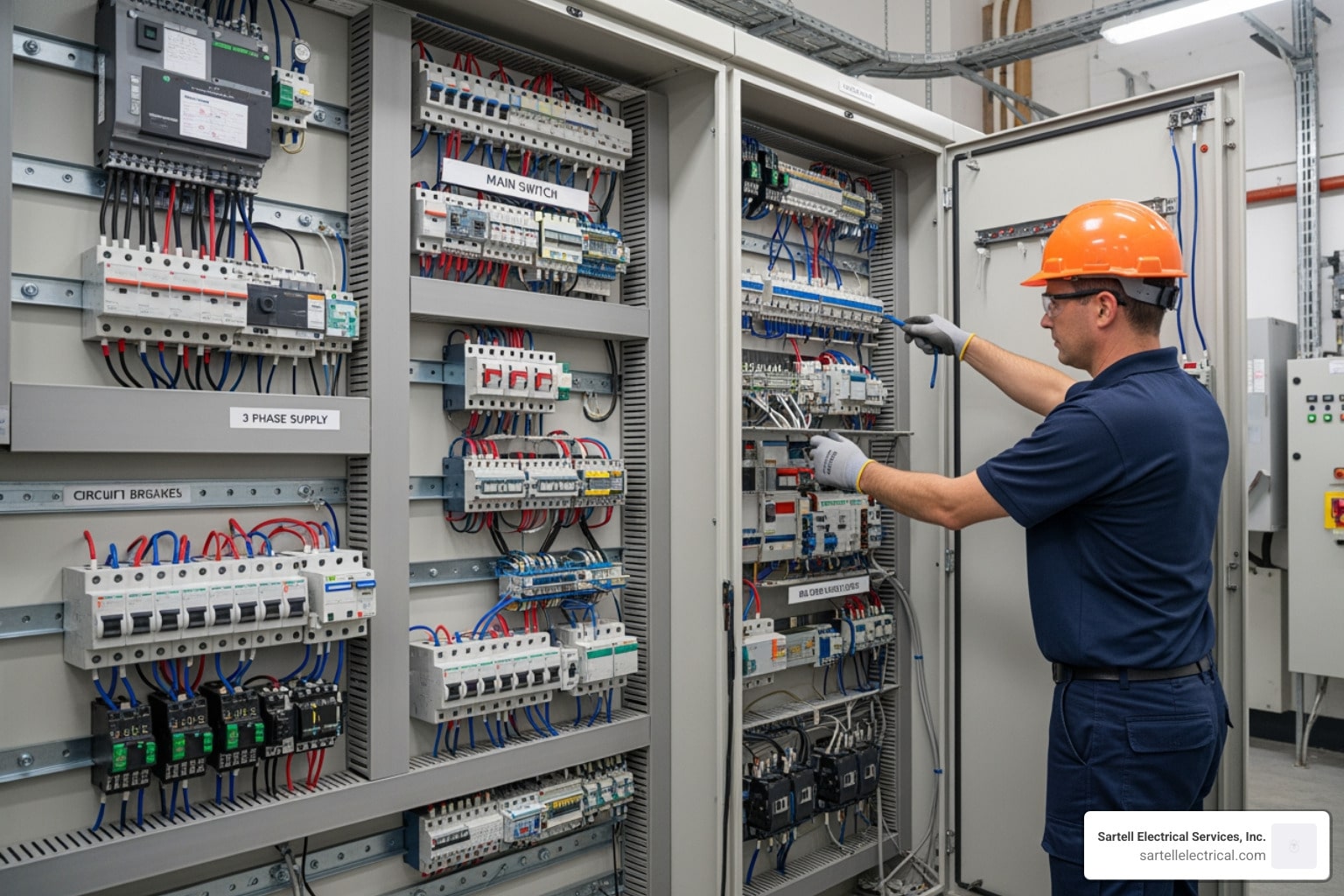
Electrical service upgrades: 5 Crucial Signs
Why Modern Homes Need More Electrical Capacity
Electrical service upgrades are essential for increasing your home's power capacity, improving safety, and handling modern technology. Here's what you need to know:
Top Benefits of an Electrical Service Upgrade:
- Safety: Reduces risk of electrical fires, shocks, and overloaded circuits
- Capacity: Powers modern appliances like EV chargers, heat pumps, and smart home devices
- Home Value: Increases property resale value and appeal to buyers
- Compliance: Meets current electrical codes and insurance requirements
- Future-Proofing: Prepares your home for increasing electrical demands
Modern homes draw far more power than in the past. We charge EVs, run heat pumps, and power home offices—loads many older systems weren't designed to handle. Homes over 25 years old often have 100-amp service, which is frequently insufficient. Newer homes typically have 200-amp service.
Warning signs are hard to miss: lights dimming when appliances start, frequently tripping breakers, or a warm electrical panel. These are safety red flags.
According to industry data, 48 million homes would require service upgrades to safely accommodate a typical Level 2 EV charger. As electrification accelerates, that need will only grow.
I'm Ed Sartell, founder of Sartell Electrical Services. Since 1985, my team has provided safe, code-compliant electrical service upgrades across Massachusetts. These projects make homes safer, more capable, and more valuable.
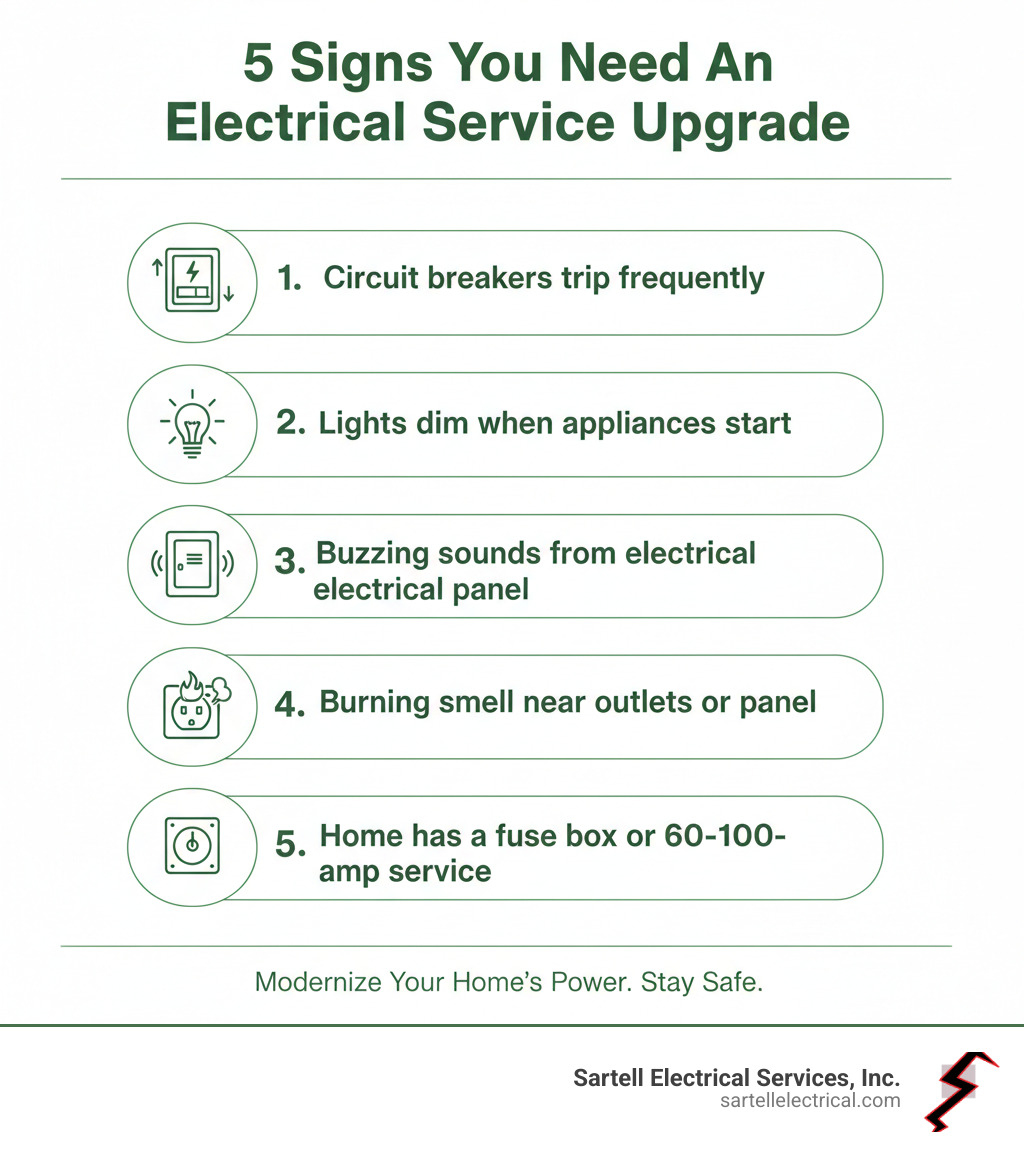
Why Your Home Might Need More Power: Signs and Triggers for an Upgrade
Our homes have changed dramatically. Where we once had a few appliances, we now have home offices, EV chargers, and sophisticated kitchen equipment. The electrical systems in older homes simply weren't built for this demand. Recognizing the signs that your system is overwhelmed is crucial for your family's safety.
Common Reasons for Electrical Service Upgrades
An electrical service upgrade is usually triggered by a specific need. Here are the most common drivers we see:
- Home Electrification: Adding an EV charger or a heat pump significantly increases your electrical needs. A Level 2 EV charger alone can use nearly half the capacity of a 100-amp service.
- Renovations and Additions: A kitchen remodel, basement finishing, or a new addition requires new circuits for lighting and appliances, often exceeding an old panel's capacity.
- Age: Electrical panels should be replaced every 20-30 years. If your home is over 25 years old, its system likely lacks modern safety features and wasn't designed for today's power loads.
- Unsafe Panels: Certain brands like Federal Pacific Electric or Zinsco are known fire hazards and require immediate replacement. Our team can help assess your system with our Home Electrical Panel Upgrade services.
- Cumulative Load: The combined power draw of gaming systems, multiple computers, and smart home devices can collectively strain an older electrical system.
Telltale Signs an Upgrade is Necessary
Your home will tell you when its electrical system is struggling. Look for these warning signs:
- Flickering or Dimming Lights: A classic sign your system can't distribute power evenly, especially when large appliances turn on.
- Frequently Tripped Breakers: If you're constantly resetting breakers, your circuits are overloaded.
- Buzzing or Crackling Sounds: A healthy panel is silent. Any noise from your panel indicates a problem that requires immediate professional attention.
- Burning Smells: An emergency signal of overheating wires near outlets or your panel. This is an immediate fire risk; call an electrician right away.
- Outdated Fuse Box: Fuse boxes lack the safety features and capacity of modern breaker panels and should be upgraded.
- Overheating Outlets or Panel: Outlets or a panel that are warm to the touch are dangerously overloaded.
- Reliance on Extension Cords: A constant need for power strips suggests your home has insufficient outlets, which can overload circuits.
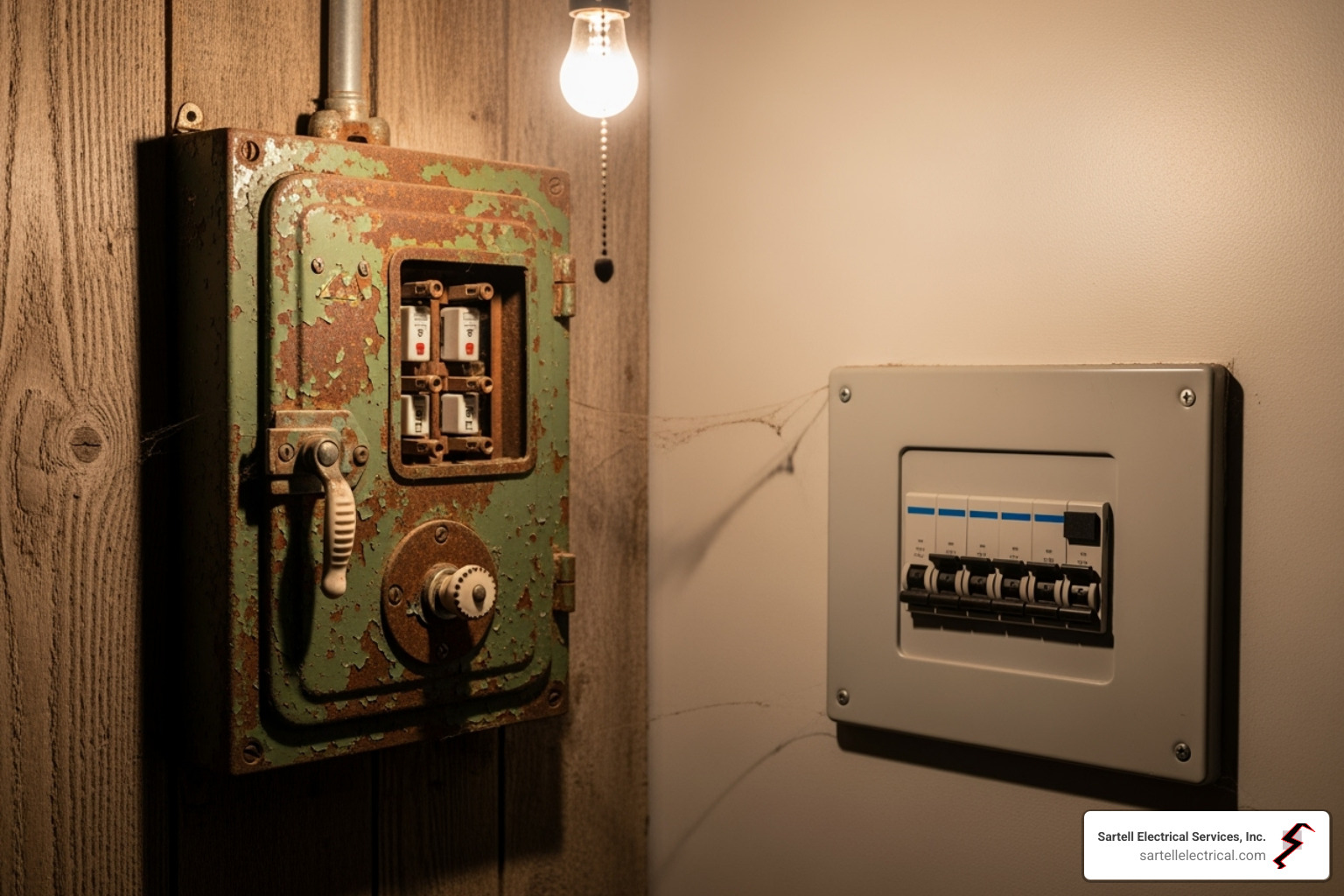
If you're experiencing any of these issues, it's time for a professional assessment. An electrical service upgrade is an investment in protecting your home and family.
Decoding Your Options: Amperage, Panels, and Associated Costs
When considering electrical service upgrades, it's helpful to understand the basics. Think of your electrical service as a highway to your home: amperage is the number of lanes, and the panel directs traffic. The first step is an electrical load calculation, where we determine how many lanes you need for your current and future power consumption. You can learn more about
Residential Electrical Service Amps and how they impact your home.
100-Amp vs. 200-Amp Service: What's Right for You?
Your service's amp rating determines the maximum electrical current that can flow into your home.
- 60-Amp Service: This is completely outdated, unsafe, and requires an immediate upgrade.
- 100-Amp Service: Once the standard, this may still work for smaller homes with mostly gas appliances. However, adding a modern appliance like an EV charger or heat pump will push it to its absolute limit.
- 200-Amp Service: This is the modern standard for most homes. It comfortably handles all-electric appliances, hot tubs, and future technologies like solar panels. It's what we recommend for most upgrades.
- 400-Amp+ Service: Necessary for very large homes or properties with extensive electrical demands, such as multiple EV chargers or large workshops.
| Service Amperage |
Typical Home Size |
Appliance Load |
Future Tech Suitability |
| 60-Amp |
Very Small (Outdated) |
Very Limited |
None (Requires Upgrade) |
| 100-Amp |
Small to Medium |
Gas Appliances |
Limited (Careful Planning) |
| 200-Amp |
Most Modern Homes |
All-Electric, Hot Tubs |
Excellent (Standard) |
| 400-Amp+ |
Very Large Homes |
Extensive Demands |
Superior |
Our team can help you determine
What is the Standard Residential Electrical Service Size? for your home.
Factors Influencing the Cost of Electrical Service Upgrades
A typical 200-amp service upgrade in Massachusetts costs between $2,000 and $4,500, but several factors affect the final price:
- Labor and Location: Rates vary based on geographic area and job complexity.
- Panel Accessibility: Hard-to-reach panels in crawl spaces or finished walls increase labor time and cost.
- Underground Service: Upgrading can require expensive trenching and landscaping repairs.
- Additional Work: An upgrade often reveals the need for rewiring, a new grounding system, or whole-house surge protection.
- Permits and Utility Fees: Local permits are required. The utility company may also charge fees, especially if their transformer needs an upgrade, which can add significantly to the cost.
We provide a detailed, free in-home estimate to give you an accurate number. Learn more about the
Cost to Change Out Electrical Panel.
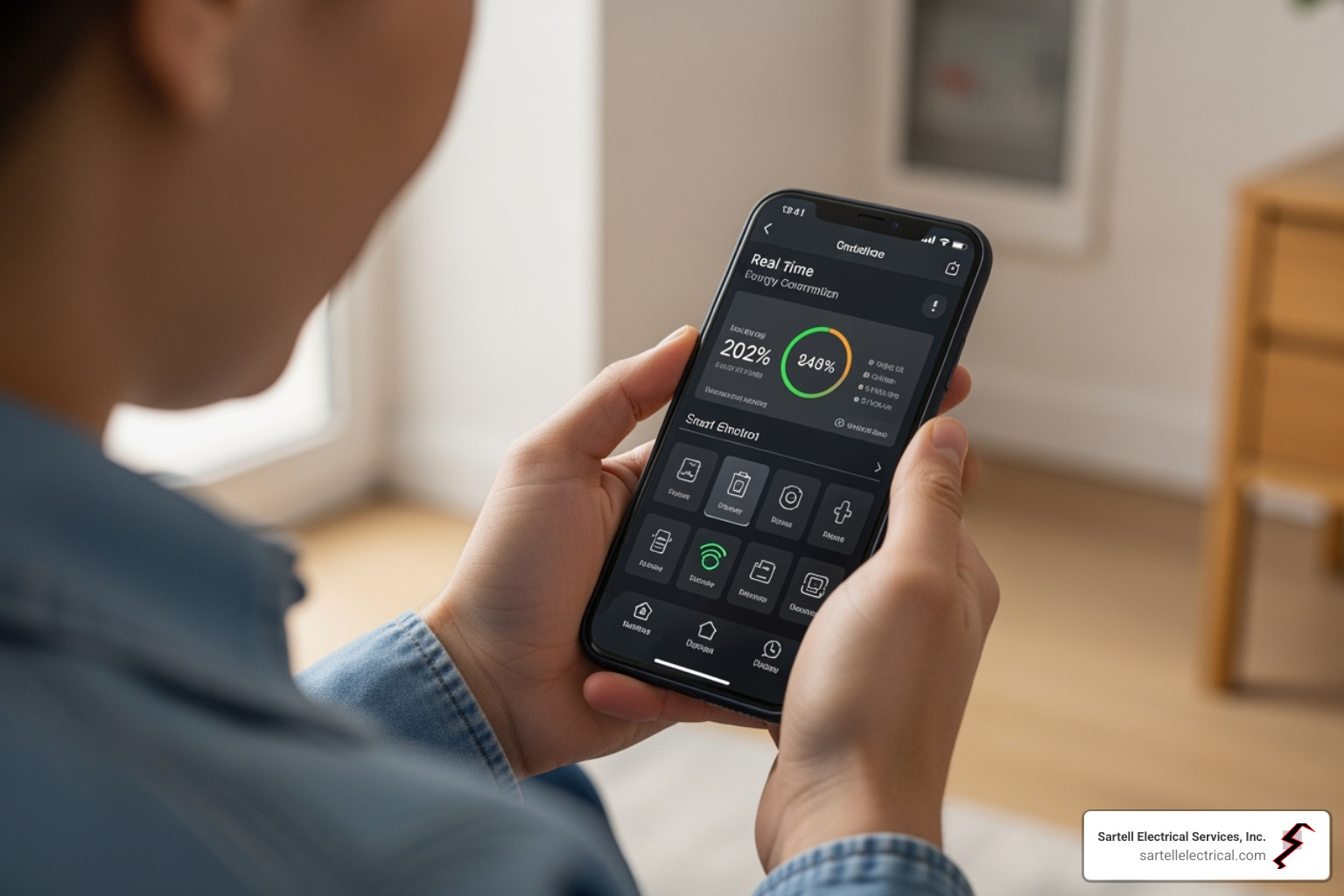
Modern Alternatives: Smart Panels and Load Management
While a full electrical service upgrade is the best long-term solution, some technologies can help manage existing capacity. Smart panels let you monitor usage and prioritize circuits, automatically pausing non-essential loads like an EV charger during peak demand. Simpler load management devices can also prevent overloads by allowing two appliances to share a circuit, but not run simultaneously. These are useful workarounds for adding a single large appliance, but they don't increase your home's total power—they are a temporary fix, not a cure for an undersized service.
The Anatomy of an Electrical Service Upgrade Project
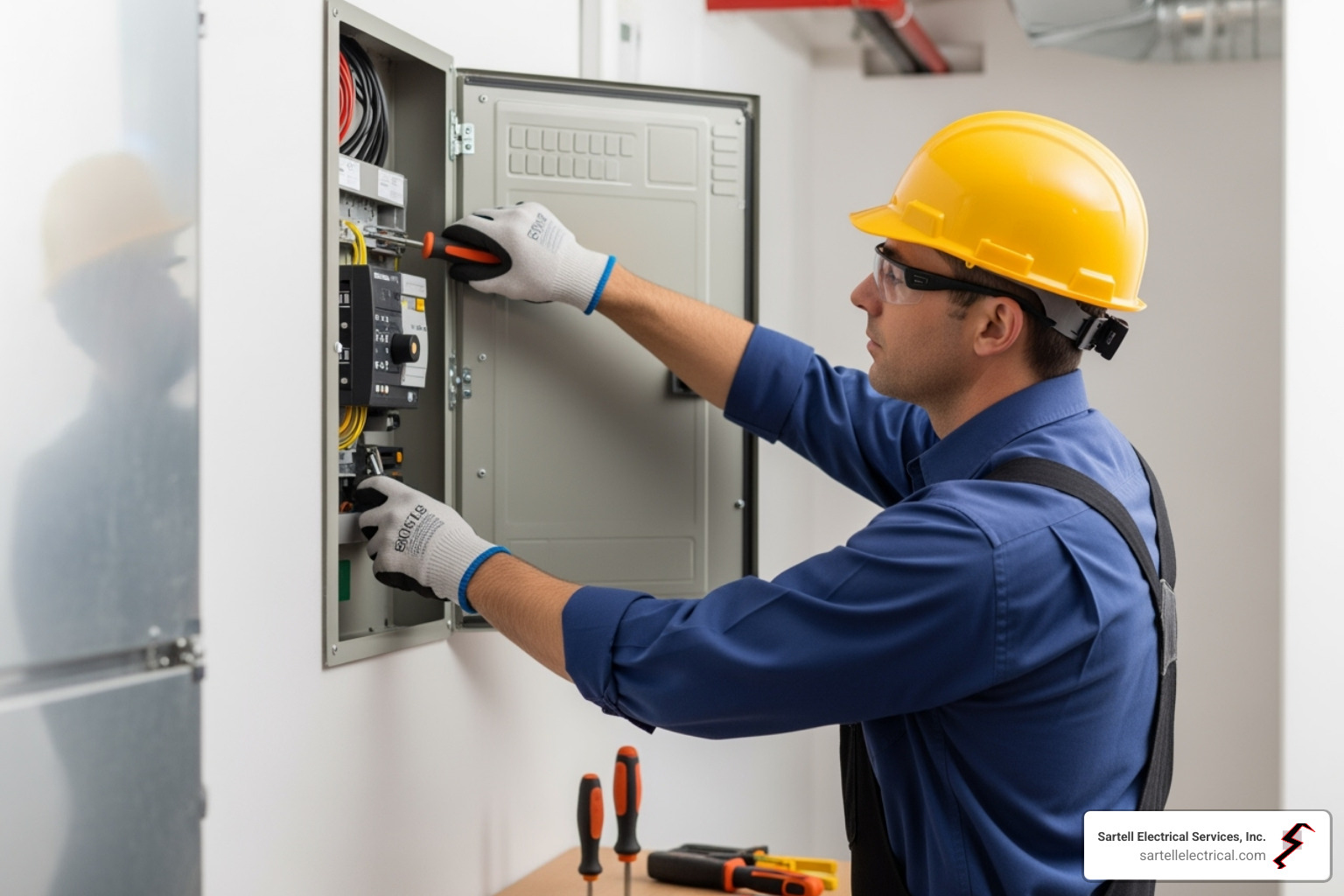
An electrical service upgrade is a coordinated project involving your electrician, the utility company, and local inspectors. It typically takes 1-2 days of on-site work, with a planned power outage of several hours. This temporary inconvenience leads to decades of safer, more reliable power.
Preparing for the Upgrade: A Homeowner's Checklist
Preparation is key to a smooth project. Here’s what you can do:
- Consult a Licensed Electrician: Start with a professional assessment of your current and future needs. Our Licensed Home Electrician team provides detailed, transparent estimates.
- Plan for Downtime: Your power will be out for several hours. Charge your devices, plan no-cook meals, and have flashlights ready.
- Clear the Work Area: Ensure the electrician has safe, unobstructed access to the panel and outdoor meter. Protect nearby furniture from dust.
- Bundle Projects: Consider adding other electrical work, like dedicated circuits or surge protection, at the same time to save on costs. We offer comprehensive Electrical Project Management to keep everything running smoothly.
Navigating Permits and Utility Company Coordination
A professional electrician handles the complex coordination for you. This includes:
- Utility Company Coordination: We work with your utility (like Eversource or National Grid in Massachusetts) to schedule the safe disconnection and reconnection of power. They must approve the upgrade, and in some cases, may need to upgrade their own equipment, which can affect the project timeline and cost.
- Permits and Inspections: We obtain all necessary permits from your local building department. This ensures the work is done to code. After installation, a municipal inspector must approve the work before the utility company will finalize the new service. This process guarantees your new system is safe and legal.
The Professional's Role: Why DIY is Not an Option
An electrical service upgrade is absolutely not a DIY project. The risks are life-threatening and include electrocution and fire. Here's why you must hire a professional:
- Extreme Danger: Professionals use specialized safety gear and follow strict protocols to manage high-voltage electricity safely.
- Code Complexity: A licensed electrician ensures your project complies with the complex and ever-changing National Electrical Code (NEC) and local regulations.
- Insurance & Liability: DIY electrical work can void your homeowner's insurance. Unpermitted work creates major legal and financial issues when you sell your home.
- Guaranteed Work: Professionals like our team at Sartell Electrical Services are licensed, insured, and provide warranties on labor and materials, giving you long-term peace of mind. Our MA Electricians Complete Guide highlights our commitment to quality.
The Long-Term Payoff: How an Upgrade Improves Your Home
An electrical service upgrade is an investment in your home's future. The benefits extend far beyond simply powering a new appliance.
- Improved Safety: Modern panels include Arc Fault (AFCI) and Ground Fault (GFCI) protection to prevent shocks and fires. Replacing old, worn components eliminates hidden hazards, which may even lower your homeowner's insurance premiums.
- Increased Home Value: An updated 200-amp service is a major selling point for buyers. It signals a well-maintained home that is ready for modern technology like EVs and smart devices.
- Future-Proofing: The world is electrifying. Heat pumps, induction cooktops, and electric vehicles are becoming standard. A service upgrade prepares your home for these technologies without needing another major overhaul later. Learn more about the move toward home electrification.
- Enabling Renewables: If you're considering solar panels or battery storage, an upgraded panel is often a prerequisite to handle the additional electrical loads and integration points.
- Improved Efficiency: Old, inadequate wiring creates resistance, wasting electricity as heat. A new system with modern components runs more efficiently.
Our team at Sartell Electrical Services specializes in
Residential Electrical Upgrades throughout Massachusetts. We've seen how these improvements transform homes, making them safer, more valuable, and ready for the future.
Frequently Asked Questions about Electrical Upgrades
After three decades of performing electrical service upgrades in Massachusetts, we've heard every question. Here are answers to the most common ones.
How long does an electrical service upgrade take?
The on-site work at your home typically takes 1 to 2 days. The power outage itself is usually concentrated to just several hours on one of those days. However, the entire project timeline, from the initial consultation to the final inspection, can take several weeks. This is due to the time required for permit processing and coordinating schedules with your local utility company.
Can an electrical upgrade lower my homeowner's insurance?
Yes, it often can. Insurance companies view outdated electrical systems as a significant fire risk. When you upgrade to a modern, code-compliant panel, you reduce this risk, which can lead to lower premiums. We recommend you contact your agent before the project to ask about potential discounts and provide them with the final inspection certificate afterward.
What is a subpanel and do I need one?
A subpanel is a smaller, secondary electrical panel that gets power from your main panel. It's used to add more circuit breaker slots for a specific area, like a finished basement, workshop, or home addition. However, a subpanel does not increase the total amount of power coming into your home. If your main service is already overloaded, you need a full electrical service upgrade, not just a subpanel. We can help you determine the right solution, whether it's a subpanel or a full
Breaker Panel Upgrade.
Conclusion
An electrical service upgrade is a crucial investment in your home's safety, value, and future-readiness. In a world of EVs, heat pumps, and smart technology, your home needs an electrical system that can keep up safely.
This guide has shown the warning signs of an overloaded system and explained the process and benefits of an upgrade. The most important takeaway is that this work protects your family and prepares your home for decades to come.
For homeowners throughout Massachusetts, Sartell Electrical Services offers expert
Residential Electrical Services backed by nearly 40 years of experience. We ensure your home is powered safely and reliably.
Don't wait for a minor issue to become a major hazard.
Contact our team of expert electrical contractors in the Boston, MA area today! Let's create a solution that gives you the power and peace of mind you deserve.