When Your Electrical System Acts Up, You Need More Than a Quick Fix
Electrical troubleshooting services are the systematic process of diagnosing and resolving faults in electrical circuits — identifying the root cause of problems like flickering lights, tripped breakers, or burning smells before they become dangerous.
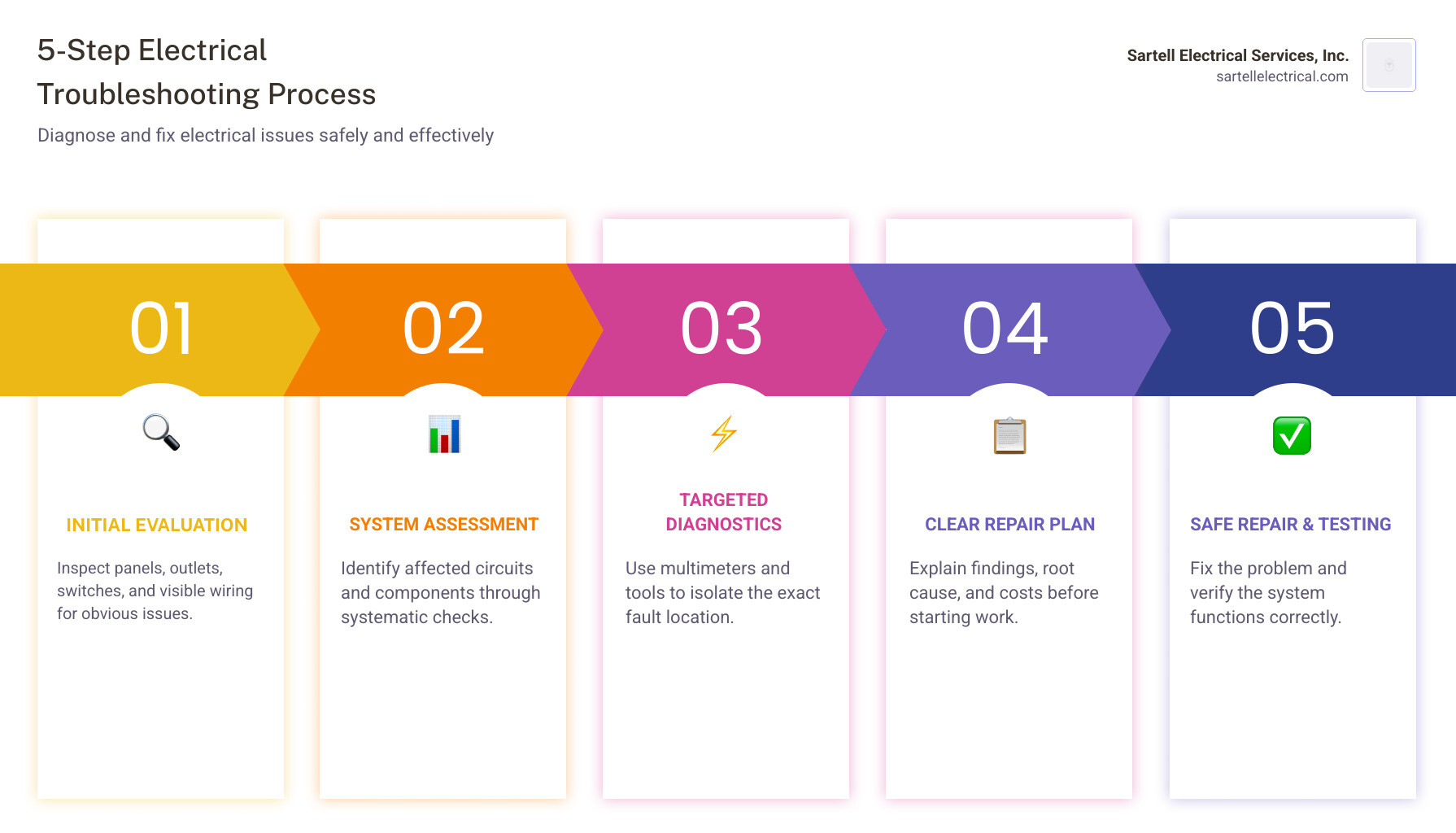
Here's what professional electrical troubleshooting typically involves:
- Initial evaluation — inspecting the panel, outlets, switches, and visible wiring
- System assessment — identifying which circuits or components are affected
- Targeted diagnostics — testing circuits with specialized equipment to isolate the fault
- Clear repair plan — explaining findings and costs before any work begins
- Safe repair and final testing — fixing the root cause and verifying the system works correctly
Electrical problems are more common — and more costly — than most people realize. According to the National Fire Protection Association (NFPA), electrical issues affect roughly 51,000 homes every year, causing an estimated $1.3 billion in property damage annually. Electrical malfunctions are also one of the leading causes of residential fires.
The risk isn't just to your property. Ignored warning signs like buzzing outlets, warm switch plates, or burning odors can point to live wiring faults that put your family or employees in real danger.
I'm Ed Sartell, President of Sartell Electrical Services, Inc., and with nearly four decades of hands-on experience delivering electrical troubleshooting services to homeowners, builders, and businesses across Massachusetts, I've seen how early, accurate diagnosis prevents small issues from turning into serious hazards. In this guide, I'll walk you through everything you need to know to recognize electrical problems, understand the diagnostic process, and make informed decisions about when to call a professional.
Related content about electrical troubleshooting services:
- condition-based asset monitoring for electrical systems
- electrical asset management
- electrical network monitoring
Understanding the Importance of Electrical Troubleshooting Services
At its core, electrical troubleshooting is a specialized form of detective work. It isn't just about swapping out a part; it's about performing a deep circuit analysis to find the "why" behind the failure. Whether we are working in a residential kitchen in Reading or an industrial facility in Boston, the goal is root cause identification.
If you simply replace a blown fuse or reset a breaker without understanding why it tripped, you are merely treating the symptom. The underlying problem — perhaps a loose connection or a compromised wire — remains, waiting to cause a more significant failure or, worse, a fire. In industrial settings, this process is even more critical. Complex machinery relies on precise electrical inputs, and a single fault can lead to massive downtime. For those managing high-stakes environments, you can find more info about machine electrical repair to see how troubleshooting scales from the home to the factory floor.
Common Signs You Need Professional Electrical Troubleshooting Services
Your home’s electrical system usually tries to tell you when something is wrong. The problem is that many of us have become "electrically deaf" to these warnings. If you notice any of the following, it is time to call for electrical troubleshooting services:
- Flickering or Dimming Lights: This often happens when a large appliance (like your AC or refrigerator) kicks on. While occasional dimming is common, persistent flickering suggests loose wiring or an overloaded circuit.
- Tripped Breakers: A circuit breaker is a safety device. If it trips frequently, it’s doing its job by preventing a fire, but it’s also telling you that the circuit is overloaded or there is a short circuit.
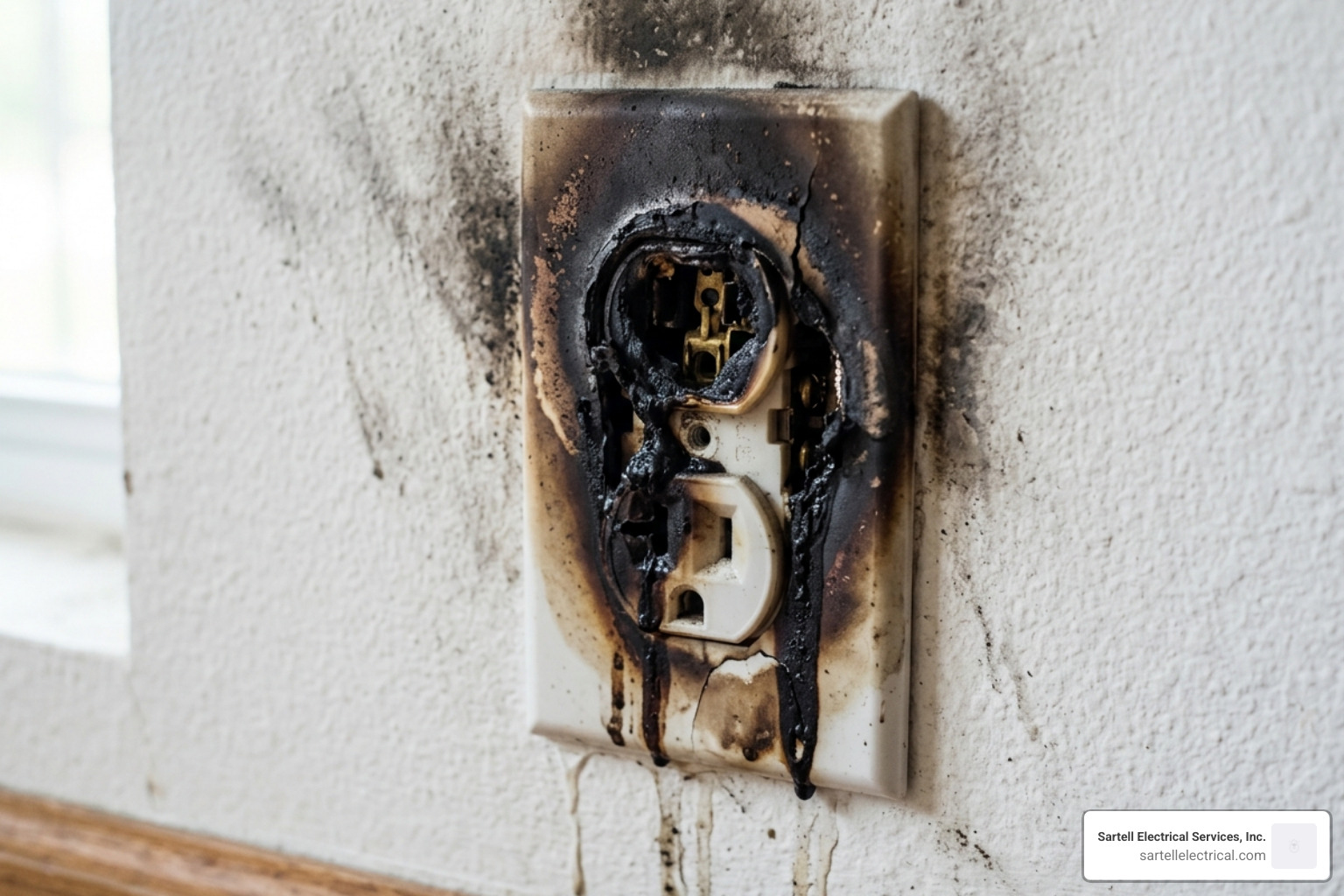
- Buzzing or Sizzling Sounds: Electricity should be silent. If you hear a hum or a crackle coming from a switch or outlet, it’s a sign of "arcing," where electricity is jumping through the air between loose connections.
- Burning Smells: This is an immediate emergency. If you smell ozone or burning plastic near an outlet or the electrical panel, shut off the main breaker and call us immediately.
- Warm Switch Plates or Outlets: If an outlet feels hot to the touch, the wiring behind it is likely overheating.
One of the most common residential headaches involves GFCI outlets. These are the ones with the "Test" and "Reset" buttons found in kitchens and bathrooms. If yours won't stay reset, check out our guide on Stop The Trip A Guide To Fixing Your Gfci Outlet for specific steps to take.
Why Professional Electrical Troubleshooting Services Outperform DIY Fixes
We live in an era of YouTube tutorials, but electricity is one area where "Doing It Yourself" can have fatal consequences. In April 2026, the standards for home safety are higher than ever, and for good reason.
- Safety and Electrocution Hazards: A standard 120-volt household outlet carries enough current to stop a human heart. Professional electricians use insulated tools and personal protective equipment (PPE) to stay safe while testing live circuits.
- Code Compliance: Massachusetts has strict electrical codes. DIY repairs often fail to meet these standards, which can lead to issues when you try to sell your home or file an insurance claim after a fire.
- Long-Term Reliability: A pro doesn't just "make it work"; they ensure the repair is sustainable. We look at the load balance of your entire panel to ensure one fix doesn't cause a problem elsewhere.
- Insurance Requirements: Many homeowners' insurance policies will not cover damages caused by unlicensed electrical work.
If you are on the fence about whether to pick up a screwdriver or a phone, our Choosing Electric Repair Guide can help you weigh the risks and benefits.
The Professional Diagnostic Process: From Inspection to Repair
When our team arrives at a home in Greater Boston or a commercial site in Essex County, we follow a methodical process. We don't guess; we measure.
- Visual Assessment: We start by looking for the obvious — scorched outlets, frayed wires, or outdated Federal Pacific or Zinsco panels (which are known fire hazards).
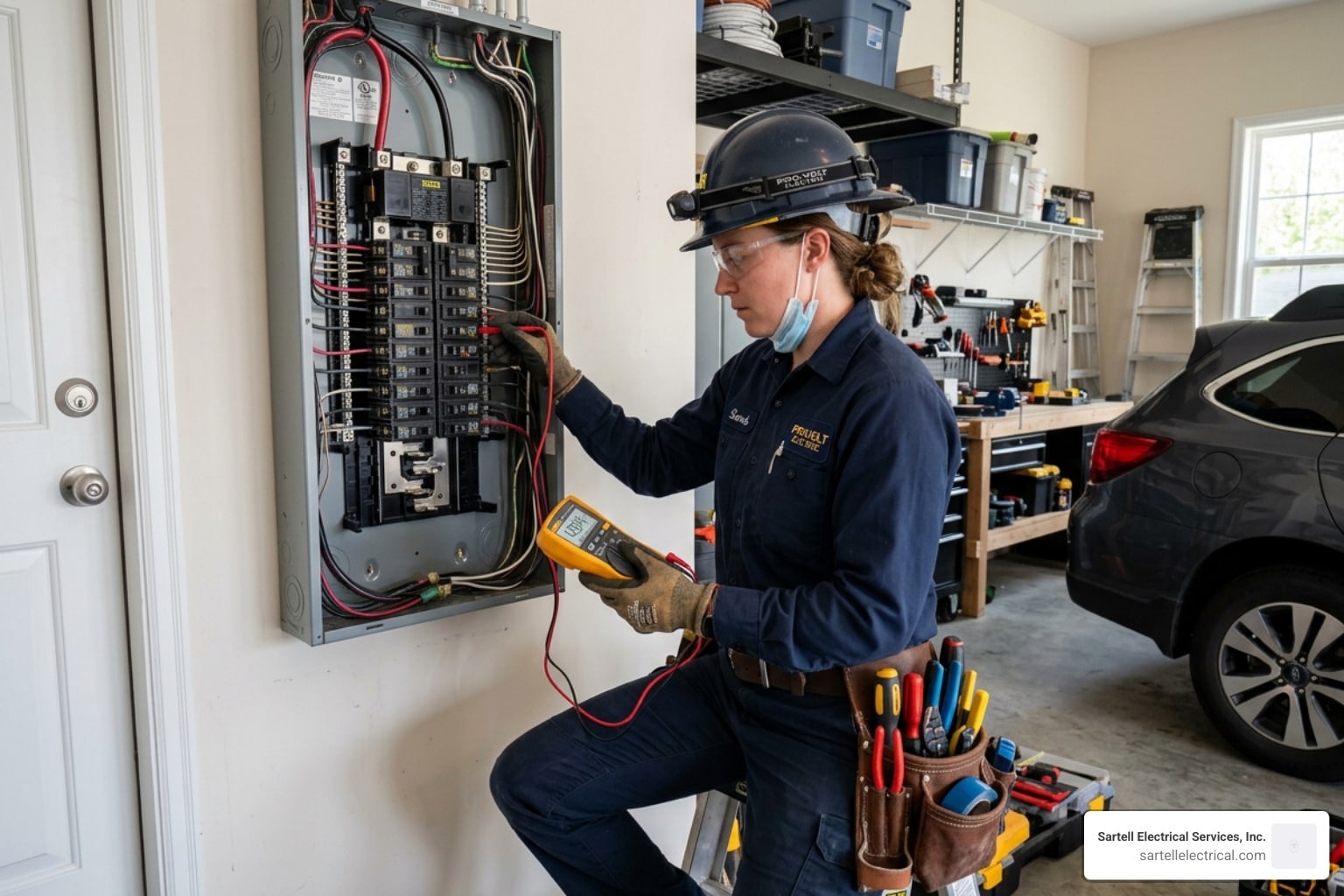
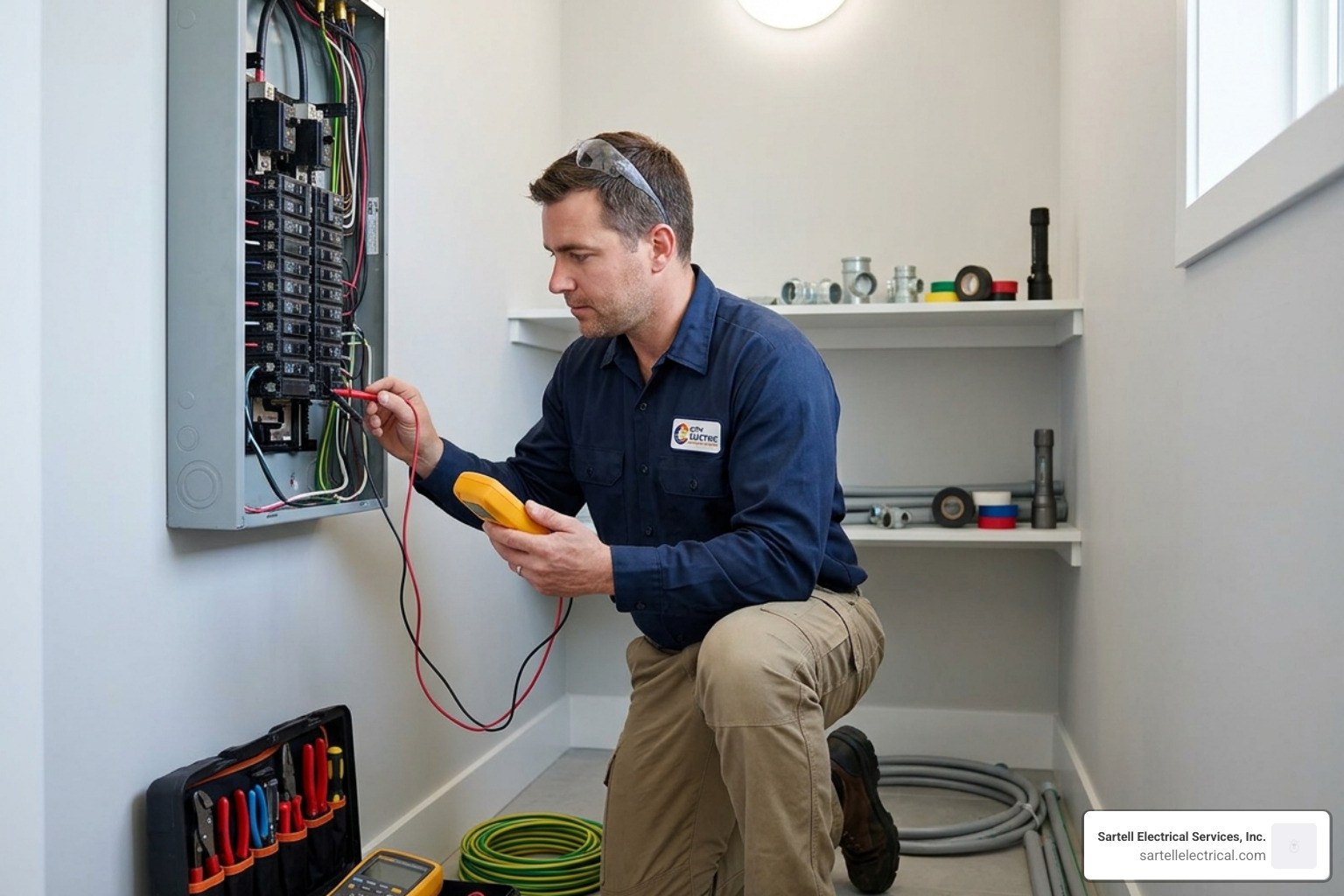
- Parameter Evaluation: We use multimeters to check voltage levels. Normal residential voltage should range between 108V and 132V. Anything outside that range indicates a utility issue or a serious internal fault.
- Component Testing: We isolate parts of the circuit. This might involve opening up junction boxes or testing the resistance of specific wires.
- Repair Execution: Once the fault is found, we perform a code-compliant repair, often replacing aging insulation or tightening degraded connections.
- Final Verification: We never leave a job without testing the fix. We put the circuit under load to ensure it holds up.
In commercial and industrial settings, we often take this a step further. We use thermal imaging to find "hotspots" in breaker boxes that the naked eye can't see. This is a staple of Industrial Electrical Equipment Repair, allowing us to fix problems before they cause a total system shutdown.
Root Causes of Common Electrical Failures
Why do things go wrong? Usually, it comes down to one of these five culprits:
| Symptom | Potential Root Cause | Professional Solution |
|---|---|---|
| Frequent Tripped Breakers | Overloaded Circuit | Load redistribution or new dedicated circuit |
| Flickering Lights | Loose Neutral Wire | Tightening connections at the panel or fixture |
| Dead Outlets | Tripped GFCI or Loose Terminal | Gfci Not Resetting repair or outlet replacement |
| Burning Smell | Arcing / Melting Insulation | Immediate power cut and wire replacement |
| Shock when touching appliances | Improper Grounding | Ground Fault Repair and system bonding |
In many older homes across Middlesex and Norfolk counties, aluminum wiring (common in the 1960s and 70s) is a major hidden risk. Aluminum expands and contracts more than copper, leading to loose connections and fire hazards over time. Professional troubleshooting can identify these high-risk areas before they ignite.
Safety First: Tools and Precautions for Electrical Systems
Safety isn't just a checkbox for us; it's our culture. Before any electrical troubleshooting services begin, we implement strict safety protocols.
- Power Disconnection: Whenever possible, we de-energize the circuit.
- Lockout/Tagout (LOTO): In commercial or industrial environments, we use LOTO procedures to ensure no one accidentally flips a switch while we are working on the line.
- PPE Requirements: This includes voltage-rated gloves, safety glasses, and flame-resistant clothing.
- Voltage Testing: We always use a non-contact voltage tester or a multimeter to "test before we touch."
Essential Tools for Electrical Diagnostics
A homeowner might have a basic circuit tester, but a professional arrives with a mobile laboratory. To provide top-tier home electrical repair services near me, we utilize:
- Multimeters: For measuring voltage, current, and resistance.
- Clamp Meters: These allow us to measure the current flowing through a wire without even touching the copper.
- Thermal Cameras: To see heat generated by high-resistance connections.
- Circuit Tracers: To find where a wire goes behind a finished wall.
- Insulation Testers (Meggers): To check if the plastic coating on your wires is breaking down.
These tools are especially vital for ground fault repair, where electricity is "leaking" to the ground in ways that are invisible to the naked eye.
Frequently Asked Questions about Electrical Troubleshooting
How much do electrical troubleshooting and repair services typically cost?
This is the most common question we get. The truth is, it varies based on the complexity of the issue. Most companies charge a diagnostic fee (sometimes called a service call fee) to cover the time and expertise required to find the problem. Once the issue is identified, you'll receive a quote for the actual repair.
For a detailed breakdown of what to expect, visit our page on Electrical Troubleshooting Cost. Generally, replacing a single outlet is inexpensive, while upgrading a full electrical panel can range from $2,500 to $5,000 or more depending on the amperage and local requirements.
What emergency electrical issues require immediate 24/7 service?
Not every electrical issue can wait until Monday morning. You should call for emergency electrical troubleshooting services if you experience:
- Total Power Loss: If your neighbors have lights but you don't, and your breakers are fine, you may have a dropped phase or a main breaker failure.
- Arcing or Sparking: Visible blue sparks from an outlet or panel.
- Burning Smells: As mentioned, this is a major fire warning.
- Buzzing Panels: A loud hum from your breaker box often indicates a breaker that is failing to trip, which is a massive fire risk.
If you are looking for electrical home repair near me tips, the best tip is this: if it smells like smoke or looks like fire, call the fire department first, then call us.
How can I prevent future electrical problems through maintenance?
Prevention is always cheaper than a midnight emergency repair. We recommend:
- Annual Inspections: Especially for homes over 40 years old.
- Tightening Connections: Vibrations and temperature changes can loosen wires over time.
- Whole-Home Surge Protection: To protect your expensive electronics from external power surges.
- Upgrading Outdated Tech: If you still have a fuse box or an old 60-amp service, it’s time for an upgrade to handle modern appliances.
For businesses, we recommend electrical condition monitoring to keep things running smoothly without interruption.
Conclusion
Electrical issues are more than just a nuisance; they are a direct threat to the safety of your home or business. Whether you are dealing with a baseboard heater repair in the middle of a Massachusetts winter or need outdoor lighting repairs for your storefront in Boston, the quality of the troubleshooting determines the safety of the result.
At Sartell Electrical Services, Inc., we bring over 30 years of experience to every job. Based in Reading, MA, we serve the entire Greater Boston area, including Essex, Middlesex, Norfolk, and Suffolk counties. Our commitment to excellence means we don't just "fix the spark" — we ensure your entire system is robust, code-compliant, and ready for the future.
If you are experiencing electrical "gremlins," don't wait for a fire to start. Contact us for professional electrical home repair service today. From lighting repair near me to complex warehouse lighting repair and industrial electrical equipment repair, we have the tools and the talent to keep your lights on and your family safe.
Related resources for your property: