Electrical Troubleshooting Cost: Smart Guide 2025!
Understanding What You'll Pay for Professional Electrical Troubleshooting
Electrical troubleshooting cost varies widely based on several key factors, but understanding the typical price ranges can help you budget effectively for electrical repairs. When lights flicker, outlets stop working, or circuit breakers keep tripping, the first question that comes to mind is usually: "How much is this going to cost me?"
Quick Answer - Typical Electrical Troubleshooting Costs:
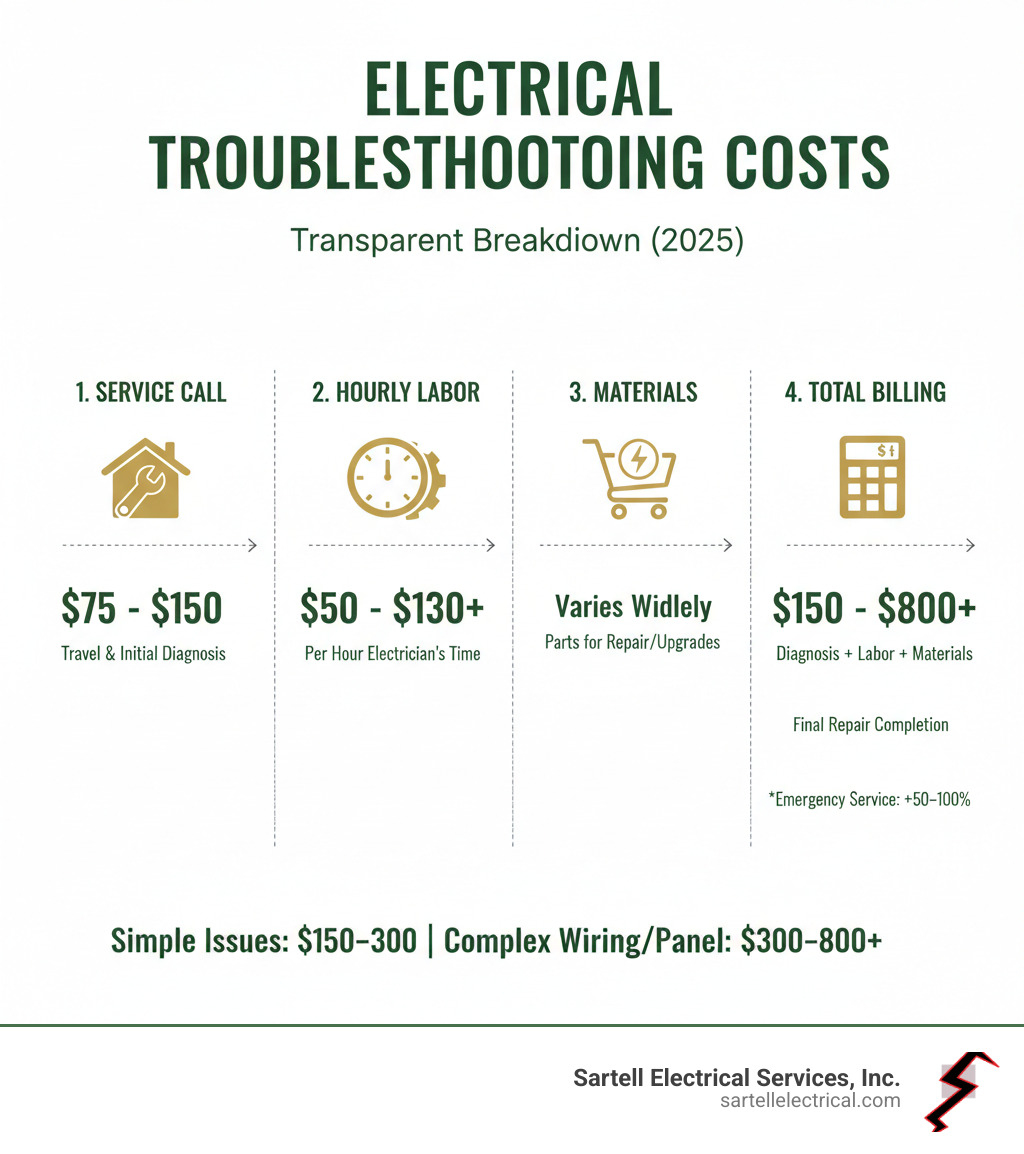
- Service call fee: $75-$150 (covers travel and initial diagnosis)
- Hourly rates: $50-$130+ per hour for labor
- Simple repairs: $150-$300 (outlet replacement, switch repair)
- Complex issues: $300-$800+ (wiring problems, panel issues)
- Emergency service: 50-100% higher than standard rates
The average professional electrical contractor in North America charges between $50 to $100 per hour for troubleshooting, with service call fees ranging from $163 to $535 depending on your location and the complexity of the issue. Many electricians charge a flat diagnostic fee that covers the first hour of work, then bill hourly for any additional time needed.
What affects your final bill? The total cost depends on problem complexity, accessibility of wiring, whether you need emergency service, and any materials required for repairs. Simple issues like a tripped breaker might only require the basic service call fee, while hidden wiring problems or electrical panel upgrades can cost significantly more.
As Ed Sartell, President of Sartell Electrical Services since 1985, I've helped thousands of Massachusetts clients understand electrical troubleshooting cost and make informed decisions about their electrical repairs. With nearly four decades of hands-on experience, I know how important it is to provide transparent pricing and quality workmanship for every project we take on.
Understanding the Base Charges: Service Calls & Hourly Rates
When you face an electrical issue, the first step is often to call a licensed electrician. This initial contact typically involves a service call fee, which covers the basic overhead of getting a professional to your door and beginning the diagnostic process.
What is an Electrician's Service Call Fee?
An electrician's service call fee (or trip/diagnostic fee) is the initial charge for a professional to assess an electrical problem at your home or business. This fee, typically $75 to $150, covers the electrician's travel and the first hour of work dedicated to diagnosing the issue. For a dead outlet or tripping breaker, our electricians use this time to find the root cause. This upfront cost ensures the electrician's time and travel are covered, even for minor, quickly resolved problems, forming a foundational part of the total electrical troubleshooting cost.
Typical Electrician Hourly Rates
Beyond the initial service call, the electrician will charge an hourly rate for any additional time spent troubleshooting and repairing your electrical system. The typical hourly rate for an electrician can vary significantly, generally falling between $50 and $130+ per hour. Some sources suggest an average of $80 to $130 per hour for fault finding in regions like Sydney, while others cite $50 to $100 per hour in North America.
Several factors influence these hourly rates:
- Experience and Expertise: A master electrician with extensive experience will likely charge more than an apprentice. Our team at Sartell Electrical Services consists of highly skilled and licensed professionals, ensuring you receive top-tier expertise.
- Regional Differences: Costs vary based on the cost of living and demand in your area. For example, electrical services in Greater Boston might be on the higher end of the spectrum compared to rural regions.
- Overhead Costs: An electrician's hourly rate covers more than their salary; it includes business expenses like insurance, vehicle maintenance, tools, training, licensing, and administrative costs. These overheads are crucial for running a professional, reliable, and safe electrical service.
- Type of Work: Highly specialized work, such as complex industrial control systems, may command a higher hourly rate.
Sometimes, for smaller jobs, an electrician might quote a flat rate for the entire job. This can provide predictability, but it's important to understand what the flat rate includes. For more complex issues, a time and materials (T&M) approach is common, where you're billed for the actual time spent plus the cost of any parts used. We believe in transparency, and our licensed home electricians are always ready to discuss our pricing structure with you. More info about our licensed home electricians
The Cost of Diagnosing a Specific Problem
Diagnosing a specific electrical problem is where the "troubleshooting" aspect truly comes into play. This isn't just about showing up; it's about the electrician's skill in methodically identifying the fault. For common issues like a tripping breaker or a dead outlet, the diagnostic process can often be completed within the initial service call's timeframe (typically the first hour).
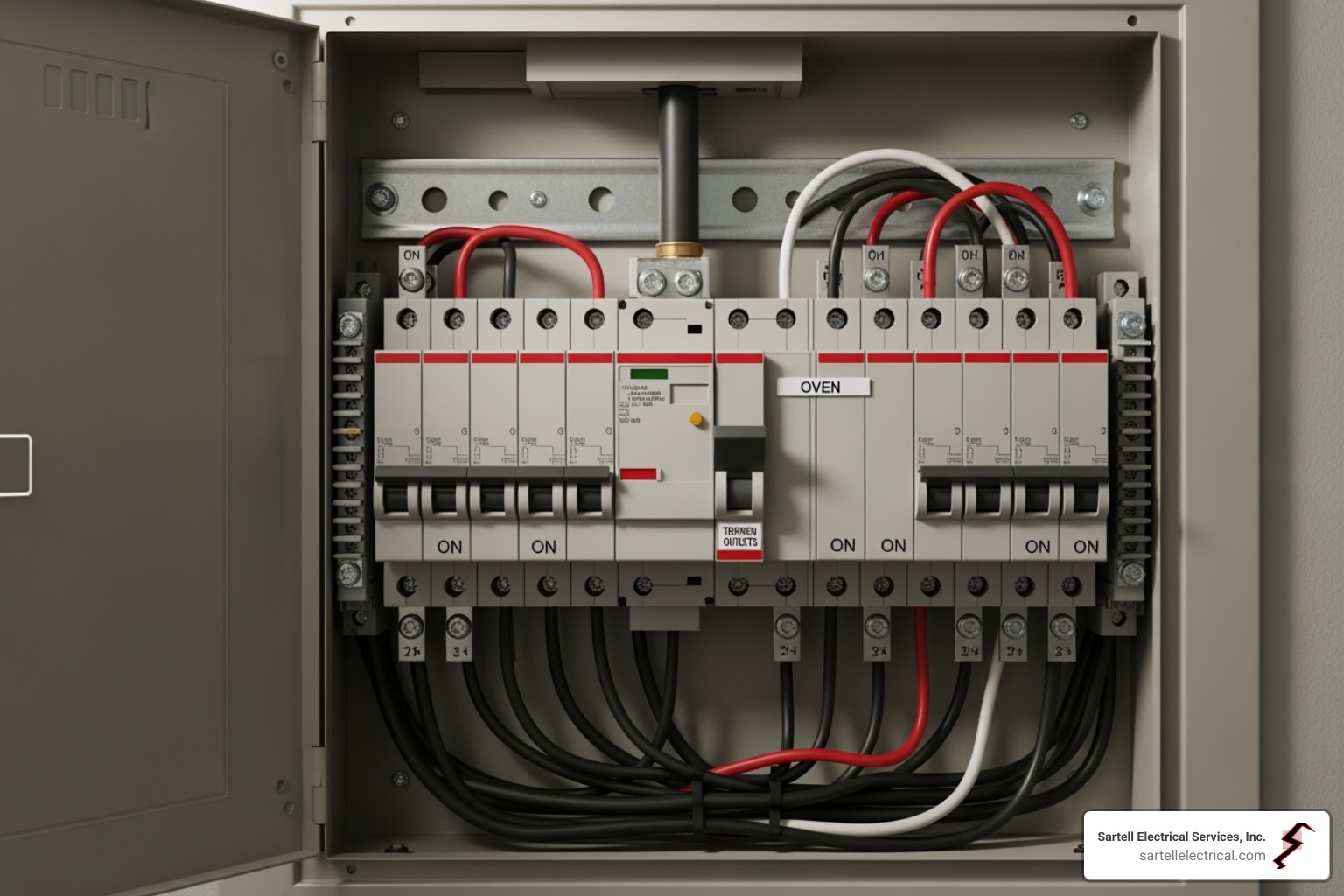
For instance, if your circuit breaker keeps tripping, our electricians will first check the breaker itself, then investigate the circuits it controls for overloads or short circuits. They'll use specialized tools like multimeters to test voltage and continuity. The average cost for diagnosing a specific electrical problem, if it extends beyond the initial service call, typically falls within the hourly rate of $75 to $150.
However, some problems are more elusive. Intermittent faults, like an occasional flicker or an outlet that works sporadically, are challenging and time-consuming to diagnose. Pinpointing these requires extensive testing, increasing the diagnostic time and overall electrical troubleshooting cost. If the issue involves hidden wiring or junction boxes, the process may require opening walls, adding to the complexity.
Key Factors That Influence the Total Electrical Troubleshooting Cost
Beyond the basic service call and hourly rates, several important factors can dramatically change your final electrical troubleshooting cost. Think of it like this: diagnosing a headache is different from diagnosing a complex neurological condition. The same principle applies to electrical problems.
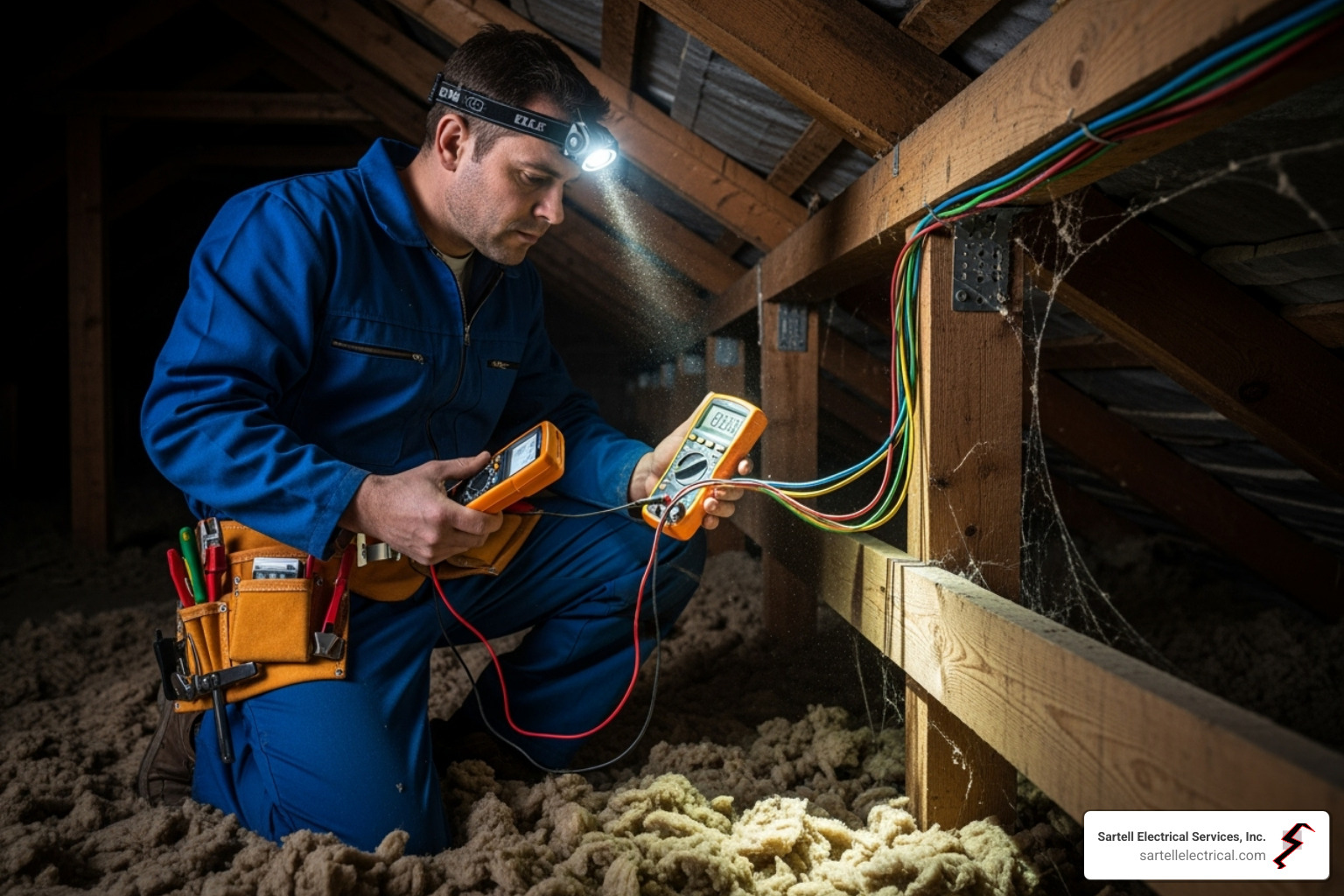
Complexity and Severity of the Problem
The nature of your electrical problem is the biggest factor in determining your final bill. Simple faults like a tripped GFCI outlet or a burned-out switch are usually straightforward to diagnose and fix, making them relatively affordable.
Complex faults are a different story. Loose connections cause intermittent problems, like lights that flicker unpredictably, requiring systematic testing to locate. Short circuits, where a hot wire touches a neutral or ground, require tracing the entire circuit path to find the fault—a time-consuming task, especially in older homes. Hidden junction boxes covered by drywall add another layer of complexity, as they must be located and carefully accessed.
The extent of damage also matters. A simple loose wire is a quick fix, but if that connection has been arcing and damaged surrounding components, the repair becomes much more involved.
Emergency Services vs. Standard Appointments
Electrical problems often happen at the worst times. While we're always ready to help with emergencies, after-hours rates typically cost 50% to 100% more than standard appointments.
This higher cost reflects the need to compensate electricians for working outside normal business hours and the operational flexibility required to prioritize your emergency over scheduled work. Common situations that warrant emergency service include visible sparks, complete power outages, buzzing sounds from electrical components, or a burning smell. In these cases, your safety is worth the extra cost.
For non-emergency situations, scheduling during regular business hours can help keep your electrical troubleshooting cost more manageable. More info about emergency electrical services.
Residential vs. Commercial: How Does the Electrical Troubleshooting Cost Differ?
Commercial electrical troubleshooting typically costs more than residential work for several reasons. System complexity is higher in commercial buildings, which often use three-phase power and higher voltages (e.g., 480-volt systems) that require specialized tools and expertise. Code requirements are also more stringent. Furthermore, the scale of work is larger; a single issue can affect an entire department, requiring extensive diagnostics and coordinated repairs to minimize business disruption.
At Sartell Electrical Services, we have the expertise to handle both residential and commercial challenges effectively. More info about residential and commercial electrical systems and More info about commercial electrical services.
Additional Costs to Consider
Your electrical troubleshooting cost extends beyond just the electrician's time. Material costs for wire, new outlets, or circuit breakers can add to your bill. Quality materials provide better long-term value and safety.
Permit fees are required for many electrical repairs, particularly those involving panel work or new circuits, and typically range from $100 to $500. We handle all necessary permits to ensure your project meets local codes.
Sometimes, fixing one problem reveals that other parts of your system need code updates to meet current safety standards, such as those outlined in the National Electrical Code (NEC). For instance, replacing an old outlet might require installing GFCI protection. While this adds to the immediate cost, it significantly improves your home's safety.
Don't forget about wall repairs. If we need to open walls or ceilings to access wiring, you'll need drywall patching and painting afterward. While we focus on the electrical work, coordinating these finishing touches is part of planning your total project budget.
Estimated Costs for Common Electrical Repairs
Once our electricians finish troubleshooting and identify the problem, we can move on to the actual repair. Having worked on thousands of electrical issues over nearly four decades, I've seen just about every type of repair imaginable. Here's what you can expect to pay for the most common electrical fixes we handle every day.
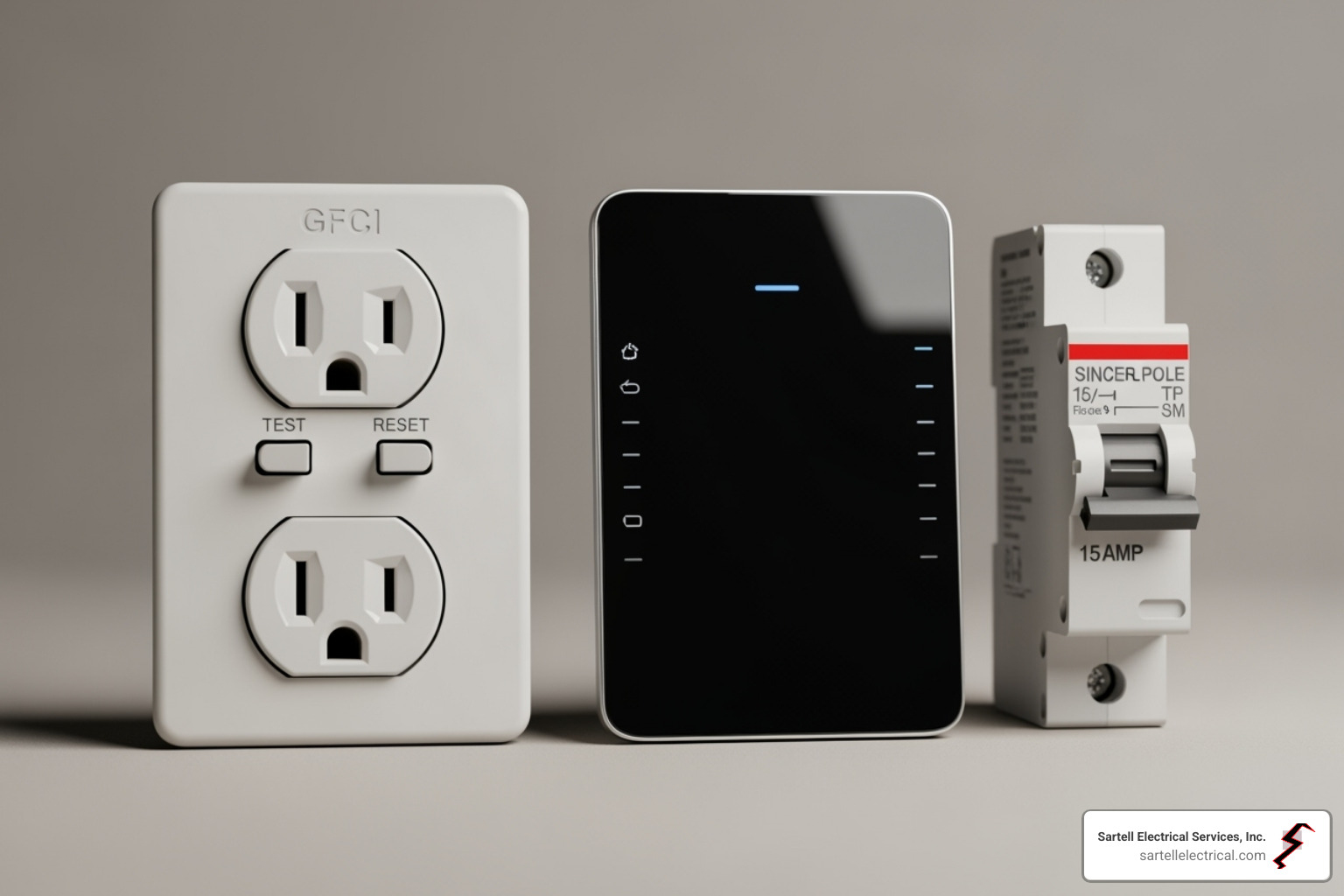
Outlet and Switch Repairs
These repairs are a large portion of our service calls and are often straightforward and affordable.
Standard outlet replacement typically runs between $100 to $250, which includes our labor and the new outlet or switch. This covers everything from a simple outlet that's stopped working to replacing an old, faulty switch.
GFCI outlet installation costs slightly more, usually $100 to $300. A GFCI (Ground Fault Circuit Interrupter) is a safety device that instantly cuts power if it detects an imbalance, preventing shocks. They are required by code in wet or damp locations like kitchens, bathrooms, and garages. The higher cost reflects the more sophisticated technology. How Much Does It Cost To Install Electrical Outlets?
Smart outlet installation has become increasingly popular. Installing a smart outlet falls into that same $100 to $300 range, though the smart outlets themselves cost more than standard ones.
For dimmer switch wiring, expect to pay around $100 to $200 per switch. The final cost depends on your existing wiring and the type of dimmer you choose. Some older homes need additional wiring work to support modern dimmers safely. More info about dimmer switch wiring.
Wiring and Circuit Breaker Issues
When we get into wiring problems and circuit breaker issues, we're dealing with more serious electrical work. These repairs are crucial for your family's safety, and the electrical troubleshooting cost reflects the complexity and importance of getting them right.
Circuit breaker replacement runs between $150 to $400 when a breaker keeps tripping or has failed. This includes the new breaker and our labor to install it safely. When a breaker won't reset or trips constantly, it needs replacement.
Single circuit wiring repair can cost anywhere from $300 to $800. Accessibility is key here; if we can easily reach the damaged wire, the cost is lower. If we need to open walls to trace a wire, the cost goes up. We always provide a detailed estimate before starting work.
Whole-home rewiring is a major investment, typically running $2,000 to $15,000 or more depending on your home's size. Partial rewiring might cost $2,000 to $7,000. Outdated wiring, like old knob-and-tube or aluminum wiring, is a safety hazard and needs updating. More info about ground fault repair.
Electrical Panel and Service Upgrades
Your electrical panel is the heart of your home's electrical system. Upgrading it is an investment in safety, capacity, and home value.
Panel upgrade costs typically range from $1,000 to $3,000 or more, often involving a move from a 100-amp to a 200-amp service. Modern homes with computers, large TVs, AC units, and EV chargers demand more power than older panels can provide.
Upgrading amperage is also about safety improvements that bring your electrical system up to current codes. Older panels can be fire hazards, and some insurance companies won't cover homes with certain outdated panel types.
Many homeowners call us when they're supporting new appliances like hot tubs or EV chargers. These additions often require more electrical capacity than an older panel can safely provide. A panel upgrade gives you the peace of mind that your electrical system can handle the load.
The investment in a panel upgrade pays dividends in safety, convenience, and home value. More info about home electrical panel upgrades.
How to Save Money on Your Electrical Service Costs
Nobody likes surprise expenses, especially when it comes to electrical repairs. The good news? There are several smart strategies that can help you manage your electrical troubleshooting cost without compromising on safety or quality.
Think of it like this: a little planning and preventative care can save you hundreds (or even thousands) of dollars down the road. After nearly four decades in the electrical business, I've seen homeowners make both costly mistakes and brilliant money-saving decisions.
How Can Homeowners Save Money on Electrical Troubleshooting Cost?
The smartest money-saving tip I can share is to bundle your small repairs together. Since electricians typically charge a service call fee regardless of job size, combining multiple small issues into one visit makes perfect financial sense. Instead of calling us three separate times for a flickering light, a loose outlet, and a faulty switch, schedule them all at once. You'll pay one service call fee instead of three, and the labor efficiency often translates to savings for you too.
Timing is everything when it comes to electrical repairs. Whenever possible, schedule non-urgent work during regular business hours. That weekend emergency call might cost you double what the same repair would cost on a Tuesday afternoon. Of course, true emergencies can't wait, but many electrical issues aren't actually urgent safety hazards.
Before picking up the phone, take a moment to check your circuit breakers safely. A surprising number of "electrical problems" are simply tripped breakers. If you find a breaker in the middle position or switched off, try flipping it completely off and then firmly back on. If it trips again immediately, that's when you call us. This simple check can save you a service call for what might be a non-issue.
Get detailed, written estimates for any significant electrical work. A good electrician will be happy to break down labor costs, materials, permits, and any additional charges. Don't be shy about asking questions - understanding what you're paying for helps you make informed decisions and avoid surprises.
Here's where the real savings happen: preventative maintenance. Just like your car needs regular tune-ups, your electrical system benefits from periodic inspections. An annual electrical check-up can catch loose connections, overloaded circuits, or aging components before they become expensive emergencies. More info about building electrical maintenance.
While we always recommend professional help for actual electrical work, homeowners can perform basic visual safety inspections. Look for scorch marks around outlets, listen for unusual buzzing sounds, and note any lights that flicker consistently. These observations help your electrician diagnose problems more quickly, potentially reducing troubleshooting time.
Though - there's a fine line between being proactive and being penny-wise but pound-foolish. Attempting complex electrical repairs yourself can lead to safety hazards, code violations, and much more expensive problems later. When in doubt, call a professional. Your safety and your wallet will thank you.
Frequently Asked Questions about Electrical Repair Costs
After helping thousands of Massachusetts homeowners with their electrical needs over the past 30+ years, I've noticed the same questions come up time and again. Let me share the answers to the most common concerns about electrical troubleshooting cost that our clients ask.
How much is a basic service call for an electrician?
A typical service call or diagnostic fee ranges from $75 to $150. This covers our electrician's travel time to your home and the first hour of work, which we use to assess and identify what's actually wrong with your electrical system.
This diagnostic time is crucial because it allows us to give you an accurate estimate for the repair work. Without properly identifying the problem first, we'd just be guessing at solutions, which could end up costing you more. The fee ensures that even if your problem is simple, our time and expertise are fairly compensated.
Are electrical repairs covered by home insurance?
The answer is: it depends on your policy and the cause of the problem. Generally, sudden and unexpected events like lightning strikes or storm damage may be covered. However, issues from normal wear and tear, lack of maintenance, or pre-existing conditions (like old wiring failing) are typically not covered. Your insurance company will likely consider these maintenance issues.
My advice is to review your policy and call your agent before assuming coverage. We are happy to provide any documentation your insurance company requires.
Can I do my own electrical troubleshooting to save money?
While the desire to save money is understandable, we strongly recommend leaving most electrical work to professionals. Simple safety checks, like resetting a tripped breaker (once), are fine. If it trips again, call us.
Beyond that, DIY electrical work is dangerous, with risks of electric shock, fire, and system damage. A failed DIY project often costs more to fix than the original professional repair would have.
Furthermore, improper work can violate local electrical codes, void your home insurance, and create issues when selling your home. For your safety and peace of mind, trust a licensed home electrician for anything beyond basic checks.
Conclusion
Understanding electrical troubleshooting cost doesn't have to be overwhelming. Throughout this guide, we've broken down the various factors that influence your final bill - from that initial service call fee to the complexity of your specific problem, and all the additional costs that might pop up along the way.
Here's what really matters: investing in professional electrical troubleshooting is investing in your safety. It might seem tempting to try fixing that flickering light yourself, but electrical work isn't the place to cut corners. What looks like a simple problem on the surface can often hide more serious issues that only trained eyes can spot.
The key cost factors we've covered - problem complexity, accessibility of your wiring, emergency vs. standard service, and material needs - all play important roles in determining your final bill. But remember, a higher upfront cost often means avoiding much bigger expenses (and safety hazards) down the road.
At Sartell Electrical Services, we've been helping Massachusetts homeowners and businesses steer these decisions for over 30 years. From our home base in Reading, we've served communities across Greater Boston, Andover, Cambridge, and beyond. Our commitment to excellence, leadership, and customer service means you'll never get surprise charges or rushed work.
Whether you're dealing with a mysterious dead outlet, a circuit breaker that won't stop tripping, or planning a major electrical upgrade, our licensed and experienced electricians are ready to provide transparent pricing and reliable solutions. We handle everything from simple residential repairs to complex industrial systems.
Don't let electrical problems keep you guessing - or worse, put your family or business at risk. Contact us for professional industrial electrical services or any electrical need you might have. We're here to keep your lights on and your electrical systems running safely and efficiently.