Machine Electrical Repair: Win in 2025!
Why Machine Downtime is Your Business's Silent Profit Killer
When
machine electrical repair is needed, every minute of downtime costs your business. Industrial machinery relies on stable electrical systems, and any failure—from fluctuations to component breakdowns—can damage expensive equipment and halt production.
Quick Answer for Machine Electrical Repair Services:
- Emergency Response: 24/7 availability for critical breakdowns
- Common Issues: Circuit breakers, voltage drops, worn components, cable deterioration
- Repair Process: Diagnosis → Isolation → Testing → Parts replacement → Verification
- Safety First: Licensed electricians using proper lockout/tagout procedures
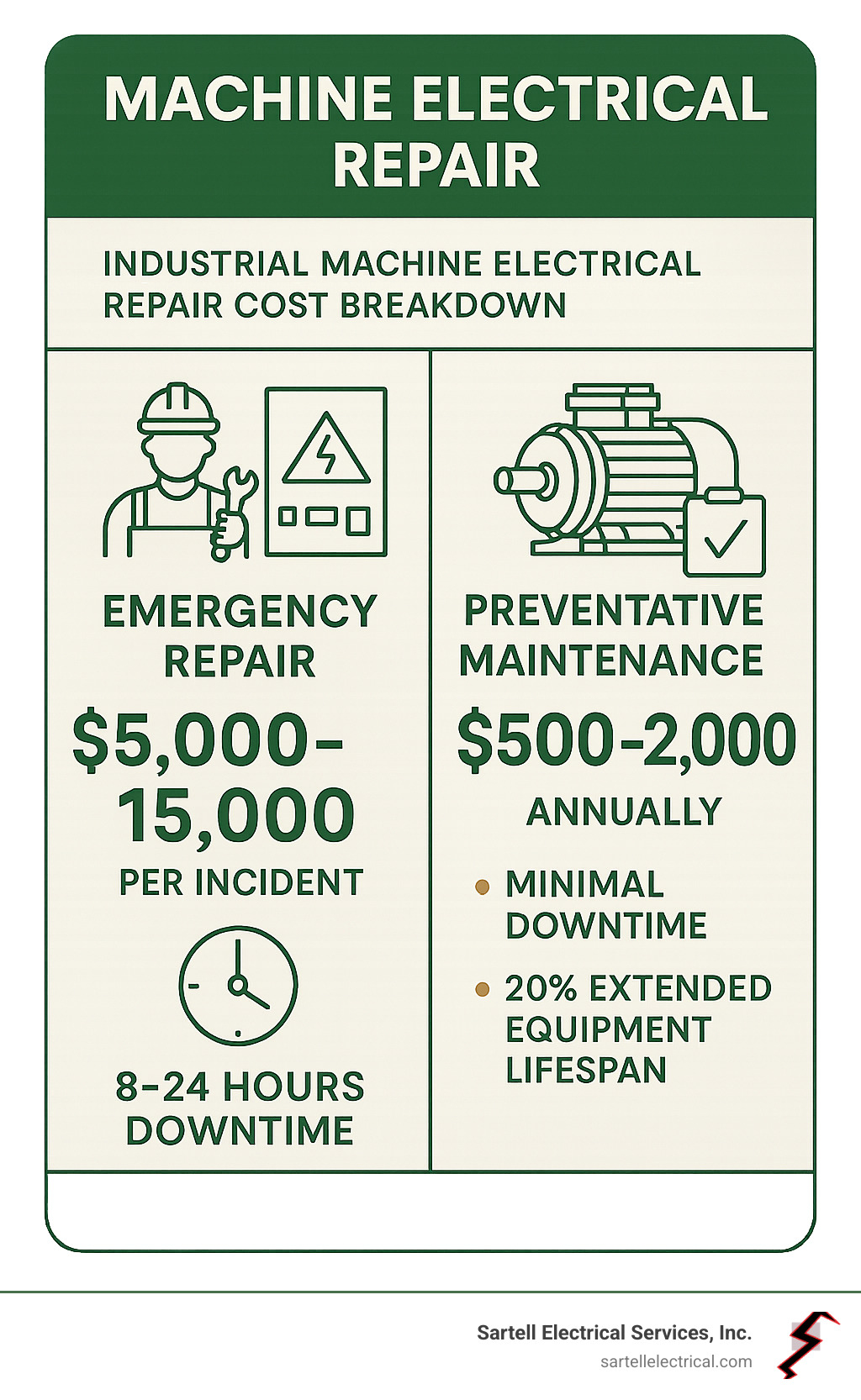
- Preventative Care: Regular maintenance extends equipment life by up to 20%
The reality is stark: electrical failures cause costly downtime, but proactive maintenance can cut emergency repairs by up to 50%. Common and costly issues range from deteriorated cables causing voltage drops to worn motor brushes creating intermittent failures.
The most frequently repaired components include:
- PLCs (Programmable Logic Controllers)
- AC/DC motor drives and servo systems
- Power supplies and circuit boards
- HMI panels and control systems
- Contactors, relays, and electrical panels
I'm Ed Sartell, President of Sartell Electrical Services since 1985. I've seen how proper
machine electrical repair and maintenance can mean the difference between profitable operations and costly shutdowns. With decades of experience serving Massachusetts businesses, our team understands that your electrical systems are the backbone of your productivity.
Recognizing the Red Flags: Common Industrial Electrical Issues
Industrial machinery requires every electrical component to work in harmony. When one part fails, the entire system can break down. Machines show warning signs before a catastrophic failure; the key is recognizing these signs early.
Electrical components rarely fail silently.
Frequent circuit breaker trips are a major red flag, indicating overloads, short circuits, or ground faults that need immediate attention. It's your system's self-protection mechanism.
Flickering lights on control panels or dimming displays suggest voltage fluctuations that can affect your machinery's precision. Meanwhile,
unusual noises—buzzing, humming, or clicking—often signal loose connections or failing components.
Burning smells from electrical components are a critical warning. The odor of overheating plastic or insulation means you must shut down immediately and call for professional
machine electrical repair to prevent costlier damage.
Inconsistent machine performance, where equipment runs perfectly one hour and struggles the next, is often due to electrical issues like
voltage drops from deteriorated cables and loose terminals.
The most commonly repaired industrial electrical components include
PLCs (Programmable Logic Controllers),
AC/DC Drives,
Servo Motors & Drives,
Power Supplies,
HMI (Human-Machine Interface) panels, and
Circuit Boards. Each signals trouble in its own way.
Signs Your Machine's Electrical System Needs Attention
When electrical problems start, they leave clues.
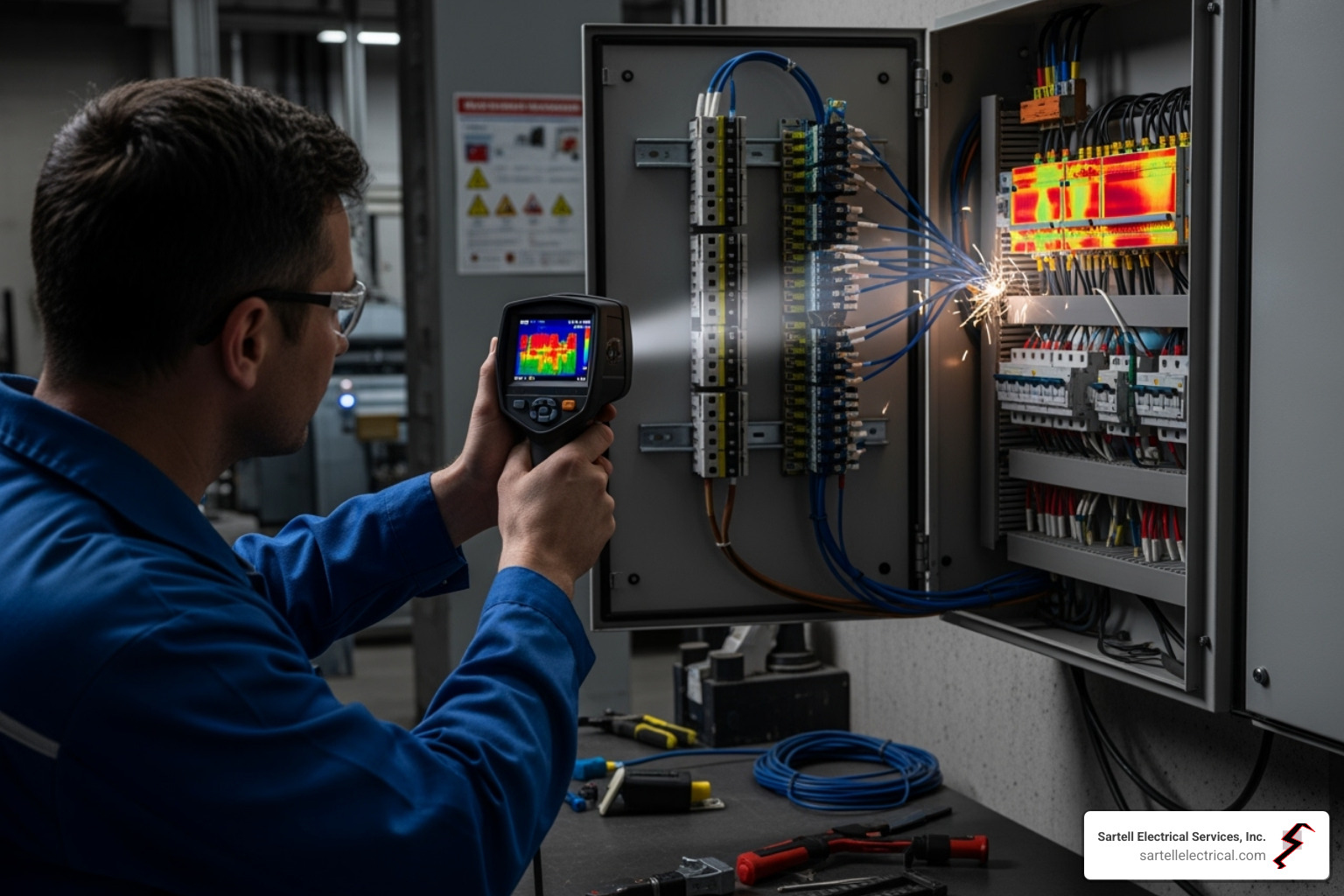
Overheating components, detected by thermal imaging or touch, indicate excessive current or poor connections.
Intermittent failures—when equipment works unpredictably—usually trace back to loose connections or worn parts like DC motor brushes.
Reduced efficiency appears in higher power bills and lower production numbers.
Unexplained shutdowns are your machine's emergency brake, often due to overheating or power supply instability.
Don't overlook visual clues.
Visible wear on cables (cracking, fraying),
deteriorated insulation, and
loose terminals from vibration all create resistance and heat, compounding electrical problems.
For comprehensive solutions to these challenges, explore our
electrical solutions for industrial environments.
How Electrical Problems Impact Productivity
The ripple effects of electrical issues go beyond repair costs.
Production halts are the most visible impact, turning profitable hours into costly waiting periods.
Wasted materials add to the cost when shutdowns ruin batches mid-process.
Increased labor costs pile on as employees stand idle or work overtime to catch up.
Missed deadlines can strain customer relationships and trigger contract penalties.
Safety hazards from malfunctioning equipment put your team at risk. Finally, constant electrical stress
reduces equipment lifespan, forcing premature replacements that hit your budget hard.
The
statistics on downtime losses are sobering: electrical system failures can cost businesses thousands per hour, while proactive maintenance reduces emergency repairs by up to 50%. These numbers make a compelling case for taking early warning signs seriously.
The Core of Machine Electrical Repair: Diagnosis and Troubleshooting
When your industrial machinery acts up, a quick fix versus days of downtime often comes down to the right approach and tools in experienced hands.
 Machine electrical repair
 is like detective work. A systematic approach is essential, as rushing a diagnosis can create bigger problems. Effective troubleshooting starts with the right diagnostic tools.
Multimeters measure voltage, current, and resistance to find shorts or open circuits.
Oscilloscopes visualize electrical signals, revealing issues basic meters miss.
Thermal imaging cameras are game-changers for spotting hot spots before they become disasters.
Safety is paramount. We always use
Lockout/Tagout (LOTO) procedures, de-energizing, locking, and tagging equipment before work begins. Our technicians wear proper
Personal Protective Equipment (PPE), including arc-rated clothing, and use insulated tools.
The Step-by-Step Process for Machine Electrical Repair
We've refined our repair process over decades to minimize downtime and maximize safety.
- Initial Assessment: We act as detectives, talking to operators, reviewing logs, and checking error codes to understand the problem's history and symptoms.
- Isolating the Problem: Based on initial clues, we narrow our focus to specific panels, circuits, or inputs and implement safety protocols.
- Component Testing: Our specialized tools shine here. We systematically test components, trace circuits, and analyze signals to pinpoint the fault.
- Sourcing Replacement Parts: Our strong supplier relationships allow us to get high-quality parts quickly. We also help you decide if repair or replacement is more cost-effective.
- Performing the Repair: Precision is key, whether we're replacing cables, fixing circuit boards, or installing new drives. One mistake can cause future problems.
- System Testing and Verification: We run diagnostics and watch the machine operate under load to ensure the problem is fully resolved before we consider the job done.
- Documentation: We record what went wrong, our fix, and the parts used. This history helps prevent future issues and speeds up subsequent repairs.
For more details about our comprehensive approach, check out our
Industrial Electrical Services page.
Critical Safety Considerations
Working with industrial electrical systems is dangerous.
Arc flash hazards can cause severe injuries in milliseconds, and high voltage demands respect and proper procedures.
We follow
OSHA regulations and
NFPA 70E standards because they are lessons learned from serious accidents. Proper grounding protects both equipment and people from shock and power surges.
Only qualified, licensed electricians should handle these repairs. DIY attempts are dangerous, can void warranties, and may lead to
worksite safety violations and fines. Our experience has taught us that cutting corners on safety always costs more in the long run.
From Reactive to Proactive: The Power of Preventative Maintenance
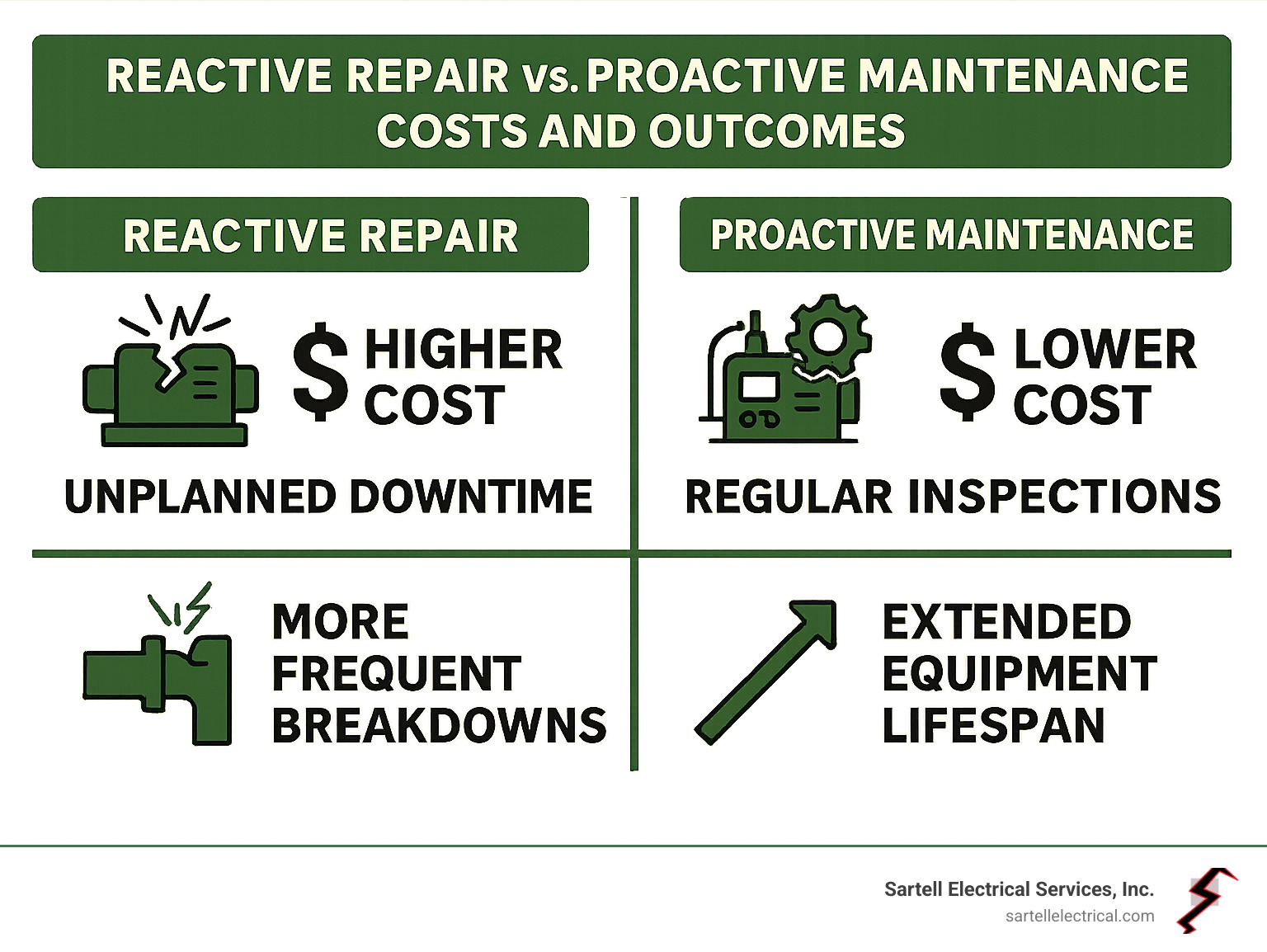
Imagine a facility with no emergency shutdowns or frantic repairs. Preventative maintenance makes this possible. It's the difference between fighting fires (reactive) and preventing them (proactive).
 Reactive maintenance
 means waiting for a breakdown, leading to unplanned downtime, rushed and costly repairs, and safety hazards.
Proactive maintenance, however, involves scheduled servicing to catch issues before they become problems, saving money and stress.
How Preventative Maintenance Extends Component Lifespan
Regular electrical maintenance gives your equipment a longer, healthier life.
Regular maintenance can extend machinery lifespan by up to 20% and reduce emergency repairs by up to 50%. Since emergency repairs often cost double, the savings are significant. The cost to repair a component is almost always less than replacing the entire machine.
Our preventative maintenance includes:
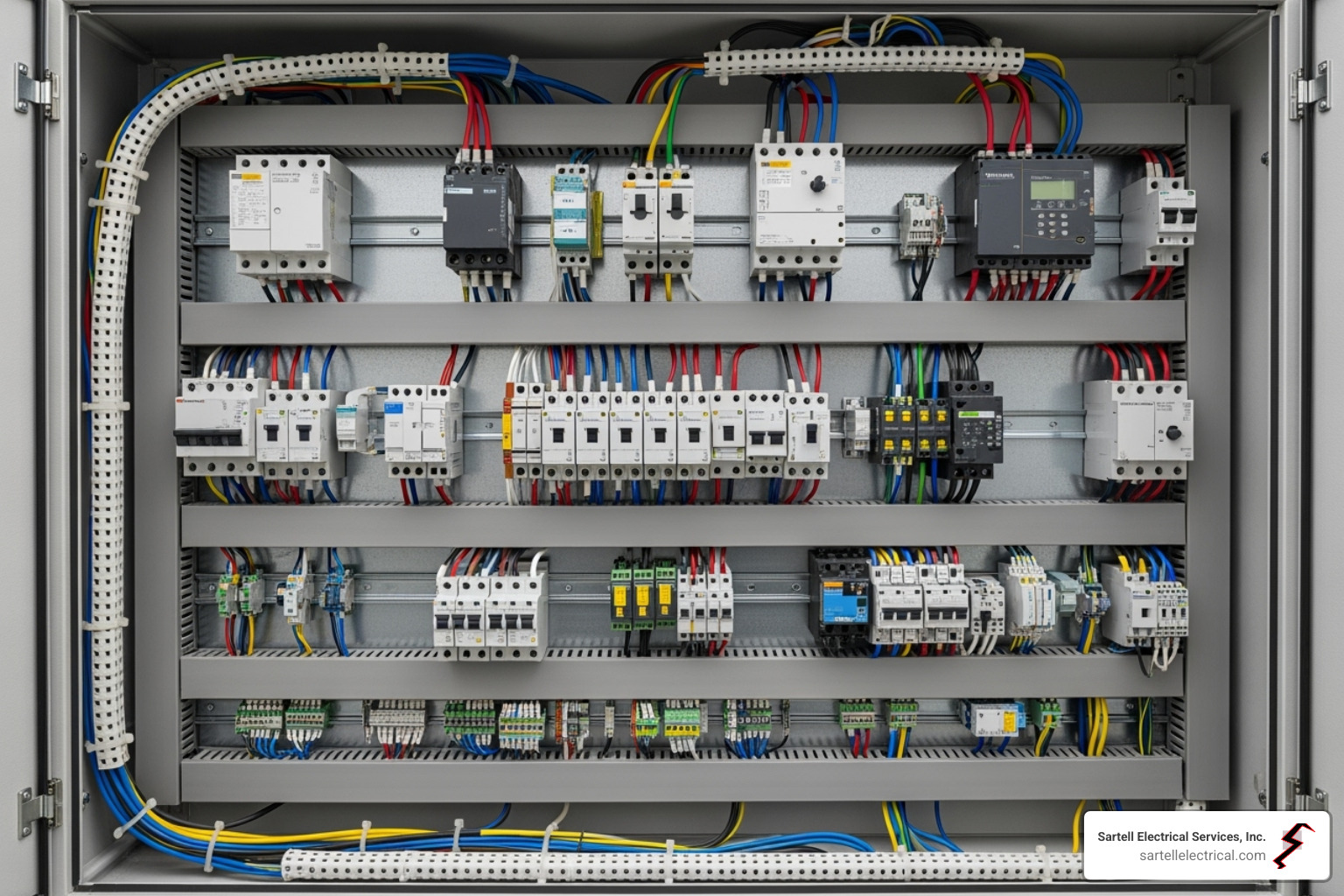
- Regular visual inspections for wear, loose connections, and overheating.
- Cleaning and lubrication to remove contaminants and reduce friction.
- Tightening connections to prevent resistance and heat buildup from vibration.
- Calibration to ensure sensors and control systems remain accurate.
- Thermal scanning to detect hidden hotspots that signal impending failure.
- Vibration analysis to predict bearing failures or alignment issues before they cause an electrical overload and require machine electrical repair.
The Role of PLC Backup and Restoration
A major concern for facility managers is PLC failure and the loss of custom programming. Programmable Logic Controllers are the brains of your operation, containing the specific code that makes your machines work.
Most industrial equipment contains devices with custom programming. If a PLC fails without a backup, simply swapping in a new unit won't work. The default factory programming won't control your specific equipment, leading to a slow and expensive rebuild, especially for older or obsolete machines.
We provide archival management of PLC, controller, and motor drive programming. We extract and record the correct data from your systems, even undocumented ones, and work with your IT department to store it securely.
With a proper backup, restoration is quick,
minimizing downtime to hours instead of weeks. This is crucial for
older machines where original documentation is missing. We also handle
battery replacements for units that retain memory, always checking voltage before disconnection to prevent data loss.
Protecting your custom programming is about protecting years of operational refinements. To learn more, explore our main
Industrial Electrical Service page.
Choosing the Right Industrial Electrical Repair Partner
When production stops, having the right
machine electrical repair partner is critical. It's the difference between a minor hiccup and a major catastrophe. Choosing the wrong partner can lead to delays, spiraling costs, and even bigger problems.
Industrial machinery repair requires a unique blend of experience, specialized knowledge, and the ability to work under pressure. Not all electrical contractors are created equal.
Key Qualifications for a Machine Electrical Repair Provider
Here’s what to look for when choosing a provider, based on our experience serving Massachusetts businesses since 1985.
- Licensing and Insurance: This is non-negotiable. A licensed, bonded, and insured contractor protects you from liability and ensures work meets industry standards.
- 24/7 Emergency Service: Machines don't break down on a schedule. You need a partner who answers the phone and responds quickly, day or night.
- Experience and Certifications: Certifications show training, but real-world experience troubleshooting complex problems under pressure is what truly counts.
- Reputation and Reviews: Check references and testimonials. A strong reputation for quality, reliability, and service is built over years of consistent performance.
- Service Warranties: A provider who stands behind their work will offer warranties on both parts and labor.
- On-site Capabilities: The ability to dispatch skilled technicians to your facility is essential for complex machinery that can't be moved.
- Comprehensive Service Offerings: A partner who offers installation, preventative maintenance, and upgrades in addition to repairs provides consistency and saves you time.
- A Strong Safety Record: A provider's commitment to safety protects your workers and your facility. Look for contractors who prioritize LOTO procedures and have excellent safety records.
- Local Presence: A local provider understands regional regulations, responds faster to emergencies, and builds lasting relationships. We are proud to serve as your trusted Industrial Electrical Contractor in Boston, MA, Industrial Electrical Contractor in Cambridge, MA, and Industrial Electrical Contractor in Reading, MA.
At Sartell Electrical Services, we combine
decades of experience with
union-trained electricians who understand complex industrial systems. Our commitment to excellence, leadership, and customer service has been our foundation for over 30 years. We're ready to be your trusted partner when you need us most.
Frequently Asked Questions about Industrial Electrical Repair
Over our nearly four decades in business, we've answered countless questions about
machine electrical repair. Here are the most common ones we hear.
How often should I schedule electrical maintenance for my machinery?
There's no single answer, as the ideal maintenance schedule depends on several factors:
- Machine type: Complex, high-precision machinery like CNCs requires more frequent attention than simpler systems.
- Operating environment: Dusty, humid, or high-vibration environments increase wear and tear. Heat exposure is especially hard on electrical components.
- Usage intensity: A machine running 24/7 will need more frequent maintenance than one running a single shift.
- Manufacturer recommendations: Always consult the manufacturer's guidelines for optimal performance.
A general guideline is an annual comprehensive electrical inspection and preventative maintenance service. For critical or heavily used equipment, we recommend quarterly or semi-annual checks.
Is it more cost-effective to repair or replace a faulty electrical component?
The "repair or replace" decision depends on a few key factors:
- Age of the component: If a component is near the end of its expected lifespan (often 10+ years for major equipment), replacement may be wiser.
- Cost comparison: If the repair cost is less than 50% of the replacement cost, repair is usually the better financial choice.
- Availability of parts: For older or obsolete machinery, finding parts can be difficult, making a creative repair the only option.
- Impact on the system: A single failing component might indicate a larger, underlying issue.
- Downtime implications: A quick repair may be preferable to waiting weeks for a replacement part to arrive.
A qualified technician can provide a recommendation based on a detailed assessment of your specific situation and budget.
What are the most common causes of electrical failures in industrial machines?
We consistently see the same root causes for electrical failures:
- Heat exposure: Constant electrical current generates heat, which degrades insulation over time, leading to shorts and component failure.
- Vibration: The constant shaking of industrial machinery loosens connections and damages wiring and internal components.
- Moisture and contaminants: Water, dust, oil, and corrosive chemicals can get into enclosures, causing shorts and corrosion.
- Power surges and poor power quality: Voltage fluctuations, spikes, and sags put severe stress on sensitive electronics.
- Component age and wear: Electrical components have a finite lifespan. Capacitors dry out, relays wear down, and insulation degrades.
- Lack of maintenance: This is the most preventable cause. Minor issues like loose connections and dirt buildup grow into major failures if ignored.
Conclusion
When your production line is humming smoothly, you can appreciate the value of expert
machine electrical repair. It's not just about getting equipment back online; it's about protecting your business's core, ensuring your team can work safely and productively.
Throughout this guide, we've covered the warning signs of electrical trouble, our systematic diagnostic approach, and how
preventative maintenance can extend equipment life by up to 20% while cutting emergency repairs by half.
The change from reactive to proactive maintenance is where the real value lies. Instead of scrambling during a breakdown, you stay ahead of problems, protect your custom PLC programming, and keep production on schedule. This provides confidence in your equipment's reliability.
Safety remains at the core of everything we do. Proper lockout/tagout procedures, arc-flash protection, and qualified technicians are necessities that protect your people and your business.
After nearly four decades in this business, we know the right electrical partner can transform a company's operations.
The peace of mind that comes from knowing your electrical systems are in expert hands is invaluable. You can focus on running your business while we keep your machines running smoothly.
Your electrical systems work around the clock. They deserve professional attention. Don't wait for the next breakdown to be reminded of their importance.
For expert
industrial electrical services in Massachusetts, contact Sartell Electrical Services today. Let's work together to keep your production flowing and your business thriving.