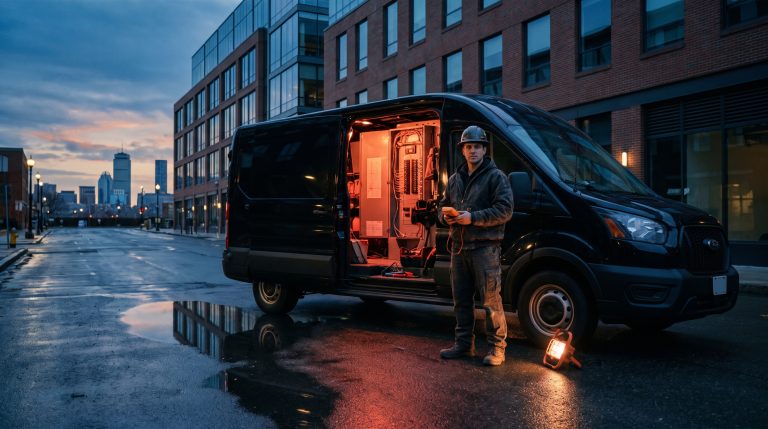

When a light flickers or a device loses power inconsistently, it can be hard to explain what happened after everything appears normal again. A useful record captures what you actually noticed: where the symptom occurred, when it happened, what was affected and what remains unknown.
The goal is to give an electrician a clear description, not to identify the cause. You do not need to reproduce the problem, inspect wiring or complete a log before asking for help.
Safety comes before documentation
Note Do not approach suspect electrical equipment or recreate a fault to collect details. This log is not a guide to deciding whether a situation is safe or how urgently it needs attention. Do not delay seeking help to finish your notes; share only the observations you already have.
Keep the record based on observations already available to you. Do not touch equipment to check its temperature, remove covers, open a panel, test energized parts or repeatedly reset a breaker. A photograph or video is optional; never move closer to a suspected hazard or recreate the symptom to obtain one.
Describe the symptom before the suspected cause
Use ordinary language about what you saw or heard. Describe whether a light dimmed, flickered or went out, or whether a device stopped operating. Avoid turning that description into a conclusion about wiring, a circuit or a component.
- Location: Identify the room and the particular light, outlet or device involved. Use a familiar landmark if needed so the electrician can distinguish it from nearby equipment.
- What happened: Describe the visible or audible change, including whether it stopped and returned or continued while you were present.
- Timing: Note when you noticed it, whether the timing is approximate and whether you witnessed the beginning or only discovered the result.
- How long it lasted: Record your recollection without false precision. If you were away or stopped observing, say that the length is unknown.
- Other affected areas: Include other lights or devices you naturally noticed at the same time. Do not walk around testing outlets to determine the extent.
Note circumstances without creating a test
Record what was already happening during normal household activity. If you noticed an appliance operating when the symptom occurred, include that observation. If recent electrical work or a newly installed device preceded the problem, note that history without assuming it caused the symptom.
Do not switch appliances on and off, move devices between outlets or manipulate a switch to see whether the problem returns. Events occurring together are useful context, but they do not establish a cause.
Keep observations, unknowns and guesses separate
“Not checked” is different from “unaffected.” If you only saw the kitchen light flicker, say that you did not observe the other rooms rather than claiming the problem was limited to the kitchen. Likewise, a device stopping does not by itself confirm that its outlet lost power.
Label information reported by another household member rather than presenting it as something you witnessed. If you have a theory, keep it under a separate “suspected cause—not confirmed” heading. It is also fine to leave guesses out entirely.
A reusable symptom-log template
Copy these prompts into a note and add a separate entry when you naturally notice another occurrence. Leave fields marked “unknown” when you cannot answer them safely or accurately.
- When noticed; exact or approximate; witnessed by:
- Room and specific light, outlet or device:
- What I actually saw or heard:
- How long I observed it; whether it stopped or remained ongoing:
- Other lights or devices naturally observed at the same time:
- Household activity or circumstances already occurring:
- Whether this resembles an earlier occurrence:
- What I did afterward, if anything:
- Unknowns, secondhand information and any unconfirmed theory:
- Related repair or inspection records already available:
Summarize the pattern without overstating it
Before speaking with the electrician, put a short summary above your entries: the main symptom, its location, whether it has recurred and whether it appears to be changing. Keep the individual entries underneath so differences between occurrences are not lost.
Avoid words such as “always” unless your observations support them. Say that you noticed a symptom during an activity, rather than that the activity triggers it. If everything currently appears normal, include that too; it does not erase the earlier observations.
Bring existing records, not a diagnosis
Gather relevant repair invoices, inspection reports or written professional findings if you already have them. Preserve the original wording and distinguish documented findings from your memory of a conversation. Do not remove equipment or access wiring to find identifying information.
A log can organize the conversation, but it cannot establish the fault’s cause or replace an on-site assessment. For broader background on professional assessment, read about electrical troubleshooting services.
Residential troubleshooting in Greater Boston
Sartell Electrical offers residential electrical troubleshooting and serves Greater Boston from its Reading base, covering Essex, Middlesex and Norfolk counties. Explore Sartell’s residential electrical services to discuss a recurring household electrical symptom. Share the observations you have; a complete record is not a prerequisite to asking for help.