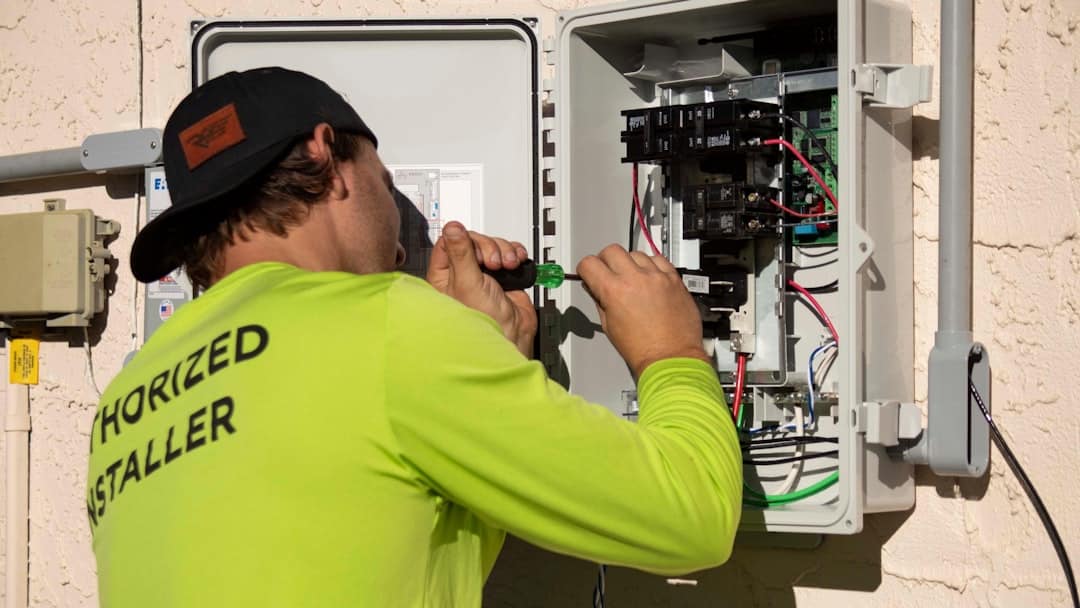
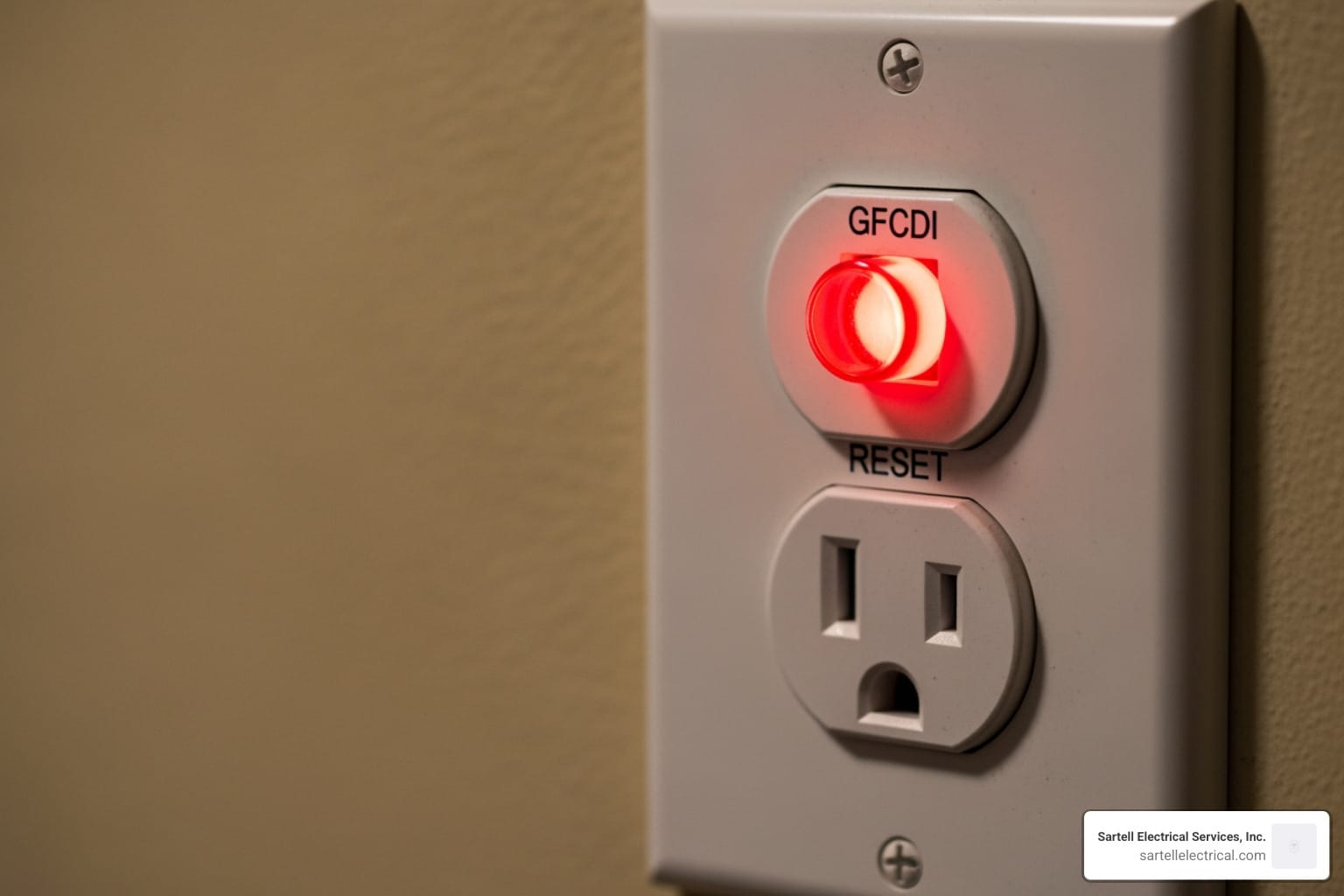
When Your GFCI Keeps Tripping, Here's What's Going On
GFCI keeps tripping is one of the most common electrical complaints homeowners face — and it's usually a sign that something on your circuit needs attention.
Quick answer — the most common reasons a GFCI trips:
- Moisture inside the outlet box or a connected outdoor receptacle
- Faulty appliance leaking even a tiny amount of current (as little as 5 milliamps)
- Circuit overload from too many high-draw devices on one circuit
- Wiring issues such as loose connections, damaged insulation, or rodent-chewed wires
- Old or defective GFCI — these devices typically last 15–25 years before failing
- Downstream fault — another outlet protected by the same GFCI is the real source of the problem
A GFCI outlet is extremely sensitive by design. It trips the moment it detects a current imbalance as small as 5 milliamps. That's less than the current in a standard LED nightlight. So even a small problem — a damp outlet box, a worn appliance cord — can trigger a trip instantly.
The good news: most causes are identifiable with a few simple steps, and many can be fixed without calling an electrician.
I'm Ed Sartell, President of Sartell Electrical Services, and I've been diagnosing and resolving GFCI keeps tripping issues for homeowners and commercial clients across Massachusetts since 1985. In this guide, I'll walk you through exactly how to find the cause and fix it safely.
Simple GFCI keeps tripping glossary:
Understanding Why Your GFCI Keeps Tripping
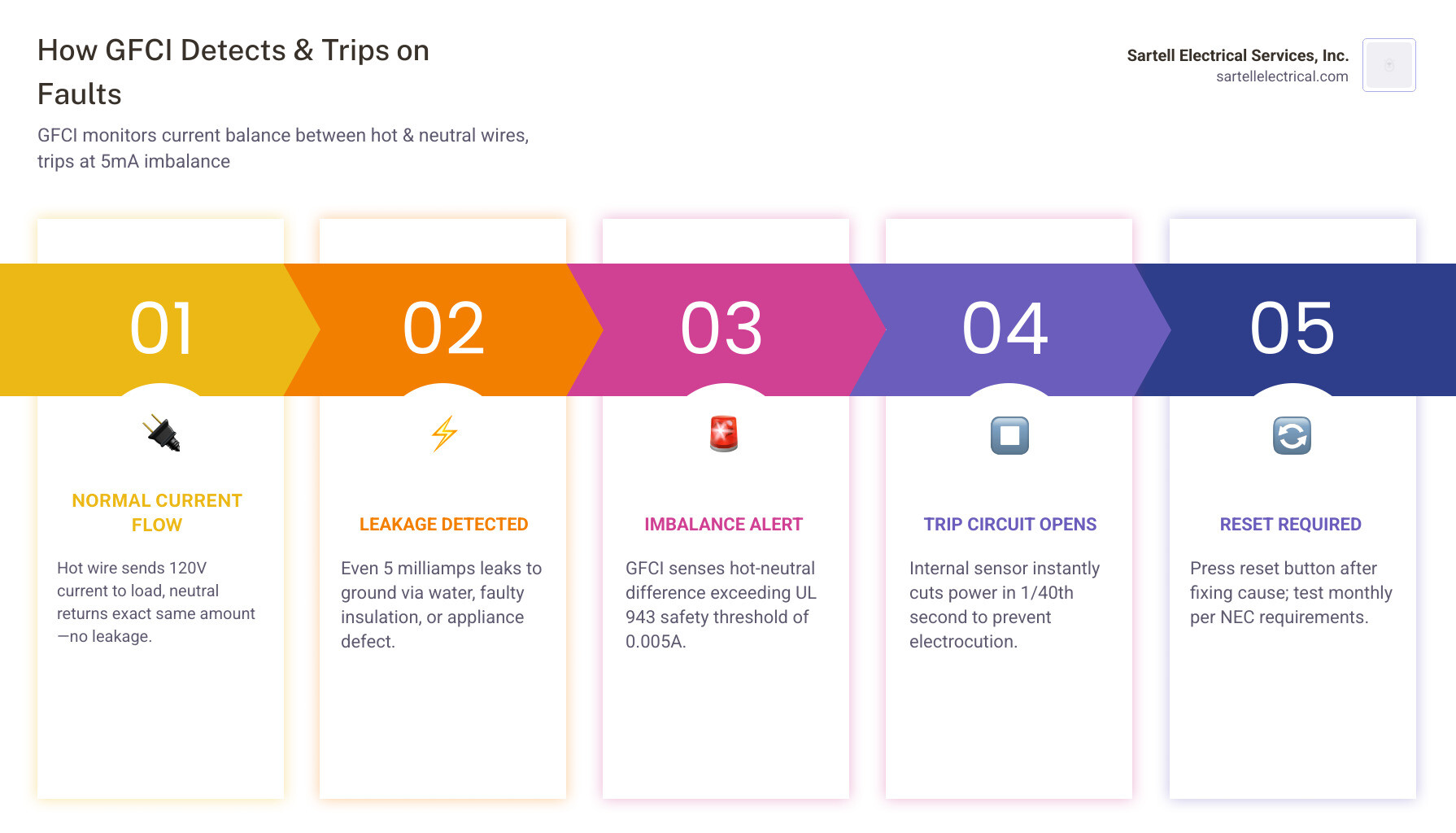
When a GFCI keeps tripping, it’s doing the job it was engineered to do. Think of a Ground Fault Circuit Interrupter as a high-speed digital scale. It constantly weighs the electricity going out on the "hot" wire against the electricity coming back on the "neutral" wire.
If those two weights don't match perfectly, the GFCI assumes the missing electricity is "leaking" somewhere it shouldn't be—like through a puddle of water or, worse, through a person. According to the UL 943 standard, a GFCI must trip if it detects a current imbalance of approximately 5 milliamps (plus or minus 1 mA). To put that in perspective, it takes about 1,000 milliamps to light a 100-watt bulb. We are talking about a tiny "leak" of just 0.005 amps.
If you are experiencing persistent issues, you may need a professional ground-fault-repair to identify where that leakage is occurring. You can also refer to the Consumer Product Safety Commission GFCI Guide for more on why these safety devices are mandatory in modern homes.
How the GFCI Protects Your Home
The primary goal of a GFCI is electrocution prevention. While a standard circuit breaker is designed to protect your house from catching fire by shutting off if the wires get too hot (over-amperage), the GFCI is there to protect you.
By monitoring the line-neutral balance, the device can detect a ground fault—a situation where electrical current finds an unintended path to the ground. Because it reacts in less than a fraction of a second, it cuts the power before the current can cause a lethal heart rhythm disruption.
The Difference Between GFCI, AFCI, and Standard Breakers
It is easy to get these confused, but they serve very different purposes:
- Standard Breaker: Protects against overloads and short circuits. It stops your wires from melting.
- GFCI (Ground Fault Circuit Interrupter): Protects against shock. It detects current leakage as low as 0.005 amps.
- AFCI (Arc Fault Circuit Interrupter): Protects against fire. It looks for "arcing"—sparks created by loose connections or frayed wires.
In many Massachusetts homes, especially newer builds in Middlesex or Essex County, you might see "Dual Function" breakers that handle both. There have been recent Electrical Code Changes for Nuisance Tripping regarding specific appliances like electric stoves, as the industry tries to balance safety with the practical reality of modern appliance electronics.
Common Causes of a Tripping GFCI Outlet
If your GFCI keeps tripping, the culprit is usually one of three things: moisture, a bad device plugged into the circuit, or a problem with the house wiring itself.
Moisture and Environmental Factors
In our neck of the woods—from the humid summers in Boston to the damp springs in Reading—moisture is the #1 enemy of GFCIs. If even a small amount of condensation or rain gets into an outdoor receptacle, it creates a bridge for electricity to leak to the ground.
High humidity in basements or laundry rooms can also cause "phantom" trips. If you have an outdoor outlet, ensure it has a "while-in-use" weatherproof cover. If a box gets wet, you may need to turn off the power and let it dry completely—sometimes using a hair dryer on a cool setting—before it will reset. Following these how-to-fix-a-ground-fault-in-5-simple-steps can help you clear out environmental hazards.
Faulty Appliances and Startup Surges
Sometimes the outlet is fine, but what you’re plugging into it is "leaking." Motor-driven devices like refrigerators, freezers, and air compressors are notorious for this. As these motors age, the insulation on their internal windings can degrade, allowing a tiny bit of current to escape.
Heating elements in self-defrosting freezers or espresso machines are also common offenders. If an appliance trips the circuit only when it "kicks on," it’s likely a startup surge or a faulty internal component. If you find an old appliance is the culprit, check local regulations for disposal; for example, certain electronics are eligible for recycling in Denver (though here in MA, you should check your local municipal waste site).
Circuit Overloads and Wiring Issues
While GFCIs primarily look for ground faults, a GFCI breaker (in your panel) will also trip if you overload the circuit. If you have a space heater, a toaster, and a microwave all running on the same kitchen circuit, the breaker will pop.
Wiring issues like loose terminal screws or "shared neutrals" (where two circuits share the same return wire) will also cause a GFCI to trip immediately. In older homes around Greater Boston, we sometimes find rodent damage where mice have chewed through wire insulation behind the walls, creating an intermittent ground fault.
Ground Fault vs. Circuit Overload
| Feature | Ground Fault (GFCI Trip) | Circuit Overload (Breaker Trip) |
|---|---|---|
| Cause | Electricity leaking to ground | Too many devices drawing power |
| Detection | 5mA current imbalance | Excessive amperage (15A-20A+) |
| Primary Danger | Electrocution / Shock | Electrical fire / Overheated wires |
| Common Culprit | Moisture or frayed cords | Space heaters or hair dryers |
Step-by-Step Troubleshooting When Your GFCI Keeps Tripping
Before you assume the outlet is broken, follow this systematic approach to isolate the problem.
Isolating the Problem Device
- Unplug Everything: Disconnect every single lamp, appliance, and charger from the circuit. This includes "downstream" outlets (other outlets that lose power when this one trips).
- Reset the GFCI: Press the "Reset" button firmly. If it clicks and stays in, the problem is likely one of the things you just unplugged.
- Sequential Testing: Plug your devices back in one by one. Turn each one on. When the GFCI trips, you’ve found your "leaky" culprit.
- The "Nothing Plugged In" Test: If the GFCI keeps tripping with absolutely nothing plugged in, the issue is either moisture in the box, a fault in the permanent wiring, or a failed GFCI unit. If it won't stay reset at all, see our guide on gfci-not-resetting.
Checking Downstream Outlets and Wiring
One GFCI outlet often protects several other standard outlets. This is called "daisy-chaining." For example, the GFCI in your primary bathroom might also protect the guest bathroom and the outdoor outlet on your porch.
If the porch outlet gets wet during a thunderstorm, the bathroom GFCI will trip. To troubleshoot this, you have to find the "Load" side of the circuit. This often requires an electrician to open the boxes and identify which wires are feeding the other outlets. If you live in an older home in areas like Arlington or Somerville, these circuit paths can be quite creative!
Testing and Replacing a Bad GFCI Outlet
Like any mechanical device, GFCIs don't last forever. They contain sensitive electronic circuitry and a spring-loaded "trip" mechanism that can wear out over time.
Signs Your GFCI Has Reached Its End of Life
Most GFCI outlets have a lifespan of 15 to 25 years. However, if they are subjected to frequent power surges or are located in harsh environments (like a damp garage in Framingham), they may fail much sooner.
Watch for these warning signs:
- Failure to Reset: You press the button, but it won't "catch" or stay in.
- Nuisance Tripping: It trips randomly when no appliances are running.
- Internal Buzzing: If you hear a faint buzzing or humming sound coming from the outlet itself, the internal contacts are likely failing.
- Discoloration: Any yellowing or charring on the face of the outlet is a sign of overheating and an immediate fire risk.
Proper Maintenance and Monthly Testing
The National Electrical Code (NEC) and most manufacturers recommend testing your GFCIs once a month. It’s a simple "press and check" routine:
- Press the TEST button. You should hear a snap, and the RESET button should pop out. Power to the outlet (and any downstream outlets) should cut off.
- Press the RESET button to restore power.
If the button doesn't pop out when you press test, the device is no longer providing protection and needs to be replaced immediately. Regular maintenance is the best way to avoid a surprise ground-fault-repair down the road.
Frequently Asked Questions about GFCI Outlets
Why does my GFCI keep tripping with nothing plugged in?
This usually indicates a "hard fault" in the wiring or the device itself. Common causes include moisture inside the electrical box, a wire that has slipped off a terminal and is touching the metal box, or a downstream outlet that has a ground fault. If it’s been raining recently, check your outdoor outlets first!
Can a power surge or lightning cause a GFCI to trip?
Yes. Large voltage spikes from the grid or nearby lightning strikes can "confuse" the sensitive electronics inside a GFCI, causing a nuisance trip. If the trip happens during a storm or right after a power flicker, it may just need a simple reset. However, a major surge can also fry the GFCI's internal circuit, meaning it will never reset again.
When should I call a professional electrician for a tripping GFCI?
While DIY troubleshooting is great for finding a bad toaster, you should call us at Sartell Electrical Services if you encounter:
- Burning Smells: If you smell ozone or burning plastic, turn off the breaker immediately.
- Warm Cover Plates: Outlets should never feel hot to the touch.
- Recurring Trips: If you've unplugged everything and it still trips, there is an underlying wiring issue.
- Complex Circuits: If your garage GFCI is tied to your attic lights and your septic pump, you need a pro to map that circuit safely.
Conclusion
A GFCI keeps tripping for a reason—it’s a safety feature, not a nuisance. By following the steps in this guide, you can usually narrow down whether the problem is a damp deck outlet, a dying refrigerator, or a worn-out GFCI device.
At Sartell Electrical Services, Inc., we’ve spent over 30 years keeping homes in Reading, MA, and the surrounding Greater Boston area safe. Whether you’re in a historic home in Salem or a new build in Andover, our commitment to excellence ensures your electrical system meets the highest safety standards.
If you’ve tried the steps above and your outlet still won't behave, don't take risks with your safety. Request Ground Fault Repair Services from our expert team today, and let us stop the trip for good.