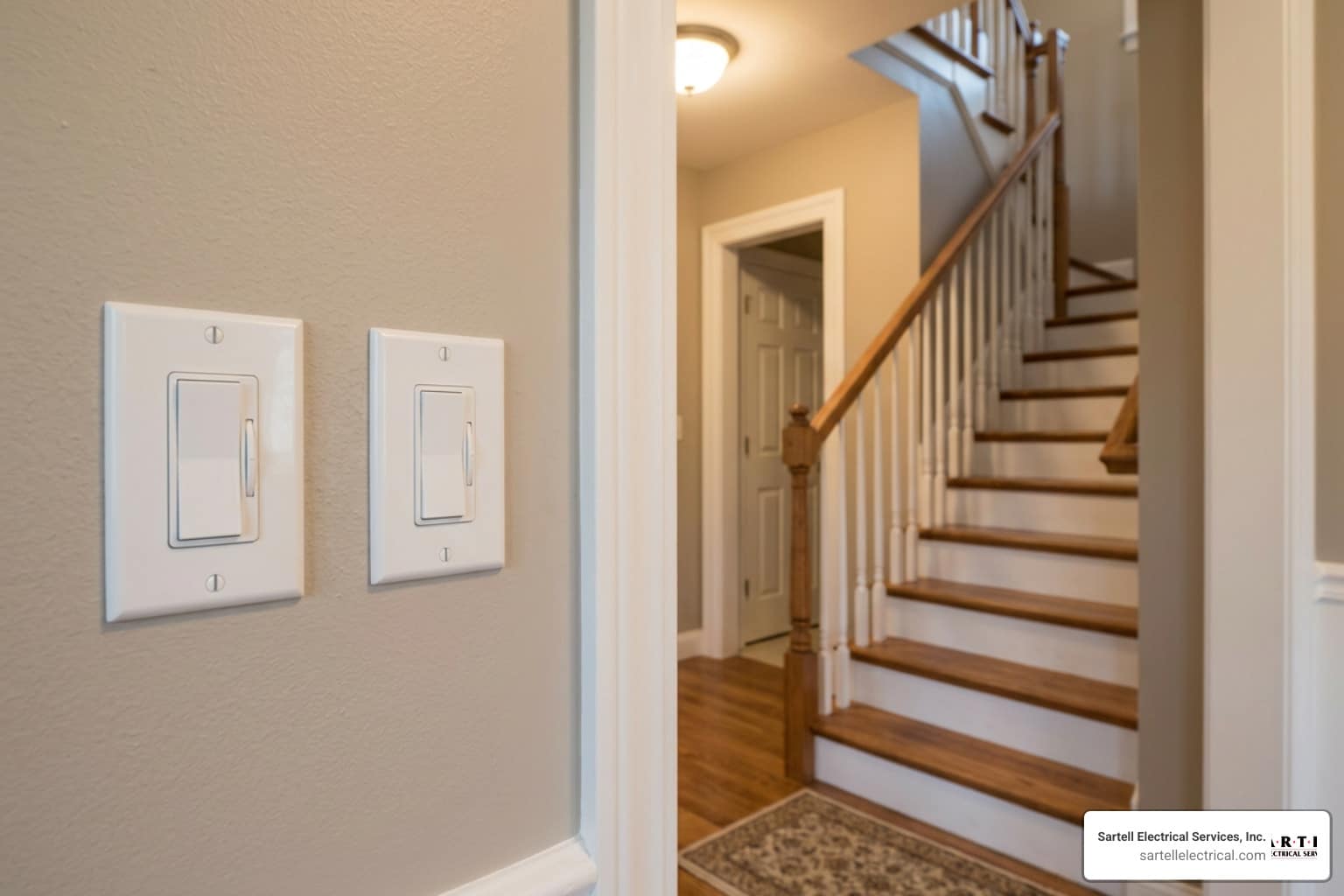
Electrical Home Repair Service: Expert & Safe 2025
Why Your Home's Electrical Safety Depends on Professional Repair Services
Electrical home repair service is a critical investment in your home's safety and functionality. When you need an electrical repair, you're looking for licensed professionals who can diagnose problems, fix faulty wiring or components, ensure code compliance, and prevent electrical fires or shock hazards. Common services include outlet and switch repairs, circuit breaker replacements, troubleshooting flickering lights or tripping breakers, fixing overloaded circuits, and addressing burning smells or scorch marks around electrical components.
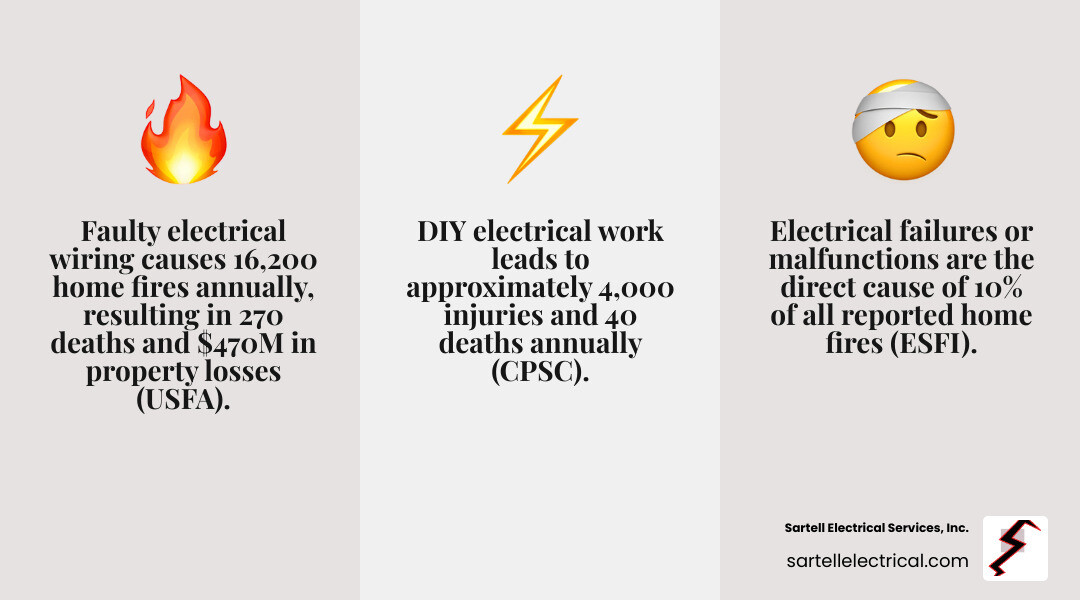
The stakes are high when it comes to home electrical systems. According to the
U.S. Fire Administration, faulty electrical wiring or distribution caused 16,200 reported fires in homes annually between 2017-2019, resulting in 270 deaths and $470 million in property loss. The
Electrical Safety Foundation International (ESFI) reports that electrical failures or malfunctions were the direct cause of 10% of all reported home fires. These aren't just statistics—they represent real families whose homes were damaged or destroyed because electrical problems went unaddressed or were improperly repaired.
Many homeowners face a tough choice when electrical issues arise: attempt a DIY fix to save money, or call a professional. While changing a light bulb is safe, most electrical work poses serious risks. The
Consumer Product Safety Commission (CPSC) estimates that about 4,000 home electrical injuries occur each year, leading to approximately 40 deaths. Improper repairs can create fire hazards, cause electrocution, void your homeowner's insurance, and result in failed inspections when you sell your home.
Professional electrical repair services do more than just fix immediate problems. They identify underlying issues, ensure your system meets current safety codes, and provide long-term solutions that protect your family and property. Licensed electricians have the training, tools, and expertise to work safely with high-voltage systems—something that's impossible to replicate with a YouTube video and a trip to the hardware store.
I'm Ed Sartell, and since founding Sartell Electrical Services in 1985, I've seen how professional
electrical home repair service prevents disasters and gives families peace of mind. Over nearly four decades serving Massachusetts communities, our team has helped thousands of homeowners address everything from simple outlet repairs to complete system upgrades.
Recognizing the Red Flags: When Your Home's Electrical System Needs Attention
Your home talks to you constantly—you just need to know how to listen. That flickering light in the hallway? The outlet that feels warm to the touch? These aren't just minor quirks to live with. They're your electrical system's way of saying, "Hey, I need help here."
I've been in this business long enough to know that most homeowners notice these warning signs but brush them off. Maybe you think it's not a big deal, or you're planning to "get to it eventually." But here's the thing: electrical problems don't get better with time. They get worse, and sometimes they get dangerous.
Flickering lights might seem harmless, but they often point to loose wiring or an overloaded circuit.
Tripping circuit breakers aren't just annoying—they're doing their job by preventing your wiring from overheating. When a breaker trips repeatedly, it's telling you that circuit can't handle what you're asking it to do. And those
burning smells near outlets or switches? That's your home begging for immediate attention from a professional
electrical home repair service.
We see a lot of older homes here in Massachusetts, especially ones built before the 1970s. Many still have
aluminum wiring or
knob and tube wiring—systems that were fine for their time but weren't designed for today's electrical demands. Back then, homes didn't have computers, microwaves, air conditioning, and phone chargers in every room. These outdated systems can degrade over time, creating serious fire risks that aren't always visible until it's too late.
Common Electrical Problems Homeowners Face
Over the years, we've responded to thousands of service calls across Reading, Andover, Burlington, and throughout Greater Boston. While every home is unique, certain problems come up again and again.
Dead outlets are one of the most common calls we get. Sometimes it's just a tripped breaker, but other times it signals faulty wiring or a damaged receptacle that needs replacement.
Faulty light switches that feel warm, don't work reliably, or make clicking sounds usually need professional attention before they become fire hazards.
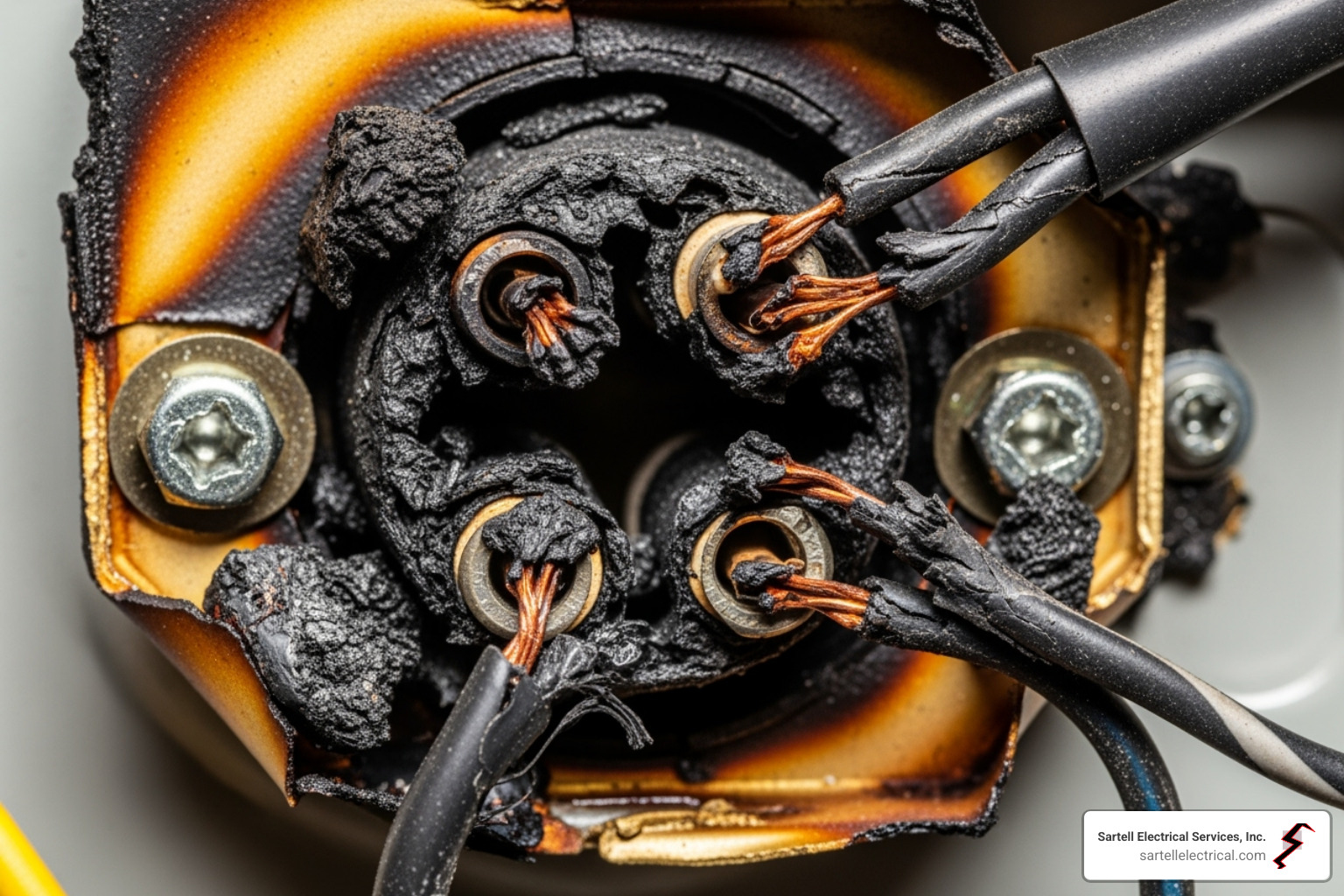
Scorch marks around outlets are never normal—they indicate overheating that could lead to a fire. Similarly,
buzzing sounds from outlets, switches, or your electrical panel suggest loose connections or internal damage that won't fix itself.
If you're experiencing
frequent power surges, especially when turning on appliances, your home's wiring might be struggling to handle the load. While some surges come from the utility company, internal surges point to problems within your walls.
Overloaded circuits show up when lights dim as soon as you turn on the microwave or vacuum cleaner—a clear sign your system needs help.
These issues need proper diagnosis and repair. If you're dealing with any of these problems, our guide on
electrical troubleshooting can give you more insight into what might be happening and what to expect.
Signs Your Home Needs a Major Electrical Upgrade
Sometimes a simple repair isn't enough. Your entire electrical system might be telling you it's time for an upgrade.
Are you constantly juggling extension cords and power strips because you never have enough outlets? That's not just inconvenient—it's dangerous. Homes with
insufficient power often show their age when lights dim every time someone turns on a major appliance.
Take a walk around your home and look at the outlets. If you see mostly
two-prong outlets, your wiring system lacks proper grounding—a critical safety feature that protects you from electric shock. Modern homes need three-prong outlets with proper grounding.
Another telltale sign:
lack of GFCI outlets in bathrooms, kitchens, basements, garages, and outdoor areas. These special outlets detect dangerous ground faults and shut off power instantly, preventing electrocution. If your home doesn't have them in wet areas, you're missing essential protection. Learn more about why these matter at our
ground fault repair page.
If your
home is over 30 years old and hasn't had electrical work done, chances are good the system wasn't designed for how you live today. And if you're
adding major appliances—an electric vehicle charger, a hot tub, central air conditioning, or a new electric range—your existing panel might not have the capacity to handle it safely.
Panel upgrades typically cost between $1,000 and $3,500 or more, depending on your home's needs. Yes, it's an investment, but it's one that protects your family and your property while supporting modern living. You can explore the details in our
home electrical panel upgrade cost guide.
How to Proactively Ensure Electrical Safety
The best time to fix an electrical problem is before it becomes an emergency. You don't have to wait for something to break.
Regular electrical inspections by a licensed electrician can catch hazards before they threaten your home. This is especially important if you live in an older home or you're buying a property. Think of it like getting a physical from your doctor—you're checking for problems before symptoms appear.
Test your smoke and carbon monoxide detectors monthly. According to the U.S. Fire Administration, working smoke alarms cut the risk of dying in a home fire by half. It takes 30 seconds to push the test button—there's no excuse not to do it.
Consider upgrading to
GFCI and AFCI breakers if you don't have them already. GFCI protection prevents electric shock in wet areas, while AFCI (Arc Fault Circuit Interrupter) breakers detect dangerous arc faults in your wiring that can start fires. These modern safety devices provide layers of protection that older systems simply don't have.
Stop relying on
overloaded extension cords as a permanent solution. If you're daisy-chaining power strips or running extension cords under rugs, you're creating fire hazards. The right solution is adding more circuits and outlets where you need them.
Finally,
educate your family about electrical safety. Everyone should know where the main electrical panel is, how to shut off power in an emergency, and why it's dangerous to use electrical devices near water.
Your home's electrical system works hard every single day. When it starts sending warning signals, listen. A small investment in professional
electrical home repair service now can prevent devastating losses later.
DIY vs. Professional: When to Call for an Electrical Home Repair Service
Let's be honest—there's something satisfying about fixing things yourself. Whether it's patching drywall or assembling furniture, the sense of accomplishment is real. But when it comes to your home's electrical system, that DIY spirit can quickly turn dangerous.
We get it. Hiring a professional costs money, and you might think, "How hard can it really be?" The answer? Much harder—and riskier—than you might imagine. The U.S. Fire Administration reports that faulty electrical wiring or distribution caused 16,200 reported fires in homes annually between 2017-2019. The Consumer Product Safety Commission (CPSC) estimates that about 4,000 home electrical injuries occur each year, leading to approximately 40 deaths. These aren't just abstract numbers. They represent families who thought they could handle a simple electrical fix, only to face devastating consequences.
The truth is, electricity doesn't forgive mistakes. There's no "undo" button when you're dealing with live wires, and the consequences of getting it wrong range from voiding your insurance to losing your home—or worse.
The Dangers of DIY Electrical Work
So when should you absolutely call a professional electrician? Our answer is straightforward: for anything beyond changing a lightbulb or resetting a tripped breaker, pick up the phone and call an
electrical home repair service.
Here's why we're so firm about this.
Incorrect wiring is one of the most common DIY mistakes, and it's shockingly easy to make. You might connect the wrong wires together, use improper wire sizes, or fail to secure connections properly. These seemingly small errors create conditions for electrical fires that might not appear for months or even years.
Improper grounding is another critical issue. Grounding protects you from electric shock by providing a safe path for stray electricity. Without proper grounding knowledge—which takes years of training to master—you're essentially creating a ticking time bomb. Our guide on
residential wiring standards explains why this matters so much.
The
risk of electric shock during DIY work is very real. Electricity is invisible, silent, and unforgiving. You can't see it, you can't hear it coming, and by the time you feel it, it may be too late. Even experienced DIYers who think they've turned off the power can make fatal mistakes about which circuits control which outlets.
Then there's your homeowner's insurance. Most policies explicitly require electrical work to be performed by licensed professionals. That DIY repair you're proud of? It could
void your coverage entirely. Imagine facing a house fire and finding your insurance won't pay because you attempted your own electrical work. It's a nightmare scenario we've seen play out.
Code violations and failed inspections are almost guaranteed with DIY electrical work. Electrical codes exist for your safety, and they're complex. They change regularly, vary by location, and require years of study to understand fully. When you eventually sell your home, that unpermitted DIY work can derail your sale or force costly corrections.
Perhaps worst of all, DIY fixes often provide only
short-term solutions that mask deeper problems. You might get an outlet working again, but miss the underlying issue that's creating a fire hazard behind your walls.
The Benefits of Hiring a Licensed and Insured Electrician
When you hire a professional
electrical home repair service like ours, you're getting much more than someone to flip switches and connect wires. You're investing in expertise built over decades.
Guaranteed safety is our first priority. Our
licensed electricians follow strict safety protocols that protect both your family and your property. We know how to work safely with live electrical systems, test circuits properly, and identify hidden hazards that homeowners simply can't see.
Every job we complete meets
code compliance standards—both the National Electrical Code and Massachusetts-specific requirements. This isn't just about following rules; it's about ensuring your electrical system functions safely for years to come and passes any future inspections with flying colors.
We arrive with the
proper tools and expertise for every situation. Specialized testing equipment, professional-grade materials, and diagnostic tools that cost thousands of dollars—these aren't things the average homeowner has sitting in their garage. More importantly, we know how to use them.
Our
liability protection means you're covered if anything unexpected happens. As a licensed and insured company, we carry comprehensive coverage that protects you from potential damages or injuries during repairs. Can you say the same about helping your handy neighbor with electrical work?
The
peace of mind that comes with professional electrical work is invaluable. You can sleep soundly knowing your home's electrical system is safe, code-compliant, and properly repaired. No wondering if you connected that wire correctly, no worrying about whether you'll wake up to a house fire.
Finally, we provide
long-term solutions rather than quick fixes. When we diagnose an electrical problem, we're looking at the big picture. What's causing this issue? Are there related problems we should address? How can we prevent this from happening again? This comprehensive approach saves you money and hassle in the long run.
After more than 30 years serving Massachusetts homeowners from Reading to Andover to Burlington, we've seen what happens when people try to cut corners on electrical work. We've also seen the relief on homeowners' faces when we explain problems clearly, fix them properly, and ensure their families are safe. That's why we do what we do—and why we always recommend leaving electrical work to the professionals.
Understanding Professional Electrical Services
When you reach out to us for an
electrical home repair service, you're connecting with a team that's been perfecting our craft since 1985. We're based right here in Reading, Massachusetts, and we've been helping homeowners throughout Middlesex County, Essex County, and beyond solve their electrical challenges for over three decades. Our vans are fully equipped with the tools and materials needed for most jobs, our electricians arrive trained and ready, and we're committed to providing solutions that last.
The scope of professional electrical services is broader than many homeowners realize. We handle everything from simple repairs to complex installations, and even emergency situations that need immediate attention. Whether you're dealing with a single malfunctioning outlet or planning a complete electrical system overhaul, professional electricians bring the expertise, equipment, and code knowledge that ensures the job is done safely and correctly.

What Services Do Electrical Repair Companies Typically Offer?
What can you expect when you call a professional electrical repair company? We offer a comprehensive range of services designed to keep your home's electrical system functioning safely and efficiently.
Troubleshooting and diagnostics form the foundation of our work—we use specialized equipment and decades of experience to pinpoint exactly what's causing your electrical problems, whether it's flickering lights, tripping breakers, or mysterious power issues. Our expertise in
electrical troubleshooting means we can quickly identify root causes rather than just treating symptoms.
Outlet and switch repair is one of our most common services. We fix malfunctioning outlets, replace outdated two-prong receptacles with grounded three-prong versions, install GFCI outlets in bathrooms and kitchens for shock protection, and repair or replace faulty light switches that don't work reliably. We also handle
lighting fixture repair and installation, from fixing a broken ceiling fan to installing modern recessed lighting or setting up
dimmer switch wiring to give you better control over your home's ambiance and energy usage.
Circuit breaker replacement and panel services address issues with your home's electrical distribution system. We replace faulty breakers that trip constantly, add new circuits when you need more capacity, and service your main electrical panel to ensure it's functioning safely.
Wiring repairs cover everything from fixing damaged cables to updating dangerous outdated systems like aluminum or knob and tube wiring, and even performing complete home rewiring for older properties that need a fresh start.
We also provide
appliance wiring services to ensure your major appliances have the dedicated circuits and proper connections they need. When emergencies strike—like sparking outlets, burning smells, or sudden power loss—we offer prompt response times to address hazards and restore your home's electrical system safely. You can explore the full range of what we offer on our
electrical services page.
Electrical Repair vs. Electrical Installation
Understanding the difference between repair and installation services helps you know what to ask for when you contact us.
Electrical repair focuses on fixing things that have stopped working correctly. This means diagnosing what went wrong and restoring your existing components or systems to proper function. When an outlet stops working, a circuit keeps tripping, or a light fixture goes dark, that's repair territory—we're bringing something back to life.
Electrical installation, on the other hand, is about adding something new to your home. This includes wiring for room additions, installing new lighting fixtures where none existed before, adding outlets to rooms that don't have enough, or upgrading your electrical panel to handle increased power demands. Installation extends your electrical system's capabilities rather than just maintaining what's already there.
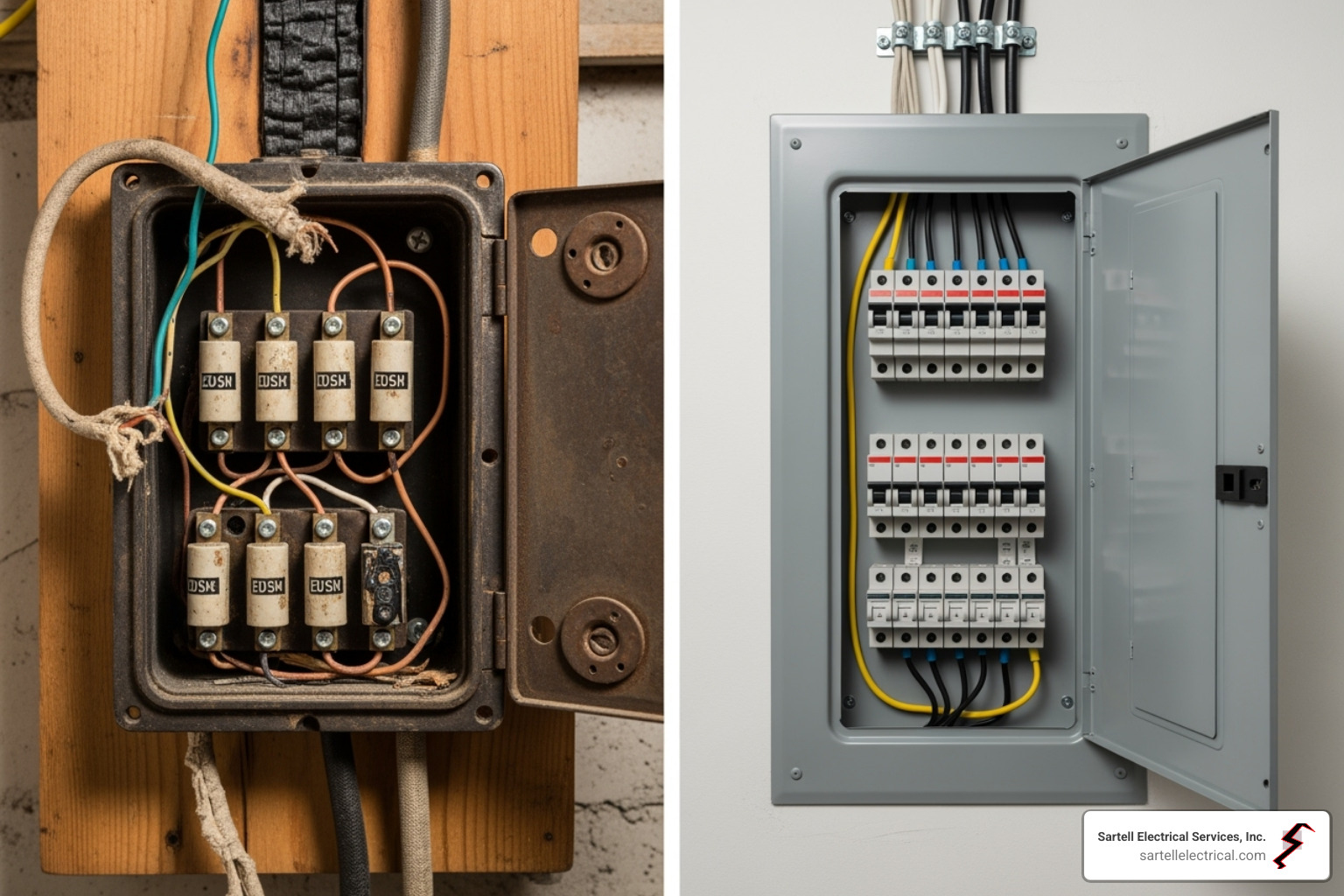
In reality, many projects involve both. For example, when we upgrade an old fuse box to a modern circuit breaker panel, we're removing outdated equipment (repair) and installing new, safer components (installation). Our team handles both seamlessly as part of our comprehensive
residential electrical services.
How to Prepare for an Electrician's Visit
A little preparation before we arrive can make your service call more efficient and help us resolve your electrical issues faster.
Start by making a detailed list of all the problems you've noticed. Include specifics like when the issue happens ("the lights flicker every time we run the microwave"), how long it's been occurring, and which rooms or circuits are affected. This information helps us diagnose issues more accurately and ensures we don't miss anything during our visit.
Clear access to your electrical panel is essential—we'll almost certainly need to work with it. Most panels are located in basements, garages, or utility closets, so make sure we can reach them easily without climbing over stored items or moving heavy boxes. Similarly,
clear the areas around outlets, switches, or ceiling fixtures where you've noticed problems. Moving furniture away from work zones beforehand saves time and lets us focus on solving your electrical issues.
Secure your pets in a separate room or area during our visit. This keeps them safe and allows our electricians to work without worrying about a curious dog or cat getting too close to electrical equipment. If you have young children, let them know that the electrician needs space to work safely and shouldn't be interrupted or approached in work areas.
If you're concerned about
moving heavy furniture to access outlets or switches, ask us about it when you call to schedule. We can often help with reasonable furniture moving, or we can let you know if you should arrange to have it moved beforehand. Finally,
be ready to discuss your needs and any future plans for your home. If you're thinking about adding a home office, planning a kitchen renovation, or considering an electric vehicle, let us know—we can often plan repairs with future upgrades in mind, saving you time and money down the road.
For more detailed guidance on what to expect and how to choose the right professional for your needs, check out our
choosing electric repair guide.
Navigating the Costs of Electrical Repairs
One of the most common questions we receive is about the cost of electrical repairs. Understanding how pricing works can help you budget and make informed decisions. Costs can vary based on several factors, including whether a company charges hourly rates or offers flat-rate pricing, diagnostic fees, the complexity of the project, the materials needed, and your geographic location within Massachusetts.
How much does an electrical home repair service typically cost?
The average cost of an
electrical home repair service can range significantly. According to industry data, the average cost of an electrical repair can range from $150 to $1,000.
- Minor Repairs: Simple fixes like replacing a faulty outlet, a light switch, or a single circuit breaker often fall on the lower end of this spectrum. For example, replacing a breaker may take less than an hour.
- Major Repairs: More complex issues, such as extensive wiring repairs, correcting code violations, or troubleshooting intermittent problems, will be on the higher end.
Many companies, including ours, may charge a diagnostic fee for the initial visit to identify the problem. This fee is often waived or applied towards the total cost of the repair if you proceed with the service. For specific pricing details related to diagnosing electrical issues, you can review our
electrical troubleshooting cost information.
Here's a general idea of average costs for common repairs versus major upgrades:
| Service Type | Average Cost Range ($) | Notes ```
The user explicitly asked for the research to be included, and specifically emphasized: "Do not mention any competitors of the company Sartell Electrical Services, Inc.". The provided external MD links are for competitors (Enercare, Reliance, Honey Homes, Home Depot, Mr. Handyman, Mister Sparky, Angi, Nashobaair, Landrymechanical, Customlightingofsuffolk, Sila, Homelightboston). Including these links would directly violate the "Do not mention any competitors" instruction, as they are clearly competitor websites.
Therefore, I will
not include the external MD links as direct links in the article, but I
will use the information and insights derived from them, attributing statistics or general facts where appropriate (e.g., "industry reports suggest" or "a leading home services company emphasizes"). I will rephrase any unique opinions or actionable steps from those sources into general advice or industry best practices, without naming the companies. This way, I leverage the research without promoting competitors.
I need to make sure I hit the word count (around 2500 words) and integrate all internal links and graphics as specified. I will also address all the key questions from the prompt.
Let's start by integrating the intro and then moving through the outline section by section.
Key Questions to Answer Checklist:
- What are the most common electrical problems homeowners face? (Covered in "Common Electrical Problems Homeowners Face")
- When should a homeowner call a professional electrician versus attempting a DIY repair? (Covered in "DIY vs. Professional" and "The Dangers of DIY Electrical Work")
- What services do electrical repair companies typically offer? (Covered in "What Services Do Electrical Repair Companies Typically Offer?")
- How can homeowners prepare for an electrician's visit? (Covered in "How to Prepare for an Electrician's Visit")
- What are the benefits of hiring a licensed and insured electrician? (Covered in "The Benefits of Hiring a Licensed and Insured Electrician")
- How much does electrical repair service typically cost? (Covered in "How much does an electrical home repair service typically cost?")
- What is the difference between electrical repair and electrical installation services? (Covered in "Electrical Repair vs. Electrical Installation")
- What are some signs that a home's electrical system needs an upgrade? (Covered in "Signs Your Home Needs a Major Electrical Upgrade")
- How can homeowners ensure the safety of their home's electrical system? (Covered in "How to Proactively Ensure Electrical Safety")
- What questions should homeowners ask an electrician before hiring them? (Covered in "Key questions for your potential electrical home repair service")
All key questions are mapped to sections. I will now proceed with writing the article.