GFCI not resetting: Top 5 Fixes!
GFCI not resetting is more than just an inconvenience—it's your electrical system waving a red flag. When that reset button won't click back into place, it means your outlet has detected a problem and refuses to restore power until it's fixed.
Quick Answer: Why Your GFCI Won't Reset
- No power reaching the outlet - Check your circuit breaker first
- Downstream ground fault - A problem in the wiring or a connected device
- Moisture or debris - Water or dirt inside the outlet box
- Failed GFCI mechanism - The outlet itself has worn out (typically after 10-15 years)
- Tripped circuit breaker - The breaker feeding the GFCI has shut off
A ground fault circuit interrupter does one critical job: it monitors the flow of electricity and cuts power in as little as 1/40th of a second when it detects an imbalance. This lightning-fast response has helped reduce home electrical deaths by
80% since 1973. When your GFCI trips and won't reset, it's actively protecting you from potential shock or fire—but you need to find out why.
The most common scenario? You press the reset button, and either nothing happens, or it pops right back out. Sometimes the button feels mushy or won't stay pushed in. These symptoms point to specific, fixable problems in your electrical system.
I'm Ed Sartell, and in nearly four decades of running Sartell Electrical Services here in Massachusetts, I've diagnosed hundreds of cases of
GFCI not resetting—from simple moisture issues to complex downstream faults that require systematic troubleshooting. Let me walk you through exactly how to identify and fix the problem.
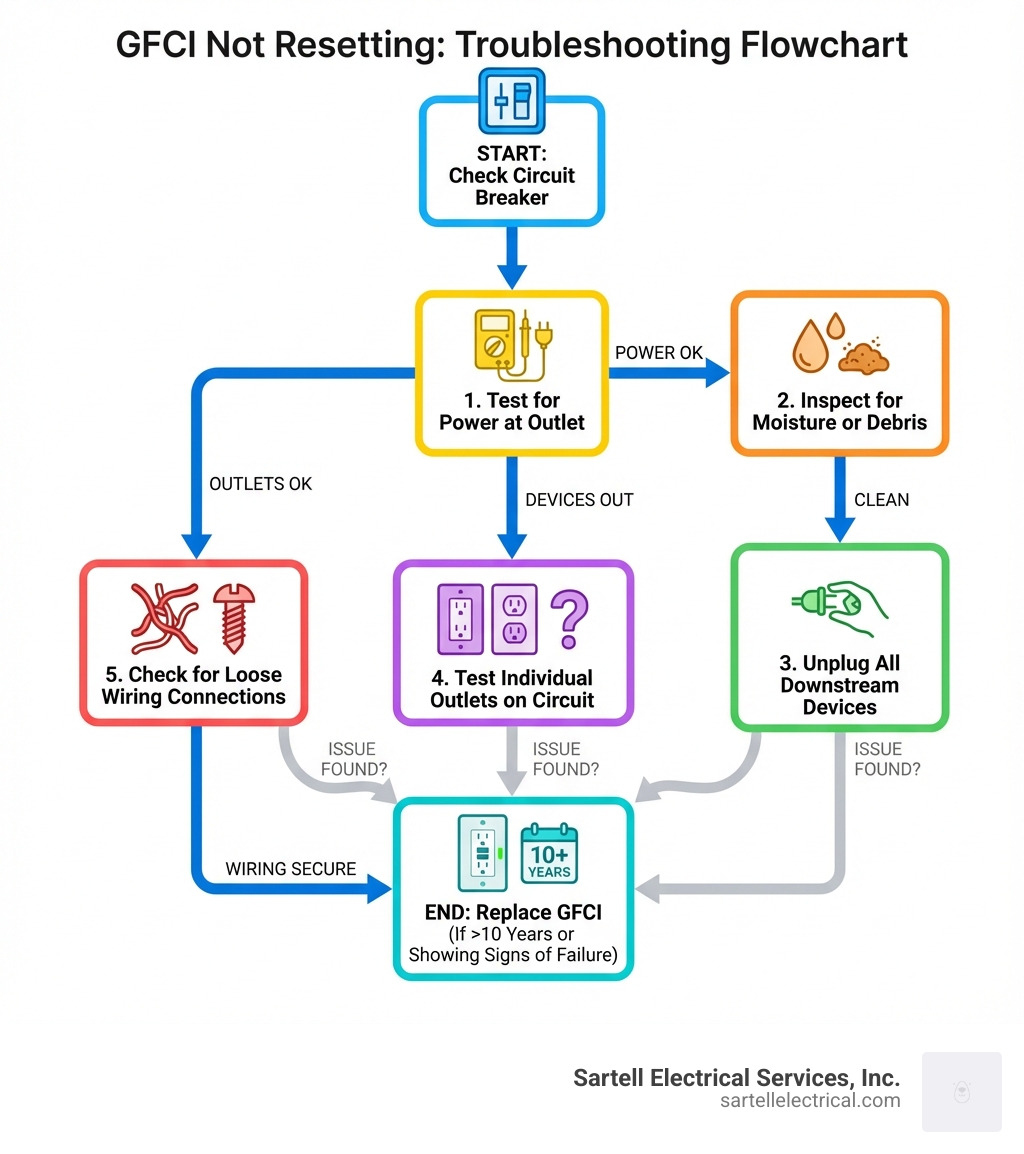
Top 5 Reasons Your GFCI is Not Resetting
When a GFCI outlet refuses to reset, it's typically signaling one of several underlying issues. Understanding these common culprits is the first step in diagnosing and resolving the problem. Here are the top reasons we encounter when a
GFCI not resetting is the issue:
- No Power to the Outlet: This is perhaps the most straightforward issue. If the GFCI isn't receiving any power from your home's electrical system, it simply cannot reset. This could be due to a tripped circuit breaker, an upstream GFCI that has tripped, or even loose wiring further back in the circuit.
- Tripped Circuit Breaker: Even if the GFCI itself has a reset button, it's connected to your home's main electrical panel. A tripped circuit breaker for that specific circuit will cut off power to the GFCI, preventing it from resetting.
- Internal GFCI Failure (Faulty GFCI Outlet): Like any electrical device, GFCIs have a lifespan. Over time, their internal mechanisms can wear out or become damaged, especially after repeated tripping, power surges, or due to age. If the GFCI itself has gone bad, it won't reset. GFCI outlets typically have a 10 to 15-year lifespan, though some can wear out in as little as five years.
- Downstream Ground Fault: A single GFCI outlet can protect other standard outlets further down the line on the same circuit. If there's a ground fault or wiring issue in one of these "downstream" outlets or devices plugged into them, the main GFCI will trip and refuse to reset until that fault is cleared.
- Moisture or Debris in the Outlet: GFCIs are often installed in areas prone to moisture, like bathrooms, kitchens, laundry rooms, and outdoors. Water ingress, high humidity, or even accumulated dust and debris can cause a ground fault condition or interfere with the GFCI's internal workings, preventing it from resetting.
Let's dive deeper into a couple of these key issues.
The Most Common Culprit: No Power Supply
It might sound obvious, but a GFCI outlet won't reset without power. This lack of power can stem from a few different places along the electrical path to the outlet.
First, check for an
upstream trip. In some installations, particularly in older homes or multi-bathroom setups, one GFCI outlet might be protecting several other outlets (both GFCI and standard) further down the line. If an event causes that
first GFCI in the series to trip, all subsequent outlets will lose power and won't reset until the primary, upstream GFCI is reset. We've seen this often in homes across Greater Boston, from Arlington to Wellesley.
Next, consider
circuit breaker issues. Even if the GFCI itself isn't tripped, its power source might be. Head to your electrical panel and look for any tripped breakers. A breaker that has tripped might be in the 'off' position, or sometimes it can be in a 'middle' position, indicating it's tripped but not fully off. We'll cover how to handle this safely in our troubleshooting guide.
Finally,
loose wiring connections can interrupt the power flow. Over time, vibration, improper installation, or even just the expansion and contraction of wires can cause connections within the outlet box or at other points along the circuit to become loose. A loose hot wire, for instance, means no power reaches the GFCI, and thus, it cannot reset. This is a common issue we address in homes from Lowell to Lynn.
A Persistent Problem: The Downstream Ground Fault
One of the most powerful safety features of a GFCI is its ability to protect not just itself, but also other standard outlets wired to its "load" terminals. This means that if a ground fault occurs at any point on that protected circuit
after the GFCI, the GFCI will trip to cut power. If that fault remains, the GFCI will refuse to reset, diligently preventing power from flowing into a potentially dangerous situation.
Imagine a faulty appliance plugged into a standard outlet in your kitchen in Cambridge, or a damaged extension cord being used outdoors in Ipswich. If these create a ground fault, the GFCI protecting that circuit will trip. Even if you unplug the faulty item, the GFCI might still not reset immediately if residual moisture or damage persists. The GFCI is designed to detect an imbalance as small as 4 to 6 milliamps, and it slams shut in a tenth of a second when such an imbalance is detected.
To isolate the problem, we often recommend unplugging everything from all outlets on the affected circuit. If the GFCI then resets, you can plug devices back in one by one to identify the faulty appliance or cord. If it still won't reset, the issue might be with damaged wiring in the circuit itself, perhaps a nicked wire inside a wall in your home in Newton, or an old, corroded connection. This is where the expertise of a professional electrician becomes invaluable, as tracing these faults can be complex and requires specialized tools.
Your DIY Troubleshooting Guide: From Simple Checks to Finding the Fault
Before you consider calling us at Sartell Electrical Services, there are several steps you can safely take to troubleshoot a
GFCI not resetting issue. Always remember: electrical work can be dangerous. Your safety is paramount. Always turn off power at the circuit breaker before removing outlet covers or touching any wiring.
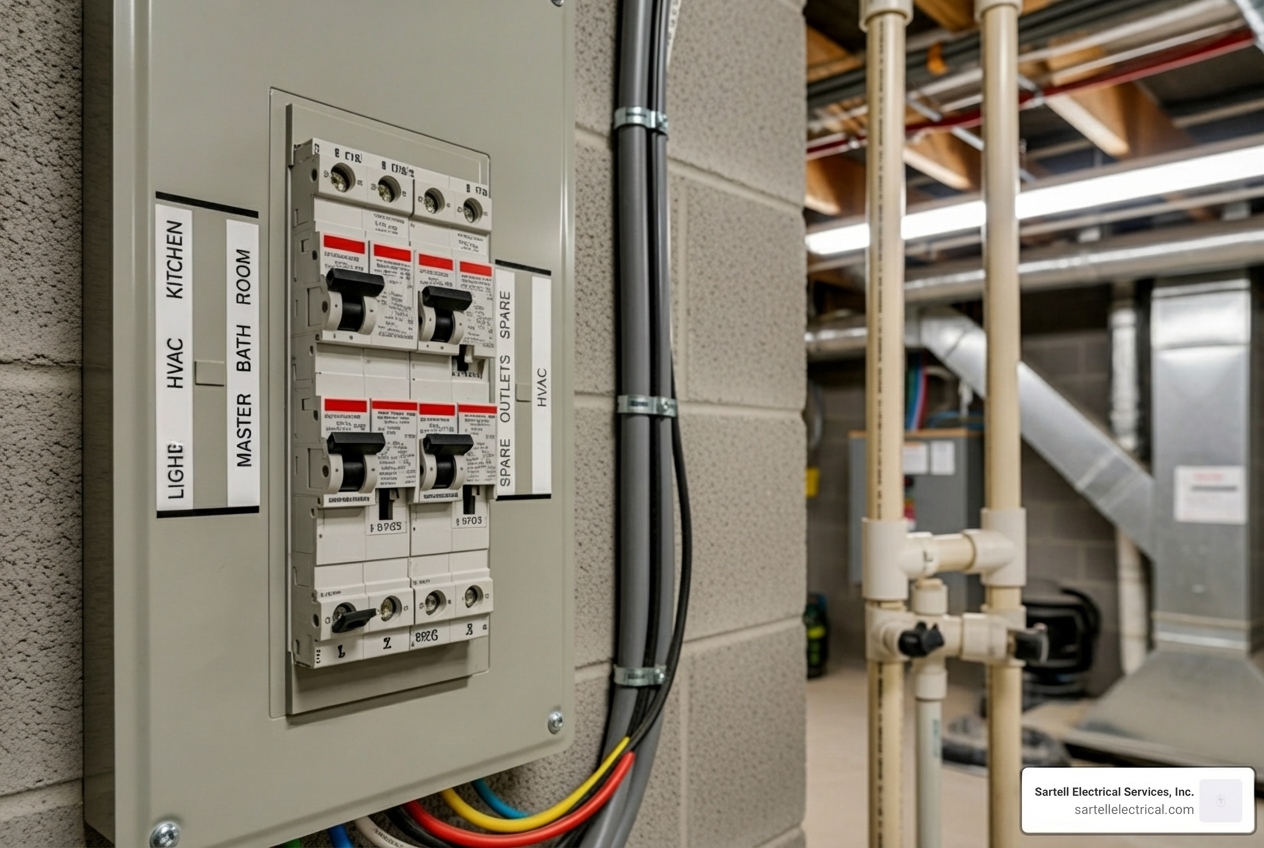
Here’s a step-by-step process, starting with the simplest checks:
Step 1: Check the Circuit Breaker and Test the Outlet
- Unplug Everything: Start by unplugging all appliances and devices from the problematic GFCI outlet and any other standard outlets on the same circuit. This helps rule out an overload or a faulty appliance causing the trip.
- Check Your Electrical Panel: Go to your main electrical panel. Look for a breaker that is in the "off" position or, more commonly, one that is "tripped" (often sitting between the "on" and "off" positions). If you find one, firmly push it all the way to the "off" position, then back to the "on" position. If it immediately trips again, there's a persistent fault, and it's time to call us.
- Test the GFCI Buttons: Return to the GFCI outlet. First, press the "TEST" button. You should hear a distinct "click" and the "RESET" button should pop out. If it doesn't, the GFCI itself might be faulty or not receiving power. Next, press the "RESET" button firmly. If it clicks and stays in, congratulations, you've likely resolved the issue! If it won't stay in, or if it immediately pops back out, the problem persists.
Step 2: Inspect for Moisture and Debris
GFCI outlets are legally required in areas with a higher risk of electrical shock, such as within six feet of sinks, water heaters, washing machines, and in garages and outdoor areas throughout Massachusetts. This means they are often exposed to moisture.
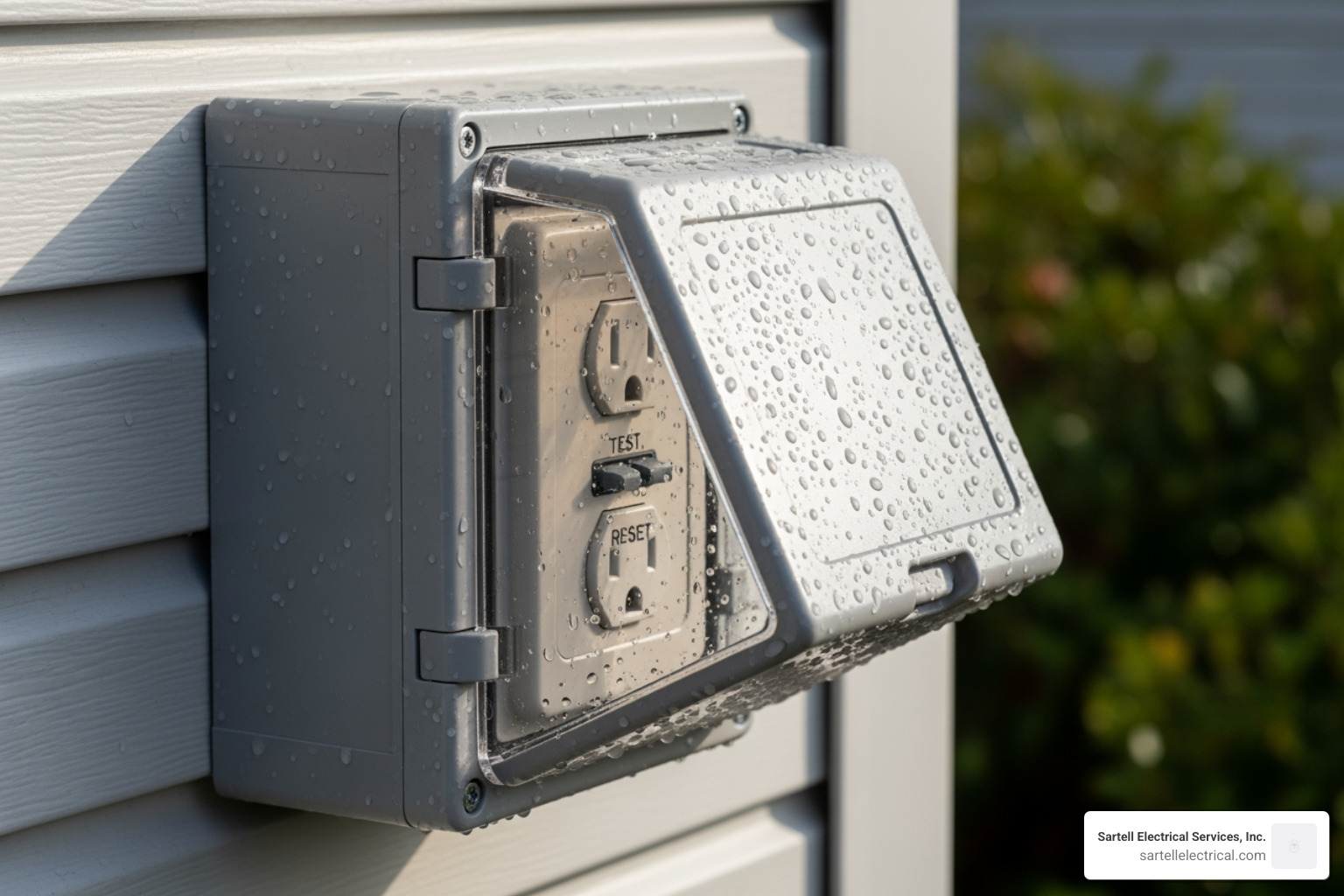
- Common Locations: Bathrooms, kitchens, laundry rooms, basements, and outdoor outlets are prime candidates for moisture issues. Even high humidity can sometimes be enough to trip a sensitive GFCI.
- How to Safely Dry an Outlet: If you suspect moisture, first, turn off the power to that circuit at your main electrical panel. If it's an outdoor outlet, ensure its weatherproof cover is intact and functioning. You can use a hairdryer, plugged into a different working outlet, to gently dry the affected GFCI outlet. Allow ample time for it to dry completely—sometimes a few hours or even overnight. Once dry, restore power and try resetting the GFCI. If it trips immediately after drying, moisture might not be the only problem, or the outlet might be permanently damaged.
Step 3: A Closer Look at a GFCI Not Resetting Due to Faulty Wiring
If the simpler steps haven't worked, the problem might lie in the wiring itself. This step requires caution and basic electrical know-how. Always wear rubber shoes and use tools with rubber handles when working with anything electrical.
- Turn Off Power: Absolutely critical. Go to your electrical panel and turn off the circuit breaker that controls the GFCI outlet. Verify the power is off using a voltage tester before proceeding.
- Remove the Faceplate: Carefully unscrew and remove the faceplate from the GFCI outlet.
- Check for Loose Connections: Gently pull the outlet out of the wall box. Inspect the wires connected to the outlet. Are any wires loose? Are the terminal screws tight? Tug gently on each wire to ensure it's securely fastened. We often see issues with loose terminal screws or "stab-in" connections (where the wire is pushed into a small hole rather than wrapped around a screw). Ensure black wires are attached to gold screws and white wires to silver screws.
- Damaged Wires: Look for any signs of damaged wires, such as frayed insulation, scorch marks, or nicks. Damaged wiring can lead to ground faults.
- Reversed Line/Load Wiring: This is a common installation error that can prevent a new or existing GFCI from resetting, especially if it was recently installed. The "LINE" terminals (where power comes in from the breaker) and "LOAD" terminals (where power goes out to protect other outlets) must be connected correctly. If these are reversed, the GFCI may not function properly or reset. If you’re unsure about identifying line and load wires, this is a good point to call a professional.
- Secure Connections: If you find loose connections, carefully tighten them. If wires are damaged, they may need to be trimmed and re-stripped, or replaced entirely. Make sure 3/4-inch of the copper conductor is showing when preparing wires for connection. Once all connections are secure and correct, carefully push the outlet back into the box, reattach the faceplate, restore power, and try resetting the GFCI again.
For complex wiring issues or if you're uncomfortable performing these checks yourself, please don't hesitate to contact us. The cost of electrical troubleshooting is a small price to pay for your safety. You can also refer to resources on
electrical troubleshooting cost or
wear protective gloves for safe handling.
Sometimes, even after thorough troubleshooting, your
GFCI not resetting problem persists. This often indicates that the outlet itself is faulty and needs replacement, or there's a more serious electrical issue that requires professional attention.
GFCI outlets typically have a lifespan of 10 to 15 years. However, factors like repeated exposure to moisture, high heat, UV light (for outdoor units), frequent tripping, overloads, or internal corrosion can shorten their life, sometimes to as little as five years. If your GFCI is older than 10 years, it might simply be time for a new one.
Here are the signs of a bad GFCI that indicate it's time for replacement or a professional call:
- Red Indicator Light: Many modern GFCIs have an indicator light. If it's red, flashing, or not illuminated when it should be, it often signals an internal fault or that the GFCI has failed its self-test and is no longer providing protection.
- Fails Test Button: If you press the "TEST" button and the "RESET" button doesn't pop out, the GFCI is likely defective and should be replaced.
- Frequent Tripping Without Cause: If the GFCI trips regularly, even when nothing is plugged in or when only low-power devices are used, it could indicate a failing internal mechanism or a persistent, undetected ground fault.
- Burning Smell or Scorch Marks: Any sign of burning, melting, or discoloration around the outlet is a serious warning sign of an electrical hazard. Turn off power immediately and call a professional.
- Won't Reset After Troubleshooting: If you've gone through all the DIY troubleshooting steps (checking breakers, moisture, wiring) and the GFCI still won't reset, the unit itself is likely faulty.
When these signs appear, or if you're ever uncomfortable with electrical work, it's always best to call a licensed electrician. For urgent issues in Massachusetts, we offer
emergency electrical service near me for your peace of mind.
Understanding the Difference: A Tripped GFCI vs. a Faulty One
It’s crucial to distinguish between a GFCI that is simply doing its job (tripping) and one that has an internal defect (faulty).
A
tripped GFCI is working exactly as intended. It has detected an imbalance in electrical current—a ground fault—and cut off power to prevent shock or fire. This is a sign of protection, indicating a potential hazard that needs to be addressed. The problem isn't the GFCI itself, but whatever caused it to trip (e.g., a faulty appliance, moisture, a short circuit). Once the fault is removed, a healthy GFCI should reset without issue.
A
faulty GFCI, on the other hand, indicates a deeper issue with the outlet itself. If it won't reset even when there's no ground fault present, or if it fails its own test, its internal mechanism has likely failed. This means it can no longer provide the crucial protection it was designed for. In such cases, the GFCI needs to be replaced.
Understanding this difference helps you decide whether to look for the source of a ground fault or to simply replace the outlet. For additional information about ground fault detection and protection, you can refer to this article by the Electrical Industry:
More on ground fault protection. We also recommend regular
electrical safety checks to ensure all your home's protective devices are functioning correctly.
Frequently Asked Questions about GFCI Outlets
We often hear similar questions from homeowners in Massachusetts regarding their GFCI outlets. Here are some of the most common ones:
Will a GFCI reset without power?
No, a GFCI outlet will not reset without power. If the circuit breaker leading to the GFCI is tripped, or if there's a break in the wiring upstream (before the GFCI), the outlet simply won't have the electrical energy needed to engage its internal reset mechanism. This is why checking your circuit breaker and ensuring the outlet is receiving power is always the first step in troubleshooting a
GFCI not resetting.
What does a red or blinking light on a GFCI mean?
Many modern GFCI outlets include an indicator light, and its color or behavior can convey important information:
- Solid Red Light: This often means the GFCI has tripped due to a ground fault and needs to be reset. However, on some models, a solid red light can also indicate an internal fault or that the GFCI has failed its self-test and is no longer providing protection.
- Blinking Red Light: This usually signifies that the GFCI has failed its internal self-test or has reached its end of life and needs to be replaced. It's essentially telling you, "I can no longer protect you safely."
- No Light / Light Off: This typically means the GFCI is functioning normally, or it might mean it's not receiving power at all. If the GFCI won't reset and there's no light, check for power supply issues first.
Always consult the specific manufacturer's instructions for your GFCI model, as indicator light meanings can vary slightly.
Where are GFCI outlets required in a home?
GFCI outlets are required by electrical code in any location where water and electricity could potentially come into contact. This is because they detect imbalances caused by current leaking to the ground, which can happen if someone becomes part of the electrical path (i.e., gets shocked) or if an appliance touches water. In Massachusetts homes, you'll find GFCIs mandated in:
- Bathrooms: All receptacles.
- Kitchens: All receptacles serving countertop surfaces, and within six feet of sinks.
- Laundry Rooms: All receptacles.
- Garages and Accessory Buildings: All receptacles.
- Outdoors: All receptacles.
- Basements: Unfinished areas, and often finished areas within a certain distance of grade.
- Crawl Spaces: All receptacles.
- Boathouses and Docks: All receptacles.
These requirements ensure that areas with a higher risk of electrical shock are protected, significantly enhancing the safety of your home and family.
Conclusion: Prioritize Safety with Professional GFCI Repair
When your
GFCI not resetting, it's more than just an annoyance—it's a critical safety warning from your electrical system. We've walked you through the common reasons why this happens, from simple power interruptions and moisture issues to more complex internal failures and downstream ground faults. We've also provided a comprehensive DIY troubleshooting guide, empowering you to perform initial checks safely.
However, electrical work, especially when it involves diagnosing persistent faults or replacing components, carries inherent risks. While minor troubleshooting can be done by a homeowner, there are clear limits to DIY. If you've tried the steps outlined above and your GFCI still won't reset, or if you ever feel uncomfortable or unsure about what to do next, please don't hesitate to call in the professionals.
At Sartell Electrical Services, we bring nearly 40 years of experience to homes and businesses across Massachusetts, including Essex County, Middlesex County, Norfolk County, and Suffolk County. Our commitment to excellence, leadership, and customer service means we handle every project, big or small, with the utmost care and expertise. We understand the specific electrical codes and common issues unique to our region.
Your family's safety is our top priority. Don't let an unresponsive GFCI leave you vulnerable to electrical hazards. If you need assistance with a
GFCI not resetting or any other electrical concern, we're here to help.
Schedule your ground fault repair with Sartell Electrical Services today, and let us restore safety and functionality to your home's electrical system.