Outdoor Lighting Repairs: Top 5 Essential Tips
Why Outdoor Lighting Matters for Your Property
Outdoor lighting repairs are essential for addressing issues like burned-out bulbs, flickering lights, wiring problems, and transformer failures. Most repairs cost between $120 and $400. A functional outdoor lighting system improves curb appeal, increases property value, and ensures safety for everyone on your property after dark. When these systems fail, it can create liability concerns and security risks.
Quick Overview: When You Need Outdoor Lighting Repairs
- Lights won't turn on → Check the circuit breaker, GFCI outlet, transformer, or wiring.
- Flickering or dimming → Look for loose connections, voltage drops, or a faulty transformer.
- Water damage → Broken seals can lead to corrosion and short circuits.
- Physical damage → Weather, animals, or landscaping can damage fixtures.
- System-wide failure → Often points to transformer or main power supply issues.
The challenge is identifying
why a system fails and deciding if repair or replacement is the best financial choice. A single burned-out bulb is a simple fix, but recurring problems often signal deeper issues that require professional diagnosis.
I'm Ed Sartell, and since founding Sartell Electrical Services in 1985, I've helped countless Massachusetts businesses resolve
outdoor lighting repairs. Our team understands that when your exterior lighting fails, it's a safety and operational concern that needs prompt, reliable attention.
Identifying Common Outdoor Lighting Problems and Their Causes
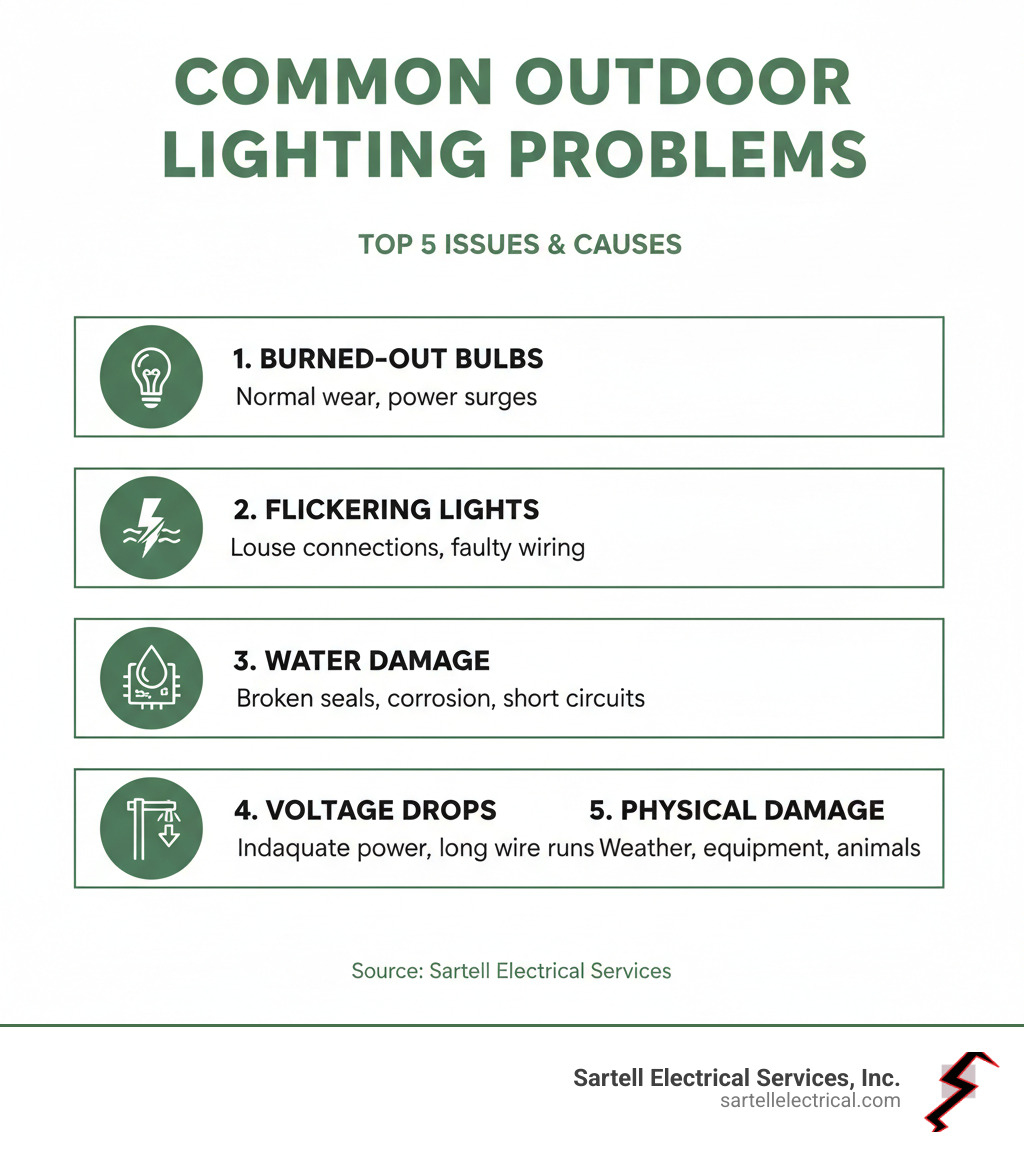
When outdoor lights fail, the cause can range from a simple burned-out bulb to hidden wiring or transformer issues. Most
outdoor lighting repairs trace back to a few common culprits. Understanding these helps diagnose the problem faster.
Common issues include burned-out bulbs, flickering lights from loose connections, tripped breakers, water damage causing corrosion, inconsistent brightness from voltage drops, and physical damage to fixtures. Recognizing these patterns is the first step to a quick fix.
Burned-Out Bulbs and Flickering Lights
A burned-out bulb is a simple fix, but if you're replacing them often, the cause could be power surges, loose sockets, or incorrect wattage. Flickering lights usually indicate an inconsistent flow of electricity. This can be caused by a loose bulb, faulty wire connections, or power fluctuations from the transformer.
Solution: First, check that the bulb is the correct type and wattage and that it's screwed in tightly. If the problem persists, it's time to call an electrician to inspect the wiring and check for power fluctuations.
Lights Not Turning On
When lights won't turn on, troubleshoot the power source by working backward.
- Check the circuit breaker: Look for a tripped breaker in your electrical panel and reset it.
- Test GFCI outlets: These outlets protect against shock and can trip easily. Press the reset button.
- Inspect the transformer: In low-voltage systems, a failed transformer will cause the entire system to go dark.
- Look for damaged wires: Underground wires can be cut by landscaping activities, interrupting the circuit.
Troubleshooting steps: A professional will systematically check each component, from the breaker to the wiring, to locate the failure point.
Water Damage and Corrosion
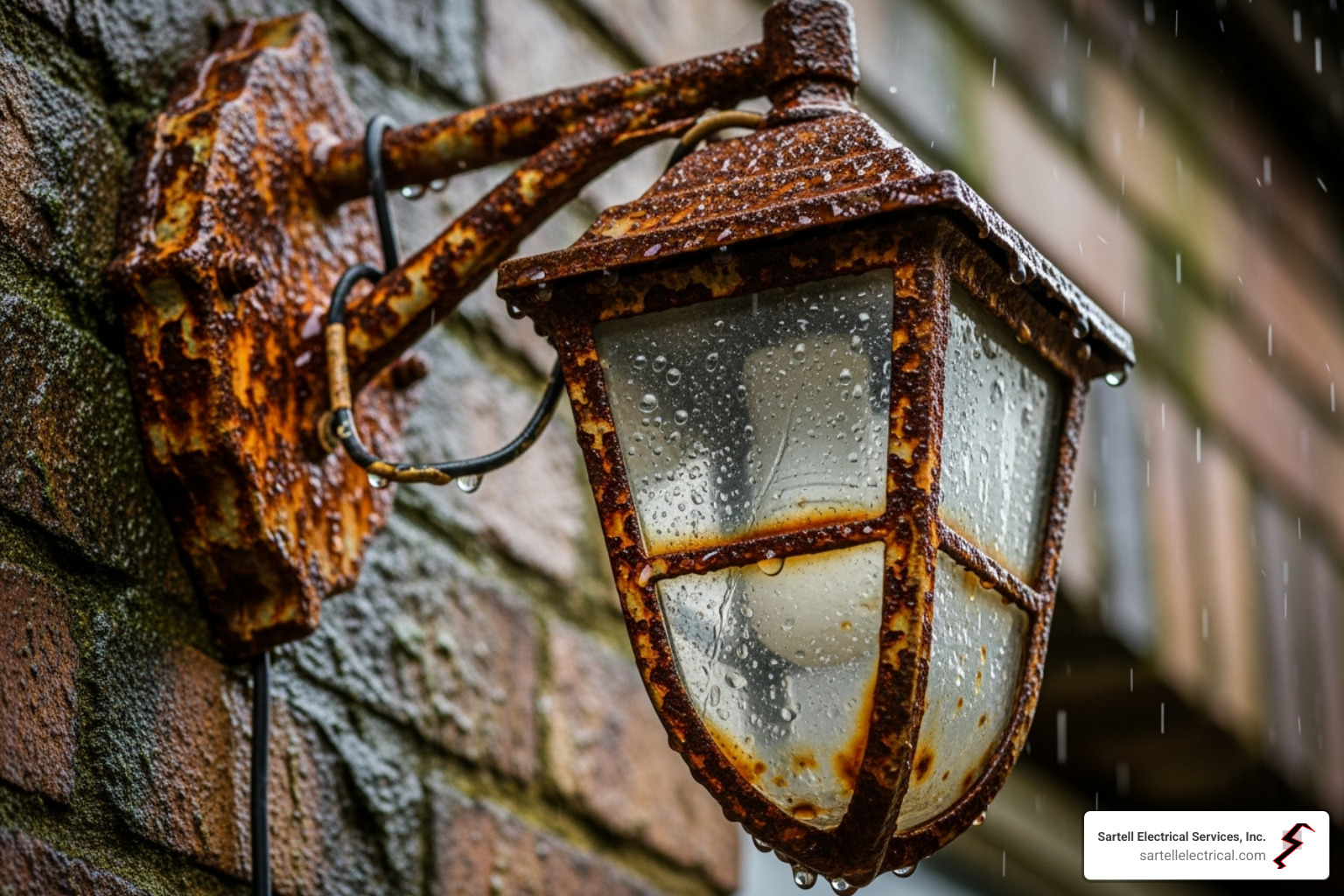
Outdoor fixtures are tough, but moisture from rain, snow, and humidity can eventually penetrate seals. Once inside, water can cause
short circuits, trip breakers, and accelerate
corrosion on metal components, leading to poor connections and eventual failure. A light that fails only in wet weather is a classic sign of moisture intrusion.
Preventative measures: Use quality waterproof fixtures with high IP (Ingress Protection) ratings. Regularly inspect fixtures for cracked lenses or signs of moisture. If you see condensation, the fixture needs immediate attention. We can often dry components, clean corrosion, and apply inhibitors, but replacement is safer if seals are compromised.
Inconsistent Lighting and Voltage Drop
If some lights are bright while others are dim, you likely have a
voltage drop—a loss of electrical strength over distance. This is common in low-voltage systems with long wire runs, an overloaded or inadequate transformer, or wire that is too thin (incorrect gauge).
Solution: An electrician can fix voltage drop by using thicker gauge wire, adding or relocating transformers to shorten wire runs, or redesigning the circuit layout to balance the electrical load.
Physical Fixture Damage
Outdoor fixtures endure constant abuse from weather, accidental impacts, and even animals.
- Weather: High winds, hail, and freeze-thaw cycles can damage housings, crack lenses, and weaken seals.
- Accidents & Landscaping: Lawn mowers, trimmers, and vehicles can easily crack or bend fixtures. Overgrown plants can also shift fixtures or strain wiring.
- Animals: Rodents may chew on wire insulation, and digging dogs can damage underground cables.
- Wear and Tear: Over time, materials degrade, screws corrode, and brackets weaken from exposure.
Repair vs. replacement approach: Minor damage like a cracked lens can often be repaired. However, if the housing or internal components are badly damaged, or if the fixture is old, replacement is usually the safer and more cost-effective solution.
The Cost of Outdoor Lighting Repairs: Repair vs. Replacement
When your outdoor lights fail, the first question is often about cost. The price of
outdoor lighting repairs depends on the type of repair, system complexity, materials, and local labor rates. A simple bulb swap is inexpensive, but tracing a damaged underground wire costs more.
At Sartell Electrical Services, we help property managers make smart financial decisions. Sometimes a quick fix is enough, but other times it's better to invest in a new system rather than continue patching an old one. Costs in the Boston area reflect the expertise of skilled professionals who guarantee their work.
Here's a look at the decision between repairing and replacing:
| Consideration |
Repairing a Single Halogen Fixture |
Replacing an Entire Aging Halogen System with New LEDs |
| Initial Cost |
$75 - $250 per fixture (plus labor) |
$1,500 - $4,000+ (for a complete system) |
| Longevity |
Depends on age of system; other components may fail soon |
New system, often with long warranties (e.g., 5-year on LEDs) |
| Energy Efficiency |
Remains inefficient (halogen bulbs consume more power) |
Highly efficient (LEDs significantly reduce energy consumption) |
| Maintenance Needs |
Continual bulb replacement; potential for other aging component failures |
Very low; LEDs last up to 25x longer; less frequent maintenance required |
| Aesthetics |
Matches existing system, but overall design might be outdated |
Opportunity for modern design, improved light quality, and customization |
| Smart Features |
Unlikely unless integrated into existing controls |
Easy to integrate with smart home/commercial automation systems |
| Long-term Savings |
Minimal, ongoing energy and repair costs |
Significant savings on energy bills and reduced repair frequency |
Average Cost for Outdoor Lighting Repairs
In Massachusetts, most
outdoor lighting repairs cost between
$120 and $400, with an average of around
$250. Hiring a professional electrician typically costs
$50 to $120 per hour, plus a minimum service fee of
$75 to $150 for the visit and initial diagnosis.
- Fixture Replacement: $75 to $250 per unit, depending on quality.
- Wiring Repairs: $120 to $400, especially for underground issues.
- Transformer Replacement: $150 to $500, as it's a critical system component.
- Bulb/Socket Replacement: $20 to $75 per unit.
- Water Damage Remediation: $100 to $450+, depending on the extent of damage.
These are estimates; the final cost depends on the specific problem.
When to Repair vs. When to Replace
Deciding whether to repair or replace your system can be tough. We often use
the 50% rule: if repair costs exceed half the price of a new system, replacement is usually the smarter long-term investment.
System age is a key factor. Halogen systems from the 1990s or 2000s have aging components. Transformers last 8-15 years, and when one fails, others may follow. If you're facing frequent
outdoor lighting repairs, the cumulative cost can quickly surpass the price of a new, reliable system.
Outdated technology like halogen is inefficient and requires constant maintenance. Upgrading to modern LEDs makes sense, especially during other property improvements. We've helped many businesses with their
retail lighting installation, and the results are always impressive.
The
benefits of replacement are significant. A new LED system can cut energy bills by 75% or more and drastically reduce maintenance since bulbs last up to 25 times longer. Modern systems also offer better designs and smart control integration. While the upfront cost of a new system ($1,500 to $4,000+) is higher, the long-term savings on energy and maintenance often make it the better choice.
DIY vs. Professional Outdoor Lighting Repair
When an outdoor light fails, it's tempting to try a DIY fix to save money. While some minor
outdoor lighting repairs are manageable, the combination of electricity and water is inherently dangerous. Safety must always be the top priority.
After decades in the business, I've seen many simple DIY attempts turn into complex, expensive problems. It's crucial to know the difference between a simple task and a job that requires professional expertise.
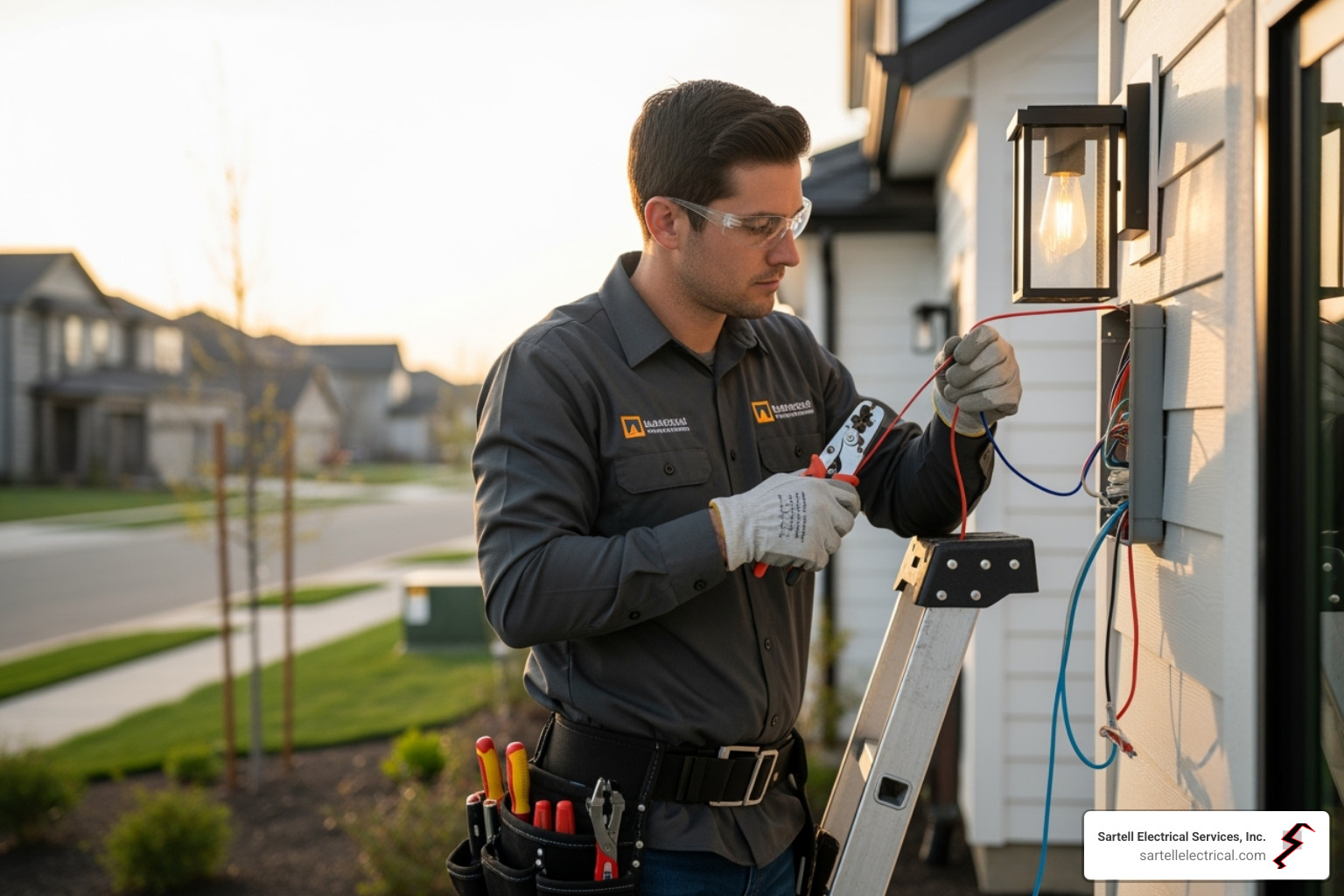
The Pros and Cons of DIY Repairs
The main appeal of DIY is cost savings. For basic tasks, you can avoid a service call fee.
What you can safely handle:
- Replacing a burned-out bulb (with the power off).
- Cleaning dirt and debris from fixture lenses.
- Trimming overgrown plants near fixtures.
- Resetting a tripped GFCI outlet or circuit breaker.
However, DIY repairs carry significant risks. Working with any electrical system brings a danger of
electrical shock. An incorrect fix can cause more extensive damage, and many manufacturer warranties are voided if an unlicensed person attempts a repair. That initial savings can quickly become a costly mistake.
Why Hire a Professional Electrician?
Beyond basic maintenance, most
outdoor lighting repairs should be handled by a professional. At Sartell Electrical Services, we bring decades of experience to solve problems safely and efficiently.
- Safety: We are trained and equipped to work with electrical systems safely, especially outdoors where moisture is a constant factor.
- Expertise: We can quickly diagnose complex issues that might stump a DIYer, ensuring we fix the root cause.
- Proper Tools & Parts: We arrive with the right equipment and compatible replacement parts for your system.
- Code Compliance: We ensure all repairs meet local and national electrical codes, protecting you from fines and ensuring your property is safe.
For larger projects like
commercial lighting installation, professional expertise is essential for safety and compliance.
Critical Safety Considerations
Electricity can be lethal. Even low-voltage (12-volt) systems pose risks if handled improperly. Line-voltage (120-volt) systems are extremely dangerous and should only be serviced by a licensed professional.
- Always turn off the power at the circuit breaker before touching any part of your lighting system. Use a voltage tester to confirm the power is off.
- Water increases the risk of electric shock and can cause electrical fires from damaged wiring.
- Ensure all outdoor circuits are protected by GFCI outlets, which quickly cut power if they detect a fault.
- Never attempt to repair a 120-volt system yourself. The risk is not worth it.
If you are ever uncertain, call a professional. It's better to be safe than to face a dangerous or expensive problem later.
Proactive Maintenance: Preventing Future Repairs
An ounce of prevention is worth a pound of cure, especially with outdoor lighting. Regular attention can extend your system's life and minimize the need for
outdoor lighting repairs. Think of it as a wellness check for your lights.
Your system constantly battles weather, growing plants, and curious animals. Even the best-installed system needs routine check-ups to stay in peak condition.
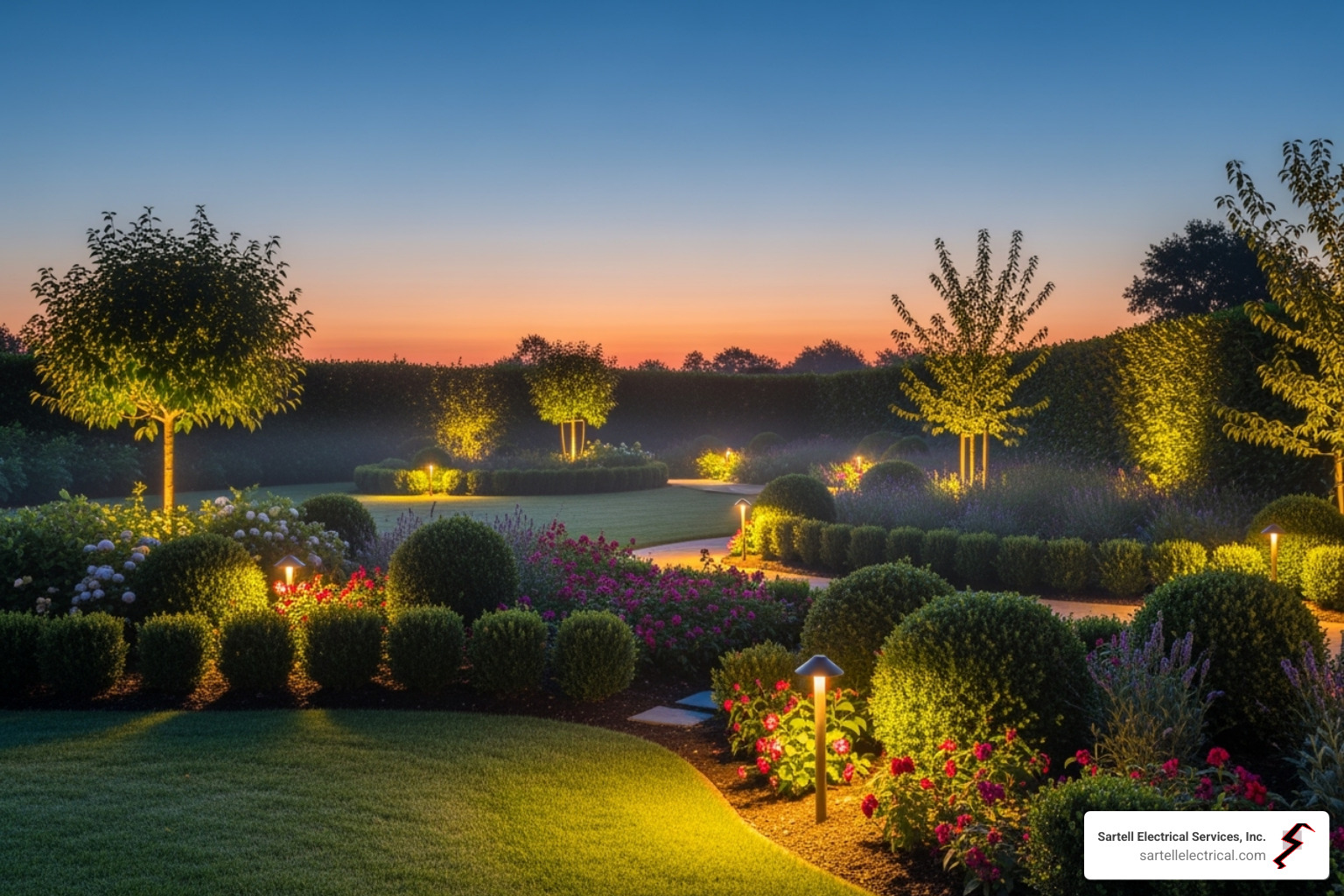
Essential Maintenance Tips to Prevent Issues
Most maintenance tasks are straightforward and don't require an electrician.
- Clean Fixtures: Regularly wipe down lenses to remove dirt, pollen, and mineral deposits that dim the light.
- Trim Vegetation: Cut back plants and branches that block light or touch fixtures to prevent damage and moisture buildup.
- Inspect Wiring: Periodically check visible wiring for cuts or fraying, especially after storms or landscaping work. Ensure all connections are tight (with the power off).
- Adjust Fixtures: Walk your property at night to check that lights are aimed correctly and adjust as needed.
- Test Controls: Ensure timers and photocells are functioning properly to save energy and maintain security.
The Long-Term Benefits of LED Lighting
Switching to LED lighting is the single best way to reduce
outdoor lighting repairs and maintenance. The advantages are clear:
- Longevity: LED bulbs last up to 25 times longer than traditional bulbs, meaning far fewer replacements.
- Energy Efficiency: LEDs use a fraction of the power of halogen or incandescent bulbs, leading to significant savings on your utility bills.
- Reduced Maintenance: Their long lifespan and durability drastically cut down on service calls.
- Durability: Modern LED fixtures are built to withstand harsh weather conditions, resulting in fewer failures.
For decorative options, LED outdoor string lights offer a warm glow with all the same benefits.
Click here to know the best outdoor string lighting in 2024.
The Role of Warranties and Maintenance Plans
Understanding warranties and considering a maintenance plan can save you money on future
outdoor lighting repairs.
Warranties from reputable manufacturers protect your investment, often covering fixtures and LED components for 2-5 years. If a part fails prematurely, the warranty may cover the replacement cost.
Maintenance plans offer proactive care for an annual fee, typically $100 to $300. These plans usually include annual inspections to catch small problems early. A professional will clean fixtures, adjust positions, tighten connections, and trim vegetation. This small investment can prevent costly emergency repairs and keep your system performing at its best.
Frequently Asked Questions about Outdoor Lighting Repairs
Outdoor lighting systems can be puzzling when they fail. Here are answers to the most common questions we hear at Sartell Electrical Services about
outdoor lighting repairs.
What are the different types of outdoor lighting systems and do they have specific repair needs?
Understanding your system type helps identify potential issues.
- Low-voltage systems (12V): Common for landscape lighting. They are safer to work with, but repairs often involve failed transformers, overloaded circuits, or wiring damage from landscaping.
- Line-voltage systems (120V): Used for security and floodlights. Due to the high voltage, all repairs require a licensed electrician. Issues often relate to faulty switches or damaged wiring in conduit.
- LED systems: Highly efficient and durable. Repairs, when needed, usually involve a faulty driver (the power source) or an issue with an integrated fixture where the light source cannot be replaced separately.
- Halogen systems: An older technology known for frequent bulb replacements. They run hot, which can accelerate socket corrosion, especially when combined with moisture.
How do weather, plants, and animals impact outdoor lighting?
Environmental factors are a leading cause of
outdoor lighting repairs.
- Weather: Moisture from rain and snow causes corrosion and short circuits. Wind can dislodge fixtures, and temperature extremes degrade materials over time.
- Plants: Overgrown vegetation can block light, push fixtures out of alignment, and damage underground wires with their roots.
- Animals: Rodents chewing on wires is a common and dangerous problem that can create fire hazards. Digging animals can also damage buried cables.
Regular inspections and trimming vegetation can help prevent many of these issues.
Do I need a permit for outdoor lighting repair in Massachusetts?
The need for a permit depends on the scope of the work.
No permit is typically required for minor repairs like replacing a bulb, cleaning fixtures, or swapping a single low-voltage fixture.
A permit is generally required for more substantial work, such as installing new circuits, making significant modifications to existing wiring, adding a new transformer, or any work on line-voltage systems. In Massachusetts, any work requiring a permit must be performed by a licensed electrician and pass an inspection to ensure it complies with the Massachusetts Electrical Code (527 CMR 12.00).
At Sartell Electrical Services, we handle all necessary permitting to ensure your project is safe, compliant, and up to code.
Conclusion
Your outdoor lighting is crucial for safety, security, and curb appeal. When it fails, addressing the problem quickly is important. We've covered the most common
outdoor lighting repairs, from flickering bulbs to complex wiring issues.
Key takeaways:
- Identify problems early to prevent costly repairs and safety hazards.
- Know when to repair versus replace. If repair costs approach 50% of a new system's price, an upgrade is often the smarter choice.
- Prioritize safety. While simple tasks like changing a bulb are fine, any work involving wiring or transformers requires a professional.
- Perform regular maintenance like cleaning fixtures and trimming plants to extend your system's life.
Upgrading to LED lighting is a wise investment, offering longevity, energy savings, and reduced maintenance. For homeowners and businesses in Massachusetts, working with an experienced contractor like Sartell Electrical Services ensures all
outdoor lighting repairs are safe, code-compliant, and durable.
Since 1985, we've provided expert electrical services, understanding the unique challenges of New England weather and state codes. Don't let failing lights compromise your property.
Ensure your property's electrical systems are in top condition by partnering with us for all your outdoor lighting needs.