Electrical Asset Management: Transform for Success 2025
Why Electrical Asset Management is Critical for Modern Operations
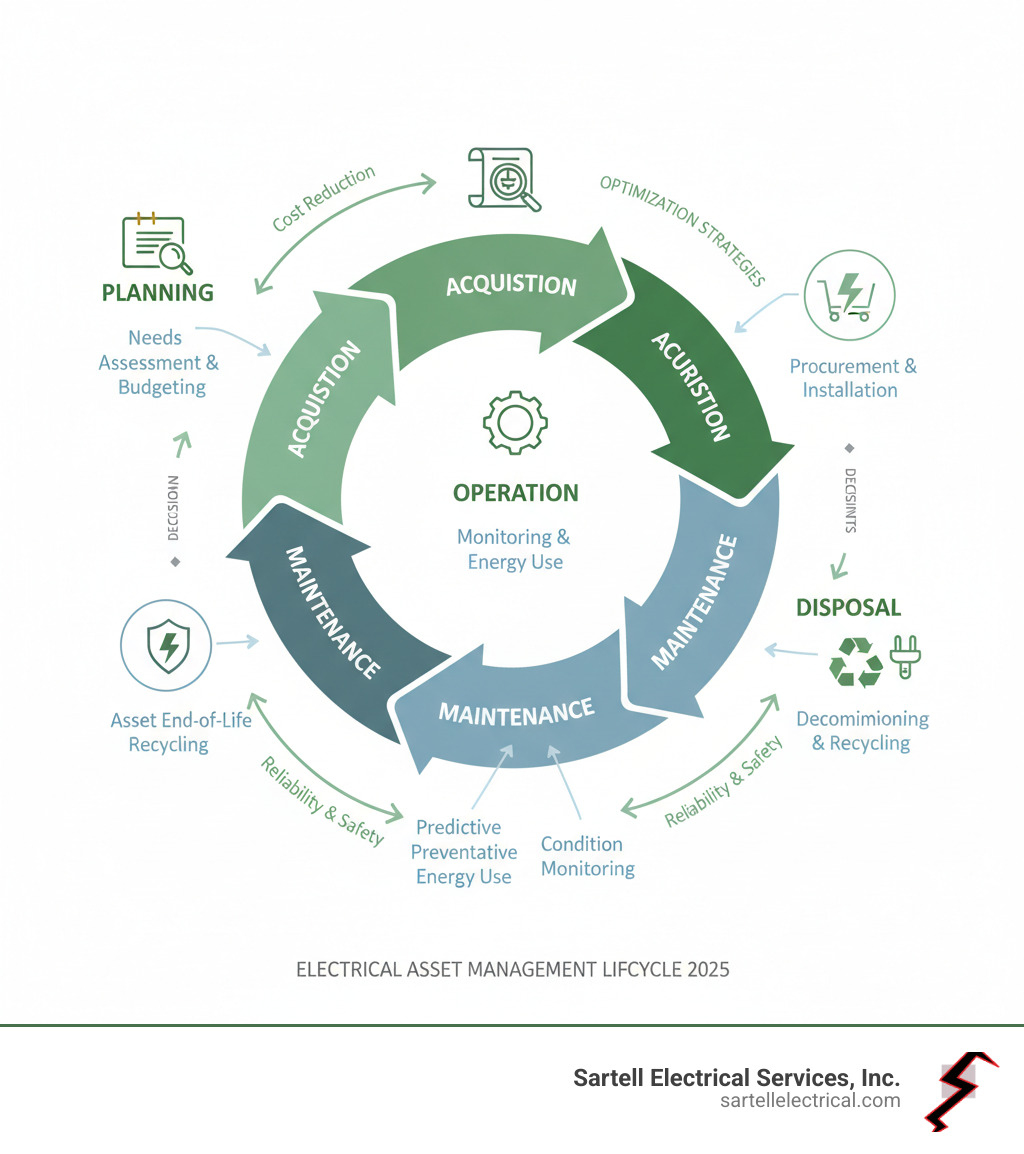
Electrical asset management is a comprehensive strategy that optimizes the entire lifecycle of electrical infrastructure - from planning and acquisition to operation, maintenance, and disposal. This proactive approach maximizes performance, reliability, and safety while minimizing costs and ensuring regulatory compliance.
Key Components of Electrical Asset Management:
- Asset Lifecycle Management - Strategic planning from installation to decommissioning
- Condition-Based Monitoring - Real-time tracking of asset health and performance
- Predictive Maintenance - Data-driven scheduling to prevent failures before they occur
- Risk Assessment - Identifying and mitigating potential operational hazards
- Regulatory Compliance - Meeting standards like ISO 55000 and NFPA 70B
- Cost Optimization - Reducing operational expenses by 10-20% through smart maintenance
The stakes couldn't be higher. Poor electrical asset management can lead to costly emergency repairs, unplanned outages, and safety incidents that disrupt operations for days. As one industry expert puts it: "Running a business is tough. It is especially more difficult when you have to worry about day-to-day operations" - particularly when electrical problems strike without warning.
The numbers tell the story: the global electrical asset management market is projected to reach $7.2 billion by 2030, growing at 9.5% annually. Organizations adopting advanced asset management practices can reduce operational costs by 10-20% and cut unplanned outages by up to 30%.
This change from reactive "fix-it-when-it-breaks" thinking to proactive asset optimization represents a fundamental shift in how smart businesses approach their electrical infrastructure.
I'm Ed Sartell, and as President of Sartell Electrical Services since 1985, I've witnessed how proper electrical asset management transforms operations across Massachusetts. My nearly four decades in the electrical trade have shown me that businesses thrive when they move from crisis management to strategic asset planning.
The Core Components of a Robust Electrical Asset Management Program
Think of electrical asset management as the master plan for your facility's electrical systems. It's about understanding every component—from transformers to panels—and making smart decisions about their care throughout their entire lifecycle.
Electrical failures don't happen in isolation. A single component failure can trigger a domino effect that shuts down entire operations. I've seen an aging circuit breaker halt a manufacturing plant for three days, which is why a comprehensive approach is so critical.
The foundation of effective electrical asset management rests on five key pillars. Asset lifecycle management means strategically planning for equipment from purchase to replacement. Risk management involves identifying which assets are most likely to fail and the potential cost, allowing you to mitigate issues proactively.
Regulatory compliance keeps you on the right side of standards like ISO 55000, which can actually reduce your asset lifecycle costs by 10%. It's not just paperwork - it's a roadmap to better performance. Sustainability goals align your electrical systems with environmental objectives, while energy efficiency strategies can dramatically cut your operating costs through smart monitoring and maintenance.
Poor power quality alone can wreak havoc on your business operations. That's why our comprehensive programs include power quality assessments that catch these issues before they become expensive problems. More info about Building Electrical Maintenance
From Reactive to Proactive: Evolving Maintenance Strategies
The old "fix it when it breaks" approach is like waiting for a car to break down before an oil change—expensive, stressful, and avoidable.
Preventive maintenance schedules regular check-ups regardless of how equipment is actually performing. It's better than waiting for failures, but you might end up fixing things that don't need fixing while missing problems that do.
Condition-based maintenance is smarter. Instead of a rigid schedule, you monitor equipment health in real-time and perform maintenance only when needed. This approach can reduce unplanned outages by up to 30%—the difference between scheduled downtime and emergency chaos.
Predictive maintenance takes this even further by using advanced analytics to forecast when failures will likely occur. Imagine knowing three months in advance that a motor will need attention, allowing you to schedule the work during planned downtime instead of scrambling at 2 AM.
Reliability-centered maintenance focuses on keeping your entire system functioning rather than just individual parts. It's like thinking about your facility's electrical system as an orchestra - every instrument needs to work together to create beautiful music.
These evolved strategies transform maintenance from a necessary evil into a competitive advantage. More info about Electrical Condition Monitoring
Key Benefits: Why EAM is a Non-Negotiable for Modern Operations
Electrical asset management isn't just a nice-to-have; it's essential for staying competitive and keeping your doors open.
Cost savings are immediate and substantial. Organizations using advanced asset management practices typically reduce operational and maintenance costs by 10-20%. Instead of expensive emergency repairs, you're making planned investments that extend equipment life and defer major capital expenses.
Improved reliability means your operations run smoothly day after day. When you can reduce unplanned outages by 30% through condition-based monitoring, you're not just avoiding downtime - you're building trust with customers who depend on your consistent service.
Improved safety protects your most valuable assets - your people. By identifying deteriorating components before they become dangerous, you prevent accidents, fires, and other hazards that could harm employees and damage property. Regular inspections aren't just compliance requirements; they're investments in everyone's well-being.
Regulatory confidence comes from having documented processes that demonstrate compliance with industry standards. When inspectors visit, you're not scrambling for paperwork - you're showing them a well-oiled system that meets or exceeds requirements.
Extended asset lifespan maximizes every dollar you've invested in electrical infrastructure. Through optimized maintenance and timely interventions, equipment that might have lasted 15 years can reliably serve you for 20 or more.
The goal is reaching what we call the "Optimal Maintenance State" - where you're maintaining critical assets at the lowest possible cost while ensuring peak performance. More info about Industrial Electrical Solutions
Leveraging Technology for Smarter Electrical Asset Management
Technology has transformed electrical asset management. The old world of clipboards, paper logs, and reactive fixes has evolved, making electrical systems safer and more reliable than ever.

The digital revolution is revolutionizing electrical asset management. Instead of guessing when equipment might fail or scrambling to fix problems, we use smart technology to stay one step ahead.
Computerized Maintenance Management Systems (CMMS) have become the backbone of modern maintenance operations. Think of it as the brain that coordinates everything - scheduling maintenance tasks, tracking work orders, managing inventory, and generating reports that actually make sense. No more lost paperwork or wondering when someone last checked that critical transformer.
Artificial Intelligence and Machine Learning might sound like buzzwords, but they're delivering real results. These systems can analyze enormous amounts of data from your electrical equipment and spot patterns that would take humans years to identify. The numbers don't lie - AI adoption in asset management leads to a 15-25% improvement in asset reliability. That's the difference between unexpected downtime and smooth operations.
Internet of Things (IoT) devices and smart sensors are like having a team of dedicated technicians watching your equipment 24/7. These small devices attach to your electrical equipment and continuously monitor temperature, vibration, current, and voltage. When something starts to go wrong, you know about it immediately - not after it's already caused problems.
The beauty of these technologies is how they work together to give you data-driven insights. Instead of making decisions based on gut feelings or outdated schedules, you're working with real, current information about how your systems are actually performing. More info about Commercial Electrical Services
The Power of Data: Condition Monitoring and Predictive Analytics
Condition monitoring and predictive analytics are like a data-powered crystal ball for your electrical systems, powered by real data and proven science.
Real-time data collection means your electrical assets are constantly telling you how they're feeling. Sensors gather thousands of data points every day, creating what engineers call a "digital twin" of your equipment. It's like having a detailed health record for every piece of electrical equipment in your facility.
Health indexing takes all that data and turns it into something you can actually use. Each asset gets a health score - think of it like a credit score for your equipment. This helps us quickly identify which assets need attention and which ones are performing like champions. We can even spot "bad actors" - equipment that's prone to problems even when it looks fine on the surface.
Predictive failure analysis is where the magic really happens. By combining historical data with current performance metrics, we can predict when something is likely to fail. This means you can schedule maintenance when it's convenient for you, not when a breakdown forces your hand.
The condition monitoring techniques we use might sound technical, but they're incredibly practical. Infrared thermography uses thermal cameras to spot hot spots before they become fires. Vibration analysis listens to the "heartbeat" of your motors and generators to catch problems early. Oil analysis for transformers is like getting blood work done - it reveals what's happening inside the equipment. Ultrasonic testing can actually "hear" electrical problems like partial discharge before they cause major failures.
These aren't just fancy gadgets - they're proven tools that prevent costly breakdowns and keep your operations running smoothly.
The Role of a Centralized Asset Database in Electrical Asset Management
Managing electrical assets without a centralized database is like managing personal finances with scattered receipts—a recipe for disaster.
A centralized asset database serves as your single source of truth for everything related to your electrical infrastructure. It brings together maintenance records, inspection reports, sensor data, purchase information, and financial details all in one place. No more hunting through filing cabinets or trying to remember which computer has the latest information.
The benefits are immediate and substantial. Data accessibility means everyone on your team is working with the same up-to-date information. Your maintenance technician, facility manager, and financial planner all see the same asset history and current status. This eliminates those frustrating moments when different people have different versions of the "truth."
Improved decision-making becomes natural when you have a complete picture of each asset's history and performance. Should you repair that aging switchgear or replace it? The database shows you the maintenance costs, downtime history, and remaining useful life - giving you the facts you need to make smart choices.
Asset lifecycle tracking follows each piece of equipment from the day you buy it until the day you retire it. This comprehensive view helps you understand the true cost of ownership and plan for future replacements before they become emergencies.
Performance benchmarking lets you compare similar equipment across your facilities. If one motor is constantly causing problems while identical units run smoothly, you can investigate why and apply those lessons across your entire operation.
Perhaps most importantly, a centralized database captures and preserves institutional knowledge. When experienced team members retire or move on, their knowledge stays with your organization instead of walking out the door with them. See an example of an asset management plan to understand how this all comes together in practice.
This integrated approach transforms electrical asset management from a reactive scramble into a strategic advantage that keeps your operations running smoothly and efficiently.
Best Practices for Implementing Your EAM Strategy
Implementing an effective electrical asset management strategy isn't something you can rush into. Think of it like building a house - you need a solid foundation, the right team, and a clear blueprint before you start construction.
Over my nearly four decades in the electrical industry, I've watched countless organizations struggle because they tried to implement everything at once. The smart approach? Take it step by step.

The most successful electrical asset management programs start with strategic planning. You need to know where you're going before you can figure out how to get there. What's driving your need for better asset management? Maybe it's those surprise equipment failures that shut down production, or perhaps it's the mounting maintenance costs that are eating into your budget.
Getting stakeholder buy-in early makes all the difference. When your finance team understands how predictive maintenance will reduce emergency repair costs, and your operations manager sees how condition monitoring prevents unexpected downtime, you'll have allies instead of obstacles.
Phased implementation is where many organizations get it right or get it wrong. Start small - pick your most critical assets and prove the concept works. Once you've got some wins under your belt, scaling up becomes much easier. I've seen too many companies try to boil the ocean and end up with nothing but steam.
The continuous improvement approach - what we call the Plan-Do-Check-Act cycle - keeps your program evolving. Your electrical systems aren't static, and neither should be your management strategy. Regular reviews help you spot what's working and what needs tweaking.
This methodical approach has served us well in our electrical project management work, where proper planning makes the difference between success and expensive do-overs.
Developing a Winning Electrical Asset Management Strategy
Creating a winning electrical asset management strategy is like tailoring a custom suit - it needs to fit your organization perfectly. What works for a manufacturing plant won't necessarily work for a data center or hospital.
Defining clear objectives comes first. Instead of vague goals like "better maintenance," get specific. Are you trying to reduce unplanned outages by 30%? Cut maintenance costs by 15%? Extend asset life by five years? These concrete targets give your team something to aim for and measure against.
Your comprehensive asset inventory is the foundation everything else builds on. You can't manage what you don't know you have. This means cataloging every transformer, switchgear unit, motor, and control panel. Include the basics - where it is, how old it is, what condition it's in, and how critical it is to your operations.
The thorough risk assessment phase separates the professionals from the amateurs. For each asset, we look at what could go wrong, how likely it is to happen, and what the impact would be. A backup generator failure during a power outage hits differently than a lobby lighting circuit going down.
Establishing the right KPIs keeps everyone focused on what matters. Mean Time Between Failures tells you about reliability. Mean Time To Repair shows how efficient your response is. Maintenance costs as a percentage of asset value reveals if you're spending wisely. These numbers tell the real story of your program's success.
Technology selection should support your goals, not drive them. The fanciest monitoring system won't help if it doesn't integrate with your existing processes. Choose tools that make your team more effective, not just more busy.
For healthcare facilities where power interruptions can be life-threatening, this strategic approach isn't just good business - it's essential patient care. Our work in healthcare electrical services has shown us how critical proper asset management becomes when lives are on the line.
Building the Right Team: Expertise and Technical Abilities
Technology is impressive, but people make electrical asset management programs successful. You need team members who can think both strategically and technically - folks who understand both the big picture and the nitty-gritty details.
Data analysis skills have become non-negotiable in modern asset management. Your team needs people who can look at condition monitoring data and spot patterns that predict problems before they happen. It's like being a detective, but instead of solving crimes, you're preventing equipment failures.
Electrical engineering knowledge provides the technical foundation. Understanding how transformers age, why motor bearings fail, and what causes insulation breakdown helps your team make smart decisions about maintenance timing and methods. This expertise separates educated guesses from informed strategies.
Maintenance planning and scheduling expertise keeps everything running smoothly. It's one thing to know a motor needs attention; it's another to coordinate the shutdown, gather the right parts, schedule the technicians, and minimize operational disruption. Good planners make it look easy, but there's real skill involved.
Regulatory standards knowledge keeps you out of trouble and your people safe. Standards like NFPA 70B guide maintenance practices, while NFPA 70E focuses on electrical safety. These aren't just suggestions - they're requirements that protect both workers and organizations.
Project management skills become crucial when implementing new systems or major upgrades. Someone needs to keep track of timelines, budgets, and deliverables while making sure the lights stay on during the transition.
At Sartell Electrical Services, our team combines decades of hands-on experience with ongoing education in the latest asset management practices. We've learned that the best programs blend seasoned expertise with fresh perspectives.
In specialized environments like telecommunications facilities where even brief outages can affect thousands of users, having the right team expertise becomes even more critical. Our telecommunications electrical services work has taught us that expertise isn't just helpful - it's essential for maintaining the reliable power these systems demand.
Frequently Asked Questions about Electrical Asset Management
Let's address some of the most common questions we hear from business owners and facility managers who are considering implementing an electrical asset management program. These are the real-world concerns that come up during our initial consultations.
What is the difference between EAM and a CMMS?
This is probably the question we get asked most often, and it's a great one because understanding this distinction is crucial for making smart decisions about your electrical infrastructure.
Electrical Asset Management (EAM) is the big picture - it's a comprehensive strategy that covers everything about your electrical assets from cradle to grave. We're talking about financial planning, risk assessment, regulatory compliance, and making those tough decisions about when to repair versus replace. It's your master plan for getting the most value out of every piece of electrical equipment you own.
A Computerized Maintenance Management System (CMMS), on the other hand, is more like your trusty toolbox. It's software that helps you execute part of that master plan - specifically the maintenance side. Think work orders, scheduling, inventory tracking, and keeping records of what you've done and when.
Here's how I like to explain it to clients: if EAM is your business strategy, then CMMS is one of the key tools that helps you carry it out. You can have a CMMS without a comprehensive EAM strategy, but you can't have effective electrical asset management without some way to track and manage your maintenance activities.
How does electrical asset management improve safety?
Safety is where electrical asset management really shines, and frankly, it's one of the most compelling reasons to implement a program. When you're being proactive instead of reactive, you're catching problems before they become dangerous.
Think about it this way: would you rather find a loose connection during a routine thermal scan, or find it when it causes an arc flash that puts someone in the hospital? That's the difference between proactive asset management and the old "fix it when it breaks" approach.
Our EAM programs help improve safety in several key ways. Regular inspections and condition monitoring catch deteriorating components before they fail catastrophically. We're talking about preventing electrical fires, equipment explosions, and dangerous power surges that can hurt people and damage property.
Compliance with safety codes like NFPA 70E becomes automatic when you have a structured program in place. Instead of scrambling to meet requirements, you're consistently maintaining safe working conditions as part of your regular operations.
Perhaps most importantly, reducing emergency repairs means your team isn't constantly working under dangerous, high-pressure conditions. Emergency electrical work is inherently riskier - you're often working quickly, sometimes in less-than-ideal conditions, and under stress. A good EAM program minimizes these situations dramatically.
What is the first step to implementing an EAM program?
If you're ready to move forward with electrical asset management, the first step might surprise you with its simplicity - but don't mistake simple for easy.
You need to conduct a comprehensive audit of all your electrical assets. This means creating a detailed inventory that includes where everything is located, what type of equipment it is, its specifications, age, and how critical it is to your operations. We also look at the operational history - what's been repaired, when, and why.
This initial assessment is like taking a snapshot of your current electrical infrastructure. Without this foundational data, you're essentially flying blind. How can you prioritize maintenance spending if you don't know which assets are most critical? How can you plan for replacements if you don't know the age and condition of your equipment?
During this audit phase, we often uncover surprises - equipment that's been forgotten, critical systems without proper documentation, or assets that are in worse condition than anyone realized. It's not uncommon for this initial assessment to immediately identify some quick wins or urgent issues that need attention.
The beauty of starting with a thorough audit is that it gives you the data you need to make smart, informed decisions about where to focus your efforts and resources. It's the foundation everything else builds on, and getting it right sets you up for long-term success with your electrical asset management program.
Conclusion: Powering Your Future with Strategic Asset Management
In today's digital and interconnected world, reliable electrical infrastructure isn't just nice to have—it's absolutely essential for every organization to thrive. As we've explored throughout this guide, electrical asset management goes far beyond simple maintenance schedules. It's a strategic approach that transforms how you think about your electrical infrastructure, turning it from a cost center into a competitive advantage.
The change from reactive "fix-it-when-it-breaks" thinking to proactive, data-driven strategies is revolutionizing operations across every industry imaginable. When you accept condition-based monitoring, predictive analytics, and cutting-edge technologies like CMMS and AI, the results speak for themselves. Organizations typically see their operational and maintenance costs drop by 10-20%, while unplanned outages decrease by up to 30%. Asset reliability improves by 15-25%, and that's just the beginning.
But the benefits extend far beyond the numbers on a spreadsheet. You'll achieve better regulatory compliance, extend the useful life of your valuable equipment, and—perhaps most importantly—create a significantly safer environment for everyone who works in your facility.
At Sartell Electrical Services, we've spent over three decades helping organizations across Massachusetts steer the complexities of managing diverse electrical assets. Whether you're running a busy commercial building, an industrial facility that never sleeps, a healthcare institution where reliability can be life-or-death, or a telecommunications center that keeps people connected, we understand the unique challenges you face.
Here's what I've learned after nearly 40 years in this business: electrical asset management isn't just about managing equipment—it's about empowering your organization's future. When you make smart, informed decisions about your electrical infrastructure today, you're not just preventing problems. You're building a foundation for growth, efficiency, and success that will serve you for decades to come.
Ready to take the next step? We're here to help you transform your approach to electrical infrastructure management. Learn how to implement Electrical Condition Monitoring for your assets and find how strategic asset management can power your organization's success story.