Electrical Network Monitoring: Cut 30% Energy Waste
Why Your Electrical Grid's Health Matters More Than Ever
Electrical network monitoring is the real-time tracking and analysis of your power distribution system to ensure optimal performance, prevent costly outages, and maintain system reliability. Here's what you need to know:
Key Benefits:
- Cost Savings: Reduce energy waste by up to 30% and avoid expensive downtime.
- Proactive Management: Detect issues before they cause equipment failure.
- Power Quality: Monitor voltage, frequency, and harmonics to protect sensitive equipment.
- Compliance: Meet regulatory requirements and sustainability goals.
Main Components:
- Smart sensors and meters to collect electrical data.
- Data loggers to store and transmit information.
- Analysis software to turn data into actionable insights.
- Automated control systems to respond to issues instantly.
Modern facilities, especially major power consumers like manufacturing plants and data centers, face increasing pressure to maintain reliable power. Poor power quality can damage expensive equipment and interrupt critical operations. For example, one plastic extrusion plant lost €65,000 per incident from voltage dips—a preventable loss with proper monitoring.
The good news is that
electrical network monitoring systems are now more affordable and accessible thanks to IoT technology. These systems provide the visibility needed to make informed decisions about your electrical infrastructure.
I'm Ed Sartell, and since 1985, I've helped Massachusetts businesses use electrical network monitoring to transform operations and prevent costly surprises.
What is Electrical Network Monitoring and Why is it Crucial?
Sudden power flickers, equipment malfunctions, and production slowdowns can cost your facility thousands in lost productivity. This is why
electrical network monitoring has become so crucial for modern businesses.
Electrical network monitoring is like a health tracker for your power network. It continuously tracks electricity flow, from voltage levels to consumption patterns, providing early warnings to fix issues before they become disasters. Proactive management is simple: prevent problems instead of scrambling to fix them. Real-time visibility shows you when a circuit is overloaded, power quality is declining, or equipment is using excess energy.
With companies wasting up to
30% of their consumed energy, monitoring helps identify and eliminate these costly inefficiencies. Unplanned outages cause production hits, equipment damage, and customer relationship issues, with costs running into thousands of dollars per minute for some businesses.
Modern
electrical networks are complex systems that need constant attention.
Electrical network monitoring gives you the visibility to spot trouble early, optimize performance, and keep everything running smoothly.
The High Cost of Poor Power Quality
Poor power quality is like dirty fuel for your equipment; when the power isn't clean and stable, everything suffers. It manifests as
voltage sags (dips),
surges (spikes),
harmonics (distortion), and a poor
power factor, which means you're paying for electricity you don't use effectively.
These issues silently damage your equipment daily, causing motors to run hot, electronics to age faster, and energy bills to creep up. What seems like normal wear and tear is often poor power quality eroding your systems. The financial impact adds up quickly through premature equipment replacement, frequent maintenance, and high energy costs.
This is where an
Industrial Power Monitoring System becomes invaluable. It watches these parameters continuously, alerting you to deviations before expensive damage occurs.
Key Industries That Benefit Most
While every business benefits from monitoring, for some industries, it's essential for survival.
Manufacturing facilities are the
largest power consumers in the United States. For them, even minor power quality issues can ruin product batches or cause hours of downtime for recalibration.
Data centers consume
10 to 50 times more power than typical commercial buildings. As the backbone of the digital world, a power interruption at a data center impacts every company and service relying on it.
Hospitals and healthcare facilities operate where power interruptions can be a matter of life and death. Life support, surgical, and monitoring equipment depend on clean, uninterrupted power, leaving no room for error.
Commercial buildings like offices, shopping centers, and campuses present huge opportunities for energy savings and can dramatically reduce operating costs by optimizing their electrical systems.
Each of these industries has learned that
electrical network monitoring is essential infrastructure that protects their operations, budgets, and people.
The Core Benefits of Implementing Electrical Network Monitoring
Investing in
electrical network monitoring is an investment in your facility's future, with benefits rippling through your operations, finances, and sustainability. The most immediate impact is
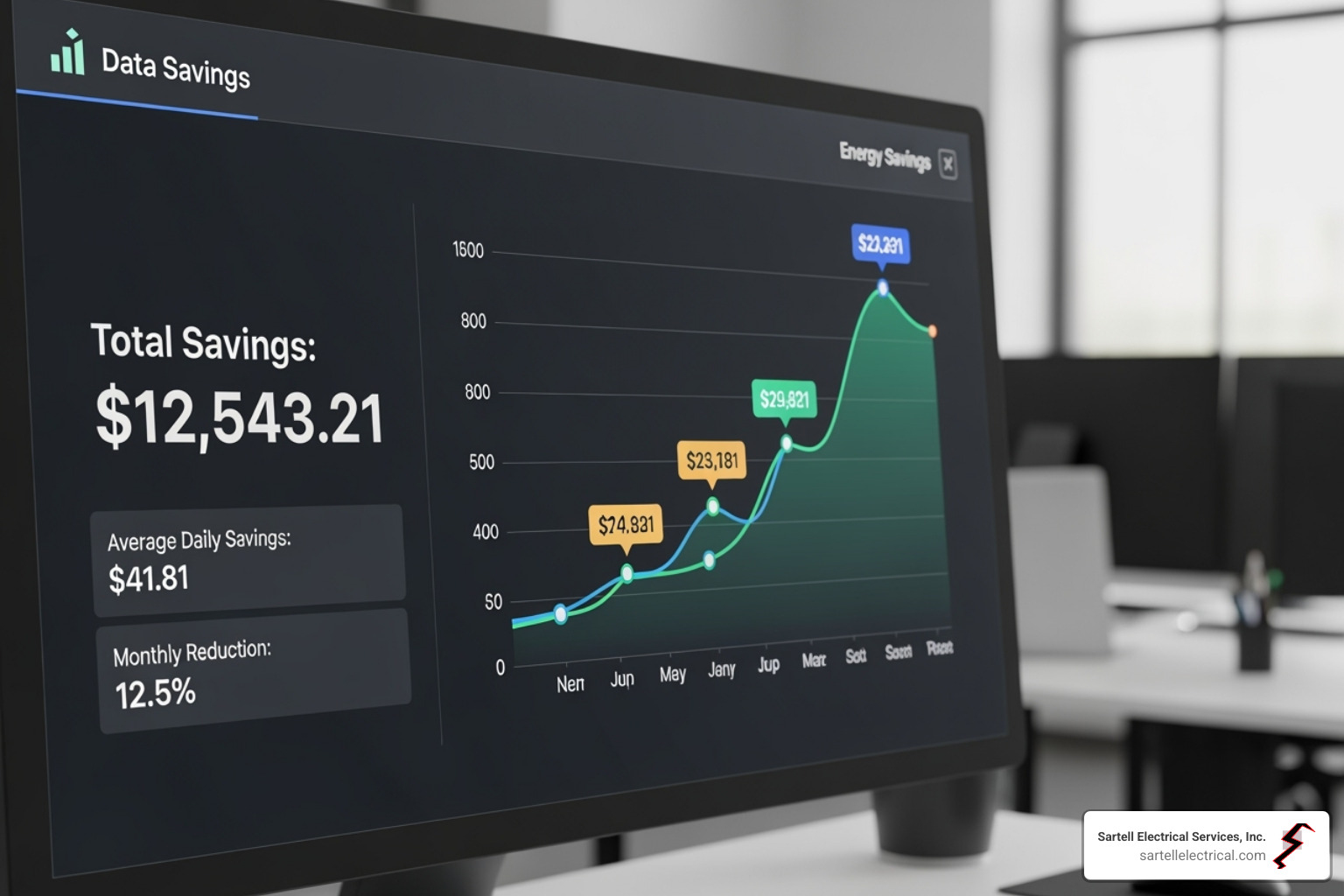
cost savings. Monitoring identifies where energy is wasted, and real-time load data helps you shift operations away from peak demand periods, avoiding charges that can double or triple your electricity costs.
Operational efficiency improves as you can stop guessing why equipment draws excess power. Data-driven insights enable precise load balancing and equipment optimization.
Improved safety is another key benefit, as monitoring systems detect gradual but dangerous conditions like overloads, ground faults, or overheating before they become disasters, protecting staff and assets.
You can also shift to
predictive maintenance, servicing equipment based on its actual condition. This means fewer surprise failures, less downtime, and longer equipment life. Finally, monitoring provides the concrete data needed to track
sustainability goals, prove regulatory compliance, and demonstrate your commitment to reducing your carbon footprint.
Improved System Reliability and Reduced Downtime
Just as
90% of errors in overhead power lines are temporary, many electrical issues in your facility show warning signs before becoming full-blown failures.
Electrical network monitoring acts like a 24/7 watch, spotting these signs early.
Proactive fault detection alerts you to weakening components or developing faults, allowing for scheduled repairs during planned maintenance windows instead of dealing with emergency shutdowns. This dramatically reduces unexpected outages and their costly ripple effects. The system learns what's "normal" for your facility and flags any deviation, preventing minor glitches from escalating into major disasters.
For facilities that need comprehensive reliability, we offer
Building Electrical Maintenance services that work hand-in-hand with monitoring systems.
Optimizing Energy Consumption and Reducing System Losses
Electrical network monitoring gives you X-ray vision into your energy consumption, showing you exactly where every kilowatt is going and where waste occurs. With this clear data, you can easily identify inefficiencies, balance electrical loads with precision, and manage peak demand to slash utility costs.
This allows you to distinguish between necessary energy use and actual waste, enabling targeted improvements rather than broad, expensive overhauls. Our
Electrical Solutions for Industrial Environments integrate these monitoring capabilities to help facilities maximize their efficiency and minimize their environmental impact.
Key Components and Technologies in a Monitoring System
An
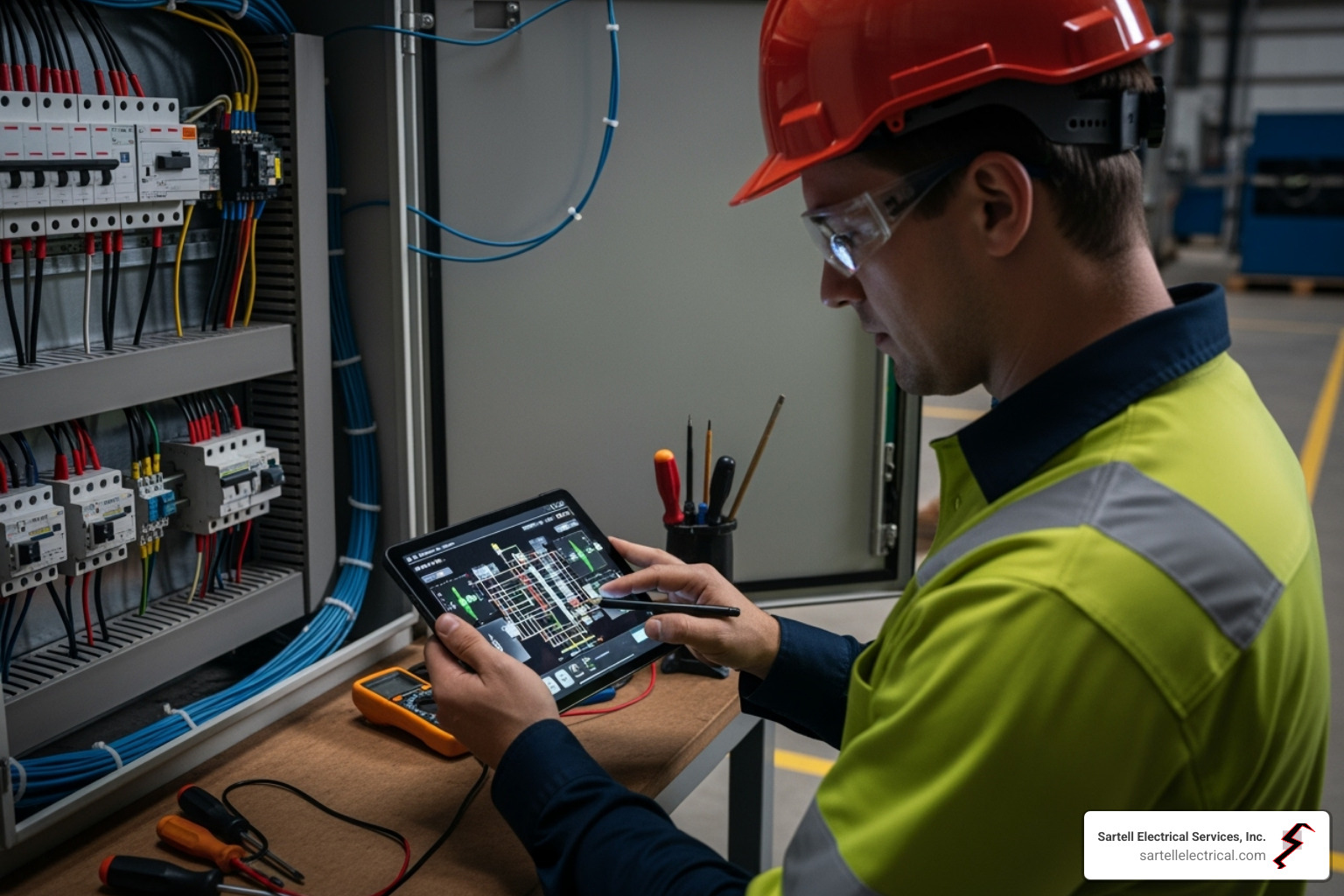
electrical network monitoring system uses specialized hardware and software to keep a constant pulse on your electrical network. It's not just about collecting data—it's about turning that information into actionable insights that save money and prevent downtime.
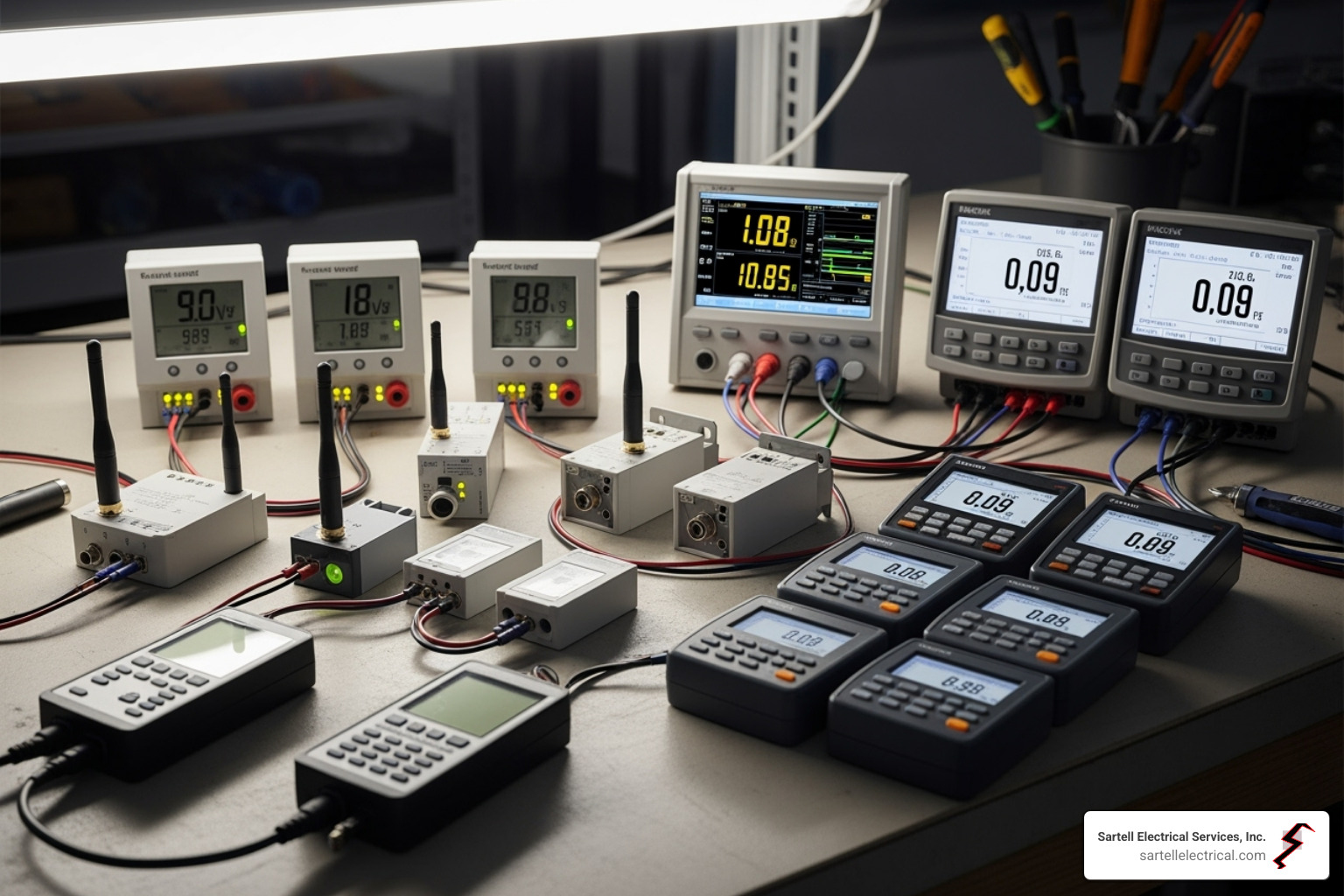
The Hardware: Sensors, Meters, and Data Loggers
Hardware components are the vigilant guards of your electrical system.
- Smart meters are sophisticated devices that track voltage, current, frequency, and power factor in real-time, providing foundational data on your facility's electrical behavior.
- Power quality analyzers go deeper, detecting subtle issues like harmonics and voltage distortions that can damage sensitive equipment over time.
- Current transformers (CTs) safely step down high currents to measurable levels for monitoring equipment.
- Data acquisition systems collect data from multiple sensors, capturing fleeting events like split-second voltage sags.
- Dataloggers are intelligent devices that collect, process, and timestamp data, flagging important events and providing a comprehensive picture of your electrical health.
When we design systems for our
Industrial Electrical Services clients, we carefully select and position these components for maximum visibility.
The Software: Analysis, Visualization, and Control
Hardware collects data, but software turns it into intelligence.
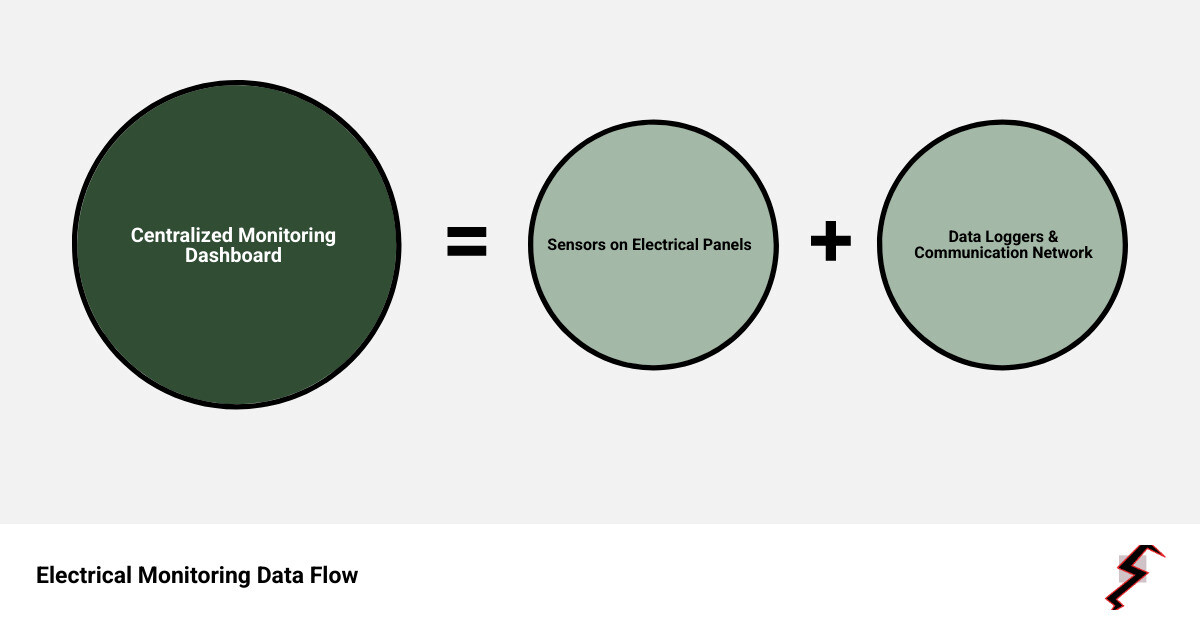
- Centralized dashboards transform complex data into clear, visual displays, making it accessible to managers, maintenance staff, and executives.
- Data analysis tools perform trend analysis over time, which is invaluable for planning upgrades, predicting maintenance, and understanding seasonal variations.
- Custom alerts ensure critical issues get immediate attention. You can set thresholds for key parameters and receive immediate alerts via email or text when they are breached.
- Automated control is the pinnacle of sophistication. Advanced systems can respond to problems automatically, making real-time adjustments to correct issues like voltage dips without human intervention, a feature valuable in our Power Plant Monitoring System installations.
Common Protocols for Data Exchange
For components to work together, they need to speak the same language via communication protocols.
- Modbus is a simple, reliable standard for connecting sensors and meters.
- SNMP (Simple Network Management Protocol) is ideal for integrating electrical monitoring with your existing IT infrastructure.
- BACnet (Building Automation and Control Networks) is designed for building automation, integrating monitoring with systems like HVAC and lighting.
- CoAP (Constrained Application Protocol) is a newer IoT protocol, enabling real-time communication for low-power sensors and expanding monitoring possibilities.
Our experience with diverse
Electrical Services helps us select the right communication strategy for each unique application.
EPMS vs. BMS vs. SCADA: Choosing the Right System
When exploring
electrical network monitoring, you'll encounter three main systems: EPMS, BMS, and SCADA. While similar, they serve different purposes. Understanding these differences is key to choosing the right system for your facility.
| Feature |
Electrical Power Monitoring System (EPMS) |
Building Management System (BMS) |
Supervisory Control and Data Acquisition (SCADA) |
| Primary Function |
Measures energy usage, health, and stability of electrical networks |
Automates and controls building services like HVAC, lighting, security |
Controls and monitors industrial processes across large distances |
| Data Focus |
Advanced insights into grid health, power quality, energy consumption, and electrical parameters |
Basic energy data, environmental controls, occupancy, equipment status |
Real-time process data, operational status, alarms, control commands |
| Typical Applications |
Manufacturing, data centers, large commercial facilities, utilities (for specific electrical analysis) |
Commercial buildings, offices, hospitals, schools, hotels |
Utilities (power grids, water), oil & gas, manufacturing, transportation |
| Scope |
Specialized for electrical power management |
Whole-building automation and environmental control |
Broad industrial control, often integrating multiple subsystems |
Electrical Power Monitoring System (EPMS)
An
EPMS is a dedicated electrical health specialist for your facility, focusing exclusively on power-related parameters. It excels at detecting subtle issues like voltage fluctuations, current imbalances, and harmonic distortion. This precision helps identify utility bill errors and predict equipment failure by analyzing electrical signatures. EPMS is invaluable for power-hungry operations like
manufacturing facilities and
data centers. Our
Industrial Electrical Solutions often incorporate robust EPMS capabilities.
Building Management System (BMS)
A
BMS is a building's central nervous system, managing
whole-building automation like
HVAC control,
lighting systems, and
security systems. It provides basic energy data but lacks deep electrical detail. A BMS might flag high energy use but won't diagnose the root electrical cause, like poor power quality. It excels in commercial buildings, offices, and hospitals where occupant comfort and safety are primary concerns.
Supervisory Control and Data Acquisition (SCADA)
SCADA systems are for
large-scale industrial control across vast distances, managing entire
utility grids, pipelines, and complex
manufacturing processes. An EPMS can be seen as a specialized subset of SCADA; while SCADA provides a high-level operational view, EPMS focuses on the critical electrical details. SCADA is essential for large industrial operations where
process automation and remote monitoring are critical.
The key is specialization. Choose EPMS for detailed electrical analysis, BMS for building environmental controls, and SCADA for large-scale industrial operations. Our
Electrical Project Management services ensure these systems integrate seamlessly with your infrastructure.
Frequently Asked Questions about Electrical Network Monitoring
Over my three decades in the business, I've found that facility managers and owners often have the same practical questions about
electrical network monitoring.
How does real-time load monitoring contribute to system efficiency?
Real-time load monitoring provides immediate insights into energy consumption patterns. This allows you to identify
peak usage periods and adjust operations to reduce strain on the system, such as by staggering equipment startups. By managing consumption proactively, you can
avoid costly peak demand charges from utilities. It also helps with
load balancing across circuits, ensuring power is distributed evenly, which improves overall efficiency, reduces energy waste, and extends equipment life.
What role do automated control systems play in voltage and frequency regulation?
Automated control systems are crucial for maintaining grid stability. For
voltage regulation, they monitor levels and automatically trigger corrective actions—like adjusting transformers or capacitor banks—to correct sags and surges in milliseconds. This protects sensitive equipment from damage. For
frequency regulation, they make real-time adjustments to maintain a stable frequency (e.g., 60 Hz), which is essential for precision electronics. This rapid, automated response prevents minor fluctuations from becoming major, operation-halting problems.
How does monitoring help identify security threats within a network?
By establishing a baseline of normal power consumption and network activity, a monitoring system can flag anomalies that may indicate a security threat. An
unexplained spike in power consumption at an odd time or unusual data patterns could signal
unauthorized access or a compromised system. The system's
historical data is also invaluable for investigating a breach, helping to trace when the unusual activity began. This makes your electrical monitoring system an unexpected but valuable layer of your cybersecurity defense.
Take Control of Your Facility's Electrical Health
Electrical network monitoring has evolved from a luxury to a necessity for any business serious about controlling costs, maintaining reliability, and staying competitive. With facilities wasting up to 30% of their energy, equipment being damaged by poor power quality, and outages costing thousands per hour, the question is no longer if you can afford monitoring, but if you can afford to go without it.
The choice is clear: shift from reactive management (waiting for failures) to proactive management (preventing problems). Use real-time data to optimize energy use and make informed decisions. This proactive approach builds a foundation for
sustainable growth, with longer-lasting equipment, smoother operations, and predictable energy costs.
I've seen Massachusetts businesses achieve remarkable results with smart monitoring. A Woburn manufacturing plant cut energy costs by 25%, and a Cambridge data center prevented outages worth millions. These are the predictable results of gaining visibility into your electrical systems.
At
Sartell Electrical Services, we've helped businesses across Massachusetts achieve this for over three decades. Our Master Electricians partner with you to design and install a monitoring solution custom to your operations, ensuring you maximize your investment. Whether you're in a Reading commercial building or a Boston industrial facility, the principle is the same:
visibility leads to control, and control leads to optimization.
Ready to stop flying blind with your electrical systems?
Contact us for an expert consultation on Electrical Condition Monitoring and turn your facility's electrical health into a competitive advantage.