Baseboard heater repair: 5 Easy Fixes
Is Your Baseboard Heater Giving You the Cold Shoulder?
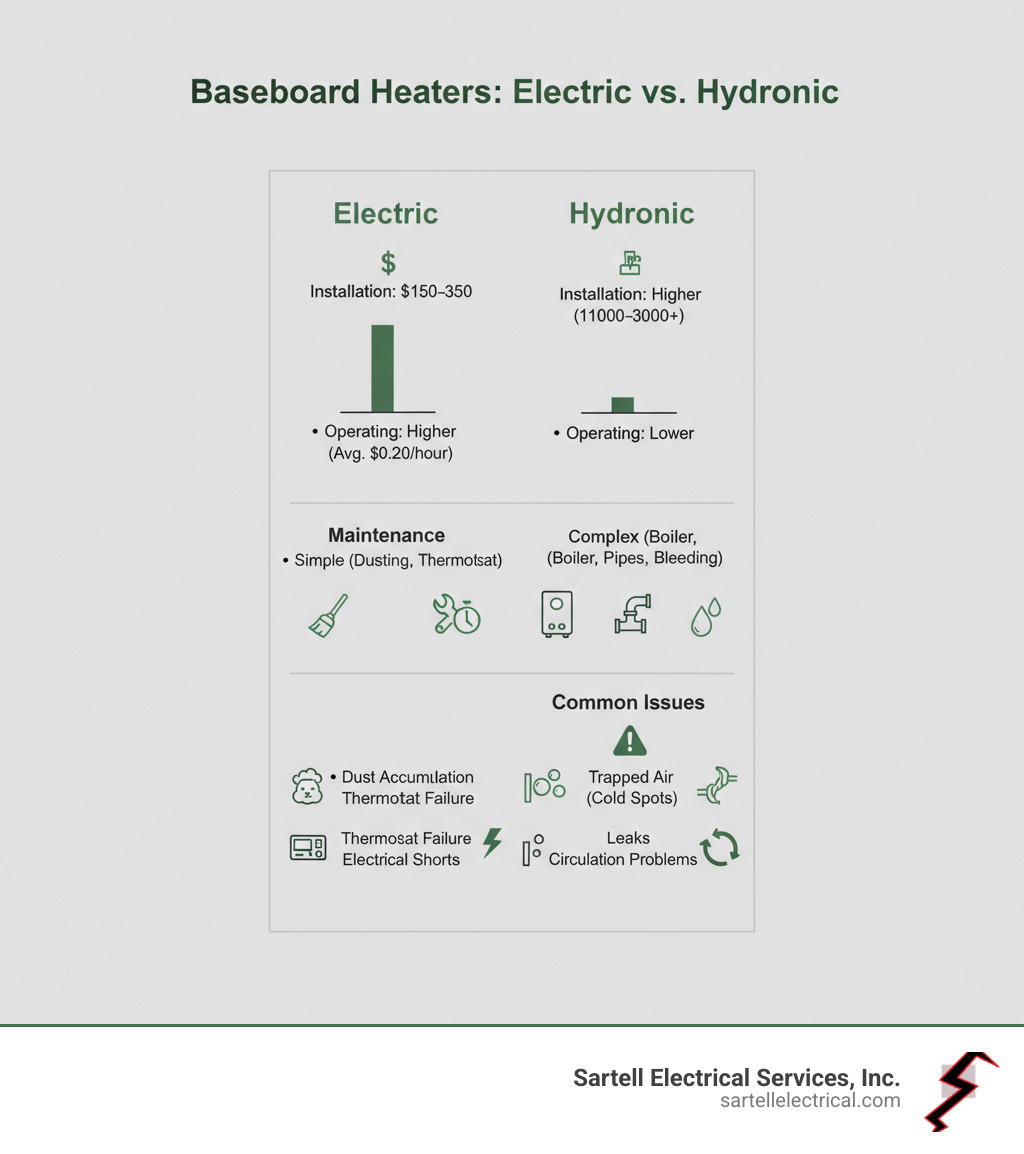
Baseboard heater repair often involves common issues like faulty thermostats, tripped breakers, or blocked airflow. When your heater fails, it disrupts comfort and operations. Symptoms like no heat, strange noises, or high energy bills point to specific problems that can be diagnosed and resolved.
Quick Repair Guide:
- No heat: Check thermostat settings, circuit breaker, and wiring connections.
- Low heat: Clear blocked vents, clean dusty fins, and check for damaged heating elements.
- Won't turn off: Test thermostat calibration and inspect for stuck contacts or faulty wiring.
- Circuit breaker trips: Identify overloaded circuits and check for electrical shorts.
- Strange noises/smells: Vacuum dust from elements, check for shorts, or bleed air from hydronic systems.
Most baseboard heater problems fall into predictable categories.
Electric baseboard heaters can last over 20 years but are prone to dust buildup and electrical failures.
Hydronic systems, which use hot water from a boiler, face challenges like trapped air and leaks. The good news is many issues have straightforward solutions. The average repair cost ranges from $139 to $440, with most homeowners paying around $287.
I'm Ed Sartell, founder of Sartell Electrical Services. Since 1985, my team and I have provided expert
baseboard heater repair and electrical services across Massachusetts, resolving countless heating issues for commercial, industrial, and residential properties.
Understanding Your System: Electric vs. Hydronic Heaters
Before troubleshooting, it's crucial to know which of the two main types of baseboard heaters you have.
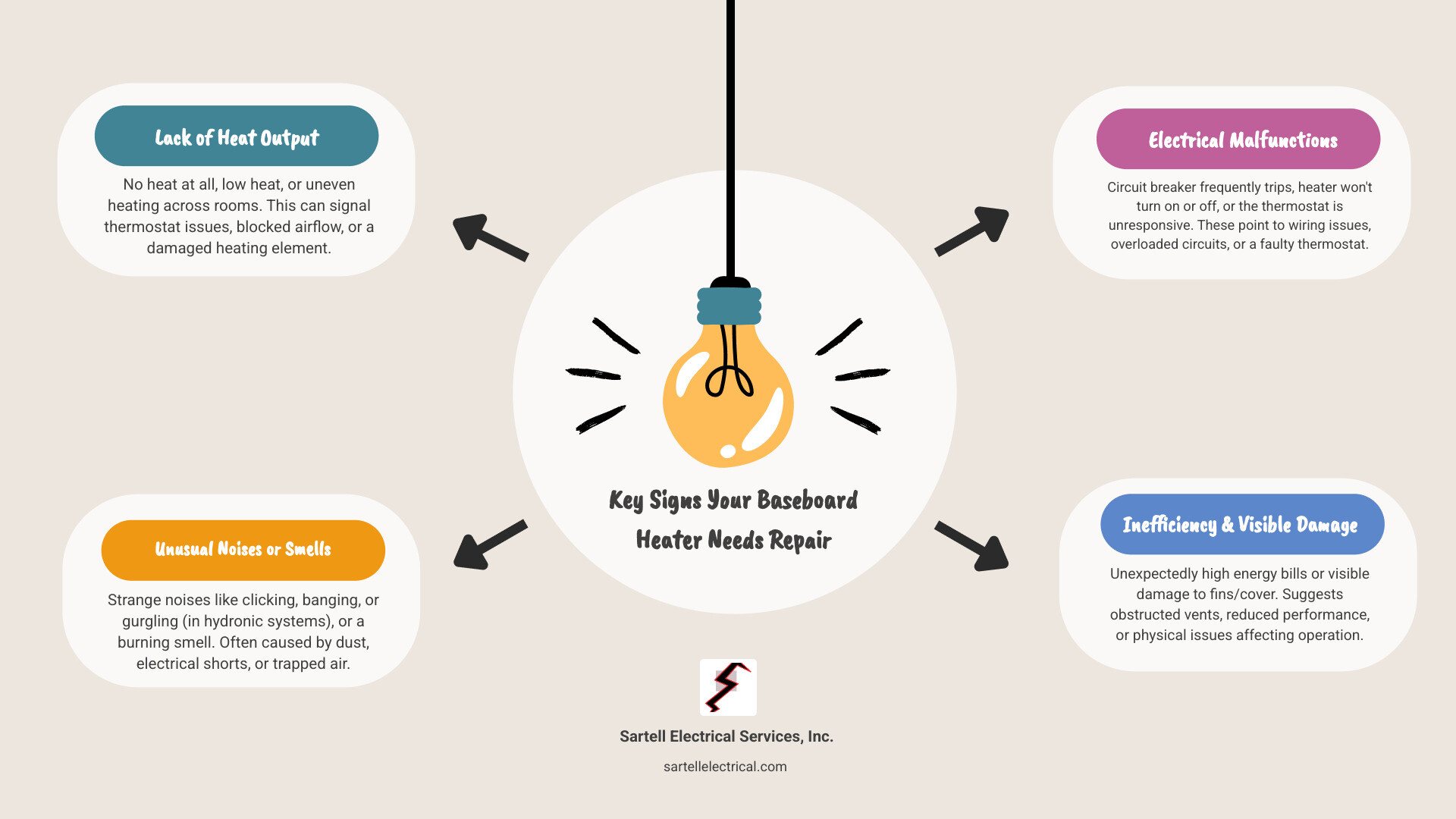
- Electric Baseboard Heaters: These are common and convert electricity directly to heat. An internal element warms up, transferring heat to metal fins. Air circulates over the fins via convection, warming the room. They are quiet and relatively inexpensive to install ($150-$350) but can be costly to operate, averaging $0.20 per hour for a 1.5 kWh unit.
- Hydronic Baseboard Heaters: These systems use hot water or oil from a central boiler, which circulates through pipes in the unit to heat the room. They provide a more even, sustained heat but are more complex to maintain due to plumbing components. Common issues include leaks, blockages, and trapped air.
Knowing your system type is the first step in effective
baseboard heater repair.
A Step-by-Step Guide to Common Baseboard Heater Repair
Many baseboard heater issues follow predictable patterns. With a methodical approach, you can often identify the problem.
Safety is paramount: Always turn off power at the circuit breaker before inspecting or working on any electrical heating system.
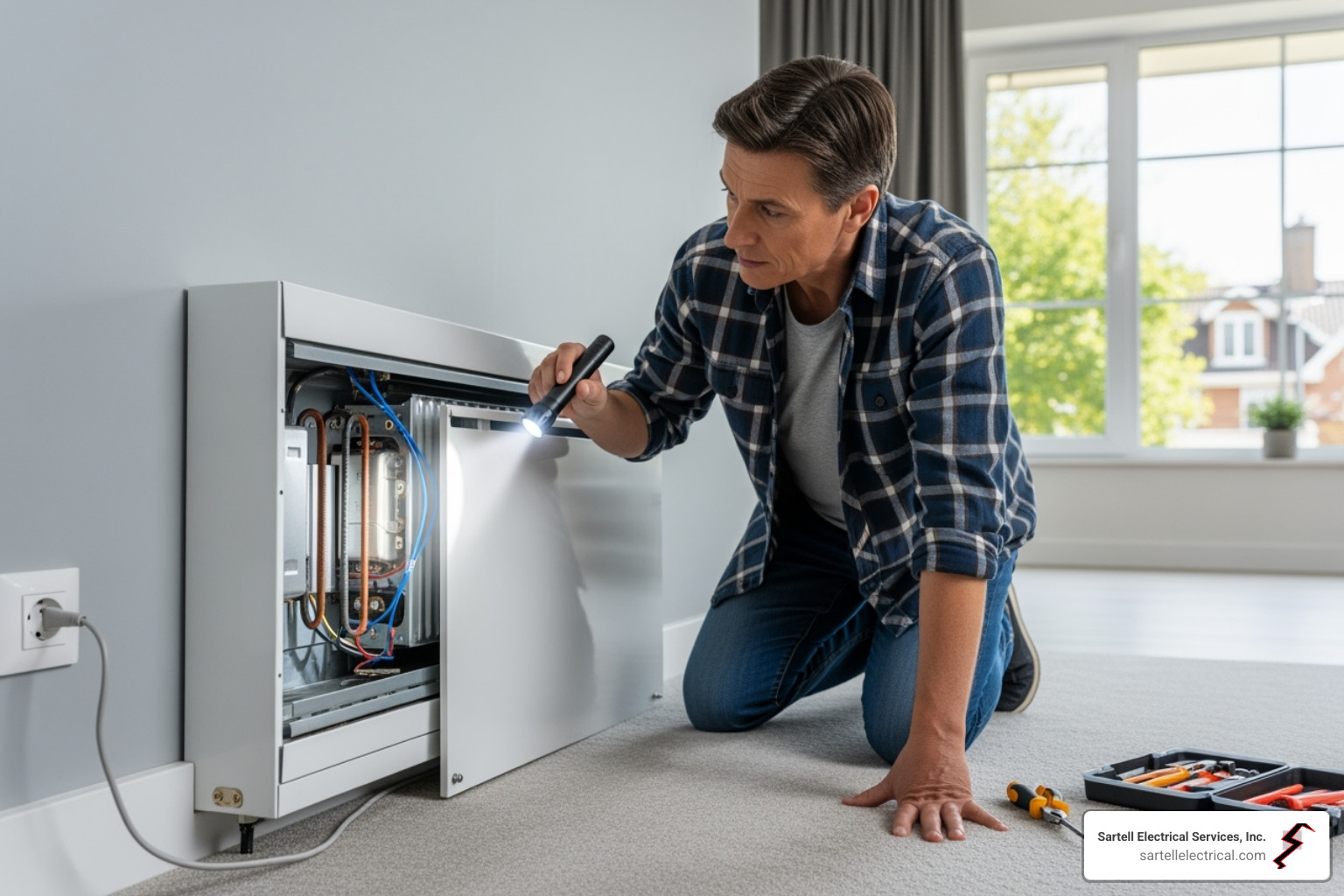
Problem 1: The Heater Won't Turn On at All
If your heater is completely unresponsive, follow these steps:
- Check the thermostat: Ensure it's set to "Heat" and the temperature is above the current room temperature. For smart thermostats, check the batteries or power source.
- Go to the electrical panel: Look for a tripped breaker. Flip it firmly to "Off," then back to "On." If it trips again immediately, stop and call a professional. This indicates a serious electrical fault. Learn more about your system with our guide on home electrical panel upgrades.
- Inspect wiring connections: With the power off, remove the heater's cover and look for loose, corroded, or burnt wires. If you find damage, it's time to call an expert.
- Reset the high-temperature limit switch: This safety feature trips when the heater overheats. After turning off the power and letting the unit cool, press the small reset button inside the housing. If it trips repeatedly, the underlying cause of overheating (usually blocked airflow) must be addressed.
Problem 2: The Heater is On, But There's No (or Low) Heat
If the heater runs but the room stays cold, investigate these common culprits:
- Blocked airflow: Baseboard heaters need clear space to work. Furniture, curtains, or other items blocking the unit will stop air circulation. Ensure at least 12 inches of clearance above and 6-12 inches in front of the heater.
- Dirty fins and elements: Dust and debris act as insulators, trapping heat. A thick layer of grime can reduce heating capacity by over 25%. Regular cleaning is essential.
- Damaged heating element (electric): If only one section of the unit is warm, the element may be partially damaged and require professional replacement.
- Trapped air (hydronic): Gurgling or banging sounds often indicate air bubbles in the system, which block heat distribution. "Bleeding" the system by opening small valves to release air can solve this. If you're not comfortable with this or the problem persists, seek professional help. For more maintenance strategies, see our page on building electrical maintenance.
Problem 3: The Heater Won't Turn Off
A constantly running heater is expensive and makes rooms uncomfortably warm. This issue almost always points to the thermostat.
- Faulty thermostat: The thermostat's internal components can fail, causing it to send a constant "on" signal. In older mechanical models, the contacts can stick.
- Incorrect wiring: A mistake during installation or a previous repair might cause the heater to bypass the thermostat's off command. This requires a trained electrician to diagnose and correct safely. For more on proper wiring, see our guide on standard residential electrical wiring.
- Calibration issues: If the thermostat reads the room temperature incorrectly, it may run longer than necessary. Some models can be recalibrated, but replacement with a modern digital or smart thermostat is often the best solution.
Problem 4: The Circuit Breaker Keeps Tripping
A repeatedly tripping breaker is a serious warning sign that should never be ignored.
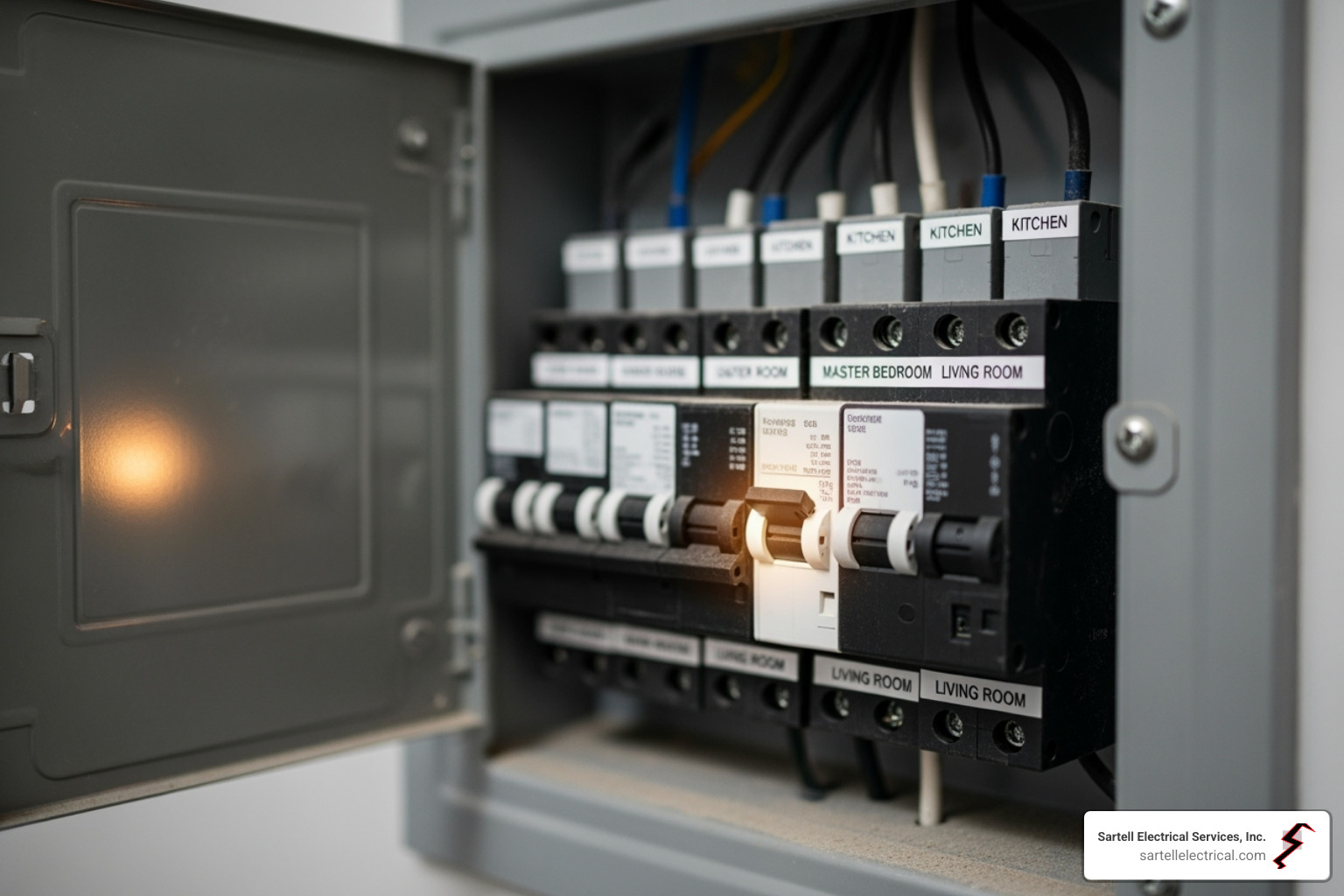
- Overloaded circuit: The circuit may not be rated to handle the electrical load from the heater and other appliances. Adding heaters or other high-wattage devices can cause the breaker to trip.
- Faulty wiring: Deteriorating or damaged wiring can create short circuits, which are a major fire hazard and require immediate professional attention.
- Shorted heating element: A failed heating element can draw excessive current, triggering the breaker. The element must be replaced by a qualified electrician.
- Faulty breaker panel: An old or failing circuit breaker might trip prematurely. If your electrical system is over 20 years old, consider a breaker panel upgrade to ensure it can handle modern electrical demands.
Problem 5: The Heater is Making Strange Noises or Smells
Unusual sounds or odors are important warning signs.
- Burning smell: This is common at the start of the heating season as accumulated dust burns off the elements. The smell should dissipate within a few hours. If it persists or you see smoke, turn the heater off immediately.
- Persistent burning smell with buzzing: This signals a serious electrical short and is a fire hazard. It requires professional baseboard heater repair.
- Popping or clicking: These sounds are usually normal, caused by metal expanding and contracting with temperature changes.
- Gurgling (hydronic): This indicates trapped air. Bleeding the system should resolve the noise and improve efficiency.
- Buzzing or humming (electric): A loud, persistent buzz often points to loose wiring or a failing component. These electrical issues can become safety hazards and should be inspected. For more on repair costs, see our info on electrical troubleshooting costs.
Essential Safety and Maintenance for Optimal Performance
Regular maintenance and smart safety practices will keep your baseboard heater running efficiently and safely for years.
Safety First: Precautions for Baseboard Heater Repair
Safety is non-negotiable when working with any electrical system.
- Turn Off the Power: Before touching an electric baseboard heater, turn off the corresponding circuit breaker at the electrical panel. The circuit is live even if the thermostat is off.
- No Live Wires: Never attempt to repair or handle live electrical wiring unless you are a qualified safe electric registered electrical contractor. The risk of shock or fire is too great. For more information on home electrical safety, consult resources from the Electrical Safety Foundation International (ESFI).
- Prevent Fire Hazards: Keep all combustible materials—curtains, furniture, paper, clothing—away from your heaters. Never place items on top of a unit.
- Maintain Clearance: For safety and performance, ensure at least 12 inches of clearance above the unit and 6-12 inches in front. Never install electrical outlets directly above a baseboard heater, as rising heat can melt wire insulation.
- Hydronic System Safety: When bleeding hydronic systems, wear protective gloves and eyewear to guard against hot water or steam.
How to Clean Your Baseboard Heaters Safely
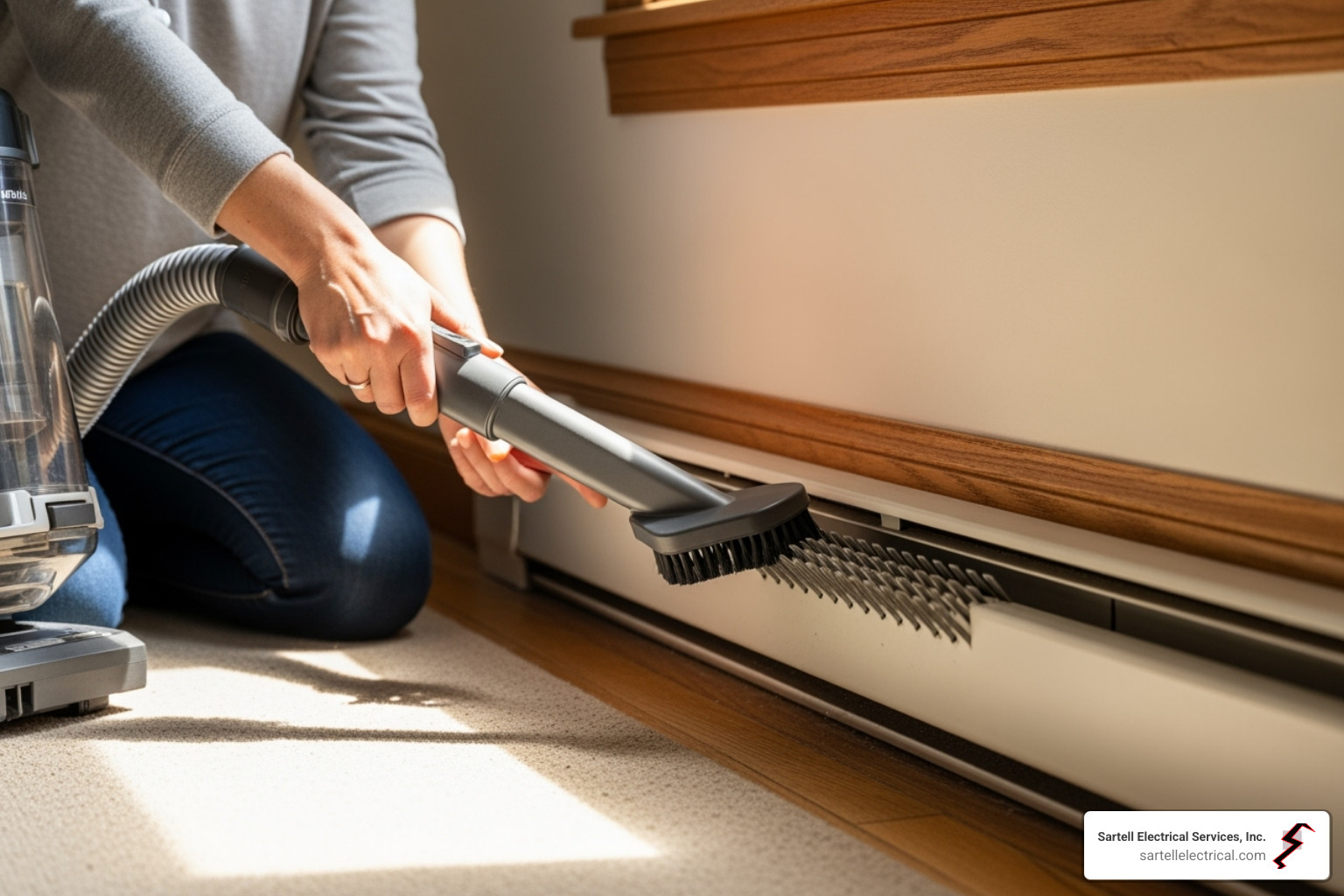
Cleaning your heaters is the single most effective maintenance task for improving performance. Aim to clean them 2-3 times per year.
- Power Down: Turn off the power at the circuit breaker for electric heaters. Ensure hydronic units are cool to the touch.
- Vacuum: Use a vacuum with a brush attachment to gently clean the exterior and interior, paying close attention to the metal fins where dust accumulates.
- Use Compressed Air: For heavy buildup, a can of compressed air can dislodge stubborn dust. Be gentle with the fins, as they bend easily. If you bend one, carefully straighten it with needle-nose pliers.
- Wipe Down: Use a damp cloth to clean the outer cover. Ensure everything is completely dry before restoring power.
A thorough cleaning can often restore a seemingly broken unit to full working order.
Improving Your System's Efficiency
Beyond cleaning, these strategies can lower your energy bills and improve comfort:
- Seal Drafts: Weatherstripping and caulk around windows and doors prevent heat loss, making your system's job easier.
- Upgrade to a Smart Thermostat: These devices can reduce heating costs by up to 25% by allowing precise scheduling and remote control.
- Use Zone Heating: Take advantage of baseboard heating's ability to control temperatures in individual rooms. Lower the heat in unused spaces to save energy.
With proper care, electric baseboard heaters can last
20 years or more. Regular maintenance is key to achieving this lifespan. For more tips, visit our page on
building electrical maintenance.
Repair or Replace? Making the Right Call
When your baseboard heater malfunctions, you must decide whether to repair or replace it. Understanding the factors involved can help you make the most cost-effective choice.
DIY Baseboard Heater Repair: What You Can Safely Handle
Certain
baseboard heater repair tasks are suitable for DIY.
- Cleaning: Regularly vacuuming dust from the fins is simple, safe, and highly effective.
- Checking Thermostat Settings: Ensure the thermostat is on "Heat," the temperature is set correctly, and the batteries are fresh.
- Bleeding Hydronic Systems: If you're comfortable, releasing trapped air can fix gurgling noises and improve heat distribution.
- Replacing Covers: A damaged cover can be easily replaced to improve appearance and airflow.
However,
DIY repairs have clear limits. Never attempt work involving electrical wiring, internal components like heating elements, or major plumbing. The risks of shock, fire, or water damage are too high. When in doubt, call a professional. For more maintenance tips, visit our page on
building electrical maintenance.
When to Call a Pro for Electric Baseboard Heater Repair
Some situations demand the expertise of a licensed electrician.
- Faulty Wiring: Burnt, frayed, or loose wires require professional attention.
- Component Replacement: Replacing heating elements or limit switches involves working with dangerous electrical components.
- Persistent Circuit Breaker Issues: If a breaker continues to trip after a reset, a professional diagnosis is needed.
- Unresolved Problems: If basic troubleshooting fails or you're unsure of the cause, an expert can save you time and frustration.
The national average cost for
baseboard heater repair is around $287, a small price for the safety and peace of mind that professional service provides. For help choosing a professional, see our
guide on choosing an electric repair.
Cost of Repair vs. Replacement
Understanding the financials is crucial. Average repair costs range from $139 to $440. Replacing a thermostat might cost $100-$250, while a new heating element can be $100-$300. In contrast, a new unit costs $200-$500 plus $150-$350 for installation, totaling $416 to $1,531.
Consider these factors when deciding:
- Age of Unit: Baseboard heaters last 15-20 years. If your unit is approaching this age, replacement is often more sensible than a costly repair.
- Frequency of Repairs: If you're calling for service multiple times a year, the costs can quickly add up. If a repair costs more than 50% of a replacement, it's usually wiser to replace it.
- Energy Efficiency: Newer models, especially when paired with smart thermostats, are more efficient and can lead to significant long-term savings on your energy bills.
For a detailed cost breakdown, see our article on
how much does it cost to repair baseboard heaters?
Frequently Asked Questions about Baseboard Heater Repair
Here are answers to the most common questions we receive about
baseboard heater repair from our Massachusetts clients.
Why is my electric bill so high with baseboard heaters?
While electric baseboard heaters are 100% efficient at converting electricity to heat, electricity itself can be an expensive heating source. An average 1.5kWh unit costs about $0.20 per hour to run. Several factors can drive up your bill:
- Poor insulation and drafts: Heat escaping through walls, windows, and doors forces your heaters to work harder.
- Incorrect thermostat settings: Heating unoccupied rooms or setting the temperature too high wastes energy.
- Lack of maintenance: Dirty heaters can't transfer heat efficiently, causing them to run longer.
Solutions: Improve insulation, seal drafts, clean your heaters regularly, and upgrade to a
smart thermostat, which can cut heating costs by up to 25%.
Can I put furniture in front of my baseboard heater?
No, you should never place furniture or other items in front of a baseboard heater. It is both dangerous and inefficient.
- Fire Hazard: Blocking airflow can cause the unit to overheat, creating a serious fire risk. Even with a safety shutoff switch, it's not worth the danger.
- Reduced Efficiency: Baseboard heaters work by convection. Blocking airflow traps heat, preventing it from circulating into the room. This makes the heater run constantly while the room stays cold.
Maintain at least
12 inches of clearance above the heater and 6-12 inches in front for safe and proper operation.
How do I fix a noisy baseboard heater?
Some noises are normal, while others signal a problem. Here’s a breakdown:
- Popping and Clicking: These sounds are usually normal, caused by metal expanding and contracting as it heats and cools. If excessive, check for loose covers or mounting brackets.
- Loud Banging or Gurgling (Hydronic Systems): This almost always indicates trapped air, which reduces efficiency. The solution is to bleed the system by opening the bleed valves to release the air. If you're not comfortable doing this or the noise persists, it's time for a professional baseboard heater repair.
- Buzzing or Humming (Electric Units): A faint hum is normal, but a loud, persistent buzz can indicate loose wiring or a failing electrical component. This is a potential safety hazard. Turn the unit off at the breaker and call a licensed home electrician for an inspection.
Restore Your Home's Comfort and Safety
When your baseboard heater fails, it impacts your comfort and safety. We've covered how to diagnose common issues, from a heater that won't turn on to one making strange noises. Many problems have simple solutions, like regular cleaning and maintaining proper clearance around your units.
However, it's critical to know your limits. While tasks like cleaning and checking a thermostat are safe for DIY, electrical work is not. Attempting to fix wiring, heating elements, or persistent breaker trips without professional training is dangerous.
That's where Sartell Electrical Services comes in. Since 1985, we have provided expert
baseboard heater repair and electrical services to homes and businesses across Massachusetts. Our experienced team serves Middlesex County, Essex County, and the greater Boston area, ensuring your heating system operates safely, efficiently, and reliably.
Whether you need a simple fix or are deciding between repair and replacement, we provide honest assessments to help you make the best choice for your comfort and budget.
Don't let heating problems leave you in the cold.
Contact us for professional building electrical maintenance and let our experienced team restore warmth and peace of mind to your space.