Why Electrical Asset Management & Condition Monitoring Matter Now More Than Ever
Electrical asset management & condition monitoring is the proactive practice of tracking, analyzing, and maintaining electrical infrastructure through continuous data collection and predictive analytics to prevent failures, extend equipment life, and optimize maintenance schedules. Instead of waiting for equipment to fail or performing time-based maintenance regardless of need, modern condition monitoring uses sensors, AI, and real-time data to tell you exactly when and how to service your assets.
Quick Overview: What You Need to Know
- What it is: Continuous observation of electrical assets (transformers, switchgear, breakers, cables) to detect early warning signs of degradation
- Why it matters: 90% of asset failures are event-driven, not time-based—making scheduled maintenance alone insufficient
- Core benefit: Reduces catastrophic failures by 55% on average and extends equipment lifespan by 20-40%
- Key technologies: IIoT sensors, thermal imaging, partial discharge testing, vibration analysis, and AI-driven predictive analytics
- Strategic shift: Moves utilities and facilities from reactive repairs to proactive, data-driven maintenance
As utility infrastructure ages and demand grows exponentially, the challenge isn't just keeping the lights on—it's doing so safely, efficiently, and cost-effectively. Many electric utilities face a backlog of aging assets reaching their end of life, with lead times for replacements now doubled or even tripled. Equipment failures can cost millions in downtime, while traditional time-based maintenance often means servicing assets that don't need it yet, or worse, missing critical issues until they become catastrophic.
The solution lies in changing how we monitor and maintain critical electrical assets. Modern condition monitoring systems go far beyond simple sensor deployment—they integrate real-time data from multiple sources, apply machine learning to detect anomalies, and provide actionable intelligence that tells you not just that something is wrong, but what is wrong and when you need to act.
The shift from reactive to strategic asset management is no longer optional. With proper condition monitoring, offshore wind farm operators save up to 8% of O&M costs through early intervention. Mining companies with robust data infrastructure collect condition-monitoring data automatically at a 90% rate. Even predictive maintenance schedules can reduce manual inspections by over 50% without sacrificing operational quality.
I'm Ed Sartell, and since founding Sartell Electrical Services in 1985, I've seen how electrical asset management & condition monitoring has evolved from clipboards and scheduled inspections to sophisticated digital systems that predict failures before they happen. Throughout nearly four decades serving Massachusetts businesses and institutions, we've helped clients transition from costly reactive repairs to strategic, data-driven maintenance that maximizes uptime and extends equipment life.
Essential electrical asset management & condition monitoring terms:
The Fundamentals of Electrical Asset Management & Condition Monitoring
At its heart, electrical asset management & condition monitoring is about understanding the "health" of your infrastructure throughout its entire lifecycle. For businesses in Greater Boston or Essex County, this means moving away from the "if it ain't broke, don't fix it" mentality.
Effective asset management begins with a comprehensive electrical asset management guide approach: identifying every critical component, assessing its risk of failure, and determining its strategic importance to your operations. By deploying condition monitoring sensors, we can harvest real-time data on temperature, humidity, vibration, and electrical stress.
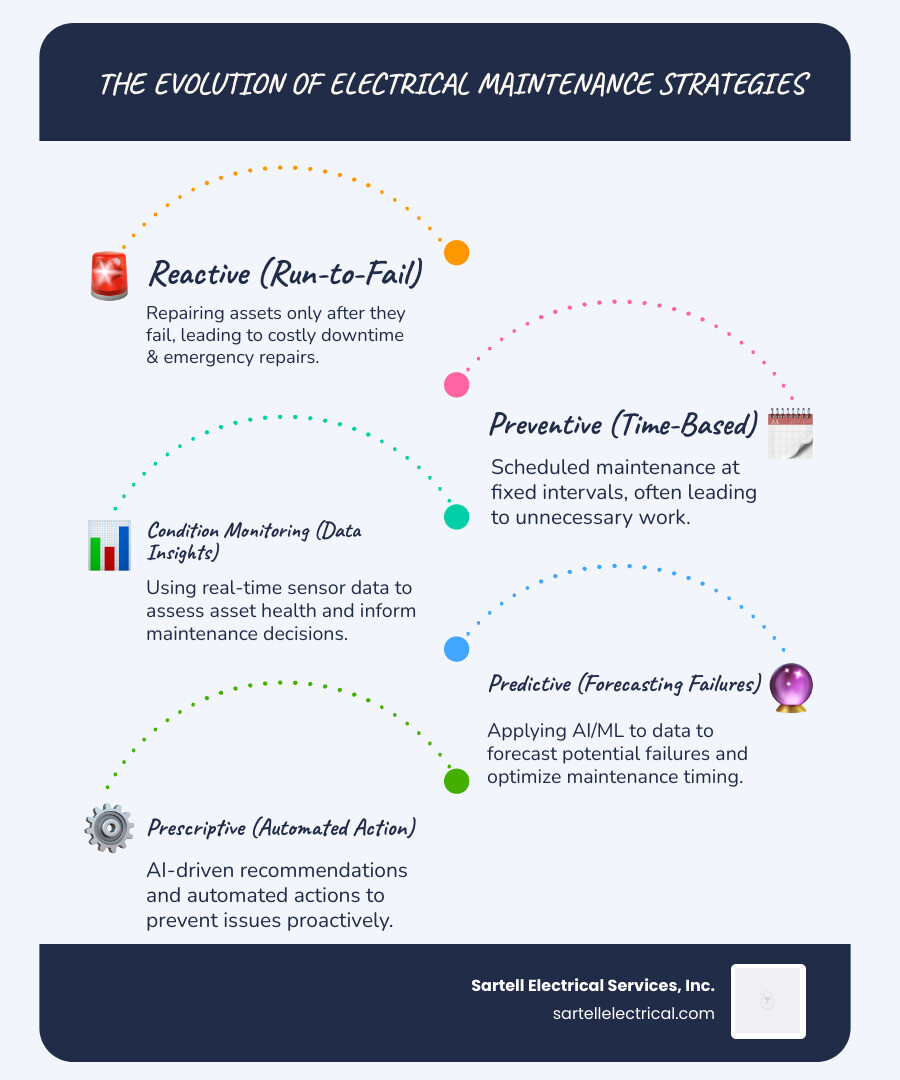
| Maintenance Type | Strategy | Cost | Risk of Failure |
|---|---|---|---|
| Reactive | Run-to-failure; fix only when broken | High (unplanned downtime) | Highest |
| Preventive | Time-based; scheduled checks | Medium (often unnecessary) | Moderate |
| Predictive | Condition-based; data-driven | Low (optimized intervals) | Lowest |
Core Components of Modern Monitoring Systems
A robust monitoring system isn't just a single gadget; it's an ecosystem. We typically implement a four-part architecture to ensure our clients in Reading and the surrounding North Shore areas have total visibility:
- Wireless Sensors: These are the "eyes and ears" placed on transformers, switchgear, and motors. They monitor parameters like partial discharge or thermal hotspots.
- Gateway Devices: These collect data from local sensors and securely transmit it to a central hub.
- Cloud Storage: This allows for the storage of vast amounts of historical data, which is essential for identifying long-term degradation trends.
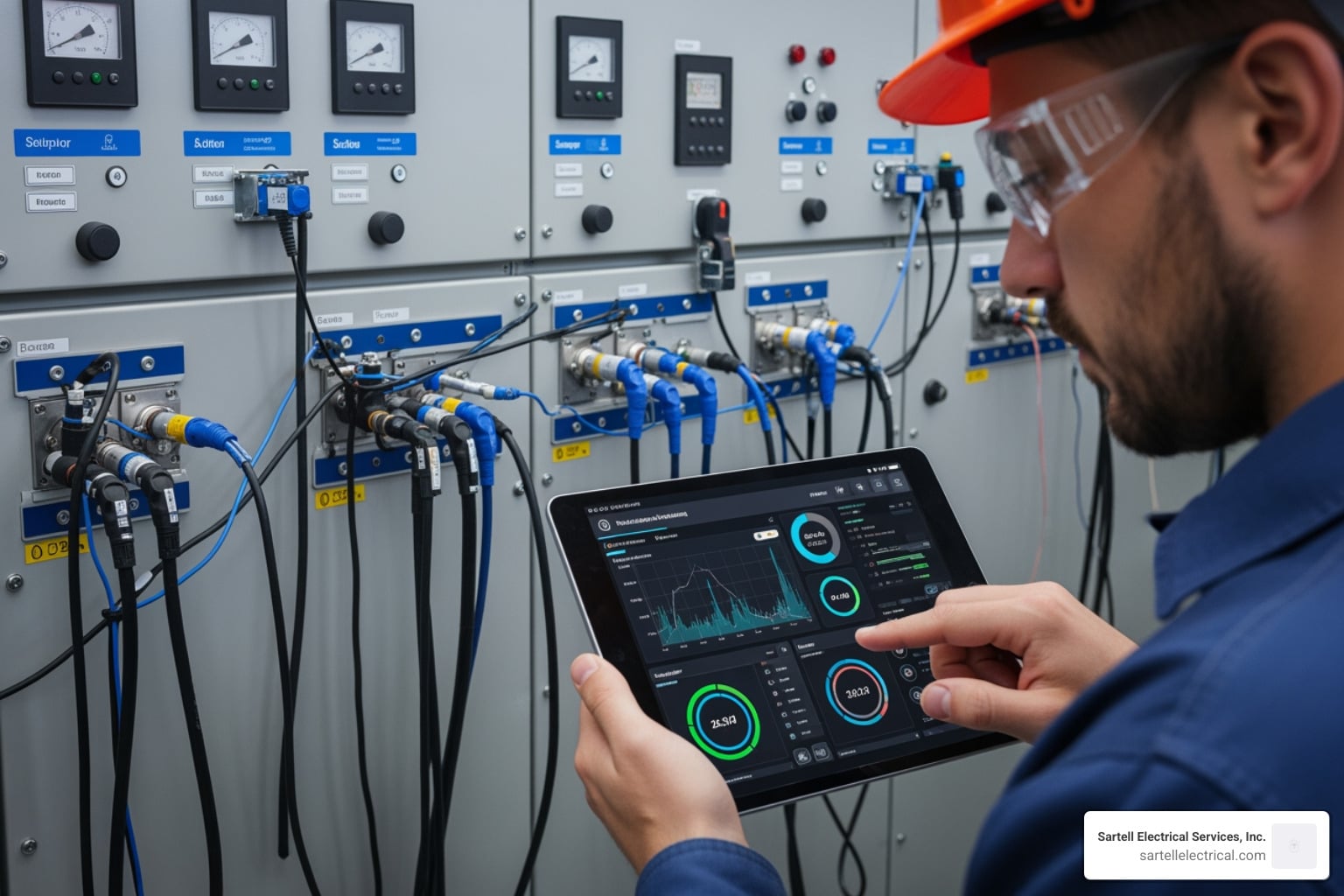
- Analytical Dashboards: An industrial power monitoring system provides a user-friendly interface where managers can see real-time health scores and receive alerts.
Why Event-Driven Failures Demand Constant Vigilance
One of the most startling facts in our industry is that 90% of asset and equipment failures are event-driven rather than time-based. This means a transformer doesn't just fail because it's ten years old; it fails because of a specific thermal event, a voltage surge, or a moisture intrusion.
By analyzing voltage waveforms and "load-signatures," we can detect creeping issues that a manual inspection once every six months would completely miss. Our electrical maintenance services use transient modeling to identify these "tipping points" before they lead to irreversible damage.
Key Benefits of Investing in Condition Monitoring Solutions
Investing in electrical asset management & condition monitoring isn't just about avoiding disaster; it's a savvy financial move. Across various industries, regular condition monitoring has been shown to result in a 55% reduction in failures on average.
For our industrial clients in Lowell or Lawrence, the numbers are even more compelling. Early detection of wear and tear can lead to a 20% to 40% extended lifespan for expensive equipment. Furthermore, early intervention can lead to significant 8% O&M savings in complex environments like wind farms or large-scale manufacturing plants.
Enhancing Safety and Environmental Impact
Safety is our number one priority at Sartell Electrical. By using remote monitoring, we drastically reduce the need for personnel to enter high-risk areas, such as near high-voltage switchgear, for manual checks. This is a cornerstone of electrical safety for industrial facilities.
Furthermore, industrial electrical maintenance powered by condition data aids in the "decarbonization" journey. More efficient equipment uses less energy, and avoiding catastrophic failures prevents the environmental hazards associated with oil leaks from transformers or fire-related emissions.
Optimizing Productivity and Resource Allocation
When you know exactly which assets need attention, you can optimize your spare parts inventory. There's no need to store thousands of dollars in components "just in case" when your data tells you exactly what is likely to fail next. Seven out of ten operators report that automated diagnostics have improved their ability to execute more inspection projects in a year.
Our commercial electrical system maintenance programs ensure that your team spends their time fixing problems, not just looking for them.
Primary Methods and Technologies for Electrical Asset Health
To get a complete picture of asset health, we use a "toolbox" of diagnostic methods. Each method provides a different perspective on the equipment's condition:
- Thermography: Using infrared cameras to detect abnormal heat patterns (hotspots) in connections or components.
- Partial Discharge (PD): Detecting tiny electrical sparks within insulation that indicate impending failure in cables or switchgear.
- Vibration Analysis: Essential for rotating machines like motors and generators to detect bearing wear or imbalance.
- Ultrasonic Testing: Listening for high-frequency sounds caused by electrical arcing or gas leaks.
- Oil Analysis: For transformers, analyzing the insulating oil for dissolved gases (DGA) can reveal internal faults like overheating or arcing.
By combining these, we can identify network faults and restore service much faster than traditional troubleshooting.
Advanced Technologies in Electrical Asset Management & Condition Monitoring
The "Smart Grid" isn't a buzzword; it's a reality powered by AI-powered sensor fusion. This technology integrates data from multiple sources—vibration, temperature, and electrical load—to create a holistic view.
Key technologies include:
- IIoT Sensors: Low-power, high-accuracy devices that provide the raw data.
- Edge Computing: Processing data locally on the sensor node to reduce bandwidth and allow for instant alerts.
- Digital Twins: Creating a virtual 3D replica of a power plant monitoring system to run "what-if" scenarios and predict how different loads will impact equipment aging.
Critical Assets Benefiting from Continuous Oversight
While every breaker matters, some assets are more critical than others. We focus heavily on:
- Medium Voltage Switchgear: The heart of power distribution.
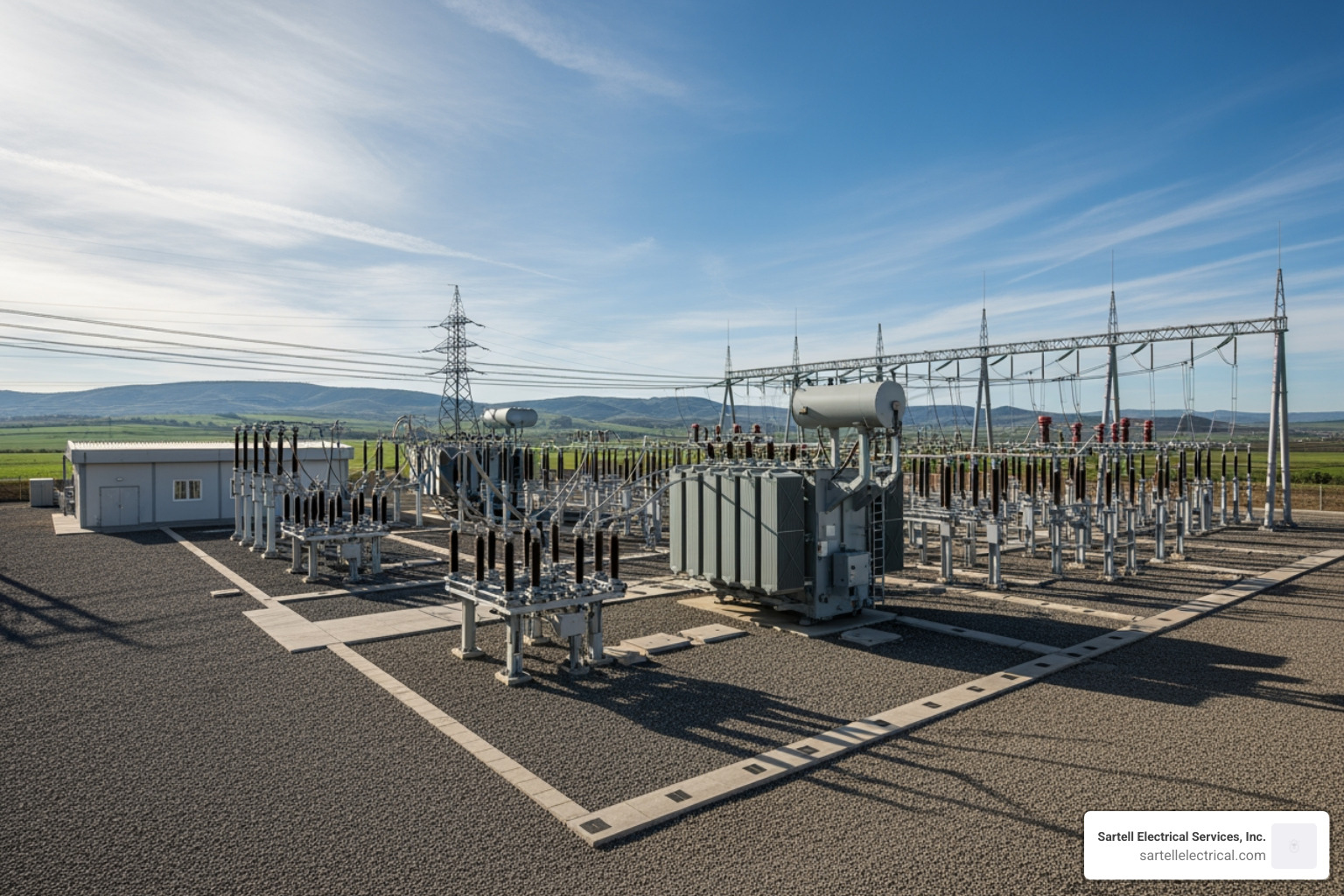
- Power Transformers: Often the most expensive single asset in a facility.
- Motor Control Centers (MCC): Vital for manufacturing and industrial processes.
- Data Center Electrical Systems: Where even a millisecond of downtime is unacceptable. Our data center electrical services emphasize redundant monitoring.
- UPS and VFDs: Critical for power quality and motor efficiency.
Strategic Implementation: Transitioning from Reactive to Predictive
Transitioning to condition based asset monitoring is a journey, not a switch you flip. It requires shifting from a maintenance department that "puts out fires" to a strategic team that uses "predictive intelligence."
The goal is to determine the Remaining Useful Life (RUL) of your assets. By using asset health management research, we can model how an aging transformer in a Boston hospital will behave under increased summer loads, allowing for a planned replacement rather than an emergency crisis.
Overcoming Challenges in Electrical Asset Management & Condition Monitoring
It’s not always easy. The biggest hurdle isn't collecting data—it's interpreting it. Raw sensor output is just noise without the "domain expertise" to understand what a specific vibration frequency means for a 30-year-old motor.
Challenges we help our clients steer include:
- Signal-to-Noise Ratio: Filtering out background electrical interference to find real faults.
- Fragmented Systems: Integrating new sensors with legacy SCADA systems.
- Cybersecurity: Ensuring that your connected electrical network is protected from external threats. Our electrical network monitoring guide covers these security protocols in detail.
The Role of Digital Twins and Drones in Modern Utilities
In Greater Boston, we are seeing a surge in the use of drones for inspecting hard-to-reach assets like overhead lines or bridge-mounted conduits. Drone-based inspection using LiDAR and photogrammetry can identify rusted members or cracked insulators in minutes—tasks that used to take days of bucket-truck work.
For hospital power systems guide applications, digital twins allow us to visualize the entire electrical topography in 3D, making it much easier to plan maintenance without disrupting patient care.
Frequently Asked Questions about Electrical Asset Management
What are the most common electrical assets that require monitoring?
While it depends on your facility, we generally prioritize transformers, circuit breakers, gas-insulated switchgear (GIS), and medium-voltage cables. For industrial sites, rotating machines (motors/generators) are also high on the list. These are the critical electrical systems that, if they fail, bring your entire operation to a halt.
How does AI improve predictive maintenance for electrical infrastructure?
AI excels at pattern recognition. While a human might miss a subtle 2-degree temperature rise over six months, an AI model can correlate that rise with load patterns and humidity to predict a failure weeks before it happens. This predictive analytics for the grid effectively filters out "false positives," so your team only responds to real threats.
Can condition monitoring really extend the life of 40-year-old equipment?
Absolutely. Many maintenance checks on older equipment only confirm that the asset is in excellent condition, meaning the "maintenance" itself can sometimes introduce risks. By switching to condition-based building electrical maintenance, we avoid unnecessary interventions and only perform work when wear is detected. This can result in a 20% to 40% extension of the asset's service life.
Conclusion
The landscape of electrical asset management & condition monitoring is shifting rapidly toward a smarter, more resilient future. For businesses across Massachusetts—from the high-tech hubs of Cambridge to the industrial corridors of the Merrimack Valley—this evolution offers a path to operational excellence and significant cost savings.
At Sartell Electrical Services, Inc., we believe that the integration of smart grid technologies and decarbonization efforts will only increase the importance of these systems. Whether you are managing a data center in Boston or a manufacturing plant in Reading, the data is clear: proactive, intelligent monitoring is the key to longevity and safety.
Ready to move beyond the breaker? Learn more about electrical condition monitoring and how we can help you build a more reliable future.