Industrial electrical maintenance: 2025 Ultimate Guide
The Unseen Engine of Modern Industry
Behind every smoothly running production line is a critical, often invisible force:
industrial electrical maintenance. This is the systematic process of inspecting, servicing, and repairing electrical systems in factories and large facilities to prevent breakdowns, ensure safety, and maintain optimal performance. When these systems fail, the results can be catastrophic—costly downtime, safety hazards, and disrupted operations.
Key maintenance strategies include:
- Preventive Maintenance: Scheduled servicing to catch issues early.
- Predictive Maintenance: Using technology to forecast failures.
- Corrective & Emergency Maintenance: Repairing equipment after it fails.
Proper maintenance delivers crucial benefits like improved safety, improved efficiency, significant cost savings, and regulatory compliance. The reality is simple:
industrial facilities depend entirely on reliable electrical systems. From high-voltage equipment to complex control systems, these networks require specialized knowledge. Failing to maintain them isn't just risky—it's expensive.
As Ed Sartell, President of Sartell Electrical Services since 1985, I've spent decades helping businesses across Massachusetts keep their critical electrical systems running safely and efficiently. Understanding this specialized field is essential for facility managers and anyone considering a career as an industrial electrician.
The Backbone of Industry: Defining Industrial Electrical Maintenance
Every industrial operation, from manufacturing to energy, relies on its electrical systems.
Industrial electrical maintenance is the specialized practice of keeping these systems running safely and reliably. Without it, operations grind to a halt, leading to equipment damage, costly downtime, and serious safety hazards. Proper maintenance prevents these issues by ensuring systems run exactly as they should.
The Scope of Industrial Electrical Maintenance
Industrial electrical maintenance goes far beyond simple repairs. It involves regular inspections, meticulous servicing, and expert troubleshooting to prevent breakdowns. Technicians work with complex, high-voltage distribution systems, Programmable Logic Controllers (PLCs) that automate production, and motor control centers that power heavy machinery. A single fault in these systems can shut down an entire production line, which is why our
Machine Electrical Repair services focus on keeping specialized equipment operating without interruption.
Why It's Non-Negotiable for Businesses
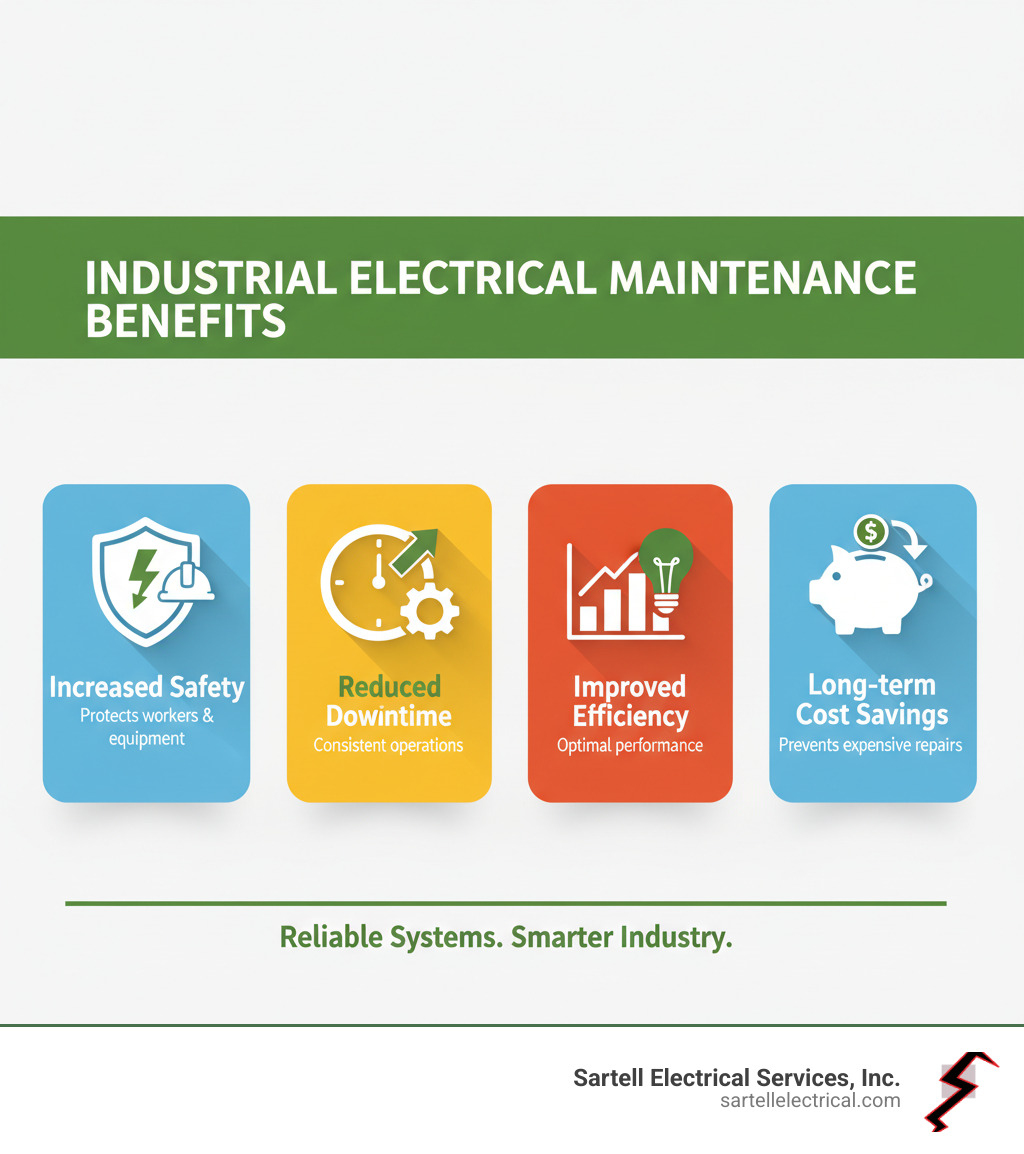
For any industrial business, consistent electrical maintenance is essential for four key reasons:
- Safety: It identifies and mitigates hazards like faulty wiring or overloaded circuits, preventing fires, shocks, and other accidents.
- Efficiency: Well-maintained systems run at peak performance, consuming less energy and reducing utility costs.
- Cost Savings: Proactive maintenance catches small issues before they become expensive disasters, avoiding emergency repairs and lost production time.
- Compliance: Regular maintenance ensures you adhere to strict electrical codes and safety standards, helping you avoid fines and legal issues.
Industrial electrical maintenance is an investment that protects your people, equipment, and profitability. Our comprehensive
Industrial Electrical Services are designed to deliver these benefits, allowing you to focus on running your business.
Building the Expert: Skills and Qualifications for a Career in Electrical Maintenance
Becoming an expert in
industrial electrical maintenance requires a unique blend of technical skill, sharp problem-solving, and an unwavering commitment to safety. It's a rewarding career for those who love figuring out how complex systems work.
Essential Skills for Technicians
Top technicians share a common foundation of skills:
- Electrical Theory: A deep understanding of concepts like voltage, current, and resistance is non-negotiable.
- Reading Schematics: The ability to interpret complex blueprints is crucial for diagnosing issues quickly.
- Troubleshooting & Problem-Solving: Technicians must diagnose faults like short circuits and ground faults, often under pressure. This requires critical thinking to find the root cause, not just the symptom.
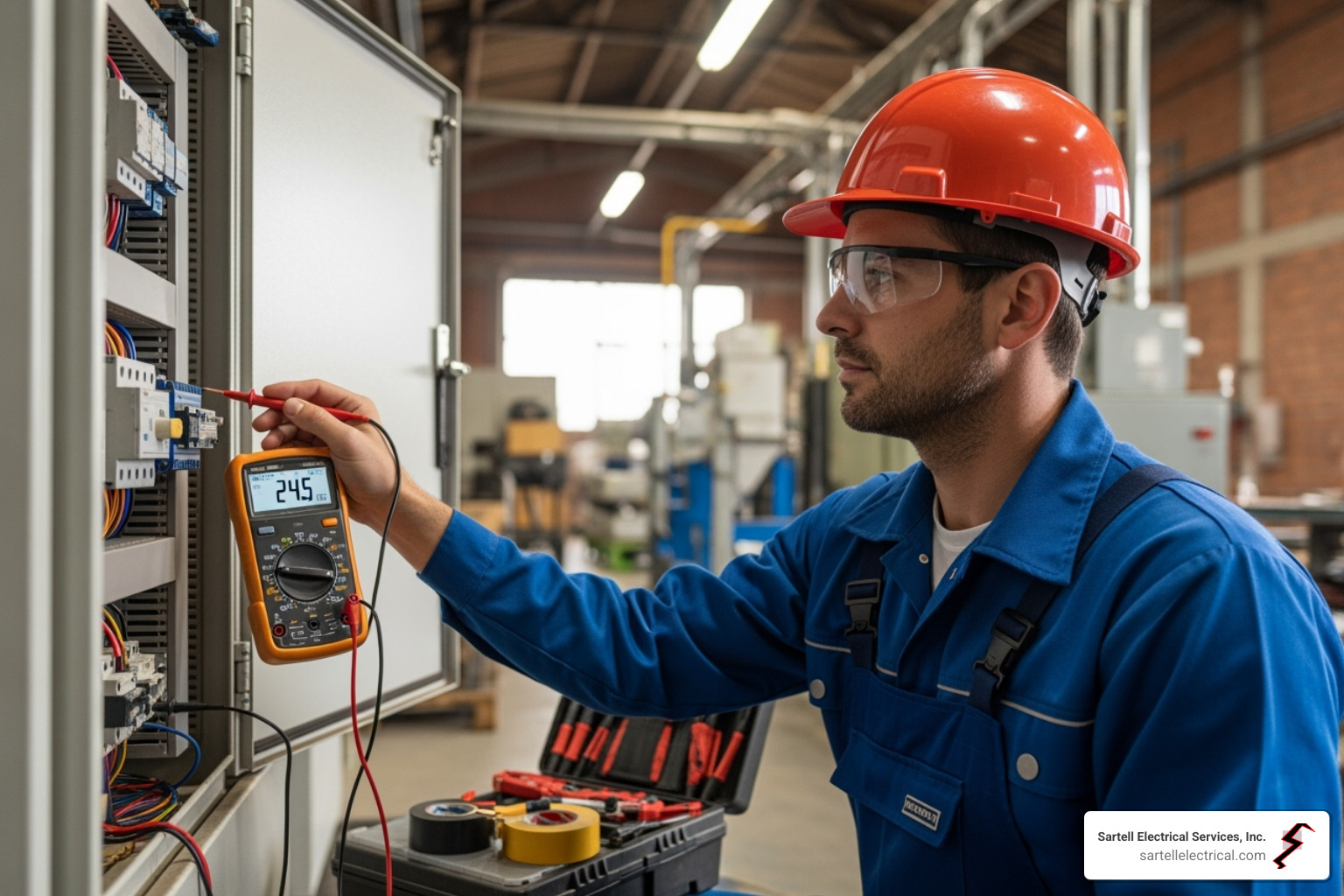
- Safety Awareness: Every task is viewed through a safety lens. This includes mastery of Lockout/Tagout (LOTO) procedures, understanding the National Electrical Code (NEC), and proper use of Personal Protective Equipment (PPE).
They also rely on specialized tools like multimeters, clamp-on ammeters, and thermal imaging cameras to diagnose problems accurately and safely.
Training, Certifications, and Career Path
The journey to becoming a qualified technician is demanding. It typically starts with
apprenticeship programs that combine thousands of hours of on-the-job training with classroom instruction.
Formal education, guided by standards from organizations like
NCCER, builds a comprehensive knowledge base.
Certifications, such as those aligned with the
Red Seal Program or state-level credentials, validate a technician's expertise. However, learning never stops.
Continuous learning is vital to keep up with evolving technology and safety protocols.
Career progression can lead from entry-level roles to specialized positions in PLCs or high-voltage systems, and eventually to supervisory or management roles.
Who is Responsible for Maintenance?
Effective maintenance is a collaborative effort:
- Facility Managers oversee strategy and budgets.
- Maintenance Supervisors lead teams and manage daily tasks.
- In-house Technicians handle routine maintenance and troubleshooting.
- Specialized Electrical Contractors, like Sartell Electrical Services, provide expert support for complex challenges, emergency repairs, and comprehensive maintenance programs. Our Commercial and Industrial Electrician services often complement in-house teams.
Team collaboration is the key to keeping industrial electrical systems safe, efficient, and reliable.
Proactive vs. Reactive: Core Strategies in Industrial Electrical Maintenance
In
industrial electrical maintenance, a proactive approach is far more effective than a reactive one. Getting ahead of problems prevents costly failures, much like regular health check-ups prevent serious illness. A smart maintenance program leans heavily on proactive strategies.
Here's a quick look at the different approaches:
| Maintenance Type |
Timing |
Cost (Short-term) |
Cost (Long-term) |
Goal |
Typical Activities |
| Preventive |
Scheduled, before failure |
Moderate |
Low |
Avoid breakdowns, extend asset life |
Regular inspections, cleaning, lubrication, scheduled part replacements |
| Predictive |
Based on condition monitoring data |
Moderate |
Very Low |
Forecast failure, optimize maintenance |
Vibration analysis, thermal imaging, oil analysis, Electrical Condition Monitoring |
| Corrective |
After failure occurs, planned repair |
High |
High |
Restore functionality |
Troubleshooting, component replacement, repair of failed equipment |
| Emergency |
Immediate response to critical failure |
Very High |
Very High |
Prevent catastrophe, restore operations quickly |
Urgent repairs, temporary fixes, safety interventions, Emergency Electrical Service Near Me |
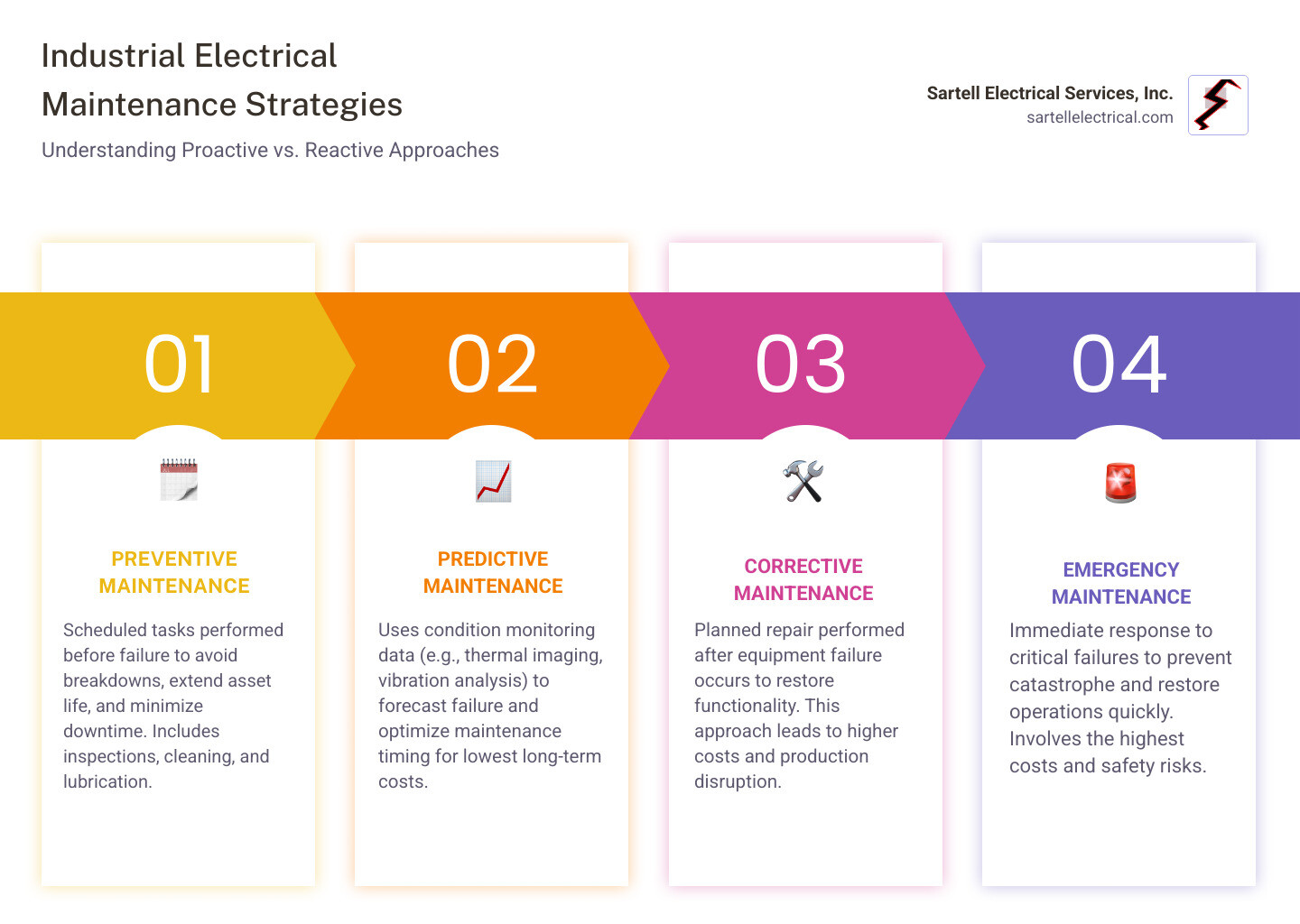
The Four Main Types of Maintenance
- Preventive Maintenance: Involves regularly scheduled tasks like inspections and cleaning to fix potential problems before they cause a breakdown.
- Predictive Maintenance: Uses technology and data to forecast when equipment might fail. This allows for maintenance based on actual condition, which we support through Electrical Condition Monitoring.
- Corrective Maintenance: Repairing equipment after it has already failed. This approach is reactive and often leads to expensive, unplanned downtime.
- Emergency Maintenance: An immediate, urgent response to a critical failure that poses a safety risk or threatens major production loss. Our Emergency Electrical Service Near Me teams are ready to respond quickly to these situations.
Best Practices for an Effective Maintenance Program
An effective
industrial electrical maintenance program is built on several best practices:
- Develop a Comprehensive Plan: Outline all equipment, tasks, schedules, and responsibilities.
- Conduct Regular Inspections: Consistent checks by skilled electricians are vital to catch issues early.
- Keep Detailed Records: Document all maintenance to track performance and inform future decisions.
- Prioritize Critical Equipment: Focus efforts on machinery whose failure would have the biggest impact.
- Invest in Training and Quality: A well-trained team and high-quality components reduce failures and extend system life.
- Leverage Project Management: For large projects, strong Electrical Project Management ensures tasks are completed on time and on budget.
The Future is Now: Technology's Role in Modern Maintenance
Industrial electrical maintenance has evolved from a reactive practice to a proactive, technology-driven field. Today, we can predict failures, diagnose issues remotely, and maintain systems with unprecedented precision. These advancements help us keep our clients' operations running smoothly, safely, and more efficiently than ever before.
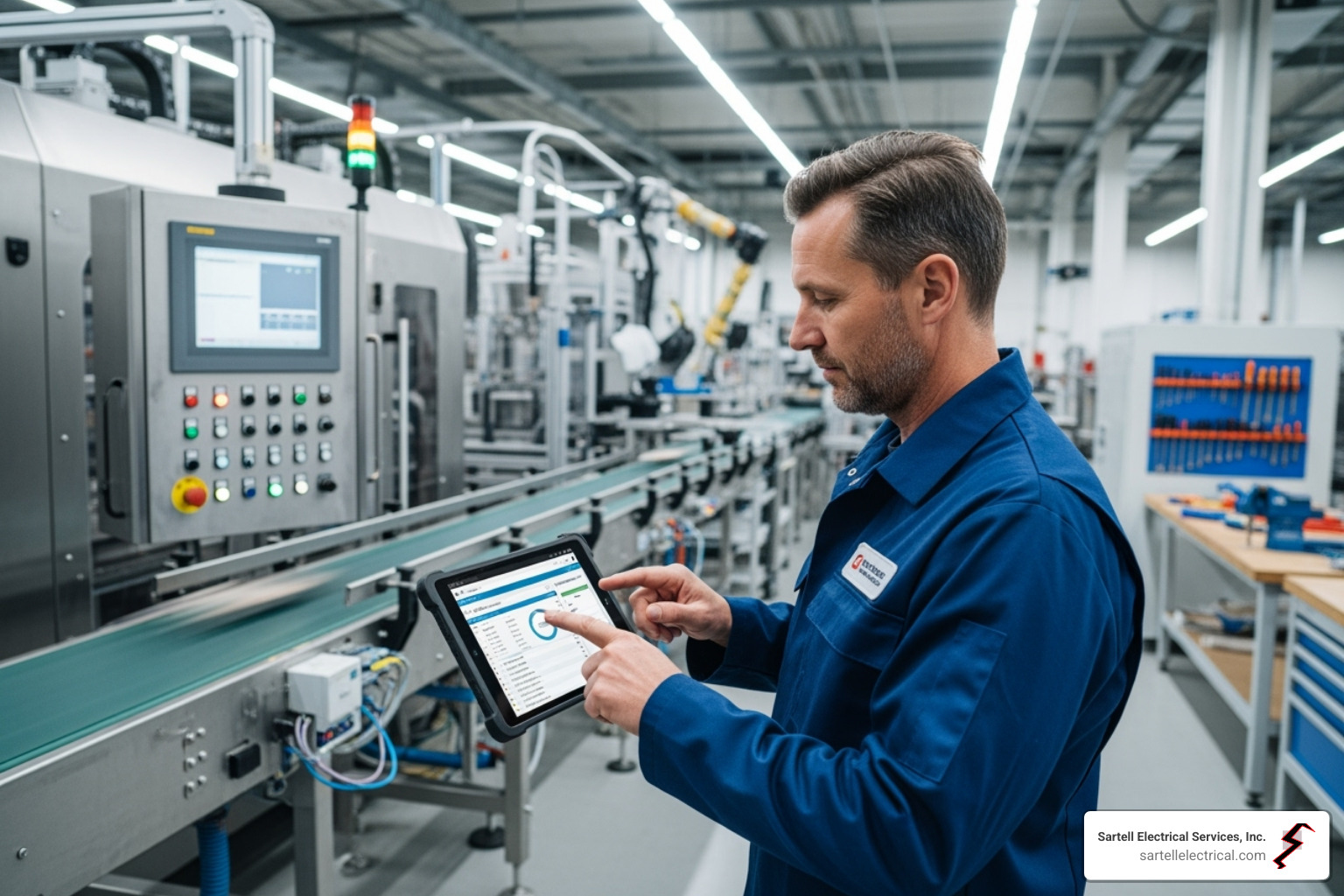
Modern tools help us see problems before they cause a breakdown:
- Thermal Imaging: These cameras detect heat signatures from failing components or loose connections, allowing for proactive repairs.
- Vibration Analysis: By monitoring vibration in motors and pumps, we can detect wear and misalignment long before a catastrophic failure.
- Internet of Things (IoT): Connected sensors provide real-time data on equipment health. Our Industrial Power Monitoring System uses this data to provide constant oversight.
- Drones: Drones with thermal sensors can safely and efficiently inspect hard-to-reach or hazardous areas.
- Augmented Reality (AR): AR technology can overlay schematics and procedures onto a technician's view, guiding complex repairs.
These technologies enable a shift to condition-based maintenance, where we service equipment precisely when needed. Our
Electrical Condition Monitoring services leverage this approach to save time, reduce costs, and extend equipment life.
The Impact of Automation and Data
The true change in maintenance comes from how we use data.
Computerized Maintenance Management Systems (CMMS) are the central hub for tracking equipment, managing work orders, and analyzing maintenance history. By combining CMMS data with real-time information from IoT sensors, we can identify performance trends and predict potential issues.
Artificial Intelligence (AI) is also emerging to help interpret this data, predicting failures and optimizing maintenance schedules. This data-driven approach relies on well-maintained control systems like
Programmable Logic Controllers (PLCs) and
Distributed Control Systems (DCS). Maintaining these complex systems is a specialized skill, as detailed in our
Electrical Network Monitoring Complete Guide.
Technology has turned maintenance into a proactive, data-driven strategy that improves safety, reduces downtime, and lowers costs.
Safety First, Always: Critical Protocols and Compliance
In
industrial electrical maintenance, safety is woven into every decision and task. The stakes are too high to treat it as an afterthought. In environments with high voltages and powerful machinery, rigorous safety protocols and regulatory compliance are the foundation of our work.
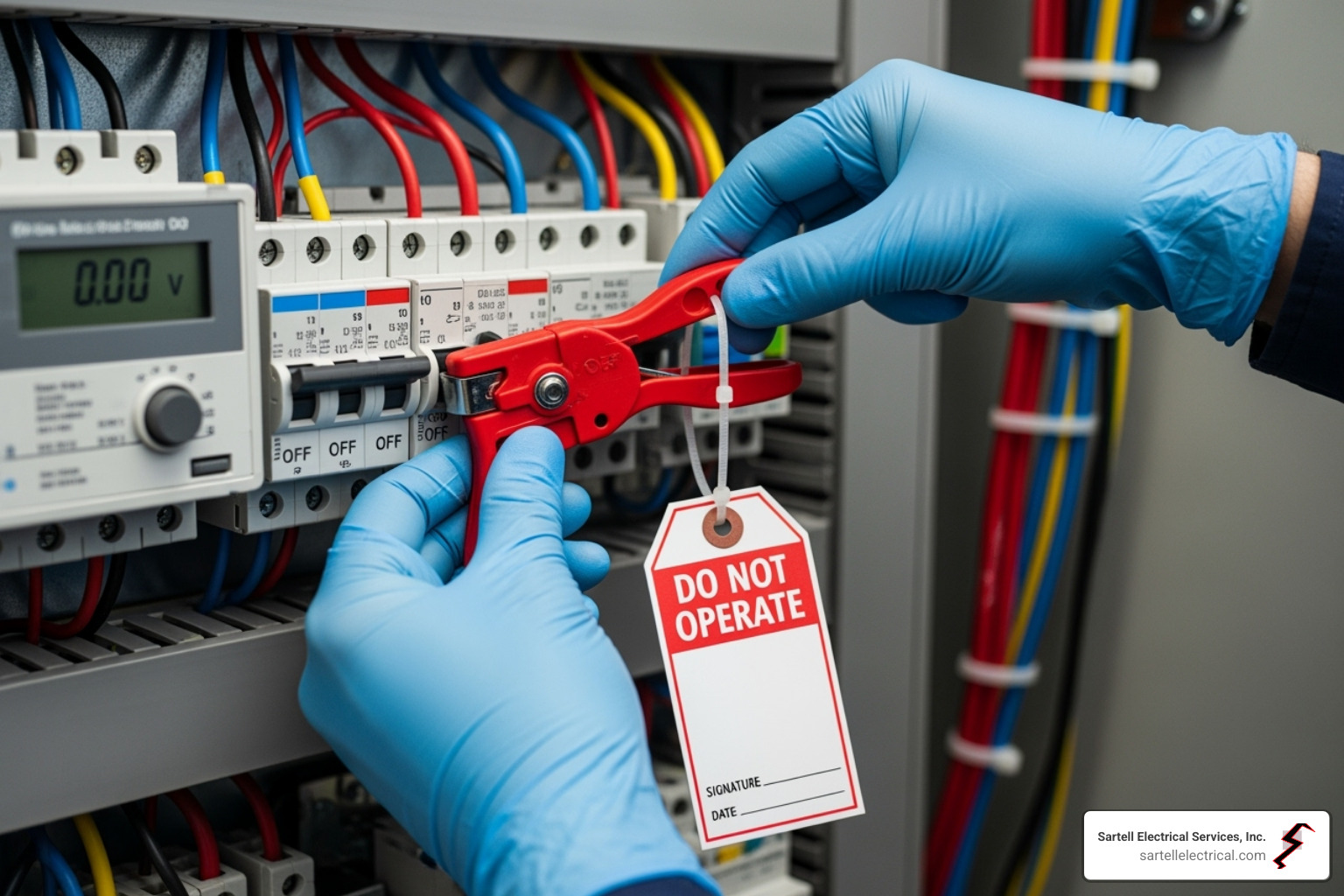
Crucial Safety Protocols
We adhere to proven safety protocols to protect everyone on site:
- Personal Protective Equipment (PPE): Our first line of defense includes arc-rated clothing, insulated gloves, safety glasses, and hard hats, all selected for the specific task.
- Arc Flash Safety: Technicians are trained to conduct hazard analyses and use appropriate PPE to protect against the violent energy release of an arc flash.
- Lockout/Tagout (LOTO): This is the most critical procedure. It ensures equipment is completely de-energized and locked out before maintenance begins, preventing accidental startup.
- Hazardous Locations: We use specialized, explosion-proof equipment in areas with flammable gases or combustible dust to prevent ignition.
- Electrical Shock Prevention: This involves constant awareness, using insulated tools, and verifying that circuits are de-energized before work begins.
Our commitment to these protocols is reflected in our status as a
Safe Electric Registered Electrical Contractor.
Ensuring Compliance with Codes and Regulations
Adherence to industry codes and standards is non-negotiable. These regulations represent the accumulated wisdom of our profession.
- National Electrical Code (NEC/NFPA 70): The foundation for safe electrical installation and maintenance in the U.S.
- NFPA 70E: The standard for electrical safety in the workplace, guiding safe work practices and PPE requirements.
- NFPA 70B: A recommended practice for electrical equipment maintenance that helps minimize failures.
- OSHA Standards: We comply with all federal OSHA regulations for workplace safety.
- Local Regulations: Our experience in Massachusetts ensures we understand and adhere to all local codes.
- Documentation: We maintain meticulous records of all maintenance activities to prove compliance, track system history, and guide future decisions.
By following these protocols, we ensure the systems we service are safe, reliable, and legally compliant.
Frequently Asked Questions about Industrial Electrical Maintenance
Here are answers to some of the most common questions we receive about
industrial electrical maintenance.
What is the difference between an industrial electrician and a commercial electrician?
While both are skilled professionals, their work environments and the systems they handle differ significantly.
- Commercial Electricians typically work in offices, retail stores, and restaurants. They handle standard power and lighting, HVAC systems, and general wiring. You can learn more on our Commercial Electricians page.
- Industrial Electricians work in factories, power plants, and manufacturing facilities. They manage high-voltage systems, complex motor controls, and automation systems like PLCs. Their work involves higher voltages and requires specialized knowledge of process controls and heavy machinery.
At Sartell Electrical Services, our teams are skilled in both environments, allowing us to provide solutions custom to any setting.
How often should industrial electrical maintenance be performed?
There is no one-size-fits-all answer. The ideal frequency depends on several factors:
- Manufacturer Recommendations: Follow the guidelines provided for your specific equipment.
- Equipment Age and Condition: Older or heavily used equipment requires more frequent attention.
- Operating Conditions: Harsh environments (dust, vibration, extreme temperatures) demand more frequent inspections.
- Criticality of Equipment: Systems vital to production or safety should be maintained more often.
- Regulatory Requirements: Some industries have legally mandated maintenance schedules.
A typical approach involves daily visual checks, quarterly basic maintenance, and comprehensive annual inspections by qualified electricians.
What are the biggest challenges in this field?
Industrial electrical maintenance presents several unique challenges:
- Keeping Up with Technology: The rapid evolution of automation, IoT, and PLCs requires continuous learning and skill development.
- Ensuring Safety: Working in complex, hazardous environments demands strict adherence to safety protocols like LOTO to prevent serious injury.
- Minimizing Production Downtime: Maintenance must be planned and executed efficiently to reduce costly interruptions to operations.
- Finding Skilled Technicians: There is a high demand for technicians with the specialized knowledge required for industrial work, making experienced contractors a valuable partner.
Conclusion: Partnering with an Expert for a Safer, More Efficient Facility
Industrial electrical maintenance is a complex and critical field that has evolved from reactive repairs to a proactive, technology-driven strategy. A well-executed maintenance program, combining skilled technicians and smart planning, transforms this function from a necessary expense into a competitive advantage, keeping your facility safe, efficient, and productive.
The key takeaways are clear: safety must always come first, proactive approaches save money, technology makes it possible to predict failures, and skilled technicians are irreplaceable. As the industry continues to adopt more IoT sensors and AI-driven analytics, investing in a robust maintenance program is essential for future success.
At Sartell Electrical Services, we have spent over 30 years mastering this field. We understand that our role is to protect your investment, your people, and your future. For businesses in the Boston area seeking a reliable partner for their industrial, commercial, or
telecom electrical contractor needs, our experienced team ensures safety, compliance, and operational excellence. Whether you need routine maintenance or a complete system overhaul, we deliver the leadership and customer service that have defined our company since 1985. Let's ensure your facility's electrical foundation is rock-solid.