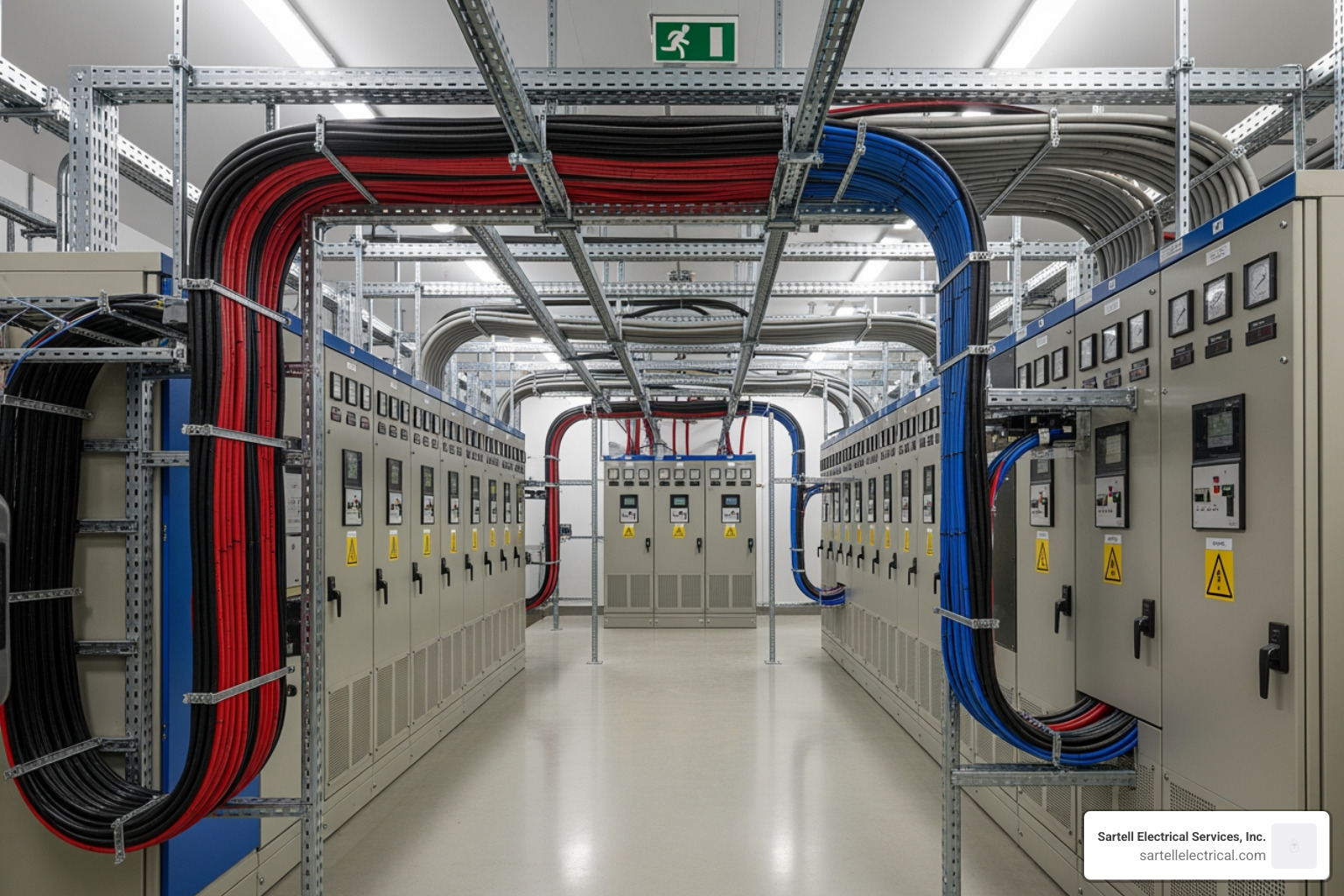
 Electrical safety for industrial facilities
 is a critical priority that protects employees, prevents costly downtime, and ensures regulatory compliance. A comprehensive safety program involves hazard recognition, using qualified personnel, implementing Lockout/Tagout (LOTO) procedures, wearing proper Personal Protective Equipment (PPE), and conducting regular inspections.
While electricity is essential, it's also one of the most dangerous forces in the workplace when mishandled. From 2011 to 2023, there were 1,940 electrical fatalities in the U.S., with the construction and manufacturing industries accounting for the majority. These incidents often stem from damaged equipment, improper grounding, and failure to follow safety procedures.
The stakes are incredibly high. A current as small as 75 milliamps can be fatal, and arc flash temperatures can exceed 35,000°F—hotter than the sun's surface. These aren't just statistics; they represent preventable tragedies.
The good news is that most electrical accidents are preventable through proper training, adherence to OSHA standards, and a commitment to equipment maintenance. For any industrial facility, implementing comprehensive electrical safety measures isn't optional—it's essential.
I'm Ed Sartell, President of Sartell Electrical Services. For nearly four decades, my team and I have been dedicated to ensuring
electrical safety for industrial facilities across Massachusetts. We've seen how proactive safety measures protect people and operations, which is why we make safety our top priority on every project.
Similar topics to
electrical safety for industrial facilities:
The Shocking Reality: Electrical Hazards and Governing Standards
Electrical hazards are a leading cause of workplace fatalities. The statistics are stark: from 2011 to 2023, there were 1,940 electrical fatalities nationwide, with 96% occurring in the private sector, according to the
Electrical Safety Foundation International. Industries like construction and manufacturing are particularly affected.
The primary electrical hazards in industrial settings include:
- Electric Shock and Electrocution: Current passing through the body, causing injury or death.
- Arc Flash: A sudden, violent release of electrical energy through the air, creating intense heat and light.
- Arc Blast: The explosive pressure wave from an arc flash, capable of causing physical trauma.
- Electrical Fires and Explosions: Caused by faulty wiring, overloaded circuits, or sparks in flammable environments.
Most accidents stem from preventable issues like damaged equipment, overloaded circuits, improper grounding (a top OSHA violation), and unsafe work practices. The consequences of neglect are severe, ranging from tragic injuries and fatalities to costly downtime and legal penalties. Adhering to standards from OSHA and the NFPA is not just good practice—it's essential.
Understanding the Dangers: From Shock to Arc Flash
It's crucial to understand the distinct dangers of electric shock and arc flash.
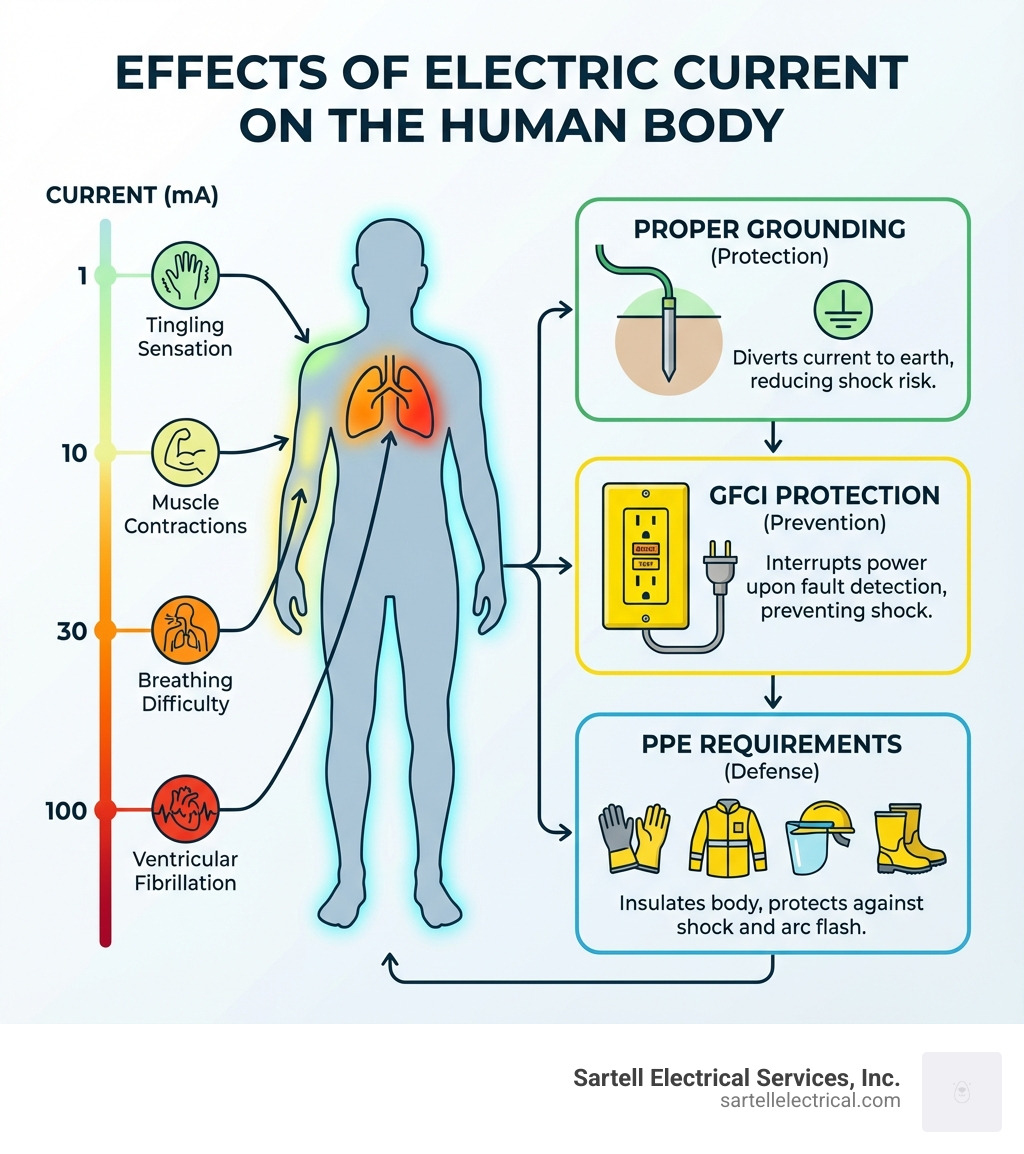
Electric Shock: Occurs when a person becomes part of an electrical circuit. The severity depends on the current (amperage), its path through the body, and duration. Even a small current can be lethal; 75 mA can cause ventricular fibrillation. While voltage is the "pressure," it's the current that harms. However, high voltage easily overcomes the body's resistance, allowing a deadly current to flow.
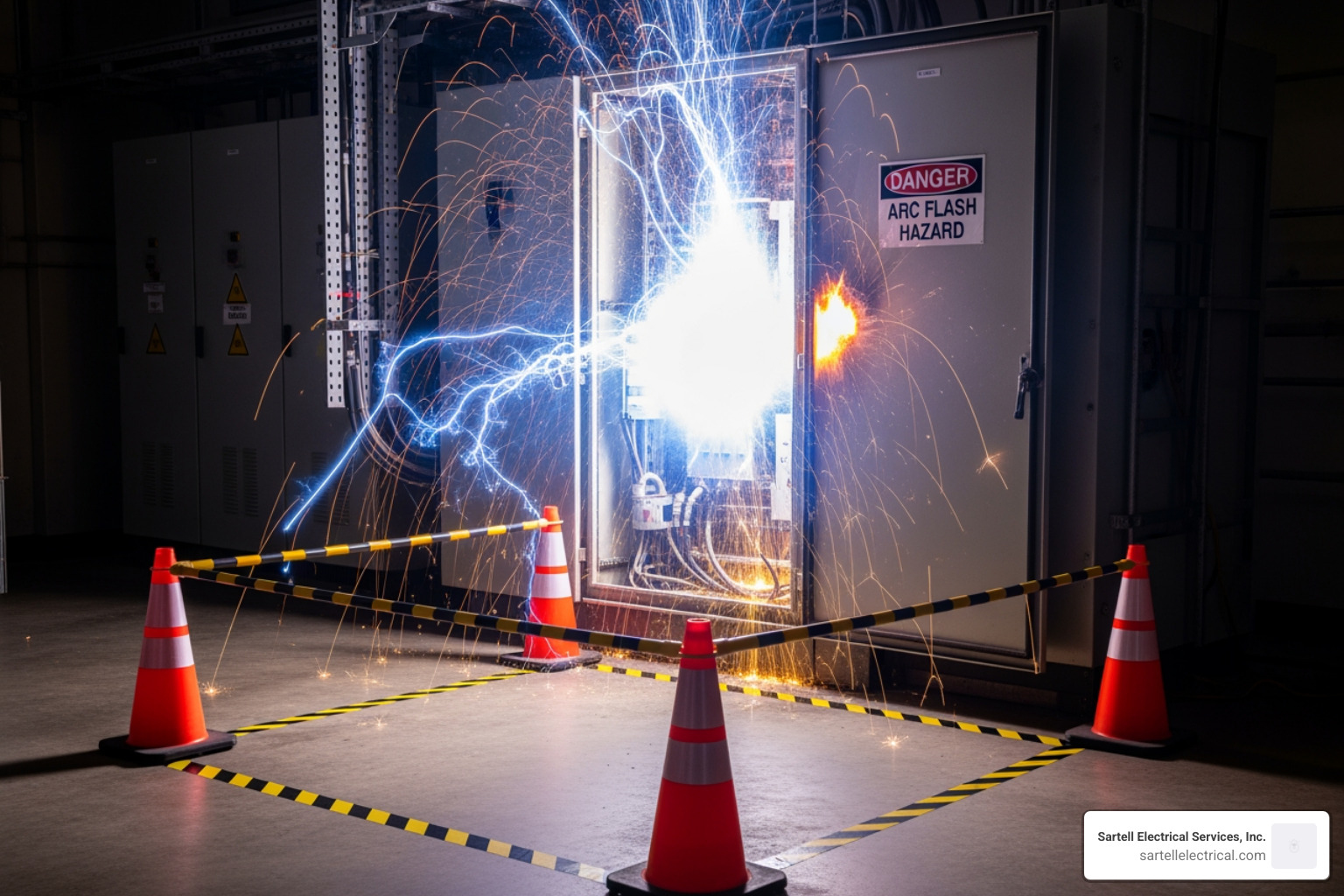
Arc Flash and Arc Blast: An arc flash is an electrical short circuit through the air, releasing immense energy with temperatures reaching 35,000°F. The accompanying arc blast is a violent explosion that can throw workers, rupture eardrums, and propel molten metal. The combination of extreme heat and explosive force makes these events incredibly dangerous. For more details, refer to
OSHA's guidance on Arc Flash.
Secondary injuries, like falls from ladders after a shock or blast, are also a significant concern.
The Rules of the Game: OSHA and NFPA 70E
In Massachusetts and nationwide,
electrical safety for industrial facilities is governed by strict standards from the Occupational Safety and Health Administration (OSHA) and the National Fire Protection Association (NFPA).
- OSHA 1910 Subpart S: This is OSHA's primary standard for electrical safety in general industry, setting legal requirements for safe electrical installations and work practices.
- NFPA 70E®: This is the industry benchmark for workplace electrical safety. It provides detailed guidance on protecting workers from arc flash and shock, defining qualified vs. unqualified employees, safe work practices, and PPE requirements.
Employers are legally obligated to provide a safe workplace, which includes developing a safety program, providing training and PPE, and maintaining electrical systems. Both OSHA and NFPA 70E emphasize that an
Electrically Safe Work Condition (ESWC)—de-energizing and locking out equipment before work begins—is the primary method for preventing injuries. At Sartell Electrical Services, our commitment to these standards ensures we provide safe, compliant solutions. For more on how we ensure compliance, learn about our
Electrical Safety Checks.
Building Your Fortress: Core Components of an Electrical Safety Program

An effective electrical safety program is a living system integrated into all operations. For
electrical safety for industrial facilities, a robust program is non-negotiable. Key components include:
- Hazard Identification and Risk Assessment: Continuously identifying potential dangers and evaluating the associated risks to prioritize action.
- Job Safety Analysis (JSA): Systematically breaking down tasks to identify hazards and establish safe work procedures.
- Written Safety Program: A formal document outlining policies, procedures, and responsibilities.
- Management Commitment and Employee Involvement: Safety culture starts with leadership providing resources and support, and thrives on employee participation in identifying and reporting hazards.
Implementing this program requires careful planning, applying principles from our
Electrical Project Management Complete Guide.
Conducting Effective Hazard Analyses
A cornerstone of any safety program is effective hazard analysis. We use a three-step Electrical Safety Model:
- Recognize Hazards: Diligently inspecting for damaged equipment, overloaded circuits, exposed live parts, and other potential dangers, including arc flash and blast risks.
- Evaluate Risk: Assessing the likelihood and potential severity of an incident. For example, a frayed cord in a wet area poses a much higher risk than in a dry one.
- Control Hazards: Implementing measures to eliminate or reduce risk, following the "Hierarchy of Controls":
- Elimination/Substitution: Removing the hazard or replacing it with a safer alternative.
- Engineering Controls: Modifying equipment to reduce exposure (e.g., installing GFCIs, guarding live parts).
- Administrative Controls: Implementing safe work procedures like training and Lockout/Tagout.
- Personal Protective Equipment (PPE): The last line of defense, used when other controls aren't sufficient.
This proactive approach is fundamental to our commitment to safe
Electrical System Design.
The Role of Training in Electrical Safety for Industrial Facilities
Training is the backbone of
electrical safety for industrial facilities. We classify personnel based on their interaction with electrical systems:
- Qualified Persons: Have demonstrated skills and knowledge to work on or near exposed energized parts and are trained to recognize and avoid the specific hazards involved.
- Unqualified Persons: May work near electrical equipment but are not permitted to work on it. They must be trained to recognize the hazards they might encounter and how to protect themselves.
Our comprehensive training covers general safety, specific tasks, LOTO, PPE use, and emergency procedures. Key personnel are also trained in CPR and first aid for electric shock victims, as a rapid response can be life-saving. We ensure continuous education to keep our teams updated on the latest standards and practices, and we carefully document all training. This dedication to education is a hallmark of our
Professional Electrical Services Guide 2025.
On-the-Ground Tactics: Essential Procedures and Protective Equipment
While policies are foundational, it's the on-the-ground tactics and protective equipment that make the difference in
electrical safety for industrial facilities. These are the practical steps our teams take daily to mitigate risks.
Personal Protective Equipment (PPE): Your Last Line of Defense
PPE is a critical last line of defense when working on or near energized equipment. The right gear can prevent a severe injury.
Here's a general overview of PPE categories for arc flash hazards:
| PPE Category |
Required Arc Rating (cal/cm²) |
Typical PPE |
| 1 |
4 |
Arc-rated long-sleeve shirt, pants, face shield, hard hat, safety glasses, hearing protection, leather gloves |
| 2 |
8 |
All Category 1 items, plus arc-rated jacket/coverall, balaclava |
| 3 |
25 |
All Category 2 items, plus arc-rated suit (hood, jacket, pants) |
| 4 |
40 |
All Category 3 items, with higher rated arc-rated suit |
- Insulated Gloves: Rubber insulating gloves (rated for the voltage) worn under leather protectors are crucial for preventing shock. They must be air-tested before each use.
- Arc-Rated Clothing: Made from flame-resistant fabrics that resist ignition and self-extinguish, protecting against arc flash heat.
- Head, Face, and Eye Protection: An arc-rated face shield over safety glasses and a Class E (electrical) hard hat protect against heat, debris, and shock.
- Foot Protection: Electrical hazard (EH) rated safety shoes provide secondary protection.
All PPE must be regularly inspected for damage and properly maintained. Compromised gear must be replaced immediately.
Lockout/Tagout (LOTO): The Lifesaving Procedure
Lockout/Tagout (LOTO) is a critical procedure to prevent the unexpected energization of equipment during maintenance. Our rule is simple: if you're working on it, it must be de-energized and locked out.
The primary steps of a LOTO procedure are:
- Preparation: Identify all energy sources for the equipment.
- Notification: Inform affected employees of the shutdown.
- Shutdown: Turn off the equipment using normal procedures.
- Isolation: Disconnect the equipment from all energy sources.
- Lockout/Tagout: Apply a lock and tag to each energy-isolating device. Each worker applies their own lock.
- Verification: Test the equipment to confirm it is de-energized and that all stored energy has been released.
Purpose of LOTO: The goal is to protect workers from the unexpected release of any form of energy—electrical, mechanical, hydraulic, etc. An "authorized employee" performs the LOTO, while an "affected employee" operates the equipment and must be notified.
OSHA mandates annual inspections of LOTO procedures to ensure their integrity. Following these steps is how we protect our teams working on critical equipment. For assistance with repairs requiring strict LOTO, we offer specialized
Industrial Electrical Equipment Repair services.
Proactive Strategies for Long-Term Electrical Safety for Industrial Facilities
Maintaining high standards of
electrical safety for industrial facilities requires a proactive mindset. It's about anticipating problems and continuously improving systems to prevent incidents before they happen.
The Importance of Inspections and Maintenance
Regular inspections and maintenance are the bedrock of long-term electrical safety. They allow us to find and fix issues before they become dangerous failures.
- Visual Inspections: We conduct routine checks for signs of wear like frayed cords, damaged insulation, and overloaded circuits. We also ensure electrical panels are clearly labeled and accessible.
- Infrared Thermography: This diagnostic tool uses thermal cameras to detect hot spots in electrical components, which often indicate loose connections or impending failure. Early detection allows for preventive maintenance.
- Circuit Breaker Testing: Regular testing ensures these critical protective devices will function correctly during a fault, preventing more significant hazards.
- Housekeeping: Keeping equipment and work areas clean and dry is vital. Dust, dirt, and moisture can lead to overheating, short circuits, and insulation breakdown.
These proactive measures are essential for system reliability and safety. Our
Electrical Condition Monitoring services help clients implement these comprehensive upkeep strategies.
Leveraging Technology for Improved Electrical Safety for Industrial Facilities
Modern technology offers powerful tools to improve
electrical safety for industrial facilities, moving from reactive to predictive safety.
- Smart Sensors and Real-Time Monitoring: We deploy sensors to track critical parameters like temperature, current, and vibration in real-time. This data is fed into centralized systems that provide a continuous overview of electrical health.
- Automated Alerts: When a parameter deviates from safe limits, the system sends an automatic alert to maintenance teams. This allows for prompt intervention, preventing downtime and accidents.
- Digital LOTO Systems: These platforms can improve LOTO compliance by managing procedures, tracking locks, and reducing human error.
Investing in these technologies provides a significant return by enabling predictive maintenance, reducing downtime, and dramatically improving safety. This approach is integral to our
Industrial Power Monitoring System implementations.
When to Call a Professional
While in-house teams are vital, certain situations require a licensed, experienced electrical professional for
electrical safety for industrial facilities. At Sartell Electrical Services, we bring decades of expertise to complex challenges across Massachusetts.
Always call a professional for:
- Complex Repairs: Work involving high-voltage systems, intricate wiring, or specialized equipment.
- New Installations and System Upgrades: Ensuring new systems meet all codes, are properly sized, and are safely integrated.
- Code Compliance Issues: Navigating complex electrical codes like the NEC and NFPA 70E to avoid penalties and ensure safety.
- Arc Flash Studies: A specialized analysis to determine hazard levels and required PPE.
For any significant electrical work, partnering with a licensed
Industrial Electrical Contractor Boston MA is paramount. Our team has the certifications and experience to handle projects of all sizes, ensuring safety and compliance.
Frequently Asked Questions about Industrial Electrical Safety
What is the single most important step to prevent electrical accidents?
While many steps contribute to safety, establishing an
Electrically Safe Work Condition (ESWC) is arguably the single most important step. This means de-energizing equipment, locking and tagging it out, testing for the absence of voltage, and grounding it before any work begins. This process eliminates the hazard at its source, making it impossible for current to flow through the worker.
How often should our facility's electrical safety program be reviewed?
Your facility's electrical safety program should be reviewed at least
annually. Additionally, it should be reviewed and updated whenever there are significant changes to electrical equipment, work processes, regulations, or following any electrical incident or near-miss. Regular reviews ensure the program remains relevant, effective, and compliant.
Can an unqualified employee ever work on electrical equipment?
No, an unqualified employee should never work directly on electrical equipment. Unqualified employees may work
near electrical installations, but they must be protected from electrical hazards through measures like warning signs, barricades, and maintaining safe distances. Only qualified persons, who have received specific training and demonstrated the ability to recognize and avoid electrical hazards, are authorized to perform tasks directly involving electrical equipment.
Conclusion
Mastering
electrical safety for industrial facilities is an ongoing journey that demands a proactive approach and unwavering commitment. We've covered the reality of electrical hazards, the importance of OSHA and NFPA 70E standards, and the core components of a robust safety program. From hazard analysis and training to on-the-ground tactics like PPE and LOTO, every step builds a safer work environment.
Fostering a strong safety culture—where every employee is empowered to prioritize well-being—is invaluable. By embracing proactive strategies like regular inspections and leveraging technology, we can prevent incidents before they occur.
At Sartell Electrical Services, we are dedicated to helping our Massachusetts clients steer the complexities of industrial electrical safety. With nearly four decades of experience, we understand the unique challenges faced by facilities in Greater Boston and beyond.
For comprehensive support with your facility's electrical systems, explore our
Industrial Electrical Services.