Electrical safety checks: 1 Non-Negotiable
Why Electrical Safety Checks Matter More Than You Think
Electrical safety checks are professional inspections of your property's electrical system to identify hazards, ensure code compliance, and prevent fires or shocks. Here's what you need to know:
- What they include: Wiring inspection, outlet testing, panel assessment, grounding checks, and safety device verification
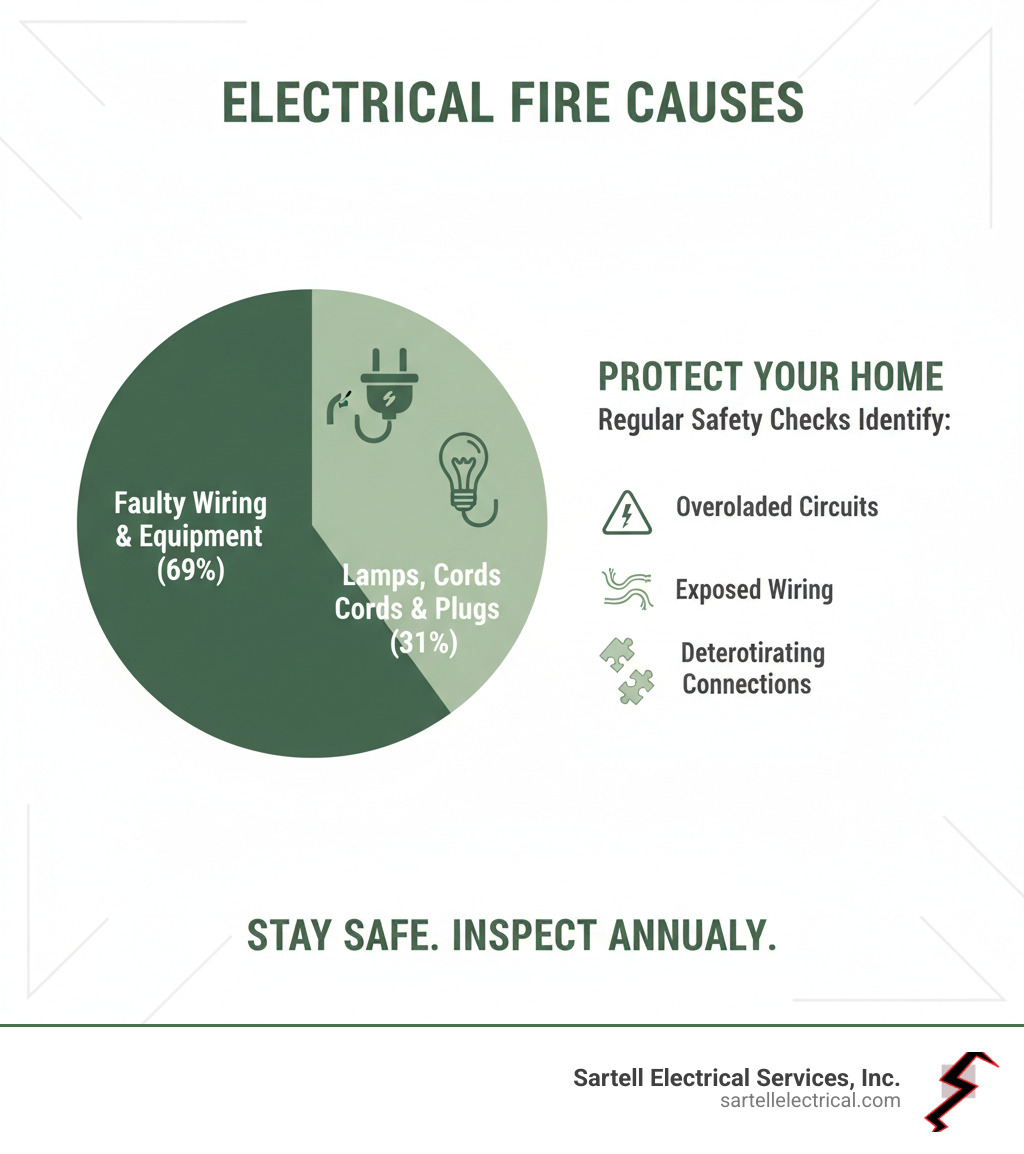
- Why they matter: 31,000 home electrical fires occur annually in the U.S., with 69% caused by faulty wiring and equipment
- Who needs them: Homeowners (every 3-5 years), landlords (every 2-5 years), businesses (annually), and anyone buying or renovating property
- What you'll receive: A detailed report with fault codes (C1, C2, C3) indicating the urgency of any issues found
You use electricity every day, but most electrical hazards are invisible. Loose connections, degraded insulation, and overloaded circuits don't announce themselves until they cause sparks, shocks, or flames. With over 31,000 electrical fires in U.S. homes each year, an inspection is about catching problems you can't see before they become emergencies.
These inspections are straightforward and provide invaluable insights. You'll know exactly what's working, what's not, and what needs attention—no guesswork, no surprises.
I'm
Ed Sartell, and through Sartell Electrical Services, I've been conducting
Electrical safety checks across Massachusetts since 1985. For nearly four decades, I've seen how proactive inspections prevent catastrophic failures and protect property and lives, while neglect leads to dangerous and costly consequences.
Why Electrical Safety Inspections are Non-Negotiable
It's easy to take electricity for granted, but behind every outlet is a complex system that needs attention.
Electrical safety checks uncover hidden dangers like frayed wires, loose connections, and overloaded circuits before they fail. The
United States Consumer Product Safety Commission highlights that faulty wiring and equipment are responsible for 69 percent of electrical fires.
Beyond fire risk, electrical faults cause shock hazards, damage appliances, and threaten the safety of your family or employees. A thorough inspection identifies the exact issues that lead to preventable injuries and deaths each year. Investing in regular checks protects your property, your people, and your peace of mind. If you're already dealing with issues like tripping circuits, learn more about our
Ground Fault Repair services.
The Alarming Cost of Neglect
Skipping an electrical inspection to save money is a gamble that can lead to a financial nightmare. The consequences of neglect are severe and often irreversible:
- Catastrophic Property Damage: A single electrical fire can destroy a home or business, with rebuilding costs running into hundreds of thousands of dollars.
- Insurance Invalidation: Many policies require regular electrical inspections. If you fail to comply, your insurer could deny a claim, leaving you with the full cost of damages.
- Legal Liability: Landlords and business owners face fines, lawsuits, and revoked licenses for failing to meet mandated inspection schedules. The National Fire Protection Association documents how compliance saves lives and property.
- Electrocution Risk: Faulty wiring and components create lethal shock hazards, posing a deadly risk to anyone on the property.
- Business Downtime: For a business, an electrical failure means lost revenue, halted operations, and a damaged reputation. A single day of downtime can cost more than a decade of preventative inspections.
Key Triggers for an Inspection
While regular checks are wise, some situations demand an immediate inspection:
- Buying a Home: An inspection reveals the system's true condition and gives you negotiating power. Always get your own independent inspection.
- Renovations: Any major work, especially in kitchens or bathrooms, requires an inspection to ensure new wiring integrates safely with the existing system and meets current codes.
- Older Properties (40+ years): These homes were not designed for modern electrical loads and often have outdated, unsafe wiring.
- Frequent Breaker Trips: This is a clear warning sign of an overload or a fault that could start a fire.
- Flickering or Dimming Lights: Persistent flickering often signals loose connections or overloaded circuits.
- Adding Major Appliances: A new hot tub, EV charger, or HVAC system may require more power than your current panel can safely provide. You might need a Home Electrical Panel Upgrade.
- Landlord Requirements: Most jurisdictions legally require inspections for rental properties every 2-5 years. You must provide documentation to tenants.
- Warm Outlets or Burning Smells: These are emergency signs. Evacuate immediately and call a professional.
The Anatomy of a Comprehensive Electrical Inspection
A proper
electrical safety check is a methodical evaluation of your entire electrical system. Our licensed electricians combine visual inspection for obvious damage with diagnostic testing using specialized equipment to measure what the naked eye can't see. Every inspection adheres to the latest safety standards and electrical codes to ensure your property is safe and compliant.
Key Components of an Electrical Safety Audit
We examine every accessible part of your fixed electrical installation, including:
- Wiring Inspection: We check for wear, frayed insulation, improper splices, and outdated systems like knob-and-tube or aluminum wiring that pose a fire risk.
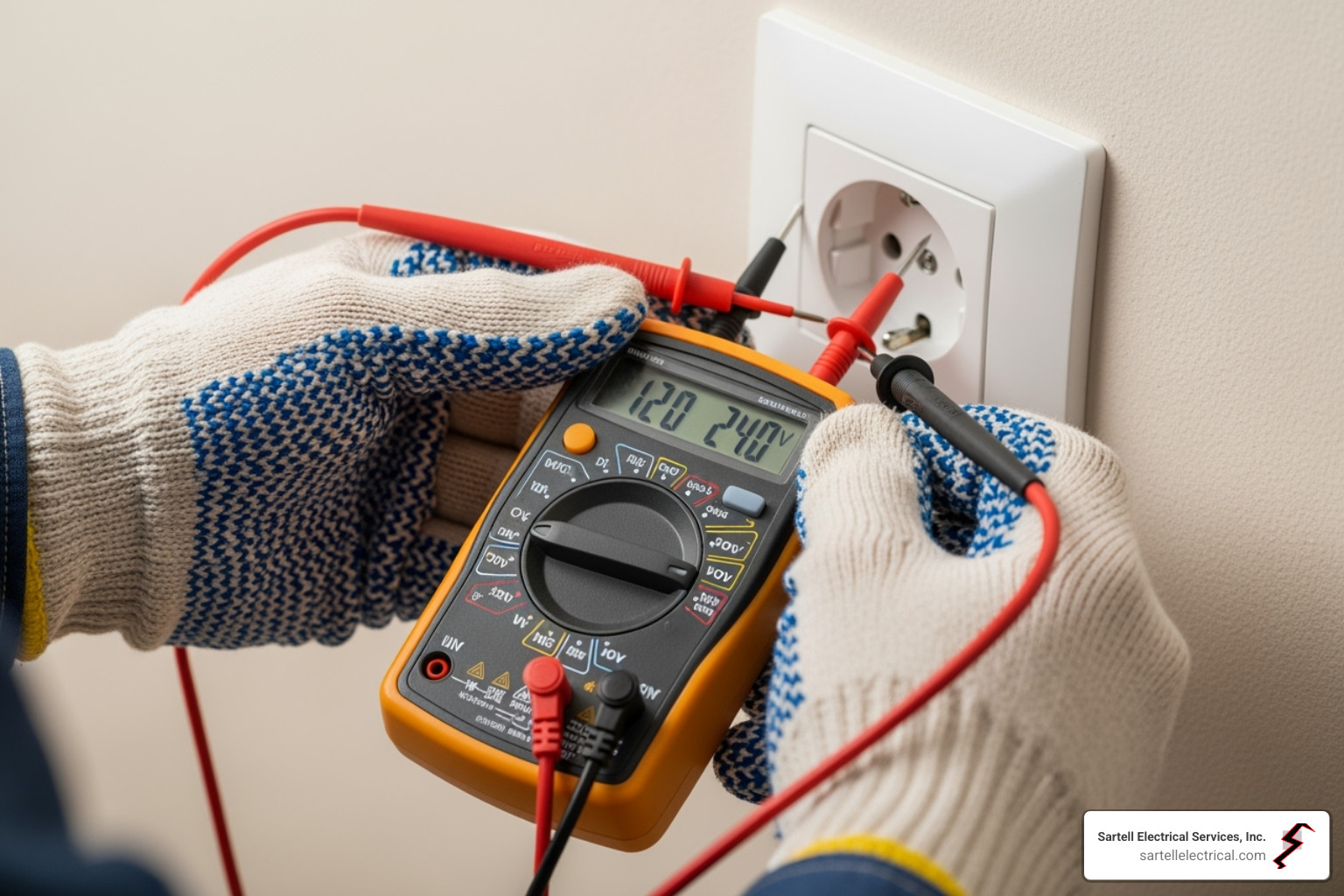
- Outlet and Switch Testing: Every accessible outlet is tested for proper voltage, polarity, and grounding. We flag any that are warm, loose, or show burn marks.
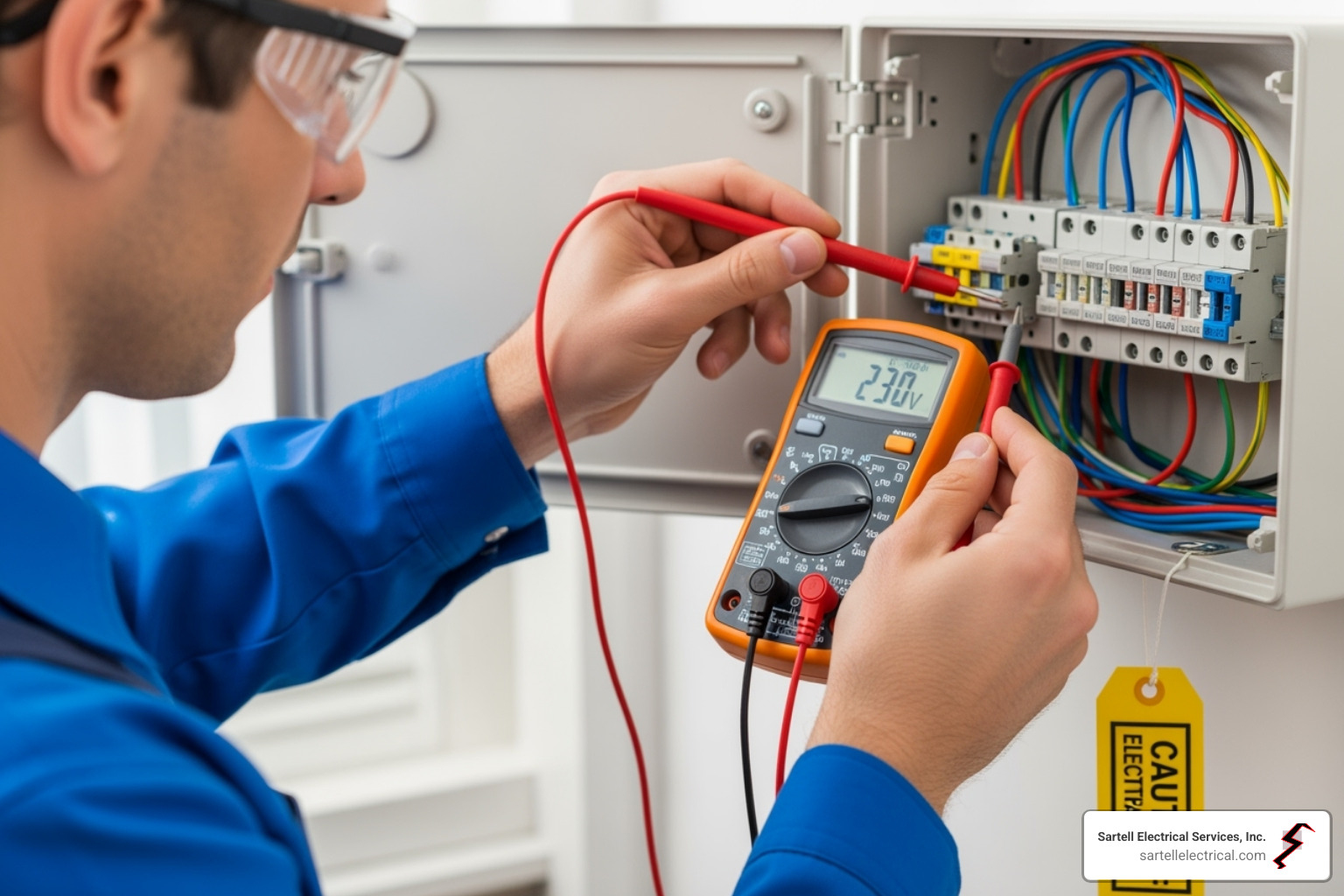
- Electrical Panel Assessment: We inspect circuit breakers for correct ratings and signs of overheating. We also ensure the panel has enough capacity for your electrical demands. If not, a Home Electrical Panel Upgrade may be necessary.
- Grounding System: We verify that your grounding system is properly installed to provide a safe path for electricity in case of a fault, preventing shocks.
- GFCI and AFCI Testing: We test Ground-Fault Circuit Interrupters (for shock protection in wet areas) and Arc-Fault Circuit Interrupters (for fire prevention) to ensure they function correctly. For issues with these devices, see our Ground Fault Repair services.
- Smoke and Carbon Monoxide Detectors: We check that these life-saving devices are properly located, hard-wired where required, and working.
Common Electrical Tests and Procedures
Diagnostic testing allows us to find faults hiding beneath the surface. Key tests include:
- Insulation Resistance Test: Measures how well your wiring's insulation is preventing current leakage, which can lead to short circuits and fires. We use Electrical Condition Monitoring to track this over time.
- Earth Continuity and Polarity Tests: These verify that all metal components are safely grounded and that all connections are wired in the correct sequence.
- Earth Fault Loop Impedance Test: Measures how quickly a breaker or fuse will trip in the event of a fault, ensuring it's fast enough to prevent injury or fire.
- RCD/GFCI Testing: Confirms that these critical safety devices cut power within the required timeframe when they detect a dangerous current imbalance.
- Thermal Imaging: We use infrared cameras to see heat patterns invisible to the naked eye. Hot spots reveal loose connections, overloaded circuits, or failing components before they cause a fire.
- Arc Flash Analysis (Commercial/Industrial): This complex assessment identifies explosive energy release hazards and ensures protective measures are in place to safeguard personnel.
Residential vs. Commercial Electrical Safety Checks
While the goal of safety is the same,
electrical safety checks for residential and commercial properties differ significantly in scope and complexity. Commercial systems are larger, handle higher loads, and are subject to more stringent regulations. Understanding these differences helps you know what to expect for your property type.

What to Expect from Residential Electrical Safety Checks
For homes, our focus is on the safety of your family and daily life. We evaluate your system's ability to handle modern appliance loads without overloading. If you're unsure about your home's capacity, learn more about
Residential Electrical Service Amps.
Key residential checks include:
- Verifying that high-draw appliances have dedicated circuits.
- Ensuring GFCI outlets are installed and working in kitchens, bathrooms, laundry rooms, and outdoor areas to prevent shock.
- Checking for AFCIs to prevent fires from arcing wires.
- Confirming smoke and carbon monoxide detectors are correctly placed and functional.
- Looking for general hazards like exposed wires, damaged cords, or warm outlets.
Understanding Commercial Electrical Safety Checks
Commercial and industrial facilities present a different set of challenges. The electrical demands are higher, and the stakes for safety and business continuity are immense.
Key commercial checks include:
- Heavy Load Calculations: We ensure the infrastructure can safely power heavy machinery, production lines, and data centers.
- Emergency Systems: We test emergency lighting, exit signs, and backup generators to ensure they function flawlessly during a power outage.
- Workplace Safety Compliance: We assess compliance with standards like NFPA 70E, which governs electrical safety in the workplace.
- Arc Flash Assessments: For many facilities, these are mandatory to identify explosive arc flash hazards and determine the necessary personal protective equipment (PPE). These should be performed every five years.
- Minimizing Downtime: Our inspections identify potential failure points before they halt operations and cause significant financial loss.
We provide comprehensive
Commercial Electrical Service and Repair to keep facilities across Massachusetts safe and operational.
Frequency, Costs, and Your Final Report
Planning for
electrical safety checks involves knowing how often you need them, what they cost, and what the final report means. Here’s a breakdown of what to expect.
How Often Should You Schedule an Inspection?
The recommended frequency for
electrical safety checks is based on property type, age, and use:
- Homeowners: Every 3-5 years. If your home is over 40 years old, aim for the 3-year mark.
- Landlords: Every 2-5 years, depending on local regulations. You must provide tenants with proof of inspection.
- Businesses: Annually for most equipment, as per the 2023 NFPA 70B update. Arc flash assessments are required every five years.
- Special Situations: An inspection is crucial after major renovations, storm damage, or flooding.
For businesses, our
Commercial Electrical Service and Repair includes scheduling and documentation to keep you compliant.
Understanding the Inspection Report
After the inspection, you'll receive an Electrical Installation Condition Report (EICR). This document will classify your system as either
Satisfactory (safe and compliant) or
Unsatisfactory (issues require attention).
Any faults found are categorized with a standard code to indicate urgency:
- C1 (Danger Present): An immediate threat that requires instant action.
- C2 (Potentially Dangerous): An urgent issue that could become a danger and needs to be addressed quickly.
- C3 (Improvement Recommended): The installation is currently safe, but an upgrade would improve it to modern standards.
- FI (Further Investigation Required): We've spotted a potential issue that needs a closer look to determine its severity.
Your report will include a detailed list of recommended repairs and serves as your certificate of compliance. The cost of an inspection varies by property size but is always a fraction of the cost of recovering from an electrical fire or failure.
Frequently Asked Questions about Electrical Inspections
Here are answers to the most common questions we receive about
electrical safety checks.
While you should regularly look for visual warning signs like frayed cords, warm outlets, or frequently tripping breakers, a comprehensive
electrical safety check is not a DIY job. Identifying hidden hazards requires specialized tools like thermal cameras and insulation testers, along with the professional training to use them safely. Most dangerous electrical faults are hidden from view, so leave the diagnostic work to a licensed electrician.
What's the difference between an inspection and an audit?
Though often used interchangeably, these terms have distinct meanings, especially in commercial settings.
- An inspection is the hands-on physical evaluation and testing of your electrical system's condition, resulting in a report like an EICR.
- An audit is a more comprehensive review, typically for commercial or industrial facilities. It includes the physical inspection plus a review of safety procedures, maintenance records, and compliance with standards like NFPA 70E.
How long does an electrical inspection take?
The time required depends on the property's size and complexity.
- Residential Home: A typical inspection takes 2 to 4 hours.
- Commercial Property: This can range from a full day for a small office to several days for a large industrial facility.
We work efficiently and can schedule inspections during off-hours or weekends to minimize disruption to your business operations.
Secure Your Property with Professional Electrical Checks
Your electrical system works silently until something goes wrong. A proactive
electrical safety check is your first line of defense against the fires, shocks, and costly damage that can happen in an instant. Waiting for a warning sign like a burning smell or flickering lights means you're already in danger. The best time to schedule an inspection is before you need one.
At Sartell Electrical Services, we've been protecting properties across Massachusetts since 1985. Our licensed electricians serve homeowners, landlords, and businesses throughout
Boston, Middlesex County, Essex County, and beyond. We don't just check boxes; we provide a thorough assessment of your electrical system's health to protect your investment and the people who depend on it.
A professional inspection offers both protection for your property and peace of mind. Don't wait for an emergency to force your hand.
Take charge of your electrical safety today.
Schedule your professional electrical inspection in the Boston area with Sartell Electrical Services and let us help keep your property safe and compliant.