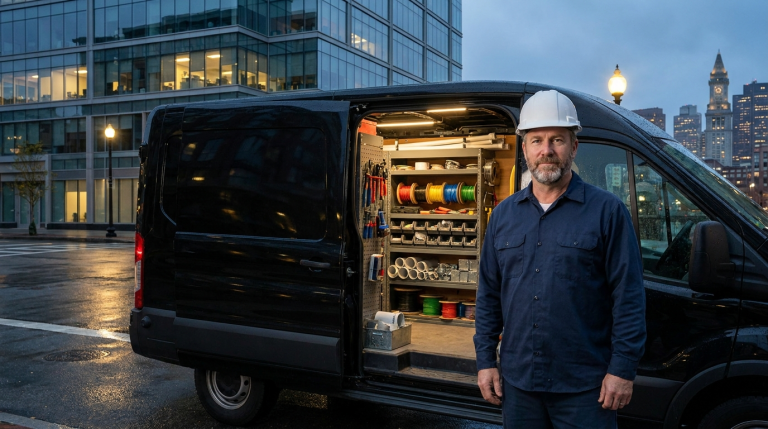
Electrical Installation and Maintenance: Safe 2025 Guide
Why Electrical Installation and Maintenance Matters
Electrical installation and maintenance is the process of setting up, inspecting, and repairing electrical systems to ensure they operate safely and efficiently. This applies to both the initial installation of components and the ongoing work required to keep them functioning properly in your home or business.
Quick Overview:
- Installation: Planning, wiring, panel setup, and testing of new electrical systems.
- Maintenance: Regular inspections, cleaning, tightening connections, and replacing worn parts.
- Inspections: Recommended every 3-5 years for homes and annually for commercial facilities.
- Benefits: Improved safety, lower energy costs, longer equipment life, and fewer breakdowns.
- Warning Signs: Flickering lights, frequent breaker trips, burning smells, or buzzing sounds require immediate attention.
Your electrical system is the foundation that powers nearly everything you rely on daily. It must be properly designed, installed, and maintained to support your lights, HVAC systems, computers, and security.
As
Ed Sartell, President of Sartell Electrical Services, I've spent nearly four decades managing
electrical installation and maintenance projects across Massachusetts. In this guide, I'll share what I've learned about keeping electrical systems safe, efficient, and reliable for residential, commercial, and industrial properties.
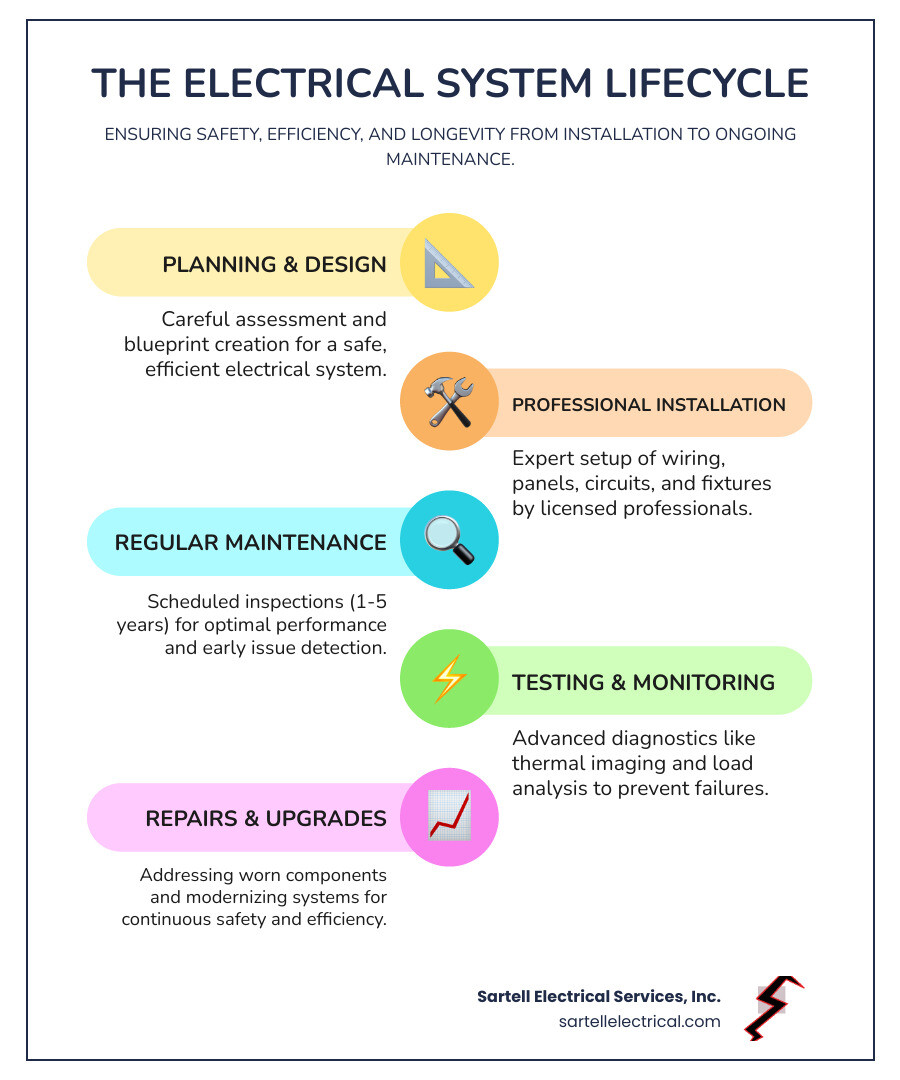
The Foundation: Defining Electrical Systems
An electrical system is your building's circulatory system, delivering power from its source to every outlet, light, and appliance.
Electrical installation is the comprehensive process of creating this infrastructure, including planning,
wiring,
panel and
circuit installation, and testing all
fixtures to ensure they work safely.
- The wiring acts as the veins, carrying current throughout your property.
- The panel (breaker box) is the heart, distributing power and protecting against overloads.
- Each circuit is a dedicated pathway for electricity to a specific area or appliance.
Once installed, a system is not "set it and forget it."
Electrical maintenance is the ongoing commitment to keeping your system in peak condition through regular
inspection,
testing,
repair, and
prevention. This involves visual checks, using diagnostic tools to verify function, addressing faults promptly, and fixing small issues before they become costly or dangerous.
At Sartell Electrical Services, we know that comprehensive
Electrical Services involve both expert installation and continuous maintenance to keep everything running safely for years.
Types of Electrical Installations
The electrical needs of a home are vastly different from a retail store or a factory. We work with three main categories of electrical installations, each with unique requirements and safety regulations.
| Feature |
Residential Electrical Installations |
Commercial Electrical Installations |
Industrial Electrical Installations |
| Purpose |
Powers homes, appliances, lighting, and HVAC systems. |
Supports businesses, offices, retail, and public spaces. |
Drives heavy machinery, manufacturing, and large-scale operations. |
| Voltage |
Typically single-phase, 120V/240V. |
Often three-phase, 208V/480V, for higher power demands. |
High-voltage systems, three-phase, often custom-engineered. |
| Complexity |
Moderate, focused on household needs and convenience. |
More complex, accommodating diverse business equipment, lighting, and security. |
Highly complex, involving specialized machinery, automation, and critical power. |
| Equipment |
Standard outlets, switches, lighting, appliances, HVAC. |
Commercial-grade lighting, specialized outlets, data cabling, security, HVAC. |
Heavy machinery, motor controls, PLCs, high-capacity panels, specialized wiring. |
| Regulations |
Governed by local building codes and National Electrical Code (NEC). |
Stricter commercial codes, fire safety, and accessibility standards. |
Most stringent codes, safety protocols, hazardous location classifications, and specific industry standards. |
| Maintenance |
Periodic inspections (3-5 years), basic repairs. |
Annual inspections, preventive maintenance to minimize downtime. |
Continuous monitoring, predictive maintenance, specialized equipment servicing. |
Residential Electrical Services focus on safety and comfort in living spaces, typically using single-phase power. Maintenance usually involves professional inspections every three to five years.
Commercial Electrical Services involve more complex systems to support businesses. These properties often use three-phase power and require annual inspections to prevent downtime and comply with stricter fire and safety codes.
Industrial Electrical Services are the most demanding, powering heavy machinery in factories and manufacturing plants. These high-voltage systems require continuous monitoring and predictive maintenance to prevent costly production shutdowns and adhere to the most stringent safety standards.
Why Proactive Maintenance is Non-Negotiable
Proactive
electrical installation and maintenance is essential for safety, operational continuity, and financial well-being. In my 40 years of experience, I've seen that properties investing in regular maintenance avoid the emergency calls and expensive repair bills that result from neglect. It's about being prepared, not paranoid.
Key Benefits of Regular Maintenance
- Improved Safety: Regular inspections catch deteriorating wires, loose connections, and overloaded circuits, which are leading causes of electrical fires and shocks. We use tools like thermal imaging to spot hidden hazards before they become dangerous.
- Cost Savings: Fixing small issues early prevents expensive emergency repairs and the productivity losses that come with unexpected downtime. A well-maintained system also runs more efficiently, lowering your monthly utility bills. For an idea of what to expect for repairs, see our guide on Electrical Troubleshooting Cost.
- System Longevity: Regular cleaning, tightening connections, and replacing worn parts extends the life of your entire electrical system, from the panel to the appliances.
- Peace of Mind: For businesses, proactive maintenance reduces the risk of breakdowns that halt operations. For homeowners, it provides confidence that your system is safe and compliant with all safety regulations.
Warning Signs Your System Needs Attention
Your electrical system will often signal when there's a problem. If you notice any of these signs, call a professional immediately.
- Flickering lights: This often indicates an overloaded circuit or loose wiring, especially if lights dim when an appliance turns on.
- Frequent breaker trips: A breaker that trips regularly means the circuit is drawing too much power or has a fault. This may require a Breaker Panel Upgrade or Fuse Box Replacement.
- Burning odors or warm/discolored outlets: A burning smell or outlets and switch plates that are warm or discolored are serious fire hazards that require immediate attention.
- Buzzing or sizzling sounds: Electricity should be silent. Noises from outlets, switches, or your panel typically indicate loose wiring or other dangerous conditions.
Recommended Maintenance Frequency
How often you need professional maintenance depends on your property type.
- Residential Properties: A professional inspection is recommended every 3-5 years to identify developing issues that are not visible to the untrained eye.
- Commercial Properties: Annual maintenance is advised due to higher usage and more complex systems. This prevents costly downtime and ensures compliance with commercial safety codes.
- Industrial Facilities: Maintenance schedules are based on the operation's intensity, equipment age, and system complexity. Regular Building Electrical Maintenance is crucial in these high-stakes environments.
A Closer Look at Electrical Installation and Maintenance Tasks
Professional
electrical installation and maintenance is a comprehensive examination to ensure your system is safe, efficient, and reliable. It's a combination of detective work and preventive care to catch small issues before they become major problems.
Key Tasks in Residential and Commercial Electrical Maintenance
Professional maintenance is like a thorough physical for your electrical system. Key tasks include:
- Visual Inspections: Examining wiring, outlets, and panels for signs of wear, damage, or overheating.
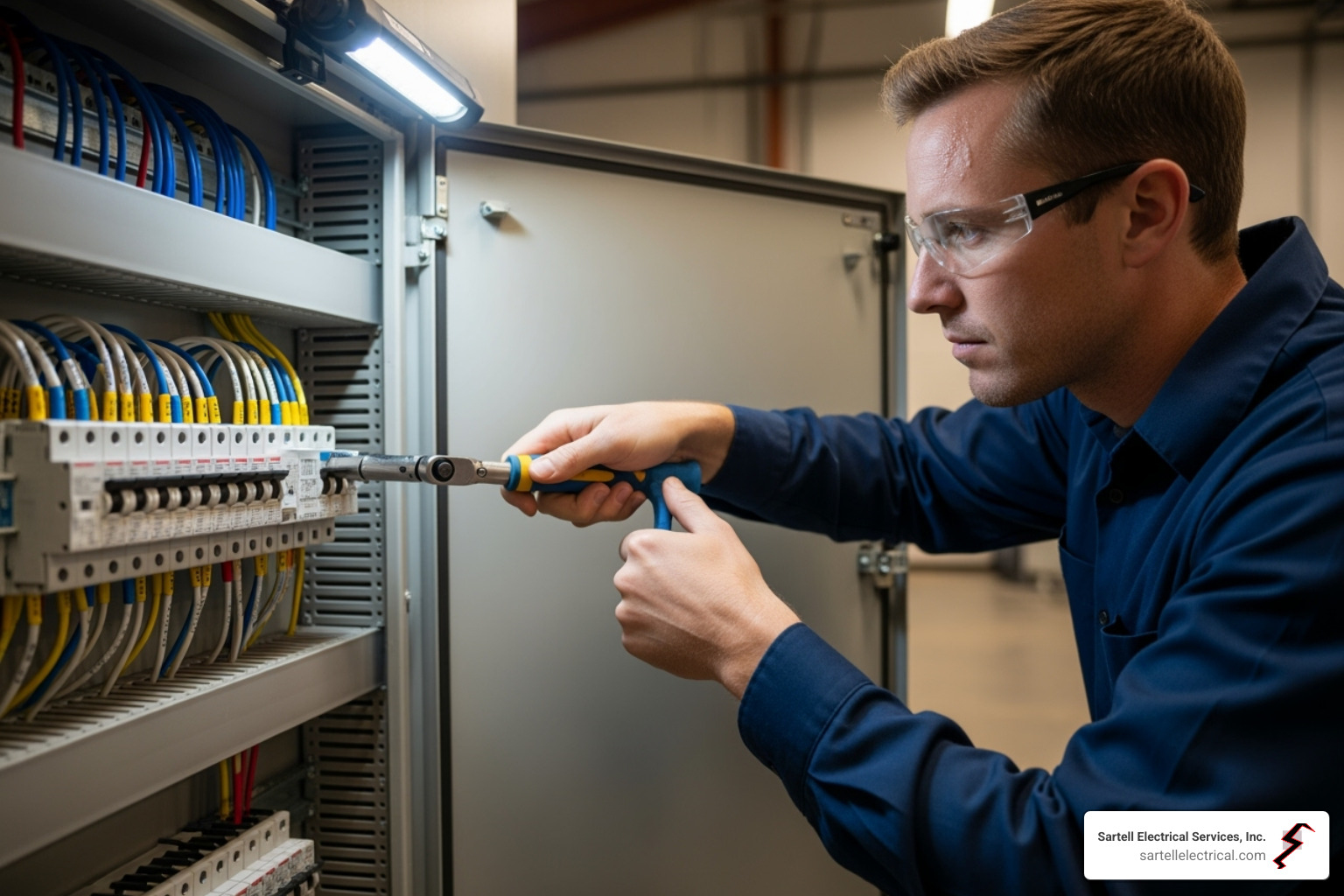
- Connection Tightening: Systematically tightening all connections in panels, outlets, and fixtures. Loose connections are a primary cause of electrical fires.
- Panel Cleaning: Removing dust and debris from electrical panels to prevent overheating.
- Safety Device Testing: Verifying that circuit breakers trip correctly under fault conditions and that GFCIs and AFCIs are functioning to prevent shock and fire.
- Load Testing: Assessing circuits to ensure they are not overloaded, which is a significant fire risk. In complex systems, we may use [Electrical Condition Monitoring] to track performance.
To ensure a thorough job, professionals often use a detailed
electrical maintenance checklist during inspections.
Electrical work is dangerous and should only be performed by qualified professionals. DIY attempts can lead to fires, injuries, and expensive damage.
A
licensed electrician has completed extensive training and passed rigorous exams on electrical codes and safety. This certification is proof of the knowledge required to work on electrical systems safely. At Sartell Electrical Services, we are a licensed and insured contractor with over 30 years of experience in Massachusetts.
The dangers of DIY electrical work are serious. Incorrect wiring can cause shocks and fires, and it often violates safety codes, which can void your insurance and create hidden hazards. Code violations can lead to fines and significant safety risks.
When you need electrical work, always choose a reputable, licensed, and insured electrical contractor. Our team of licensed residential electricians is ready to provide expert service, ensuring your system is in the safest hands.
The Future of Electrical Systems and Technology
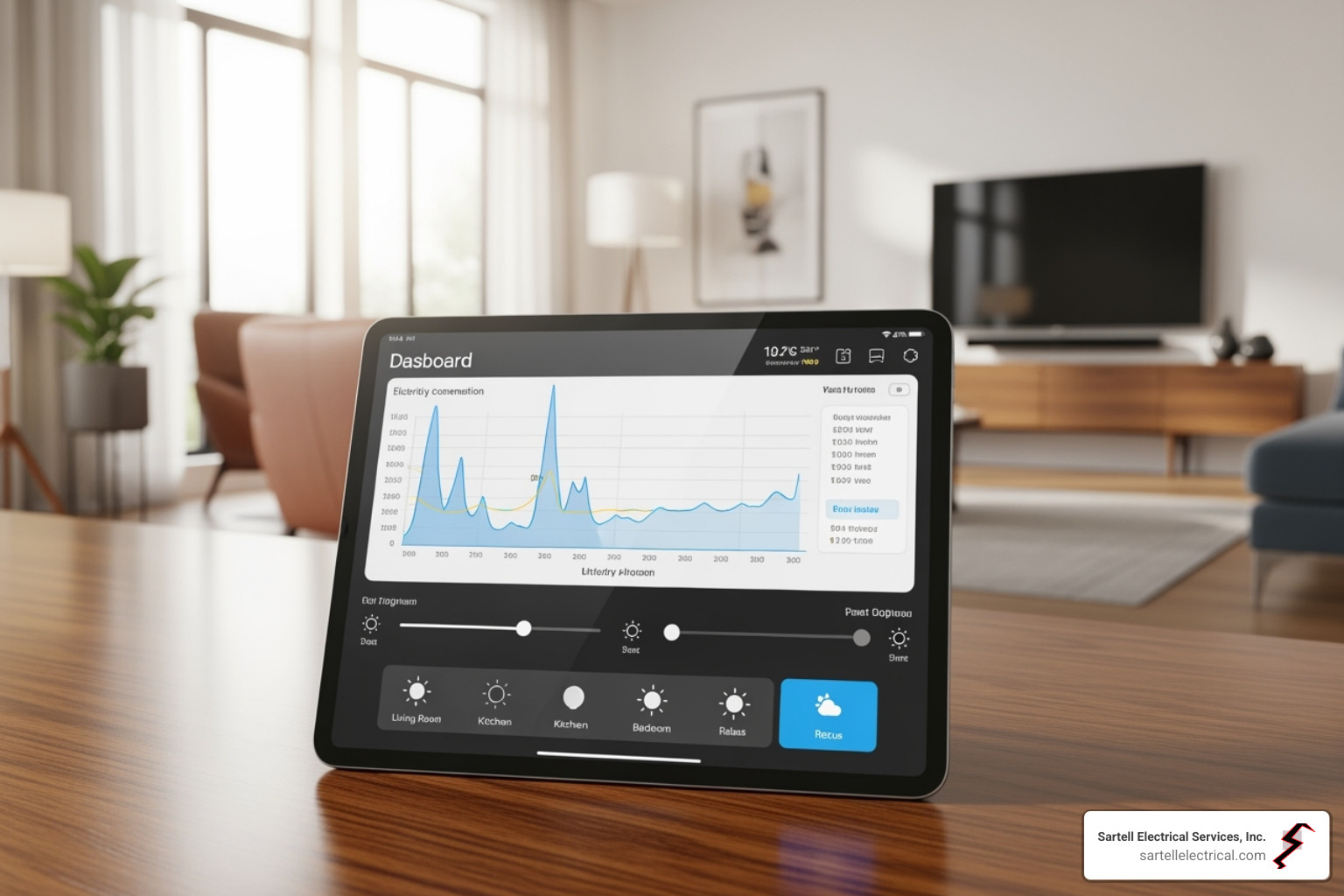
The pace of change in
electrical installation and maintenance has never been faster. New technologies are making systems safer, more efficient, and more intelligent than ever before.
Emerging Trends in Electrical Installation and Maintenance
- Smart Home Technology: Homeowners now expect integrated systems for lighting, security, and climate control. These systems require reliable networks and proper infrastructure to support IoT (Internet of Things) integration and automated controls.
- Energy Efficiency: LED lighting has become the standard, drastically reducing energy bills and maintenance. We are also installing a growing number of EV chargers, which often require a [Home Electrical Panel Upgrade] to handle the additional load safely.
- Renewable Energy Integration: Solar panels and battery storage systems are becoming common features on homes and businesses. Integrating these sources with the grid requires specialized knowledge to manage power flow and ensure safety.
The Rise of Predictive Maintenance
Maintenance is shifting from reactive (fixing broken things) to
predictive (anticipating problems before they happen). Using
data analytics and modern monitoring tools, we can detect subtle changes that signal developing issues.
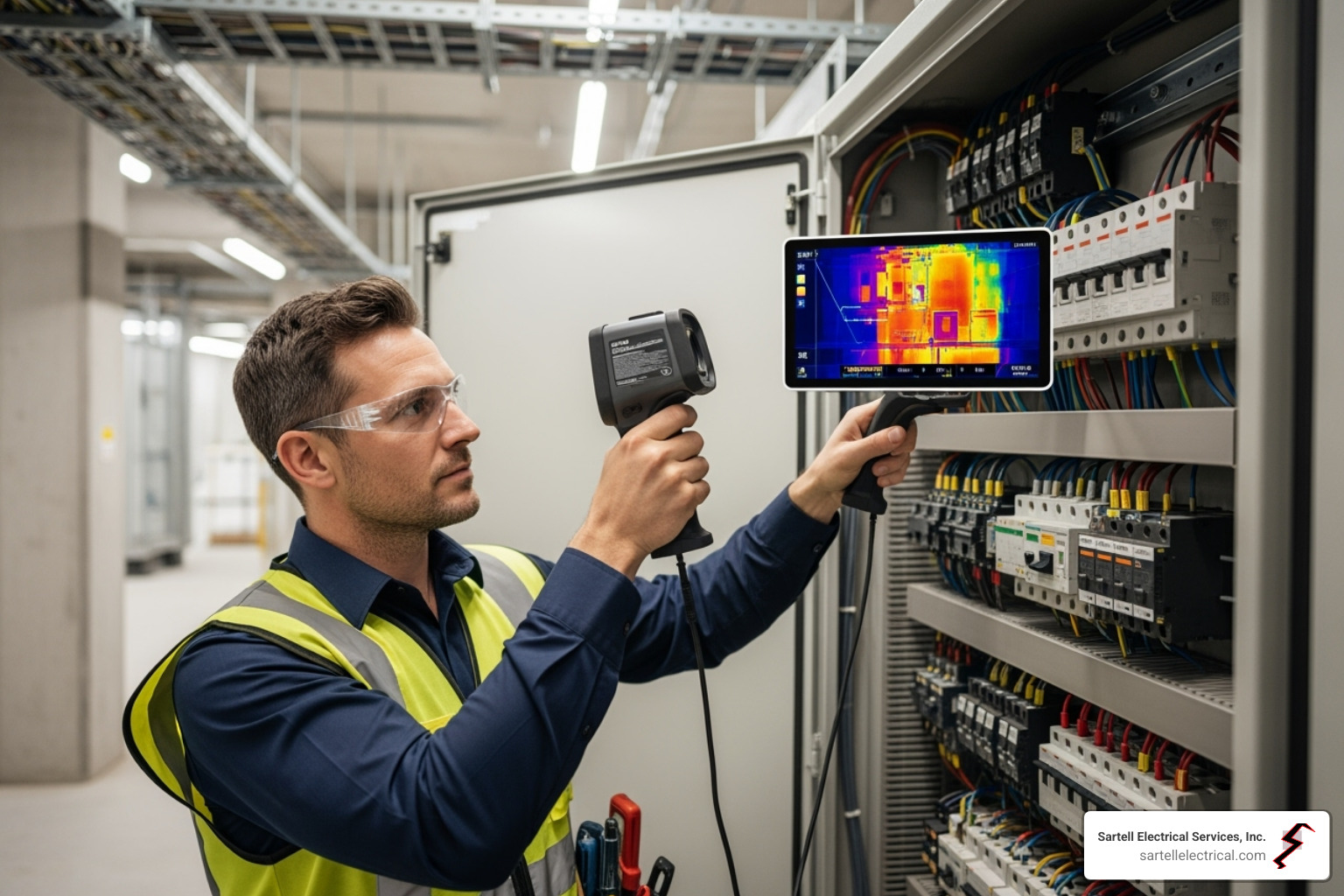
Thermal imaging is one of our most valuable tools. Infrared cameras detect abnormal heat in electrical components, revealing loose connections or failing breakers long before they cause a fire or outage. For industrial clients,
vibration analysis can detect mechanical faults in motors before they lead to catastrophic failure.
The
Predictive maintenance techniques we use today are part of a proactive philosophy at the heart of modern electrical asset management strategies. This approach ensures maximum uptime and safety, giving our commercial and industrial clients a competitive advantage by preventing costly, unplanned downtime.
Frequently Asked Questions about Electrical Services
Over the years, we've answered thousands of questions about
electrical installation and maintenance. Here are the answers to some of the most common ones.
How much does a typical electrical inspection cost?
The cost of an electrical inspection varies based on several factors, so a single price is difficult to quote. The cost depends on the property's size, the age of the electrical system, and the overall
project complexity. A basic residential inspection will cost less than a comprehensive assessment of a large commercial facility. Most contractors charge hourly rates, but the cost of an inspection is always a small fraction of the potential cost of fire damage or emergency repairs from an undetected problem. When you contact us for service in Massachusetts, we provide a transparent, detailed quote for your specific situation. Our guide on [Electrical Troubleshooting Cost] can also give you a better sense of what to expect for repairs.
What's the difference between a circuit breaker and a fuse?
Both devices protect your electrical system from dangerous overcurrents, but they work differently. A
fuse contains a thin metal filament that melts and breaks the circuit when too much current flows through it. It's a one-time-use device that must be replaced after it blows. Fuses are common in older homes.
A
circuit breaker is a reusable switch. When it detects an overcurrent, an internal mechanism trips the switch to the "off" position, breaking the circuit. Once the issue is resolved, you can simply flip the breaker back on. Modern circuit breakers are the standard in today's [House Breaker Panel Wiring] because they are more convenient and reliable. If your home still has a fuse box, you may want to consider a [Fuse Box Replacement] or [Breaker Panel Upgrade].
Can I perform minor electrical maintenance myself?
While some basic tasks are safe for homeowners, any work involving wiring or opening panels should be left to a professional.
- Safe DIY Tasks: Changing lightbulbs, testing smoke detectors, resetting a tripped circuit breaker, and replacing outlet cover plates.
- Call a Professional For: Any task involving working with wires, installing new fixtures, or troubleshooting problems like flickering lights, frequent breaker trips, or burning smells.
The risks of improper DIY work are severe, including electric shock, fire, and costly damage. It can also violate electrical codes and void your home insurance. My rule of thumb is simple:
if you have to ask whether you should call a professional, you should call a professional. Our team of licensed residential electricians is here to help, and our emergency electrical service is available when you need us most.
Conclusion: Powering Your Future Safely and Efficiently
After more than three decades in the electrical industry, I can say with certainty that the key to a safe and efficient property is a serious approach to
electrical installation and maintenance. Proper installation lays the groundwork, and proactive maintenance ensures long-term safety and reliability.
The benefits are clear: improved safety, lower energy bills, longer equipment life, and the peace of mind that comes from preventing problems before they start. Warning signs like flickering lights or frequent breaker trips are calls for help that should never be ignored. Following a regular maintenance schedule—every 3-5 years for homes, annually for businesses—is a small investment that pays huge dividends.
As technology evolves with smart homes and renewable energy, the need for professional installation and maintenance only grows. At Sartell Electrical Services, we have served Massachusetts communities for over 30 years, staying current with the latest technologies and safety standards to provide the highest level of service.
Your electrical system is too important for guesswork. It deserves the attention of experienced professionals. For expert
building electrical maintenance and installation services, contact our team today. Let us help you power your future safely and efficiently.