What Is Electrical Panel Relocation — and Do You Need It?
Electrical panel relocation is the process of physically moving your home's circuit breaker box from its current location to a new one. Here's a quick summary of what's involved:
- What it is: A licensed electrician disconnects all wiring, removes the panel, reroutes circuits, and reinstalls the panel at a new location
- Average cost: $1,500 to $4,000, with most homeowners paying around $3,500
- Time required: 4 to 8 hours of on-site work, though scheduling permits and utility disconnects can extend the total timeline to a week or more
- Permit required: Yes, in virtually all jurisdictions
- DIY: Not recommended — this work must be done by a licensed electrician in most states
Whether you're remodeling, dealing with a panel that blocks access, or bringing an older home up to code, relocating your breaker box is a significant but manageable project when handled by the right professional.
I'm Ed Sartell, President of Sartell Electrical Services, and I've been managing electrical panel relocation projects across Massachusetts since 1985. In this guide, I'll walk you through every step of the process so you know exactly what to expect before the work begins.
Electrical panel relocation definitions:
- 24 hour electrician service near me
- Electrical Contractor Service
- local electrical contractors near me
Why Consider Electrical Panel Relocation?
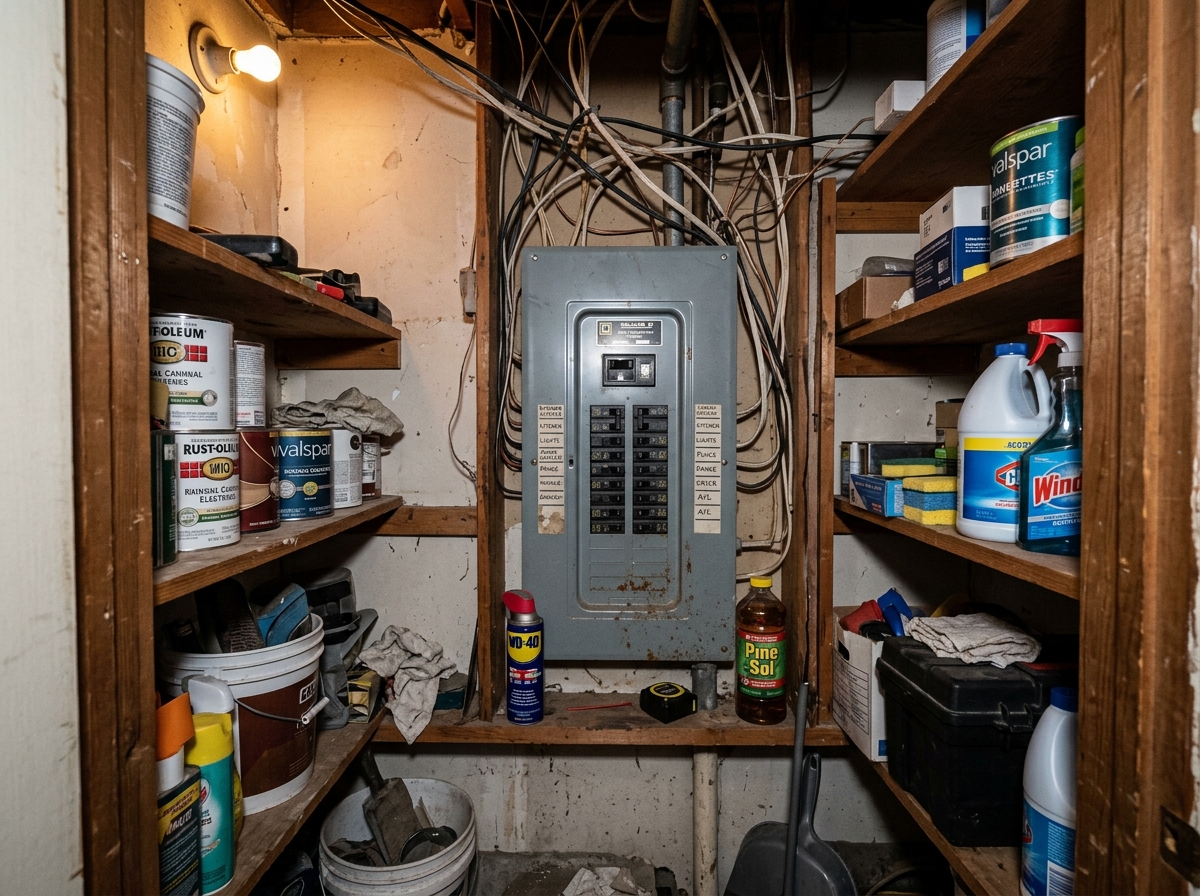
We often see homeowners who feel "stuck" with their current electrical setup. Maybe your breaker box is in a dark, damp corner of the basement that floods every spring, or perhaps it’s right in the middle of the wall where you want to install a new set of kitchen cabinets. Whatever the reason, electrical panel relocation is more common than you might think.
Remodeling and Space Optimization
This is the number one reason we get calls for relocation in places like Reading or Arlington. When you’re finishing a basement or expanding a kitchen, that gray metal box can become a major obstacle. We’ve seen panels protruding into narrow walkways or blocking the path of a new rear door. Moving the panel just 10 feet to a different wall can completely open up your floor plan.
Code Compliance and Safety
Electrical codes have changed drastically over the last few decades. In the past, it was common to see panels tucked away in closets or even bathrooms. Today, the National Electrical Code (NEC) strictly prohibits this. If you are doing a major renovation, an inspector might require you to move the panel to a compliant location. Furthermore, if your panel is currently located near a water source or in a high-traffic area where it’s prone to physical damage, moving it is a vital safety upgrade.
Accessibility and Modernization
As we age, or as we simply look for more convenience, having the residential main electrical panel in an easy-to-reach spot becomes a priority. If you have to climb over storage boxes or navigate a steep crawl space just to reset a tripped breaker, it’s time for a change. Relocating the panel to a garage or a dedicated utility room makes maintenance much safer and easier.
Pros and Cons of Relocation
While the benefits are clear, we always like to be transparent with our clients about the trade-offs:
- Pros: Improved safety, better home aesthetics, increased resale value, and easier access for future upgrades like EV chargers.
- Cons: It is a labor-intensive project that involves temporary power outages and secondary costs like drywall repair and painting.
Understanding the Costs of Moving a Breaker Box
Budgeting for electrical panel relocation can be tricky because no two homes are wired exactly the same. However, looking at national and local Massachusetts averages can give you a solid starting point. Most homeowners in our service area, from Boston to North Andover, find that a full relocation costs between $2,500 and $5,500.
| Panel Type | Average Relocation Cost |
|---|---|
| Breaker Box | $1,500 – $4,000 |
| Fuse Box | $1,000 – $2,500 |
| Subpanel | $1,000 – $3,000 |
Labor and Material Breakdown
The bulk of your investment goes toward skilled labor. Electricians typically charge between $50 and $130 per hour for this type of work. Because relocation involves tracing every single circuit in your home, labeling them, and extending the wires to the new spot, it’s not a "quick fix."
Materials also add up. You aren't just paying for the box itself; you're paying for:
- New copper wiring (which can cost $0.50 to $1.00 per foot).
- Specialized connectors ($10–$15 each).
- Conduit, junction boxes, and potentially a new main panel upgrade cost if your current equipment is outdated.
Factors Influencing Electrical Panel Relocation Pricing
Why does one job cost $1,500 while another costs $4,000? It usually comes down to these variables:
1. Distance of the Move
The further you move the panel, the more it costs. Why? Because every single circuit in your house has to reach that new location. If we move a panel 20 feet away, we have to splice and extend 20 to 40 different cables. This requires more wire, more junction boxes, and significantly more labor time.
2. Wire Gauge and Complexity
If you have high-draw appliances like a double oven, a central AC unit, or an EV charging station, those require thicker, more expensive wire gauges. Navigating through finished ceilings or complex framing also adds to the difficulty.
3. Drywall and Cosmetic Repairs
We try to be as surgical as possible, but moving a panel usually involves cutting into walls to reroute wires. You should budget an additional $200 to $750 for drywall repair and potentially $2 to $6 per square foot for painting once we're done. These are the "hidden" home electrical panel upgrade cost factors that many homeowners overlook.
Relocation Costs for Different Panel Types
The type of system you currently have will dictate the complexity of the move.
- Breaker Box: This is the standard modern setup. Relocation is straightforward but time-consuming due to the number of circuits.
- Fuse Box: If you still have a fuse box, we almost always recommend a fuse box replacement during the move. It rarely makes financial sense to relocate obsolete technology. Moving and upgrading a fuse box to a modern breaker system usually lands on the higher end of the price scale.
- Subpanel: These are smaller panels that feed specific areas like a garage or an addition. They are generally cheaper to move because they handle fewer circuits.
The Step-by-Step Process for Relocating Your Panel
At Sartell Electrical Services, we follow a rigorous process to ensure your home stays safe and your power is restored as quickly as possible. Here is how a typical electrical panel relocation unfolds.
Phase 1: Site Assessment and Planning
We start by inspecting your current system and your desired new location. We check for NEC clearance requirements and ensure the new spot is dry and accessible. We also look at the house breaker panel wiring to determine the best path for rerouting the circuits.
Phase 2: Permits and Utility Coordination
You can't just move a panel on a whim. We handle the permit applications with your local Massachusetts municipality (like the City of Boston or the Town of Reading). We also coordinate with the utility company. Since the main service line coming from the street must be disconnected, the utility company needs to be involved in the "pull and reconnect" process.
Phase 3: The Big Day — Power Shutoff and Removal
Once the utility company kills the power to your house, we get to work. We carefully label every single wire in your existing panel. This is the most critical step—if wires aren't labeled correctly, it can lead to major headaches (and safety risks) during reconnection. We then remove the old panel and gut the box.
Phase 4: Rerouting and Installation
We mount the new panel in the agreed-upon location. Often, we use the old panel location as a "junction box." We extend the existing wires from that old box through the walls or ceiling to the new panel. We then secure the wires, install new breakers, and ensure everything is "torqued" to manufacturer specifications.
Phase 5: Testing and Inspection
After everything is reconnected, we don't just flip the switch and leave. We test every circuit for continuity and polarity. We check the grounding and bonding of the system to ensure it's lightning-safe. Finally, a local building inspector will visit to sign off on the work, ensuring it meets all safety codes.
Safety Standards for Electrical Panel Relocation
Safety isn't just a buzzword; it's the law. When we perform an electrical panel relocation, we adhere to the latest NEC standards.
- The 6-Foot Rule: If we extend a branch circuit by more than 6 feet, modern codes often require us to add AFCI (Arc Fault Circuit Interrupter) protection. This is a vital safety feature that prevents house fires, but it can add to the project cost.
- Working Clearance: The NEC requires a clear working space in front of the panel that is at least 30 inches wide, 36 inches deep, and 6.5 feet high. You can't hide a panel behind a refrigerator or inside a tiny pantry.
- Grounding and Bonding: Moving a panel often means we need to update the grounding system, ensuring a solid connection to a ground rod or your home's water main. This is part of a standard breaker panel upgrade that we include in our relocation service.
Choosing the Right Location for Your New Panel
Picking the new spot for your electrical panel box for home is a decision you'll live with for decades. We recommend:
- The Garage: It’s usually dry, accessible, and has plenty of clearance.
- A Dedicated Utility Room: Keeps the panel out of sight but easy to reach.
- Avoid Wet Areas: Never install a panel in a bathroom, near a sump pump, or in a laundry room where moisture is a constant factor.
- Think Future-Proof: If you plan on adding solar panels or a backup generator later, choose a spot that has room for additional equipment.
Frequently Asked Questions about Panel Relocation
Do I need a permit to move my electrical panel?
Absolutely. In Massachusetts, any major electrical work—especially something as significant as moving the main service—requires a permit. This ensures that a third-party inspector verifies the work is safe. We handle the entire permit and inspection process for our clients, so you don't have to navigate the red tape at city hall.
How long does the relocation process typically take?
The actual on-site labor usually takes 4 to 8 hours for a straightforward move. However, if we are doing a full home rewiring or a complex 200-amp service upgrade, it could take 1 to 2 days. The biggest "wait time" is often waiting for the utility company to arrive for the disconnect or for the local inspector to schedule their visit. For a deep dive into the timing, check out our main electrical panel upgrade complete guide.
Is it safe to relocate an electrical panel yourself?
In a word: No. This is not a DIY project for a Saturday afternoon. Working inside a main panel involves handling "live" wires that carry enough current to be fatal. Furthermore, if the work isn't done to code, your homeowner's insurance may refuse to cover you in the event of a fire. Licensed electricians have the specialized tools, like large-scale wire cutters and torque wrenches, and the years of training required to do this safely.
Conclusion
Electrical panel relocation is a big step toward a safer, more functional home. Whether you're clearing space for a dream kitchen remodel in Waltham or bringing a historic home in Salem up to modern standards, the peace of mind that comes with a professionally moved panel is well worth the investment.
At Sartell Electrical Services, Inc., we’ve spent over 30 years serving our neighbors across Middlesex, Essex, and Norfolk counties. From our home base in Reading, MA, we bring a commitment to excellence and customer service to every job, no matter the size. We understand the local codes from Boston to Billerica, and we treat every home as if it were our own.
If you’re ready to move that breaker box and take control of your home’s electrical system, we’re here to help.