Breaker Panel Upgrade Cost: Top 5 Smart Tips
Why Understanding Electrical Panel Costs Matters for Your Property
Breaker panel upgrade cost typically ranges from $1,200 to $4,500 for most residential and commercial properties, with the final price depending on several key factors:
Quick Cost Breakdown:
- 100-amp upgrade: $850 - $2,000
- 200-amp upgrade: $1,300 - $3,500
- 400-amp upgrade: $2,000 - $6,000+
- Labor costs: $400 - $1,920 (4-8 hours with electricians)
- Permits & inspections: $200 - $500
- Additional costs: Rewiring, panel relocation, or code updates
Modern electrical demands have grown dramatically. Today's properties require significantly more power than systems installed even 20 years ago. Whether you're managing a commercial facility, healthcare institution, or residential property, an outdated electrical panel creates safety risks and limits your ability to support critical operations.
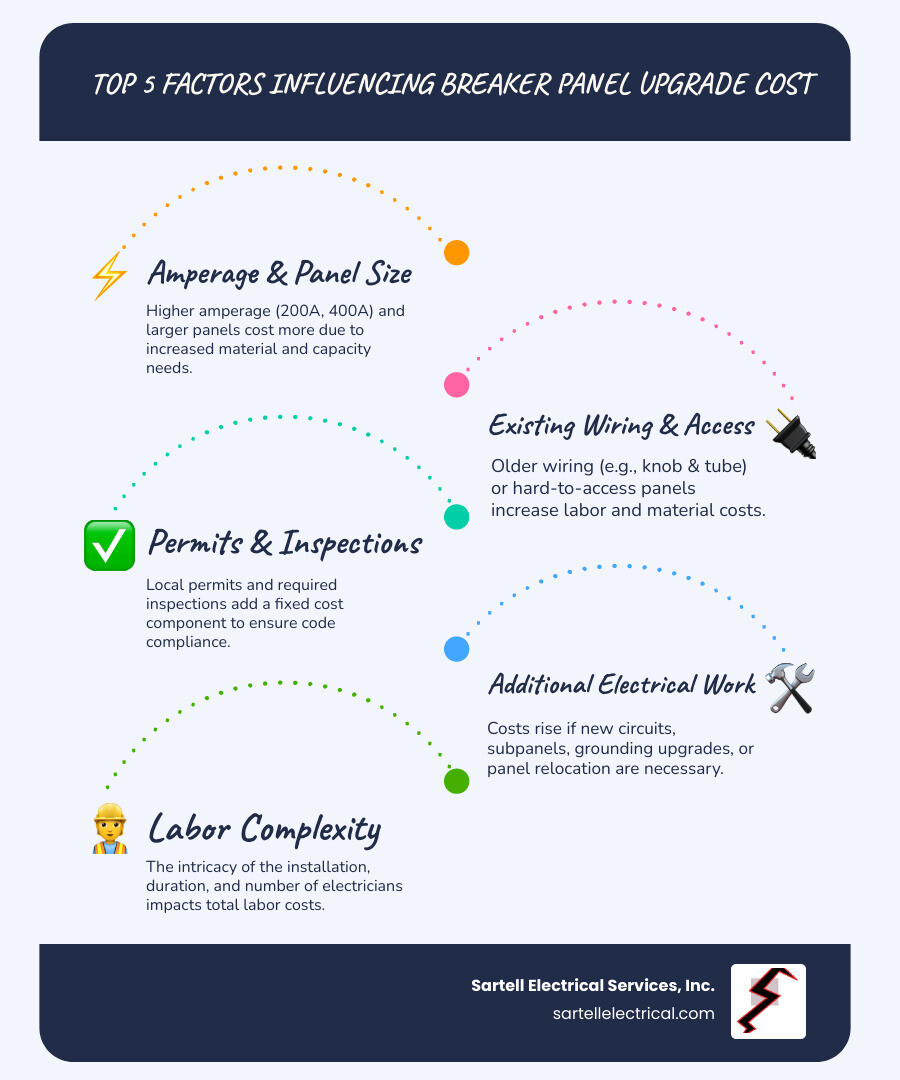
Key factors that impact your breaker panel upgrade cost include the amperage you need, your current panel's condition, accessibility, and whether additional electrical work is required. Properties with older wiring or hard-to-reach panels will see higher costs, while straightforward upgrades in accessible locations cost less.
As Ed Sartell, I've been helping property owners steer electrical upgrades since founding Sartell Electrical Services in 1985, and I've seen how proper planning can control
breaker panel upgrade cost while ensuring reliable, code-compliant installations. Understanding these cost factors upfront helps you budget effectively and avoid unexpected expenses during your project.
Important
breaker panel upgrade cost terms:
When and Why to Upgrade Your Electrical Panel
Take a moment to count the electrical devices you use daily. Your smartphone charger, laptop, coffee maker, microwave, washing machine, air conditioning – the list goes on and on. Now imagine trying to run all of this through the same electrical system that powered homes in the 1960s. That's exactly what many homeowners are doing, and it's a recipe for trouble.
Modern life demands more electricity than ever before. We're adding smart home devices, electric vehicle chargers, heat pumps, and energy-efficient appliances that require dedicated circuits. Meanwhile, many homes are still running on electrical panels designed for a much simpler time.
When your electrical panel can't keep up, it doesn't just create inconvenience – it creates real safety risks. Those
flickering lights when your air conditioner kicks on? That's your system crying for help.
Tripping breakers that send you to the basement multiple times a week? Your panel is working overtime to protect you from an overload.
The typical electrical panel has a
lifespan of 25 to 40 years, but today's electrical demands can push older systems beyond their limits much sooner. That mysterious
buzzing sound coming from your panel isn't normal – it's a warning sign that shouldn't be ignored.
Beyond safety, upgrading your electrical panel brings real value to your property. A modern electrical system
increases home value significantly and provides crucial
safety improvements that protect your family and your investment. As electrification trends continue – think EV charging stations and efficient heat pumps – an upgraded panel transforms from a nice-to-have into an absolute necessity.
Understanding the
breaker panel upgrade cost early in your planning helps you make informed decisions about when and how to upgrade your system.
For comprehensive support with your electrical upgrade needs, explore our
Residential Electrical Services.
Signs Your Panel is Outdated or Overloaded
Your electrical system has its own way of communicating, and learning its language can save you from serious problems down the road. After three decades in this business, I've seen the same warning signs over and over again.
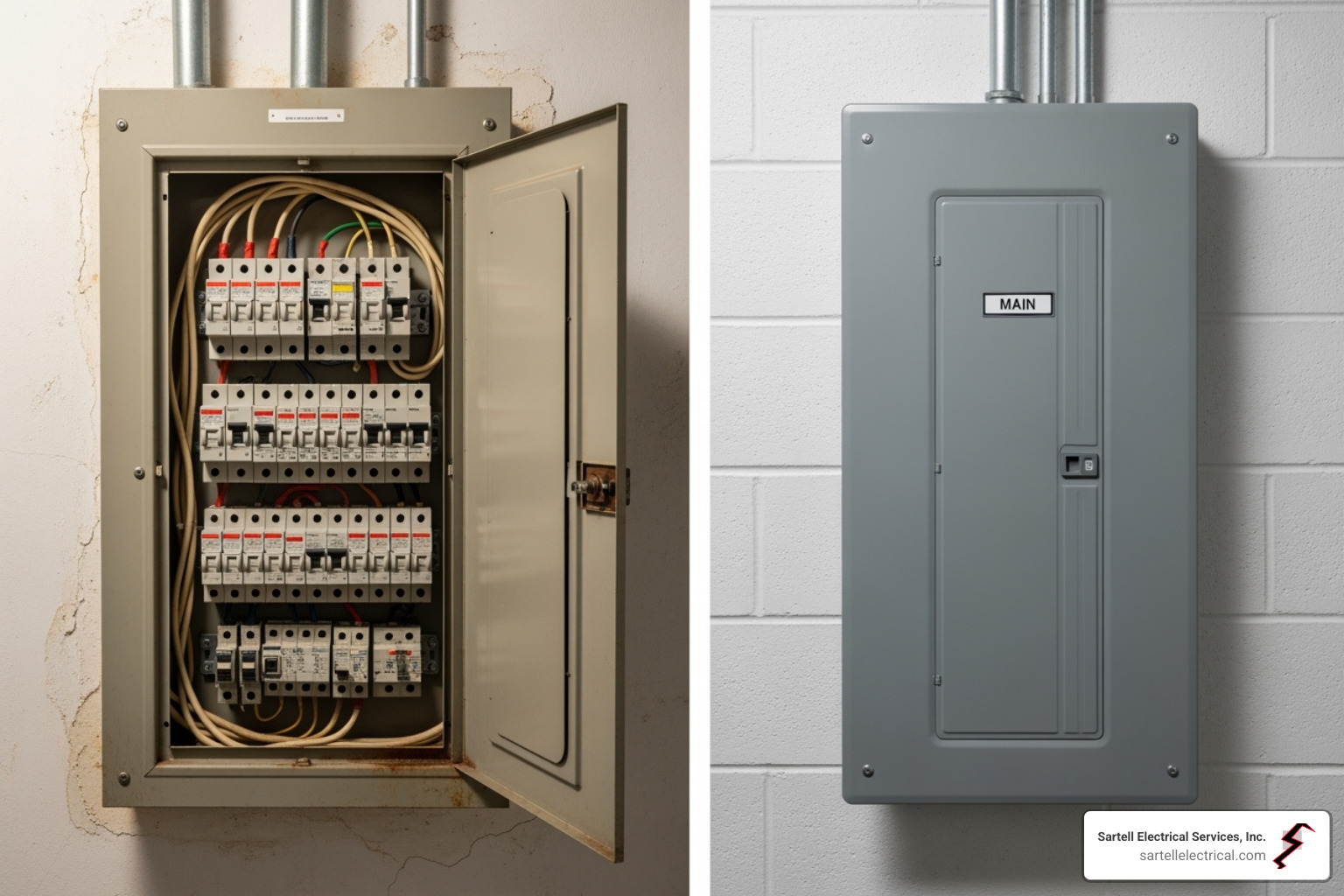
If you still have an old
fuse box instead of modern circuit breakers, you're living with 1950s technology in a 2020s world. Fuse boxes simply weren't designed for today's electrical appetite. They're inconvenient when fuses blow, and they lack the safety features of modern breaker panels.
Many older homes operate on
60-amp service, which is like trying to fill a swimming pool with a garden hose. Today's homes typically need at least 100 amps, with most families finding 200 amps more realistic for their needs. If you're constantly dealing with
insufficient power for your daily activities, your amperage is probably too low.
Breakers that trip frequently are your electrical system's way of protecting you, but they're also telling you that your circuits are overloaded. This isn't just annoying – it's potentially dangerous. Similarly, if you notice a
burning smell around your electrical panel or outlets, stop what you're doing and call a professional immediately.
Corrosion or rust on your panel indicates moisture problems or aging components that compromise safety.
Melted wiring or heat damage around outlets and switches are serious red flags that demand immediate attention.
According to the National Fire Protection Association, electrical failures are a leading cause of home fires. These warning signs aren't just inconveniences – they're your home's way of asking for help before a serious problem develops.
Benefits of a Modern Electrical Panel
Upgrading your electrical panel isn't just about fixing problems – it's about changing how your home handles electricity. The benefits extend far beyond simply keeping the lights on.
Improved safety tops the list of reasons to upgrade. Modern circuit breakers respond instantly to electrical faults, cutting power before damage occurs. This protection extends to your family, your appliances, and your home itself. There's real peace of mind in knowing your electrical system can handle whatever you throw at it.
Increased capacity means no more choosing between running the air conditioner and the washing machine. Modern panels provide the power your lifestyle demands, whether that's charging an electric vehicle, powering a home office, or running multiple appliances simultaneously.
Future-proofing your home has become essential as we accept electrification trends. That heat pump you're considering for next year? The EV charger you'll want when you upgrade your car? A modern electrical panel makes these additions simple instead of complicated.
The
higher energy efficiency of modern electrical systems reduces waste and strain on your components. While the panel itself doesn't directly save energy, an efficient system runs more smoothly and lasts longer.
Insurance compliance matters more than many homeowners realize. Insurance companies increasingly require updated electrical systems, especially in older homes. A modern panel can even qualify you for lower premiums by demonstrating your commitment to safety.
Finally,
increased property resale value makes this upgrade an investment rather than just an expense. Home buyers recognize the value of a modern, code-compliant electrical system. It signals that your home is well-maintained and ready for contemporary living.
Understanding the Breaker Panel Upgrade Cost
Planning for an electrical panel upgrade can feel overwhelming, especially when you're trying to figure out what you'll actually spend. The truth is,
breaker panel upgrade cost isn't a simple answer because every home and situation is unique.
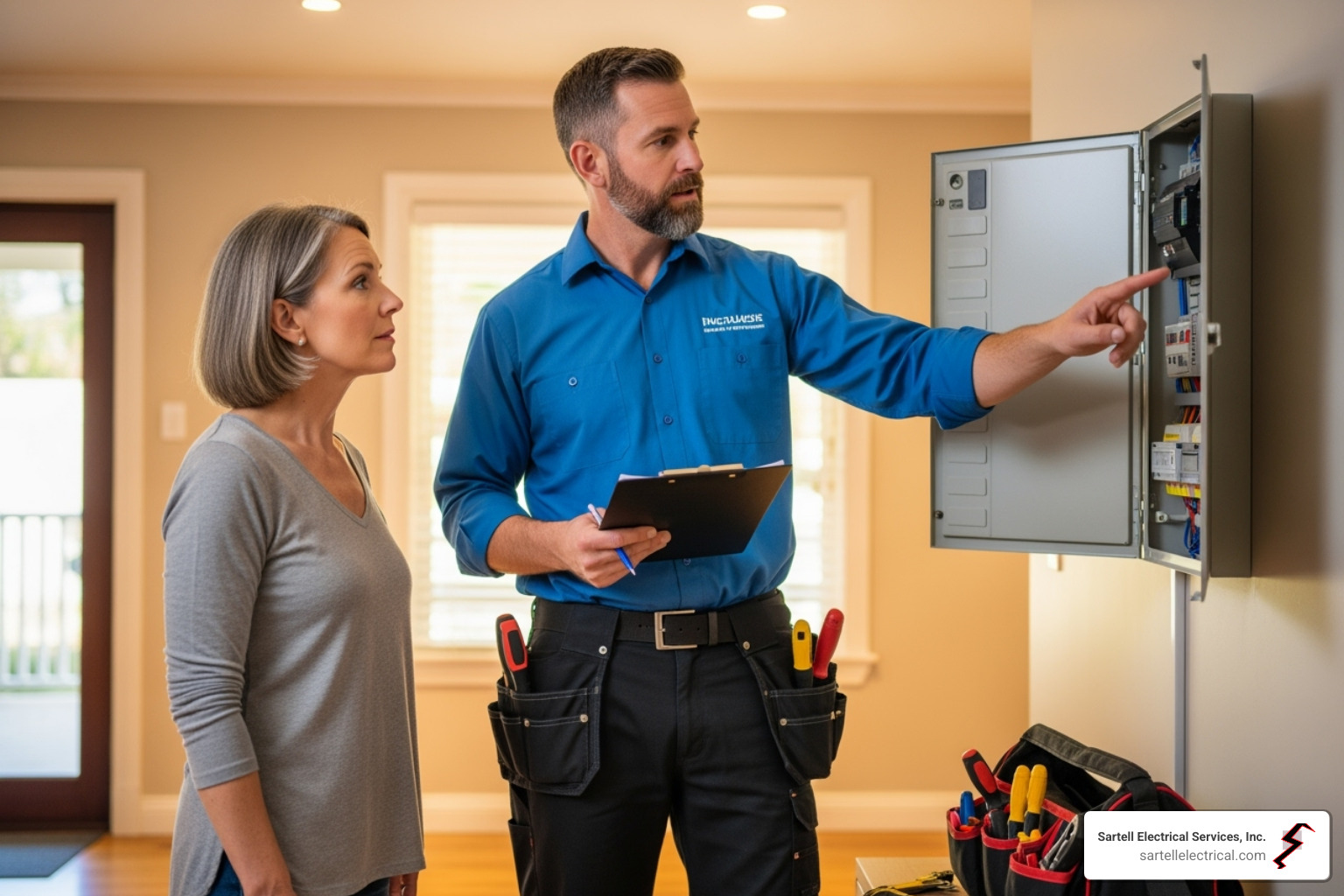
When I sit down with homeowners to discuss their electrical panel upgrade, I break down the costs into clear categories so they understand exactly what they're paying for.
Labor costs typically make up the biggest chunk of your investment, and for good reason. This work requires years of training and expertise to do safely. You're paying for skilled craftsmanship that protects your family and property.
Material costs include your new electrical panel, circuit breakers, wiring, and all the components needed for a safe installation. The quality of these materials directly impacts the longevity and reliability of your electrical system.
Then there are the
permit fees and
inspection fees. I know some homeowners wonder if these are necessary, but they absolutely are. These fees ensure your upgrade meets all safety codes and protects you legally. Think of them as insurance for your investment.
The
amperage you choose has a huge impact on your final cost. A 100-amp panel serves basic needs, while a 200-amp panel gives you room to grow. Your
home size and the condition of your existing wiring also play major roles in determining the final price tag.
Key Factors Influencing Your Breaker Panel Upgrade Cost
Over my 30+ years in this business, I've learned that several key factors can significantly impact your
breaker panel upgrade cost. Understanding these upfront helps you budget realistically and avoid surprises.
| Amperage |
Typical Cost Range |
Use Cases |
| 100-amp |
$850 - $2,000 |
Smaller homes, minimal electrical demands, replacing older 60-amp panels. |
| 200-amp |
$1,300 - $3,500 |
Standard for most modern homes, accommodates typical appliances, AC, and some future expansion. |
| 400-amp |
$2,000 - $6,000+ |
Large homes (4,000+ sq.ft.), homes with multiple high-demand appliances (EV chargers, electric heating, hot tubs, workshops). |
Panel accessibility can make or break your budget. If your current panel is tucked away behind a finished wall or crammed into a tight crawl space, expect to add $500 to $1,000 to your project. I've seen panels hidden in the most creative places, and getting to them always adds complexity.
Relocating the panel is sometimes necessary for code compliance or convenience. Maybe your current panel is in a spot that doesn't meet today's safety standards, or you want it moved to a more accessible location. This involves extensive rewiring and can add $800 to $3,000 to your total cost.
Existing wiring condition is often the wild card in electrical upgrades. If your home still has knob and tube wiring or other outdated systems, we might need to do some rewiring alongside your panel upgrade. This can add anywhere from $500 to $2,000, or even more for extensive rewiring projects.
Subpanel installation becomes necessary when you're adding new areas like a finished basement or workshop. These typically run between $400 and $1,750, depending on size and complexity.
Grounding system upgrades are often required in older homes to meet current safety standards. This usually adds $200 to $500 to your project, but it's essential for safety and code compliance.
Average Breaker Panel Upgrade Cost by Amperage
Let me walk you through the real-world costs for different amperage upgrades, since this is usually the biggest factor in determining your
breaker panel upgrade cost.
100-amp upgrades typically cost between $850 and $2,000. This is perfect for smaller homes or when you're replacing an old 60-amp system. It handles basic electrical needs without breaking the bank, though it doesn't leave much room for future expansion.
200-amp upgrades are what I recommend for most homeowners, ranging from $1,300 to $3,500. This gives you plenty of capacity for modern appliances, air conditioning, and leaves room for future additions like EV chargers or smart home systems. It's the sweet spot for most families.
400-amp upgrades are for homes with serious electrical demands, costing $2,000 to $6,000 or more. These are typically needed for very large homes or properties with multiple high-draw appliances like EV chargers, electric heating systems, or extensive workshop equipment.
Here's something that surprises many homeowners:
replacing an old panel with the same amperage doesn't save you much compared to upgrading to higher capacity. Most of your cost comes from labor, permits, and ensuring everything meets current codes, regardless of the panel size.
Beyond the main panel work, you might encounter additional costs, such as:
- Drywall repair: $1.50 to $3 per square foot if we need to open walls.
- New circuit installation: $100 to $250 per circuit.
- Utility fees: $250 to $700 for disconnecting and reconnecting power.
- Specialty breakers: Modern AFCI and GFCI units cost more than standard breakers but are often required by current electrical codes.
Permits, Inspections, and Other Fees
I always tell my clients that permits and inspections aren't red tape – they're your protection. These typically add $200 to $500 to your project, but they ensure everything is done safely and legally.
Here in Massachusetts, we follow specific electrical code requirements that must be met for every installation. Our team knows the Massachusetts Electrical Code inside and out. We handle all the paperwork and coordinate with local authorities so you don't have to worry about compliance issues.
Final inspections are crucial because they verify that your new panel meets all safety standards.
Utility company fees for disconnection and reconnection are standard practice, ensuring our electricians can work safely without power to your home. These coordination fees typically range from $250 to $700, but they're essential for everyone's safety.
I've seen too many DIY attempts or unlicensed work create major problems down the road. Skipping permits can lead to hefty fines, insurance complications, and serious issues when you try to sell your home. It's simply not worth the risk when proper permitting protects your investment and your family's safety.
The Upgrade Process and Hiring a Professional
Starting on an electrical panel upgrade might feel overwhelming at first, but when you work with experienced professionals, the process becomes surprisingly straightforward. Think of it like having a trusted guide who knows every step of the journey.
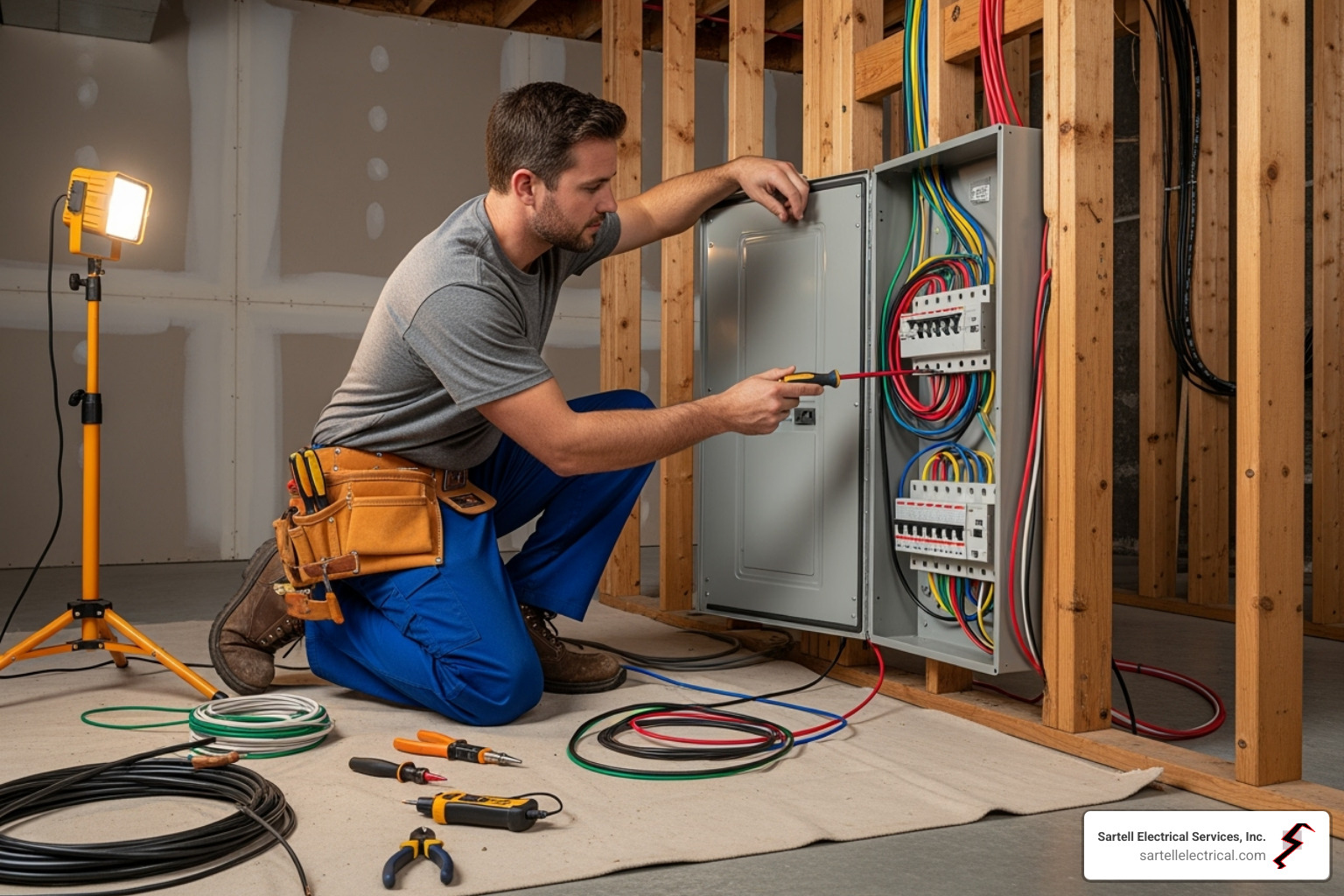
The upgrade process follows a logical sequence that protects both you and your property. We begin with a
comprehensive assessment of your current electrical system, examining everything from your existing panel's condition to your home's power demands. This isn't just a quick glance - we're looking for signs of wear, calculating your electrical load, and identifying any potential challenges that could affect your
breaker panel upgrade cost.
Next comes the
detailed quoting phase, where we provide you with a transparent breakdown of all anticipated costs. No hidden surprises, no vague estimates - just honest numbers you can count on. While we're preparing your quote, we're also handling the
permitting process with your local municipality, taking that administrative burden off your shoulders.
Installation day is when everything comes together. We coordinate with your utility company for the necessary power shutdown, ensuring everyone's safety during the work. Our licensed electricians then carefully install your new panel, upgrade any necessary wiring, and conduct thorough testing before the
final inspection by municipal authorities confirms everything meets code.
How to Hire a Licensed Electrician
Choosing the right electrician for your panel upgrade is one of the most important decisions you'll make in this process. Your electrical panel is essentially the heart of your home's power system, and you want someone with the right skills and credentials working on it.
Always verify licensing and insurance first. This isn't just a formality - it's your protection against liability if something goes wrong. In Massachusetts, electrical work must be performed by licensed professionals, and that license should be current and in good standing. Insurance coverage protects you from potential accidents or property damage during the work.
Reviews and testimonials tell the real story of how an electrician treats their customers. Look beyond just star ratings and read what people actually say about their experience. Did the electrician show up on time? Was the work area left clean? Were there any unexpected issues, and how were they handled?
Getting multiple written quotes is essential, but don't just look at the bottom line. Compare what each electrician includes in their scope of work, their timeline, and their approach to permits and inspections. Be cautious of quotes that seem too good to be true - they often are.
Experience specifically with panel upgrades matters tremendously. While all licensed electricians can handle basic electrical work, panel upgrades require specialized knowledge of service entrance equipment, load calculations, and coordination with utility companies. At Sartell Electrical Services, we've been performing these critical upgrades for over 30 years, giving us deep expertise in handling projects of all complexities across Massachusetts.
You can learn more about
our qualifications and our commitment to excellence, leadership, and customer service that has served our community for decades.
What to Expect During the Installation
Installation day is when months of planning come together in a carefully orchestrated process. Understanding what happens helps you prepare and ensures everything goes smoothly.
The day starts with preparation and safety measures. Our team arrives with all necessary equipment and materials, sets up protective coverings for your property, and walks you through the day's schedule. We'll answer any last-minute questions and make sure you're comfortable with the process.
The power shutdown is the most critical phase. We coordinate with your utility company to safely disconnect power to your home, which means you'll be without electricity for several hours - typically the full duration of the installation. This is a good time to charge your devices beforehand, have flashlights ready, and unplug sensitive electronics to protect them from power surges when service is restored.
Removing the old panel and installing the new one requires precision and expertise. We carefully disconnect and remove your existing electrical panel, then mount and wire the new upgraded panel. This involves connecting main service lines, installing new circuit breakers, and methodically connecting every circuit from your home to the appropriate breaker in the new panel.
System testing and inspection happen before power restoration. We test every circuit to ensure proper operation and safety, check all connections, and verify that your grounding system meets current code requirements. Only after our internal quality checks do we coordinate with the utility company to restore power to your home.
The final municipal inspection provides official confirmation that your upgrade meets all local electrical codes and safety standards. We also take time to
label each circuit clearly in your new panel, so you'll know exactly what each breaker controls - no more guessing games when you need to turn something off.
The entire process typically takes
8 to 10 hours, depending on your home's specific requirements and any unexpected issues we encounter with existing wiring. Our goal is always to minimize disruption to your daily routine while ensuring the work is completed safely and efficiently.
Frequently Asked Questions about Electrical Panel Upgrades
Over the years, we've helped thousands of homeowners steer their
breaker panel upgrade cost decisions. These are the questions that come up most often during our consultations, and I want to make sure you have clear, honest answers.
How long does an electrical panel typically last?
Here's the good news:
a modern electrical panel typically lasts between 25 to 40 years when it's properly installed and maintained. That's a solid investment in your home's safety and functionality.
But here's what many homeowners don't realize:
individual components like breakers can fail sooner than the panel itself. If your breakers are constantly tripping or you're dealing with an overloaded system, those components might wear out faster than expected.
We strongly recommend regular inspections for any panel over 20 years old. Think of it like getting your car serviced - a little preventive care goes a long way toward avoiding bigger problems down the road. During these inspections, we can spot early warning signs and help you plan for an upgrade before you're dealing with an emergency.
Can I upgrade my electrical panel myself?
I'm going to be direct here:
absolutely not. This isn't like replacing a light fixture or installing a ceiling fan. We're talking about working with
high-voltage electricity that can seriously injure or kill you.
Electrical panel work requires a licensed professional for several critical reasons. First, the safety risks are enormous - one mistake can lead to electrocution, fires, or worse. Second, this work involves complex code requirements that change regularly. Third,
you'll need permits and inspections that only licensed electricians can properly handle.
Attempting a DIY panel upgrade can
void your homeowner's insurance, create serious fire hazards, and lead to expensive fines from your local authority. When we're talking about your family's safety and your home's protection, this is definitely not the place to try to save money.
Does upgrading my electrical panel qualify for any tax credits?
Yes, and this is one of those pleasant surprises that can help offset your
breaker panel upgrade cost!
You may qualify for the Energy Efficient Home Improvement Credit, which can be a real game-changer for your budget.
This federal credit covers up to 30% of your project's cost, and for an
electric panel upgrade, the credit is capped at $600. While $600 might not cover your entire upgrade, it's certainly a welcome reduction in your overall investment.
The tax credit landscape changes regularly, so I always recommend checking with a tax professional or reviewing the latest information on government websites. What qualifies this year might be different next year, and there may be additional state or local incentives available in Massachusetts that could further reduce your costs.
Conclusion
Upgrading your electrical panel is one of the smartest investments you can make in your property. Think of it as the heart of your home's electrical system—when it's working properly, everything else can function safely and efficiently. A modern panel doesn't just keep your lights on; it protects your family from electrical fires, supports all those power-hungry devices we can't live without, and prepares your home for whatever the future brings.
The
breaker panel upgrade cost might seem significant upfront, but consider what you're getting in return. You're buying peace of mind, knowing your electrical system can handle modern demands without breaking a sweat. You're investing in your property's value—buyers love seeing a recently upgraded electrical panel because it means one less major expense they'll face. And you're future-proofing your home for electric vehicles, smart home technology, and whatever innovations come next.
We've seen too many homeowners try to squeeze just a little more life out of an aging panel, only to face flickering lights, tripped breakers, and the constant worry about safety. Don't wait until your electrical system forces your hand with an emergency situation that could have been prevented.
For homeowners and businesses throughout Massachusetts, choosing the right electrical contractor makes all the difference. At Sartell Electrical Services, we've been helping families and businesses upgrade their electrical systems for over three decades. We've seen every type of panel, handled every kind of challenge, and we know exactly what it takes to get the job done right the first time.
Our commitment goes beyond just installing a new panel. We take the time to understand your specific needs, explain your options clearly, and handle every detail from permits to final inspection. When we're finished, you'll have a modern, code-compliant electrical system that's ready to serve you reliably for decades to come.
Ready to take the next step?
Contact us today for a professional assessment of your residential electrical needs. Let's work together to ensure your electrical system is safe, reliable, and ready for whatever the future holds. After all, when it comes to your family's safety and your property's value, you deserve nothing less than excellence.