Why Finding a Trusted Garden Electrician Near Me Matters
If you're looking for a garden electrician near me, here's a quick answer to get you started:
What does a garden electrician do, and do you need one?
| Your Situation | Do You Need a Garden Electrician? |
|---|---|
| Adding outdoor sockets or lighting | Yes — outdoor wiring requires weatherproof, code-compliant installation |
| Powering a shed, garage, or garden room | Yes — requires dedicated circuits and proper underground cabling |
| Installing an EV charger in your driveway | Yes — needs panel assessment and permits |
| Setting up a hot tub or pool circuit | Yes — specialized safety standards apply |
| Replacing a dead outdoor bulb yourself | Usually no — but call a pro for anything beyond the fixture itself |
Outdoor electrical work is not the same as indoor work. It requires weatherproof fittings, protected wiring, and code-compliant installation to stay safe through rain, temperature swings, and everyday use. Skipping any of these steps creates real risk — over 50,000 residential electrical fires occur in the U.S. every year, and many start with wiring that was never built for the conditions it was placed in.
Your garden and outdoor spaces deserve the same level of electrical safety as the inside of your home — often more.
I'm Ed Sartell, President of Sartell Electrical Services, Inc., with nearly four decades of residential and commercial electrical experience across Massachusetts — including the outdoor and garden electrician near me work that homeowners and businesses consistently get wrong when they try to cut corners. Let's walk through exactly what professional outdoor electrical service looks like, so you can make a confident, informed decision.
Garden electrician near me terms to know:
- 24 hour electrician service near me
- emergency electricians in my area
- local electrical contractors near me
Why You Need a Specialized Garden Electrician Near Me
Many property owners assume that any general contractor or handy neighbor can run a wire out to a garden bed or mount a patio spotlight. However, outdoor electrical environments are inherently hostile to electrical systems. Moisture, shifting soil, extreme temperature fluctuations, and pests present unique challenges. A specialized garden electrician understands that bringing power outside requires a completely different approach than wiring a bedroom or kitchen.
When you look for qualified Electricians Near Me to handle your backyard project, you are investing in specialized knowledge of moisture protection, soil conditions, and strict outdoor electrical codes.

Outdoor Power and Weatherproof Sockets
Installing power outlets in a garden or on a patio requires heavy-duty, weatherproof equipment. Unlike indoor receptacles, outdoor outlets must be protected by robust Ingress Protection (IP) rated enclosures.
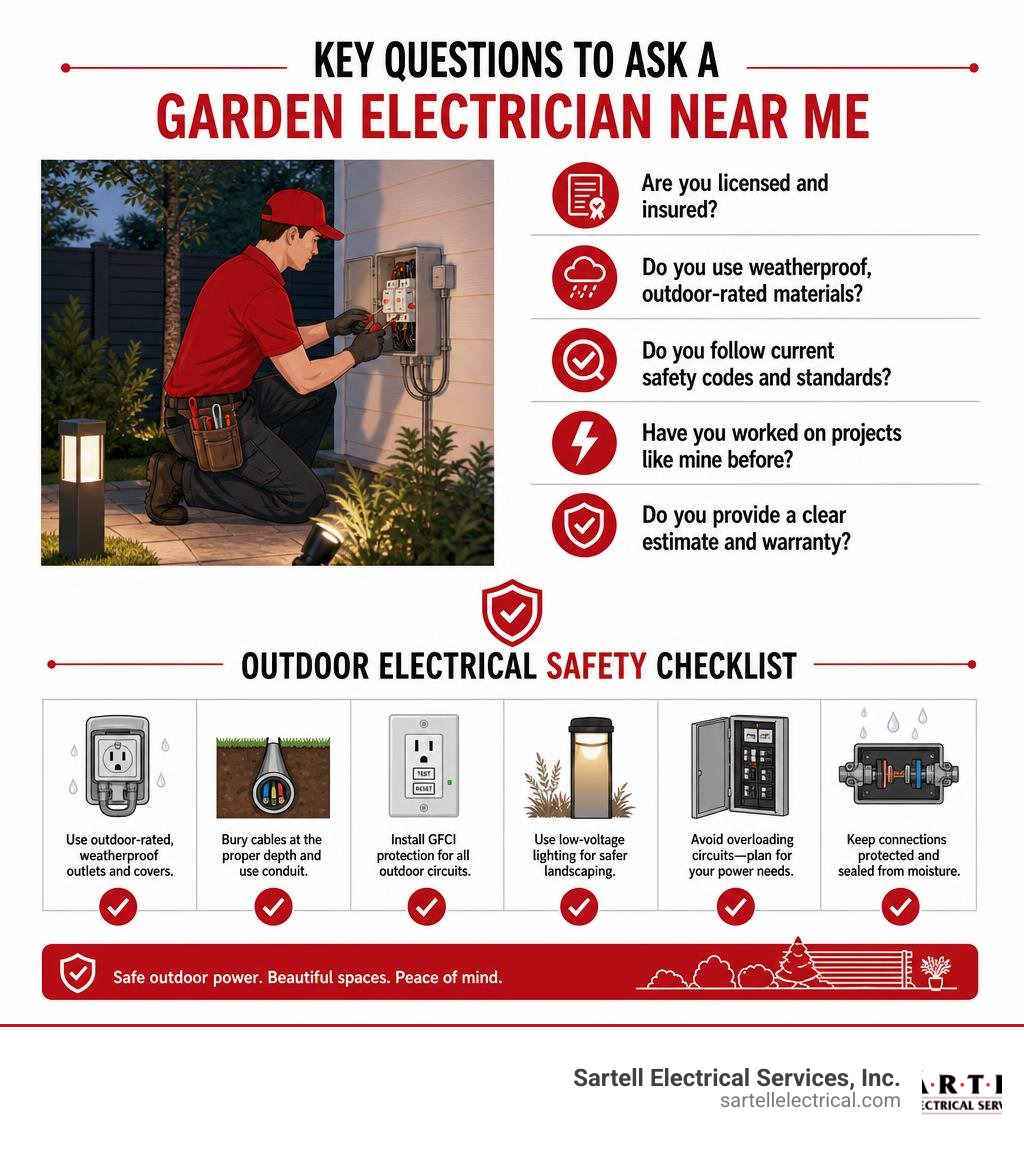
- IP Ratings Explained: For most garden environments, a minimum rating of IP44 is required to protect against splashing water. However, for fully exposed areas subject to heavy rain or hose sprays, we install IP66-rated enclosures. These "while-in-use" wet-location covers remain completely sealed even when an appliance or lighting string is plugged in.
- RCD and GFCI Protection: In outdoor environments, the risk of electrical shock is significantly elevated due to wet ground conditions. Every single outdoor circuit must be protected by a highly sensitive Residual Current Device (RCD) or Ground Fault Circuit Interrupter (GFCI) rated at 30mA. These safety devices continuously monitor the current and cut power in milliseconds if they detect the slightest leakage, preventing lethal shocks.
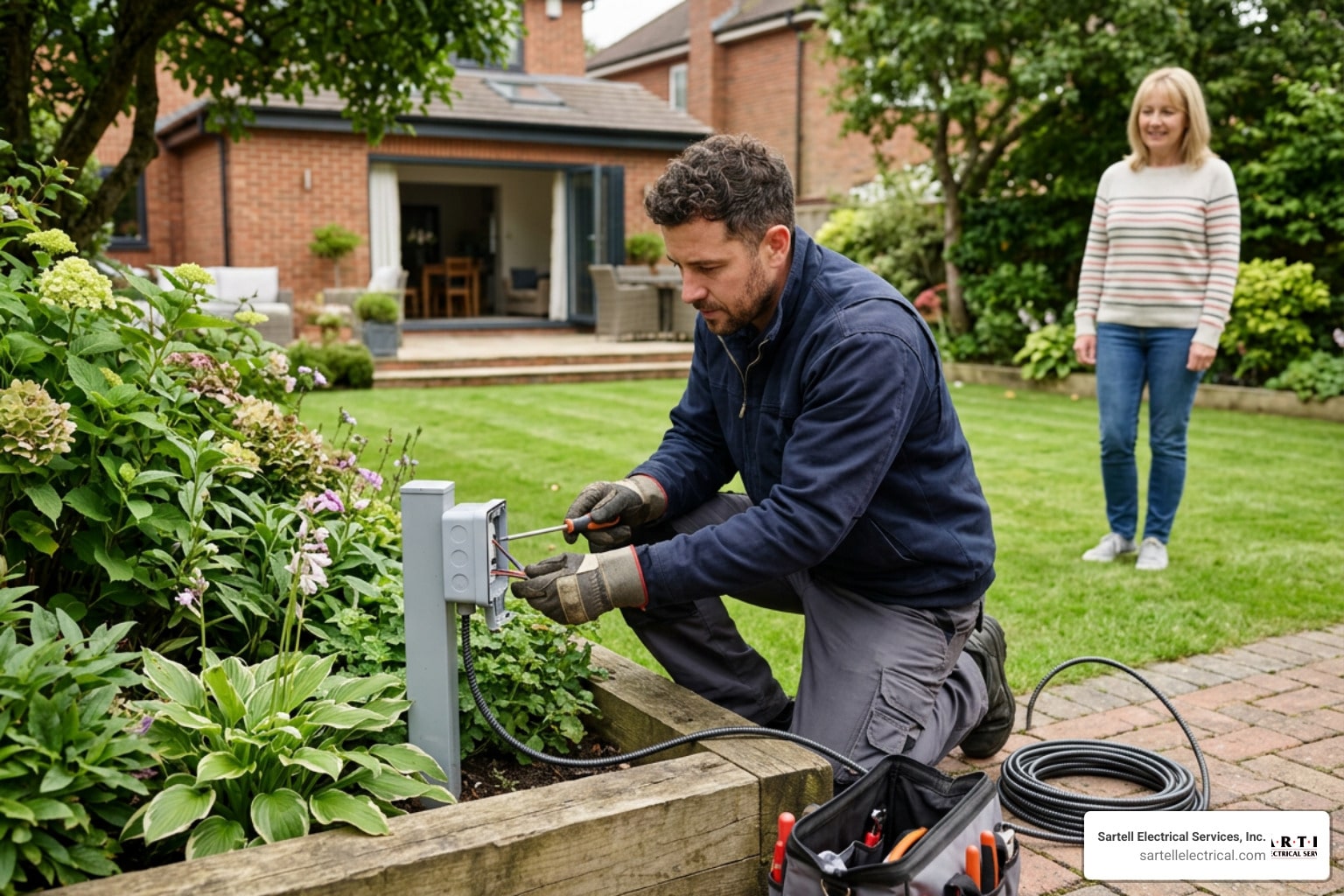
- Professional Installation Standards: Running temporary extension cords across your lawn is a major fire and tripping hazard. A professional garden electrician will install permanent, weatherproof sockets mounted securely to solid structures like brick walls, treated wooden posts, or concrete plinths. This ensures your lawnmowers, hedge trimmers, and patio heaters always have a safe, reliable power source.
Landscape and Patio Lighting Design
A beautifully lit garden does more than extend your living space into the evening hours; it increases your property’s security, aesthetic appeal, and overall market value. According to real estate studies, professionally installed outdoor lighting can increase a home’s value by up to 20% while yielding an impressive return on investment of approximately 50%.
- Aesthetic and Feature Lighting: From highlighting a mature oak tree to casting a soft glow along a stone pathway, landscape lighting design is an art. Professional electricians utilize low-voltage LED systems that are highly energy-efficient, safe to touch, and versatile. Placing uplights, downlights, and path fixtures correctly requires a deep understanding of voltage drop and circuit layout. For inspiration on beautiful Massachusetts properties, you can read about Landscape Lighting Installation in Massachusetts.
- Security and PIR Lighting: Integrating Passive Infrared (PIR) motion sensors with your garden lighting provides an excellent deterrent against intruders. These lights activate instantly when movement is detected, illuminating dark entryways and blind spots. A specialized electrician can configure these sensors so they do not trigger constantly from passing wildlife or wind-blown branches.
- Low-Voltage Systems vs. Line Voltage: While some elements like security floodlights run on standard line voltage (120V/240V), most modern decorative garden lighting runs on safe 12V or 24V low-voltage systems powered by an outdoor-rated transformer. This drastically reduces the risk of shock if a cable is accidentally nicked by a garden trowel.
Essential Outdoor Electrical Services for Homes and Businesses
Whether you are a homeowner wanting to light up a backyard deck or a business owner managing a commercial facility, outdoor electrical demands are diverse. Working with established Local Electrical Contractors Near Me ensures that your systems are engineered to handle the specific loads required.

| Service Category | Residential Properties | Commercial Properties |
|---|---|---|
| Primary Lighting | Soft landscape lights, patio sconces, path lighting | High-intensity security lights, architectural floodlights |
| Power Outlets | Weatherproof outlets for tools, lawn care, pool pumps | Heavy-duty sockets for maintenance equipment, exterior events |
| High-Load Power | Hot tub connections, EV chargers, detached garage panels | Parking lot pole lights, EV fleet charging stations, HVAC |
| Safety Systems | Standard GFCI breakers, motion-activated floodlights | Integrated commercial security, fire alarms, emergency exit paths |
High-Demand Residential Upgrades: EV Chargers, Generators, and Panels
As we move through 2026, residential power needs are changing rapidly. Modern homes demand significantly more power than they did just a few decades ago. Homes with older 100-amp electrical service (common in pre-1990 homes) often cannot safely support modern, high-draw outdoor additions like Level 2 electric vehicle (EV) chargers, which require dedicated 40-to-50 amp circuits.
- EV Charger Installation: Adding an EV charger to your driveway or carport requires a comprehensive load calculation of your existing electrical panel. If your panel is maxed out, a professional Licensed Home Electrician will perform a panel upgrade to 200 amps or install a smart load-management system to ensure your vehicle charges safely without overloading your home.
- Whole-Home Standby Generators: With severe weather events becoming more common, having a reliable backup generator is crucial. Electricians can install a standby generator with an automatic transfer switch (ATS). When the grid fails, the ATS instantly transfers your home's critical circuits—like your heating system, refrigerator, and outdoor security—to generator power.
- Whole-Home Surge Protection: Did you know that the average home experiences dozens of minor, unnoticed power surges every day? While Florida experiences the highest number of lightning strikes per square mile, Massachusetts coastal storms and grid fluctuations still pose a massive threat to sensitive electronics. Installing a whole-home surge protection device directly into your main electrical panel shields your expensive appliances, smart home systems, and outdoor LED lighting from sudden voltage spikes.
Commercial Solutions: Parking Lot Pole Lights and LED Upgrades
Commercial properties require heavy-duty outdoor electrical services that go far beyond standard residential applications. Keeping your commercial exterior properly illuminated is vital for customer safety, employee security, and liability protection.
- Parking Lot Pole Light Maintenance: Maintaining commercial pole lights requires specialized equipment, including bucket trucks and diagnostic tools. Commercial electricians regularly troubleshoot and repair dead bulbs, burned-out ballasts, faulty capacitors, and malfunctioning photocells. Ensuring these high-mast fixtures function at peak performance keeps your parking lots safe and compliant with local municipal codes.
- Commercial LED Lighting Upgrades: Upgrading outdated metal halide or high-pressure sodium fixtures to modern commercial LEDs is one of the smartest investments a business can make. LED lighting uses 75% to 80% less energy than traditional incandescent or HID bulbs and can last up to 25 times longer. This leads to dramatic utility bill savings and slashes your ongoing maintenance costs. Many local utility companies in Massachusetts also offer substantial rebates for commercial LED retrofits, sometimes covering a significant portion of the upfront installation costs.
Safety, Code Compliance, and Local Permitting
Electrical work is highly regulated for a reason: improper installations can cause catastrophic fires, severe injuries, or fatal shocks. In Massachusetts, all electrical work must comply with the strict guidelines of the National Electrical Code (NEC) as well as localized state building codes. When you hire a Registered Electrician Near Me, you are ensuring that your project is fully permitted, inspected, and certified.
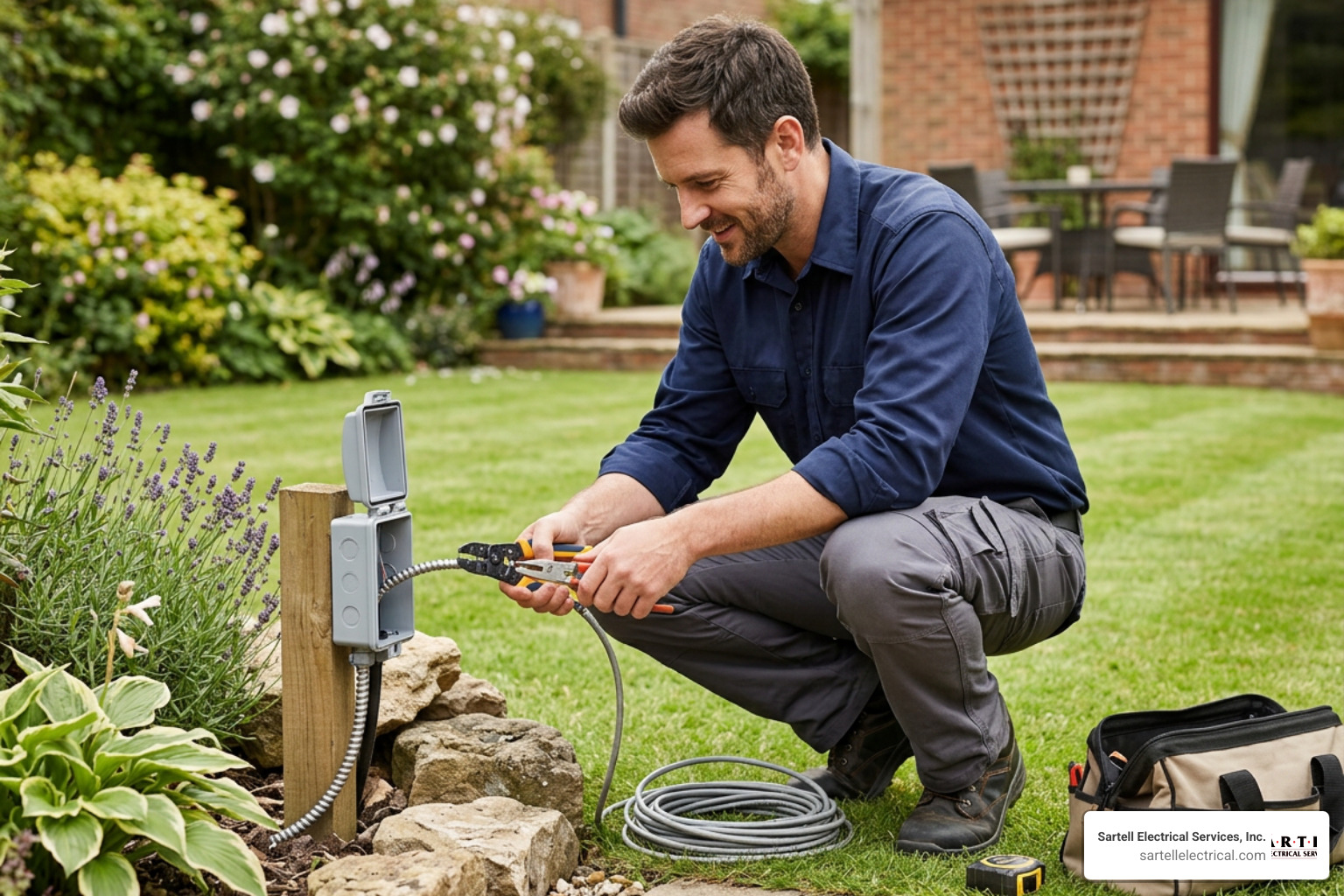
Verifying Licenses and Insurance Regulations
Never allow an unlicensed contractor, landscaper, or handyman to perform electrical work on your property. In Massachusetts, licensing laws are strictly enforced to protect consumers.
- Verify the License: Always ask to see an electrician's license before they begin any work. You can verify a license online through the Massachusetts Division of Occupational Licensure. A legitimate contractor will gladly provide their license number.
- Check the Vehicle: Under state regulations, licensed electrical contractors must clearly display their license number on their service vehicles. Keep an eye out for this indicator of professional compliance.
- Confirm Insurance Coverage: A professional contractor must carry substantial liability insurance and workers' compensation coverage. This protects you from financial liability in the rare event of property damage or an on-site injury during your project. Hiring a Licensed Residential Electricians Near Me guarantees that the team on your property is fully insured and qualified.
Underground Cabling and Weatherproofing Standards
Running power through a garden requires specialized materials and physical installation techniques to protect the cables from moisture, soil chemicals, and physical damage from gardening tools.
- Steel Wire Armored (SWA) Cable: For underground runs to garden rooms, sheds, or remote light fixtures, standard indoor cables cannot be used. Electricians utilize heavy-duty Steel Wire Armored (SWA) cables. The steel wire wrapping provides excellent mechanical protection against accidental punctures from shovels or garden forks.
- Correct Burial Depths: The NEC dictates precise depths for buried cables to ensure they remain safe from surface activities. Under a standard lawn or garden bed, cables must be buried at a minimum depth of 600mm (approximately 24 inches). Under permanent paths or driveways, armored cables must be buried to at least 450mm (18 inches).
- Conduit Protection: In areas where cables transition from underground to above-ground—such as running up the side of a wooden post to an outlet—they must be enclosed in rigid, impact-resistant conduit to prevent physical damage.
How to Hire a Reliable Professional
Finding the right contractor for your outdoor project doesn't have to be overwhelming. By focusing on local experience, clear communication, and verified credentials, you can easily filter out unreliable providers from professional Electrical Companies Near Me.
How to Choose the Best Garden Electrician Near Me
When searching for a specialized contractor, use these actionable steps to ensure you hire the best:
- Look for Specialized Outdoor Experience: Ask potential contractors about their experience with garden electrics, landscape lighting, and underground cabling. Outdoor work requires a different skill set than simple indoor outlet replacements.
- Request Written Estimates: A reputable electrician will always provide a detailed, written estimate outlining the scope of work, materials, labor costs, and project timeline. Avoid contractors who only offer vague verbal quotes.
- Check Google Reviews and Local References: Read online reviews to assess the company’s reliability, punctuality, and quality of work. Look for consistent praise regarding their clean-up practices and customer service.
- Consult Local Guides: For a comprehensive overview of what to look for when hiring, check out resources like Finding Your Spark: The Ultimate List of Local Electrical Contractors.
When to Call an Emergency Garden Electrician Near Me
Some electrical issues can wait for a scheduled appointment, but others require immediate professional intervention to prevent a fire or severe shock hazard. You should call an emergency electrician immediately if you notice:
- Burning Smells or Smoke: If you detect a fishy, burning, or plastic-like odor near an outdoor outlet, light fixture, or your main breaker panel, shut off the power immediately and call a pro.
- Sparking Outlets or Fixtures: Visible sparks when plugging in outdoor equipment or turning on garden lights indicate a severe short circuit or loose connection that must be addressed right away.
- Storm Damage: If a severe Massachusetts storm has knocked down branches that damaged your outdoor electrical service mast or exposed underground wiring, stay far away and contact an emergency team.
- Repeatedly Tripping Breakers: If an outdoor circuit breaker trips immediately after being reset, do not force it back on. This is a clear warning sign of a dangerous fault. For more safety tips, read Stop Playing With Fire and Find a Local Electrician Today.
Frequently Asked Questions about Garden Electrical Services
Navigating outdoor electrical projects can raise many questions. If you are planning an upgrade, read through our guide on Current Events: Your Guide to Hiring a Private Electrician Near Me or review these common queries below.
Do outdoor electrical sockets need special weatherproofing?
Yes, absolutely. Outdoor sockets must be housed in specialized weatherproof enclosures. Under current electrical regulations, these enclosures should feature an IP66 rating, which protects against powerful jets of water and dust. They must also include a "while-in-use" cover that keeps the receptacle completely sealed even when an appliance is plugged in, and they must be connected to a dedicated 30mA RCD/GFCI breaker for shock protection.
Can I run standard indoor extension cords for my garden lighting?
No. Standard indoor extension cords are not built to withstand UV radiation, moisture, temperature changes, or physical wear. Using them outdoors is a major fire hazard and can easily result in electric shocks. Temporary outdoor extension cords should only be used briefly in dry conditions and never as a permanent wiring solution for garden lighting or outbuildings.
How deep do underground garden cables need to be buried?
To meet safety standards, standard cables buried under garden beds or lawns must be buried at a minimum depth of 600mm (24 inches). If you are using heavy-duty Steel Wire Armored (SWA) cable, it must be buried at least 450mm (18 inches) deep. The trench should also include a brightly colored warning tape buried slightly above the cable to alert anyone digging in the future.
Conclusion
Bringing power and light to your outdoor spaces is one of the best ways to enhance your property's beauty, security, and utility. However, because water and electricity are a deadly combination, outdoor projects require the specialized skills of a professional garden electrician.
At Sartell Electrical Services, Inc., we have spent over 30 years delivering safe, reliable, and code-compliant electrical solutions to homeowners and businesses across Massachusetts. Headquartered in Reading, MA, we proudly serve communities throughout Essex, Middlesex, Norfolk, and Suffolk Counties, including Greater Boston. Whether you need a skilled Residential Electrician Boston for a backyard lighting design or a commercial team to handle complex exterior installations, our commitment to excellence ensures your project is completed safely and on time.
Ready to transform your outdoor living spaces with beautiful, safe, and reliable power? Schedule your professional outdoor electrical consultation today with Sartell Electrical Services and let us help you spark joy in your garden!