
What are the essential best practices for managing commercial electrical projects?
Successfully managing commercial electrical projects in Massachusetts and beyond requires a blend of technical expertise, strategic planning, and unwavering commitment to best practices. Our goal at Sartell Electrical Services is always to ensure safety, efficiency, and project success for our clients.
The ELECTRI International Model Process
A cornerstone of effective electrical project management is a structured, research-backed methodology. The ELECTRI International Model Process, derived from an analysis of high-performing electrical construction projects, provides just such a framework. This model outlines 81 distinct activities, meticulously organized into 14 critical categories, including mobilization, coordination, scheduling, scope and change control, cost control and billing, subcontractor management, materials management, tools management, labor management, safety management, quality control, and project closeout.
Studies have shown a significant correlation between adopting this model and project success. Projects that closely implemented a management process similar to the ELECTRI International model achieved an impressive average gross annual profit margin of 27%. In stark contrast, poorly managed projects often resulted in an average loss margin of 6%. This highlights the direct impact of robust project management on financial outcomes. Successful projects, as defined by this research, met 10 key criteria, encompassing profitability, high customer satisfaction, on-time completion, impeccable safety records (no accidents), and superior quality of work.
To delve deeper into these methodologies, explore our resources on Electrical Project Management and the Electrical Project Management Process Implementation Manual.
Aligning Pre-construction Planning with Execution
The journey to a successful electrical project begins long before the first wire is pulled. Formalized pre-construction planning is paramount for achieving better profitability and outcomes. This phase involves detailed estimating, securing necessary permits, and orchestrating initial coordination efforts. A seamless transition from this meticulous planning stage to the execution phase is crucial for optimal results, minimizing surprises and maximizing efficiency.
We provide more insights into this critical phase through our guides on Pre Construction Electrical Planning and the Electrical Pre Construction Planning Implementation Manual.
Common Reasons for Success vs. Less-than-Success
The difference between a triumphant project and one that falls short often boils down to adherence to these best practices:
- Successful Projects: Characterized by clear communication, detailed planning, proactive risk management, unwavering adherence to safety protocols, and effective resource allocation.
- Less Successful Projects: Frequently plagued by scope creep, poor communication, inadequate initial planning, reactive problem-solving, and critical safety lapses.
Sartell Electrical Services' Approach
As a Massachusetts-based electrical contractor with over 30 years of experience, Sartell Electrical Services, Inc. embodies these best practices in every project we undertake across Reading, Boston, and the wider Greater Boston area. Our commitment to excellence, leadership, and unparalleled customer service ensures that projects of all sizes are managed with precision and expertise. We believe in building lasting relationships through reliable and high-quality electrical solutions.
For a comprehensive overview of our approach, please see our Electrical Project Management Complete Guide.
How can meticulous planning and clear objectives ensure project success?
Meticulous planning and clearly defined objectives are the bedrock of any successful commercial electrical project. Without them, even the most skilled teams can find themselves adrift in a sea of changing requirements and unforeseen challenges.
Establishing Clear Objectives and Scope Definition
The foundation of a successful electrical project is a well-defined scope of work, rooted in a deep understanding of the client's specific needs and operational challenges. This clarity is your strongest defense against scope creep—the insidious expansion of project requirements beyond the initial agreement—which can lead to costly delays, budget overruns, and client dissatisfaction. Detailed project planning involves meticulously breaking down the entire project into manageable phases, establishing realistic timelines, conducting thorough material take-offs, and accurately estimating labor hours. This level of detail ensures that every team member understands their role and the project's trajectory.
For more information, consider the insights provided in Project Management for Electrical Contractors | Electrical Contractor Authority.
Detailed Project Planning for Complex Installations
Detailed project planning becomes even more critical for complex electrical installations. These projects often involve intricate tasks, high safety stakes, and strict regulatory compliance, demanding a comprehensive plan that accounts for every variable. Our planning encompasses pre-construction estimating, securing all necessary permits, planning for mobilization, managing the rough-in and trim-out phases, and finally, commissioning. The Authority Having Jurisdiction (AHJ) plan review process can add anywhere from 2 to 8 weeks to the pre-construction lead time, a factor we always account for in our timelines.
To learn more about the scope of commercial electrical work, refer to Commercial Electrical Contractor Services | National Commercial Contractor Authority.
Key Activities for On-Time Delivery
Several key activities are instrumental in ensuring projects are delivered on schedule:
- Mobilization: This involves setting up the job site, including logistics, establishing temporary power, and setting up safety stations. Proper mobilization ensures the team has everything they need to start work efficiently.
- Coordination: Electrical work rarely happens in a vacuum. Effective coordination means integrating our electrical installations seamlessly with other trades, such as HVAC and plumbing contractors, to proactively identify and resolve potential conflicts before they cause delays.
- Scheduling: Crafting realistic timelines, sequencing tasks logically, and diligently managing dependencies are crucial. A well-structured schedule acts as a roadmap, guiding the project from start to finish.
Further details on this can be found in our discussion on Electrical Project Coordination.
Commercial Electrical Build-Outs
Commercial electrical build-outs, common in office and restaurant spaces across Massachusetts, follow a structured process. This typically includes: Electrical Drawings Review, Preconstruction Planning, Site Preparation, Rough-In Management, Issue Resolution, Equipment Installation, Inspections and Testing, and Project Closeout. The duration for most office and restaurant electrical build-outs generally ranges from 2 to 8 weeks, depending on the project's complexity and specific requirements.
For a deeper understanding of this process, see Commercial Electrical Build Outs for Offices and Restaurants.
Sartell Electrical Services' Expertise
At Sartell Electrical Services, we excel in pre-construction planning and provide comprehensive design-build services. This ensures that every project we undertake, whether in Boston, Cambridge, or any of the surrounding towns, starts with a solid foundation and crystal-clear objectives, paving the way for successful execution.
Discover more about our capabilities in Design Build Electrical Services, Commercial Electrical Design Build, and Electrical System Design.
What critical elements ensure safety, quality, and efficient resource management?
In commercial electrical projects, safety, quality, and efficient resource management are not just goals; they are non-negotiable requirements that underpin every successful outcome.
Prioritizing Safety Protocols
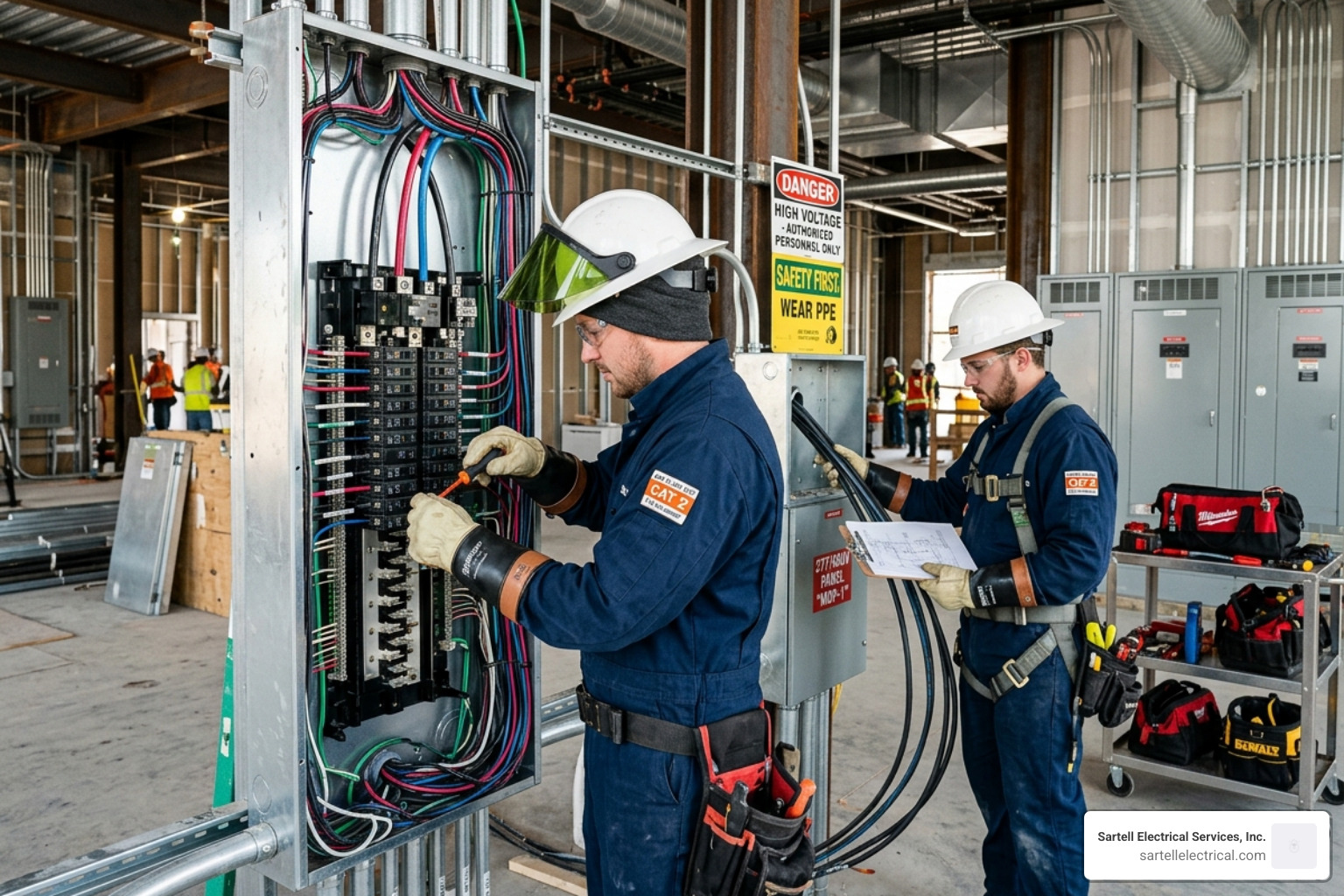
Electrical projects inherently involve significant risks, necessitating strict adherence to safety protocols. We rigorously follow OSHA standards and industry regulations, including NFPA 70E for arc flash personal protective equipment (PPE). Our approach includes implementing detailed job hazard analyses (JHAs), strict lockout/tagout (LOTO) procedures, and regular, thorough site inspections. The National Fire Protection Association (NFPA) consistently identifies electrical system failures as a leading cause of commercial property fires, underscoring the critical importance of these safety measures.
Efficient Resource Management
Effective resource management is about optimizing every asset at our disposal:
- Manpower: This involves strategically allocating our skilled electricians, matching their expertise to specific tasks, and maximizing their productivity. We ensure our teams are well-trained and certified, ready for the specific demands of commercial projects in areas like Essex County and Middlesex County.
- Materials: Timely and accurate procurement, robust inventory management, and minimizing waste are crucial. Access to a vast network of suppliers, some offering over $60 million in-stock electrical material for immediate delivery, significantly streamlines this process.
- Equipment: Tracking valuable tools like digital multimeters and conduit benders, scheduling regular maintenance, and ensuring their immediate availability prevents costly delays and downtime.
Our strong relationships with suppliers, like those highlighted in Commercial Projects | Capital Electric Supply, contribute to our efficient material management.
Monitoring Progress and Managing Risks
Continuous progress monitoring against established timelines and budgets is essential. We proactively identify and mitigate risks, whether they stem from potential supply chain issues, adverse weather conditions, or unforeseen change orders. It's common for change order thresholds to range from $500 to $2,500, depending on contract terms, making careful management vital. We employ earned value management techniques to maintain tight cost control and accurately track progress throughout the project lifecycle.
Here are some common risks we actively manage in commercial electrical projects:
- Material delays: Supply chain disruptions can impact project schedules.
- Labor shortages: Ensuring adequate skilled personnel is crucial, especially in a competitive market like Greater Boston.
- Unexpected site conditions: Discovering unforeseen issues during demolition or rough-in.
- Regulatory changes: New codes or interpretations can require adjustments.
- Coordination failures: Miscommunication with other trades can lead to rework.
- Equipment breakdowns: Malfunctioning tools or machinery can halt progress.
- Permit delays: Bureaucratic holdups can push back start dates.
- Weather-related disruptions: Outdoor work is susceptible to adverse weather.
How do communication, technology, and utility coordination streamline project execution?
In the dynamic environment of commercial electrical projects, seamless execution hinges on three pillars: clear communication, smart use of technology, and efficient utility coordination. These elements work in concert to keep projects on track and within budget.
Effective Communication
Effective communication is undeniably the backbone of successful electrical project management. It ensures that everyone involved—from our field teams and project managers to clients and vendors—is on the same page. This prevents costly delays, minimizes errors, and crucially, averts potential safety hazards. Our approach involves regular meetings, establishing clear reporting structures, and maintaining comprehensive documentation throughout the project lifecycle. Miscommunication can lead to significant setbacks, which is why we prioritize transparent and consistent information exchange.
Leveraging Digital Tools and Software
The right digital tools and software significantly improve productivity in electrical project management. They offer capabilities that traditional methods simply cannot match, especially for complex projects across our service areas like Suffolk County and Norfolk County.
For example, solutions like WorkMax streamline critical aspects such as time tracking, asset management, and safety compliance. Features like GPS timestamps, biometric recognition, and geofencing allow for accurate real-time tracking of our crews, ensuring accountability and optimizing labor costs. Asset management capabilities enable us to efficiently assign tools, schedule maintenance, and monitor usage of costly equipment. Furthermore, digital safety forms facilitate on-site checks for lockout/tagout procedures and PPE verification, ensuring rigorous compliance. WorkMax users have reported over 96% customer satisfaction for the last 10 years, underscoring the value such tools bring.
While WorkMax is one example, other software solutions offer robust features for quoting, estimating, scheduling, dispatching, invoicing, and detailed reporting, all contributing to a more efficient and error-free project workflow.

Utility Coordination with Strategic Distribution Managers
For projects involving new electrical services, power upgrades, or complex installations, effective coordination with utility providers is paramount. Leveraging utility resources, such as Strategic Distribution Managers offered by some utilities, can significantly simplify this process. These managers often serve as a single point of contact for interactions across various utility departments, including distribution design, construction, and maintenance. This streamlined communication helps manage power reliability issues, coordinate planned outages, and navigate the intricate requirements for connecting to the grid, saving valuable time and preventing potential delays.
Sartell Electrical Services' Commitment
At Sartell Electrical Services, we prioritize clear and consistent communication across all project stakeholders. We embrace modern digital tools to enhance efficiency, accuracy, and real-time project oversight, ensuring seamless execution and client satisfaction on every job, from Acton to Woburn. Our dedicated project coordinators play a vital role in this, as highlighted in From Wires To Wins Unpacking The Electrical Project Coordinator Role and Current Opportunities Electrical Project Coordinator Roles.
What is involved in the final stages of project completion and handover?
The final stages of a commercial electrical project are just as critical as the initial planning. This phase ensures that all systems are fully operational, meet every specification, and are properly documented for future use and maintenance.
Rigorous Testing and Commissioning
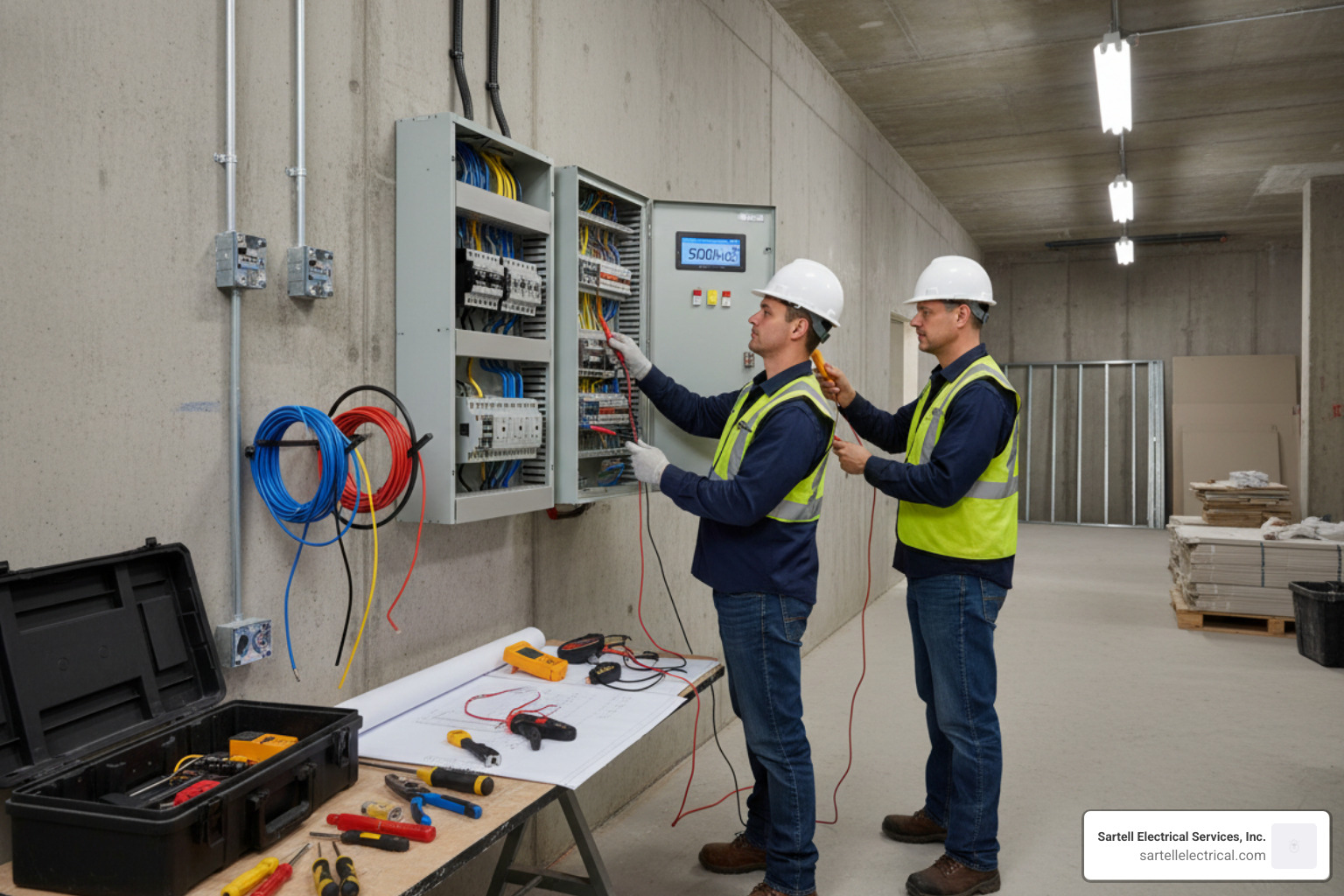
Before any electrical system is handed over for operation, it undergoes rigorous testing and commissioning. This crucial step ensures that all installations meet industry standards, comply with local codes (such as those in Massachusetts), and function precisely as intended. Our process includes:
- Continuity and Insulation Resistance Testing: We test circuits for continuity and insulation resistance using specialized equipment like megohmmeters to verify proper wiring and prevent faults.
- Load Calculation Verification: We meticulously verify electrical load calculations against the existing service capacity to ensure the system can handle its intended demand without issues.
- Functional Testing: All components, from lighting controls to emergency power systems, are tested to confirm they operate correctly under various conditions.
Comprehensive Documentation and Handover
Providing detailed and accurate documentation during project handover is absolutely crucial for the client's long-term success and for any future maintenance or upgrades. This comprehensive package typically includes:
- As-Built Drawings: Updated drawings that reflect the exact final installation, including any changes made during construction.
- Operations and Maintenance (O&M) Manuals: Detailed guides for operating and maintaining all installed equipment and systems.
- Warranty Information: Documentation for all installed components, outlining warranty periods and contact information.
- Final Inspection Reports: Official reports from regulatory bodies confirming code compliance.
- Testing and Commissioning Reports: Records of all tests performed and their results.
This documentation is essential for future troubleshooting, planned maintenance, and ensuring ongoing compliance with safety and operational standards.
Project Closeout
The final closeout phase involves several administrative and financial steps to formally conclude the project:
- Final Inspections: Ensuring all work passes final inspections by the AHJ.
- Punch List Completion: Addressing any remaining minor deficiencies identified during walkthroughs.
- Financial Reconciliation: Finalizing all invoices, payments, and lien waivers.
- Contractual Obligations: Confirming that all terms and conditions of the contract have been met.
This methodical approach ensures a smooth transition from construction to operation, providing our clients with peace of mind and a fully functional, safe electrical system.
Frequently Asked Questions about Managing Commercial Electrical Projects
What is the foundation of a successful electrical project?
The foundation of a successful electrical project lies in a well-defined scope of work, a thorough understanding of client needs and challenges, and meticulous pre-construction planning. This clarity prevents costly issues and sets the stage for efficient execution.
Why is effective communication important in electrical project management?
Effective communication is vital because it ensures that all stakeholders—teams, clients, and vendors—are aligned and informed. This prevents delays, minimizes errors, avoids safety hazards, and fosters a collaborative environment essential for project success.
What happens in the final stage of an electrical project?
The final stage of an electrical project involves rigorous testing and commissioning to verify that all systems meet standards and function as intended. This is followed by comprehensive documentation and project closeout, ensuring all contractual obligations are met and the client has all necessary information for future operation and maintenance.
Conclusion
Managing commercial electrical projects effectively is a complex but rewarding endeavor. By adhering to best practices, implementing meticulous planning, prioritizing safety, efficiently managing resources, fostering clear communication, leveraging technology, and executing thorough closeout procedures, you can ensure project success. These strategies lead to increased profitability, enhanced safety, and high client satisfaction. For expert guidance and execution on your next commercial electrical project, trust the experienced team at Sartell Electrical Services, Inc. With over 30 years of commitment to excellence in Massachusetts, we deliver reliable, safe, and efficient electrical solutions tailored to your business needs.
Learn more about our comprehensive electrical services and how we can power your success.