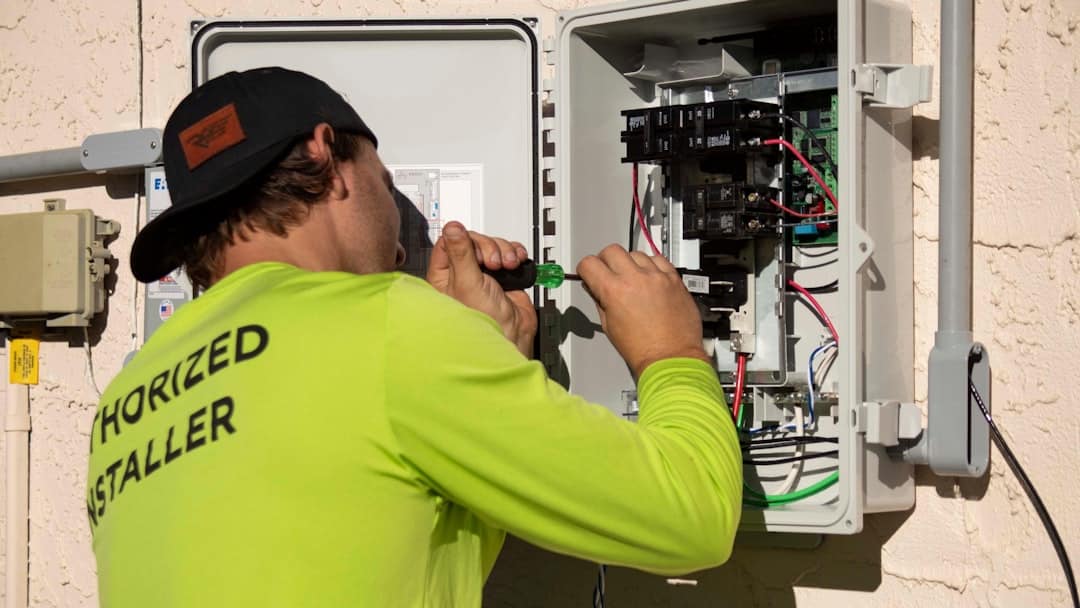
Electrical Pre-Construction Planning Implementation Manual 1
Why Electrical Pre-Construction Planning Makes or Breaks Your Project
An
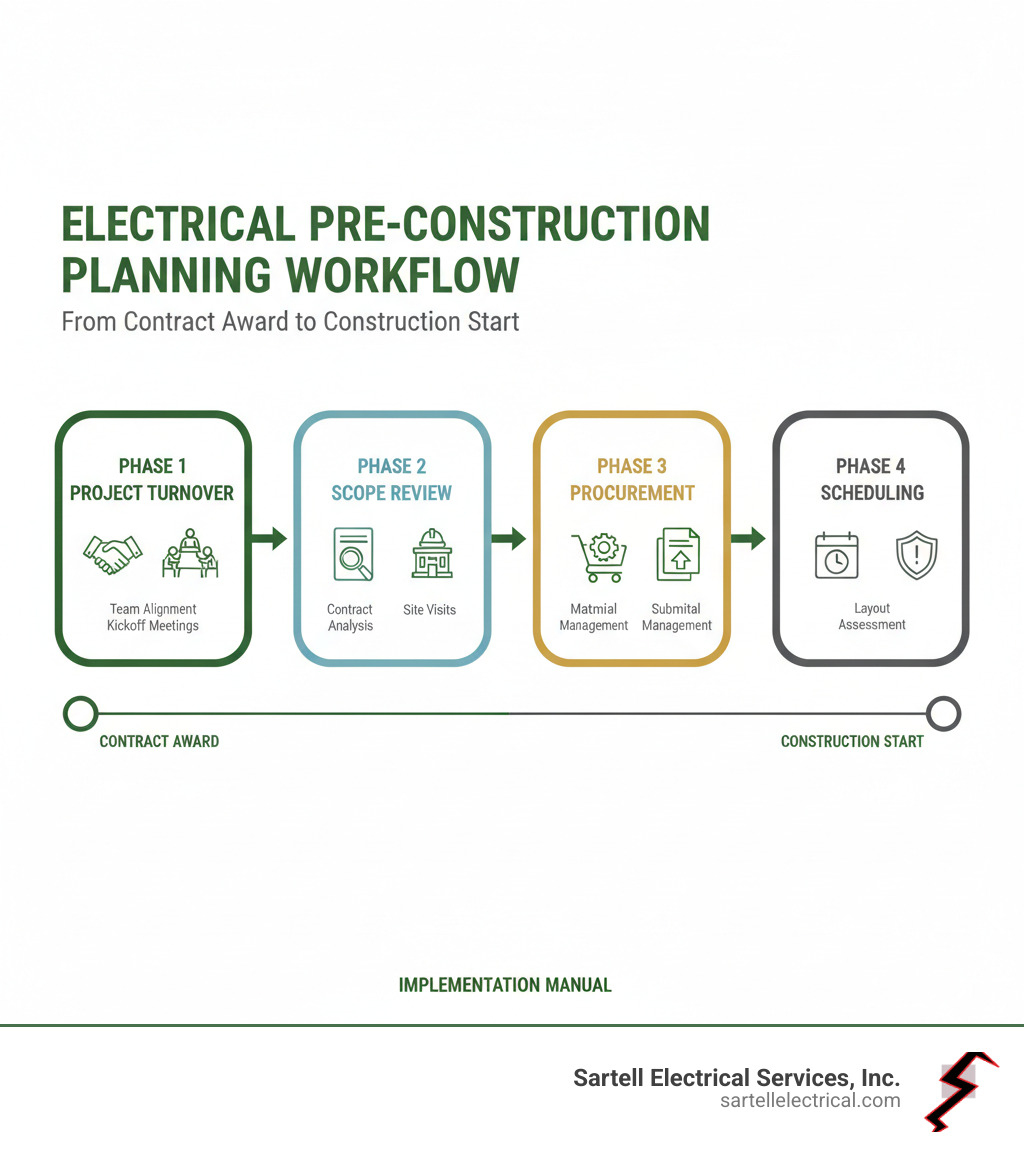
electrical pre-construction planning implementation manual is a structured framework guiding contractors through critical planning before breaking ground. It helps prevent costly delays, budget overruns, and coordination failures by focusing on four key areas:
- Project Turnover: Formal handoff from estimating to project management and field supervision.
- Scope Review: Risk analysis, RFI management, and value engineering.
- Procurement: Cost code development, material buyout, and submittal tracking.
- Scheduling: Installation sequencing, coordination drawings, and risk mitigation.
Research from ELECTRI International and the National Electrical Contractors Association (NECA) shows that what happens
before installation determines project success. Formal pre-construction planning leads to better cost control, fewer safety incidents, and higher customer satisfaction. Without it, contractors face miscommunication, overlooked risks, procurement delays, and schedule conflicts. These problems are preventable with a comprehensive planning framework.
I'm Ed Sartell, and since founding Sartell Electrical Services in 1985, I've seen how systematic pre-construction planning transforms project outcomes. Our team has applied the principles from the
electrical pre-construction planning implementation manual to hundreds of projects across Massachusetts, bridging the gap between winning a bid and delivering a profitable, on-time project.
Deconstructing the Manual: Origins and Research Methodology
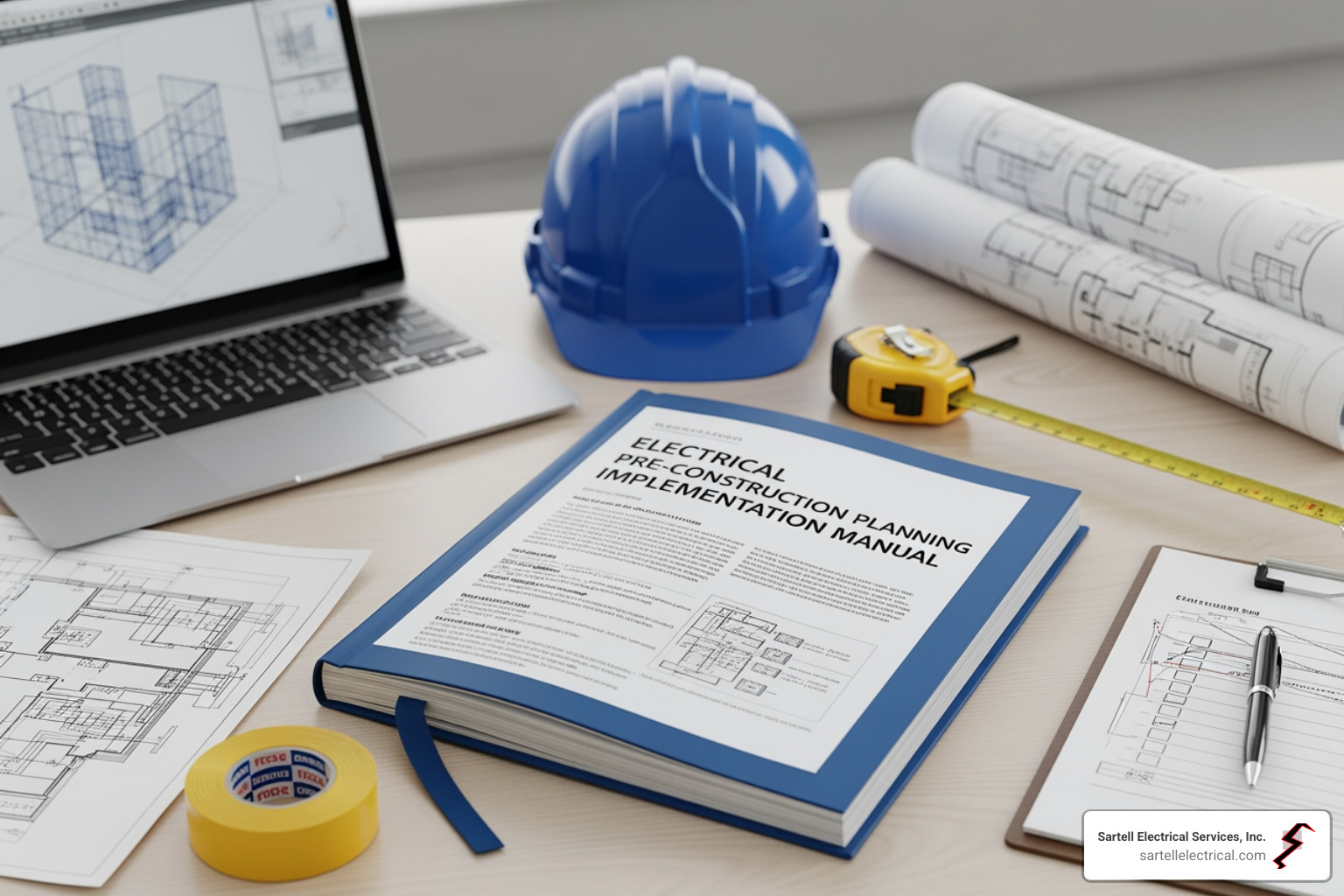
The
electrical pre-construction planning implementation manual is not based on guesswork; it's built on rigorous research and real project data, giving contractors confidence they are following a proven path.
The manual was developed by ELECTRI International, the research arm of the National Electrical Contractors Association (NECA), to help contractors move from reactive problem-solving to proactive strategic planning. You can explore
The official manual from ELECTRI International for the full resource. To see how we apply these principles, visit our page on
Electrical Project Management. At Sartell Electrical Services, we rely on evidence-backed systems like this one.
The Foundational Research
The manual is based on a methodical study of
29 successful and
27 less-than-successful electrical projects across
11 states. Researchers conducted extensive data collection and in-depth interviews with project managers, estimators, and field supervisors.
Projects were categorized based on concrete metrics: budget adherence, schedule performance, safety records, and customer satisfaction. By comparing the two groups, clear patterns emerged. Successful projects consistently followed specific planning activities that struggling projects skipped. This empirical analysis identified the pre-construction steps that truly impact project outcomes.
Defining the Model Process
The research team translated these insights into a standardized framework any electrical contractor can use. They found a
direct correlation between comprehensive pre-construction planning and positive results. The
electrical pre-construction planning implementation manual distills these findings into a practical, step-by-step guide.
This model process bridges the gap between winning a contract and successful execution. It establishes clear procedures from project turnover to scheduling, ensuring consistency. For our team at Sartell Electrical Services, this means every job, whether in Boston, Lowell, or Cambridge, receives the same meticulous planning. A standardized framework ensures everyone follows validated best practices, creating a foundation for excellence on every project.
The Core Components of the Electrical Pre-construction Planning Implementation Manual
Think of the
electrical pre-construction planning implementation manual as your project's roadmap. It's a living framework that walks you through 46 specific planning activities organized into 12 categories, all designed to integrate smoothly into your project lifecycle.
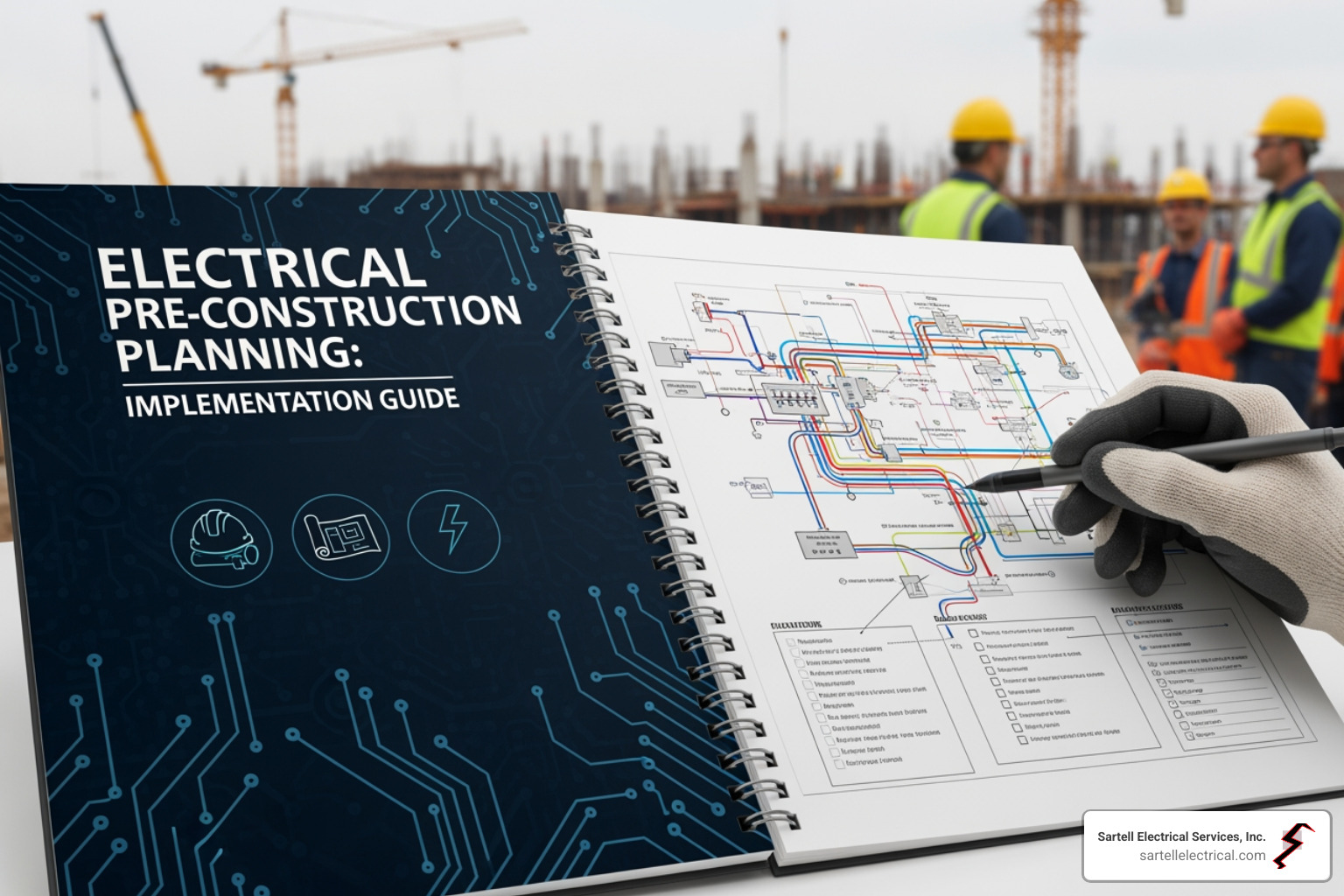
The manual breaks down into four major phases, each building on the last. This step-by-step process helps us anticipate challenges, optimize resources, and keep everyone aligned. Whether for our
Commercial Electrical Services in Boston or industrial projects in Lowell, these components are key.
Phase 1: Project Turnover and Team Alignment
This is where projects get off to a strong start. The
estimator-to-PM turnover is a critical handoff where the estimating team shares the full story behind the bid. Next, the
PM-to-field supervisor turnover translates strategy into tactics, equipping the field leader with schedules, labor needs, and site-specific details. The
pre-job kickoff meeting then brings the entire team together to define responsibilities, establish communication protocols, and align on goals and safety standards. Finally, we review
lessons learned from past projects to apply proven insights and avoid repeating mistakes.
Phase 2: Scope, Contract, and Site Review
This phase involves detailed investigation to prevent future problems.
Contract risk analysis is first, where we scrutinize every clause for ambiguities or hidden liabilities. We then
review plans and specifications for clarity and completeness.
Site visits are essential to verify existing conditions and plan logistics, often revealing issues not visible in drawings. When we find inconsistencies, we use the
RFI (Request for Information) process to get clear answers before work begins. This phase is also an opportunity to explore
value engineering and prefabrication, suggesting alternative methods or materials to save money or improve efficiency.
Phase 3: Budgeting, Buyout, and Procurement
This phase builds the project's financial and material backbone.
Cost code development creates a detailed tracking system for all expenses, providing real-time financial visibility. We create a granular
labor and material budget breakdown and a
schedule of values for clear billing. If needed, we use a rigorous
subcontractor qualification process.
Long-lead material ordering is prioritized to prevent schedule delays. We use
submittal logs to track all approvals, and a
material handling plan maps out logistics to minimize waste and improve site safety.
Phase 4: Scheduling, Layout, and Risk Management
This final phase creates an executable plan while managing future challenges.
Coordinating with the master schedule is critical to ensure our work meshes with the overall project timeline. We develop
detailed installation sequences to optimize workflow.
Layout drawings provide our field teams with precise locations for every conduit and fixture.
Conduit and pull schedules streamline material flow. We also systematically
identify project risks and develop contingency plans. The
electrical pre-construction planning implementation manual provides the framework for this risk mitigation, building resilience into every project.
Following the
electrical pre-construction planning implementation manual provides real, measurable improvements. Our projects see tighter cost control, better schedule adherence, fewer safety incidents, and higher quality work. This structured approach keeps everyone, from clients to subcontractors, aligned and informed. Whether on a complex commercial build in Boston or a healthcare facility in Cambridge, these benefits consistently emerge. It's the difference between reactive firefighting and proactive prevention.
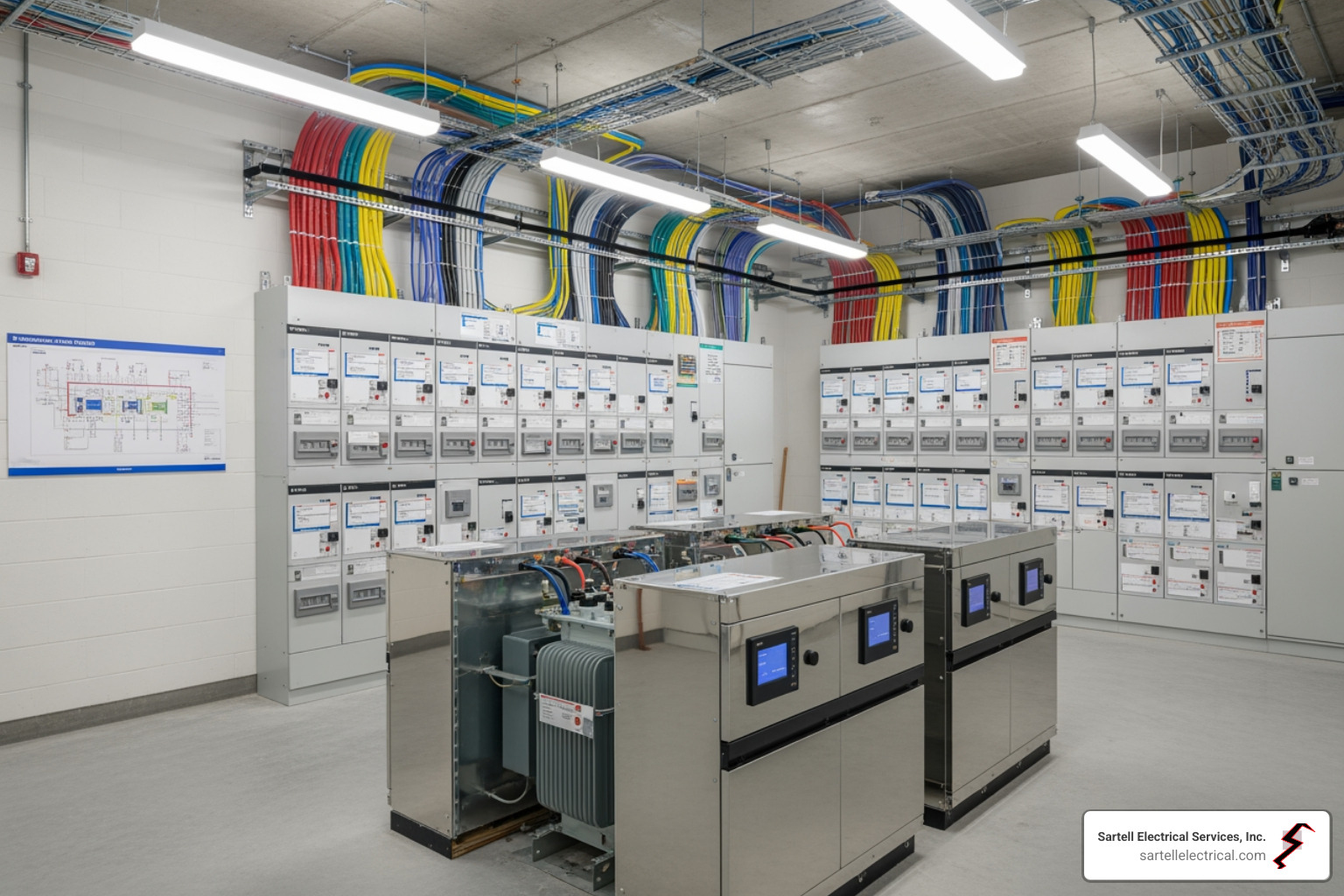
Mitigating Cost Overruns and Delays
Cost overruns and delays are common in construction; a
McKinsey study on construction productivity found 98% of large projects experience them. While our projects are not always "megaprojects," the principle holds: poor planning leads to preventable problems.
The manual's framework helps us dramatically reduce these risks. It guides us through accurate estimating and proactive problem-solving, identifying issues during planning when they are inexpensive to fix. By thoroughly reviewing plans, using the RFI process, ordering long-lead materials early, and coordinating with other trades, we eliminate budget-busting surprises. This minimizes change orders, improves our profitability, and gives clients the predictable outcomes they deserve.
Comparing Successful vs. Unsuccessful Projects
The research behind the manual tells a compelling story. The ELECTRI International team found dramatic contrasts between successful and struggling projects, all pointing back to the use of a formal planning process.
Projects that adopted formal pre-construction planning consistently achieved
higher profit margins. By controlling costs and optimizing efficiency, profitability naturally follows. These projects also reported
increased customer satisfaction, as delivering on time and on budget builds client trust.
Most importantly, well-planned projects had
fewer safety incidents. A direct link exists between organization and safety; when the plan is clear and hazards are identified in advance, the job site is inherently safer for our crews across Massachusetts. Proactive scheduling also led to improved schedule performance with fewer delays.
The crucial insight is that the impact comes from completing planning activities
before execution begins. The timing is what matters. Investing time upfront builds a solid foundation that supports everything that follows, ensuring we deliver excellence consistently.
Understanding the
electrical pre-construction planning implementation manual is one thing; putting it into action is where the real value lies. At Sartell Electrical Services, we've woven these principles into our daily operations. We continuously evaluate and improve our processes, embracing technology to make our planning for projects like
Industrial Electrical Services even more effective. The research identified 16 pre-construction activities with the most significant impact, and the manual provides the tools to implement them.
The manual includes practical tools to make implementation straightforward:
- Planning Effectiveness Scorecard: Objectively assesses your current planning process to identify areas for improvement.
- Pre-Construction Activities Tables: Break down 46 activities, defining responsibilities, timelines, and deliverables to ensure clarity.
- Checklists and Forms: Standardized templates for kickoff meetings, site visits, and RFIs ensure nothing is missed.
- RFI Tracking Systems: A systematic way to manage Requests for Information, creating a documented trail that protects the schedule.
- Labor Tracking Reports: Monitor actual hours against budgeted hours in real-time to spot potential cost overruns early.
You can access
Downloadable forms from the research to see these resources.
How to Leverage the electrical pre-construction planning implementation manual
Implementing a new process can be done through continuous improvement:
- Benchmark your process: Use the Planning Effectiveness Scorecard to get an honest assessment of your current strengths and weaknesses.
- Identify planning gaps: Pinpoint which of the manual's activities are missing or inconsistent in your workflow and focus on high-impact areas.
- Implement formal turnover meetings: Make structured handoff meetings between estimating, project management, and the field mandatory. This simple step can immediately reduce miscommunication.
- Standardize documentation: Adopt or customize the manual's templates to ensure everyone uses the same system, saving time and improving consistency.
- Train your project teams: Ensure your team understands not just what to do, but why it matters. When they see how planning makes their jobs easier, they become advocates for the process.
- Adopt a culture of planning: Make proactive planning a core company value. Encourage early problem identification and make it clear that thorough planning is the foundation of success, not extra work.
This systematic approach has transformed how we deliver projects across Middlesex, Essex, and Norfolk Counties, turning good contractors into great ones.
Frequently Asked Questions about Electrical Pre-Construction Planning
Over the years, we've had many conversations about electrical pre-construction planning. It's a topic that generates curiosity for good reason, as proper planning is the key to a smooth project. Here are some of the questions we hear most often.
What is the primary goal of an electrical pre-construction planning manual?
The primary goal of the
electrical pre-construction planning implementation manual is to provide a standardized, research-backed roadmap for electrical contractors. It offers a framework to improve project planning, mitigate risks before they become problems, control costs, and ultimately increase the likelihood of success. It's about shifting from a reactive to a proactive approach, building success into the project from day one. For us at Sartell Electrical Services, this translates to happier clients and more profitable projects across Massachusetts.
How does pre-construction planning differ from project estimation?
This is an important distinction.
Estimation is about winning the bid. It involves calculating costs for labor, materials, and equipment to create a competitive price. The goal is to submit an accurate proposal that wins the project.
Pre-construction planning happens
after winning the contract. It's the detailed work of figuring out
how to execute the project efficiently. This includes developing schedules, coordination strategies, procurement logistics, and risk management plans. In short, estimation determines the
what and the cost, while pre-construction planning defines the
how to ensure a successful outcome.
Can these principles be applied to smaller residential projects?
Absolutely. While the
electrical pre-construction planning implementation manual was developed using data from larger projects, its fundamental principles are scalable to any size job. Whether it's a new medical facility or a home panel upgrade, the need for clear communication, scope review, scheduling, and material planning remains. The formality may differ—a formal meeting might become a detailed conversation, and a complex tracking system might be a series of documented emails. But the core benefits of avoiding mistakes, ensuring materials are on time, and sticking to the budget apply to all projects, including our
Residential Electrical Service work. We scale the principles to fit the project, but we never abandon them.
Conclusion: Building a Foundation for Electrical Project Excellence
In electrical contracting, success isn't left to chance—it's planned. The
electrical pre-construction planning implementation manual provides the indispensable framework for this, changing how projects are approached from contract signing to final walkthrough.
Accepting proactive planning gives you a competitive advantage. It reduces risks, controls costs, and improves profitability while delivering exceptional value to clients. At Sartell Electrical Services, this commitment to excellence is central to our work. For over 30 years, our team has integrated these meticulous planning principles into every project across Massachusetts, from complex commercial builds in Boston to residential service calls in Canton.
We've seen how these principles lead to projects that stay on schedule and on budget, building lasting relationships with clients who value our systematic approach. A well-planned project is a well-executed project, translating directly into superior results and a reputation that sustains a business for decades. Your next project deserves that same solid foundation.
Let us help you build your next project on the foundation of excellence we've spent three decades perfecting.
Explore our Design-Build Electrical Services and find the difference that expert planning and execution can make.