Why Electrical Project Coordinator Jobs Are in High Demand
Electrical project coordinator jobs are experiencing strong growth across North America, with the construction, healthcare, and information technology sectors leading the demand. If you're searching for opportunities in this field, here's what you need to know:
Quick Overview of Electrical Project Coordinator Jobs:
- Median Salary: $77,690 annually ($37.35/hour)
- Job Growth: 10% projected growth from 2022 to 2032
- Key Industries: Construction, healthcare, IT, utilities
- Typical Requirements: Bachelor's degree in business, engineering, or construction management
- Core Skills: Project coordination, scheduling, budget tracking, client communication
- Top Hiring Sectors: Electrical contractors, general contractors, engineering firms, government agencies
These roles serve as the critical link between design teams, field crews, and clients. You'll coordinate project timelines, manage documentation, track budgets, and ensure that complex electrical installations stay on schedule and within scope. The position requires both technical knowledge of electrical systems and strong organizational skills to manage multiple stakeholders.
The demand is particularly strong in major metropolitan areas like Toronto, where infrastructure projects, transit development, and commercial construction are creating numerous openings. Companies ranging from established contractors like Houle Electric to specialized firms and government organizations are actively recruiting coordinators at junior, intermediate, and senior levels.
I'm Ed Sartell, President of Sartell Electrical Services since 1985, and throughout my nearly four decades in the electrical trade, I've seen how crucial skilled project coordinators are to delivering successful commercial and residential projects. Understanding the landscape of electrical project coordinator jobs can help you identify the right opportunity and prepare for a rewarding career in this growing field.
What to Expect from Electrical Project Coordinator Jobs
An Electrical Project Coordinator is the backbone of any successful electrical project, ensuring everything runs smoothly from start to finish. They are the "conductor of the orchestra," as one job description aptly put it, orchestrating various technical personnel and negotiations to keep projects on track. Their role spans the entire project lifecycle, playing a pivotal part in scheduling, budget tracking, and maintaining clear communication with clients and teams.

At Sartell Electrical Services, we understand the intricate dance required to deliver top-tier electrical solutions across Massachusetts, from Greater Boston to the furthest reaches of Essex, Middlesex, Norfolk, and Suffolk Counties. Our project coordinators are essential to our commitment to excellence.
For a deeper dive into how projects are managed in our field, you can explore More info about Electrical Project Management.
Typical Responsibilities
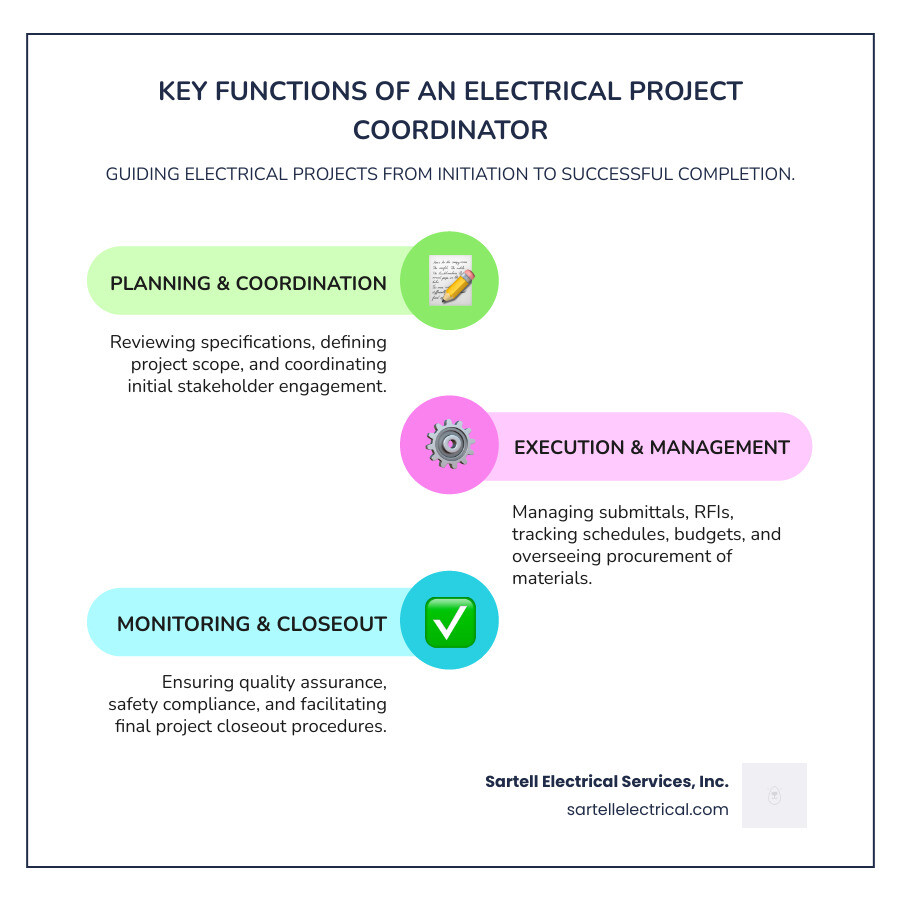
The daily life of an Electrical Project Coordinator is dynamic and varied. Their primary goal is to support the Project Manager and ensure that all electrical project components are carefully organized and executed. Here’s a breakdown of their typical responsibilities:
- Coordination: This is the core of the role. They coordinate all project actions, ensuring that timelines are understood and adhered to by all parties. This includes scheduling meetings, managing resources, and keeping everyone aligned.
- Procurement of Materials: Project coordinators often oversee the ordering and tracking of electrical components and materials. This involves working with suppliers, managing logistics, and ensuring materials arrive on time and within budget.
- Document Control: Maintaining accurate and organized project documentation is crucial. This includes everything from contracts and permits to blueprints and technical specifications. They ensure all documents are properly filed, accessible, and up-to-date.
- Submittals, RFIs, and Change Orders: They manage the process of submittals (materials for approval), Requests for Information (RFIs) to clarify project details, and change orders when project scope or design evolves. This requires keen attention to detail and proactive communication.
- Liaising with Stakeholders: Electrical Project Coordinators are the central point of contact for various stakeholders, including clients, engineers, architects, suppliers, and our own field crews. They respond to inquiries, provide updates, and facilitate communication to keep the project moving forward.
- Quality Assurance: While not directly performing electrical work, they help ensure that all work meets quality standards and specifications. This might involve reviewing completed tasks against plans or coordinating inspections.
- Safety Compliance: Safety is paramount in electrical work. Coordinators assist in ensuring that all project activities comply with safety regulations and company policies, contributing to a secure working environment for our teams in towns like Reading, Andover, and Burlington.
For more on the operational side of our work, check out More info about Electrical Installation and Maintenance.
Essential Tools and Software
To manage the complexities of electrical projects, coordinators rely on a suite of specialized tools and software. These technologies improve efficiency, accuracy, and communication:
- Project Management Software: Platforms like Microsoft Project or Primavera P6 are commonly used for creating detailed project schedules, tracking progress, and managing resources.
- Smartsheet: This versatile tool is increasingly popular for tracking tasks, collaborating with teams, and creating dynamic dashboards for project oversight. Many job postings specifically mention experience with Smartsheet.
- Bluebeam: Essential for reviewing, marking up, and collaborating on PDF documents, especially electrical drawings and blueprints.
- AutoCAD: While not always hands-on designers, coordinators often need to view and understand drawings created in AutoCAD, requiring a basic familiarity with the software.
- Communication Tools: Email, instant messaging platforms, and video conferencing tools are indispensable for daily interactions with internal teams and external stakeholders.
- Scheduling Software: Beyond general project management software, dedicated scheduling tools help manage crew assignments, equipment allocation, and adherence to project timelines.
- Microsoft Office Suite: Proficiency in Excel for budget tracking and data analysis, Word for documentation, and PowerPoint for presentations is fundamental.
Skills and Qualifications for Success
Becoming a successful Electrical Project Coordinator requires a unique blend of technical understanding, organizational prowess, and excellent interpersonal skills. It's a role where being detail-oriented and a great communicator can truly shine.

Essential skills for electrical project coordinator jobs
For those looking to enter or advance in electrical project coordinator jobs in Massachusetts, certain qualifications and skills are non-negotiable:
- Educational Background: Most positions require a bachelor's degree in a related field. This often includes engineering (especially electrical or civil), construction management, or business administration. This academic foundation provides the necessary theoretical knowledge for understanding project principles and technical concepts.
- Technical Aptitude: While not performing hands-on electrical work, a strong understanding of electrical systems, components, and processes is crucial. This includes:
- Blueprint Reading: The ability to accurately interpret electrical blueprints, schematics, and wiring diagrams is fundamental.
- Electrical Codes: Familiarity with national and local electrical codes (like the National Electrical Code in the U.S.) ensures compliance and safety.
- Understanding Technical Product Specifications: Being able to review and comprehend specifications for switchgear, lighting, and other electrical equipment is vital for procurement and installation planning.
- Soft Skills: These are often what lift a good coordinator to a great one:
- Communication: Excellent written and verbal communication skills are paramount for liaising with diverse stakeholders, from our clients in Wellesley and Lexington to our electricians in the field.
- Organization: The ability to manage multiple tasks, prioritize effectively, and maintain meticulous records is key to keeping complex projects on track.
- Problem-solving: Electrical projects inevitably encounter unexpected challenges. A coordinator must be adept at identifying issues and collaborating with the team to find practical solutions.
- Attention to Detail: From reviewing submittals to tracking budget line items, precision and thoroughness prevent costly errors.
- Leadership: Coordinators often act as informal leaders, guiding teams and ensuring everyone is working towards common goals. A friendly demeanor and the ability to inspire confidence are invaluable.
The Role of Union Membership
In the construction industry, union membership can play a significant role in securing electrical project coordinator jobs, particularly for those who started in the trades. Organizations like the International Brotherhood of Electrical Workers (IBEW) and Canadian Union of Skilled Workers (CUSW) are prominent in this sector.
While our operations at Sartell Electrical Services are based in Massachusetts, the principles of union involvement are generally consistent across North America. Union membership can provide:
- Networking Opportunities: Access to a broad network of professionals and contractors, which can be invaluable for career advancement and job placement.
- Training Resources: Unions often offer extensive training programs and apprenticeships, helping members develop and maintain cutting-edge skills.
- Job Placement: For unionized companies, many positions, especially in the field, are hired directly through the union halls, streamlining the job search process.
For those interested in understanding more about union roles in the electrical trade, you can find Information on the Canadian Union of Skilled Workers and Information on the International Brotherhood of Electrical Workers. While these specific links refer to Canadian locals, the IBEW has a strong presence across the United States, including Massachusetts, with local chapters that serve our communities.
Career Path and Compensation
The field of electrical project coordination offers a robust career path with significant growth potential, reflecting the overall demand for project coordinators.
The number of project coordinator jobs is projected to grow 10% from 2022 to 2032, which is faster than the average for all occupations. This strong demand means excellent opportunities for career progression and competitive compensation packages.
Junior vs. Senior Coordinator Roles
The journey in electrical project coordination often begins with junior roles and progresses to more senior positions, each with distinct levels of responsibility and autonomy.
| Feature | Junior Project Coordinator | Project Coordinator |
|---|---|---|
| Responsibilities | Primarily administrative support, data entry, assisting with documentation, scheduling meetings, basic communication. | Manages specific project phases, coordinates procurement, handles submittals/RFIs, liaises with key stakeholders, tracks budgets, prepares status reports. |
| Experience Level | Entry-level, typically 0-2 years of experience. May be a recent graduate. | Mid-level, typically 2-5+ years of experience. Demonstrates proven project support capabilities. |
| Autonomy | Works under close supervision, follows established procedures. | Works with moderate supervision, can troubleshoot minor issues, makes recommendations to Project Manager. |
| Key Skills | Strong organizational skills, attention to detail, eagerness to learn, basic software proficiency. | Strong communication, problem-solving, understanding of technical specs, proficiency in project management software. |
A Junior Project Coordinator might start by creating project folders and tracking basic timelines, while a Project Coordinator takes on more complex tasks like coordinating negotiations with manufacturers and ensuring continuous follow-up with clients. It's a fantastic pathway to learn the ropes and grow into leadership roles.
Typical career paths from electrical project coordinator jobs
The skills honed as an Electrical Project Coordinator are highly transferable and open doors to numerous advanced roles within the electrical and construction industries. Many coordinators naturally progress into:
- Project Manager: This is a common and logical next step, where you take full ownership of projects, managing budgets, schedules, and teams more independently.
- Senior Project Manager: For those with extensive experience and a track record of successful project delivery, this role involves overseeing multiple large-scale projects or managing a team of project managers.
- Estimator: Leveraging their detailed knowledge of materials, labor, and project scope, coordinators can transition into estimating roles, preparing bids and proposals for new projects.
- Operations Manager: With a comprehensive understanding of project execution and team dynamics, some coordinators move into operations, overseeing the broader functioning of a department or company.
At Sartell Electrical Services, we value growth and continuous learning. We encourage our team members to explore these pathways and often find our future leaders among our dedicated project coordinators. To understand the broader scope of electrical services and their management, you might find our Professional Electrical Services Guide 2025 insightful.
Salary and Benefits
The compensation for electrical project coordinator jobs is competitive, reflecting the crucial nature of the role. Nationally, the median annual wage for project coordinators was $77,690 in May 2023, translating to a median hourly wage of $37.35. While specific local salaries vary across Massachusetts, this national average provides a strong benchmark.
Beyond the base salary, companies like ours often offer comprehensive benefits packages designed to support our employees' well-being and financial security. These typically include:
- Health Insurance: Comprehensive medical, dental, and vision plans are standard, often with a significant employer contribution to premiums.
- Retirement Plans: Employer-matched 401(k) contributions help employees save for their future.
- Paid Time Off: Vacation days, sick leave, and paid holidays are essential for work-life balance.
- Professional Development: Support for ongoing training, certifications, and tuition reimbursement demonstrates an investment in an employee's career growth.
- Wellness Allowances: Some companies offer health and wellness reimbursements or access to employee assistance programs.
- Flexible Work Arrangements: Depending on the role, options such as compressed workweek schedules or hybrid models can be available, promoting a healthy balance between professional and personal life.
We believe that a supportive work environment and robust benefits are just as important as a competitive salary in attracting and retaining top talent in places like Cambridge, Newton, and Framingham.
How to Land an Electrical Project Coordinator Position
Securing an electrical project coordinator job requires a strategic approach, from crafting a compelling resume to acing the interview. We're always on the lookout for talented individuals to join our team across Greater Boston.
Preparing for the Interview
The interview is your chance to showcase your skills and personality. For electrical project coordinator jobs, interviews often combine behavioral and technical questions.
- Behavioral Questions: These questions explore your past experiences to predict future behavior. For example, "Tell me about a time you had to manage a challenging project deadline."
- Technical Questions: These will assess your knowledge of electrical concepts, project management methodologies, and software proficiency. Be ready to discuss your familiarity with blueprints, electrical codes, or specific project management software like Smartsheet.
- STAR Method: We highly recommend using the STAR method (Situation, Task, Action, Result) to structure your answers to behavioral questions. This helps you provide clear, concise, and impactful responses by drawing upon real-life experiences.
- Company Research: Thoroughly research the company you're interviewing with. Understand their projects, values, and recent news. This demonstrates genuine interest and allows you to tailor your answers.
- Project Portfolio: If you have prior experience, be prepared to discuss specific projects you've coordinated. Highlight your contributions, the challenges you overcame, and the positive outcomes.
For additional tips on preparing for interviews, you can Watch this video on interview preparation.
Where to Find Opportunities
Electrical project coordinator jobs can be found across a diverse range of organizations within the electrical and construction sectors. In Massachusetts, you'll find opportunities with:
- Electrical Contractors: Companies like Sartell Electrical Services frequently hire coordinators to manage our commercial, industrial, telecom, healthcare, and residential projects across our extensive service areas, including towns like Peabody, Malden, and Quincy.
- General Contractors: These firms oversee entire construction projects and often need electrical-specific coordinators to manage the electrical subcontractors.
- Utility Companies: Large utility providers, such as those serving our region, require project coordinators for infrastructure upgrades, maintenance, and new installations.
- Engineering Firms: Electrical engineering firms often need coordinators to manage the design and planning phases of complex projects.
- Government Agencies: Local and state government bodies may hire project coordinators for public works projects, infrastructure development, or facility management.
Platforms like LinkedIn are excellent resources for job searching. You can See current job openings in Toronto as an example of the types of roles available on such platforms. We strongly encourage you to conduct targeted searches for "electrical project coordinator jobs" in Massachusetts, Greater Boston, and specific towns like Reading, Andover, or Chelsea to find opportunities relevant to our service areas. Don't forget to Create a job alert for new roles to stay updated on the latest openings.
Conclusion
Electrical project coordinator jobs offer a rewarding and dynamic career path within a growing industry. With strong projected job growth, competitive salaries, and clear opportunities for advancement, this role is ideal for individuals who are organized, technically savvy, and possess excellent communication skills.
As Electrical Project Coordinators, you'll be at the heart of delivering essential electrical infrastructure, playing a vital role in projects that power our homes, businesses, and communities. From coordinating complex installations in Boston to managing commercial upgrades in Worcester, your expertise will be indispensable.
At Sartell Electrical Services, we are always looking for talented individuals who share our commitment to excellence and leadership. We pride ourselves on delivering superior electrical services throughout Massachusetts, and our project coordinators are key to that success. If you're ready to take on a challenging yet fulfilling role, the electrical project coordination field is waiting for you.
To learn more about how we approach project success, visit our page on More info about Electrical Project Management.