Electrical system design: Advanced Guide 2025
Powering the Modern World
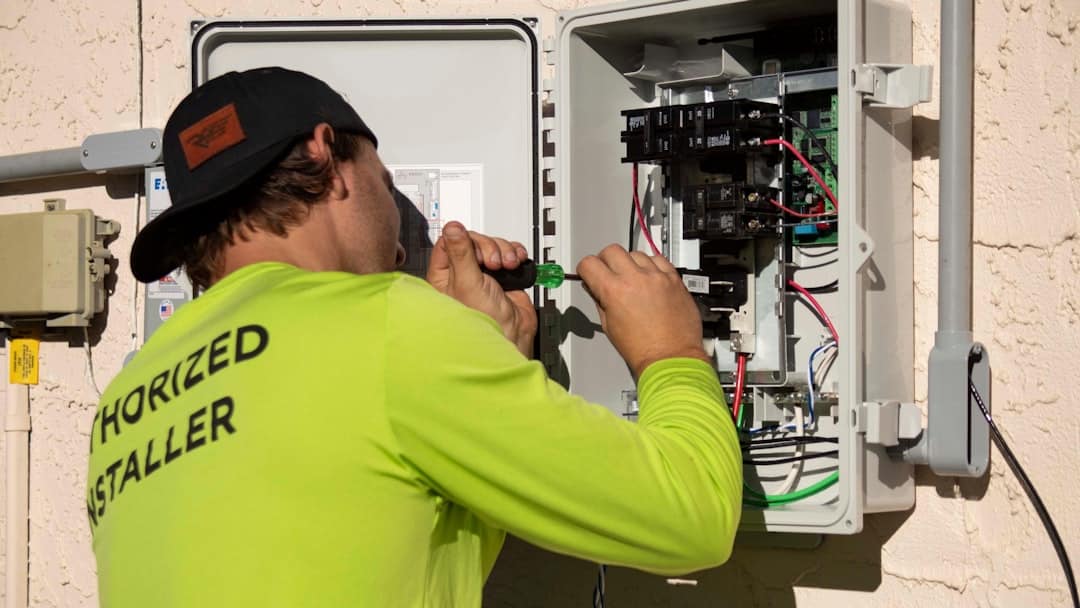
Electrical system design is the critical process of planning and implementing power systems that distribute electricity safely and efficiently. It involves determining power requirements, selecting components, creating documentation, and ensuring compliance with safety codes.
Today's systems power everything from personal devices to massive industrial facilities. The stakes are high: a well-designed system ensures safety, prevents fires, optimizes energy use, and provides reliable power. In contrast, poor design can lead to dangerous conditions, costly failures, and expensive retrofits.
Modern electrical design has evolved beyond just "getting the lights on." It now integrates smart technologies, renewable energy, and backup power systems. Each project, from a home to a hospital, requires careful planning and adherence to strict standards.
As
Ed Sartell, President of Sartell Electrical Services since 1985, I've overseen countless
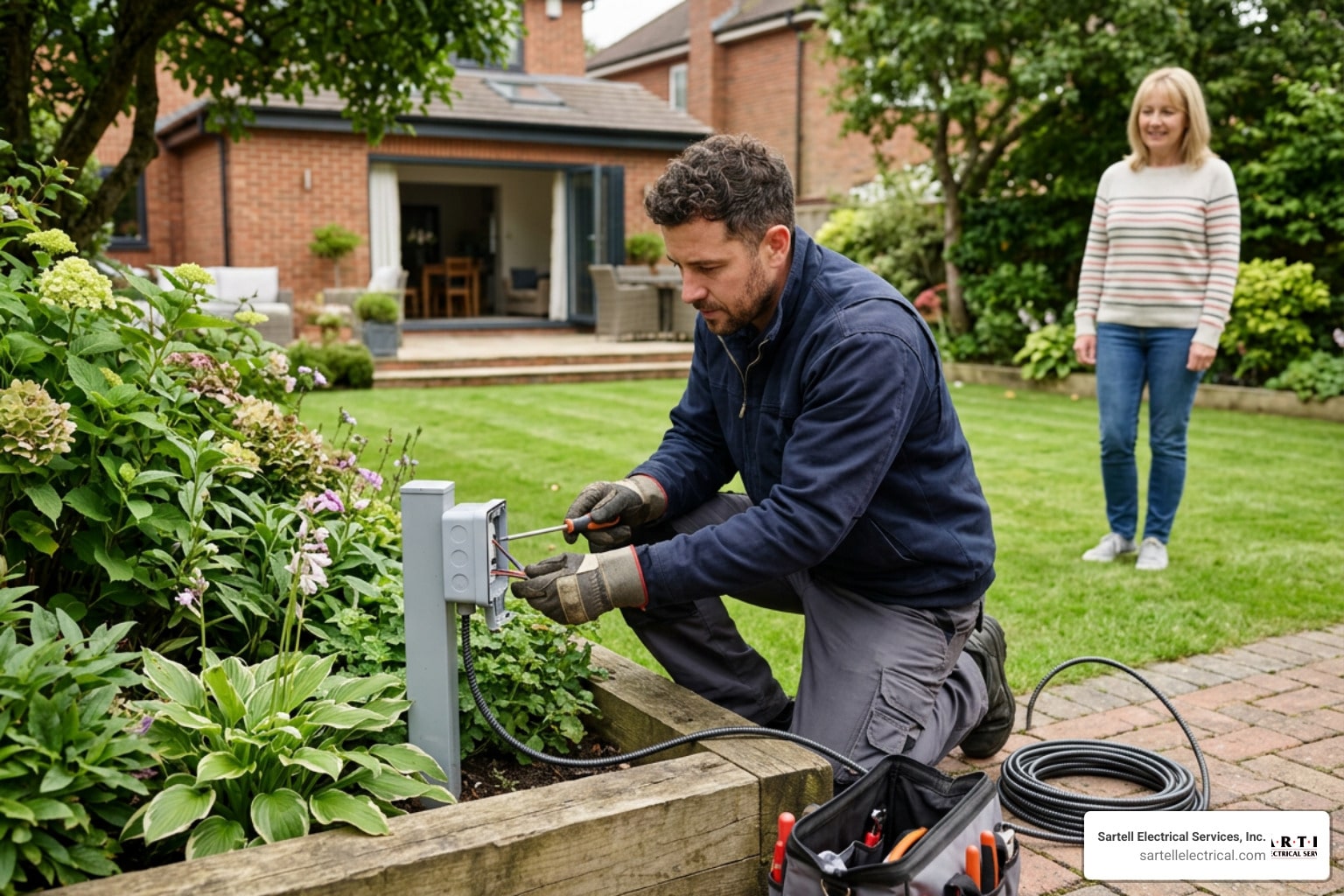
Electrical system design projects across Massachusetts for residential, commercial, and industrial clients. Whether designing power for a hospital expansion or a manufacturing facility, my team brings nearly four decades of hands-on expertise to every blueprint.
The Foundations: Core Principles and Components
An electrical system is like a house; it needs a solid foundation. Mastering the fundamental physics and components is the difference between a good system and a great one. Let's explore what makes the lights turn on—and stay on safely.
Fundamental Principles of Electrical Design
Ohm's Law—the relationship between
voltage (pressure),
current (flow), and
resistance (opposition)—is the bedrock of electrical design. However, modern design goes much further. Every project begins with
load calculation to determine the precise power needs of a facility, accounting for all equipment and future growth. Getting this wrong leads to an undersized system that fails or an oversized one that wastes money.
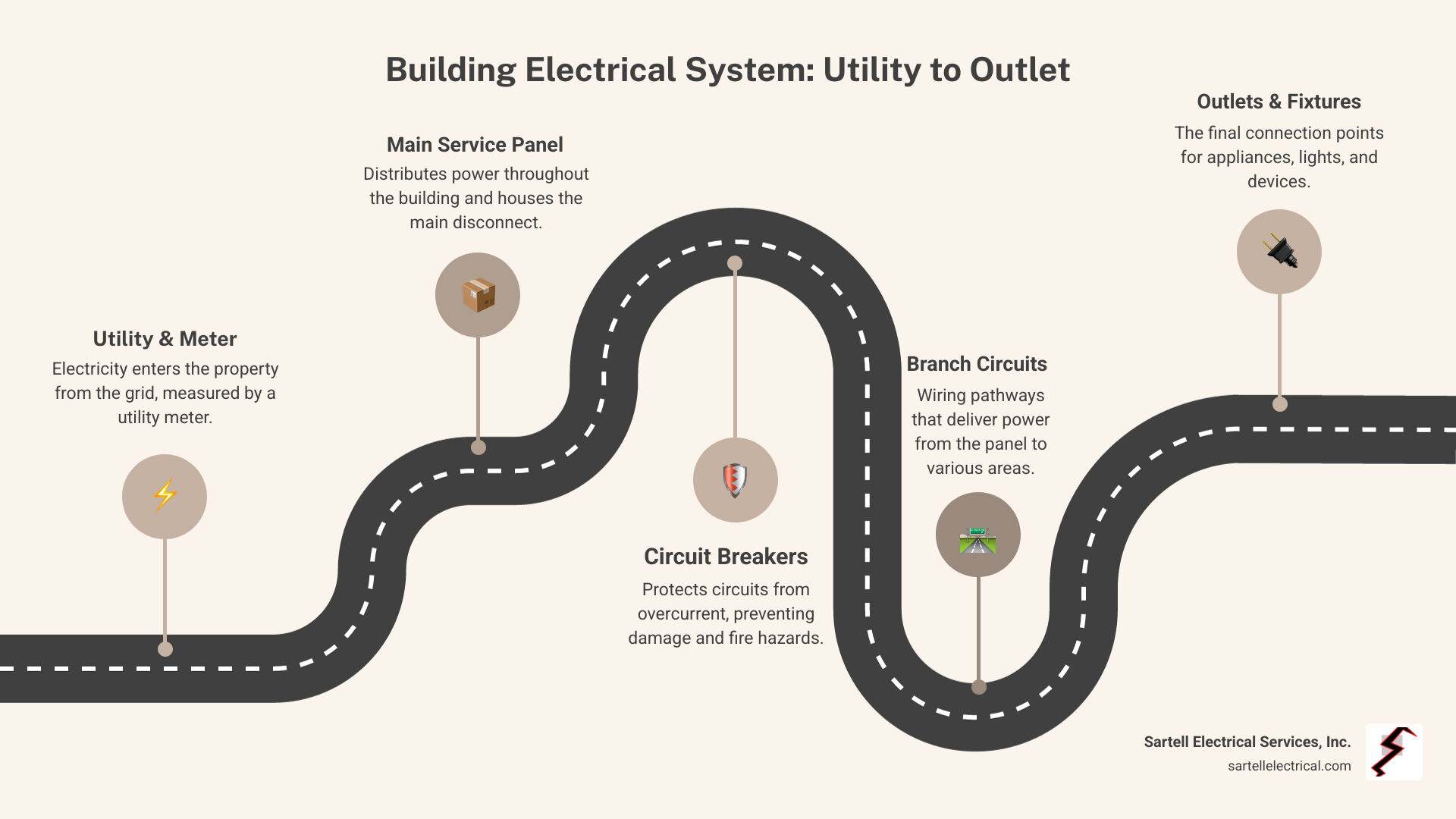
Power distribution is the art of planning how electricity travels safely and efficiently from the utility to the end-user. This involves selecting appropriate voltages and equipment.
Fault analysis is where professionals earn their keep, conducting studies for arc flash and short-circuits to predict and mitigate what happens when things go wrong. This analysis shapes safety measures and protects people and equipment. For more technical details, the
Electrical Distribution Fundamentals Design Guide is an excellent resource.
Essential System Components and Their Roles
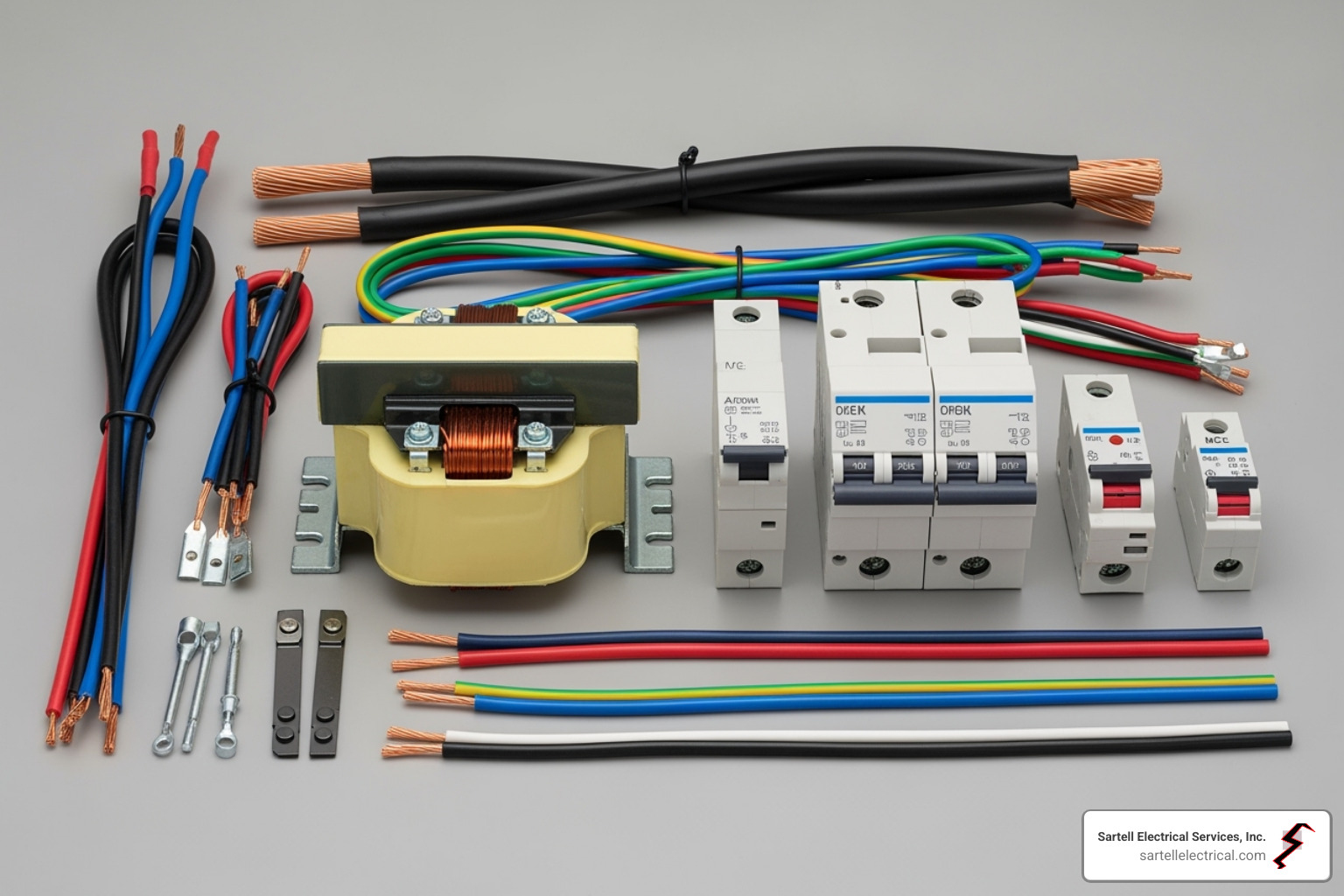
An electrical system is only as good as its parts. Each component has a vital role:
- Transformers adjust voltage levels, stepping it up for efficient long-distance transmission and down for safe use in buildings.
- Circuit breakers are safety guardians that instantly interrupt power flow during an overload or short circuit, preventing fires and protecting equipment.
- Electrical panels act as the command center, organizing and distributing power to various circuits. If your panel is outdated, our guide on main electrical panel upgrades explains your options.
- Grounding systems provide a safe path for fault currents into the earth, preventing electric shock and protecting sensitive electronics.
- Wiring and cabling is the circulatory system that carries electricity. Proper selection of gauge and insulation is critical for reliability.
- Surge Protective Devices (SPDs) shield electronics from voltage spikes caused by lightning or utility issues.
Starting a Career in Electrical Design
For those interested in this field, a career in electrical design combines problem-solving with technical expertise. The path typically involves:
- Formal education: A bachelor's degree in electrical engineering provides the theoretical foundation.
- Practical experience: Internships and hands-on work are crucial for learning how theory applies in the real world.
- Software proficiency: Mastery of CAD, BIM (like Revit), and electrical simulation software is essential for modern design.
- Continuous learning: The industry is always evolving, so staying current with new technologies, codes, and best practices is key to a successful career.
The Blueprint in Action: A Step-by-Step Process for Electrical System Design
Designing a functional electrical system requires a methodical, step-by-step approach. At Sartell Electrical Services, we've refined this process over decades of work across Massachusetts, ensuring every project is built on a solid foundation.
Phase 1: Planning and Load Calculation
Every project starts with a conversation to define the scope, budget, and timeline. We conduct a
site survey to assess existing infrastructure and environmental conditions. The core of this phase is
load calculation, a precise analysis of a building's power needs. We analyze peak demands, diversity factors, and future scalability to ensure the system is sized correctly—not too small to handle the load, and not too large to be wasteful.
Phase 2: Schematic Design and Equipment Selection
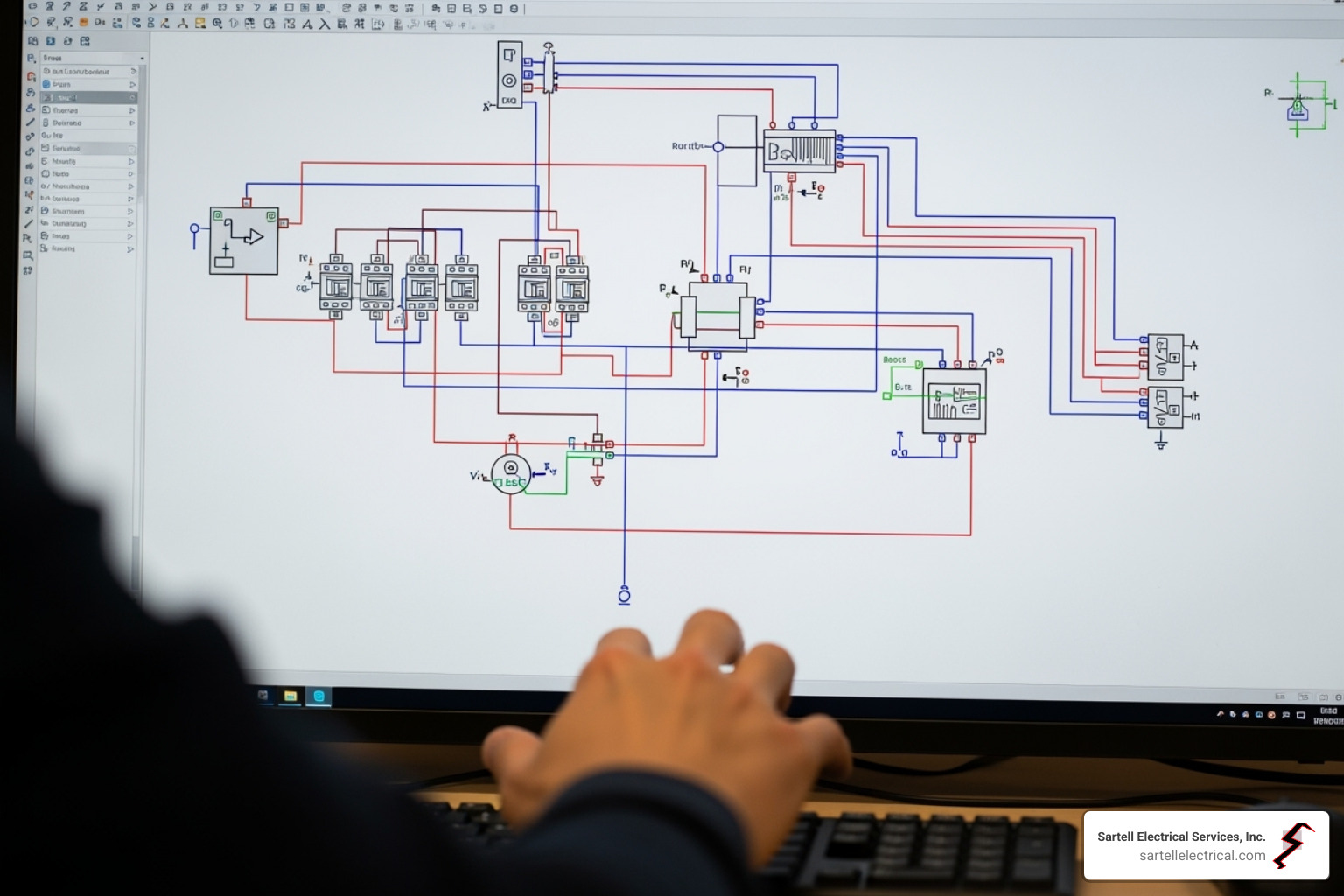
With power requirements defined, we translate needs into blueprints. We start with high-level
functional diagrams before creating detailed
schematic diagrams that show precise electrical interconnections. A key document is the
single-line diagram, a master plan showing power flow from the utility to individual loads, including equipment ratings and protection schemes.
Based on these diagrams, we move to
equipment specification, selecting transformers, circuit breakers, and panels that meet code and project requirements.
Voltage selection is another critical decision. While homes have a
standard residential electrical service size, commercial and industrial projects often use higher voltages for efficiency. We conduct incremental reviews with clients to ensure the design meets expectations before construction.
Phase 3: Documentation, Implementation, and Commissioning
A great design requires flawless execution. This phase transforms plans into a functioning system.
We create
comprehensive documentation, including detailed wiring diagrams, a Bill of Materials (BOM), safety protocols, and MEP design documents for coordination with other trades. This package guides installers, aids inspectors, and serves as a vital reference for future maintenance.
During
installation, our electricians work from these plans, coordinating closely with other trades to ensure seamless integration. Finally,
system testing and commissioning serves as our quality control checkpoint. We verify that every circuit, protective device, and grounding system functions correctly and meets performance specifications under various loads. Only after successful commissioning is the system handed over, ensuring it will operate safely and reliably for years to come.
Sector-Specific Designs: Tailoring Systems for Different Needs
Electrical system design is not a one-size-fits-all service. The power needs of a home, a hospital, and a factory are vastly different. Each sector presents unique challenges and priorities that require a custom approach.
Key Considerations for Residential Electrical System Design
For homes,
occupant safety is the top priority. We ensure proper grounding and circuit protection (GFCIs and AFCIs) in every design. We also focus on
load balancing for appliances to prevent tripped breakers and accommodate modern power demands. With the rise of
smart home integration, we build robust infrastructure for interconnected devices. Finally, we prioritize
energy optimization with LED lighting and efficient practices to reduce costs. For any home project, it's best to work with
licensed residential electricians near you.
Commercial and Healthcare Applications
Commercial and healthcare facilities require
robust systems to handle diverse, substantial loads from HVAC, lighting, and IT networks. We design for efficiency and control, especially for energy-intensive
HVAC and lighting loads. Resilient power for
IT infrastructure is critical, as downtime is not an option. For this reason,
backup power needs are often essential. Hospitals, in particular, depend on uninterrupted electricity for life-saving equipment. We design comprehensive backup solutions, including generators and UPS systems, drawing on our expertise in
Commercial Electrical Services and
Hospital Electrical Systems Best Practices.
Challenges in Industrial Electrical System Design
Industrial facilities represent the most complex and demanding electrical designs. They feature
heavy-duty machinery requiring high-voltage systems and massive, stable power.
Operational continuity is paramount, as downtime can cost millions. We design for reliability and redundancy to keep production lines running. We also integrate complex
automation and control systems like VFDs to optimize productivity. Given the high voltages,
safety is rigorously addressed through risk assessments and arc flash analyses. Our
Electrical Solutions for Industrial Environments ensure these facilities are safe, efficient, and reliable.
| Feature |
Residential Electrical Systems |
Commercial Electrical Systems |
Industrial Electrical Systems |
| Primary Focus |
Occupant safety, convenience, energy efficiency |
Reliability, business continuity, IT infrastructure, comfort |
Operational continuity, heavy machinery support, safety, automation |
| Voltage Levels |
Typically 120/240V single-phase |
Often 120/208V or 277/480V three-phase |
High voltage (480V to kV ranges) three-phase |
| Load Characteristics |
Appliances, lighting, HVAC, personal electronics |
HVAC, lighting, IT equipment, office systems, specialized commercial loads |
Heavy machinery, motors, heating systems, process control, automation |
| Backup Power |
Optional (generator for critical loads) |
Often required (UPS and generators for critical systems) |
Essential (multiple generators, UPS, comprehensive redundancy) |
| Complexity |
Moderate |
High |
Very High |
| Safety Considerations |
GFCI, AFCI, general electrical safety |
Arc flash protection, selective coordination, emergency lighting |
Arc flash analysis, lockout/tagout procedures, specialized PPE, comprehensive fault analysis |
| Scalability |
Limited, often requires panel upgrades |
Moderate, planned for anticipated growth |
High, designed for expansion and process changes |
| Typical Documentation |
Basic floor plans, load schedules |
Detailed schematics, panel schedules, single-line diagrams |
Extensive schematics, single-line diagrams, protection coordination studies, control diagrams |
The Future is Electric: Innovations and Sustainability
The world of
electrical system design is constantly evolving with new technologies that create smarter, more sustainable power systems. We are excited to deliver forward-thinking solutions that are both reliable and efficient.
Smart Technology and Automation
Smart electrical panels and
IoT devices are changing how buildings manage electricity. These systems use sensors to track energy use in real-time and identify problems early. This enables
predictive maintenance, where potential issues are flagged before they cause a crisis. Instead of reacting to failures, we can perform scheduled maintenance to prevent downtime. Our
electrical condition monitoring services leverage this technology to keep operations smooth.
Building Management Systems (BMS) integrate lighting, HVAC, and electrical systems onto one platform for better control and significant energy savings.
Integrating Renewables and Backup Power
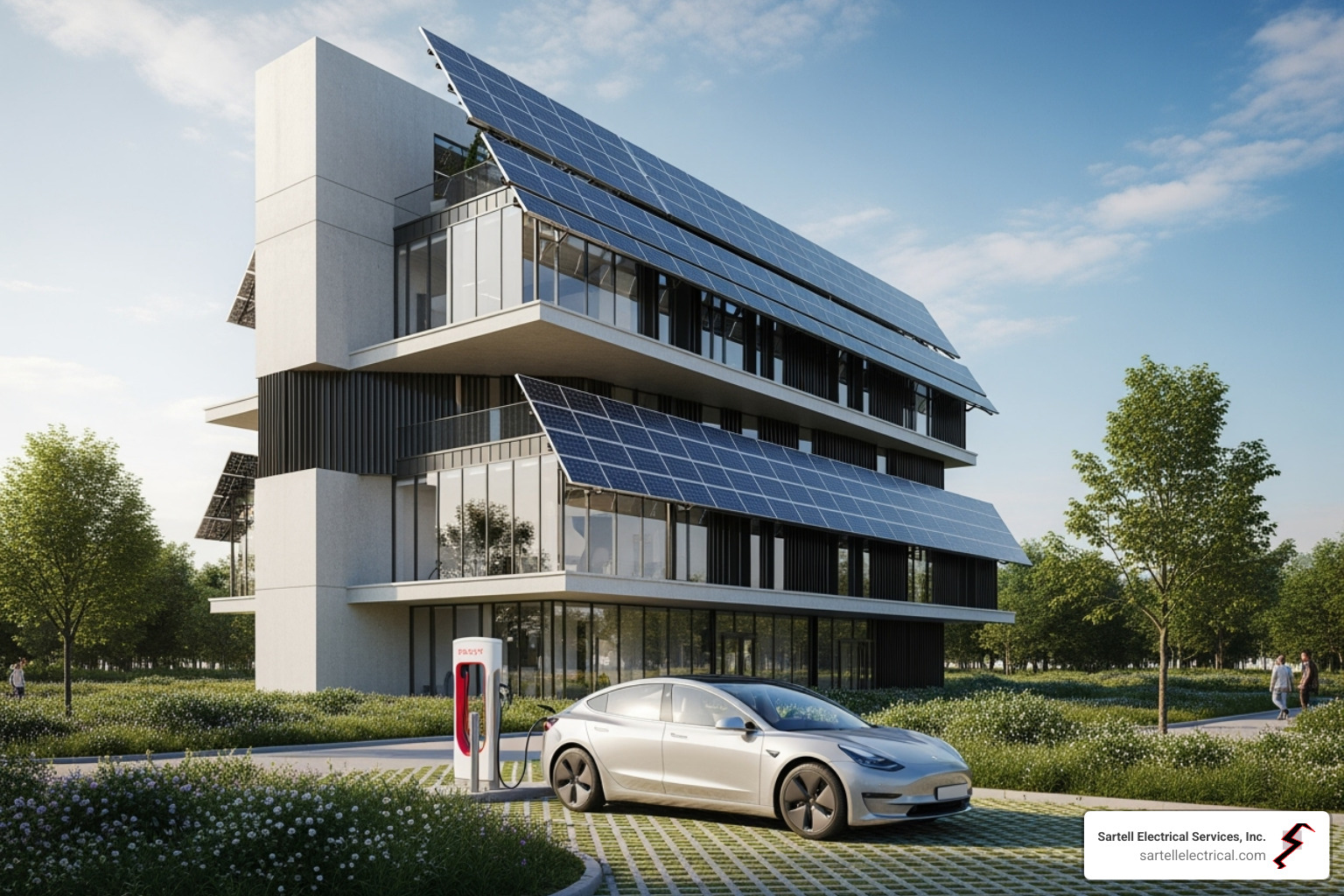
Green energy is now a standard part of our design toolkit. We create systems that seamlessly blend power from
solar and wind integration with the traditional grid, reducing utility bills and increasing energy independence.
Energy Storage Systems (ESS), or batteries, store surplus renewable energy for use during peak hours or outages, making renewables more practical.
For facilities needing absolute reliability, we design
microgrids that can operate independently from the main grid. These are often paired with
Uninterruptible Power Supplies (UPS) for instant, seamless backup, which is critical for facilities like data centers and hospitals. Our expertise in
hospital UPS systems ensures these environments never go dark.
Generators provide longer-term support during extended outages, creating a layered defense against power loss.
Designing for Energy Efficiency and Sustainability
A well-designed electrical system can pay for itself through lower energy costs. We specify
energy-efficient components like high-efficiency transformers,
LED lighting, and
Variable Frequency Drives (VFDs) for motors, which significantly reduce electricity consumption. We also conduct
power quality analyses to eliminate electrical "noise" that wastes energy and damages equipment. This comprehensive approach, detailed in resources like
this design and application guide, reduces a building's
carbon footprint and ensures compliance with modern environmental regulations.
Ensuring Safety, Compliance, and Efficiency
After nearly four decades in the business, I can confirm that a great electrical design is defined by three pillars: safety, compliance, and efficiency. These are not just checkboxes; they are the foundation of a system that protects people, performs reliably, and operates economically.
The Critical Role of Codes and Standards
Every
electrical system design must adhere to rigorous standards learned from decades of experience. The
National Electrical Code (NEC) is our primary guide, covering everything from wiring methods to equipment installation.
NFPA 70E specifically addresses workplace electrical safety, particularly arc flash hazards. We also rely on
ANSI, IEEE, and UL standards to ensure the components we specify have been tested for safety and performance. Finally, we steer
local regulations across Massachusetts to ensure every project moves smoothly through permitting.
Best Practices for a Safe and Efficient System
Beyond code compliance, we implement best practices to optimize performance.
Load balancing distributes electrical loads evenly across circuits to prevent overheating and fires.
Selective coordination ensures that a fault only trips the nearest protective device, maximizing uptime for the rest of the facility. We conduct
arc flash hazard analyses on commercial and industrial projects to assess risks and define safety protocols.
Proper grounding and bonding are essential for preventing electric shock and protecting equipment. We also believe in simplicity; a less complex design often leads to lower maintenance costs and fewer operator errors. Finally, we focus on
energy optimization by minimizing electrical losses, which reduces operational costs. Paired with a solid
building electrical maintenance plan, these practices ensure long-term performance.
Modern software has revolutionized how we design and validate electrical systems.
Computer-Aided Design (CAD) allows us to create precise 2D schematics.
Building Information Modeling (BIM) takes this further, creating intelligent 3D models that integrate electrical plans with architectural and mechanical designs. This allows us to identify and resolve conflicts before construction begins, saving time and money.
Simulation software is one of our most powerful tools, allowing us to virtually test designs by running load flow analyses and short-circuit calculations. This helps us predict system behavior and refine the design for optimal performance. These technologies, wielded by experienced professionals, allow us to turn complex ideas into high-performing electrical systems.
Frequently Asked Questions about Electrical System Design
We often discuss the ins and outs of
electrical system design with clients. Here are some of the most common questions we hear, along with our honest answers.
What is the most important goal of electrical system design?
The single most important goal is
safety. A well-designed system prevents electric shock, fires, and equipment damage. Our primary principle is to create a power system with no electrical hazard to people or property. Following closely behind safety are other critical goals:
reliability to ensure power is always available,
efficiency to minimize wasted energy and cost, and
compliance with all applicable codes and standards.
How long does the electrical design process take?
The timeline for
electrical system design depends entirely on the project's complexity. A simple residential upgrade might take a few days to a week for design, while the electrical infrastructure for a hospital or manufacturing plant can take months. Factors influencing the timeline include project complexity, the specific industry sector, and the time required for site surveys, load analysis, and coordination with other trades. We never rush the design phase, as thoroughness at this stage prevents costly problems later.
Can I design my own home's electrical system?
While we appreciate the DIY spirit, we strongly advise against designing your own electrical system. The
National Electrical Code is a complex document that professionals spend years mastering. A single mistake in applying the code can create a severe risk of electric shock, fire, or equipment damage. The dangers of electricity are unforgiving.
Licensed professionals bring the necessary training and experience to ensure a system is safe under all conditions. Furthermore, most municipalities require plans from licensed professionals for permitting, and improper work will not pass inspection. Hiring a professional from our team of
licensed home electricians is an investment in your family's safety and your home's value.
Conclusion: Your Partner in Advanced Electrical Design
We've explored
electrical system design, from core principles to the advanced technologies shaping our future. The right design is the difference between a system that simply works and one that performs safely, efficiently, and reliably for decades.
At Sartell Electrical Services, this is what we've delivered since 1985. For nearly four decades, our team has designed and implemented electrical systems across Massachusetts, powering hospitals, industrial plants, and homes. Our commitment is to get every detail right, never compromising on safety or quality.
As buildings become smarter and our world more electrified, the need for expert
electrical system design grows. The systems we build today are ready for tomorrow's demands. You deserve an electrical system that's safe, efficient, and built to last, backed by a partner who understands both the science and the practical realities of the trade.
Ready to discuss your electrical design needs? Whether you're planning new construction or upgrading an existing facility, we're here to help.
Contact a professional telecom electrical contractor in Boston, MA today, and let's create an electrical system that exceeds your expectations.