Medical center electrical service: Uninterrupted 2025
The Invisible Backbone: Why Medical Center Electrical Service is Critical
Medical center electrical service is the invisible backbone that keeps healthcare facilities running 24/7. Unlike standard commercial buildings, medical centers require specialized electrical infrastructure to power life-saving equipment, ensure patient safety, and maintain continuous power during emergencies.
Quick Answer: What Makes Medical Center Electrical Service Different?
Medical facilities require:
- Backup power systems that activate within 10 seconds for life-critical equipment
- Essential Electrical Systems (EES) with three separate branches (Life Safety, Critical, Equipment)
- Redundant grounding to protect patients from microshock hazards
- Isolated power systems in operating rooms and wet procedure locations
- Compliance with NEC Article 517 and NFPA 99 healthcare-specific codes
- Generator capacity that can be 50-60% of the building's total power needs
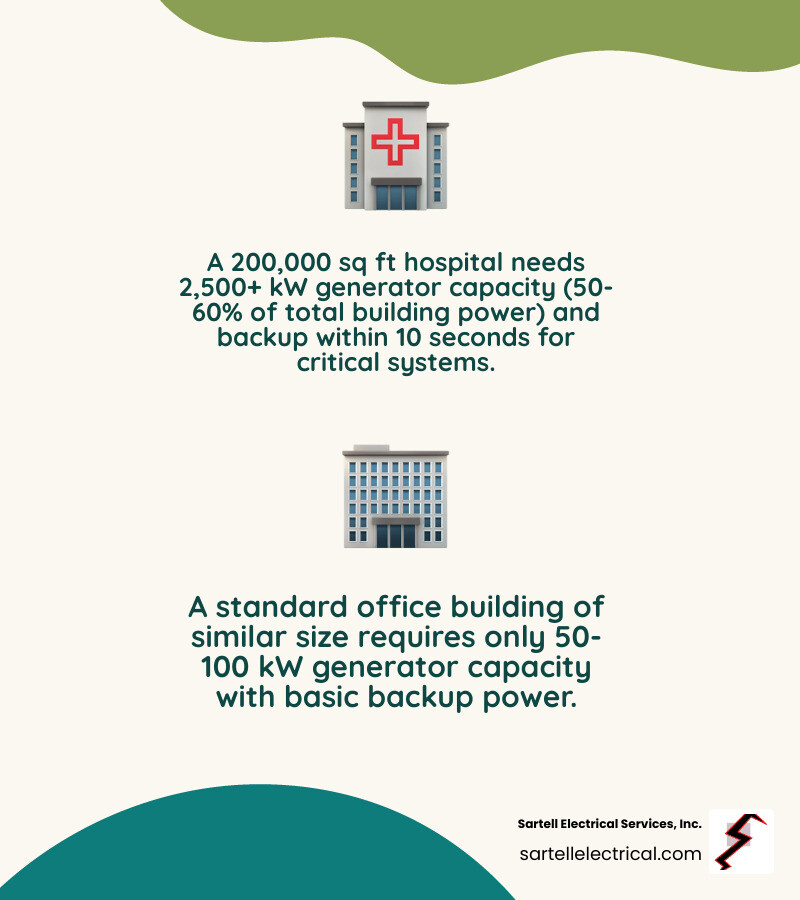
The stakes couldn't be higher. A 200,000-square-foot hospital may need 2,500 kW or more of generator capacity, compared to just 50-100 kW for a similarly sized office building. A power failure during surgery or for a patient on a ventilator is not an option. These systems are a matter of life and death, powering everything from ICU ventilators to electronic health records.
Behind every successful patient outcome is a complex web of electrical infrastructure built to standards far more stringent than typical commercial work. Power must be reliable, redundant, and resilient. Grounding must protect against the smallest currents, and backup systems must take over instantly when normal power fails.
I'm Ed Sartell, and as President of Sartell Electrical Services since 1985, I've worked on
medical center electrical service projects ranging from small clinics to major hospital expansions across Massachusetts. Our team understands that healthcare electrical work demands specialized expertise in codes like NEC Article 517, meticulous attention to patient safety, and the ability to work in active facilities without disrupting critical care.
Explore more about
medical center electrical service:
Why Healthcare Electrical Systems Are Uniquely Demanding
In any hospital, the constant hum of equipment—ventilators, heart monitors, medication refrigerators—is the sound of life being sustained. This is where
medical center electrical service proves it's about more than just flipping a switch.
While the U.S. power grid is over 99% reliable, that fraction of a percent of downtime is unacceptable in healthcare. It represents moments when a surgeon is operating, an infant is in an incubator, or a patient is on dialysis. There is simply no margin for error. This is why healthcare facilities require
power reliability and
24/7 operation that go beyond what any grid can promise.
Medical facilities also have immense
power density, concentrating huge electrical demand in areas like operating rooms and imaging suites. The
quality of this power is just as important as the quantity.
Voltage sags can cause equipment to malfunction mid-procedure, while
harmonics (electrical distortions) can create a cascade of problems. Sensitive diagnostic machines like MRI and CT scanners are particularly vulnerable to these electrical hiccups, where one moment of poor power quality can mean corrupted data or a failed diagnosis.
This is where specialized expertise becomes essential. It requires deep knowledge of healthcare-specific codes and a genuine understanding that lives depend on getting it right.
For more insights into maintaining these critical systems, explore our guide to
Hospital Electrical Systems Best Practices.
The Critical Need for Uninterrupted Power
Every piece of medical equipment in a hospital assumes the power will
always be there.
Patient outcomes are directly tied to continuous electrical power. During
surgical procedures, the team depends on consistent lighting and life-support systems. In the
ICU, ventilators, infusion pumps, and monitors track vital signs second by second. Any interruption could be fatal.
Beyond life-support, the entire digital nervous system of a modern medical center runs on electricity.
Electronic health records (EHR) are critical for patient safety, providing instant access to allergies, medications, and medical history. When these systems go down,
data integrity is compromised and care quality suffers.
Financial losses from downtime can also be staggering, from canceled surgeries to spoiled medications and blood products. This is why
emergency power needs in healthcare are so comprehensive—we're not just keeping the lights on, we're maintaining the entire ecosystem of modern medicine.
To learn how we protect against these interruptions, visit our page on
Hospital UPS Systems.
Grounding and Power Quality Considerations
In healthcare, the danger isn't just from standard electrical shocks, but from
microshock hazards. These are tiny, imperceptible currents that can be fatal to patients with direct electrical connections to their bodies, such as through cardiac catheters. To prevent this, facilities require
redundant grounding in patient care areas, creating two separate safety paths for electricity.
In sensitive areas like operating rooms,
isolated power systems provide another layer of protection. They supply power that isn't referenced to ground, so a single fault won't cut power or send current through a patient. A Line Isolation Monitor alerts staff to issues before they become dangerous, ensuring critical equipment stays on.
Keeping the power "clean" is another challenge. Modern medical equipment is sensitive to
EMI/RFI interference (electromagnetic and radio frequency noise). Proper
shielding and cable routing are essential to protect against this invisible interference, especially for
imaging equipment. MRI and CT scanners require an electrically "quiet" environment to produce clear images, preventing misdiagnosis or the need for repeat scans.
This obsession with safety and power quality is what sets
medical center electrical service apart. It's why we conduct regular
Electrical Safety Checks on Medical Equipment to ensure every component is performing as it should.
The Essential Electrical System (EES): The Heart of Hospital Power
When utility power fails in a hospital, the Essential Electrical System (EES) is the lifeline. Required by
NEC Article 517 and
NFPA 99, the EES is an engineered network of backup power that acts as the hospital's heart, pumping electricity to critical equipment.
The EES uses multiple layers of protection.
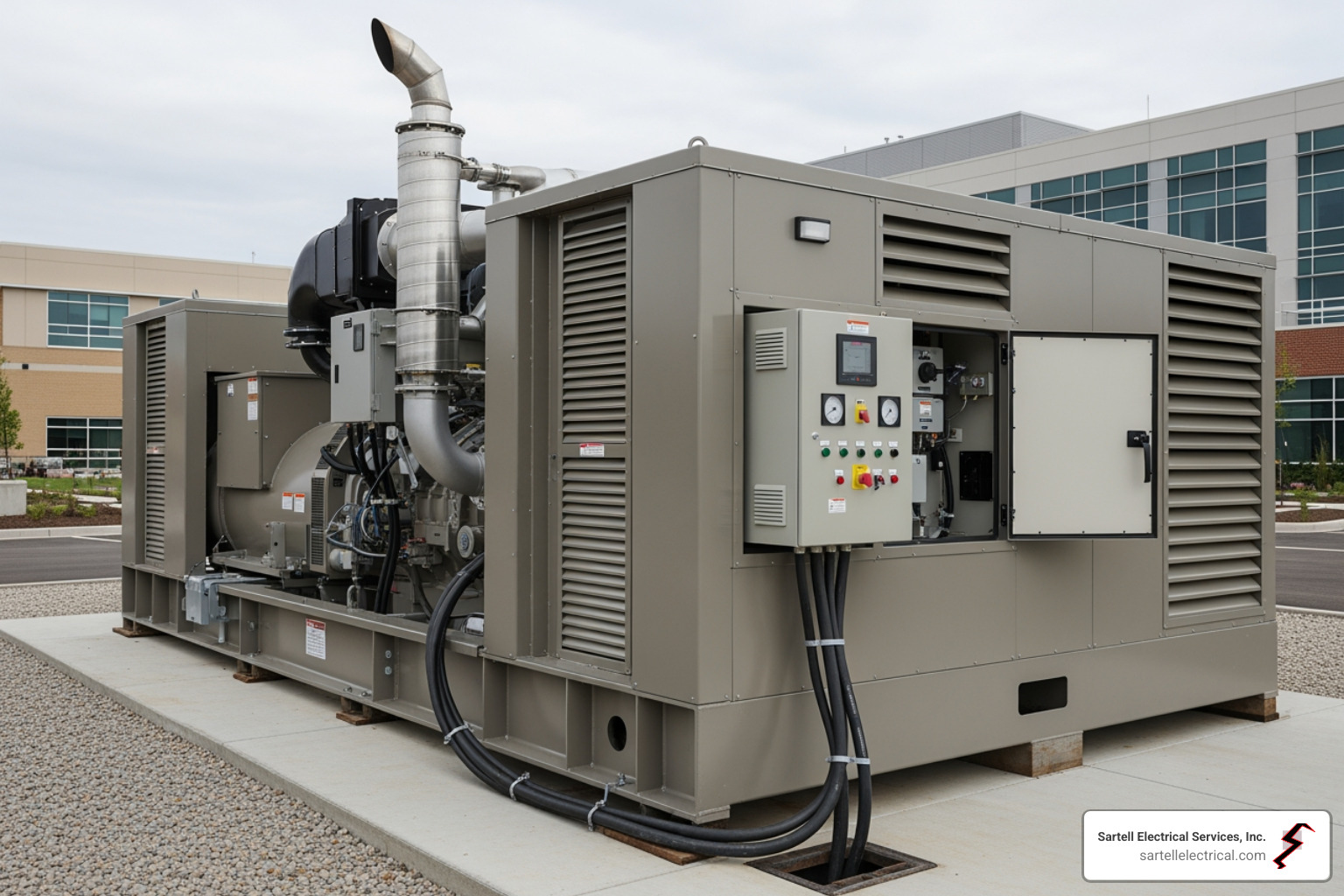
Backup power sources, typically diesel generators with fuel for several days, stand ready. Because generators take seconds to start,
Uninterruptible Power Supply (UPS) systems provide instant battery backup, bridging the gap for the most sensitive equipment.
Automatic Transfer Switches (ATS) detect a power failure in milliseconds and automatically switch to backup power, often within 10 seconds for the most critical loads.
What makes the EES truly sophisticated is its organization into distinct
branches. Each branch serves specific functions on separate circuits, ensuring that a problem in one branch won't affect the entire system. It's redundancy by design.
For a comprehensive understanding of these systems, the International Association of Electrical Inspectors offers an excellent resource on
Essential Electrical Systems for Healthcare Facilities.
The Life Safety Branch
The
Life Safety Branch is the first priority in a power outage, ensuring safe evacuation. It must transfer to backup power within 10 seconds. This branch powers
egress lighting,
exit signs, the
fire alarm system,
emergency communication systems, and selected elevators to help move patients who can't use stairs.
The Critical Branch
The
Critical Branch keeps patients alive, transferring to backup power within 10 seconds. It powers equipment where any delay could be fatal, including
life support equipment like ventilators and dialysis machines,
patient monitoring systems, and
surgical lighting. It also powers
critical task illumination at nurses' stations and the
nurses' call system.
Every piece of equipment on the Critical Branch is selected because its failure could directly harm a patient. Our
Medical Equipment Installation services treat every connection as mission-critical.
The Equipment Branch
The
Equipment Branch supports essential facility systems that create a safe healing environment. While not immediately life-threatening, systems like
HVAC for critical patient care areas,
medical air compressors and vacuum pumps, and
sterilizers are vital for ongoing operations. This branch has a slightly longer transfer time but is crucial for allowing the rest of the hospital to function properly.
Navigating Codes, Standards, and Patient Area Classifications
Electrical design for healthcare is governed by a complex maze of codes and standards designed to protect patients and ensure operational continuity. Expertise in these regulations is as crucial as technical skill for any
medical center electrical service.
Key codes and standards include:
- NEC Article 517: The core of the National Electrical Code for healthcare, detailing wiring methods and requirements for essential electrical systems. This overview of NEC Article 517 provides excellent context.
- NFPA 99: The Health Care Facilities Code, which works with the NEC to minimize fire, explosion, and electrical hazards.
- NFPA 110: Governs emergency and standby power systems, ensuring generators and transfer switches perform reliably.
- FGI Guidelines: Provide best-practice recommendations that often exceed minimum code, representing the gold standard in facility design.
In Massachusetts, we adhere to all these national standards, plus state-specific amendments found in the
Massachusetts electrical code information. This layered approach is why specialized expertise is so vital.
Patient Care Area Classifications Explained
A key concept in healthcare electrical design is the risk-based classification of patient care areas, as defined by
NFPA 99. The facility's governing body designates each space into a category, which determines the required electrical infrastructure.
- Category 1: Highest risk areas (operating rooms, ICUs) where power failure could cause major injury or death. They require a Type 1 EES, the highest number of receptacles on backup power, redundant grounding, and often isolated power systems.
- Category 2: Spaces like general patient rooms where power failure could cause minor injury. They require a robust EES connection with multiple backup receptacles per bed.
- Category 3 & 4: Spaces where power loss is unlikely to cause injury (waiting rooms, offices). These have less stringent requirements and may not connect to the EES.
| Category |
Definition of Risk from Power Failure |
Impact on Electrical System Requirements |
Example Areas |
| Category 1 |
Power failure can cause significant injury or death. |
Requires Type 1 EES (Life Safety, Critical, Equipment branches), highest number of receptacles, redundant grounding, IPS in wet locations. |
Operating rooms, ICUs, CCUs, Emergency Rooms. |
| Category 2 |
Power failure likely to cause minor injury. |
Requires Type 1 EES (if Cat 1 areas exist) or Type 2 EES (Life Safety, Equipment branches). Specific receptacle counts, improved grounding. |
General patient rooms, procedure rooms (non-critical). |
| Category 3 |
Power failure unlikely to cause injury but can cause discomfort. |
Less stringent EES requirements, may rely more on general building emergency power. |
Waiting rooms, physical therapy areas, exam rooms (basic care). |
| Category 4 |
Power failure unlikely to impact patient care. |
Standard commercial electrical requirements, no specific EES connection needed. |
Administrative offices, storage rooms, break areas. |
Specifics of a comprehensive medical center electrical service
Specialized areas like operating rooms and imaging suites demand unique electrical solutions where experience in
medical center electrical service is critical.
Operating rooms and wet procedure locations present a high risk of electric shock. This is why they use
Isolated Power Systems (IPS). An IPS supplies power isolated from ground, preventing a single fault from cutting power to life-support. A
Line Isolation Monitor (LIM) constantly monitors the system and alarms if a fault is detected, allowing staff to address the issue without interrupting power.
Imaging suites for MRI, CT, and X-ray machines require massive amounts of stable, clean power. The electrical design must create a pristine environment, free from interference that could degrade image quality and lead to misdiagnosis. This involves careful attention to grounding, shielding, and power quality that goes far beyond typical commercial work, as detailed in resources like this guide on
electrical design for healthcare facilities.
Modernization and Future Trends in Medical Center Electrical Service
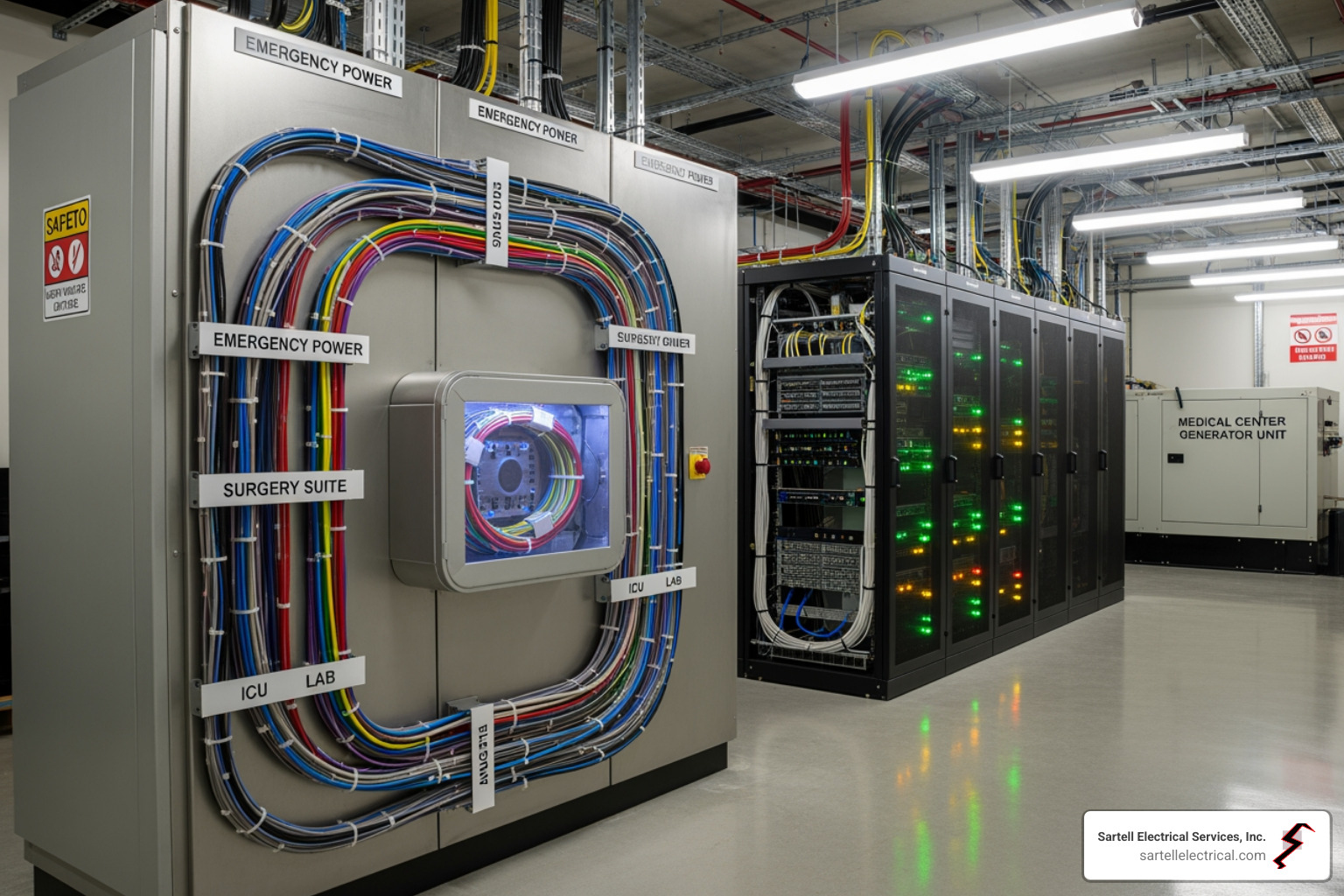
Many older hospitals rely on aging electrical systems that struggle to meet the demands of modern medical equipment. This leads to higher maintenance costs and reduced reliability. At the same time, there is pressure to reduce energy costs and environmental impact. Modern
medical center electrical service solutions can address both challenges, with studies on
sustainable hospital systems showing that upgrades can cut electricity use by up to 20% while improving reliability.
The Benefits of Upgrading Your Facility's Electrical Systems
Electrical upgrades solve immediate problems like outdated panels and also provide broader benefits.
LED lighting retrofits, for example, reduce electricity use and HVAC load. The improved light quality also improves the environment for staff and patients.
Smart controls and building automation can automatically adjust lighting based on occupancy or predict when a component is wearing out before it fails. The financial impact is significant, as
reduced energy consumption leads to
lower operational costs. This
improved reliability and
improved patient experience make upgrades a wise investment, often incorporated into
Medical Office Construction projects.
The Future of medical center electrical service
Future healthcare electrical systems are evolving into intelligent, self-sufficient networks.
Microgrids are miniature, on-site power grids that can operate independently. By combining
on-site generation (like solar) with
battery storage, a hospital can maintain power during a utility outage and reduce energy costs during normal operation.
Smart hospitals feature deep
integration with IT systems, where the electrical infrastructure communicates with building management systems. This enables
predictive maintenance, alerting staff to a component showing wear before it breaks. This approach dramatically reduces unexpected downtime.
AI in energy management can learn a facility's usage patterns to automatically optimize lighting and HVAC, shift loads to off-peak hours, and make priority decisions during outages. The electrical system is evolving from a passive network into a dynamic, thinking infrastructure that actively protects patients and optimizes operations.
Why Specialized Expertise is Non-Negotiable for Healthcare Electrical Work
To be direct,
medical center electrical service is a specialized field with zero margin for error. It's not learned from a manual; it's about protecting lives. The complexity of these 24/7 facilities, with equipment that cannot tolerate the slightest power fluctuation, is unlike anything in standard commercial construction.
Mastery of codes like
NEC Article 517 and
NFPA 99 is essential. This requires understanding the 'why' behind the rules and how to apply them in complex, real-world scenarios.
Beyond technical skill, working in an active healthcare facility demands seamless coordination with medical staff, flexibility to work around patient care, and a deep respect for the stressful environment. Strict
infection control protocols are also non-negotiable. Our electricians use containment barriers, HEPA filtration, and meticulous cleanup to prevent the spread of pathogens.
Phased renovations in active facilities require a level of planning most contractors never develop. Every power interruption must be carefully scheduled and executed with verified backup plans. Our work as a
Healthcare Electrical Contractor Boston MA has taught us that in healthcare, "good enough" simply doesn't exist.
Choosing the Right Electrical Contractor
Choosing the right electrical contractor is critical. The wrong choice risks code violations and patient safety issues, while the right one ensures your facility's electrical infrastructure is in expert hands.
When vetting a contractor, ask these key questions:
- What is your experience with NEC Article 517 and NFPA 99? Can they explain key concepts like patient care space categories or the use of isolated power systems?
- Can you describe a similar project you've completed in an active healthcare facility? How did they manage safety, logistics, and coordination with clinical staff?
- Are your electricians trained in infection control procedures? Do they understand how to properly set up containment barriers?
- How do you handle medical workflows and scheduling demands? Are they flexible enough to work around surgical schedules and patient care routines?
- What are your emergency response capabilities? Do they have staff on-call 24/7 for critical issues?
At Sartell Electrical Services, we've built our reputation on answering these questions with confidence, backed by decades of successful healthcare projects. We understand that you're trusting us with your patients' safety—and we take that responsibility seriously.
Learn more about our comprehensive approach to
Health Care Electrical Services and find why healthcare facilities across the region trust us.
Conclusion
The electricity that powers a hospital is its invisible lifeline.
Medical center electrical service is not just infrastructure; it's a system of precision, redundancy, and reliability that makes modern healthcare possible.
We've covered the unique demands of healthcare electrical systems: the Essential Electrical System (EES) with its Life Safety, Critical, and Equipment branches; specialized grounding to prevent microshock; and isolated power systems for operating rooms. We've also steerd the complex codes like
NEC Article 517 and
NFPA 99 that govern every design decision. All are designed to ensure patient care continues uninterrupted.
Looking ahead, the field is evolving with smart hospitals, microgrids, and AI-driven energy management. But the fundamental truth remains: healthcare electrical work demands specialized expertise and a deep respect for the lives that depend on it.
At Sartell Electrical Services, this is who we are. Since 1985, we've served healthcare facilities across Massachusetts, understanding that our work ensures power is always there when it's needed most—for patients, surgeons, and staff. We bring an understanding of infection control, the ability to work in active facilities without disrupting care, and a commitment to staying current with every code and industry advancement.
For expert guidance on ensuring your facility's electrical systems are safe, compliant, and ready for the future, explore our comprehensive
Health Care Electrical Services. Whether you're planning a renovation, upgrading infrastructure, or need a partner who understands the critical nature of your work, we're here to help. Your mission is patient care—ours is making sure the lights stay on so you can do it.