Hospital electrical systems: 1 Essential Lifeline
The Unseen Lifeline of Modern Healthcare
Hospital electrical systems are the invisible backbone that keeps patients alive and healthcare facilities running. While the power grid in the United States is more than 99 percent reliable, even a power failure of just a few seconds can take life-support equipment out of service, interrupt an ongoing surgery, or cause the loss of critical information from a patient's medical record.
Key Components of Hospital Electrical Systems:
- Essential Electrical Systems (EES) - Backup power for critical areas
- Emergency Generators - Automatic power within 10 seconds of outage
- Life Safety Branch - Powers exit lighting and fire alarms
- Critical Branch - Powers patient care equipment like ventilators
- Equipment Branch - Powers HVAC and other facility systems
- Uninterruptible Power Supplies (UPS) - Instant backup power
- Isolated Power Systems - Improved safety for operating rooms
As one healthcare electrical expert puts it: "Mechanical and electrical systems act as vital organs to a hospital, providing power, water, fresh air and other important elements that keep the hospital running efficiently and safely."
Unlike office buildings or hotels, hospitals require massive electrical infrastructure. A 200,000-square-foot hospital may need 2,500 kW or more of generator capacity, compared to just 50-100 kW for a similarly sized office building. The total emergency power for a hospital can exceed 50-60% of the building's total power needs.
I'm Ed Sartell, and in my nearly four decades leading Sartell Electrical Services, I've seen how critical proper Hospital electrical systems design and maintenance are for patient safety and facility operations. Our team has specialized in healthcare electrical infrastructure across Massachusetts, ensuring these complex systems meet the stringent codes that protect both patients and staff.
What is a Hospital Essential Electrical System (EES)?
Picture this: you're in the middle of a complex surgery when the lights suddenly go out. In a regular building, this might be an inconvenience. In a hospital, it could be a matter of life and death. This is exactly why Hospital electrical systems include something called an Essential Electrical System, or EES for short.
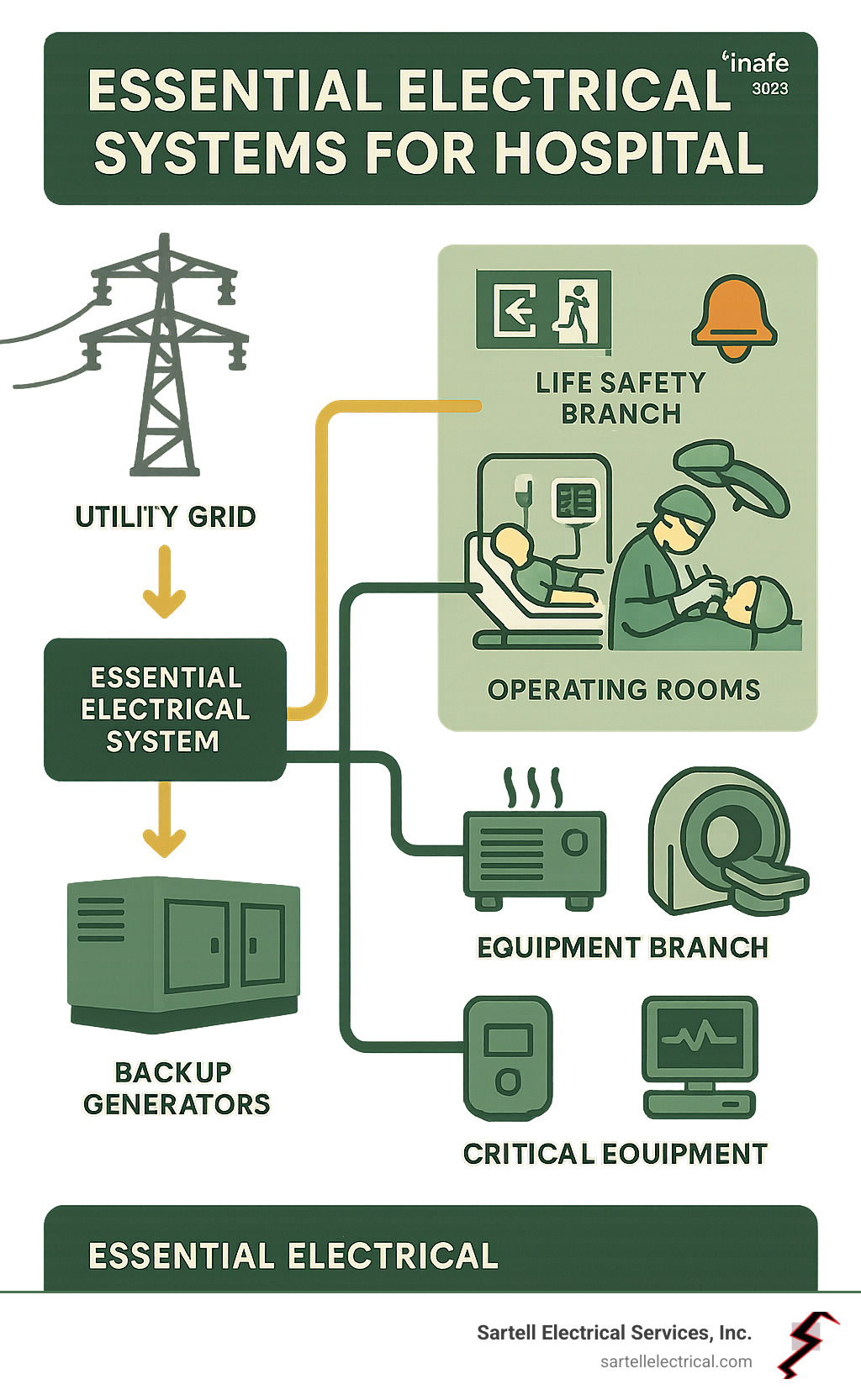
An EES is essentially a hospital's electrical safety net. When the normal power goes out, this backup system automatically kicks in to keep critical equipment running and patients safe. The NFPA 99: Healthcare Facilities Code defines it as a system that includes alternate power sources and all the connected distribution systems and equipment needed to keep essential functions operating.
Think of it as having multiple lifelines instead of just one. The EES includes emergency generators, transfer switches, and specially designed wiring that work together seamlessly. When utility power fails, these systems transfer loads to backup power sources in seconds, ensuring that life-support equipment never misses a beat.
At Sartell Electrical Services, we've spent over three decades designing and maintaining these critical systems across Massachusetts healthcare facilities. Our team understands that when it comes to Health Care Electrical Services, there's no room for error. For those wanting to dive deeper into the technical aspects, you'll find comprehensive information on Essential Electrical Systems for Healthcare Facilities.
Patient Care Risk Categories and EES Types
Not every room in a hospital faces the same level of risk during a power outage. A patient's bathroom and an operating room obviously have very different needs. That's why NFPA 99 classifies patient care areas into four risk categories, each determining what type of electrical backup is required.
Category 1 areas are where power loss could be fatal. These include operating rooms, intensive care units, and cardiac catheterization labs. Here, patients are often connected to life-support equipment, and even a brief power interruption could cause serious injury or death.
Category 2 areas present moderate risk, where power loss might cause minor injury. Think of general patient rooms where someone might be recovering from surgery but isn't on life support.
Category 3 areas might cause discomfort during an outage but won't typically lead to injury. Examination rooms and some outpatient areas fall into this category.
Category 4 areas have minimal impact on patient care during power loss. These include waiting rooms, administrative offices, and utility areas.
Based on these risk levels, healthcare facilities need either a Type 1 or Type 2 EES. Any facility with Category 1 spaces must have a Type 1 EES - the most comprehensive and stringent system available. This includes three separate branches of backup power to ensure maximum reliability.
Facilities with only Category 2 or lower spaces might qualify for a Type 2 EES, which is somewhat simpler but still robust. However, the moment a facility has even one Category 1 area, they must upgrade to the full Type 1 system.
Understanding these distinctions is crucial for compliance and patient safety. The overview of NEC Article 517 provides detailed guidance on how these requirements translate into actual electrical system design.
The Three Branches of a Type 1 EES
A Type 1 EES is like a three-legged stool - each leg serves a specific purpose, and all three must work together for maximum stability. These three branches are completely separate from each other, so if one has a problem, the others keep working.
| Branch Name | Purpose | Transfer Time to Alternate Source | Examples of Loads Served |
|---|---|---|---|
| Life Safety | Powers systems essential for safely evacuating the building during an emergency. | Within 10 seconds | Egress lighting, exit signs, fire alarm systems, and emergency communication systems. |
| Critical | Powers equipment and systems directly involved in maintaining patient care and life support. | Within 10 seconds | Ventilators, patient monitoring systems, surgical lights, and critical receptacles in patient care areas. |
| Equipment | Powers essential mechanical systems that support patient care but are not immediately life-sustaining. | Delayed (not required in 10 sec) | Medical air compressors, vacuum pumps, select elevators, and HVAC systems for critical areas like operating rooms. |
Codes, Components, and Safety in Hospital Electrical Systems
When it comes to hospital electrical systems, there's no room for guesswork. These life-critical installations operate under one of the most rigorous regulatory frameworks in the electrical industry – and for good reason. Every wire, every connection, every backup system is governed by codes that have been written in response to real-world emergencies and tragedies.
The foundation starts with NFPA 70 (National Electrical Code), particularly Article 517, which reads like a medical textbook for electricians. This isn't your typical commercial wiring – it's electrical engineering with a stethoscope. NFPA 99 (Health Care Facilities Code) works hand-in-hand with the NEC, defining exactly what each system must accomplish to keep patients safe. Think of NFPA 70 as the "how" and NFPA 99 as the "what."
NFPA 101 (Life Safety Code) ensures people can escape safely during emergencies, while NFPA 110 sets the standards for those massive generators you see outside hospitals. These aren't just backup power units – they're life support systems for entire buildings.
Here in Massachusetts, we follow these national standards but add our own state-specific requirements. The Massachusetts electrical code information includes amendments that address local conditions and safety concerns. This layered approach makes hospital electrical systems incredibly complex, which is why proper Electrical Project Management isn't just helpful – it's essential.
Power Sources and Continuity
Imagine trying to perform surgery by candlelight, or having a ventilator stop mid-breath. That's why hospitals build their electrical systems like fortresses, with multiple walls of defense against power loss.
Utility power serves as the primary source, but even our highly reliable grid fails sometimes. Natural disasters, equipment failures, or simple human error can plunge a facility into darkness. That's where the backup systems prove their worth.
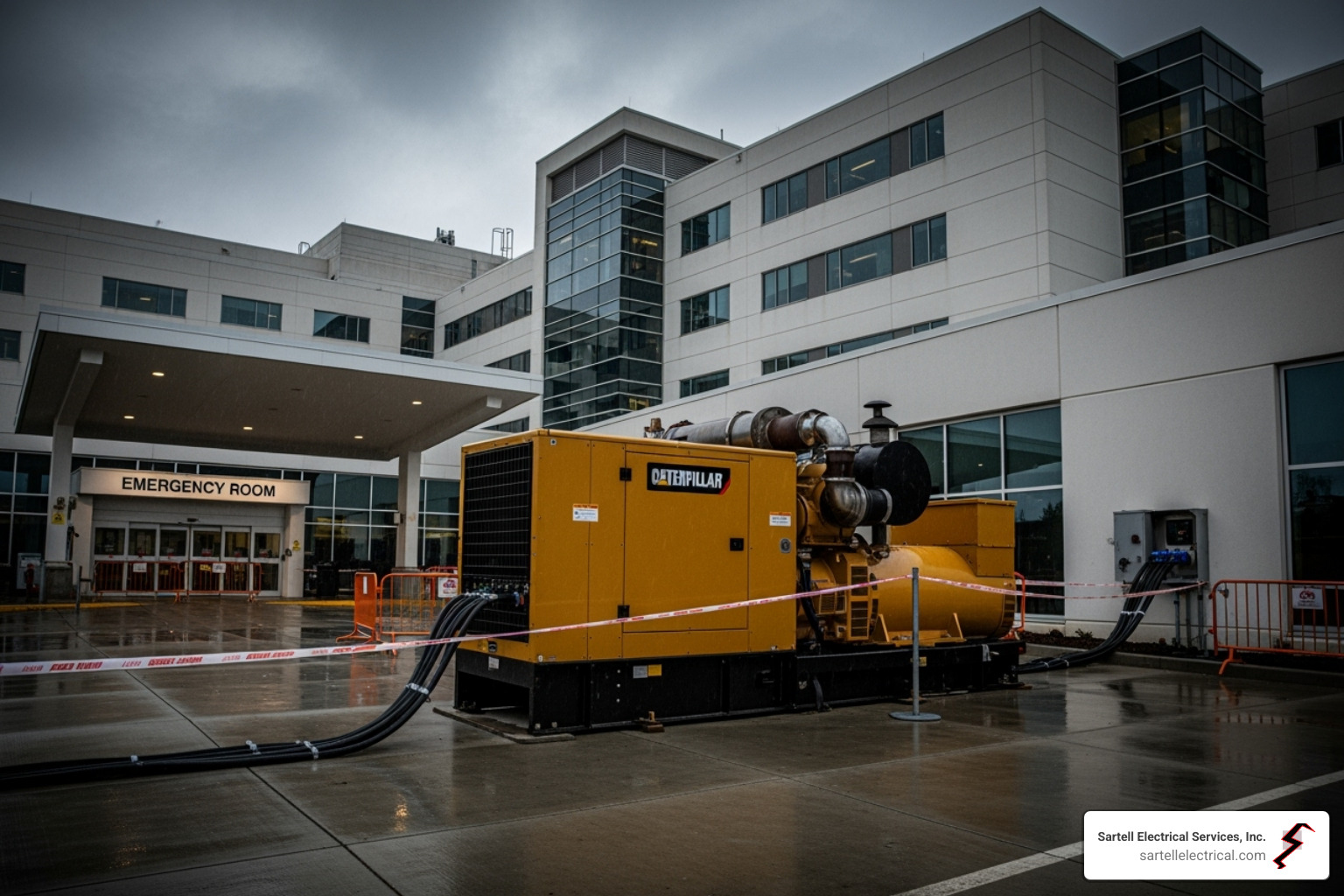
Emergency generators are the workhorses of hospital backup power. These diesel-powered giants automatically spring to life within 10 seconds of detecting a power loss. A typical hospital might need 30,000 gallons of diesel fuel or more – enough to run independently for days. The fuel storage requirements alone can be staggering, with regulations requiring minimum 4-day supplies at full load.
Uninterruptible Power Supplies (UPS) fill the critical gap between power loss and generator startup. Even those 10 seconds can be too long for sensitive medical equipment. UPS systems provide instant, seamless power while also protecting against voltage surges and sags that could damage delicate electronics.
Automatic Transfer Switches (ATS) act as the intelligent guardians of the system. They constantly monitor power quality and make split-second decisions about when to switch to backup power. Multiple ATS units throughout the hospital ensure that each branch of the Essential Electrical System can operate independently.
Electrical Panels, Grounding, and Isolated Power
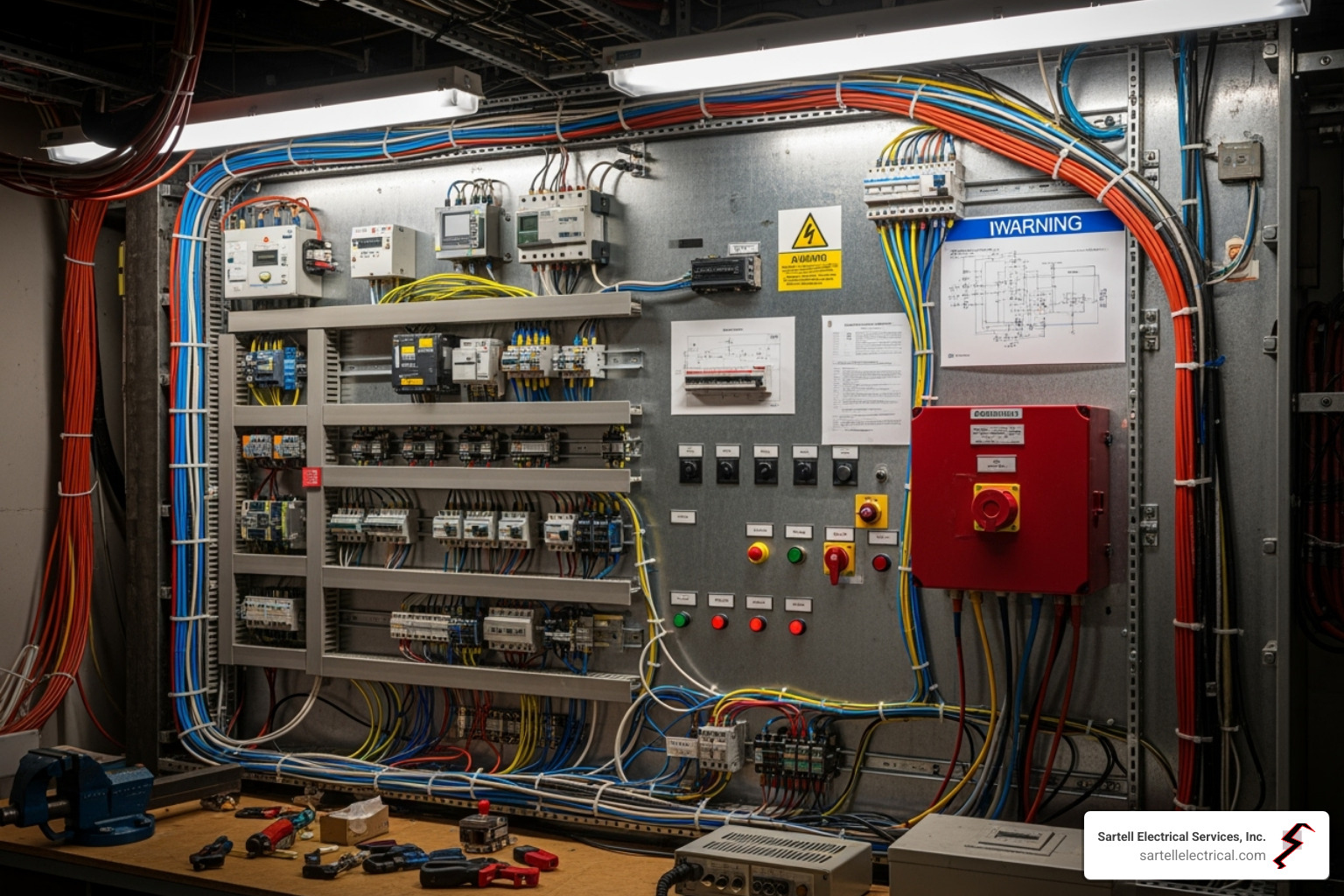
Hospital electrical panels are far more sophisticated than what you'd find in office buildings. They're the nerve centers that distribute power while constantly monitoring for faults and irregularities.
Main Distribution Boards receive power from utilities or generators and feed it to specialized subpanels throughout the facility. Emergency panels prioritize critical loads, ensuring life support equipment gets power first during an outage.
Redundant grounding is where hospital wiring gets serious about safety. Every patient care area requires both a dedicated grounding wire and a metallic conduit – two separate paths to ground. If one fails, the other maintains protection. It's like wearing both a belt and suspenders when lives are on the line. Our expertise in Ground Fault Repair keeps these critical safety systems functioning properly.
Ground Fault Protection in hospitals operates at multiple levels. Unlike typical buildings with protection only at the main service, hospitals often have GFP at both main and feeder levels. This prevents a single fault from cascading into a facility-wide blackout.
Isolated Power Systems (IPS) represent the pinnacle of electrical safety in critical care areas. These specialized systems create an electrically isolated environment where a single fault won't interrupt power to life-sustaining equipment. Line Isolation Monitors (LIM) continuously watch for problems, alerting staff to issues before they become dangerous.
Special Considerations: Wet Procedure Locations
The term "wet procedure location" has a very specific meaning in healthcare – it's any patient care area where liquids are routinely present on the floor or where patients are intentionally wetted during procedures. Operating rooms, dialysis stations, and certain treatment areas all qualify.
Water and electricity make dangerous partners, especially when patients are connected to electrical medical devices. The risk of electric shock increases dramatically in these environments, requiring special protection strategies.
Ground Fault Circuit Interrupters (GFCIs) would seem like the obvious solution, but there's a catch. While GFCIs excel at preventing shock, they can also trip unexpectedly – potentially shutting off power to life support equipment at the worst possible moment. That's why the NEC prohibits GFCIs on circuits serving critical life support devices.
Isolated Power Systems become the preferred solution in these challenging environments. By limiting fault current and maintaining power even with a single ground fault, IPS provides the safety benefits without the risk of unexpected power interruption. NFPA 99 actually classifies all operating rooms as wet locations unless a detailed risk assessment proves otherwise.
The electrical design requirements for these areas are incredibly detailed and specialized. Resources like Electrical design for healthcare facilities provide deeper insights into these complex requirements. Our team has spent decades mastering these specialized installations, ensuring compliance and safety in healthcare facilities across Massachusetts.
Modern Challenges and Future-Proofing Electrical Infrastructure
Even with robust EES in place, Hospital electrical systems face evolving challenges that would make even the most seasoned electrical engineer's head spin. The increasing reliance on sensitive electronic medical equipment introduces new complexities, while the drive for sustainability pushes for innovative solutions that our grandparents never could have imagined.
One of the biggest headaches we encounter is managing electromagnetic interference (EMI) and radio frequency interference (RFI). Think of it this way: medical equipment like MRI machines, CT scanners, and patient monitors are like sensitive musicians trying to perform in a room full of static. EMI/RFI can distort signals, lead to inaccurate readings, or even cause equipment to malfunction at the worst possible moment.
The solution isn't simple. Hospital electrical systems must incorporate proper shielding, meticulous grounding, and careful cable routing to minimize these interferences. It's like creating a quiet sanctuary where diagnostic and treatment equipment can perform their life-saving work without electronic noise getting in the way.
Another challenge lies in the sheer volume and complexity of data flowing through modern hospitals. Today's healthcare facilities are essentially high-tech cities, with electrical systems that must integrate seamlessly with building management systems, electronic health records, and smart hospital technologies. This constant evolution means that regular Building Electrical Maintenance isn't just about fixing problems anymore – it's about proactively adapting to new technologies and staying ahead of emerging risks.
The Rise of Sustainable and Smart Hospital Electrical Systems
Here's something that might surprise you: modern hospitals are becoming environmental champions. These facilities are increasingly embracing sustainability and energy efficiency, recognizing that green initiatives not only reduce operational costs but also align perfectly with their mission of promoting health. The results are impressive – improvements in sustainable systems can reduce electricity consumption by up to 20%.
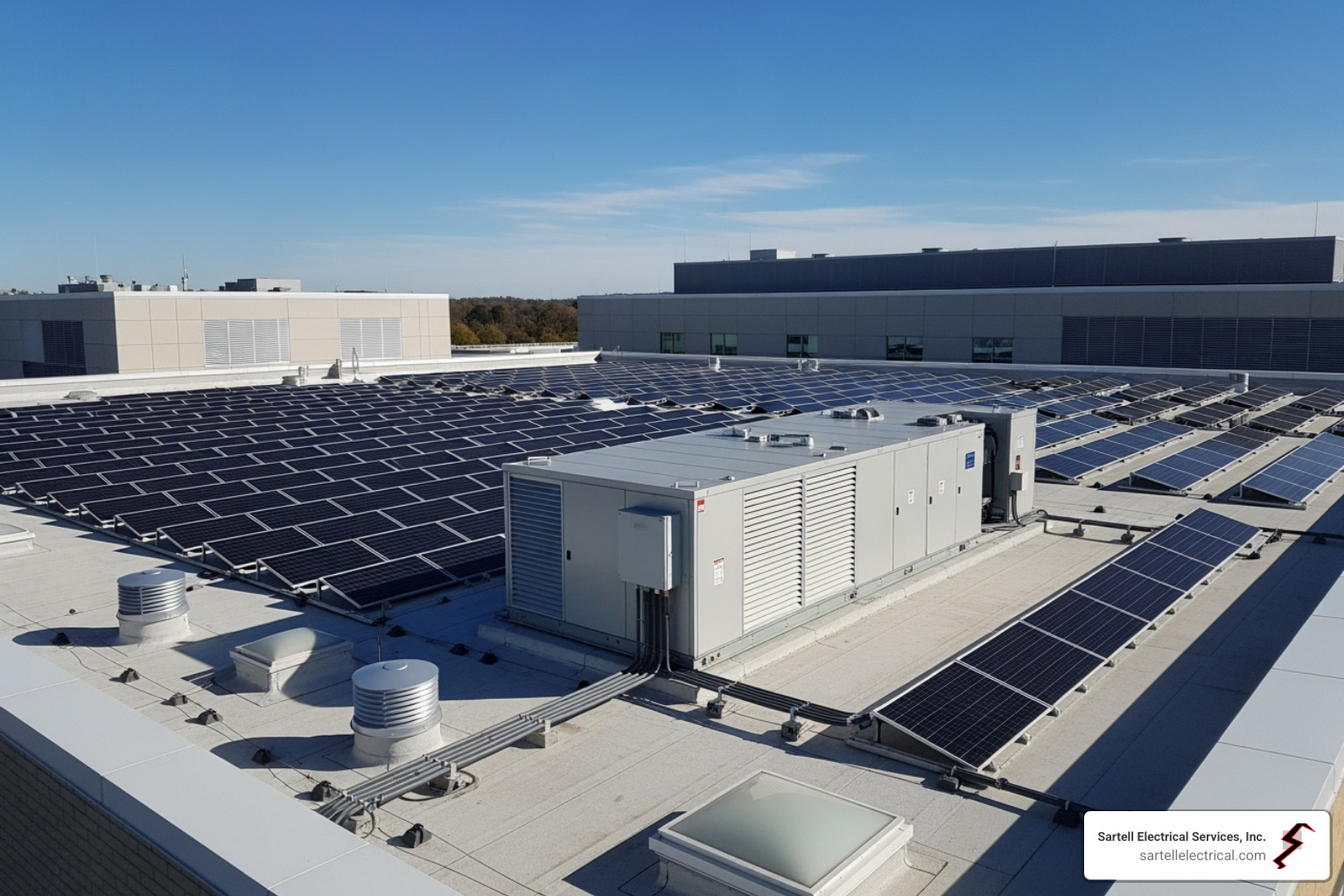
Solar photovoltaics and battery storage are game-changers for healthcare facilities. Imagine a hospital roof covered with solar panels, paired with large-scale battery storage systems tucked away in utility areas. These systems can offset peak demand, slash energy bills, and provide an additional layer of resilience when the grid experiences problems. It's like having your cake and eating it too – environmental responsibility and improved reliability.
Intelligent LED lighting goes far beyond basic energy savings. These smart systems can adapt to occupancy levels, natural light conditions, and even specific patient needs. Picture a patient room where the lighting automatically dims during rest periods or brightens for medical procedures, all while optimizing energy use.
The concept of a "smart hospital" is where things get really exciting. This isn't just about energy – it's about interconnecting all systems including electrical, medical, IT, and logistics for efficient, secure, and sustainable real-time management. Artificial intelligence (AI) plays a growing role, predicting consumption patterns, anticipating demand peaks, and automatically managing climate, lighting, and renewable energy sources.
This evolution transforms the electrical installation from a passive network into a dynamic, adaptive system that thinks and responds. For more insights into this exciting trend, you can explore sustainable hospital systems.
The Long-Term Value of a High-Quality Installation
Investing in a high-quality, well-maintained hospital electrical system isn't just a regulatory box-checking exercise. It's a strategic decision that pays dividends for years to come, much like investing in a reliable car that gets you where you need to go without breaking down.
Improved patient safety stands as the paramount benefit. When electrical systems work flawlessly, life-support equipment functions continuously, diagnostic tools provide accurate readings, and emergency systems are always ready. This directly translates to better patient outcomes and peace of mind for families and medical staff alike.
Operational continuity keeps the hospital running like a well-oiled machine. Power outages can interrupt surgeries, cause data loss, and create significant disruptions that ripple through the entire facility. A robust EES ensures that critical operations continue without missing a beat, maintaining the hospital's ability to provide life-saving care around the clock.
From a financial perspective, the cost-effectiveness is compelling. While the initial investment may be higher, a well-designed and properly installed system reduces the likelihood of costly breakdowns, emergency repairs, and energy waste. Predictive maintenance and energy efficiency measures lead to substantial long-term savings – money that can be redirected to patient care.
Regulatory compliance protects the facility from fines, legal issues, and accreditation challenges. A compliant electrical system ensures the hospital meets all national and local codes, including Massachusetts-specific requirements that we know like the back of our hand.
Finally, there's the intangible but valuable benefit of improved reputation and confidence. A hospital known for its unwavering reliability and commitment to safety builds trust within the community. Patients, staff, and partners gain confidence in a facility that prioritizes operational excellence.
At Sartell Electrical Services, our commitment to excellence translates into long-term value for our healthcare clients throughout Massachusetts. Whether it's a new installation in Boston or a critical upgrade in Peabody, we deliver electrical solutions that stand the test of time, ensuring optimal performance and safety. We're proud to serve as a trusted Healthcare Electrical Contractor Boston MA and throughout the Commonwealth, bringing three decades of expertise to every project.
Frequently Asked Questions about Hospital Electrical Systems
Over the years, I've fielded countless questions from facility managers, administrators, and even curious patients about Hospital electrical systems. These complex networks can seem overwhelming, but understanding the basics helps everyone appreciate just how much engineering goes into keeping patients safe. Let me share some of the most common questions we encounter during our projects across Massachusetts.
What is the difference between the Critical Branch and the Life Safety Branch?
This is probably the question I hear most often, and for good reason – both branches transfer power within 10 seconds, so what's the difference? Think of it this way: the Life Safety Branch is all about getting people out safely if something goes wrong. It powers exit signs, emergency lighting in hallways and stairwells, fire alarm systems, and emergency communication equipment. Basically, everything you need to evacuate the building safely.
The Critical Branch, on the other hand, is laser-focused on keeping patients alive. This branch powers the ventilators in the ICU, patient monitoring systems, surgical lights, and those critical receptacles right next to patient beds where life-support equipment plugs in. The key difference is that these branches use completely separate wiring systems. If there's an electrical fault in the life safety system, it won't affect the equipment keeping patients alive, and vice versa.
It's like having two completely independent electrical highways running through the hospital – one for evacuation, one for patient care. Neither can interfere with the other, which is exactly what you want in a crisis.
Why do hospitals need redundant grounding?
Great question, and the answer really drives home how different Hospital electrical systems are from regular buildings. In most places, a single grounding wire is perfectly adequate. But hospitals? That's a whole different story.
Picture this: a patient in the ICU is connected to multiple medical devices – heart monitors, ventilators, IV pumps. These devices are literally touching the patient, sometimes through invasive procedures. If there's a grounding failure and even a tiny amount of electrical current finds its way to the patient, it could be catastrophic. We're talking about microshock levels that wouldn't even be noticeable to a healthy person but could be fatal to someone whose heart is already compromised.
That's why hospitals require redundant grounding in patient care areas. Every circuit has both a dedicated grounding wire and uses metallic conduit as a backup grounding path. It's like having two safety nets instead of one. If one grounding method fails, the other is still there protecting patients. This extra layer of protection is so critical that we've specialized in Ground Fault Repair to ensure these systems always function perfectly.
How often do hospital generators need to be tested?
Hospital generators are like the ultimate insurance policy – you hope you never need them, but when you do, they absolutely must work. That's why NFPA 110 requires monthly testing, and these aren't just quick "does it start?" tests.
Every month, those generators need to run for at least 30 minutes under a real electrical load. We're talking about actually powering hospital systems, not just idling in the parking lot. The testing simulates what would happen during an actual power outage, ensuring the generator can handle the full electrical demand of the Essential Electrical System.
During my decades in this business, I've seen how this rigorous testing schedule pays off. Generators that are properly maintained and regularly tested start reliably when seconds count. It's one of those things where being overly cautious isn't just smart – it's literally a matter of life and death.
These tests also help identify potential problems before they become critical failures. Maybe the fuel system needs attention, or the automatic transfer switch isn't responding as quickly as it should. Catching these issues during routine testing means they can be fixed during scheduled maintenance, not during an emergency when patients' lives depend on backup power.
Your Partner for Compliant and Reliable Healthcare Electrical Systems
When it comes to Hospital electrical systems, there's no room for shortcuts or second-guessing. These aren't just electrical installations—they're lifelines that keep patients breathing, hearts beating, and emergency rooms functioning when every second counts.
After three decades in the electrical contracting business, I've seen how the smallest detail can make the biggest difference. A properly grounded receptacle in an ICU. A generator that starts in eight seconds instead of twelve. An isolated power system that prevents a single fault from shutting down an entire operating room during surgery. These aren't just technical specifications—they're the invisible threads that hold together the fabric of modern healthcare.
Hospital electrical systems demand a level of expertise that goes far beyond typical commercial work. The codes are more stringent, the stakes are higher, and the margin for error is essentially zero. Every circuit must be designed with redundancy in mind. Every connection must meet the most rigorous safety standards. Every system must be tested, documented, and maintained to perfection.
At Sartell Electrical Services, we've built our reputation on understanding these complexities. Whether it's a new construction project where we're designing the entire electrical infrastructure from the ground up, or a critical system upgrade where we're working around ongoing patient care, we bring the same meticulous attention to detail that healthcare facilities demand.
Our team doesn't just know the codes—we understand why they exist. We've seen the consequences when electrical systems fail, and we've experienced the satisfaction of knowing our work helps save lives every day. From the redundant grounding systems that protect patients from electrical shock to the emergency generators that ensure life support never falters, every aspect of our healthcare electrical work is guided by one simple principle: patient safety comes first.
The complexity of these systems means you need a partner who can steer everything from NFPA 99 compliance to state-specific Massachusetts requirements. Someone who understands that a hospital's electrical needs are as unique as the patients it serves. Someone who can handle the pressure of working in a live healthcare environment where operations never stop.
For expert guidance on your next healthcare project, explore our Health Care Electrical Services. Because when lives are on the line, excellence isn't just our goal—it's our promise.