
Electrical safety check on medical equipment: 3 Crucial Steps
Why Electrical Safety Checks Are Essential for Medical Equipment
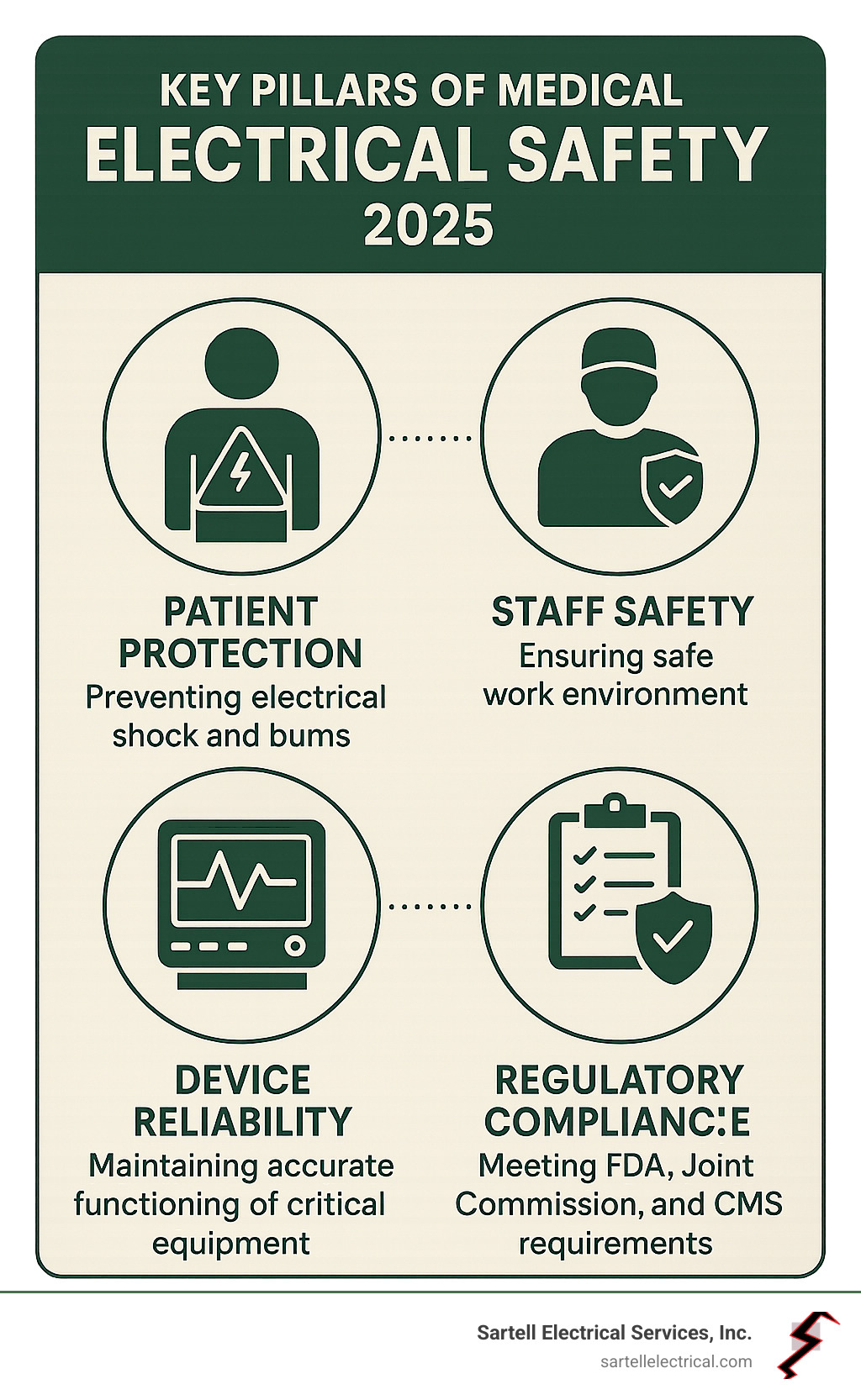
An electrical safety check on medical equipment is a critical process that protects patients and staff while ensuring the reliable operation of life-saving devices. These specialized tests address the unique risks of devices that directly contact patients or operate in critical care environments. Key goals include:
- Patient & Staff Safety: Preventing electrical shock, burns, and cardiac injuries.
- Device Reliability: Maintaining the accurate function of ventilators, defibrillators, and monitors.
- Regulatory Compliance: Meeting FDA, The Joint Commission, and CMS accreditation requirements.
- Fire Prevention: Detecting faulty components that could cause heat or electrical arcs.
- Equipment Longevity: Identifying wear early to extend device lifespan and maximize investment.
Medical equipment has stricter standards than general appliances due to direct patient contact. For instance, touch current limits for medical devices are below 100-500 µA, far lower than for standard equipment. Most devices require annual testing, while life-support equipment needs checks at least every 12-24 months.
As Ed Sartell, President of Sartell Electrical Services, I've seen how these protocols protect patients and staff in Massachusetts facilities. Our team has the specialized knowledge to maintain compliance with medical device safety standards.
The Critical Importance of Electrical Safety Testing
Hospitals are among the most electrically complex environments, filled with life-saving technology like ventilators, monitors, and defibrillators. This web of devices creates a unique challenge: using electricity's power while protecting vulnerable patients from its dangers.
An electrical safety check on medical equipment is the invisible guardian against potentially fatal electrical hazards. Unlike home appliances, medical equipment often connects directly to patients, meaning even tiny electrical faults can have devastating consequences. Healthcare facilities must follow regulatory mandates from The Joint Commission (TJC), the FDA, and CMS that require systematic electrical safety testing. These evidence-based requirements also help prevent fires from faulty components and extend equipment lifespan by catching problems early. You can learn more about these principles from Electrical Safety Standards and Basic Testing.
Why is Testing Crucial for Patient and Staff Safety?
A patient in a cardiac care unit is part of an electrical circuit, making them vulnerable to microshock and macroshock. While macroshock involves larger currents causing obvious injuries, microshock is more insidious. It occurs when tiny currents—as small as 10 microamps—travel directly through the heart via invasive devices like pacemaker leads. These currents are too small to feel but can trigger fatal heart rhythms.
The direct patient connection makes medical devices uniquely dangerous when faults occur, creating risks of electrocution, burns, and cardiac injuries. Healthcare workers also face risks, especially when handling multiple devices or working in wet environments. Creating a safe work environment means ensuring every piece of equipment meets stringent electrical safety standards. As specialists in Healthcare Electrical Contractor Services, we know that proper infrastructure and regular testing are the foundation for safe patient care.
How Testing Ensures Device Reliability and Accuracy
Medical equipment must perform flawlessly when seconds count. Preventing malfunctions in critical devices like infusion pumps, ventilators, and defibrillators is a matter of life and death. Electrical safety testing verifies that these devices operate within safe parameters, catching problems before they become emergencies.
Ensuring accurate diagnostics is equally important. A heart monitor with electrical interference might miss dangerous rhythm changes, leading to incorrect treatment. Electrical safety testing must verify not just safety, but proper functioning. Minimizing equipment downtime through proactive maintenance keeps critical devices available. When testing reveals early signs of wear, facilities can schedule repairs during planned maintenance windows rather than facing emergency breakdowns. Reliable equipment leads to confident staff, accurate diagnoses, and better patient outcomes.
Understanding the Regulatory Landscape: Standards and Classifications
Navigating medical equipment safety is essential for any healthcare facility. Regulatory bodies like the FDA, The Joint Commission (TJC), and Centers for Medicare & Medicaid Services (CMS) mandate regular electrical safety check on medical equipment procedures. This isn't just paperwork; it's vital for maintaining compliance and accreditation.
While manufacturers ensure equipment meets safety regulations during design, the responsibility shifts to the healthcare facility upon arrival. In-service testing, guided by risk management, helps prioritize what needs attention. Equipment like ECG machines, defibrillators, infusion pumps, and ventilators requires rigorous attention due to their critical functions.
Key Standards Governing Medical Electrical Safety
Several key standards provide a roadmap for compliance and safety.
- IEC 60601-1 is the foundational standard for manufacturers, covering basic safety and essential performance during design (type testing). Compliance is mandatory for market entry in the U.S., EU, and other regions.
- IEC 62353 governs in-service testing for equipment already in use. It specifies practical, less stringent test methods that ensure safety without damaging aging equipment. For more details, see IEC 62353 Explained.
- NFPA 99 (Health Care Facilities Code) is the key U.S. standard, setting specific criteria to minimize fire, explosion, and electrical hazards. For example, it requires chassis-to-ground resistance to be below 0.5 ohms for portable equipment.
- AS/NZS 3551 serves a similar role in Australia and New Zealand, focusing on management programs for medical equipment and highlighting the need for specialized testing.
While type testing (IEC 60601-1) ensures a safe design, routine testing (IEC 62353, NFPA 99) maintains that safety throughout the equipment's life. As providers of Healthcare Electrical Contractor Services, we see how these standards create comprehensive safety programs.
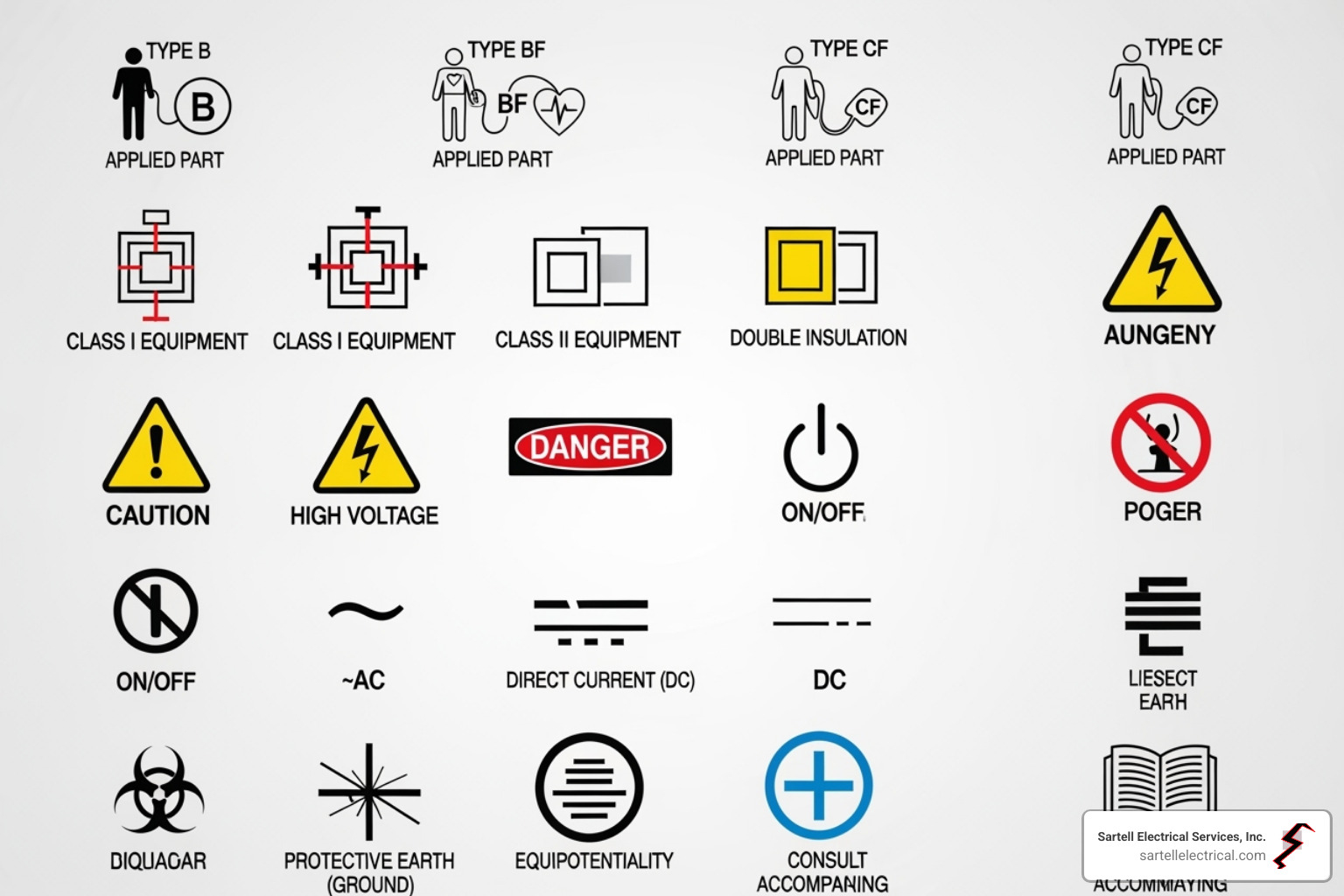
Equipment Classifications and Applied Parts
Medical equipment classifications dictate the required tests and acceptable limits.
| Feature | Class I Equipment | Class II Equipment | Class IP Equipment |
|---|---|---|---|
| Safety Reliance | Relies on protective earth (ground) connection | Relies on double or reinforced insulation | Relies on internal power supply (e.g., battery operated) |
| Insulation | Basic insulation | Double or reinforced insulation | No reliance on mains insulation for basic protection |
| Example | Many hospital beds, older X-ray machines | Infusion pumps, patient monitors, some diagnostic tools | Battery-powered diagnostic devices, portable ECGs |
Beyond general classes, "Applied Part Types" rate the level of protection needed for patient contact. Type B (Body) is for general contact (e.g., blood pressure cuffs). Type BF (Body Floating) offers higher protection for most patient monitoring. Type CF (Cardiac Floating) provides the highest protection and lowest leakage current limits for equipment with potential direct cardiac contact, like internal defibrillator paddles. Learn more at Wikipedia: Appliance classes.
Testing Frequency: How Often is Enough?
Testing frequency combines regulatory minimums with a risk-based strategy. Acceptance testing occurs before any new equipment is used on a patient. Annual testing is the standard for most equipment, though some standards allow up to 24 months for critical devices if justified by a risk management process. Post-repair testing is mandatory before any repaired or modified equipment returns to service. Manufacturers are increasingly providing specific testing intervals based on risk assessment and device history.
A Step-by-Step Guide to an Electrical Safety Check on Medical Equipment
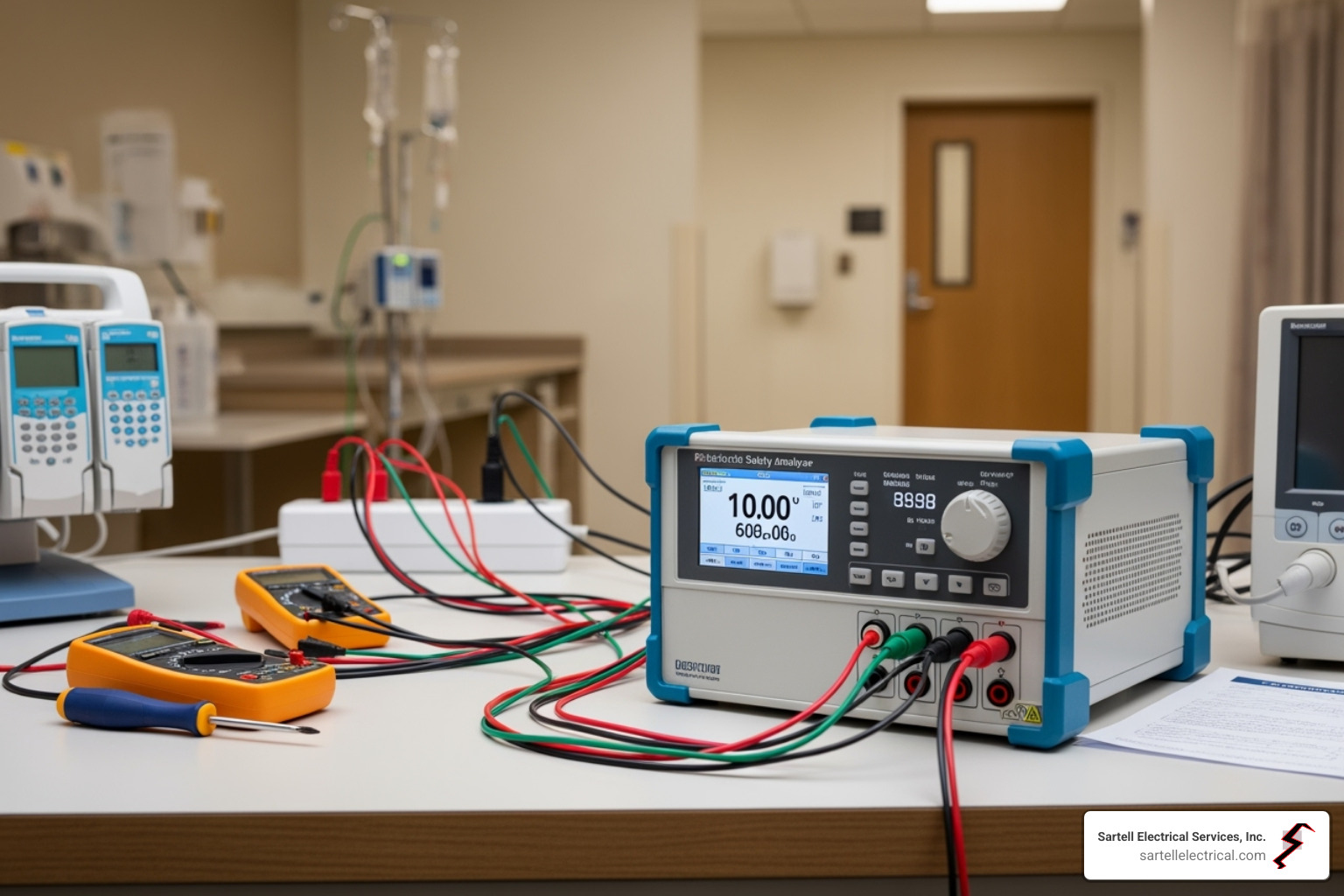
Performing an electrical safety check on medical equipment is a systematic process combining visual inspection with precise electrical measurements. While specialized analyzers are the standard, even manual testing with a digital multimeter is better than no test at all. These checks must be performed by qualified personnel (BMETs, clinical engineers, or specialized electricians) following a clear test sequence with defined pass/fail criteria.
Step 1: The Essential Visual Inspection
Every safety test begins with a thorough visual examination, which can identify most dangerous damage. Key checks include:
- Power Cord Integrity: Look for cuts, abrasions, cracks, or signs of overheating.
- Strain Relief: Inspect where the cord enters the plug and equipment, as these areas take the most abuse.
- Plugs and Connectors: Check for bent pins, cracks, or signs of burning.
- Casing: Look for cracks, dents, or missing parts that could expose internal wiring.
- Fuses: Ensure they are the correct type and rating.
- Labels and Markings: Confirm that model numbers, serial numbers, and warnings are legible.
- Cleanliness: Check for dust or liquid spills that could compromise safety.
Step 2: Performing Key Electrical Tests
After the visual inspection, electrical tests verify protective systems and measure unintended current flows.
- Protective Earth Continuity: This test verifies that Class I equipment has a low-resistance path from metal parts to the earth pin of the plug, diverting fault currents. Resistance should typically be less than 0.1-0.3 ohms.
- Insulation Resistance: This measures how well insulation separates live parts from accessible surfaces. A high resistance value (e.g., >2 MΩ) indicates good separation.
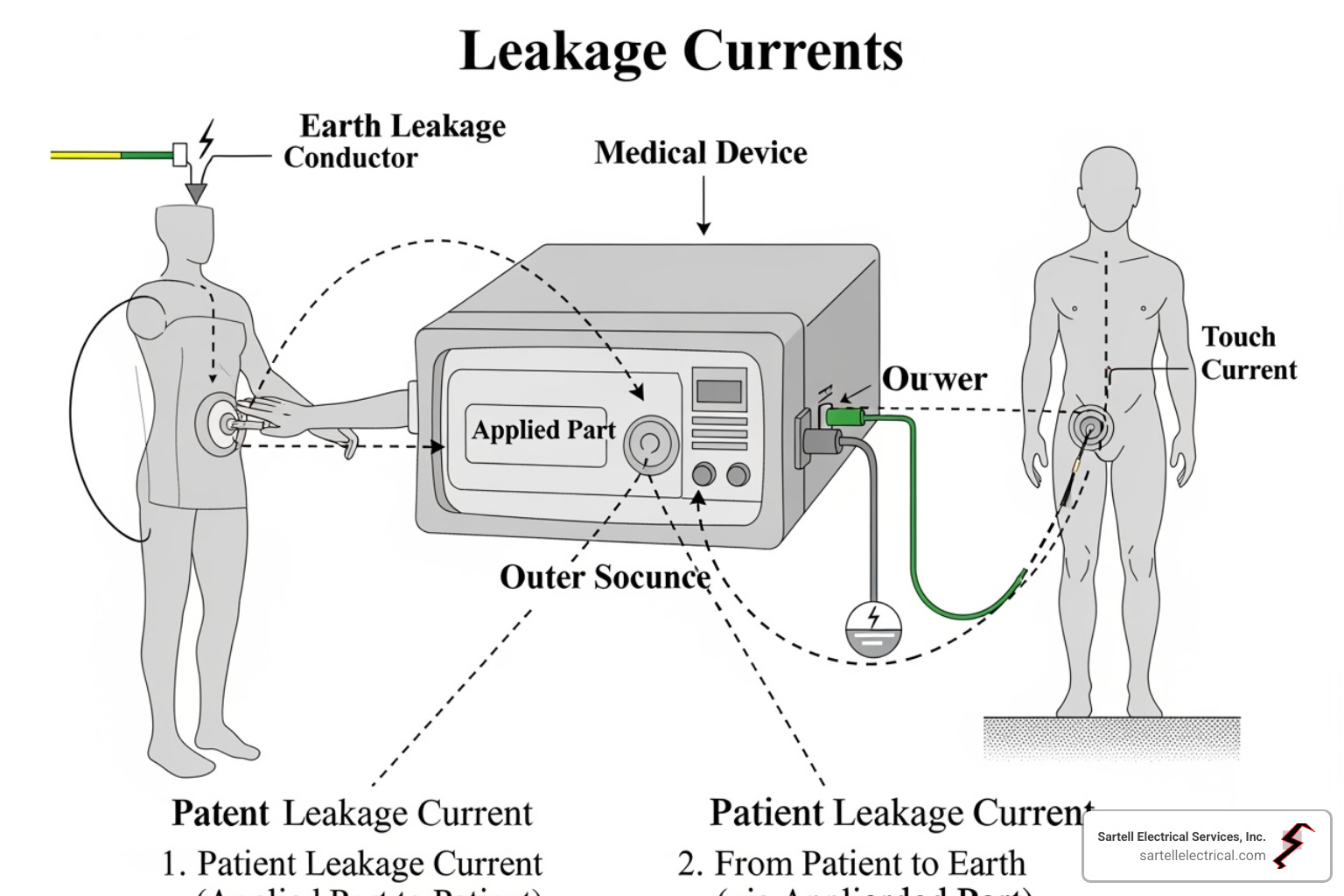
- Leakage Currents: These are small, unintended currents that can flow to the earth, through a person touching the device, or through the patient. Tests are performed under normal and simulated single-fault conditions.
Key leakage tests include:
- Earth leakage: Current flowing from electrical parts to the protective earth conductor.
- Touch current: Current that could flow through a person touching the equipment's casing. Learn more about touch current.
- Patient leakage current: Current flowing from or between parts that directly contact patients.
- Patient auxiliary current: Current flowing between different applied parts.
Step 3: Understanding Pass/Fail Limits for an Electrical Safety Check on Medical Equipment
Pass/fail criteria are defined by standards like NFPA 99 and IEC 62353 to protect patients and staff.
- Protective Earth Continuity: NFPA 99 requires resistance < 0.5 ohms. IEC 62353 is often stricter, requiring < 300 mΩ.
- Insulation Resistance: For Class I equipment, the minimum is typically 2 MΩ. For Class II, it's 7 MΩ between mains parts and accessible surfaces.
- Leakage Current Limits: These vary by equipment type. Touch current is generally limited to 100 µA (normal) and 500 µA (single fault). Patient leakage current limits are even stricter:
- Type B/BF: < 100 µA (normal), < 500 µA (single fault).
- Type CF (Cardiac): < 10 µA (normal), < 50 µA (single fault).
These numbers represent the line between safety and potential harm. Our team at Sartell Electrical Services understands these complex criteria, ensuring every check meets the highest standards by referring to specific guidelines for each piece of equipment.
Compliance, Documentation, and Facility Responsibilities
Failing to perform a proper electrical safety check on medical equipment has severe consequences. Facilities face legal liability, regulatory fines, loss of accreditation from The Joint Commission, and reputational damage if equipment failures harm patients or staff. Furthermore, electrical issues can compromise diagnostic accuracy, leading to misdiagnosis and inappropriate treatment. Proactive compliance is a critical patient safety measure.
Our work with facilities via our Healthcare Electrical Contractor Services in Cambridge, MA shows that a culture of safety starts with proactive compliance.
The Role of the Healthcare Facility and Personnel
A safe electrical environment requires teamwork.
- The biomedical engineering department manages the equipment lifecycle, from acceptance testing to scheduled maintenance and record-keeping. They perform the safety checks and ensure equipment operates within safe parameters.
- Clinical staff are the first line of defense. Nurses, doctors, and technicians must report any equipment abnormalities, such as unusual sounds, flickering displays, or worn cords, to prevent small issues from becoming major hazards.
- Facility management maintains the building's electrical infrastructure, including outlets, circuits, and emergency power systems, which is the foundation for equipment safety.
- Continuous training keeps all personnel current on safety protocols, new equipment, and evolving standards. Training programs are essential for an effective safety program.
Why Meticulous Documentation is Non-Negotiable
Thorough documentation is crucial. Every electrical safety check on medical equipment must be recorded to create a paper trail for compliance and safety analysis.
- Test reports should capture measured values, pass/fail results, test dates, and technician identification.
- Equipment inventory systems track device location, model/serial numbers, and service history.
- Service history logs help identify trends, such as recurring failures in a specific model, allowing for proactive measures.
Good documentation provides traceability, demonstrates due diligence to regulators, and helps predict maintenance needs. Digital record-keeping systems streamline this process by automating schedules, reminders, and reporting.
Specialized Needs for an Electrical Safety Check on Medical Equipment
Testing medical equipment is fundamentally different from testing general appliances (known as Portable Appliance Testing or PAT).
- Stricter Limits: Medical equipment has much lower safety limits for leakage and touch currents due to the vulnerability of connected patients.
- Patient-Connected Parts: General appliance testing standards like AS/NZS 3760 do not address patient leakage currents, which are central to medical standards like AS/NZS 3551.
- Different Risk Profile: An electrical failure in a coffee maker is an inconvenience; in a ventilator, it can be fatal. This higher risk demands specialized testing equipment, procedures, and expertise.
Understanding these distinctions is crucial. Not every electrical contractor has the specialized knowledge required for medical equipment.
Frequently Asked Questions about Medical Equipment Electrical Safety
Facility managers, biomedical technicians, and healthcare administrators often have questions about medical equipment electrical safety. Here are answers to the most common concerns.
What is the difference between IEC 60601 and IEC 62353?
Think of them as covering different life stages of a device. IEC 60601 is a design and type-testing standard for manufacturers, ensuring new equipment is intrinsically safe before it reaches the market. IEC 62353 is for recurrent (in-service) and post-repair testing within healthcare facilities. It uses gentler test methods with adjusted limits appropriate for aging equipment, ensuring ongoing safety without causing damage.
Who is qualified to perform an electrical safety check on medical equipment?
This task requires specialized knowledge beyond general electrical work. Qualified individuals include:
- Certified Biomedical Equipment Technicians (BMETs): Professionals with dedicated training in medical device maintenance and safety testing.
- Clinical Engineers: They often oversee technology management and compliance programs.
- Qualified Electricians with Specialized Medical Training: A general electrical license is not enough. These professionals must have additional training in standards like IEC 62353 and NFPA 99 and experience with medical safety analyzers.
Competency and specific knowledge of the risks associated with patient-connected devices are essential.
What happens if a device fails its electrical safety test?
When a device fails an electrical safety check on medical equipment, a strict protocol is mandatory to ensure patient safety.
- Immediately Remove from Service: The device must be taken out of clinical use without exception and clearly labeled as "failed" or "out of service."
- Diagnose and Repair: A qualified technician must diagnose the root cause of the failure and perform proper repairs using manufacturer-approved parts and guidelines.
- Complete Re-testing: After repair, the device must undergo a full electrical safety test again. This verifies the fix and ensures the repair process didn't introduce new hazards.
- Document Everything: The failure, diagnosis, repair, and re-test results must be carefully documented.
Only after successfully passing all safety tests can the device be returned to clinical use. There are no shortcuts when patient safety is at stake.
Conclusion
An electrical safety check on medical equipment is a fundamental pillar of patient and staff safety. It is the difference between a routine procedure and a preventable tragedy. Throughout this guide, we've highlighted why these checks are critical, the regulatory standards that govern them, and the key steps involved in the testing process.
Proactive maintenance through regular testing prevents equipment failures, ensures regulatory compliance, and protects everyone in a healthcare facility. Meticulous documentation provides a crucial record of due diligence and helps in managing equipment lifecycles effectively.
At Sartell Electrical Services, we understand the unique electrical challenges healthcare facilities face. Our team has the technical expertise and deep respect for healthcare environments that this critical work demands. Your facility's electrical infrastructure is the foundation for all life-saving equipment.
For a comprehensive assessment of your facility's electrical infrastructure to support your life-saving equipment, trust the experts in healthcare electrical services.