Medical equipment installation: 4 Steps to Safety
Why Medical Equipment Installation Demands Specialized Expertise
Medical equipment installation requires precision engineering, specialized knowledge, and unwavering attention to safety protocols that can mean the difference between life and death in healthcare settings.
Key Requirements for Medical Equipment Installation:
- Licensed electricians with healthcare facility experience
- Manufacturer-trained technicians for equipment-specific protocols
- Regulatory compliance with NFPA 99, OSHA, and local electrical codes
- Project management to minimize disruption to patient care
- Quality assurance systems (ISO 9001:2015 certification preferred)
- Post-installation support including calibration, testing, and staff training
The medical equipment installation market is booming, projected to reach $17.8 billion by 2030, reflecting the increasing complexity of medical technology and the critical need for specialized installation expertise.
When a healthcare facility invests in new equipment, the installation process extends far beyond basic electrical connections.
Every wire, every connection, every calibration setting directly impacts patient safety and diagnostic accuracy. As one industry expert noted, "A fraction of a millimeter can be the difference between correct equipment installation – and therefore correct pathology and lab results – precision is everything."
Modern medical equipment installation involves coordinating with facility managers, complying with infection control protocols, and integrating new systems with existing hospital infrastructure. The stakes couldn't be higher—improper installation can void warranties, compromise patient safety, and result in costly downtime.
I'm Ed Sartell, and as President of Sartell Electrical Services since 1985, I've led specialized
medical equipment installation projects across Massachusetts for nearly four decades. My experience shows that successful installations require not just electrical expertise, but a deep understanding of healthcare regulations, patient safety, and the challenges of working in active medical environments.
Why Professional Installation is Non-Negotiable
In healthcare, there are no second chances with patient safety. The same standard applies to
medical equipment installation. While cutting costs is tempting, medical environments demand specialized expertise that general contractors lack. After nearly four decades in this field, I've seen the results of cutting corners on installation—they are never worth the risk.
The Key Benefits of Expert Installation
Choosing professional
medical equipment installation is an investment in outcomes that protect your entire facility.
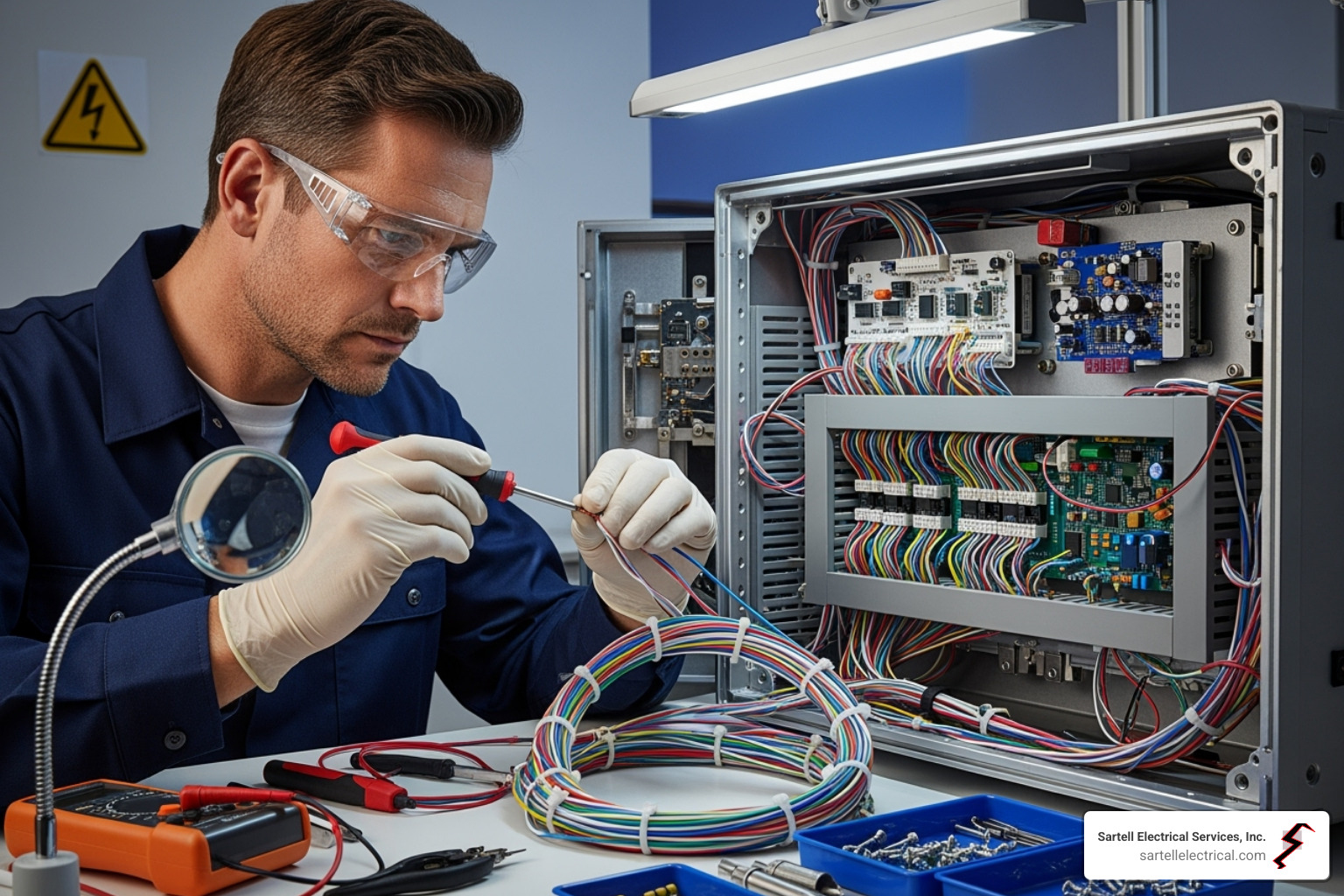
- Maximized equipment performance: Every medical device has unique requirements. Professional installers study manufacturer specifications, verify utilities, and ensure precise calibration. A million-dollar MRI or CT scanner deserves an installation that reflects its value.
- Improved patient and staff safety: This goes beyond basic electrical work. Healthcare installers understand infection control protocols, proper electrical load management, grounding, and structural integrity. These are foundational to a safe healthcare environment.
- Guaranteed compliance with codes: Avoid surprise shutdowns or costly violations. Professional installers are experts in regulations like NFPA 99 and OSHA. We provide thorough documentation for inspectors, and our ISO 9001:2015 certification ensures processes meet every regulatory requirement.
- Long-term cost savings: Properly installed equipment runs reliably, extending its lifespan and keeping warranties valid. It's better to pay for professional installation once than for multiple emergency repairs.
- Peace of mind: Knowing certified experts handled your installation to the highest safety standards lets your team focus on patient care, not equipment failures.
The High Stakes of Getting It Wrong
The consequences of improper
medical equipment installation can be devastating.
- Inaccurate diagnostic results: Improperly calibrated imaging equipment can lead to misdiagnosis. A fractional misalignment can alter treatment plans and patient outcomes. In healthcare, precision is life-saving.
- Risk of electrical shock or fire: Improper wiring or grounding dramatically increases risk. General contractors often misunderstand the complex electrical needs of medical devices, creating dangerous conditions like overloaded circuits.
- Voided manufacturer warranties: Deviating from manufacturer guidelines during installation instantly voids warranties. You become responsible for all repair and maintenance costs.
- Costly repairs and downtime: Improper installations lead to equipment malfunctions, disrupting patient schedules and reducing revenue. Emergency repairs are far more costly than getting the installation right the first time.
- Potential legal action: Patient harm from equipment failure can lead to lawsuits, investigations, and severe reputation damage. Poor installation creates this liability.
The financial liability alone should convince any facility manager to prioritize professional installation. When you consider the human cost, the choice is clear.
Our
Healthcare Electrical Contractor Services exist to prevent these scenarios. We've built our reputation by ensuring every installation meets the highest standards of safety, precision, and regulatory compliance.
The Anatomy of a Professional Medical Equipment Installation
A
medical equipment installation is like surgery: every move must be deliberate and carefully planned. Successful installations require more than technical skill; they demand orchestration of a complex process that prioritizes patient safety and minimizes disruption.

The difference between a smooth installation and a nightmare is
professional project management. Cutting corners on expertise leads to delays, disruptions, and budget overruns.
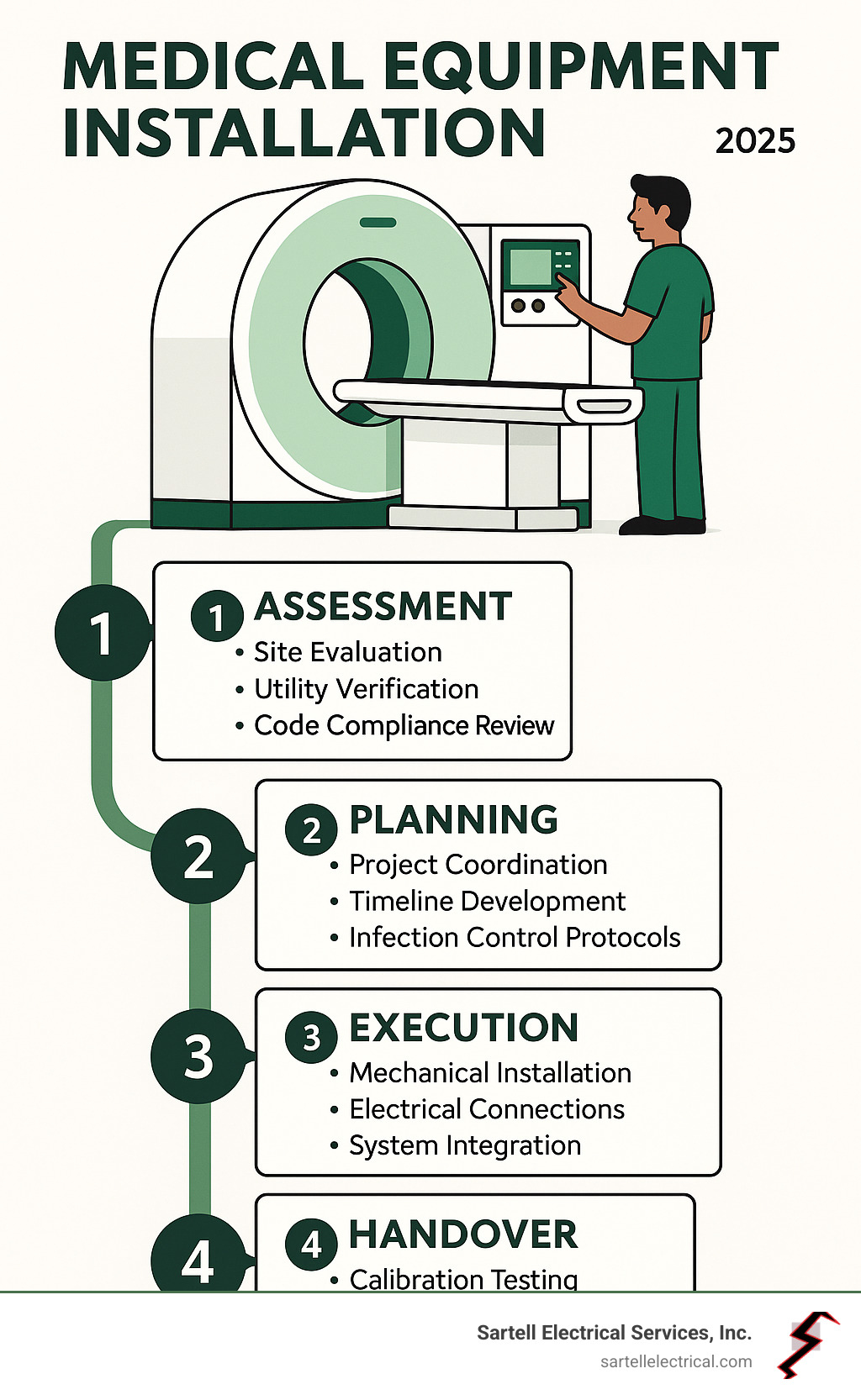
The Critical Steps of Medical Equipment Installation
Every successful
medical equipment installation follows a proven roadmap:
- Site Assessment & Planning: Our team thoroughly evaluates your space, checking infrastructure, utilities, and clearances. We coordinate with your facility management to understand operational needs and special requirements like infection control.
- Pre-Installation & Utility Verification: Before equipment arrives, we prepare dedicated circuits, ensure medical-grade grounding, and verify utilities match specifications. This proactive step prevents costly delays.
- Mechanical & Electrical Installation: Precision is everything. Our technicians follow manufacturer specifications exactly, as even tiny errors can affect diagnostic accuracy. We handle all complex connections, setup, and integration.
- System Calibration & Testing: We ensure your equipment performs perfectly from day one. Using specialized tools, we fine-tune settings and run comprehensive tests to verify performance benchmarks.
- Staff Training & Handover: We provide hands-on training on operation, safety, and maintenance so your team can use the new equipment confidently. Our job isn't done until your staff is comfortable and the equipment is fully operational.
The Role of Project Management in a Seamless Install
Poor project management can turn even the best technical work into chaos. We focus on:
- Coordinating timelines: We work around your schedule, often during off-hours or in phases, to keep critical services running and prioritize patient care.
- Managing budgets: We ensure transparent communication to avoid surprise costs, keeping projects on budget.
- Minimizing disruption: By maintaining strict infection control, keeping work areas contained, and coordinating with staff, we ensure installations don't interfere with patient care.
- Ensuring clear communication: We maintain open communication with your staff, contractors, and vendors from start to finish to keep projects running smoothly.
- Quality control: We implement rigorous checks at each phase, ensuring work meets our high standards and all regulatory requirements. This is why we're a trusted Healthcare Electrical Contractor in Boston, MA.
Beyond the Initial Setup: De-installation and Relocation
Smart facilities plan for the entire equipment lifecycle. Professional handling is crucial for upgrades, relocation, or disposal.
- Asset management: We help you save money through strategic relocation. An older imaging system might have years of useful life at a satellite clinic.
- Safe equipment removal: This requires the same precision as installation. We safely power down, disconnect, and disassemble complex devices without causing damage.
- Certified disposal: Medical equipment often contains hazardous materials. We ensure compliant disposal according to EPA and state regulations, including required system declassification certification.
- Relocating systems: This involves more than just moving. We manage packing, transport, and complete reinstallation and recalibration to ensure the system performs perfectly in its new location.
Whether installing new equipment or managing end-of-life transitions, our expertise as a
Healthcare Electrical Contractor in Cambridge, MA ensures every phase is handled professionally.
Ensuring Safety, Precision, and Regulatory Compliance
With
medical equipment installation, there is no margin for error. Every connection, calibration, and protocol impacts patient and staff safety. The difference between a good and a great installation is the expertise and certifications of the team.
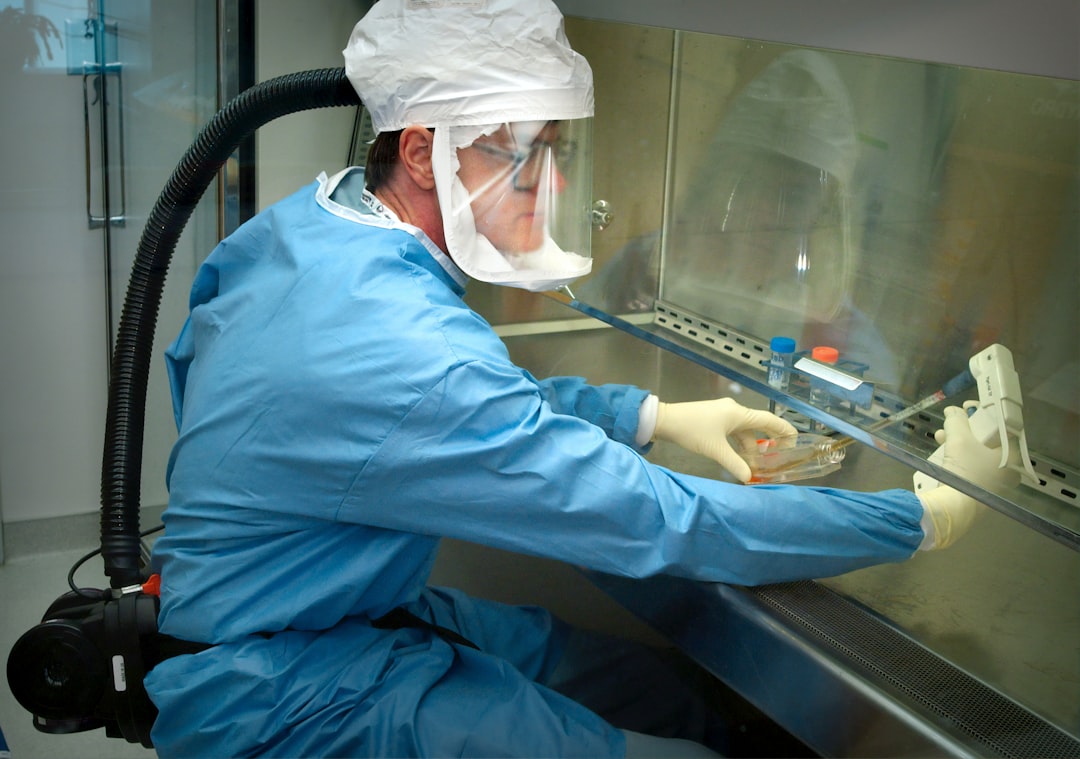
Healthcare facilities have stringent safety standards for good reason. Poor installation can lead to devastating equipment failures. We've built our reputation on having the right people with the right training for this critical work.
Qualifications and Certifications to Look For
When evaluating providers for your
medical equipment installation, look for these qualifications:
- Licensed electricians are non-negotiable, but for healthcare, you also need manufacturer-trained technicians who understand the specific requirements of complex medical devices.
- The ASHE Certified Healthcare Constructor (CHC) designation is a key differentiator. It proves technicians understand the unique challenges of healthcare environments, like infection control and minimizing disruption.
- OSHA certifications are also vital. Technicians must know how to work safely in unique healthcare environments. The Information on electrical safety in healthcare from OSHA provides excellent guidance.
- Crucially, look for experience with healthcare-specific codes like NFPA 99. This complex code is essential for safe, compliant installations.
How Professional Services Guarantee Compliance
Professional
medical equipment installation services manage compliance from start to finish.
- Adherence to manufacturer specifications: Deviating from these guidelines can void warranties, hurt performance, and create safety hazards. Our team ensures every installation meets or exceeds these requirements.
- Knowledge of regulations: The healthcare regulatory landscape is complex. We stay current on all local, state, and federal requirements to prevent compliance failures.
- Proper documentation for audits: We document every step, creating a clear compliance trail for inspections or accreditation reviews.
- Meeting standards for different facility types: A large hospital's needs differ from a small clinic or home care setting, but the need for precision and safety is universal. We ensure systems meet the correct standards for any environment.
Our commitment to these standards has made us the trusted
Healthcare Electrical Contractor in Waltham, MA. Choosing professional services gives you peace of mind that the job is done right, safely, and in full compliance.
Choosing Your Expert Electrical Partner
Choosing a partner for
medical equipment installation is like choosing a surgeon: you need credentials, experience, and steady hands. A general contractor is like a family doctor; a specialized medical electrical contractor is like a heart surgeon. When lives are on the line, you need the specialist.
What to Ask a Potential Installation Provider
When evaluating partners for your
medical equipment installation, ask these tough questions:
- What is your experience with our specific type of equipment? Experience with your exact equipment is crucial.
- Are your technicians licensed and certified for healthcare work? Ask to see state licenses, manufacturer training certificates, and credentials like ASHE CHC.
- Can you provide references from other medical facilities? Call their references and ask about timelines, communication, and overall satisfaction.
- How do you manage project timelines and minimize disruption? A professional team will have a clear plan to work around patient care and maintain infection control.
- What does your post-installation support include? Ensure calibration, testing, staff training, and ongoing support are clearly defined.
At Sartell Electrical Services, we welcome these questions. Whether we're working as a
Healthcare Electrical Contractor in Newton, MA or elsewhere, transparency is part of our commitment.
Comparison: DIY/General Contractor vs. Specialized Medical Electrical Contractor
The choice is clear when you compare the differences:
| Feature |
General Contractor |
Specialized Medical Electrical Contractor |
| Code Knowledge |
General building codes |
Expert in NFPA 99, AS3003, etc. |
| Equipment Familiarity |
Limited / Varies |
Extensive, often manufacturer-trained |
| Risk Mitigation |
Basic safety protocols |
Advanced infection control (ICRA) & safety |
| Project Management |
General construction focus |
Focused on minimizing clinical disruption |
| Compliance |
May overlook specific medical standards |
Guarantees healthcare regulatory compliance |
Medical equipment installation isn't a place to cut corners. Your patients, staff, and equipment investment deserve the expertise, precision, and peace of mind that a specialized partner provides.
Frequently Asked Questions about Medical Electrical Services
Over three decades of serving Massachusetts healthcare facilities, we've answered many questions about
medical equipment installation. Here are the most common ones.
What types of medical equipment require professional installation?
Essentially, if it's more complex than plugging into a standard wall outlet, it likely needs professional installation. This includes:
- Complex diagnostic imaging equipment (MRI, CT, X-ray) that requires specialized electrical feeds, structural support, and precise calibration.
- Surgical equipment like operating lights and booms that connect to complex electrical and data networks.
- Sterilizers, washer-disinfectors, and life support systems that need robust, dedicated, and infallible utility connections.
- Patient lift systems that require structural assessments to ensure safety.
- Advanced hospital beds and laboratory equipment where precision and safety are paramount.
If patient safety, diagnostic accuracy, or system integration is involved, professional installation is essential.
How does installation differ between a hospital and a small clinic?
While core principles like safety and precision are universal, the execution differs significantly by facility type.
- Hospital installations are complex, requiring work around ongoing patient care. This means strict infection control, off-hours scheduling, and intense coordination to ensure critical services are never interrupted.
- Small clinics may have faster turnarounds and more flexible scheduling. However, the requirements for precision and safety are just as critical as in a large hospital.
- Home care installations have unique challenges. We adapt medical-grade equipment to residential settings while maintaining all safety standards, integrating complex technology into a family's home.
Regardless of the setting, our approach is always meticulous planning, precise execution, and thorough testing.
What is involved in the de-installation and disposal process?
Removing medical equipment can be as complex as installing it. The process includes:
- Safely powering down and disconnecting systems according to specific shutdown procedures to prevent damage.
- Careful disassembly of equipment for relocation or retirement.
- System declassification certification, a legal requirement in most states for devices like diagnostic imaging equipment.
- Environmentally responsible disposal that follows EPA standards for hazardous materials, often using specialized recyclers.
- Intricate relocation planning, including careful packing, specialized transport, and complete reinstallation and recalibration at the new site.
Proper de-installation and disposal protect your facility from liability and ensure regulatory compliance.
Conclusion
Decisions about
medical equipment installation are about more than just electrical work. They're about creating a foundation of safety and precision that your patients and staff depend on daily. Every connection and calibration directly impacts the quality of care.
While the healthcare industry moves fast, cutting corners on installation is never the answer.
Professional installation protects what matters most: your patients, your staff, and your significant equipment investment. An equipment failure isn't just about downtime; it's about patient trust and critical moments where precision is vital.
Choosing a specialized electrical partner provides long-term value. You're investing in regulatory compliance, intact warranties, and reliable equipment performance. Most importantly, you're buying peace of mind, allowing your team to focus on patient care with full trust in their equipment.
We've seen how proper installation prevents headaches from equipment failures, compliance issues, and safety incidents. The difference between professional work and cutting corners is night and day.
For over 30 years, Sartell Electrical Services has provided expert healthcare electrical services across Massachusetts, ensuring every installation meets the highest standards of excellence. Our team understands that healthcare facilities can't afford downtime, compliance gaps, or safety risks. We get it right the first time, every time.
When you're ready for your next
medical equipment installation, you're choosing a partner who understands the critical nature of healthcare. Your patients deserve nothing less than the excellence we deliver.