Your Circuit Breaker Is Trying to Tell You Something
Circuit breaker tripping is your electrical system's built-in warning system — and it's worth paying attention to.
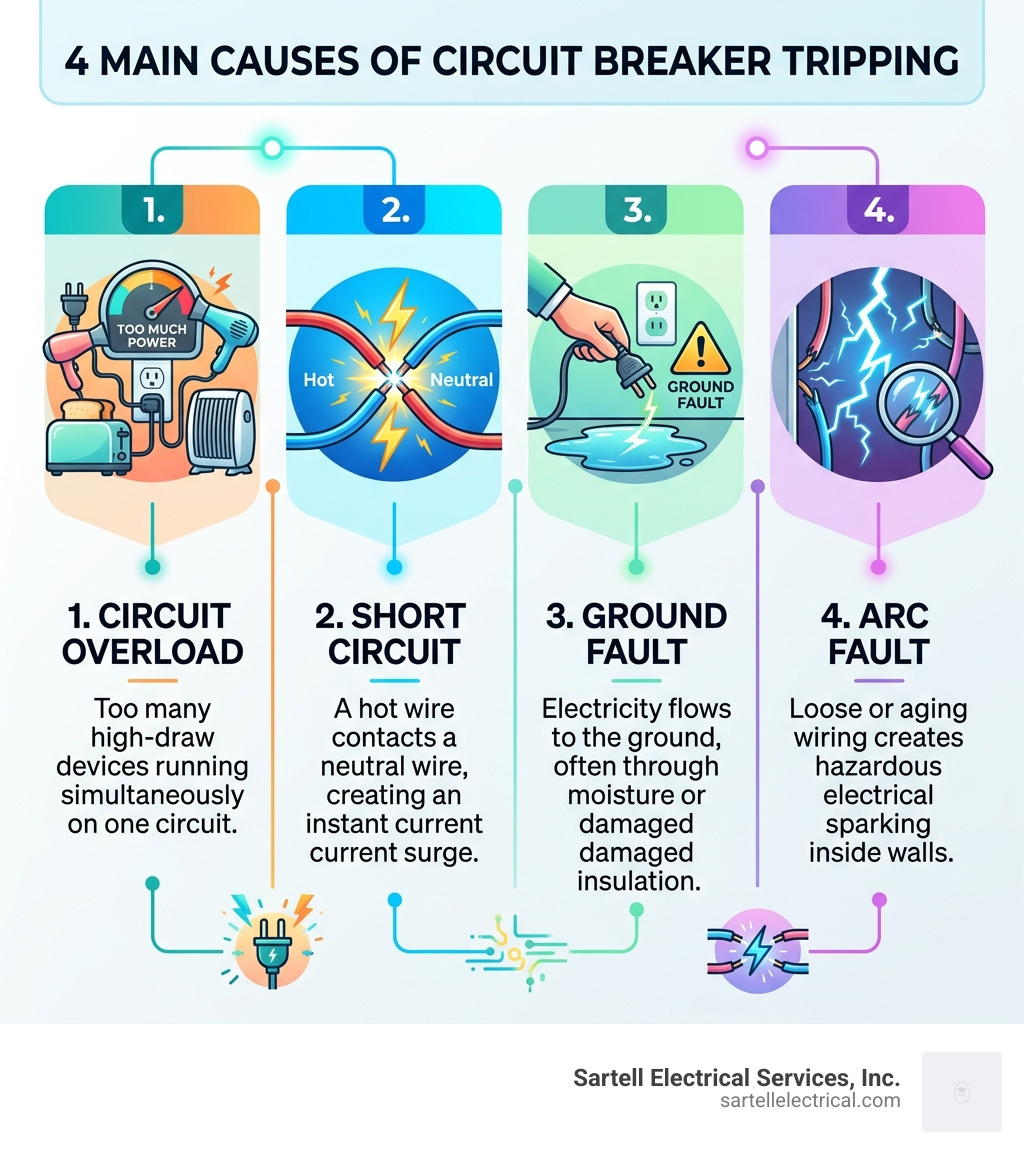
Why do circuit breakers trip? Here are the most common reasons:
- Circuit overload — Too many high-draw devices running on one circuit at the same time
- Short circuit — A hot wire contacts a neutral wire, causing an instant surge of current
- Ground fault — Electricity travels an unintended path, often through moisture or damaged insulation
- Arc fault — Loose or deteriorated wiring creates dangerous sparking inside walls
- Faulty breaker — An aging breaker trips even when the load is within normal range
About 80% of residential trips are caused by simple overloads — something you can often fix by unplugging a few devices. But the remaining 20% can point to something more serious, including fire hazards.
If your breaker trips once and resets without issue, it was likely doing its job. If it keeps tripping, something deeper is going on and ignoring it puts your home — and everyone in it — at risk.
I'm Ed Sartell, President of Sartell Electrical Services, and I've been diagnosing and resolving circuit breaker tripping issues for homeowners and businesses across Massachusetts since 1985. In this guide, I'll walk you through exactly what causes trips, how to troubleshoot safely, and when it's time to call a professional.
Circuit breaker tripping vocab to learn:
Understanding the Basics: What is a Breaker Box?
Before we can solve the mystery of why your power keeps cutting out, we need to look at the heart of your home’s electrical system. So, keeping the lights on what is a breaker box exactly? Think of your electrical panel as the "gatekeeper" or the central nervous system of your home. It receives power from the utility company and distributes it through various branch circuits to your lights, outlets, and appliances.
Inside that box, each individual circuit breaker serves as a safety fail-safe. Modern breakers typically use two methods to detect trouble: a bimetallic strip and an electromagnet.
- The Bimetallic Strip: This handles slow, steady overloads. As too much current flows through the breaker, the strip heats up and bends. Once it bends far enough, it mechanically trips the switch to "Off."
- The Electromagnet: This is for "instant" problems like short circuits. A massive surge of energy creates a magnetic field that pulls the trip lever immediately, stopping the flow of electricity in a fraction of a second.
Every breaker has an amperage rating (usually 15, 20, or 30 amps for standard household circuits). This number tells you exactly how much "traffic" that wire can handle before it gets too hot. Most residential panels have a lifespan of about 25 to 30 years. If your home in Reading or Boston is older than that, the internal components might be wearing out, leading to "soft" breakers that trip even when they shouldn't.
The 4 Main Culprits Behind Circuit Breaker Tripping
When you are standing in the dark, it helps to know which "villain" you are dealing with. While they all result in a "click" and a blackout, the causes are very different. Here is a quick comparison:
| Feature | Circuit Overload | Short Circuit | Ground Fault | Arc Fault |
|---|---|---|---|---|
| Primary Cause | Too many appliances | Hot wire touches Neutral | Hot wire touches Ground | Loose/damaged wiring |
| Speed of Trip | Seconds to minutes | Instantaneous | Instantaneous | Varies (pattern-based) |
| Warning Signs | Dimming lights, heat | Popping sound, smell | Often in wet areas | Hissing or crackling |
| Danger Level | Moderate (Heat/Fire) | High (Fire/Arc Flash) | High (Electrocution) | High (Hidden Fire) |
Whether it is a simple fix or you need professional ground fault repair, understanding these differences is the first step. According to electricians explaining why circuit breakers trip, recognizing the "personality" of the trip can save you hours of frustration.
How Overloads Lead to Circuit Breaker Tripping
The most common reason for circuit breaker tripping is the humble overload. This happens when you try to pull 20 amps of electricity through a circuit only rated for 15.
We often see this in Massachusetts homes during the winter when someone plugs a 1,500-watt space heater into the same circuit as a vacuum cleaner or a high-end gaming PC. Electrical safety experts recommend the 80% rule: for continuous loads, you should only use 80% of a circuit's capacity. For a 15-amp circuit, that is about 1,440 watts.
Common overload mistakes include:
- Daisy-chaining: Plugging one power strip into another.
- High-wattage appliances: Using a hair dryer, microwave, and toaster simultaneously on one kitchen circuit.
- Heat buildup: Overloaded wires get hot. If the breaker didn't trip, that heat could eventually melt the insulation and start a fire inside your walls.
Why Moisture Causes Circuit Breaker Tripping in GFCIs
If your breaker trips in the kitchen, bathroom, or garage, you are likely dealing with a Ground Fault Circuit Interrupter (GFCI). These are incredibly sensitive devices designed to prevent electrocution. While a standard breaker trips to protect your wires, a GFCI trips to protect you.
A GFCI monitors the balance of electricity. If it detects a "leak" as small as 5 milliamps (5mA) escaping the intended path — perhaps through a damp hand or a splash of water — it shuts off the power in 1/40th of a second. If you find your GFCI not resetting, it’s often because moisture is still present in the outlet box or there is a legitimate "leak" to the ground. For more tips, check out our guide to fixing your GFCI outlet.
Step-by-Step: How to Safely Reset and Troubleshoot at Home
If your power goes out, don't panic. Follow this systematic approach to identify the culprit.
- Identify the Area: Note which rooms or outlets lost power. This helps you narrow down which circuit is affected.
- Unplug Everything: Go to the affected area and unplug all devices. This "clears" the circuit so you can test if the problem is the wiring or just an overload.
- Locate the Panel: Find your breaker box (usually in the basement, garage, or a utility closet).
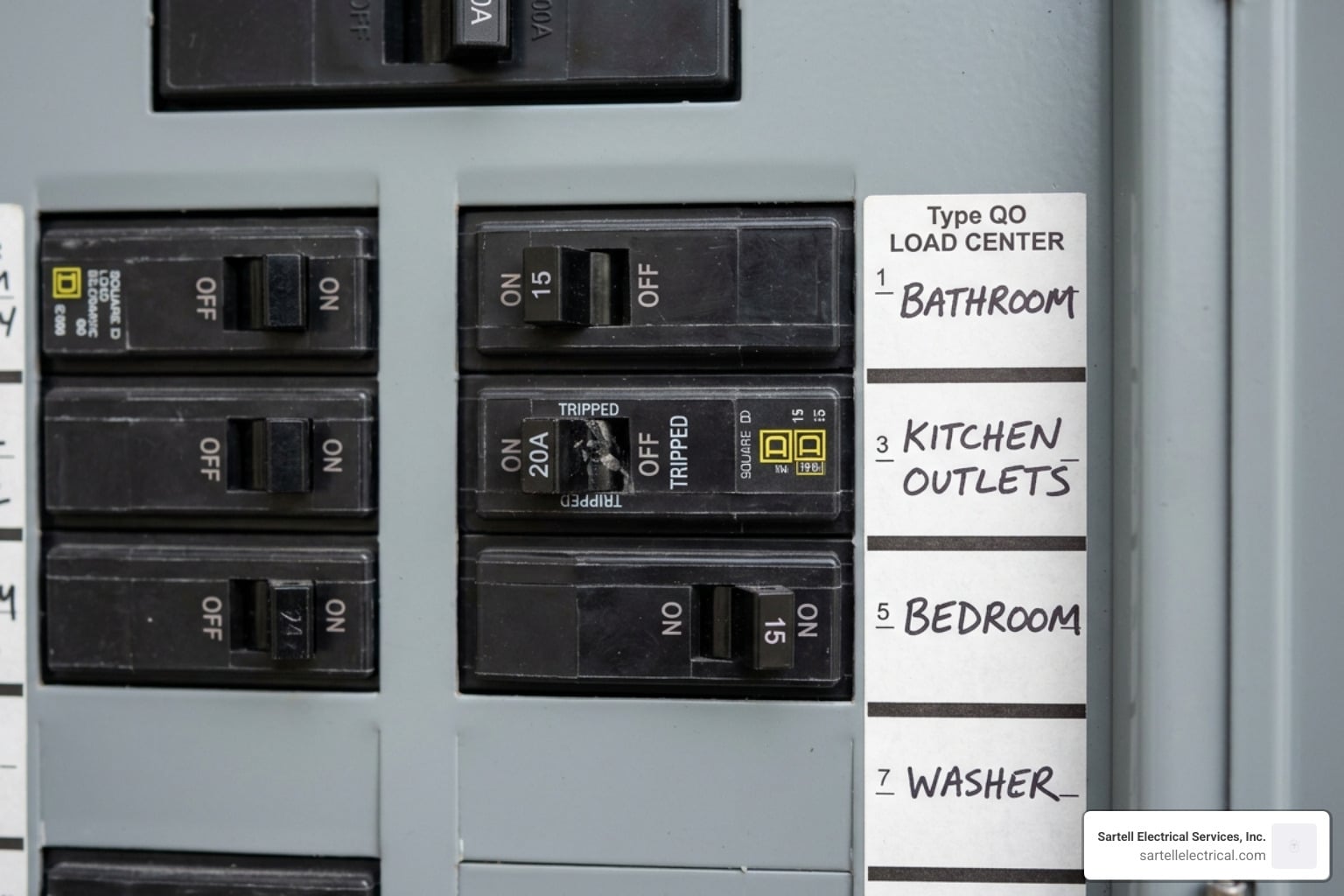
- Find the "Trip": A tripped breaker won't be fully "On" or "Off." It usually sits in a middle position or may feel "spongy" when you touch it. Some modern breakers have a red indicator window.
- The Off-to-On Sequence: To reset, you must first push the switch firmly to the OFF position until you hear a click. Then, flip it back to ON.
- Isolation Testing: Go back to the room and plug in your devices one by one. If the breaker trips the moment you plug in the toaster, you’ve found your culprit!
When to Stop Resetting and Call a Professional
There is a big difference between a one-time overload and a dangerous electrical fault. If you reset the breaker and it trips again immediately — especially if you’ve unplugged everything — stop. Repeatedly forcing a breaker to reset against a hard fault can cause the breaker to fail or lead to an arc flash.
You should call us at Sartell Electrical Services immediately if you notice:
- Burning Smells: An ozone or "fishy" smell near the panel or outlets.
- Buzzing Sounds: A vibrating or sizzling sound coming from the walls or the breaker box.
- Scorched Outlets: Any discoloration, brown marks, or melting on the plastic of an outlet.
- Physical Heat: If the breaker switch or the outlet cover feels hot to the touch.
- The "Breaker Blues": If you are wondering can a 60 amp breaker power a 100 amp subpanel, you are dealing with complex load calculations that require a pro.
Electrical failures cause roughly 26% of industrial fires and a significant portion of residential fires. Don't gamble with your safety.
Preventing Future Trips and Your System Upgrade Options
If you find yourself trekking to the basement every time you use the microwave, your home is telling you that its electrical system is outdated. Modern life requires more power than homes built in the 1970s or 80s were designed to provide.
Here is how we can help you "stop the trip" for good:
- Dedicated Circuits: High-draw appliances like refrigerators, space heaters, and window AC units should have their own dedicated lines.
- Load Distribution: We can reorganize your house breaker panel wiring to ensure one room isn't carrying the burden for the whole floor.
- Panel Upgrades: If your panel is full or aging, a breaker panel upgrade is the best investment. We can provide a clear electrical breaker box installation cost estimate for your specific home.
- Main Breaker Replacement: Sometimes the issue is the "big switch" at the top. We can help you understand the cost to replace a 200 amp main breaker or the total cost to replace a main breaker panel.
Frequently Asked Questions about Circuit Breaker Tripping
Why does my breaker trip even when nothing is plugged in?
This is one of the most frustrating scenarios. If nothing is plugged in, the trip is likely caused by:
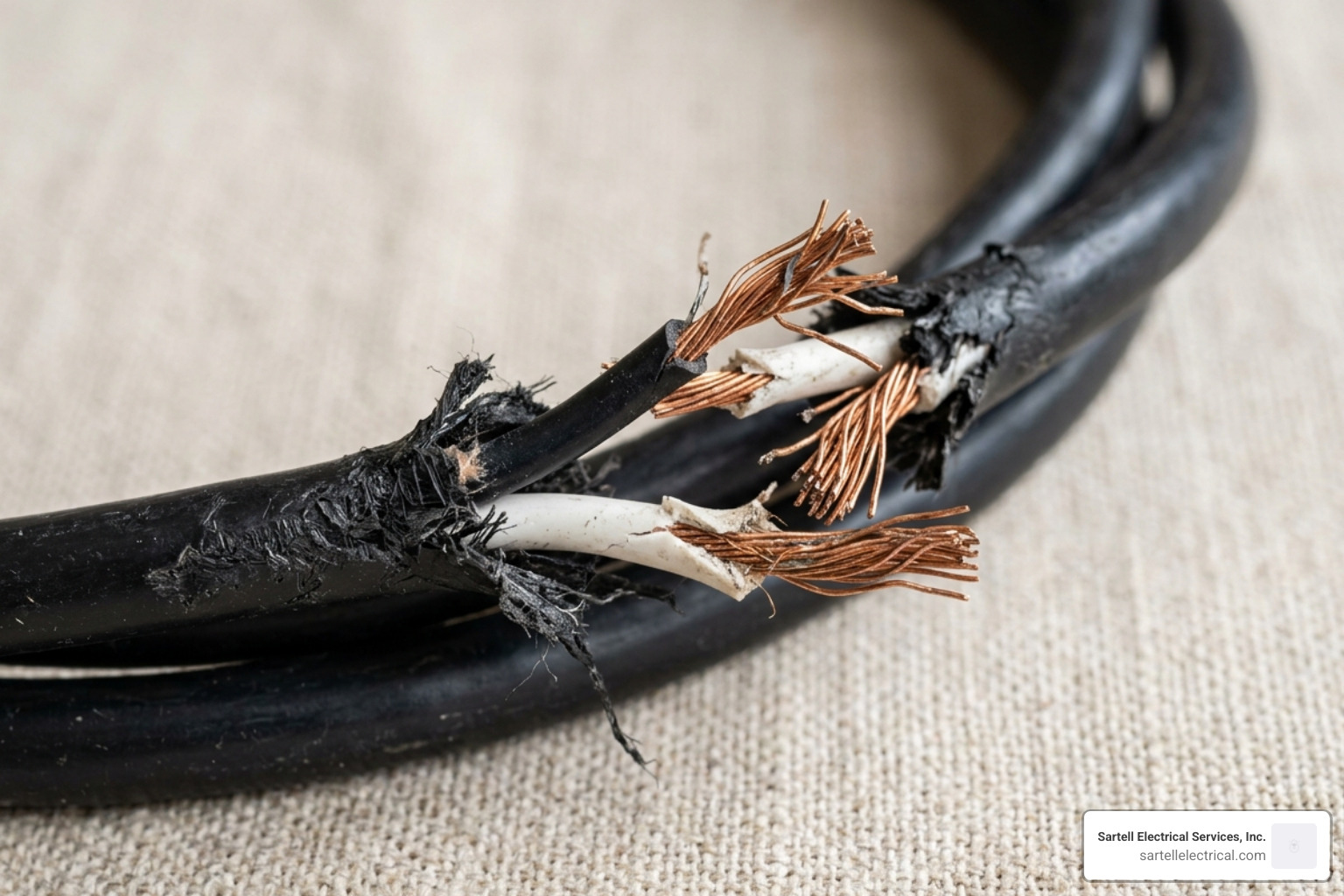
- Wiring Faults: A wire inside the wall has slipped out of a terminal or the insulation has rubbed away.
- Rodent Damage: Mice or squirrels in the attic often chew on Romex wiring, creating a short circuit.
- Faulty Breaker: The breaker itself has internal mechanical failure.
- Moisture: Water leaking into an outdoor junction box or through a foundation wall can cause a ground fault. According to why circuit breakers keep tripping, these "ghost" trips are almost always a sign of a serious wiring issue that needs an inspection.
Identifying a Short Circuit vs. Circuit Breaker Tripping from Overload
An overload is gradual. You might notice the lights dimming or hear a faint hum before the "click." The breaker will usually stay reset for a while before tripping again. A short circuit is violent and instant. You might see a spark, hear a loud "pop," or smell smoke. The breaker will trip the millisecond you try to turn it back on. Short circuits are much more dangerous because they involve high levels of heat and energy.
Is it dangerous to keep resetting a tripped breaker?
Yes. Every time a breaker trips, it sustains a tiny bit of internal wear. More importantly, if the trip is caused by a short circuit or an arc fault, "testing" it by resetting it sends another massive surge of electricity through the fault. This can result in:
- Fire risk: Igniting dust or insulation inside the walls.
- Breaker fatigue: The breaker may eventually "weld" shut, meaning it will never trip again, even during a fire.
- Wire degradation: Repeated heating damages the copper and its protective coating.
Conclusion
Circuit breaker tripping isn't just an inconvenience — it is a safety feature doing exactly what it was designed to do. Whether you're dealing with a simple kitchen overload or a complex wiring fault in an older Boston home, the team at Sartell Electrical Services is here to help.
We are a Massachusetts-based contractor located in Reading, MA, serving Essex, Middlesex, Norfolk, and Suffolk counties. With over 30 years of experience, we’ve seen every electrical mystery imaginable. From small residential repairs to major commercial installations, our commitment to excellence and customer service remains our top priority.
Don't stay in the dark. If your breakers are giving you trouble, contact us for fast, professional service. We'll find the culprit and make sure your home is safe, powered, and up to code.