Understanding What a Commercial Electrician Does
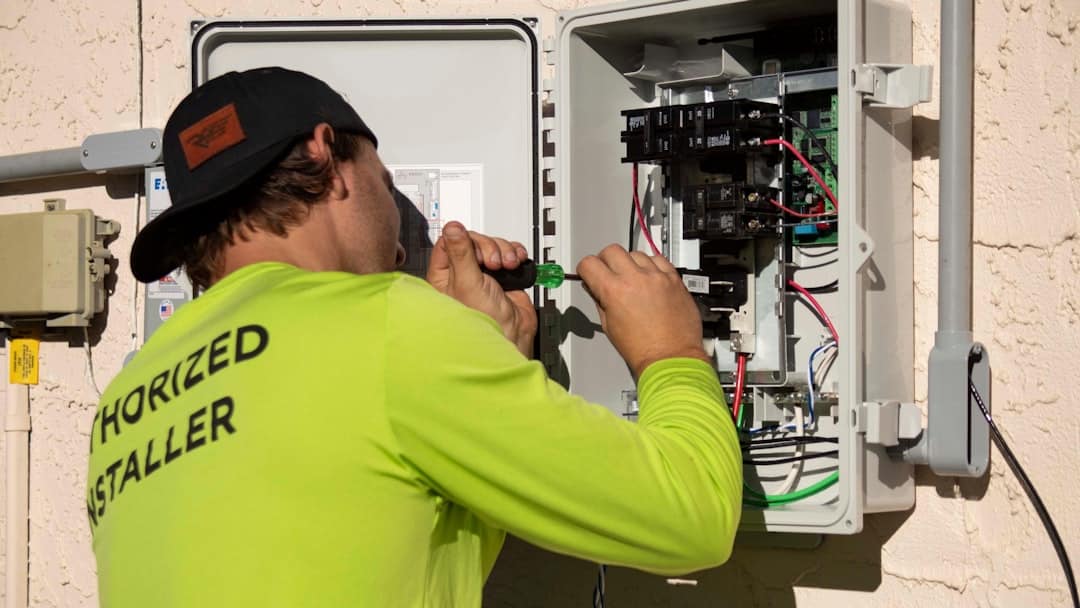
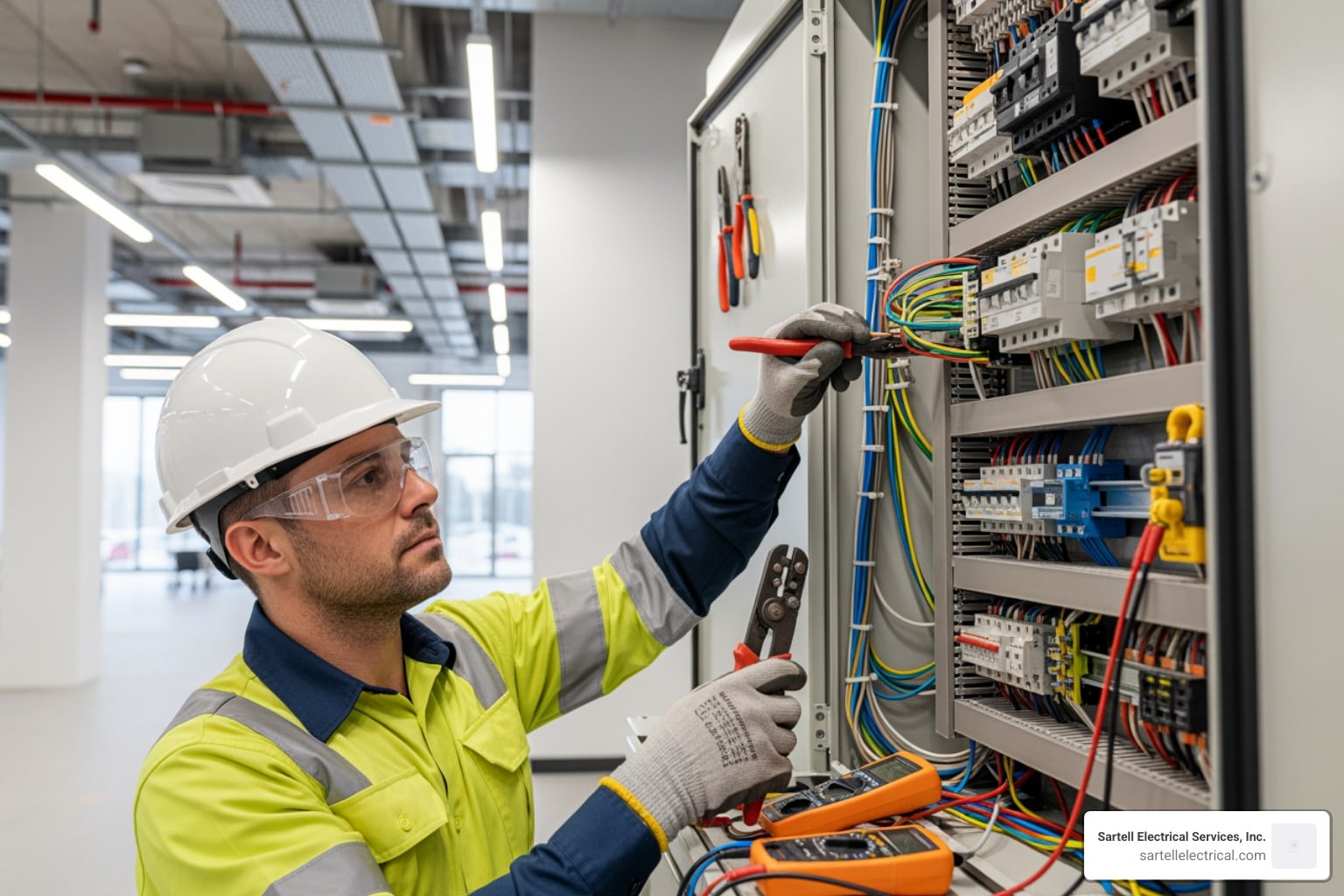
A commerical electrician is a licensed professional who specializes in installing, maintaining, and repairing electrical systems in non-residential buildings such as offices, retail stores, hospitals, schools, and industrial facilities. Unlike residential electricians who work with 120-240 volt systems in homes, commercial electricians handle more complex three-phase power systems, often working with voltages up to 480V and beyond.
Key Facts About Commercial Electricians:
- Work Settings: Office buildings, shopping centers, hospitals, schools, warehouses, data centers, and government facilities
- Voltage Systems: Typically work with 240V+ systems, including three-phase power distribution
- Core Responsibilities: Installation of switchgear, lighting systems, transformers, generators, backup power systems, and telecommunications infrastructure
- Training Path: High school diploma → apprenticeship (4-5 years) → journeyman license → optional master electrician certification
- Job Outlook: 6% employment growth projected from 2022-2032 (U.S. Bureau of Labor Statistics)
- Average Salary: $56,670 nationally (2015 BLS data), with experienced professionals earning $79,030+ in top markets
Commercial electrical work differs significantly from residential projects in both scale and complexity. These professionals must understand intricate wiring systems, adhere to stricter compliance standards, read complex blueprints, and follow National Electric Code (NEC) requirements specific to commercial spaces. They work on everything from routine lighting retrofits to critical infrastructure installations in hospitals and data centers, often managing projects ranging from $10,000 to millions of dollars.
I'm Ed Sartell, and since founding Sartell Electrical Services in 1985, I've led our team in delivering commercial electrical solutions across Massachusetts, working with businesses, builders, and institutions on projects where reliability and code compliance are non-negotiable. Whether you're planning a commerical electrician project for an office renovation or a ground-up facility build, understanding what these professionals do helps ensure your project succeeds.
Commerical electrician terms to know:
The Role and Responsibilities of a Commerical Electrician
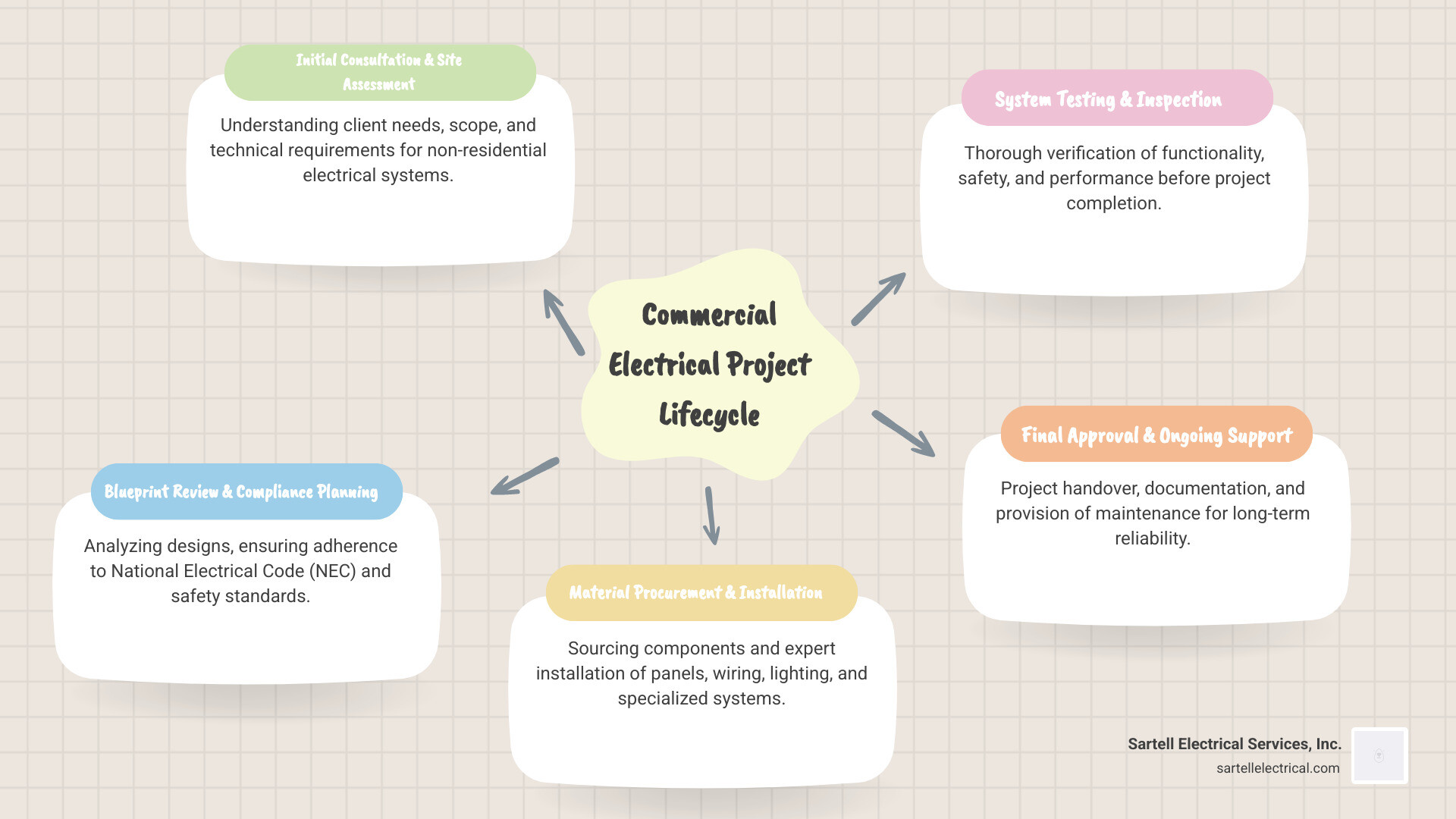
At Sartell Electrical Services, we understand that the backbone of any successful commercial enterprise is a safe, efficient, and reliable electrical system. This is precisely where the expertise of a commerical electrician becomes indispensable. Our primary role extends far beyond simply connecting wires; it encompasses the entire lifecycle of electrical infrastructure within non-residential settings.
The responsibilities of a commerical electrician are multifaceted and demanding. We are tasked with the installation and servicing of electrical systems for a vast array of properties, including retail stores, schools, office buildings, and even power generating plants. This means we are involved from the ground up, ensuring that new constructions are wired to perfection, and existing facilities receive the necessary upgrades and maintenance. For instance, our team regularly handles projects like wiring for improved networking using Cat 5, installing and repairing sophisticated lighting systems, and ensuring all electrical equipment for businesses operates flawlessly.
A key aspect of our work involves meticulous blueprint reading. Commercial electrical systems are often intricate, requiring a deep understanding of complex schematics to determine specifications, layouts, and connections. This foundational skill allows us to accurately plan installations and troubleshoot issues with precision.
Safety and compliance are paramount in commercial electrical work. We strictly adhere to National Electric Code (NEC) standards and local Massachusetts building regulations. This ensures that every installation, repair, and upgrade meets the highest safety benchmarks, protecting both property and personnel. Our commitment to safety is further reinforced through thorough commercial electrical inspections and regular commercial electrical system maintenance. These practices help identify potential hazards before they escalate, prolong the lifespan of electrical components, and prevent costly operational disruptions.
Troubleshooting is another critical skill. When electrical issues arise, businesses need quick and effective solutions to minimize downtime. Our electricians are adept at diagnosing problems, whether it's a faulty circuit, a malfunctioning motor, or a complex system failure. We employ various tools and techniques to test, diagnose, and replace electrical systems, ensuring they are always up to code and fully functional. This problem-solving capability is essential for keeping businesses running smoothly.
Furthermore, we contribute significantly to the efficiency of commercial buildings. By implementing energy-efficient lighting solutions, upgrading outdated power systems, and installing backup generators, we help businesses reduce energy consumption and maintain continuous operations. This focus on both safety and efficiency underscores the vital contribution of a commerical electrician to modern infrastructure. Our team at Sartell Electrical Services is dedicated to providing these expert solutions, ensuring our clients in Boston, Cambridge, Newton, and across Massachusetts benefit from reliable and safe electrical systems.
Commercial vs. Residential vs. Industrial Electrical Work
Understanding the distinctions between commercial, residential, and industrial electrical work is crucial, as each demands a specialized skill set and approach. While all electricians deal with electricity, the environments, voltage levels, and complexities vary significantly.
Let's break down the key differences:
| Feature | Residential Electrician | Commercial Electrician | Industrial Electrician |
|---|---|---|---|
| Voltage | Typically 120V to 240V | Generally up to 480V, often 240V+ systems | Very high-voltage systems (e.g., 600V+), complex motor controls |
| Phase | Single-phase power | Often three-phase power | Primarily three-phase power |
| Work Environment | Homes, apartments, condos | Office buildings, retail stores, schools, hospitals, data centers, restaurants, government buildings | Manufacturing plants, factories, mines, agricultural operations, power generating plants, refineries |
| Complexity | Simpler, standardized wiring, lower loads | Larger, more intricate wiring, higher loads, stricter codes | Highly specialized, heavy machinery, robotics, process controls, critical safety systems |
| Training Focus | General home wiring, code compliance for residential | Commercial wiring, motors, transformers, generators, raceways, NEC standards for commercial | Complex machinery, automation, high-voltage equipment, specialized industrial codes |
Residential electricians, like those working on single-family homes or multi-unit dwellings, primarily work with 120V-240V systems. Their focus is on standard home wiring, installing outlets, lighting, and appliances in a less complex environment. While essential, the scale and power demands are considerably lower than in commercial settings. Our licensed residential electricians near us are experts in ensuring the safety and functionality of your home's electrical system.
A commerical electrician, on the other hand, steps into a world of much higher stakes and complexity. As we've discussed, commercial buildings demand significantly more electricity and often rely on three-phase power to handle larger loads and efficient power distribution across expansive areas. We regularly work with systems up to 480V, managing intricate wiring that powers entire buildings with hundreds of occupants and specialized equipment. This requires a deeper understanding of advanced electrical theory and adherence to more stringent commercial codes. Our team at Sartell Electrical Services is equipped for both commercial and residential needs, providing comprehensive commercial residential electrician services across Massachusetts.
Industrial electricians operate at the pinnacle of electrical complexity. They specialize in heavy machinery, robotics, and automation systems found in manufacturing plants and industrial facilities. Their work often involves very high-voltage systems and requires extensive specialized expertise to maintain complex process controls and critical safety systems. While a commerical electrician requires less specialized experience than an industrial electrician, both complete a similar level of training and formal apprenticeship programs, focusing on medium to high-voltage equipment. The key difference lies in the application: commercial electricians focus on building infrastructure, while industrial electricians focus on the machinery within those structures. Our industrial electrical services team is highly specialized, ensuring electrical safety for industrial facilities and the precise operation of complex equipment.
While a residential electrician ensures your home's lights stay on, a commerical electrician keeps entire businesses powered and productive, and an industrial electrician keeps the gears of industry turning. Each role is vital, and at Sartell Electrical Services, we pride ourselves on having the expertise to handle all three, custom to the specific needs of our Massachusetts clients.
Training, Certification, and Career Outlook
The path to becoming a skilled commerical electrician is rigorous, demanding a blend of academic learning and extensive hands-on experience. It's a career choice that promises not only a stable future but also significant opportunities for growth and specialization.
The journey typically begins with a high school diploma or GED. Following this, aspiring electricians generally choose one of two primary educational pathways: vocational training or an apprenticeship program.
Educational Pathways for a Commerical Electrician
For those who prefer a more structured classroom environment, trade schools offer in-depth training from professional instructors. These programs often cover electrical theory fundamentals, alternating current theory, conduit bending techniques, and, crucially, National Electric Code (NEC) standards. A vocational program can be completed relatively quickly, sometimes in as little as 48 weeks, providing a strong theoretical foundation.
However, many aspiring commerical electricians opt for apprenticeship programs. These programs are often lauded for their "earn while you learn" model, combining paid on-the-job training with classroom instruction. Apprenticeships typically last four to five years, during which individuals gain practical experience under the guidance of experienced journeymen. This hands-on learning is invaluable, covering everything from electrical wiring and system installation to maintenance and repair in real-world commercial settings. While the specific links provided in the research refer to California's Electrician Certification Program and its Spanish counterpart, Electrician Certification Program español, the underlying principle of rigorous training and state-mandated certification applies universally, including here in Massachusetts.
Upon successful completion of an apprenticeship or sufficient documented work experience, individuals can apply for a journeyman license. This signifies a competent electrician capable of working independently. Further experience and passing an advanced examination can lead to a master electrician license, the highest level of certification, often required for supervising projects and pulling permits. Continuing education is also a vital component throughout an electrician's career, ensuring they stay updated with evolving technologies and code changes.
The career outlook for commerical electricians is exceptionally strong. The U.S. Bureau of Labor Statistics (BLS) projects a 6% rise in employment for electricians from 2022 to 2032, which is about as fast as the average for all occupations. This growth is driven by several factors, including the ongoing demand for new commercial development, the need to maintain existing infrastructure, and the emergence of new technologies like solar power and smart building systems. In fact, the job market has been described as "white hot" for commercial electricians, placing this specialty on lists of top technical vocations.
Regarding salary, the BLS reported that the average salary for electricians nationally was $56,670 in 2015, with the top 10 percent earning an average of $79,030. While these figures are from 2015 and current salaries are likely higher, they illustrate the earning potential in the field. Factors such as experience, additional certifications, and geographic location (like our service areas in Greater Boston and Eastern Massachusetts) can significantly influence earnings. The career offers a strong outlook, good work-life balance, and high job satisfaction, often ranking among the highest-paying jobs that don't require a college degree. For detailed information on career paths and potential earnings, resources like Electrician School Edu provide valuable insights into commerical electrician training and certification requirements.
Essential Services and Specialized Projects
At Sartell Electrical Services, our expertise as commerical electricians shines through the diverse range of essential services and specialized projects we undertake across Massachusetts. Commercial electrical work is rarely one-size-fits-all; it requires adaptability, deep technical knowledge, and the right tools for the job.
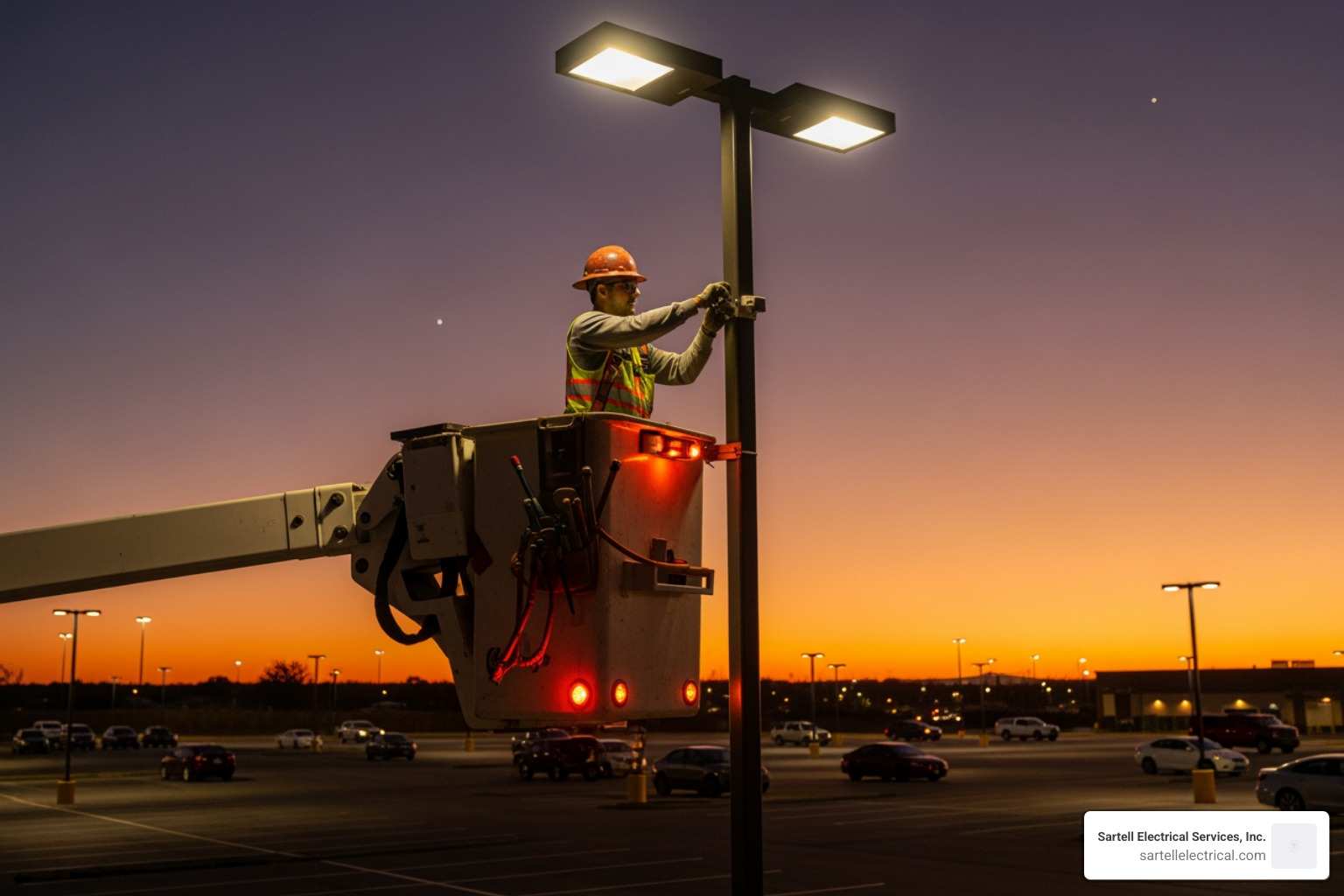
One of our most visible roles is in commercial lighting solutions. This includes everything from installing sophisticated recessed lighting and fixtures in office spaces to retrofitting outdated systems with energy-efficient LED options. We also handle critical exterior lighting, such as parking lot lighting and signage, which is essential for safety and security. Our team uses specialized equipment, including bucket trucks, to safely and efficiently service liftd wiring challenges and maintain parking lot and external building lighting.
Businesses rely heavily on robust data infrastructure. Our commerical electricians are experts in data center electrical installations, ensuring these critical facilities have the stable and redundant power supplies they need. This often involves installing backup generators and Uninterruptible Power Supply (UPS) systems to prevent data loss and operational downtime. We also provide comprehensive data cabling installation in Boston and surrounding areas, laying the groundwork for seamless communication and networking.
We also cater to highly specialized environments, such as commercial kitchens, which have unique electrical demands due to their heavy-duty equipment. Our commercial kitchen electrical complete guide outlines our services, ensuring these facilities meet strict health and safety codes while operating efficiently.
Maintaining the integrity of a commercial building's power distribution system is paramount. This includes regular switchgear maintenance and expert installation and repair of commercial electric panels. We also handle transformer installations, which are crucial for stepping down high-voltage power from the utility grid to usable levels within a building.
Healthcare facilities, from small clinics to large hospitals, have some of the most stringent electrical requirements. Our team provides specialized healthcare lighting solutions and ensures that critical electrical systems for medical equipment and life support are always operational. The importance of reliable power in these settings cannot be overstated, and we are proud to contribute to the safety and functionality of healthcare providers across our service area.
Our services extend to telecommunications infrastructure, where we install and maintain systems that keep businesses connected. This includes everything from fiber optic wiring to the electrical components of communication towers and network hubs. From Andover to Woburn and throughout our service areas, our commerical electricians are at the forefront of providing the electrical backbone for modern business operations.
Typical Projects Handled by a Commerical Electrician
The day-to-day work of a commerical electrician involves a wide array of projects, each demanding precision and adherence to specific codes. Here are some of the typical projects we handle:
- Office Fit-Outs and Renovations: When businesses move into new spaces or remodel existing ones, we are responsible for designing and installing new wiring, lighting, outlets, and data points to meet their specific needs. This often involves collaborating with architects and building owners to ensure the electrical system supports the new layout and technology requirements.
- Retail Wiring and Upgrades: Retail environments require specialized lighting for product display, robust point-of-sale (POS) systems, and efficient power distribution. We provide comprehensive retail electrical services in MA, from new installations to system upgrades that improve customer experience and operational efficiency.
- Parking Lot Lighting and Signage: Ensuring adequate and safe illumination for commercial parking lots and outdoor signage is critical for security and customer access. Our team installs, repairs, and maintains these systems, often using bucket trucks for liftd work.
- Emergency Power Systems: For facilities where continuous power is non-negotiable, such as hospitals, data centers, and critical care facilities, we install and maintain emergency generators and automatic transfer switches. Our expertise in hospital power systems ensures that essential services remain operational during outages.
- Warehouse Lighting and Power: Large warehouses require powerful and efficient lighting, as well as robust electrical systems to support heavy machinery and logistical operations. We offer warehouse lighting repair and complete electrical installations custom to the unique demands of these vast spaces.
- Tenant Build-Outs and Improvements: For multi-tenant commercial properties, we customize electrical systems for new tenants, adapting the existing infrastructure to suit their specific business operations, whether it's a new restaurant, a medical office, or a retail store.
- System Maintenance and Repair: Beyond new installations, a significant portion of our work involves ongoing maintenance, troubleshooting, and repairs to ensure the longevity and safety of commercial electrical systems. This includes everything from replacing circuits and fluorescent tubes to repairing electrical motors and programming time clocks.
These projects highlight the varied and critical nature of a commerical electrician's work. From basic repairs to complex installations, our team at Sartell Electrical Services is committed to delivering exceptional electrical solutions that power businesses throughout Massachusetts.
Conclusion and Frequently Asked Questions
As we've explored, the commerical electrician is dynamic, challenging, and absolutely essential to the functioning of our modern economy. From the intricate wiring of a new office building in Boston to the critical power systems of a hospital in Framingham, our work ensures safety, efficiency, and continuity for businesses and institutions across Massachusetts.
At Sartell Electrical Services, Inc., headquartered in Reading, MA, we bring over 30 years of experience to every project. Our commitment to excellence, strong leadership, and unwavering focus on customer service define who we are. We understand that whether you're in Cambridge, Newton, Peabody, or any of our service areas, you need an electrical partner you can trust—one who can handle projects of all sizes with precision and professionalism. We take immense pride in our role as your local commercial electrical contractor in Boston MA and beyond, providing expert project management and reliable solutions.
We hope this guide has illuminated the vital role of the commerical electrician and provided valuable insights into this specialized trade. If you have commercial electrical needs, from routine maintenance to complex new installations, we invite you to contact us for expert electrical solutions. We're ready to power your business success.
What is the average salary for a commercial electrician?
Based on data from the U.S. Bureau of Labor Statistics (BLS) in 2015, the national average salary for electricians was $56,670 per year. For those in the top 10 percent, the average rose to $79,030 annually. These figures are from 2015, and current salaries are generally higher due to inflation and increased demand. In Massachusetts, salaries can vary based on experience, specific skill sets, certifications, and the local market conditions in areas like Boston, Cambridge, or Worcester. Experienced commerical electricians with specialized skills and a strong track record often command higher wages.
How long does it take to become a licensed commercial electrician?
The typical pathway to becoming a licensed commerical electrician involves several stages and generally takes between 4 to 5 years. This includes:
- High School Diploma or GED: This is the foundational requirement.
- Apprenticeship Program: Most aspiring electricians complete a formal apprenticeship, which combines paid on-the-job training with classroom instruction. These programs usually last 4 to 5 years, accumulating thousands of hours of practical experience and technical education.
- Journeyman License: After completing an apprenticeship and passing a state-mandated examination, you can obtain a journeyman electrician license. This allows you to work independently.
- Master Electrician License (Optional but Recommended): With several years of experience as a journeyman, and by passing another advanced examination, electricians can achieve master electrician status. This level often allows for supervising other electricians, designing electrical systems, and pulling permits for projects.
The exact requirements and duration can vary slightly by state, but this progression is standard across the industry, including here in Massachusetts.
What is the difference between single-phase and three-phase power?
The primary difference between single-phase and three-phase power lies in how the alternating current (AC) is delivered and its stability.
- Single-Phase Power: This is the most common type of power found in residential homes. It delivers power in a single, fluctuating waveform. While sufficient for small loads like household appliances, it experiences momentary power drops as the voltage crosses zero. This makes it less efficient for larger, continuous power demands.
- Three-Phase Power: This system delivers power using three separate alternating currents, each offset in time from the others. This creates a constant, smooth delivery of power because at any given moment, at least one of the three phases is at or near its peak voltage. This continuous power flow makes three-phase systems much more efficient and powerful for large loads and industrial machinery. Commerical electricians frequently work with three-phase power because it is ideal for powering large commercial buildings, heavy machinery, and data centers that require consistent and substantial electrical supply.