Commercial kitchen electrical: The Shocking Truth 2025
The All-Electric Revolution in Commercial Kitchens
Commercial kitchen electrical systems are in the midst of a revolution. The push toward electrification is reshaping food service operations, but switching from gas to electric involves more than just new appliances.
Key Facts About Commercial Kitchen Electrical:
- Voltage Requirements: Commercial kitchens require at least 208 volts to operate at full capacity, unlike residential equipment which runs on 120 volts
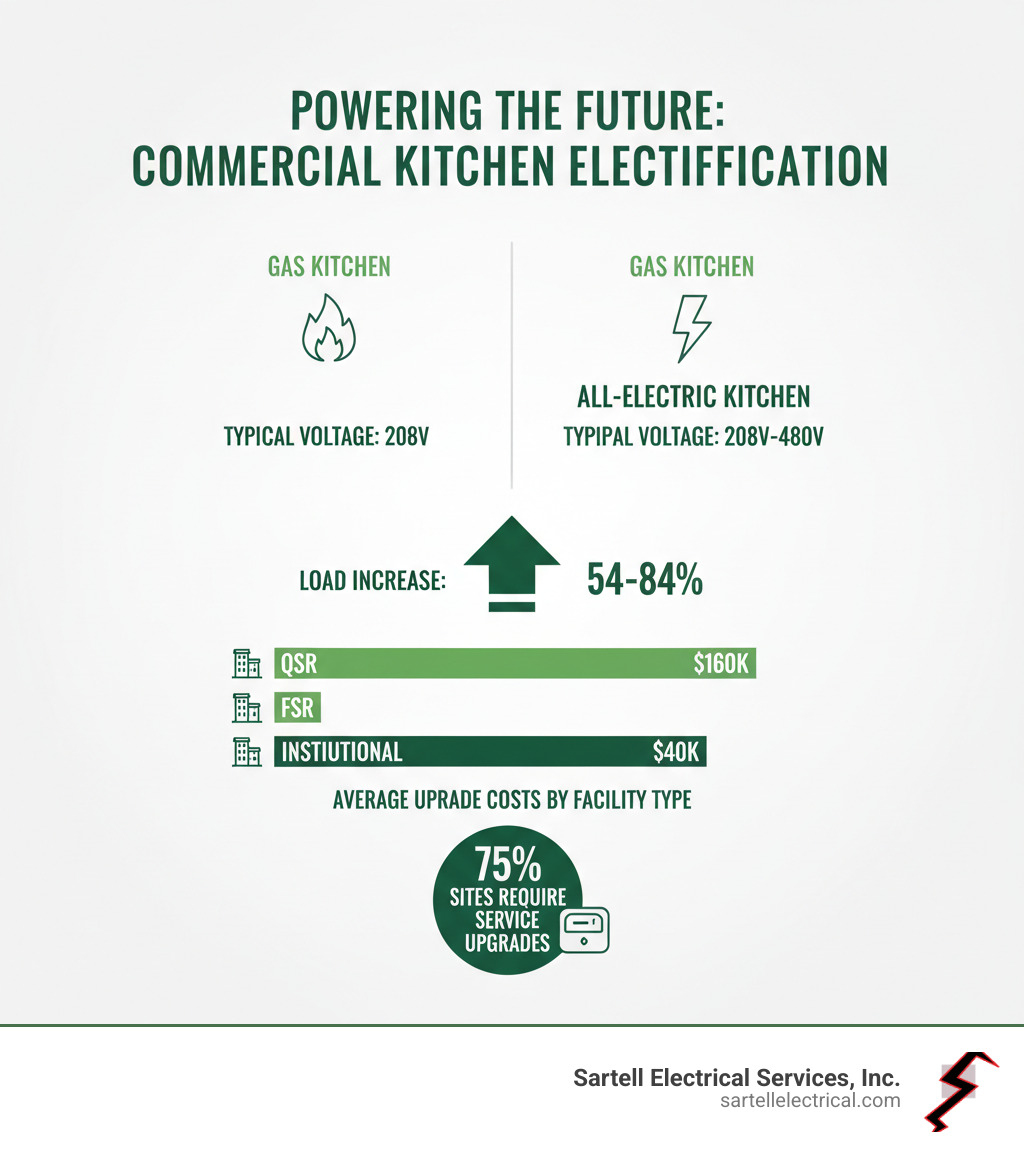
- Load Increases: Converting to all-electric can increase your electrical load by 54% to 84%
- Upgrade Costs: Average electrical upgrade costs range from $40,000 (institutional) to $160,000 (full-service restaurants)
- Service Capacity: 12 out of 16 analyzed commercial sites required higher electrical service capacity after conversion
- Demand Charges: Peak demand costs increase by $1,600 to $7,400 annually for most facilities
The "shocking truth" is that
most existing buildings lack the electrical infrastructure for an all-electric kitchen. This often means major upgrades, including new wiring, panels, and higher-capacity service entrances—hidden costs that can catch business owners by surprise.
Proper planning is the key to a successful conversion. Understanding load calculations, diversity factors, and the trade-offs between gas and electric equipment allows you to make informed decisions and avoid expensive mistakes. This guide covers everything from calculating your kitchen's electrical load to navigating safety and compliance.
I'm Ed Sartell, President of Sartell Electrical Services. Since 1985, I've specialized in complex
commercial kitchen electrical installations across Massachusetts. I've seen what works—and what leads to costly delays and safety hazards.
Planning Your Commercial Kitchen Electrical System
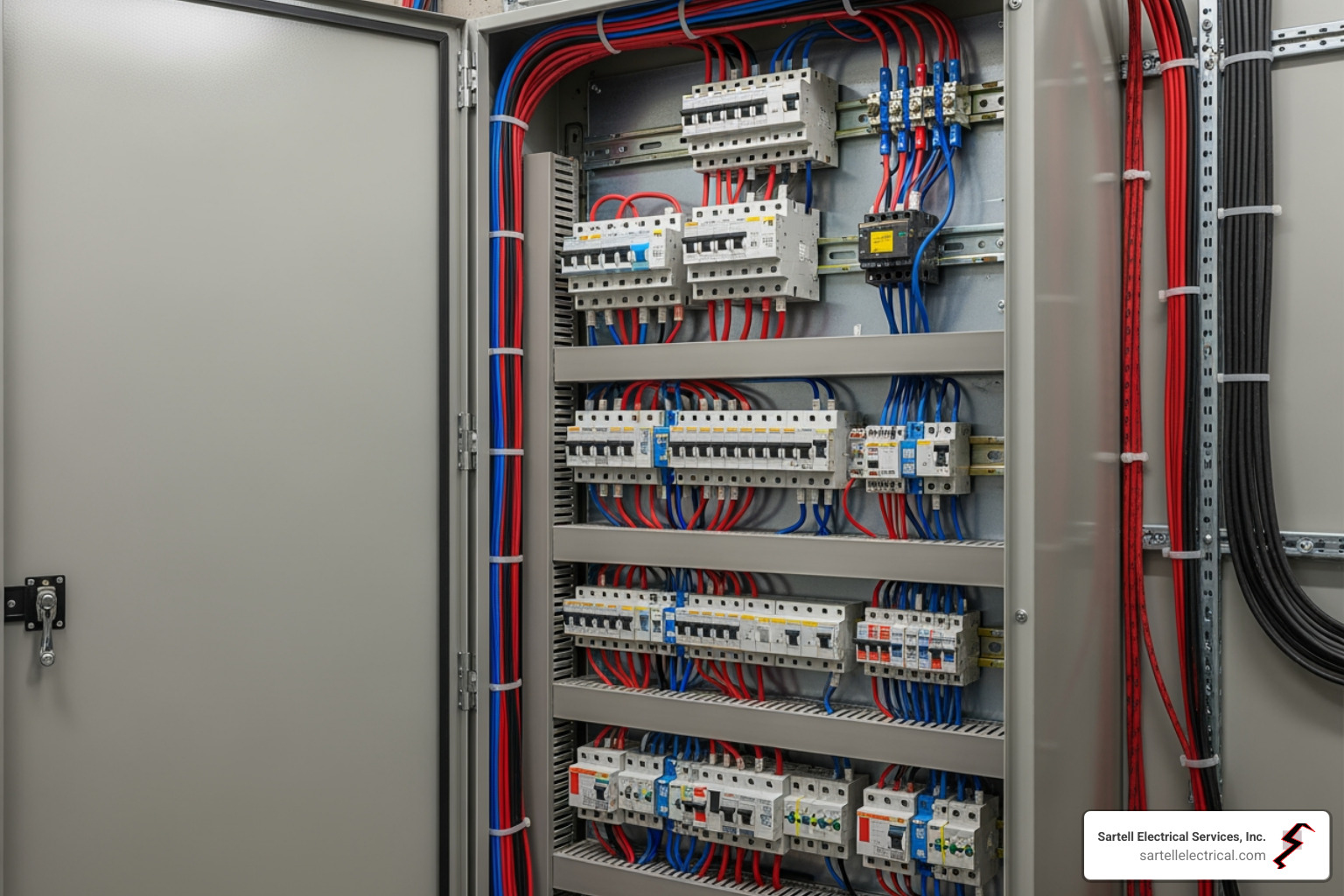
Before you purchase a single appliance, you must understand the electrical backbone of your operation. Proper
commercial kitchen electrical planning saves you from expensive surprises, code violations, and shutdowns during peak hours. This section covers the foundational knowledge you need.
Key Differences in Commercial Kitchen Electrical Needs
Your home kitchen runs on 120-volt, single-phase power. A commercial kitchen is a different beast, requiring higher voltage and more robust systems to handle the relentless demand.
Most commercial appliances need
208-volt power, with heavy-duty equipment using up to
480 volts. This higher voltage delivers more power efficiently and safely. Commercial kitchens also often use
three-phase power, which provides a more constant and balanced flow for large motors in refrigeration, mixers, and ovens. This leads to better equipment performance, less wear and tear, and greater reliability. Finally, all components—from wiring to outlets—must be commercial-grade to withstand the heat, moisture, and constant use of a professional kitchen.
At Sartell Electrical Services, we've designed and installed
commercial kitchen electrical systems across Massachusetts since 1985, and we've seen how proper planning makes all the difference.
More info about our Commercial Electrical Services
How to Calculate Your Kitchen's Electrical Load
Calculating your electrical load is a critical first step. Follow this process:
- Create a complete equipment list: Include everything from ovens and fryers to mixers, exhaust fans, and lighting.
- Find the specs for each item: Check the nameplate or manufacturer's manual for voltage (V), wattage (W or kW), amperage (A), and phase requirement (single or three-phase).
- Calculate the total connected load: Add up the wattage of all equipment. If only amps are listed, use the formula: Watts (P) = Volts (V) x Amps (I). This total represents the maximum possible power draw if everything runs at once.
This number is crucial, but it's not the whole story. For more detailed guidance, check out this helpful resource:
Calculating Electrical Requirements for Commercial Kitchen Equipment
Applying a Diversity Factor for a Realistic Estimate
Your total connected load is a theoretical maximum. In reality, not all equipment runs at peak capacity simultaneously. An electrical engineer applies a
diversity factor—typically 65% to 80% (0.65 to 0.8) for kitchens—to the total load to determine a more realistic
effective electrical load. This number is used to size your electrical service.
A qualified electrician must then assess your building's existing service capacity to see if it can handle this demand. This is especially true when converting from gas to electric. For complex projects like new builds or all-electric conversions, an electrical engineer is essential to ensure the system is properly designed and compliant with the National Electrical Code.
At Sartell Electrical Services, we regularly collaborate with engineers on design-build projects to ensure your
commercial kitchen electrical system is precisely sized and built to last.
More info about Design Build Electrical Services
The Great Debate: Gas vs. Electric Appliances
Choosing between gas and electric appliances is a major decision that impacts your food, budget, and operations. This section breaks down the pros and cons to help you make an informed choice.
For decades, gas has been king in commercial kitchens due to its instant, visual heat control. However, modern electric technology, especially induction, now rivals or exceeds gas in many applications. Electric ovens offer superior even heat for baking, while induction cooktops are faster, safer, and more precise than gas burners. The best choice depends on the specific appliance and your menu.
| Appliance |
Gas Advantage |
Electric Advantage |
The Verdict |
| Ranges |
Instant heat control, open flame climbs pan sides. |
Induction models are faster, safer, and easier to clean. |
Gas for traditional performance; Induction for modern speed and efficiency. |
| Ovens |
Heats up quickly. |
Provides even, dry heat ideal for baking and roasting. |
Electric for superior consistency and baking results. |
| Fryers |
Often cheaper upfront. |
Maintains steadier temperatures and recovers heat faster. |
Electric for better food quality and consistency. |
| Griddles |
Lower initial cost. |
More even heat distribution across the surface, fewer hot spots. |
Electric for more consistent cooking performance. |
| Charbroilers |
Open flame creates authentic char marks and flavor. |
Safer, easier to clean. |
Gas is the clear winner for authentic flame-broiled flavor. |
| Steam Tables |
Traditional choice. |
Portable, easier to clean, and doesn't require a dedicated hood. |
Electric offers more flexibility and convenience. |
Upfront vs. Long-Term Cost Analysis
While
electric appliances often have a higher purchase price, installation costs can vary. Gas requires plumbing, while electric requires sufficient wiring and panel capacity. If your building needs a major electrical service upgrade, the installation cost for electric can be substantial.
More info about our Electrical Panel Upgrade Cost Guide 2025
A major factor is long-term operating cost. In most regions, including Massachusetts,
natural gas is significantly cheaper per BTU than electricity, making gas appliances less expensive to run. Maintenance costs and lifespan are generally comparable for both types. To make the best decision, calculate the total cost of ownership over 5-10 years, not just the initial price. Check your local utility rates to run the numbers for your specific situation. Energy pricing map
Environmental Impact and Regulatory Trends
The environmental impact of cooking is a growing concern. Gas appliances emit greenhouse gases like methane and carbon dioxide. In response, some municipalities are implementing
bans on natural gas in new construction. While not yet widespread in Massachusetts, this is a national trend worth watching.
Natural Resource Defense Council report on gas stove emissions
Choosing electric, especially high-efficiency options like induction, can future-proof your kitchen against potential regulations and appeal to environmentally conscious customers. At Sartell Electrical Services, we help businesses steer these transitions, ensuring your
commercial kitchen electrical infrastructure is ready for the future.
The Reality of Converting to an All-Electric Kitchen
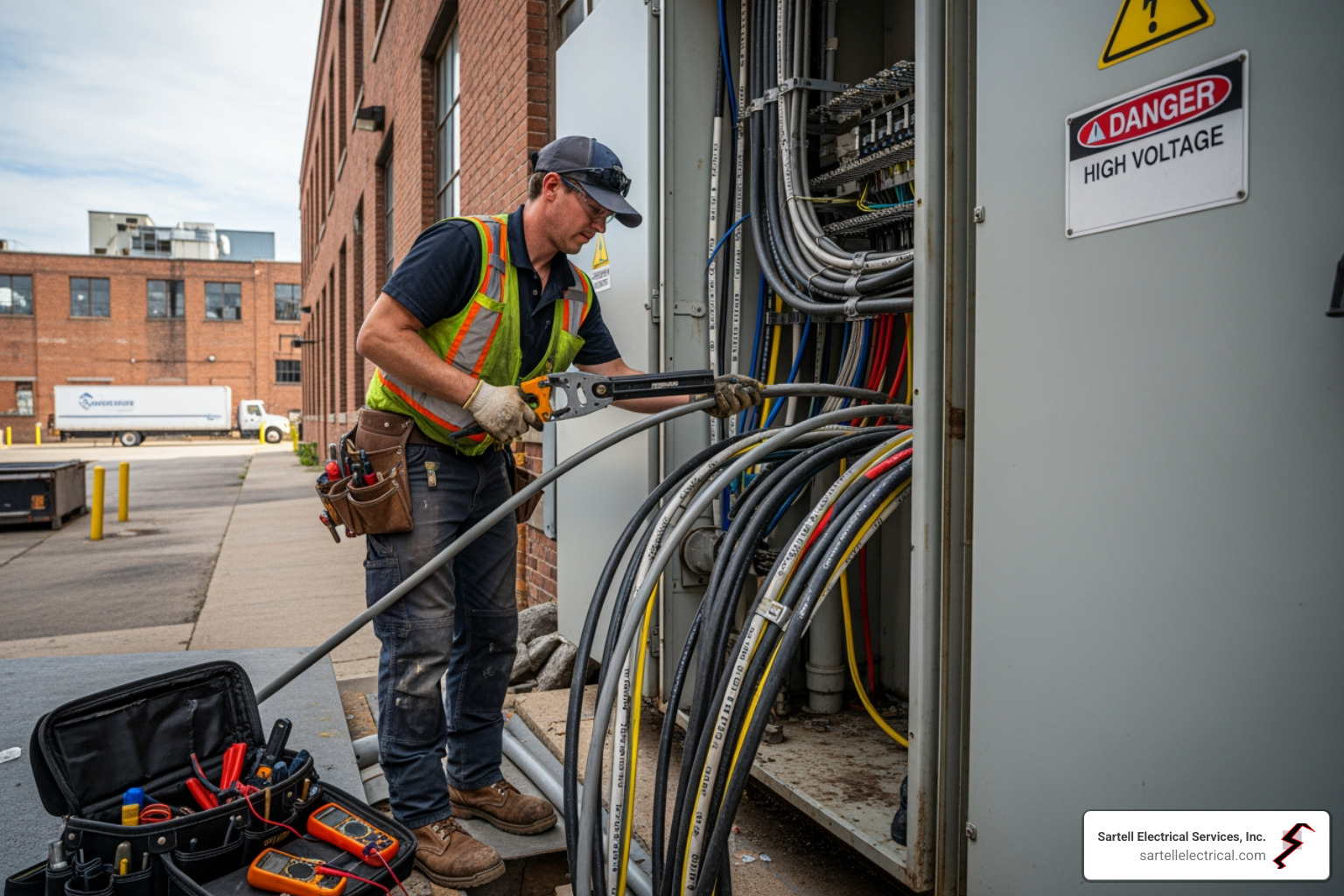
The idea of an all-electric kitchen is appealing, but the reality is more complex than many owners expect. Converting from gas is a fundamental change to your building's infrastructure, with significant challenges and costs. This section uses hard data to show you what to expect.
The "Shocking" Increase in Electrical Load and Costs
Switching from gas to electric dramatically increases your power needs. Studies of real-world conversions show that the
commercial kitchen electrical load increases by
54% to 84%. This spike in usage also leads to higher peak demand charges from your utility, potentially adding
$1,600 to $7,400 to your annual bills.
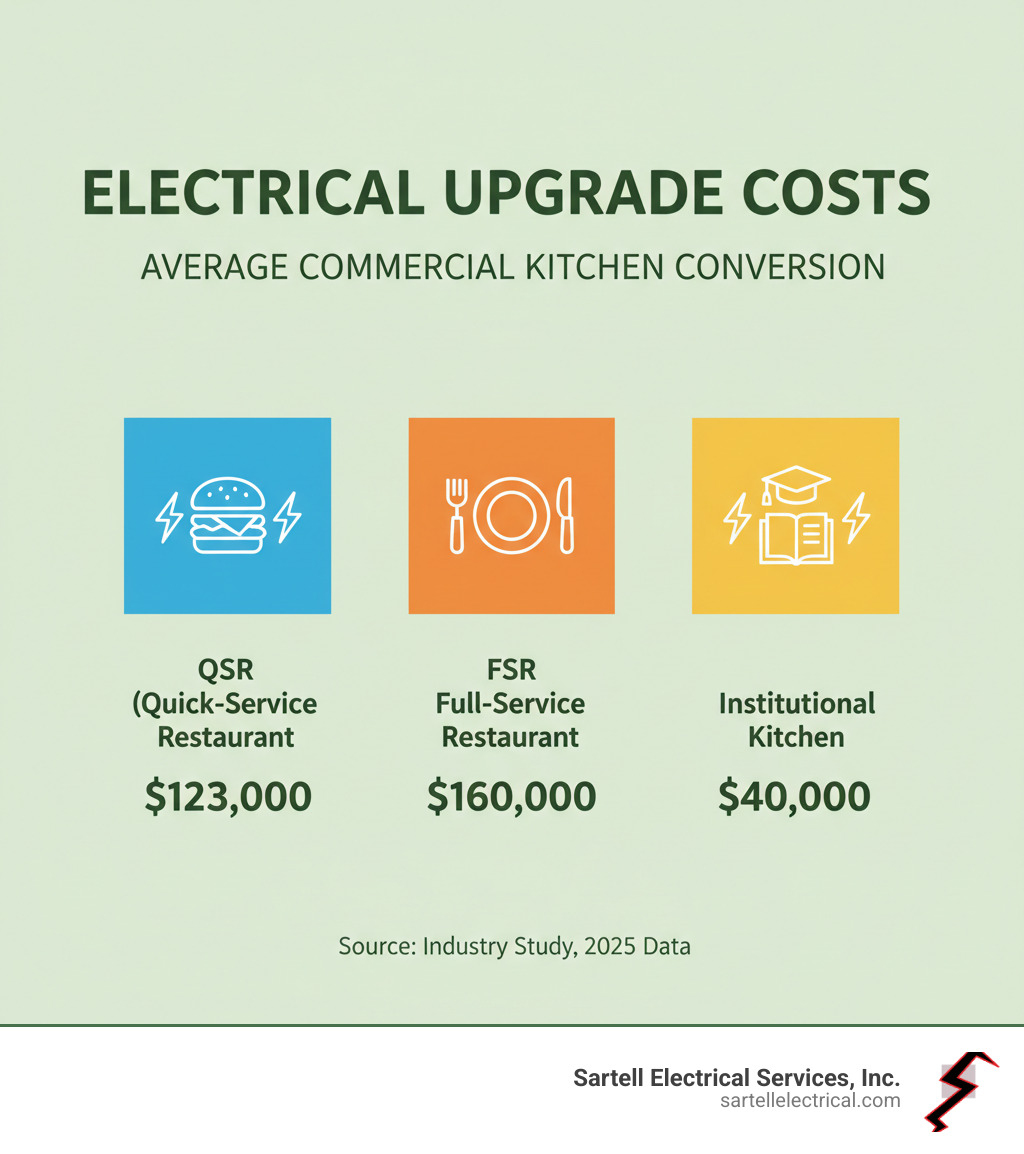
The largest hidden cost is the electrical upgrade itself. On average, these upgrades cost
$40,000 for institutional kitchens,
$123,000 for Quick-Service Restaurants (QSRs), and
$160,000 for Full-Service Restaurants (FSRs).
Service Upgrades and Operational Problems
The data is clear:
75% of commercial kitchens require a higher electrical service capacity to go all-electric. This isn't a simple fix; it often involves upgrading your main panel, service entrance conductors, and coordinating with the utility company for a new transformer. These projects can take weeks or months to complete.
In older Massachusetts buildings with only single-phase power, a
phase converter can be a cost-effective solution to run three-phase equipment without a full utility service upgrade. This provides reliable power and can extend the life of your appliances.
Beyond infrastructure, don't forget the human element.
Staff training is essential to help experienced chefs adapt to the different techniques and timing of electric cooking. Skipping this step can lead to frustration and inconsistent food quality.
At Sartell Electrical Services, we've guided countless Massachusetts businesses through these complex upgrades, making the transition as smooth and cost-effective as possible.
More info about our Main Electrical Panel Upgrade Complete Guide
Safety, Compliance, and Emergency Preparedness
A powerful kitchen is only successful if it's safe and reliable. In the high-stakes environment of a commercial kitchen, prioritizing safety and compliance for your
commercial kitchen electrical system is non-negotiable.

Navigating Commercial Kitchen Electrical Codes and Safety
Commercial kitchens are held to strict safety standards. All
commercial kitchen electrical work in Massachusetts must comply with the National Electrical Code (NEC) and NFPA 96 for ventilation and fire protection. Compliance protects your staff, customers, and business.
Key requirements include:
- GFCI (Ground-Fault Circuit Interrupter) outlets near any water source to prevent electric shock.
- Dedicated circuits for all heavy-duty appliances to prevent overloads and fire hazards.
- Proper wiring installed by a licensed commercial electrician. Improper wiring is a leading cause of equipment failure, fires, and serious injury.
At Sartell Electrical Services, we are a Safe Electric Registered Electrical Contractor, meaning all our work meets the highest safety and compliance standards.
More info about our Safe Electric Registered Electrical Contractor services
Specialized Electrical for Ventilation Systems
Your kitchen's ventilation system is a critical safety component with its own electrical needs. Exhaust hoods and makeup air units require dedicated circuits. A
hood interlock system is a key safety feature that prevents cooking equipment from operating unless the ventilation is running.
Furthermore, your
fire suppression system must be electrically integrated to automatically shut off power and fuel to appliances in the event of a fire. Regular maintenance of these systems is required by NFPA 96 to prevent grease buildup and reduce fire risk.
Creating an Electrical Emergency Plan
Even the best systems can fail. A solid emergency plan protects your staff, customers, and inventory. Consider
backup generators to power essential equipment like refrigeration during an outage, preventing costly food spoilage. Code-required
emergency lighting ensures safe evacuation. For sensitive electronics like POS systems, an
Uninterruptible Power Supply (UPS) prevents data loss and hardware damage from power fluctuations.
Every kitchen should have a well-stocked electrical emergency kit readily accessible. Essential components include:
- Flashlights with spare batteries
- A battery-powered radio
- A comprehensive first-aid kit
- Class K fire extinguishers (for kitchen fires)
- Basic insulated hand tools (screwdrivers, pliers)
- An emergency contact list (utility company, electrician, fire department)
- Copies of your electrical panel diagrams and shut-off procedures
- Portable power banks for charging devices
- Heavy-duty gloves
Being prepared is crucial. Our team at Sartell Electrical Services offers 24-hour emergency electrical service across Massachusetts.
More info about our Emergency Electrical Service Near Me
Conclusion: Powering Your Kitchen for Success
You now understand the complex world of
commercial kitchen electrical systems. The key takeaway is that
proper planning is your best defense against costly surprises.
The push toward all-electric kitchens is real, but as we've seen, it often means
load increases of 54% to 84% and electrical upgrade costs ranging from
$40,000 to $160,000. These are fundamental business decisions that require careful consideration.
Safety and compliance with NEC and NFPA codes are not optional—they are essential for protecting your business, staff, and customers. From GFCI outlets to integrated fire suppression, every detail matters.
Whether you're building a new restaurant, renovating an existing space, or considering the leap to all-electric, you need a partner who understands the unique demands of commercial kitchens. For over 30 years, Sartell Electrical Services has been helping businesses across Reading, MA, and the Greater Boston area design and install electrical solutions that are powerful, safe, and code-compliant from day one.
Don't let the complexity of
commercial kitchen electrical systems hold you back. With the right planning and the right team, you can build a space that's efficient, safe, and ready for the future.
Ready to power your kitchen for success?
Contact a professional electrician today!