Healthcare lighting solutions: Enhance 80% Savings
Why Healthcare Lighting Solutions Matter More Than You Think
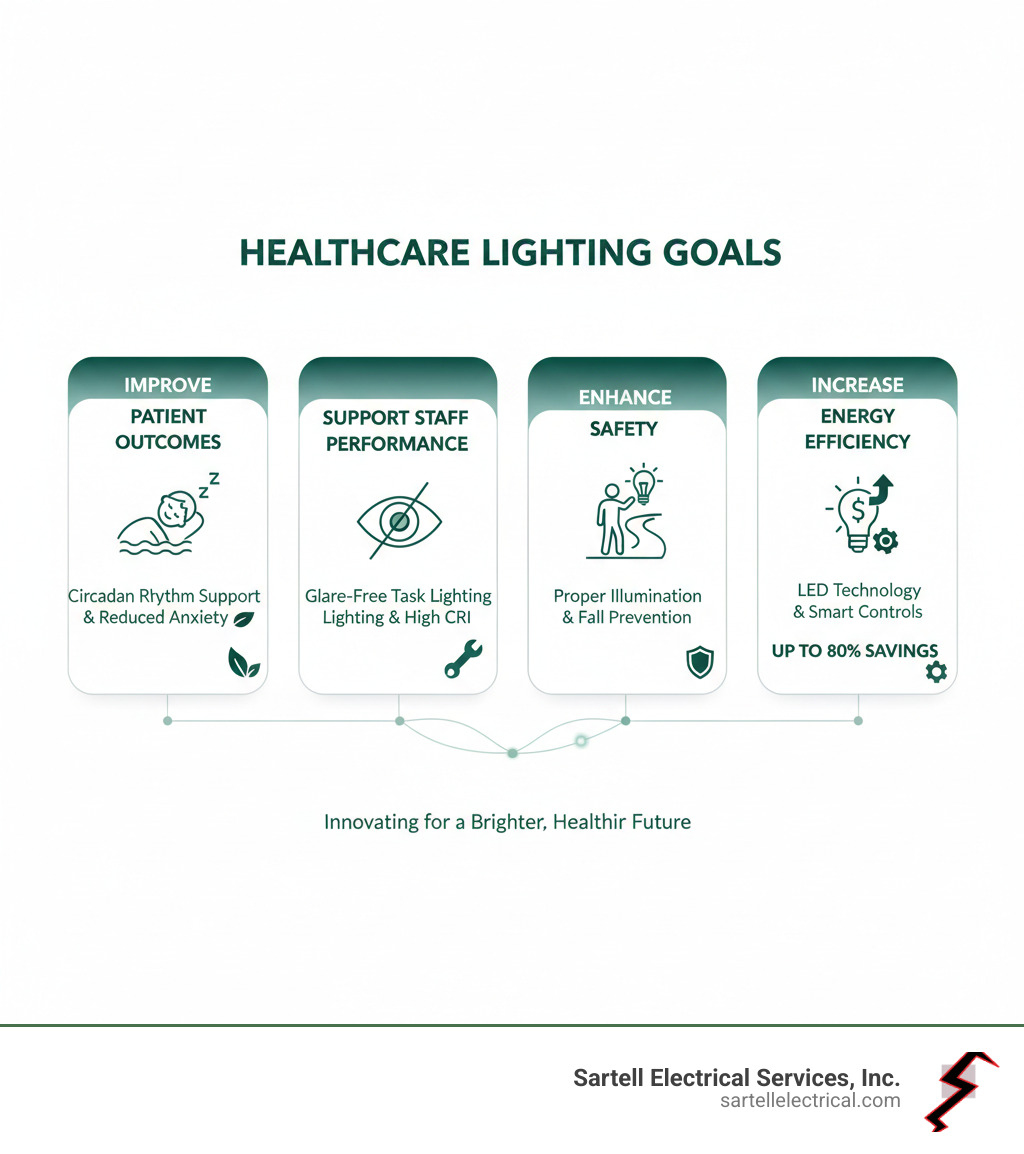
Healthcare lighting solutions encompass specialized illumination systems designed to improve patient outcomes, improve staff performance, maintain safety standards, and reduce operational costs in medical facilities. These systems include:
- Human-Centric Lighting (HCL) - Tunable white light that mimics natural daylight patterns to support circadian rhythms
- Task-Specific Illumination - High CRI, glare-free lighting for accurate diagnosis and procedures
- Smart Controls - IoT-enabled systems with occupancy sensors and daylight harvesting for energy savings up to 80%
- Infection Control Solutions - UV-C disinfection lighting and antimicrobial fixture finishes
- Area-Specific Designs - Custom solutions for operating rooms, patient rooms, corridors, and behavioral health spaces
The impact of proper lighting in healthcare extends far beyond simple visibility. Research shows that lighting consumes up to 21% of hospital energy, yet proper design can cut this by 50-80% while simultaneously improving patient recovery times and staff well-being. With 42% of physicians reporting burnout in recent surveys, the
right lighting environment has become a clinical necessity, not just an aesthetic choice.
Healthcare facilities face unique challenges: patients need restful environments that support healing, staff require bright, shadow-free workspaces for accurate diagnosis, and administrators must balance quality care with tight operational budgets. Traditional institutional lighting often fails on all three counts—harsh fluorescents disrupt sleep, create glare that leads to errors, and waste energy.
Modern
healthcare lighting solutions address these challenges through evidence-based design. Circadian lighting helps regulate patient sleep-wake cycles in windowless areas. Antimicrobial fixtures support infection prevention protocols. Smart systems provide real-time data on space utilization and energy use. Specialized fixtures for behavioral health units prioritize safety without sacrificing comfort.
I'm Ed Sartell, and since founding Sartell Electrical Services in 1985, I've overseen countless electrical installations in medical facilities across Massachusetts, where proper
healthcare lighting solutions are critical to both patient outcomes and operational efficiency. Whether it's a renovation or new construction, getting the lighting right from the start saves time, money, and potentially lives.
The Human-Centric Core: Lighting for Patients and Staff
Walk into most hospitals and you'll notice something immediately—the lighting. Sometimes it's harsh and clinical, other times it's surprisingly warm and welcoming. That difference isn't accidental. It reflects a fundamental understanding that lighting in healthcare isn't just about seeing clearly; it's about
feeling better and
performing better.
Think about it from a patient's perspective. You're already stressed, possibly in pain, and now you're trying to sleep under bright fluorescent lights that never change. Your body doesn't know if it's noon or midnight. Now imagine you're a nurse working a 12-hour shift under those same unforgiving lights—no wonder eye strain and fatigue set in.
That's exactly why modern
healthcare lighting solutions focus on the human element first. We're talking about lighting that supports your body's natural rhythms, reduces anxiety, and helps both patients and staff feel more comfortable. It's about creating environments where the light actually works
with people, not against them.
The best healthcare facilities understand this balance. They use lighting to create spaces that feel less like institutions and more like places of healing. Patients recover better when they're not fighting their environment. Staff perform better when they're not battling glare and fatigue. It's really that straightforward.
Enhancing Patient Well-being and Recovery
Here's something most people don't realize: your body runs on an internal clock that's incredibly sensitive to light. When you're in a hospital room with unchanging fluorescent lighting, that clock gets confused. Sleep becomes difficult. Mood suffers. Recovery slows down.
This is where
Human-Centric Lighting (HCL) makes a real difference. Sometimes called circadian lighting, HCL uses tunable white light technology to mimic what natural daylight does throughout the day. Morning light is cooler and brighter to help you wake up. Evening light becomes warmer and softer to prepare you for sleep. Your body recognizes these patterns instinctively.
The results speak for themselves. Patients sleeping better means faster healing. Better moods mean reduced anxiety and depression. Some advanced systems even offer red-amber illumination at night—dim enough to support restful sleep but bright enough for safe navigation to the bathroom. No more stumbling around in the dark or being jolted awake by harsh overhead lights.
We've learned that creating a welcoming, non-institutional atmosphere matters more than many people expected. Hospitality-inspired fixtures with soft ambient lighting help patients relax. When the space feels less clinical and more comfortable, anxiety drops noticeably.
Fall prevention is another critical consideration, especially for elderly patients or those recovering from surgery. Thoughtfully designed lighting in corridors provides clear wayfinding without glare or harsh shadows. The goal is lighting that guides without disturbing—keeping patients safe while supporting their natural sleep-wake cycles.
Of course, all of this requires reliable electrical infrastructure behind the scenes. For patients who depend on life-sustaining equipment, uninterrupted power isn't optional. You can find
more info about medically essential electric service to understand how critical systems stay operational.
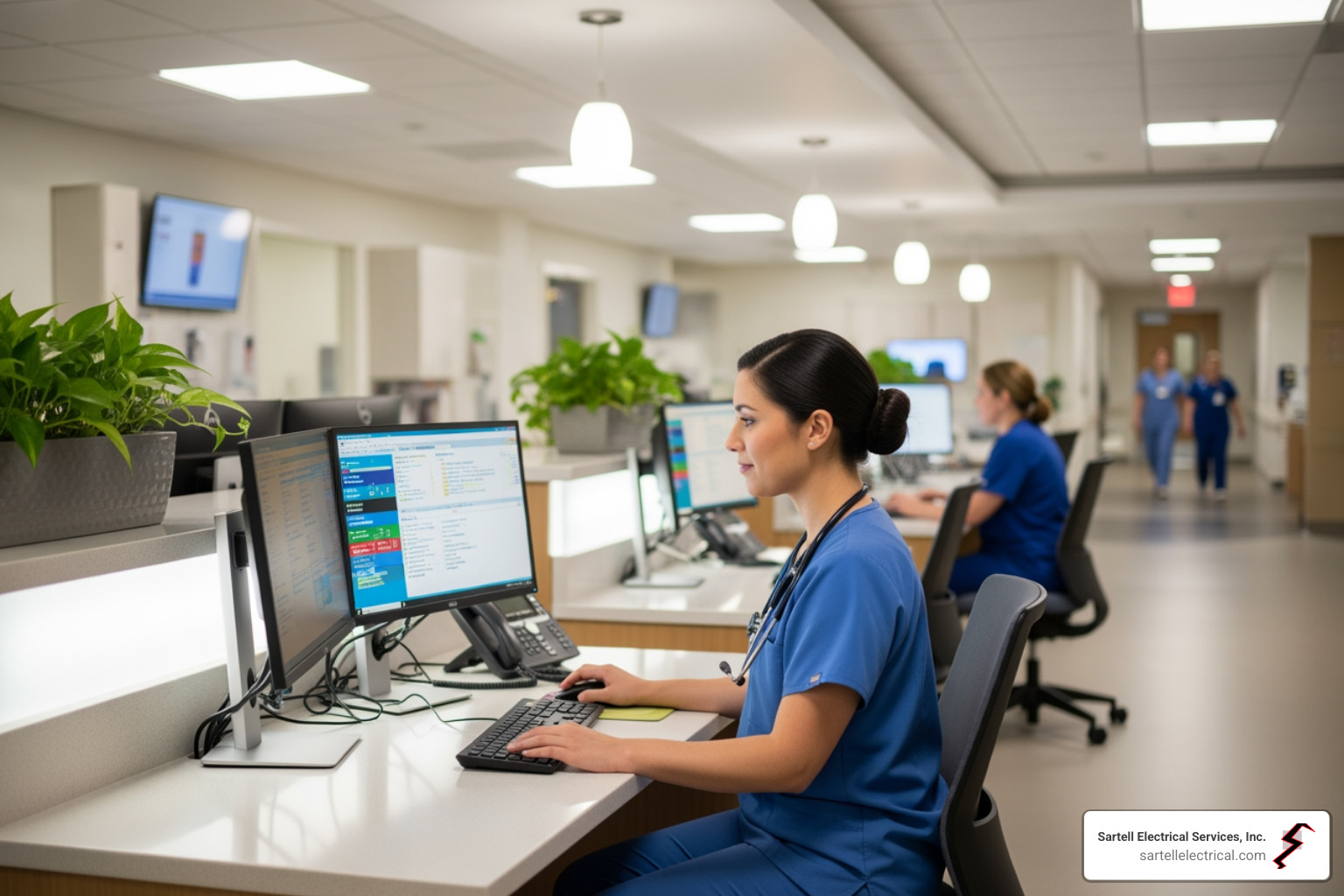
Let's talk about the people who keep healthcare facilities running. A 2021 survey found that 42% of physicians reported burnout. Forty-two percent. That's not just a statistic—that's a crisis affecting patient care quality and staff retention.
While lighting can't solve burnout alone, it plays a bigger role than most people realize. Poor lighting causes eye strain, headaches, and fatigue. It makes long shifts feel even longer. Conversely, well-designed
healthcare lighting solutions can energize staff and support their performance throughout demanding workdays.
Visual acuity is essential for clinicians. When a doctor is reading a chart, examining a patient, or reviewing lab results, they need to see colors and details accurately. That requires high
Color Rendering Index (CRI) lighting—meaning colors appear true to life, not washed out or distorted. This accuracy directly impacts diagnosis quality.
Task lighting takes this further by allowing staff to adjust both direction and intensity instantly. A nurse at a medication station needs different lighting than one documenting patient notes. Flexibility matters. When lighting adapts to the task, eye strain decreases and errors become less likely.
We've seen how lighting that mirrors natural daylight patterns can refocus and energize staff at critical moments. Better concentration at nurse stations means faster responses in emergencies and fewer medication errors. Creating pleasant working environments through thoughtful lighting also helps facilities attract and retain valuable staff—something every healthcare administrator worries about.
The bottom line? When staff feel better and see better, patients receive better care. It's a direct connection. If you want to explore how lighting fits into comprehensive facility design,
download the Healthcare Design Guide for detailed insights and best practices.
Custom Illumination: Lighting for Different Healthcare Zones
Walk through any hospital, and you'll quickly notice that not every space feels—or functions—the same. The bright, sterile precision of an operating room couldn't be more different from the soft, calming atmosphere of a patient recovery room. That's exactly how it should be. When it comes to
healthcare lighting solutions, one size definitely doesn't fit all.
Each zone within a healthcare facility has its own personality and purpose. Emergency rooms need instant visibility and flexibility. Waiting areas should ease anxiety and offer comfort. Behavioral health units require safety-first designs that don't sacrifice warmth. And throughout it all, maintenance teams need fixtures they can actually clean and service without heroic effort.
Our approach is straightforward: we listen to the people who use these spaces every day. Nurses tell us what works at their stations. Surgeons explain what they need in the OR. Facilities managers share their maintenance headaches. Then we design application-specific lighting that addresses these real-world needs while supporting the overall healing environment.
Over the years working with Massachusetts healthcare facilities, we've learned that the best lighting solutions balance functionality with humanity. Yes, the lights need to meet strict safety protocols and medical design standards. But they also need to make patients feel less anxious, help staff stay alert during long shifts, and contribute to spaces that feel less like institutions and more like places of genuine care.
Critical Care and Procedural Areas
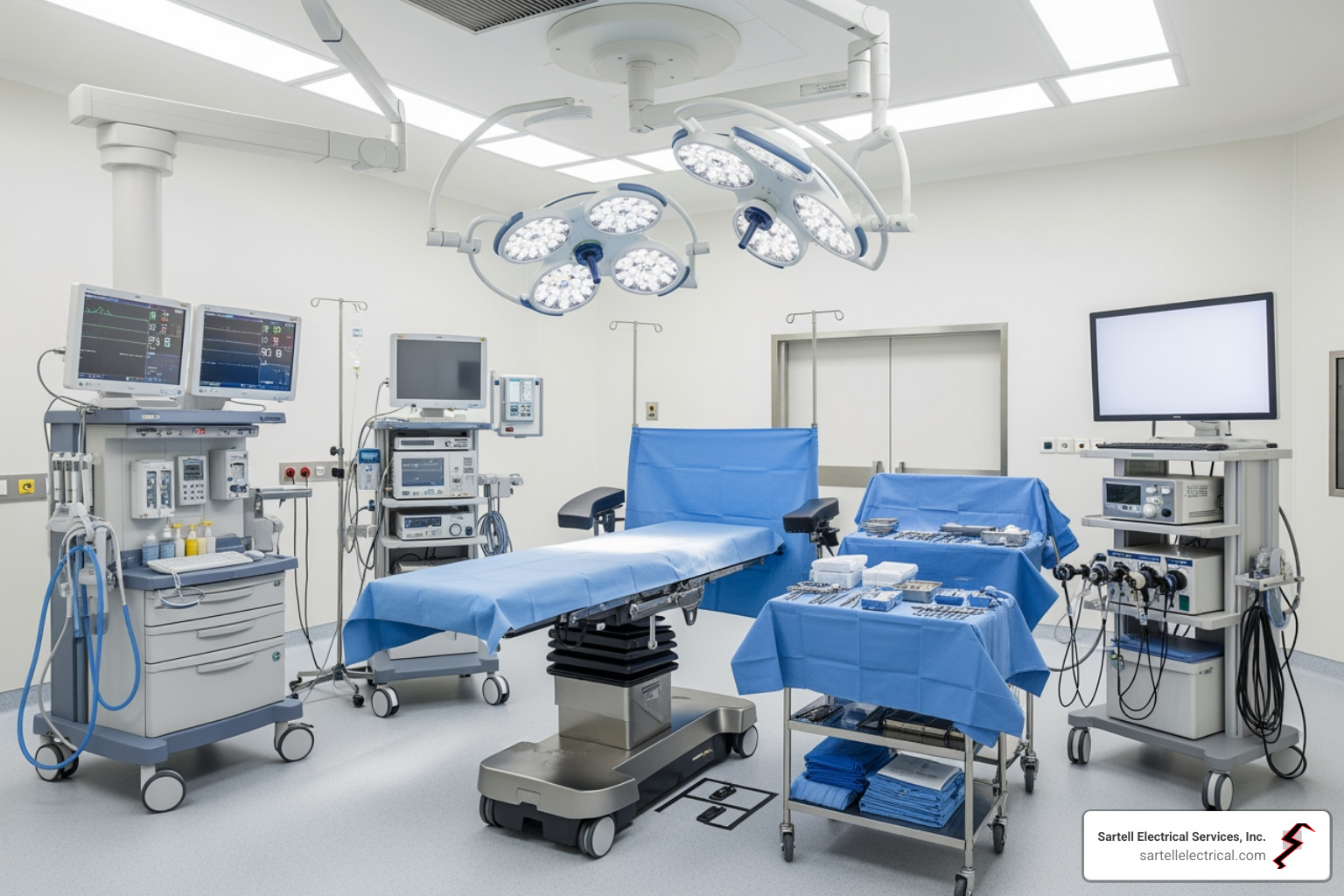
In operating rooms, laboratories, and emergency departments, lighting isn't just important—it's mission-critical. A surgeon needs to see every detail during a delicate procedure. Lab technicians must distinguish between subtle color variations in tissue samples. Emergency room staff require instant adjustability as situations change by the second.
That's why our
healthcare lighting solutions for these spaces focus on precision and reliability. Operating rooms need
shadowless illumination that surgeons can adjust instantly in both direction and intensity. No one wants to pause mid-procedure to fiddle with lighting controls. We also handle specialized requirements like
MRI-safe lighting, which uses non-ferrous components that won't interfere with sensitive imaging equipment. These details matter enormously when lives are on the line. For facilities looking to ensure their entire electrical infrastructure supports critical equipment, we offer comprehensive
medical equipment installation services.
But there's another challenge in these spaces that's equally important: infection control. Every surface, including light fixtures, can potentially harbor pathogens. That's why we specify fixtures with
antimicrobial finishes and IP66-rated seals that prevent bacteria and viruses from penetrating the housing. Fully recessed fixtures with smooth, seamless trims and lenses make cleaning and disinfection straightforward rather than a nightmare.
These aren't just theoretical concerns. We've installed lighting in cleanrooms and intensive care units where contamination could be catastrophic. The fixtures need to withstand aggressive cleaning protocols—think harsh chemicals and frequent scrubbing—without degrading. They need to be sealed tight, easy to wipe down, and designed so there are no crevices where pathogens can hide.
Patient Rooms, Common Areas, and Specialized Spaces
Once you step out of the high-intensity procedural areas, the lighting philosophy shifts. Patient rooms need versatility above all else. During morning rounds, doctors need bright, accurate light for examinations. During recovery, patients want soft ambient light that doesn't feel harsh. At night, someone might need just enough light to read without disturbing a roommate.
We often install
multi-function lighting systems in patient rooms—typically tandem over-bed luminaires that offer different scenes for different times of day. Bright daytime lighting supports medical staff. Softer evening tones help patients wind down. Gentle nighttime illumination allows safe movement without disrupting sleep-wake cycles. Some systems even include patient-controlled reading lights, giving people a sense of autonomy during a time when they often feel they have little control.
The goal is creating spaces that feel less institutional and more welcoming. Sometimes that means choosing hospitality-inspired fixtures that wouldn't look out of place in a nice hotel. Other times it's about the quality of light itself—warm tones, proper dimming, and thoughtful placement that creates comfort rather than clinical coldness.
Common areas like waiting rooms and lobbies deserve equal attention. Families waiting for news about loved ones are already stressed. Harsh fluorescent lighting only makes it worse. We design lighting scenes that reduce anxiety and create a sense of calm. It's a small thing that makes a meaningful difference during difficult moments.
Wayfinding lighting in corridors serves a practical purpose—helping people steer, especially those who might be disoriented or have mobility challenges. Good corridor lighting reduces falls and improves safety without being overly bright or institutional.
Behavioral health spaces present unique challenges. These areas require fixtures specifically designed and tested for high-abuse environments. Safety is non-negotiable—lights must be tamper-resistant and constructed to prevent self-harm. But they still need to provide appropriate, therapeutic illumination. Nobody heals well in harsh, prison-like lighting. We balance durability with dignity, creating spaces that are both secure and genuinely supportive.
Even building exteriors play a role in the healing environment. Dynamic
lighting for facades creates a symbol of care that transforms the building itself into a welcoming guide for the community. It's about more than aesthetics—it's about signaling that this is a place of hope and healing, from the moment someone sees it from the street.
Every corner of a healthcare facility, inside and out, shapes the experience of patients, visitors, and staff. Thoughtful lighting makes that experience better.
Advanced Healthcare Lighting Solutions and Technologies
The lighting industry has come a long way from the flickering fluorescents of decades past. Today's
healthcare lighting solutions represent a sophisticated blend of energy efficiency, infection control, smart technology, and environmental responsibility. When I started Sartell Electrical Services back in 1985, we never imagined lighting could do so much more than simply illuminate a room.
Here's something that might surprise you: lighting consumes up to 21% of a typical hospital's energy budget. That's a substantial chunk of operational costs that could otherwise support patient care. The good news? Modern LED technology can slash lighting-related energy consumption by around 60% right out of the gate. Add intelligent controls to the mix, and you're looking at savings of up to 80%. That's real money that healthcare administrators can redirect where it matters most.
But the benefits go far beyond the bottom line. Connected lighting solutions are now tackling some of healthcare's biggest operational challenges—from security and infection control to workflow optimization. These smart systems generate real-time data that helps facilities run more efficiently, creating what we like to call "healthier" buildings that support healthier outcomes. It's a win-win situation that proves cutting-edge technology and compassionate care can work hand in hand.
The Role of Smart Systems in Modern Healthcare Lighting Solutions
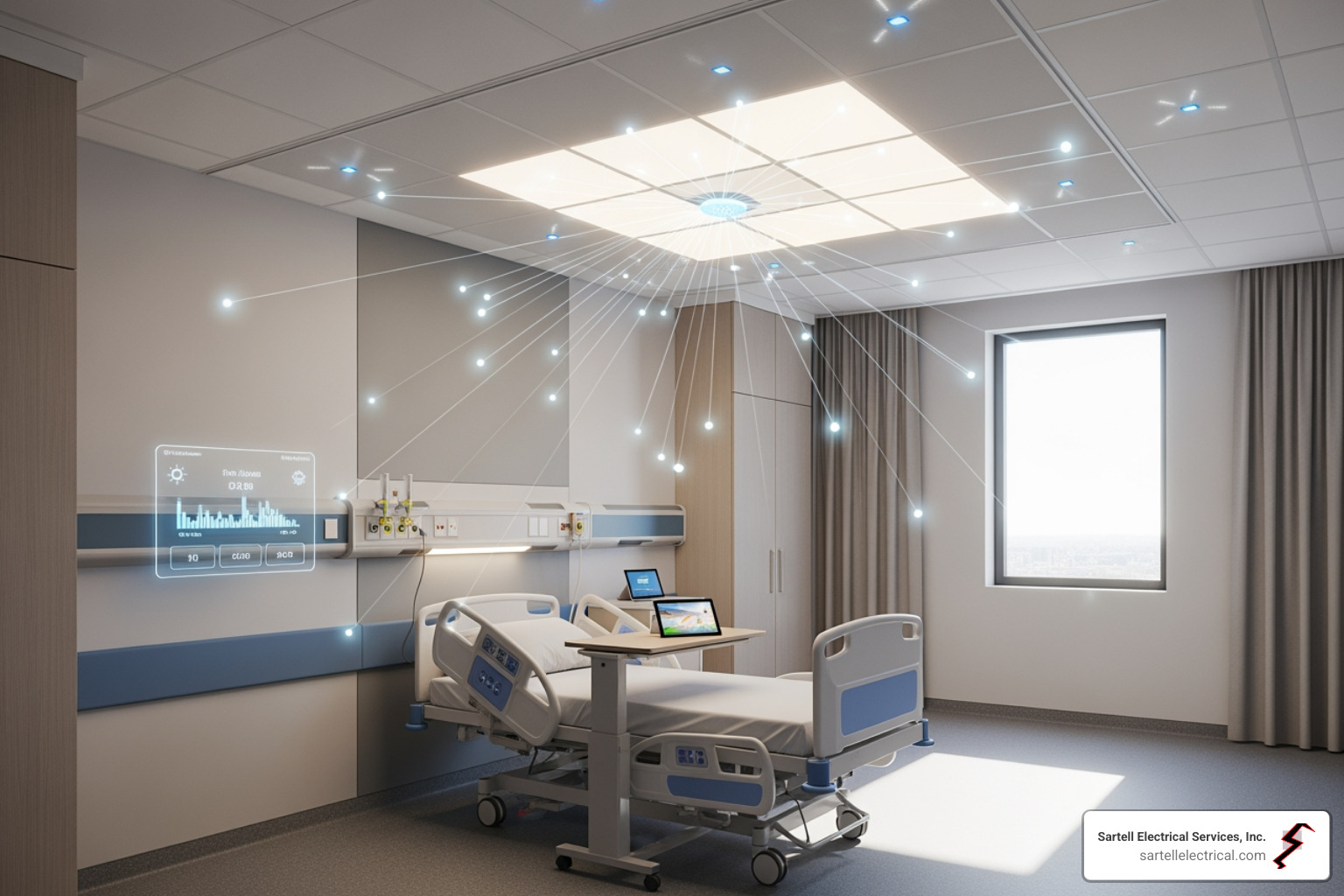
Think of smart lighting as the nervous system of a modern healthcare facility. Through IoT integration, individual light fixtures communicate with each other and with a central management system, creating an interconnected network that responds intelligently to changing conditions. It's pretty remarkable when you see it in action.
Occupancy sensors detect when rooms or corridors are empty and automatically dim or turn off lights. Daylight harvesting systems measure natural light coming through windows and adjust artificial lighting accordingly. These aren't just fancy features—they're powerful tools that can drive energy savings up to 80% when properly implemented. For our Massachusetts healthcare clients, this translates to lower utility bills month after month, year after year.
Power over Ethernet (PoE) technology has been a game-changer for installation and integration. Instead of running separate power and data lines, a single Ethernet cable handles both. This simplifies the installation process and allows seamless connection with building management systems. The result is a lighting network that can be monitored, adjusted, and optimized from a central dashboard.
The data these systems generate is incredibly valuable. Real-time location systems help staff quickly locate equipment and supplies. Occupancy monitoring optimizes space utilization and informs cleaning schedules. Some systems can even automatically adjust color temperature throughout the day to support circadian rhythms, helping patients sleep better at night and stay alert during the day.
We've learned that implementing these sophisticated systems requires careful planning and expertise. That's why following
More info about hospital electrical systems best practices is essential for ensuring these integrated solutions are installed safely and function reliably for years to come.
Innovative Healthcare Lighting Solutions for Hygiene and Safety
The pandemic changed how we think about infection control, and lighting technology has risen to meet this challenge in impressive ways. UV-C disinfection lighting represents one of the most powerful weapons in the fight against healthcare-associated infections. This specialized lighting can inactivate 99.99% of bacteria and viruses in just seconds—a level of pathogen reduction that would have seemed like science fiction not long ago.
UV-C systems come in various configurations. Some are installed as permanent overhead fixtures in unoccupied spaces, while others are mobile units that can be wheeled from room to room. We work with healthcare facilities on every aspect of UV-C implementation, from initial design and planning through installation, operation, and ongoing maintenance. It's specialized work that requires both technical expertise and a deep understanding of healthcare safety protocols.
The fixtures themselves have also evolved to support better hygiene. Modern luminaires often feature antimicrobial finishes that actively resist bacterial growth. Many are sealed to IP66 standards, meaning they're completely protected against dust and can withstand powerful water jets during cleaning. Fully recessed designs with smooth surfaces eliminate the nooks and crannies where pathogens might hide.
LED technology brings its own safety advantages beyond energy efficiency. LEDs are incredibly durable and long-lasting, which means fewer maintenance visits and more consistent illumination. In healthcare settings where reliable lighting can literally be a matter of life and death, this dependability is invaluable.
Of course, even the best lighting system needs reliable power to function. Critical healthcare facilities can't afford outages, which is why we also specialize in robust backup power infrastructure. You can find
More info about hospital UPS systems that keep essential
healthcare lighting solutions and disinfection systems running smoothly, even during power disruptions. Because when it comes to patient safety, there's simply no room for compromise.
Frequently Asked Questions about Healthcare Lighting
Over the years, we've had countless conversations with healthcare facility managers, administrators, and even medical staff about lighting. Some questions come up again and again, and they're always good ones. Here are the answers to what we hear most often about
healthcare lighting solutions:
What is Human-Centric Lighting (HCL) and why is it important in hospitals?
Think of HCL—also called circadian lighting—as lighting that works
with your body instead of against it. It uses tunable white light to mimic how natural daylight changes throughout the day, starting cooler and brighter in the morning and shifting warmer and dimmer as evening approaches.
This matters enormously in hospitals. For patients, especially those in windowless rooms or long-term care, HCL helps regulate their sleep-wake cycles. Better sleep means improved mood, reduced depression, and faster recovery times. We've seen studies showing that when patients sleep better, they heal better—it's that simple.
Staff benefit too. Nurses working night shifts or doctors in windowless procedure rooms can stay more alert and focused when the lighting supports their circadian rhythm rather than fighting it. In areas with limited or no natural light, HCL becomes even more critical, helping everyone maintain their biological balance despite being indoors for extended periods.
How does modern lighting help with infection control?
This is a question we've heard
a lot more since 2020, and for good reason. Modern
healthcare lighting solutions tackle infection control from two angles, and both are impressive.
First, there's UV-C disinfection lighting. This isn't your everyday lighting—it's a specialized technology that actively kills pathogens. UV-C light can inactivate
99.99% of bacteria and viruses in seconds by disrupting their DNA. We can install these systems as overhead fixtures in patient rooms, mobile units for quick disinfection between patients, or in HVAC systems to continuously clean the air. It's like having an invisible cleaning crew working around the clock.
Second, the fixtures themselves are now designed with hygiene in mind. Modern luminaires come with antimicrobial finishes that resist bacterial growth. Many are also sealed with
IP66 ratings, meaning they're completely protected against dust and water jets—no cracks or crevices where pathogens can hide. These smooth, seamless surfaces make cleaning and disinfecting much more effective, which is crucial for preventing hospital-acquired infections.
Can upgrading to LED lighting really save a hospital money?
Yes—and we're not talking about pocket change. The numbers are genuinely impressive.
Lighting typically accounts for
up to 21% of a hospital's total energy use. That's a significant slice of the operating budget. When you switch to energy-efficient LED lighting, you can immediately reduce lighting-related energy consumption by
50-60%. That alone makes a meaningful difference in monthly utility bills.
But here's where it gets even better: when you combine LEDs with smart controls—things like occupancy sensors that turn lights off in empty rooms or daylight harvesting that dims lights near windows—your savings can reach
up to 80%. We've worked with facilities where these upgrades freed up tens of thousands of dollars annually.
That money doesn't just vanish into the budget—it gets reinvested where it matters most: patient care, facility improvements, new medical equipment, or staff development. Plus, LEDs last significantly longer than traditional bulbs, so you're also saving on maintenance costs and the hassle of constant replacements. It's one of those rare situations where doing the right thing for the environment also makes excellent financial sense.
Conclusion: Partnering for a Brighter, Healthier Future
Throughout this guide, we've seen how
healthcare lighting solutions have evolved into something far more significant than simple illumination. They're now a fundamental part of holistic design that touches every aspect of healthcare delivery—from helping patients sleep better and recover faster to keeping staff alert and reducing burnout. When you get the lighting right, you're not just brightening rooms; you're actively supporting patient-centric care, staff satisfaction, and operational excellence.
The right lighting truly is a critical healthcare asset. It influences recovery times, reduces fall risks, helps control infections, and can even impact staff retention. A well-designed lighting system can cut energy costs by up to 80%, freeing up substantial operational funds that can be redirected toward patient care and facility improvements. But here's the thing: achieving these benefits isn't as simple as swapping out a few bulbs. It requires professional design and installation to ensure safety, compliance with healthcare codes, and optimal performance across all the different zones in your facility.
That's where experience matters. For over 30 years, Sartell Electrical Services has been delivering expert electrical solutions for complex environments throughout Massachusetts, including numerous healthcare facilities where precision and reliability aren't just nice-to-have—they're essential. We understand the unique challenges of hospital electrical systems, from maintaining power to life-sustaining equipment to integrating smart lighting controls that can adapt throughout the day. Our commitment to excellence, leadership, and customer service means we handle projects of all sizes with the same meticulous attention to detail, whether it's a small clinic renovation or a major hospital expansion.
We've seen how the right lighting transforms healthcare spaces. It's incredibly rewarding to know that the work we do contributes not just to a building's functionality, but to real human outcomes—patients who rest better, staff who work more safely, and facilities that operate more efficiently.
If you're considering upgrading your facility's lighting or planning a new project, we'd love to help you create brighter, healthier, and more efficient healthcare environments. To learn more about our comprehensive
health care electrical services, contact us today. Let's work together to build a future where every light serves a purpose in healing and care.