Why 18 AWG Direct Burial Wire Is the Smart Choice for Outdoor Low-Voltage Projects
18 AWG direct burial wire is a specialized low-voltage cable built to be installed underground without conduit, used in applications like irrigation control, landscape lighting, outdoor security systems, and audio runs.
Quick answer — what you need to know:
| Feature | Detail |
|---|---|
| Wire gauge | 18 AWG (American Wire Gauge) |
| Common conductor counts | 2, 4, 6 conductors |
| Typical voltage ratings | 30V to 600V depending on type |
| Temperature range | As low as -39°C, as high as 90°C |
| Best uses | Irrigation, landscape lighting, security, access control |
| Jacket materials | PVC, Polyethylene (PE), or LLDPE |
| Shielding options | Unshielded or aluminum foil with drain wire |
| Key certifications | UL Listed, CL3/FPL, UL Type VNTC |
Running wire underground is one of those jobs where the wrong product can fail silently — corroding, swelling with moisture, or degrading from soil chemicals — long before you ever notice a problem above ground. That's what makes choosing the right direct burial wire so important from the start.
I'm Ed Sartell, President of Sartell Electrical Services, and over nearly four decades of electrical work across Massachusetts, I've specified and installed 18 AWG direct burial wire on countless outdoor low-voltage projects — from commercial irrigation systems to institutional security infrastructure. Choosing the right cable construction upfront is one of the single biggest factors in whether an underground installation lasts 5 years or 25.
Understanding 18 AWG Direct Burial Wire Specifications
When we talk about 18 AWG direct burial wire, we are looking at a very specific "sweet spot" in the electrical world. The "18 AWG" refers to the American Wire Gauge system, where a smaller number indicates a thicker wire. For low-voltage outdoor work in May 2026, 18-gauge is the industry standard because it’s beefy enough to handle decent distances without massive voltage drop, yet flexible enough to work with easily.
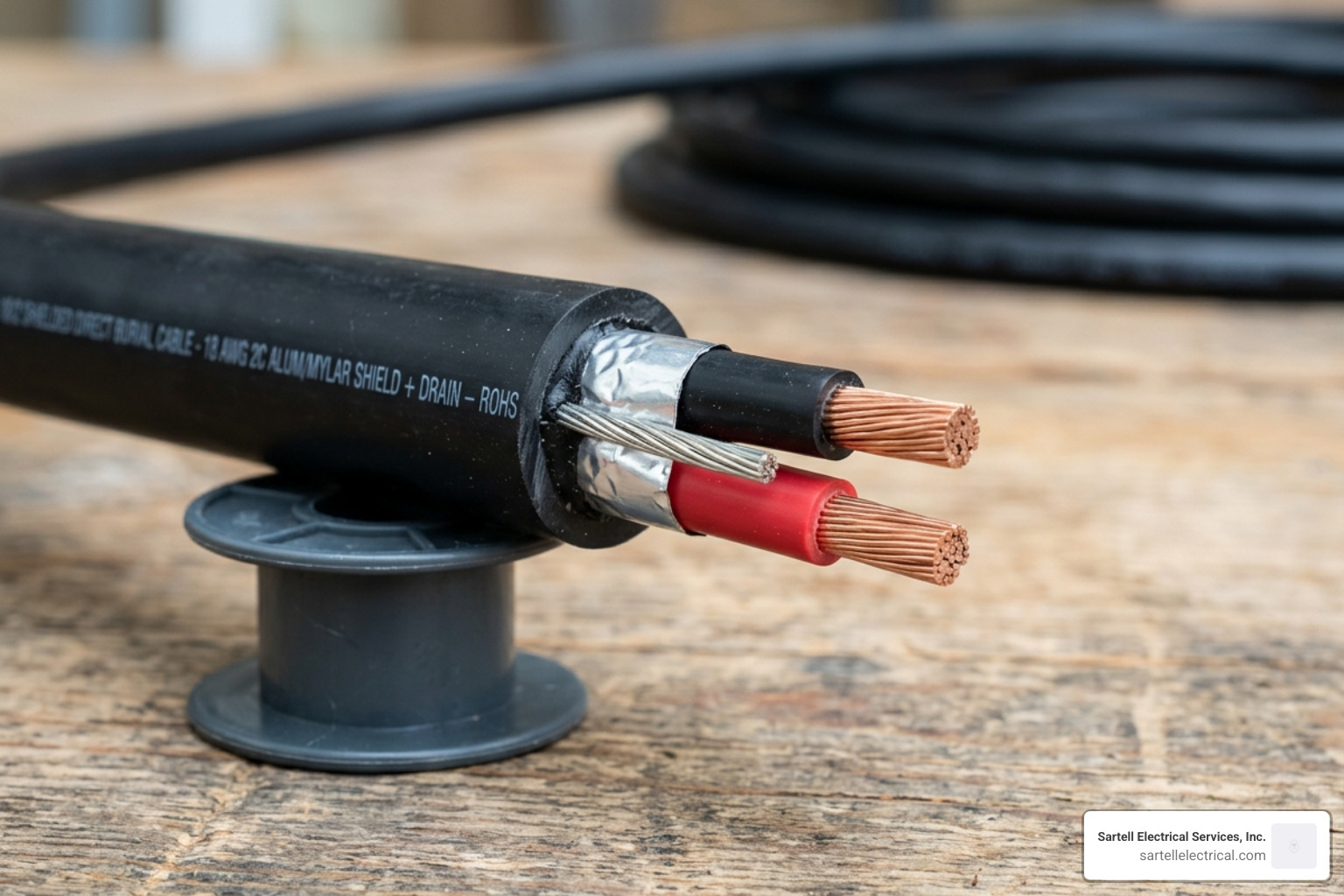
The specifications for these cables vary based on their intended environment. For instance, an 18 AWG Solid AWU Direct Burial Low Energy Underground Circuit Cable is often used for irrigation because it is optimized for low-energy circuits. When planning your project, you should also consider how this fits into your Standard Residential Electrical Wiring plan to ensure all systems are compatible.
One of the most important specs to check is the jacket material. While PVC is common, many high-end direct burial wires use LLDPE (Linear Low-Density Polyethylene).
Jacket Material Comparison
| Feature | PVC (Polyvinyl Chloride) | LLDPE (Linear Low-Density Polyethylene) |
|---|---|---|
| UV Resistance | Moderate | Superior |
| Chemical Resistance | Good | Excellent (includes methane/soil acids) |
| Moisture Permeability | Higher | Very Low |
| Durability | Standard | High resistance to burrowing animals |
A typical 1000ft spool of 18/2 stranded direct burial wire weighs about 26.5 lbs, while a 4-conductor version can weigh significantly more. The nominal outer diameter for a standard 18/2 sprinkler wire is approximately 0.190 to 0.195 inches, making it slim enough for narrow trenches.
Shielding Benefits in 18 AWG Direct Burial Wire
In our experience at Sartell Electrical Services, we often recommend shielded wire for specific "noisy" environments. If you are running security lines near power cables, electromagnetic interference (EMI) can play havoc with your signals.
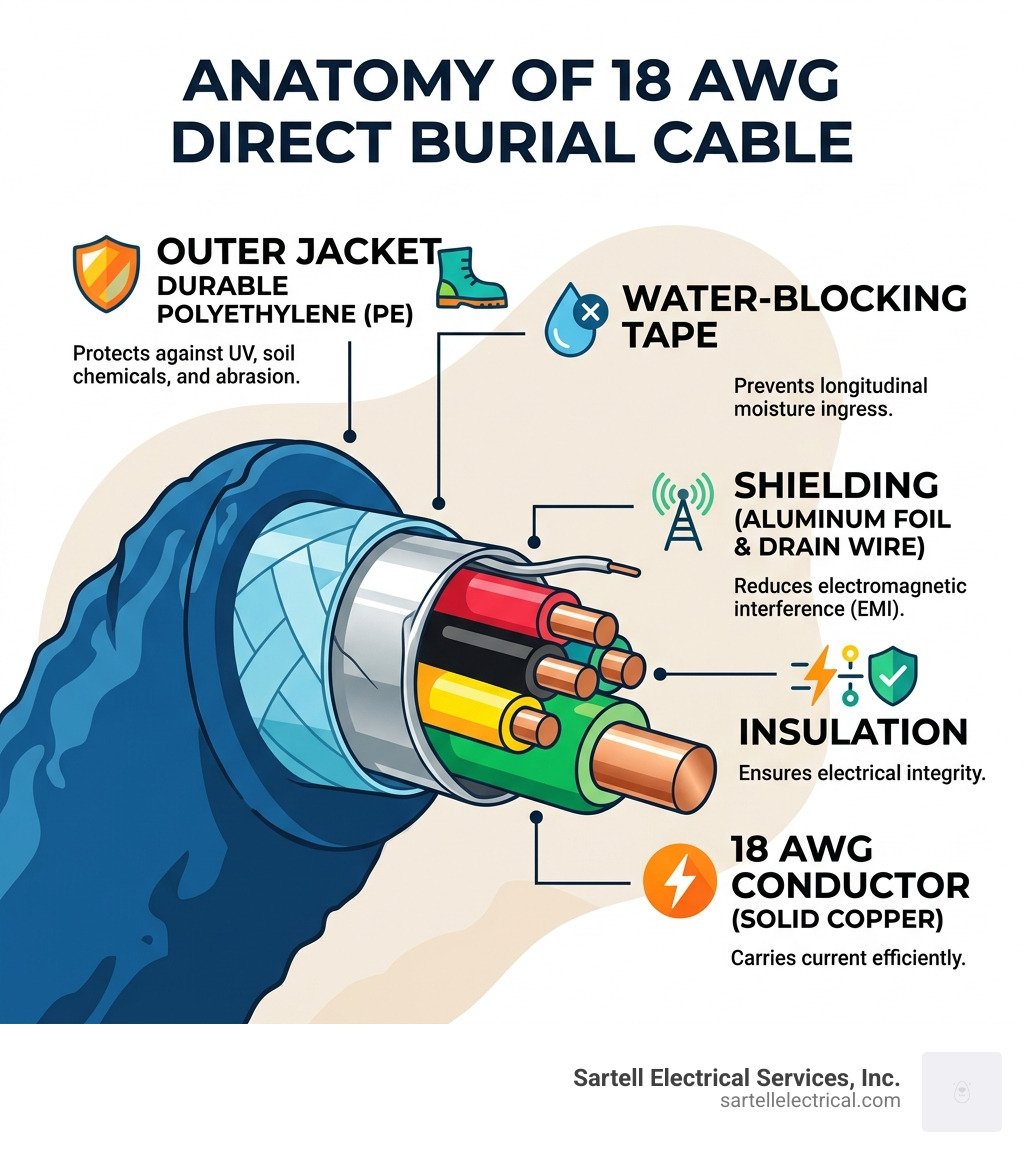
Cables like the 18-6 Stranded Shielded Direct Burial Rated Cable feature an aluminum foil shield and a dedicated drain wire. This construction provides 100% coverage, ensuring that your security cameras, motion sensors, or intercom systems don't suffer from "ghosting" or false alarms. The shielding acts as a barrier, keeping the signal "clean" as it travels through the Massachusetts soil.
Stranded vs. Solid 18 AWG Direct Burial Wire
Choosing between stranded and solid conductors depends entirely on your installation method.
- Stranded Conductors: These are made of many tiny strands (often a 7x26 configuration). They are much more flexible, making them the top choice for pulls through tight bends or for applications where the wire might experience vibration. This is often the preferred Wire For House Wiring when flexibility is a priority.
- Solid Conductors: These consist of a single, solid piece of copper. They are generally preferred for irrigation systems because they are easier to "poke" into terminal blocks and offer excellent conductivity over long runs. Most solid copper direct burial wires are manufactured to ASTM B3 standards for purity and performance.
Key Applications for Outdoor Low-Voltage Projects
The versatility of 18 AWG direct burial wire makes it a staple in our trucks. Whether we are working in Reading, Andover, or down in Quincy, we see this wire used across several key sectors.
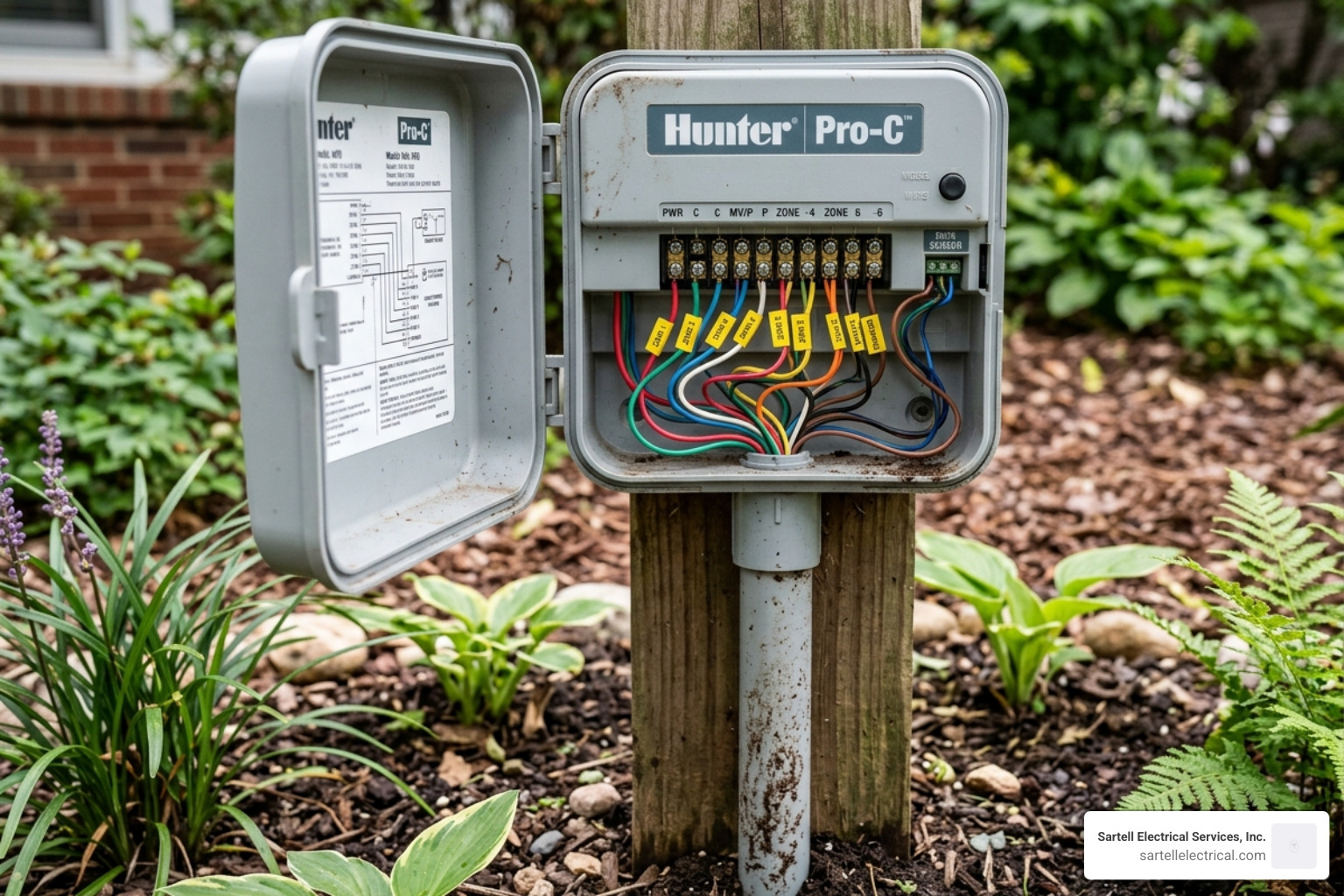
One primary use is for 18/2 Sprinkler Wire. Irrigation systems rely on these wires to connect the main controller to individual solenoids at the valves. Because these systems are constantly exposed to moisture, having a dedicated Underground Electrical Wiring Residential rating is non-negotiable.
Other common applications include:
- HVAC Systems: Connecting outdoor condenser units to indoor thermostats.
- Access Control: Wiring for gate openers, keypads, and magnetic locks.
- Audio Systems: Running outdoor speakers for a backyard sound system.
- Security: Connecting glass break sensors and smoke detectors in outbuildings.
18 AWG Direct Burial Wire for Landscape Lighting
Landscape lighting is where 18-gauge wire really shines. While it’s important to refer to a Building Electrical Wiring Complete Guide to calculate voltage drop, 18 AWG is perfect for LED garden lights which have very low power draws.
Modern outdoor lighting often uses RGB (color-changing) technology. For these setups, we use 4 Conductor RGB Direct Burial Wire. This allows for parallel connections of single-color LEDs or the complex signaling required for color-changing displays. Most of these wires carry a 30V rating, which is the standard safety threshold for "low voltage" landscape lighting.
Advanced Construction: LLDPE Jackets and Water Blocking
The real "secret sauce" of high-quality 18 AWG direct burial wire is how it handles the elements. Traditional underground cables often used messy gels to block water. Today, we prefer modern "dry" water-blocking technologies.
Many premium cables, such as the Direct Burial Shielded 18 AWG 2 Conductor, use water-swellable tape (often called REPEL technology). If the outer jacket is ever nicked by a shovel, this tape reacts with the moisture, swelling up to create a physical plug that stops water from migrating down the length of the cable.
Furthermore, LLDPE jackets provide:
- Methane Impermeability: Essential if you are burying wire near septic systems or in areas with high organic decomposition.
- Biological Immunity: Resistance to fungi and microorganisms that live in wet soil.
- Animal Resistance: A tougher exterior that is less "tasty" or easy to chew through for local Massachusetts rodents.
Installation Best Practices and Safety Standards
At Sartell Electrical Services, we always emphasize that "direct burial" doesn't mean "toss it in a shallow hole and hope for the best." Following the National Electrical Code (NEC) is vital for safety and insurance compliance.
When installing 18 AWG direct burial wire, keep these standards in mind:
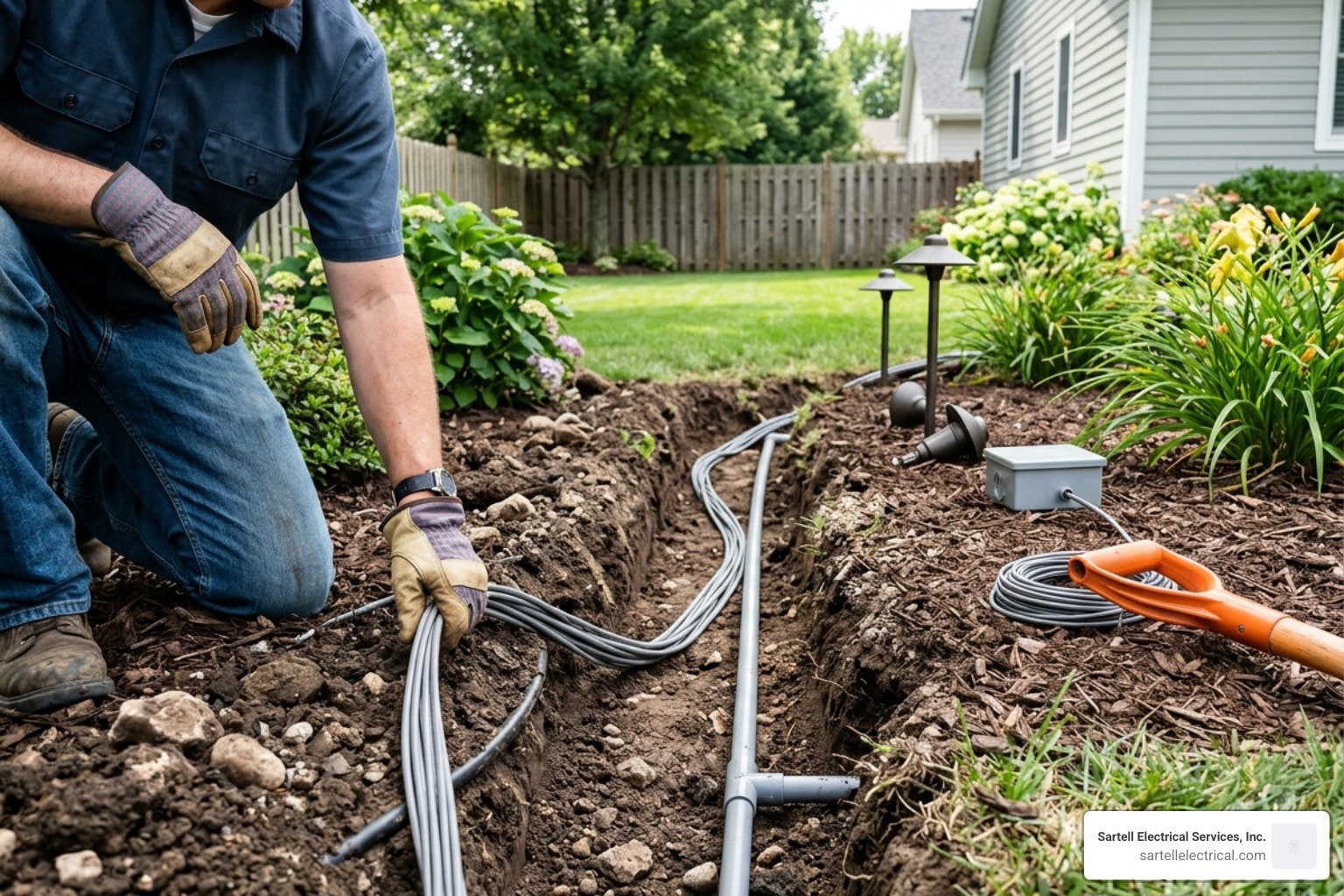
- Depth: While low-voltage (under 30V) lines can often be buried at 6 inches, we recommend going deeper (12-18 inches) in high-traffic areas to avoid "death by lawnmower" or aerators.
- Ratings: Look for UL 1493 listings or CL3/FPL ratings. CL3 indicates the cable is safe for in-wall use as well, which is helpful when transitioning from the yard into the home.
- Main Panel Safety: Even low-voltage systems should be properly integrated. Consult our guide on Residential Main Panel Wiring to understand how to safely power your outdoor transformers.
- Tension and Bending: Most 18/4 cables have a max pull tension of about 84 lbs and a minimum bend radius of 2.7 inches. Exceeding these can stretch the copper and cause premature failure.
Frequently Asked Questions about Direct Burial Wire
Is 18 AWG wire suitable for direct burial?
Yes, provided it is specifically rated for "Direct Burial." Standard 18 AWG wire used inside walls will rot quickly if placed in soil. Direct burial versions feature specialized jackets (PE or LLDPE) and moisture-blocking components to survive underground.
What is the difference between gel-filled and water-blocking tape?
Gel-filled cables use an icky, petroleum-based gel to keep water out. It works, but it's a nightmare to clean off during termination. Water-blocking tape is a "dry" solution that only activates if water enters the cable, making it much cleaner and faster for our electricians to install.
Do I need conduit for direct burial rated wire?
Technically, no — that’s the benefit of the "direct burial" rating. However, we often suggest using conduit in areas where you might be doing future digging (like flower beds) or where the wire passes under a driveway. It provides mechanical protection that even the best LLDPE jacket can't match.
Conclusion
Choosing 18 AWG direct burial wire is an investment in the longevity of your outdoor projects. Whether you're lighting up a walkway in Reading or setting up a security perimeter in Boston, the right wire makes all the difference.
At Sartell Electrical Services, Inc., we’ve spent over 30 years helping Massachusetts property owners navigate the complexities of electrical code and outdoor wiring. If you are planning a project and want to ensure it's done right the first time, we are here to help. From Underground Electrical Wiring Residential to complex industrial telecom installs, our commitment to excellence remains our top priority.
Ready to start your outdoor project? Learn more about underground electrical wiring residential or contact us today for expert guidance tailored to the Greater Boston area.