Standard residential electrical wiring: Crucial 2025 Guide
Why Standard Residential Electrical Wiring Matters for Your Home
Standard residential electrical wiring forms the backbone of every modern home, safely delivering power to lights, outlets, and appliances throughout your property. Understanding these systems helps you make informed decisions about electrical projects, whether you're planning a renovation or simply want to know how your home works.
Key Components of Standard Residential Electrical Wiring:
- Service Panel - The main distribution point that houses circuit breakers and controls power flow
- Circuit Breakers - Safety devices that protect circuits from overloads and short circuits
- Branch Circuits - Individual pathways that carry electricity to specific areas or appliances
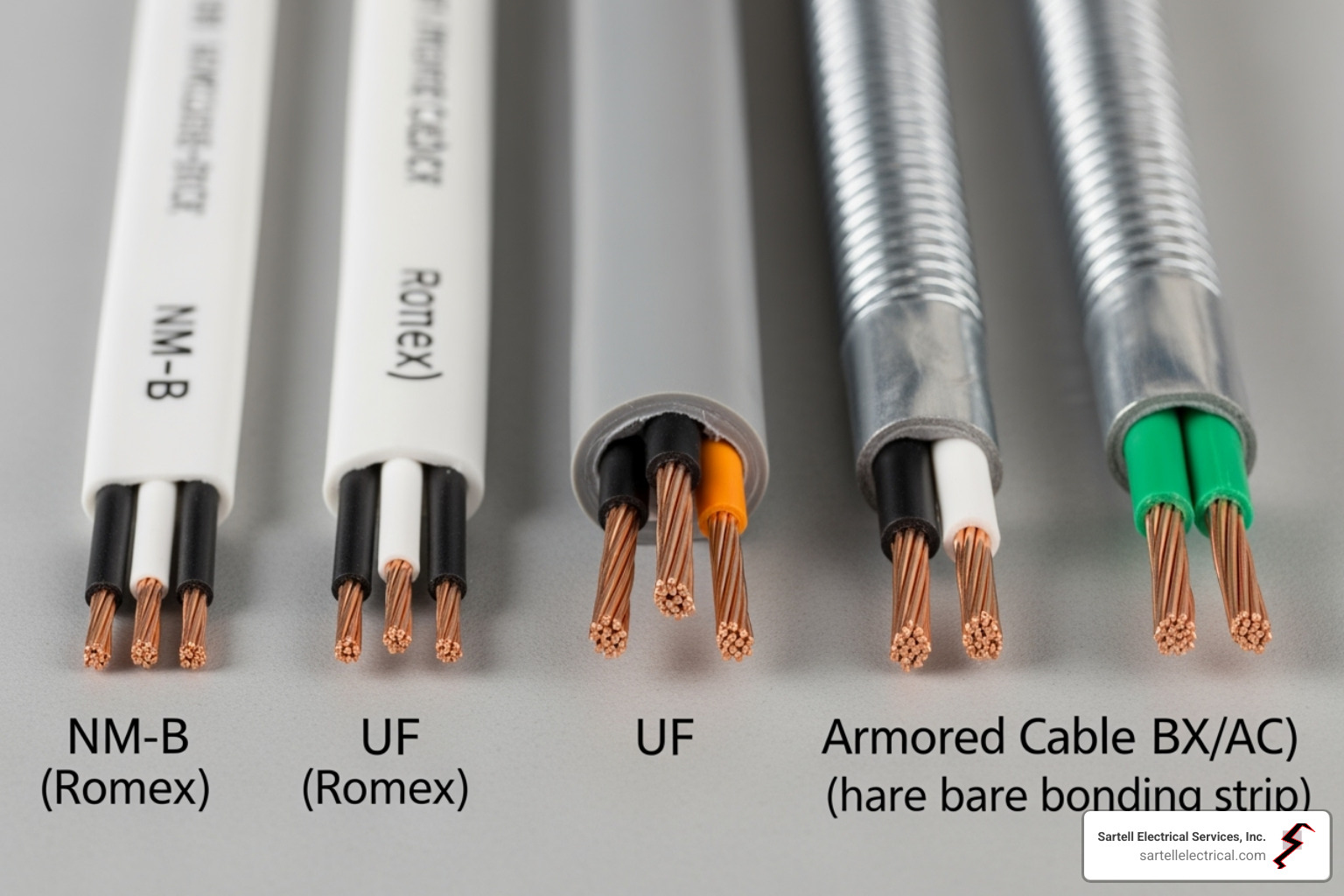
- Wiring Types - NM-B cable for interior use, UF cable for outdoor applications, and specialized wiring for different needs
- Wire Gauges - 14-gauge for 15-amp circuits, 12-gauge for 20-amp circuits, 10-gauge for 30-amp appliances
- Color Coding - Black/red for hot wires, white for neutral, green/bare copper for ground
- Safety Features - GFCI protection in wet areas, AFCI protection to prevent fires
The National Electrical Code (NEC) sets the standards for safe electrical installation across the United States. These codes are updated every three years to incorporate new safety measures and technologies. Most wires in modern homes are 12 or 14 gauge, while larger appliances like electric stoves and dryers require 10, 8, or 6-gauge wire to handle higher amperage safely.
I'm Ed Sartell, and I've been working with standard residential electrical wiring systems throughout Massachusetts since 1985 as President of Sartell Electrical Services. Over nearly four decades, I've seen how proper wiring installation and code compliance protect families while ensuring reliable power delivery to every corner of the home.
The Building Blocks of Your Home's Electrical System
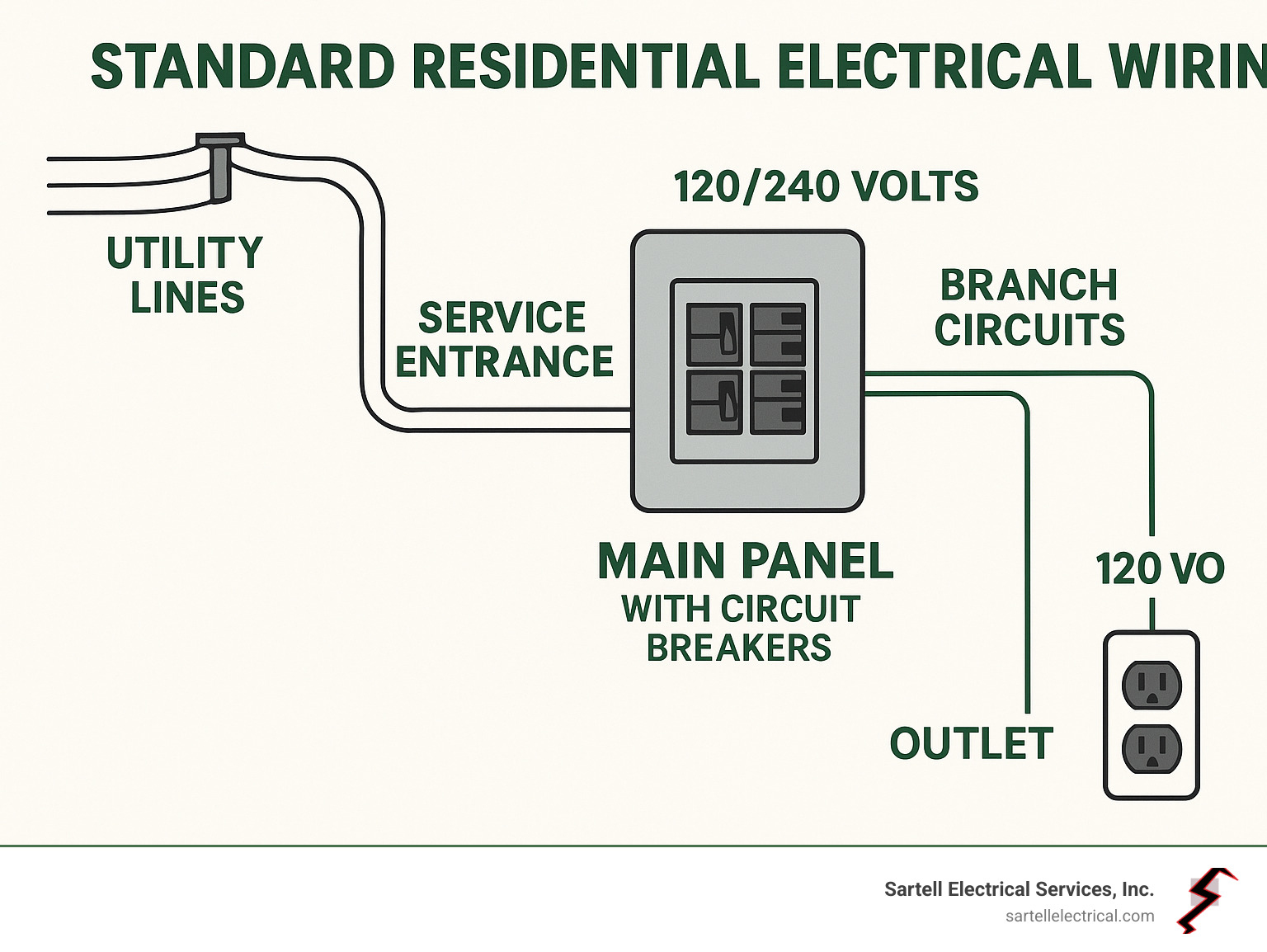
Think of your home's electrical system like a tree – electricity flows from the main trunk (your service panel) through branches (circuits) to reach every leaf (outlet and fixture). Understanding how standard residential electrical wiring works starts with knowing these essential building blocks that work together to keep your lights on and appliances running.
Understanding Standard Residential Electrical Wiring Components
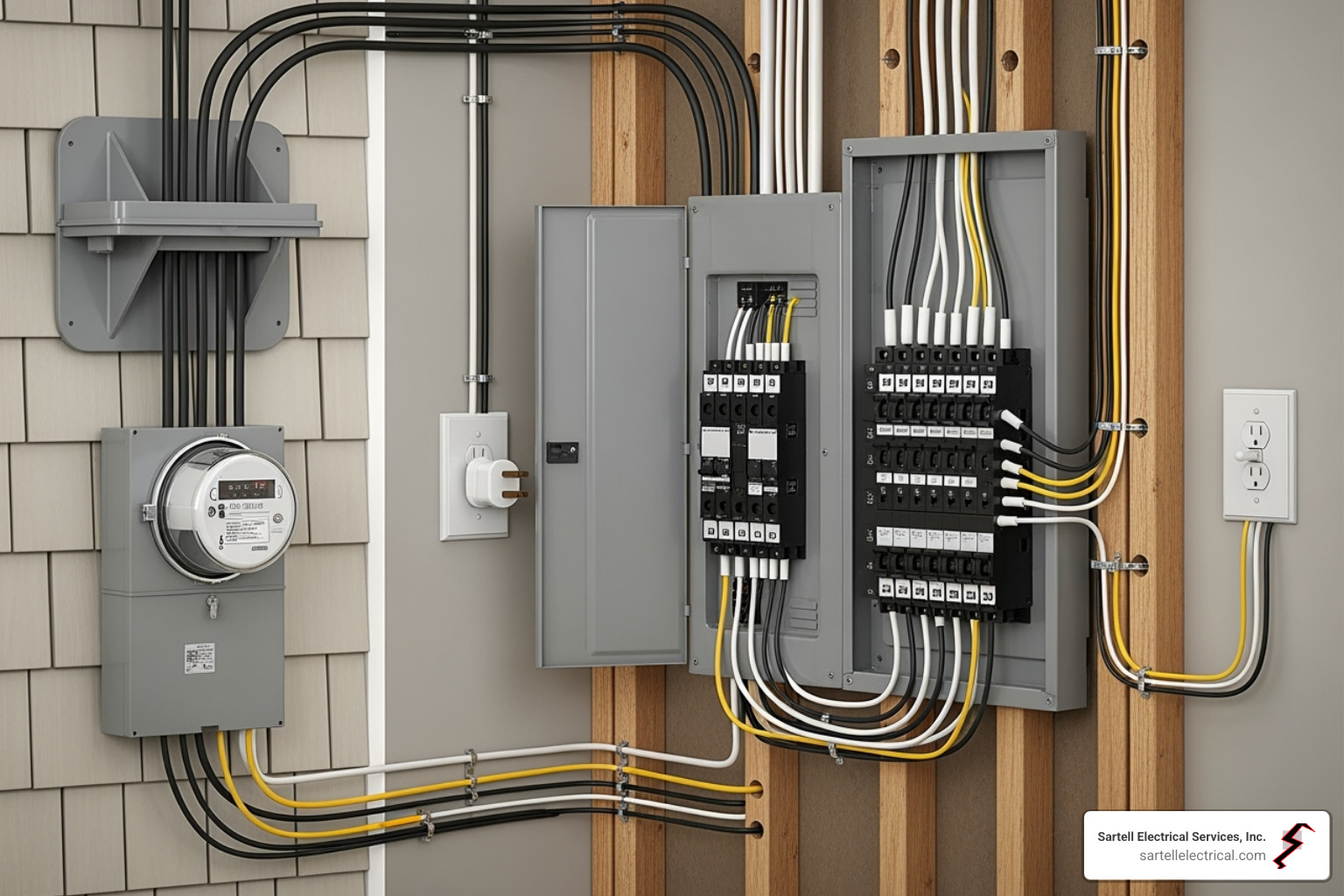
Your electrical journey begins outside your home with the service head – that's where electricity first enters from either overhead power lines or underground connections. From there, power flows to your electrical meter, which keeps track of exactly how much electricity your family uses each month (and what shows up on your electric bill).
The real heart of your electrical system is the main service panel, often called the breaker box. This metal cabinet is where electricity gets divided up and sent to different areas of your home. It's like a traffic control center, making sure power goes where it's needed safely.
Inside that panel, you'll find either circuit breakers or fuses – the guardians of your electrical system. Modern homes use circuit breakers, which are basically smart switches that automatically flip off when they detect trouble like an overload or short circuit. If you live in an older home, you might still have fuses that blow when there's a problem and need to be replaced. Both do the same job: they prevent dangerous situations by cutting power before wires can overheat.
Branch circuits are like highways carrying electricity from your main panel to specific destinations. Each circuit has its own breaker and serves particular areas or appliances. Your kitchen outlets might be on one circuit, while your living room lights are on another.
The outlets (technically called receptacles) are where the magic happens – they're your connection points for plugging in everything from phone chargers to vacuum cleaners. Switches give you control over lights and some outlets without having to unplug anything. And those junction boxes you might see? They're safety containers that house wire connections, keeping sparks contained and connections secure.
Here's something that confuses many homeowners: wires versus cables. A wire is a single copper or aluminum strand that carries electricity. Cables bundle multiple wires together in a protective jacket. Each wire has its own insulation, and the whole cable gets another layer of protection. It's like having individual straws bundled together in a larger tube.
When we talk about conductors, we mean the actual metal part that electricity flows through – usually copper because it's excellent at carrying current. The insulation is the plastic coating that keeps electricity where it belongs and keeps you safe from getting shocked.
More info about our Electrical Services
How Power is Distributed: Circuits Explained
Understanding how electricity moves through your home comes down to three key measurements. Voltage is like water pressure – it's the force pushing electricity through your wires. Amperage measures how much electricity is flowing, like the volume of water through a pipe. Wattage tells you how much power an appliance actually uses, and you can calculate it by multiplying volts times amps.
Most homes use parallel circuits for standard residential electrical wiring, which is great news for you. In a parallel setup, each outlet or fixture gets its own direct connection to the circuit. If one device stops working, everything else keeps running normally. This is different from series circuits, where devices are connected like links in a chain – if one fails, everything stops working. You might remember this from old Christmas lights where one burned-out bulb killed the whole string.
Your home actually uses two different voltage levels. 120-volt circuits power most of your everyday needs – outlets, lights, and smaller appliances. These circuits use one hot wire carrying 120 volts and one neutral wire for the return path.
240-volt circuits are the heavy lifters, powering big appliances like electric stoves, dryers, and central air conditioning. These circuits use two 120-volt hot wires that are out of phase with each other, creating 240 volts of power. Think of it like having two people pushing a heavy box – together they can move much more than either could alone.
Some appliances are power-hungry enough to need dedicated appliance circuits – their own private electrical highway. Your microwave might pull 12-15 amps all by itself, so it often gets its own circuit. Even gas water heaters with power vents need dedicated circuits because they can't afford to lose power when other appliances kick on. Any 240-volt appliance automatically gets its own dedicated double-pole breaker – there's simply no safe way to share that much power.
This system ensures every device in your home gets clean, reliable power while keeping your family safe from electrical hazards.
Decoding Electrical Wires: Gauges, Colors, and Types
Navigating electrical wires can seem daunting, but once you understand the logic behind wire gauge, color coding, and cable types, it becomes much clearer. These elements are crucial for safe and compliant standard residential electrical wiring.
The American Wire Gauge (AWG) System
The American Wire Gauge (AWG) system measures the diameter of conductors. Counterintuitively, a higher gauge number means a smaller wire with lower current capacity. Always match breaker size to conductor size: undersized wires can overheat; oversized wires are safe but costlier and harder to work with.
Common residential examples:
- 14 AWG copper: up to 15 amps; typical for 15-amp lighting and general-use receptacle circuits
- 12 AWG copper: up to 20 amps; kitchens, bathrooms, laundry small-appliance circuits, and 20-amp receptacles
- 10 AWG copper: up to 30 amps; electric dryers, some water heaters (per nameplate)
- 8–6 AWG copper: about 40–60 amps; ranges, EV chargers, HVAC equipment (per nameplate)
The National Electrical Code (NEC) is the cornerstone of safe electrical practices in the United States, and it's updated every three years. Knowing its basics is crucial for anyone involved with standard residential electrical wiring. We, at Sartell Electrical Services, always ensure our work adheres to the latest NEC requirements and any specific Massachusetts amendments, prioritizing your safety above all else.
Key NEC Rules for Standard Residential Electrical Wiring
- Outlet spacing (the 6-12 rule): No point along a wall should be more than 6 feet from a receptacle; outlets are typically spaced no more than 12 feet apart in living areas. Kitchen countertops need receptacles so that no point is more than 2 feet from one, with receptacles generally no more than 4 feet apart. Hallways over 10 feet require at least one receptacle.
- Tamper-Resistant Receptacles (TRRs): Required in most residential areas to protect children; they include internal shutters that block foreign objects.
- Box fill capacity: Do not overfill boxes. Each conductor, device, and clamp counts toward a cubic-inch limit based on wire gauge (for example, an 18 cu in box can hold nine #14 conductors; add a device and the allowance drops accordingly).
- Emergency disconnects (NEC 2023): One- and two-family dwellings require an outdoor emergency disconnect for first responders.
- Surge protection: New services and service replacements require a surge protection device at the service panel.
- GFCI and AFCI protection:
- GFCI protects against shock by sensing ground-fault current imbalances; required in wet or damp areas such as kitchens, bathrooms, laundry rooms, garages, basements, and outdoors.
- AFCI detects dangerous arcing that can start fires; required on most 120-volt branch circuits serving outlets and lighting in living spaces.
The National Electrical Code (NEC) is a dynamic document, constantly evolving to improve safety. We always stay current with the latest revisions to ensure your standard residential electrical wiring is as safe as possible.
Room-by-Room Code Requirements
- Kitchens:
- At least two 20-amp small-appliance branch circuits for countertop receptacles
- GFCI protection for all cord- and plug-connected kitchen appliances and countertop receptacles; dishwashers, disposals, and refrigerators typically need individual 120-volt circuits with GFCI protection; electric ranges use dedicated 240-volt, 50-amp circuits
- Islands with countertops ≥ 2 feet in either dimension need at least one receptacle; TRRs are required unless more than 5 1/2 feet above the floor or blocked by an appliance
- Bathrooms:
- At least one dedicated 20-amp circuit for the receptacles serving that bathroom
- GFCI protection for all receptacles; place within 3 feet of the outside edge of each sink basin
- Fixtures within 3 feet horizontally and 8 feet vertically of tubs/showers must be rated for damp/wet locations
- Living areas and hallways:
- Receptacles no more than 12 feet apart; any wall section 2 feet or wider needs a receptacle
- Provide a wall-switched lighting outlet (or a switched receptacle) for general illumination; long halls commonly use three-way switching
- Garages and laundry rooms:
- Garages: at least one 120-volt, 20-amp GFCI-protected circuit plus a switched lighting outlet
- Laundry: at least one 20-amp circuit; electric dryers require a dedicated 30-amp, 240-volt, 4-conductor circuit; all laundry receptacles require GFCI
- Closets:
- Maintain clearance between fixtures and storage: typically 12 inches for surface fixtures (LED/incandescent) and about 6 inches for recessed fixtures to prevent heat buildup
Safety First: DIY Best Practices and When to Call a Professional
Working with standard residential electrical wiring can feel empowering, but electricity demands serious respect. After nearly four decades in the electrical trade, I've seen what happens when good intentions meet electrical hazards – and it's not pretty. The key is knowing where to draw the line between a manageable DIY project and work that requires professional expertise.
Essential Tools for Safe Electrical Work:
- Voltage tester (non-contact and multimeter)
- Wire strippers designed for your wire gauge
- Linesman pliers for twisting and cutting
- Insulated screwdrivers
- Personal Protective Equipment (PPE) including safety glasses and rubber-soled shoes
Before touching any wire, always test it with a voltage tester – even if you're certain the breaker is off. Electricity has a way of surprising you when you least expect it.
Common Wiring Mistakes to Avoid
Even experienced DIYers can stumble into dangerous territory. Here are the mistakes I see most often – and they're all preventable with the right knowledge.
Making connections outside electrical boxes is probably the most serious error I encounter. Every wire connection must happen inside an approved electrical box. I've found splices buried in walls during renovation work, and it's a recipe for fire. The box contains any sparks or heat from loose connections.
Cutting wires too short might seem like a minor detail, but it creates major headaches. Wires need to extend at least 3 inches outside the box for safe connections. Short wires make it nearly impossible to create secure terminations, leading to loose connections that heat up and fail.
Overfilling electrical boxes happens more often than you'd think. Every box has a maximum capacity for wires and devices. Cramming too much into a small space damages insulation and creates heat buildup. When calculating box fill, each wire, device, and clamp counts toward the total.
Improper grounding defeats one of your most important safety systems. The ground wire provides a safe path for fault current, protecting you from shock. I've seen ground wires simply ignored or improperly connected, leaving families vulnerable to electrical hazards.
Damaging wire insulation while stripping wires creates weak points that can cause shorts or ground faults. Those little nicks in the copper conductor might look harmless, but they compromise the entire circuit's integrity.
Daisy-chaining receptacles without using pigtails can create problems down the line. While code allows direct connections in some cases, using short wire segments (pigtails) to connect each receptacle individually means one failed outlet won't affect the others on the circuit.
DIY Electrical Work: What You Can (and Can't) Do
The line between DIY-friendly and professional-only electrical work isn't always obvious, but understanding it could save your life – and your home.
Simple replacements like swapping out a light fixture, replacing a worn switch, or upgrading an outlet to include USB ports are generally within reach for careful DIYers. The key word here is "replacing" – you're working with existing wiring and boxes, not creating new circuits or moving components.
Before starting any work, use a voltage tester to confirm the power is off. Then test the tester on a known live circuit to make sure it's working properly. This simple step prevents most electrical accidents.
When to stop and call a professional becomes clear once you understand the risks. Anything involving your main service panel – adding circuits, upgrading service, or troubleshooting panel issues – requires professional expertise. The same goes for whole-house rewiring, persistent electrical problems like frequent breaker trips, or mysterious power issues.
Recognizing your limitations isn't about admitting defeat – it's about staying safe and protecting your investment. Improper electrical work can void insurance policies, create fire hazards, and put your family at risk. When in doubt, the smart money is on hiring a licensed electrician.
Finding hidden wires during renovations requires special tools and techniques. A wire tracer or stud finder with AC detection can help locate existing circuits behind walls, but interpreting what you find takes experience.
The bottom line? Simple replacements using existing wiring are often manageable for careful DIYers. Everything else – new circuits, panel work, troubleshooting complex problems – belongs in professional hands. We've been helping Massachusetts homeowners steer these decisions safely since 1985, and we're always here when you need expert guidance.
Our Residential Electrical Services
Frequently Asked Questions about Home Wiring
Over the years, I've fielded countless questions from Massachusetts homeowners about their standard residential electrical wiring. Whether you're dealing with an older home or planning renovations, these common concerns come up time and again. Let me share some straightforward answers to help you understand what's happening behind your walls.
How much does it cost to rewire a house?
This is probably the question I hear most often, and honestly, it's a bit like asking "how much does a car cost?" The answer depends on several key factors that can swing the price quite dramatically.
House size plays the biggest role in determining cost. A modest 1,200-square-foot ranch will cost significantly less to rewire than a sprawling 3,000-square-foot colonial. More square footage means more circuits, more outlets, and more labor hours.
Accessibility can make or break your budget. If your home has an unfinished basement with exposed joists, we can run new wires relatively easily. But if we're dealing with finished walls, especially older plaster walls, we'll need to open things up to access the existing wiring. That means additional costs for drywall repair and painting afterward.
Panel upgrades often go hand-in-hand with rewiring projects. Many older homes have 100-amp or even 60-amp service panels that simply can't handle today's electrical demands. Upgrading to a modern 200-amp panel adds to the project cost but gives you the capacity for modern appliances and electronics.
In Massachusetts, a complete rewiring project typically ranges from $10,000 to $50,000, with most homes falling somewhere in the middle. We always provide detailed, transparent quotes so you know exactly what you're getting into before we start any work.
What are the signs of outdated or faulty wiring?
Your home has ways of telling you when something's not right with its electrical system. The trick is knowing what to look for and when to take action.
Frequent breaker trips are like your electrical system crying for help. If you're constantly resetting breakers, it usually means circuits are overloaded or there's a fault somewhere in the wiring. This isn't just annoying – it's your home's safety system working overtime to prevent bigger problems.
Flickering lights might seem charming in an old house, but they're often a red flag. When lights dim or flicker as appliances kick on, it typically means you have loose connections or circuits that are struggling under the load. This is especially concerning if it happens consistently.
If your home was built between the mid-1960s and early 1970s, you might be dealing with aluminum wiring. Unlike copper, aluminum expands and contracts significantly with temperature changes, which can create loose connections over time. These loose connections generate heat and can become fire hazards.
Knob-and-tube wiring is another telltale sign of an aging electrical system. Found in homes built before the 1940s, this old-school wiring uses ceramic knobs and tubes to route individual wires through walls. While it can still function, it lacks modern safety features like grounding and often can't handle today's electrical demands.
Never ignore burning smells coming from outlets, switches, or your electrical panel. This is your home's way of screaming "help me!" Overheating wires or components create these odors, and they're serious warning signs that need immediate professional attention.
What's the difference between GFCI and AFCI protection?
These two safety devices are absolute game-changers in modern standard residential electrical wiring, but they protect you from completely different dangers. Think of them as your electrical system's bodyguards – each one specialized for specific threats.
GFCI protection is all about keeping you safe from electrical shock. A Ground Fault Circuit Interrupter watches the flow of electricity like a hawk, measuring current going out on the hot wire and coming back on the neutral wire. If even a tiny amount of current goes astray – say, through your body if you accidentally touch a live wire while standing in water – the GFCI detects this imbalance and cuts power in a fraction of a second.
You'll find GFCI protection required in wet locations throughout your home: bathrooms, kitchens (especially near sinks), laundry rooms, garages, basements, and all outdoor outlets. Basically, anywhere water and electricity might cross paths.
AFCI protection tackles a different monster entirely – electrical fires. Arc Fault Circuit Interrupters monitor your electrical system for dangerous arcing, which happens when electricity jumps across gaps in damaged wiring. These arcs create intense heat that can ignite surrounding materials, but AFCIs detect the unique electrical signature of dangerous arcing and shut down the circuit before flames can start.
AFCIs are required on most branch circuits in dry living areas of modern homes – bedrooms, living rooms, dining rooms, hallways, and family rooms. They're also required when you extend or modify existing circuits in older homes.
The bottom line? GFCIs protect you from shock, AFCIs protect your home from fire, and both are essential components of safe modern electrical systems. They work together to give you comprehensive protection that simply wasn't available in older homes.
Ensure Your Home's Wiring is Safe and Up to Code
Taking care of your home's standard residential electrical wiring isn't just about keeping the lights on—it's about protecting what matters most to you. Your family, your property, and your peace of mind all depend on having electrical systems that work safely and reliably.
Throughout this guide, we've covered the key building blocks that make your electrical system tick. From understanding how power flows from your service panel through branch circuits to your outlets, to decoding wire gauges and color codes, every piece plays an important role. The National Electrical Code sets the safety standards that protect you, while proper installation ensures everything works as it should.
Code compliance isn't just paperwork—it's your shield against electrical fires, shock hazards, and costly repairs down the road. When your wiring meets current standards, you're getting the safety benefits of decades of electrical engineering knowledge and real-world experience.
Here's what we've learned really matters: proper wire sizing prevents overheating, GFCI and AFCI protection guards against shock and fire, and professional installation ensures everything works together safely. Whether it's the 6-12 outlet spacing rule in your living room or dedicated circuits for your kitchen appliances, these aren't just suggestions—they're proven ways to keep your home safe.
While some simple tasks like replacing a switch or outlet can be DIY projects, the complex stuff—panel upgrades, new circuits, or troubleshooting persistent problems—really needs professional expertise. There's too much at stake to guess your way through electrical work.
At Sartell Electrical Services, Inc., we've been helping Massachusetts homeowners with their electrical needs for over 30 years. We've seen how proper wiring installation and code compliance protect families throughout Reading, Andover, Chelsea, and the Greater Boston area. Our commitment to excellence means we don't cut corners—we do the job right the first time.
Your home's electrical system works hard for you every day. Make sure it's up to the task, and more importantly, make sure it's safe. Don't leave your family's safety to chance—let our professional expertise give you the confidence that comes with knowing your standard residential electrical wiring is in good hands.
Contact us for your residential electrical needs and let's make sure your home is wired for safety and peace of mind.