Residential Main Panel Wiring: 5 Crucial Steps
Why Residential Main Panel Wiring Is Your Home's Most Critical Connection
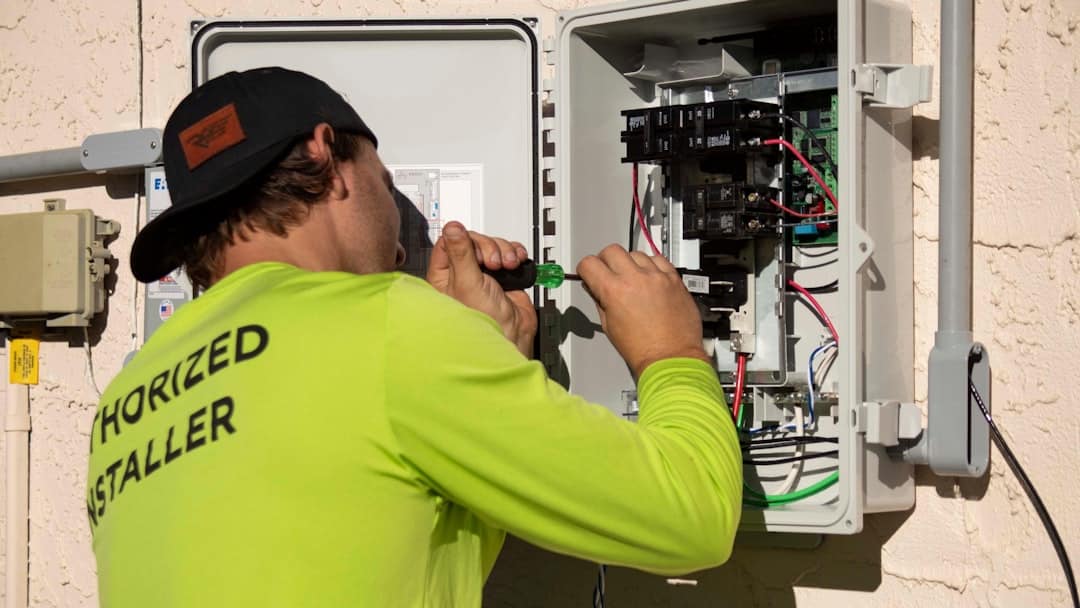
Residential main panel wiring is the central nervous system of your home, distributing power from the utility company to every outlet, light, and appliance. This complex network of wires and breakers is critical for operating your electrical system safely and efficiently. When properly wired, the panel acts as a distribution center and a key safety device, with circuit breakers protecting your home by automatically shutting off power during overloads or short circuits.
Quick Answer: Residential Main Panel Wiring Essentials
- Main components: Main breaker, individual circuit breakers, hot bus bars, neutral bar, ground bar, and service entrance wires
- Safety requirements: 36-inch clearance around panel, proper labeling, GFCI/AFCI breakers where required by code
- Professional installation: Main panel wiring involves live electrical connections and requires licensed electrician expertise
- Panel sizing: Most homes need 100-200 amp service, with newer construction typically requiring 200 amps for modern electrical demands
However,
residential main panel wiring is not a DIY project. Working with live electrical connections poses serious risks of electrocution, fire, and code violations. The main service wires remain energized even when the main breaker is off, which is why this work must be handled by a professional.
I'm Ed Sartell, and in my nearly four decades as President of Sartell Electrical Services, I've seen how proper
residential main panel wiring protects families and properties throughout Massachusetts. From upgrading outdated panels to installing modern 200-amp services, our team ensures every connection meets the highest safety standards.
Understanding Your Home's Electrical Heart
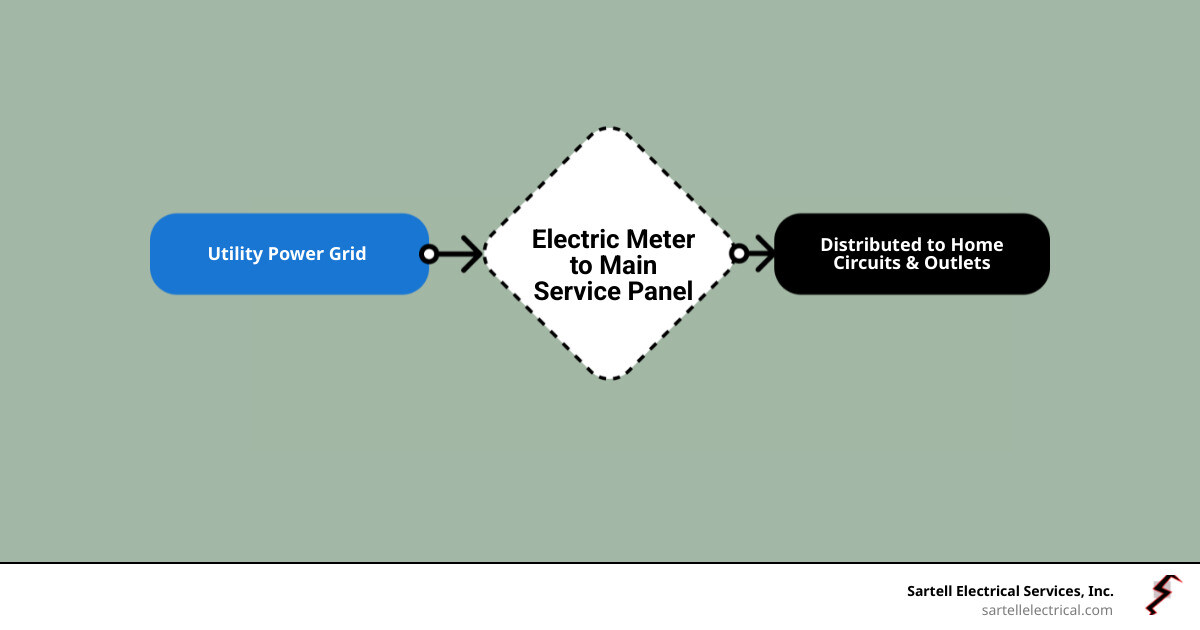
Your home's main electrical panel is the heart of its electrical system. It takes high-amperage power from the utility meter and
distributes it safely into smaller, manageable circuits that feed different areas of your home. Each circuit is protected by its own circuit breaker, a safety device that instantly cuts power during an overload or short circuit to prevent fires.
Panel sizes are crucial. While many older homes have 100-amp panels, modern life often demands more. Today's homes are filled with computers, large-screen TVs, smart systems, and EV chargers. For this reason, most new construction includes 200-amp service to handle these loads and provide capacity for future needs. If your home has an outdated 60-amp panel, an upgrade is necessary to avoid tripped breakers and other hazards.
For more information about our electrical services, including panel upgrades that can transform your home's electrical capacity, visit:
More info about our electrical services.
Inside the Breaker Box: Key Components
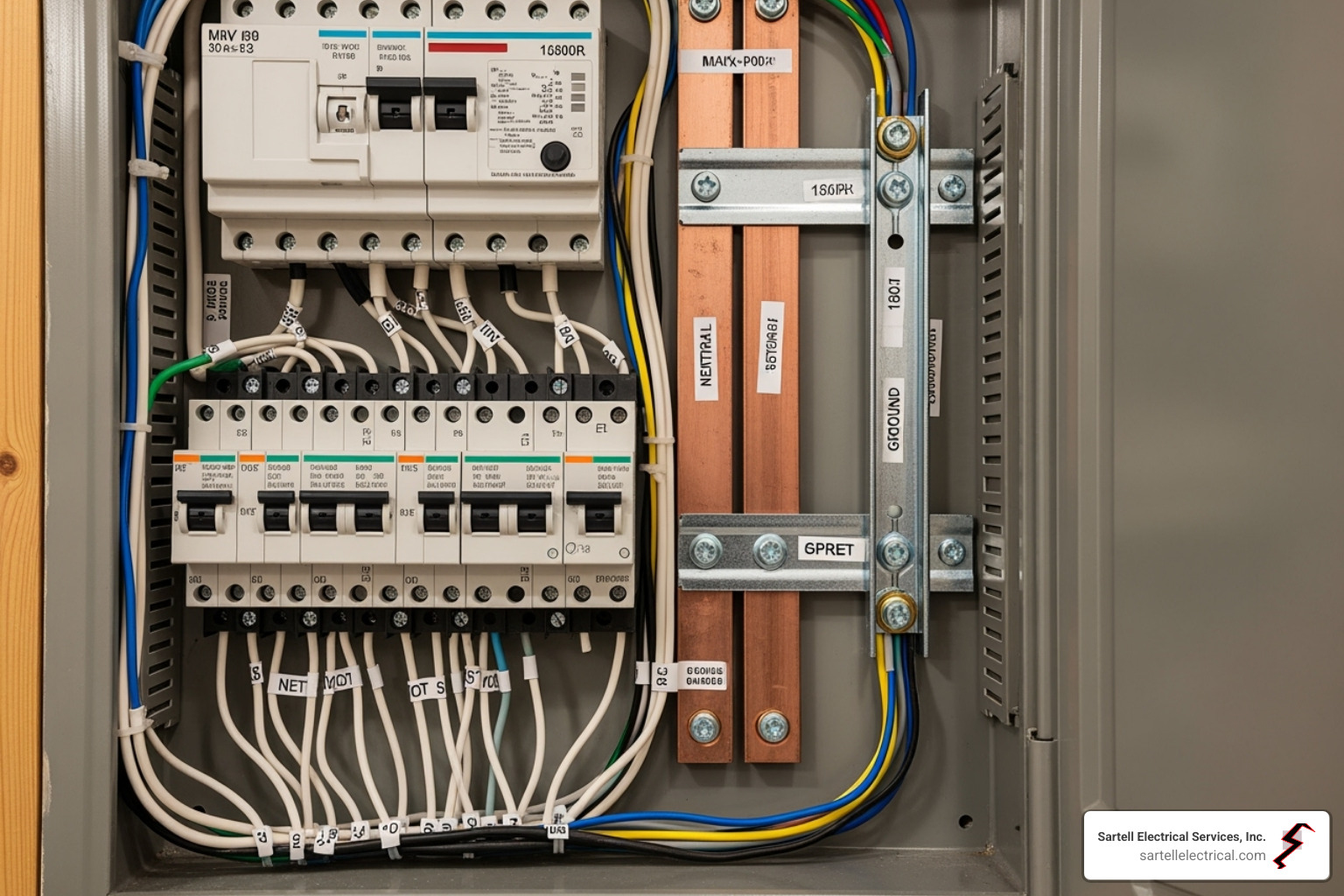
Opening your panel reveals a system of critical components:
- Main Breaker: The master switch at the top that controls all power entering your home.
- Individual Circuit Breakers: Smaller switches that protect specific circuits (e.g., kitchen outlets, bedroom lights). They trip to the off position to prevent wiring from overheating.
- Bus Bars: Metal strips that distribute power from the main breaker to the individual circuit breakers.
- Neutral Bar: A connection point for all white neutral wires, which complete the electrical circuit.
- Ground Bar: A safety feature that connects all bare copper or green ground wires, directing stray electricity safely into the earth.
Circuit Breakers vs. Fuse Boxes: What's the Difference?
Homes built before the 1960s may have a fuse box. While both systems protect against overloads, they work differently.
- Fuse Boxes: Use a fuse with a metal strip that melts to break the circuit when overloaded. Once a fuse blows, it must be replaced. Using the wrong size fuse is a common and dangerous mistake.
- Circuit Breakers: Are reusable switches. When an overload is detected, an internal mechanism trips the breaker. You can simply reset it after fixing the issue. Breakers are safer, more convenient, and required by modern standards.
Upgrading from a fuse box to a modern breaker panel is a common and highly recommended safety improvement.
Choosing the Right Panel Size
Selecting the right panel size ensures your home has enough power for today's needs and tomorrow's upgrades. While 100-amp service is sufficient for some homes, 200-amp service has become the standard for new construction to accommodate modern electrical demands.
Signs you might need a panel upgrade include:
- Breakers that trip frequently
- Lights that dim when large appliances turn on
- A heavy reliance on extension cords
A professional load calculation is the best way to determine the right panel size for your home. We perform these assessments to help homeowners in Massachusetts right-size their electrical systems for safety and convenience.
For detailed technical information about wiring different voltages in your panel, this resource provides helpful insights:
How to Wire 120V and 240V Main Panel? – Breaker Box Installation.
Safety First: Essential Precautions for Panel Work
Let's be clear:
residential main panel wiring is not a DIY project. It is dangerous work with risks of
electrocution, severe shock, and fire. The main service wires entering your panel remain live even when the main breaker is off. Only the utility company can fully de-energize the service, which is why professional coordination is essential.
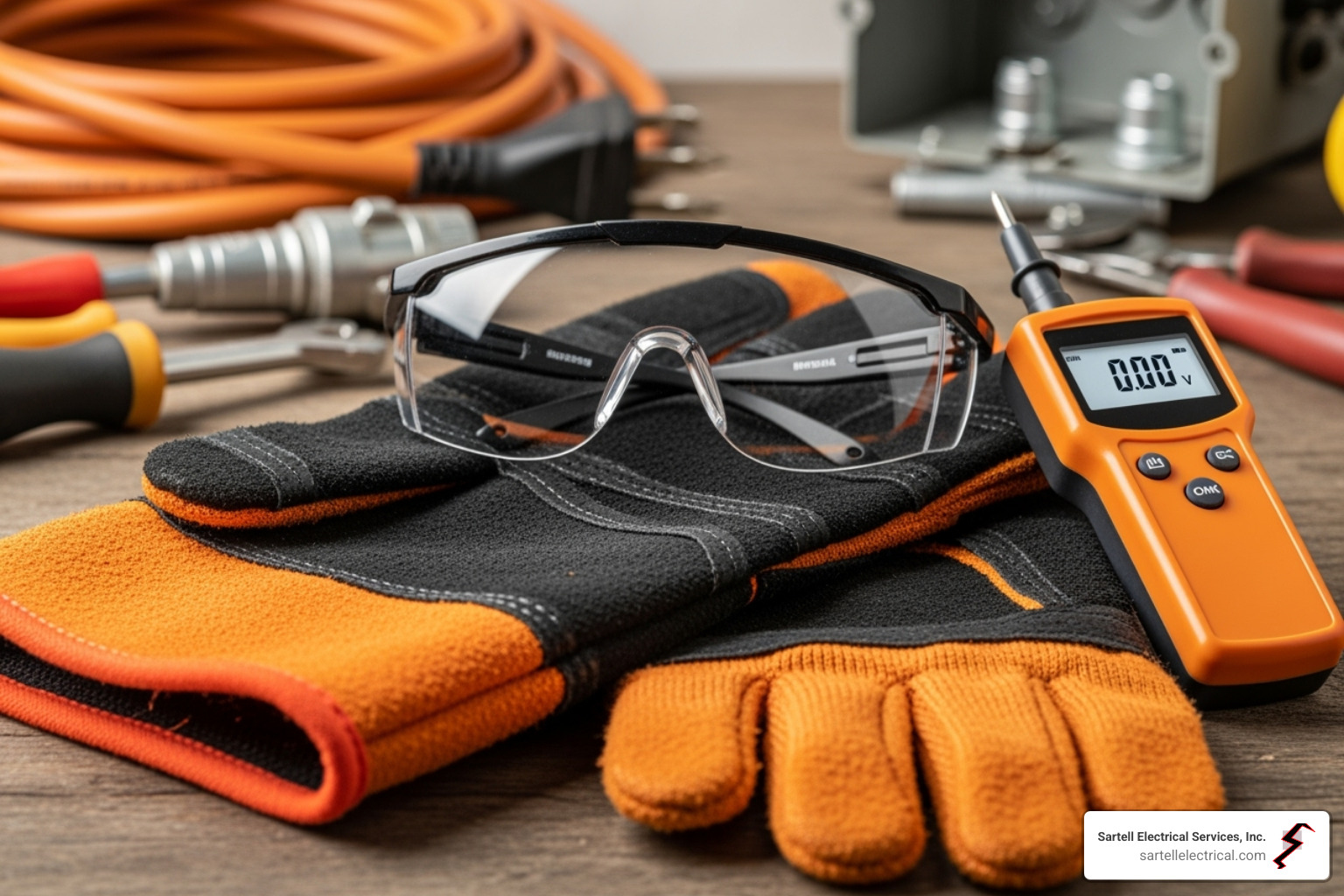
Professional electricians follow strict safety protocols, including:
- Coordinating with the utility to shut off power.
- Verifying power is off with professional-grade voltage testers.
- Using proper safety gear, including insulated gloves, safety glasses, and specialized insulated tools.
This work demands the expertise of a licensed professional. Our commitment to safety has protected families throughout Massachusetts for over three decades. You can learn more about how we prioritize safety in everything we do:
More about our commitment to safety.
Know the Code: Massachusetts and National Requirements
All electrical work must adhere to the
National Electrical Code (NEC), which is updated every three years. Massachusetts also has specific amendments that often exceed federal minimums. Key requirements for
residential main panel wiring include:
- Panel Clearance: At least three feet (36 inches) of clear working space is required in front of the panel.
- Circuit Labeling: Every breaker must be clearly and specifically labeled in the panel directory.
- Emergency Disconnects: New installations require an outside switch for first responders to quickly cut power.
- GFCI & AFCI Protection: Specialized breakers are required in specific areas to protect against shock (GFCI) and fire (AFCI).
For detailed information about Massachusetts-specific electrical requirements, you can check The Massachusetts Electrical Code through the state's official resources. Our team stays current with all codes to ensure every project is safe and compliant.
Signs You Need a Professional Repair or Upgrade
Your electrical panel will often provide warning signs when it needs attention. Ignoring these can be dangerous. Call a licensed electrician immediately if you notice any of the following:
- Flickering or dimming lights, especially when an appliance turns on.
- Frequent breaker trips, indicating overloaded circuits or worn-out breakers.
- Burning smells or scorch marks around the panel, a sign of serious overheating.
- Buzzing or crackling sounds from the panel, which can point to loose, arcing connections.
- A panel that feels warm to the touch.
- An outdated 60-amp panel or a panel from a brand with known safety defects.
- Over-reliance on extension cords due to an insufficient number of outlets.
The Step-by-Step Guide to Residential Main Panel Wiring
Disclaimer: This guide is for informational purposes only. Main panel wiring is extremely dangerous and should be performed by a licensed professional. We strongly advise against any DIY attempts at main panel wiring. This overview is intended to help you understand the complexity and expertise involved in this critical electrical work.
Wiring a main panel is a complex process that requires professional expertise. Here is a simplified overview of the steps a licensed electrician takes.
Step 1: Preparation and Mounting the Panel
The first step is coordinating with the utility company to disconnect power to the home. Once power is confirmed off, the electrician mounts the new panel box, ensuring it is level and securely fastened. The correct knockouts are removed to allow cables to enter the panel through protective connectors.
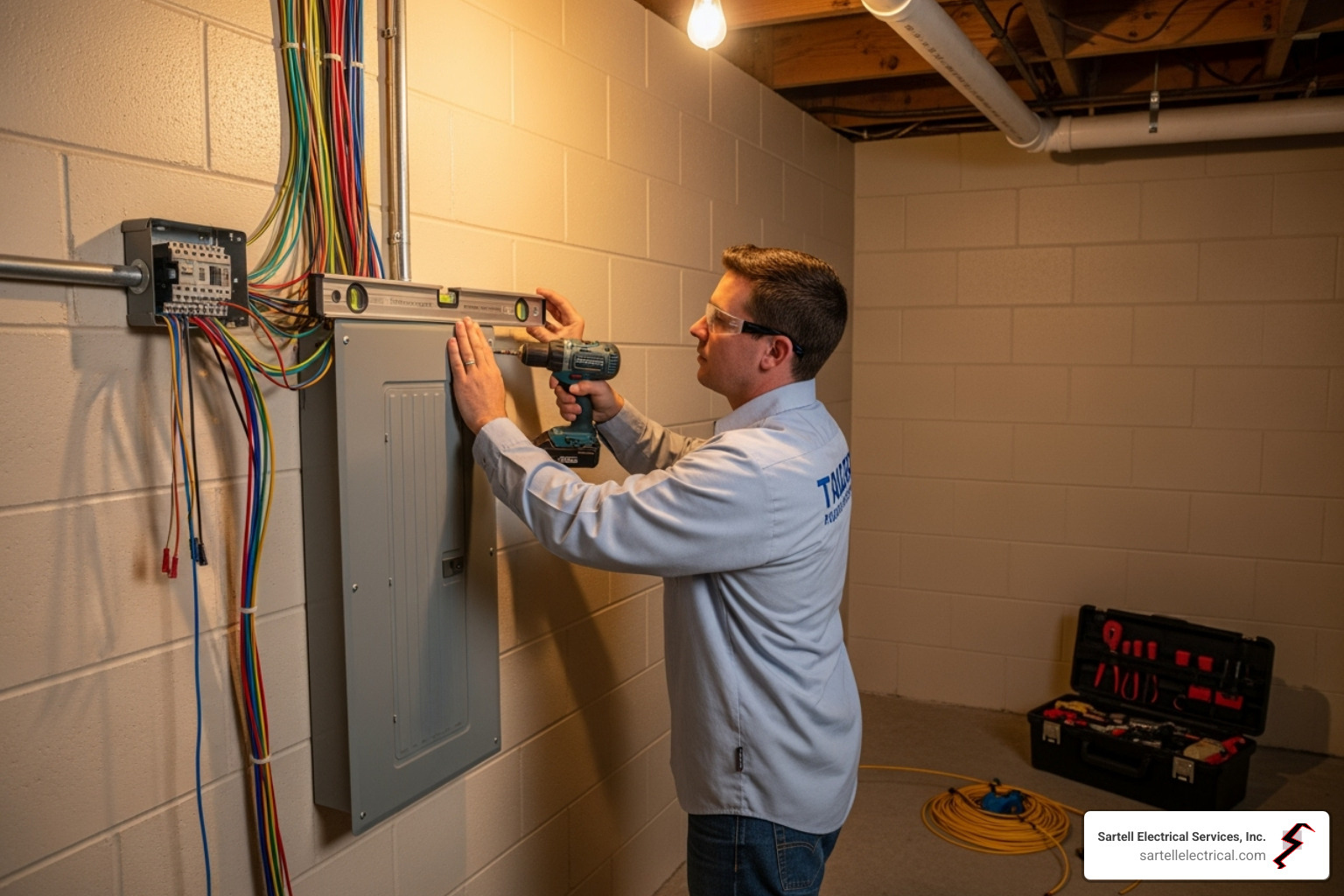
Step 2: A Guide to Residential Main Panel Wiring Connections
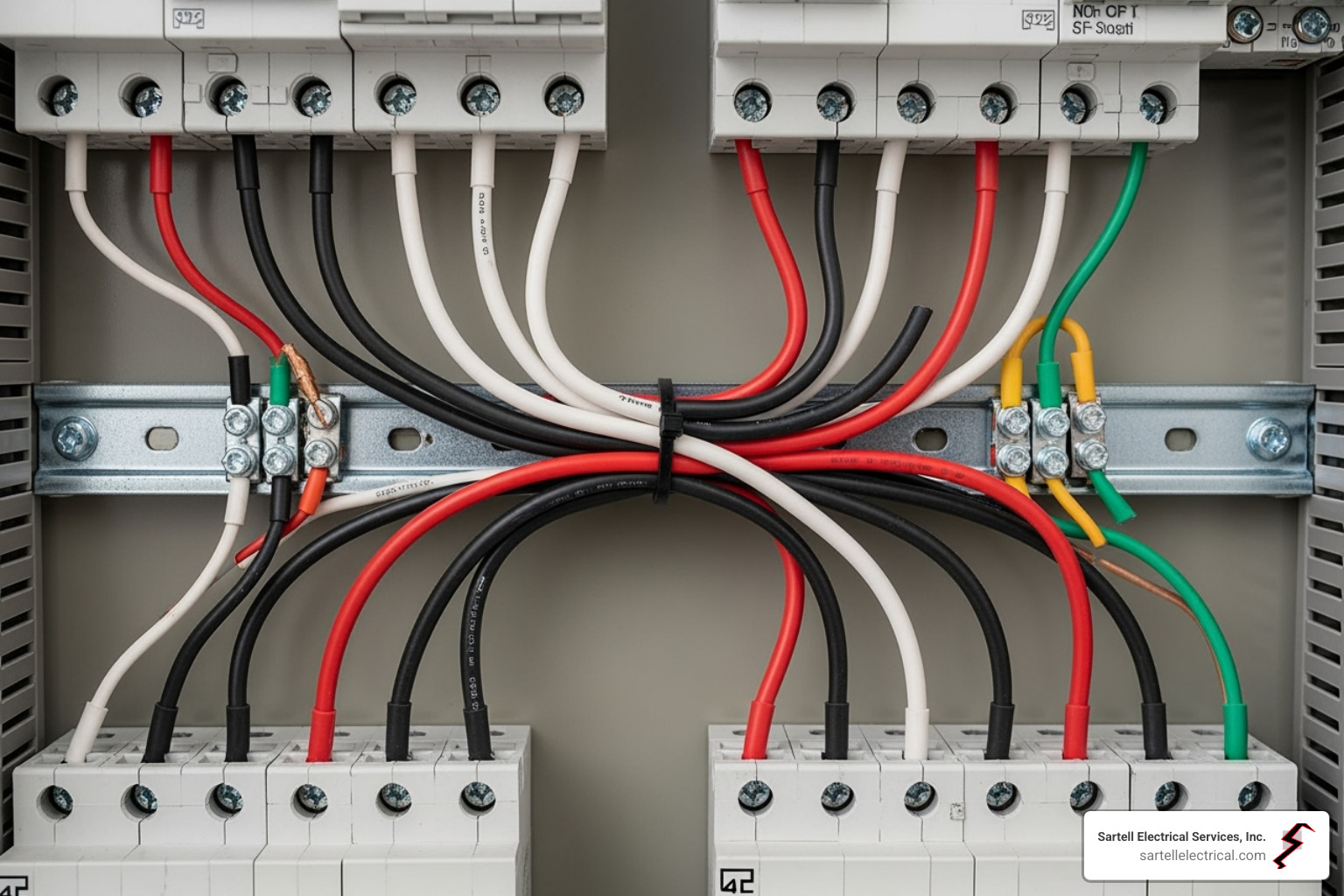
The heavy-duty main service wires from the meter are connected. The two hot wires are connected to the main breaker, which feeds the hot bus bars. The main neutral wire connects to the neutral bus bar, which is bonded (connected) to the panel's metal enclosure for safety. The main ground wire is connected to the grounding system, which typically includes ground rods driven into the earth.
Step 3: Wiring the Branch Circuits
Next, the individual branch circuits that power the home are wired. This involves:
- Selecting the right wire gauge: Thicker 12 AWG wire is used for 20-amp circuits (kitchens, bathrooms), while 14 AWG wire is used for 15-amp circuits (lighting, general outlets).
- Routing and connecting wires: Each cable's ground wire (bare copper/green) connects to the ground bar, the neutral wire (white) connects to the neutral bar, and the hot wire (black/red) connects to an individual circuit breaker.
Step 4: Installing Specialty Breakers (GFCI & AFCI)
Modern codes require specialty breakers for improved safety:
- GFCI (Ground-Fault Circuit Interrupter) breakers protect against electrical shock and are required in kitchens, bathrooms, garages, and outdoor locations.
- AFCI (Arc-Fault Circuit Interrupter) breakers protect against fire-causing electrical arcs and are required for most living areas, including bedrooms.
Step 5: Finalizing and Testing Your Residential Main Panel Wiring
Finally, the panel cover is installed, and a directory is created to clearly label what each breaker controls. Once the utility company restores power, the electrician turns on the main breaker and then each individual breaker, testing circuits to verify correct voltage and safe operation. This ensures the
residential main panel wiring is safe, reliable, and code-compliant.
To see examples of our meticulous panel installations and other residential electrical work throughout Massachusetts, visit:
View our past residential projects. When it comes to something as critical as your home's electrical heart, trust the professionals who've been perfecting this craft for decades.
Frequently Asked Questions about Main Panel Wiring
Homeowners often have questions about their electrical panels. Here are answers to some of the most common ones.
How many circuits should a house have?
While the NEC doesn't set a strict limit on outlets per circuit, a practical guideline is
8-10 lights or outlets per 15-amp circuit to prevent overloads. An average home may have 20 to 30 circuits.
Certain areas have specific requirements:
- Kitchens: Require multiple dedicated circuits for appliances, plus at least two 20-amp circuits for countertop outlets.
- Bathrooms: Need at least one dedicated 20-amp GFCI circuit for the outlets.
- Garages: Require at least one 20-amp GFCI circuit for outlets.
- Dedicated Circuits: Large appliances like an electric range (50-amp), dryer (30-amp), central air, and water heaters each need their own dedicated circuit.
A professional
load calculation is the best way to determine the exact number of circuits your home needs.
What are the most common mistakes made during panel wiring?
Understanding common wiring mistakes highlights why this job requires a professional. The most frequent and dangerous errors we see include:
- Using the wrong wire size for a breaker, creating a fire hazard.
- Loose connections that can arc and overheat, melting components.
- Overloading circuits by adding too many devices, causing frequent trips.
- Improper grounding or bonding, which disables critical safety features.
- Ignoring NEC and local codes, putting the home and its occupants at risk.
- Forgetting to label circuits clearly, making future troubleshooting difficult and frustrating.
Can receptacles and lights be on the same circuit?
Yes, the electrical code generally allows lights and outlets to share a circuit in areas like bedrooms and living rooms. The key is to stay within the circuit's load limit (1,800 watts for a 15-amp circuit; 2,400 watts for a 20-amp circuit).
However, some high-draw appliances like refrigerators and microwaves should always be on their own dedicated circuits. Proper planning and load calculation are essential to ensure mixed-use circuits operate safely and reliably without constantly tripping the breaker.
When in Doubt, Call the Professionals
As this guide illustrates,
residential main panel wiring is complex, demanding work that is best left to professionals. From navigating NEC and Massachusetts codes to ensuring every connection is torqued correctly, the process requires years of hands-on experience to guarantee safety and reliability.
The team at Sartell Electrical Services, Inc. has spent over 30 years mastering these complexities. We've wired countless panels across Massachusetts, from cozy Reading homes to larger properties throughout Essex County, Middlesex County, Norfolk County, Suffolk County, and Greater Boston. Whether you're in Andover dealing with an outdated panel or in Chelsea planning a major upgrade, we bring the expertise your family's safety deserves.
If you're experiencing warning signs like frequent breaker trips and flickering lights, or if you're planning renovations that will increase your electrical load, a professional assessment of your
residential main panel wiring is essential. These issues rarely improve on their own and can become dangerous.
We're here to help with everything from emergency repairs to complete electrical system upgrades. Our team serves communities throughout Greater Boston, bringing the same attention to detail and commitment to safety to every project, whether it's in Woburn, Acton, or anywhere in between.
Contact us today for a professional consultation on your residential electrical needs.