
Is an Electrician Residential vs Commercial Career Right for You?
Electrician residential vs commercial is one of the most important career decisions you'll face when entering the electrical trade. Here's a quick breakdown of how the two paths differ:
| Factor | Residential Electrician | Commercial Electrician |
|---|---|---|
| Work environment | Homes, apartments, condos | Offices, hospitals, retail, schools |
| Power systems | Single-phase, 120/240V | Three-phase, 208-480V+ |
| Wiring methods | Romex (NM cable) | EMT conduit, rigid metal conduit |
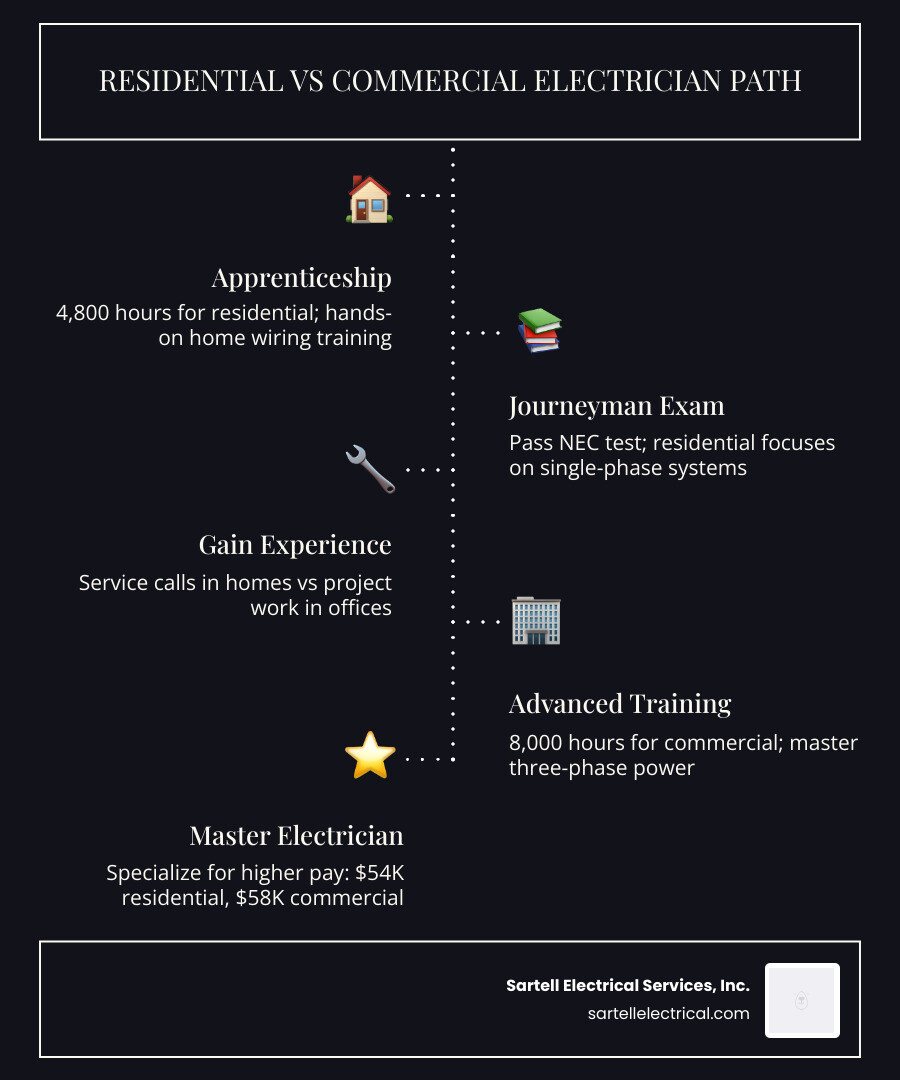
| Training hours (CA) | 4,800 hours | 8,000 hours |
| Average salary | ~$54,425/year | ~$57,879/year |
| Schedule | Variable, service-call driven | More consistent, project-based |
| Complexity | Lower | Higher |
Both paths require formal training, a licensing exam, and hands-on apprenticeship hours. The biggest differences come down to the complexity of the systems, the scale of the projects, and the depth of specialized knowledge required.
Choosing the wrong path early can cost you years of retraining. Choosing the right one can set you up for decades of stable, well-paying work.
I'm Ed Sartell, President of Sartell Electrical Services, Inc., and since 1985 I've worked across both sides of the electrician residential vs commercial divide — wiring custom homes in Reading, Massachusetts and managing complex commercial installs for builders and institutions alike. That experience gives me a clear picture of what each path really demands, and I'll share that with you throughout this guide.
Similar topics to electrician residential vs commercial:
Understanding the Core Differences: Electrician Residential vs Commercial
When we talk about the choice between an electrician residential vs commercial path, we are really talking about where you will spend the majority of your adult life. The environment of a single-family home in Andover or a townhouse in Braintree is worlds apart from a sprawling retail complex in Greater Boston or a high-tech medical facility in Cambridge.
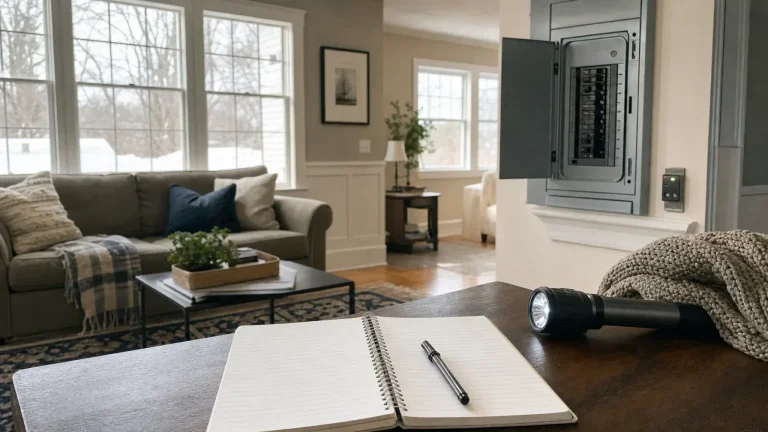
Residential electricians primarily focus on the places where people live. This includes single-family homes, duplexes, and apartment complexes. The work is personal; you are often in someone’s kitchen or attic, interacting directly with the homeowner. It requires a high level of "soft skills" and a clean, respectful approach to the workspace.
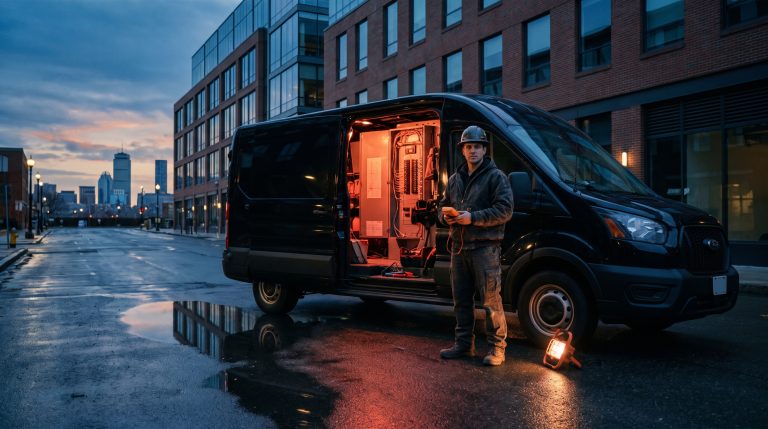
On the other hand, commercial electricians operate in business. You’ll find them in office buildings, malls, schools, and hospitals. These environments are often active construction sites or busy corporate hubs. Instead of talking to a homeowner about where they want their new ceiling fan, a commercial electrician is more likely to be coordinating with architects, engineers, and general contractors to ensure a massive power distribution system meets strict local building codes.
For a deeper look at how these roles function in the real world, you can explore our overview of Residential and Commercial Electrical Services. While both types of electricians ensure that the lights stay on, the scale of the infrastructure they manage is vastly different.
Power Systems and Technical Complexity
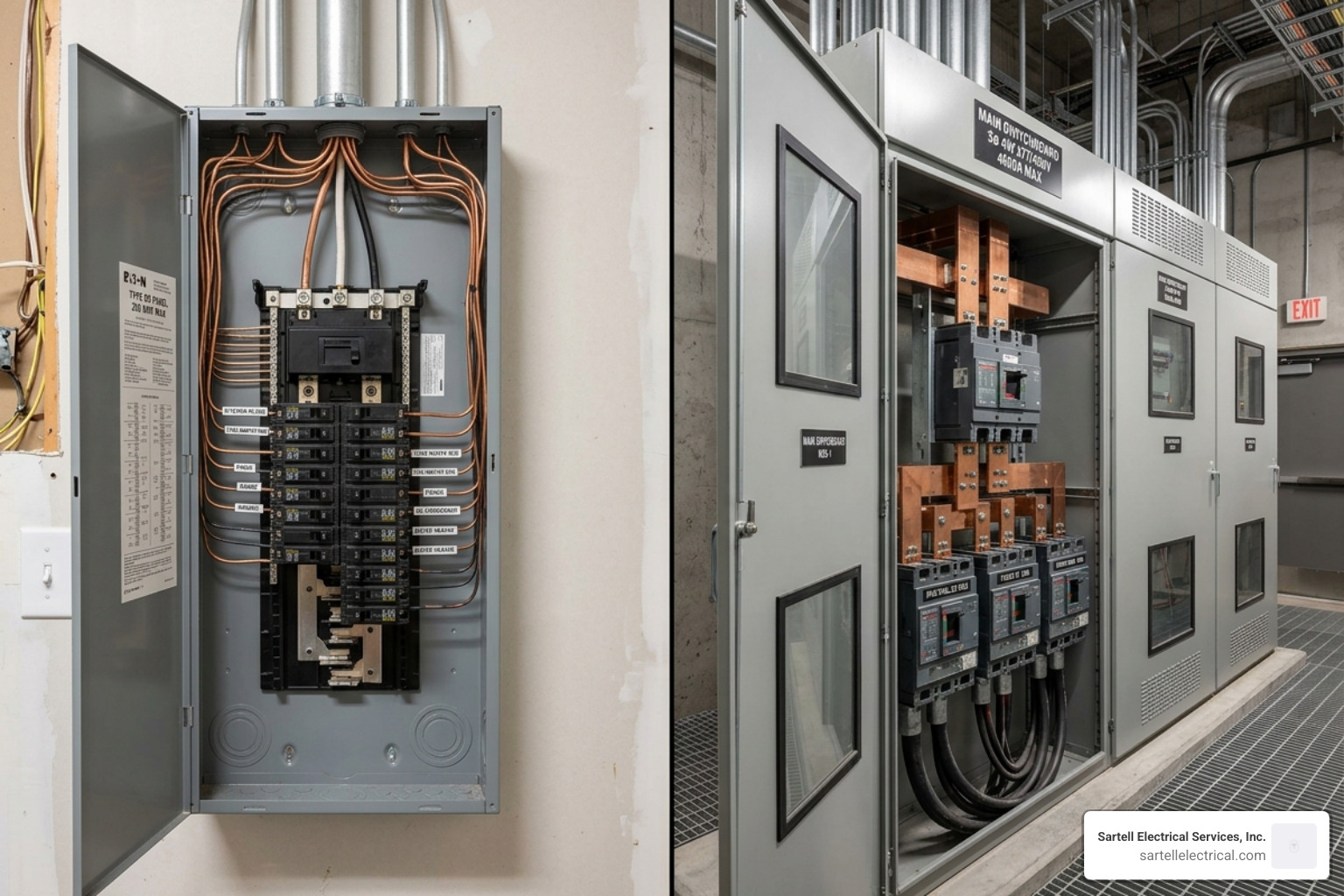
The technical "guts" of the buildings are where the electrician residential vs commercial debate gets interesting. In a typical Massachusetts home, you are dealing with single-phase power. This usually involves 120-volt or 120/240-volt systems. It’s enough to run your refrigerator, your HVAC, and your home office, but it’s relatively straightforward.
Commercial properties are a different beast entirely. Most commercial buildings utilize three-phase power. This allows for more efficient power distribution and the ability to run heavy-duty machinery. Voltages in these settings typically range from 208 to 480 volts, and in some industrial settings, even higher.
The complexity doesn't stop at voltage. Commercial systems require sophisticated load calculations and built-in redundancy. For example, in a healthcare facility in the Norfolk County area, a power failure isn't just an inconvenience—it’s a life-threatening emergency. Commercial electricians must understand how to install and maintain backup generators and emergency power systems that kick in instantly. You can learn more about these technical distinctions in our guide on Residential and Commercial Electrical Systems.
Materials and Wiring Methods
If you walk into a residential job site, you’ll see plenty of Romex. This is a non-metallic (NM) sheathed cable that is flexible and easy to run through wooden wall studs. It’s cost-effective and perfect for the smaller-scale needs of a home.
In the commercial world, however, Romex is rarely invited to the party. Because commercial buildings face more wear and tear and have stricter fire safety requirements, the wiring is almost always housed in conduit. This includes EMT (Electrical Metallic Tubing) or rigid metal conduit. These pipes protect the wires from damage and allow for easier "pulling" of new wires if the business needs to upgrade its tech later.
The tools change, too. While a residential electrician relies heavily on hand tools and portable drills, a commercial electrician might need hydraulic cable benders, large miter saws, and even boom trucks to reach high-bay lighting in a warehouse. Understanding these COMMERCIAL VS RESIDENTIAL WIRING methods is essential for anyone trying to decide which specialty fits their mechanical interests.
Training and Certification Requirements
Regardless of the path you choose, the journey starts with a solid foundation. You can't just pick up a pair of pliers and call yourself an electrician in Massachusetts. You need to complete a high school diploma or GED, followed by a formal training program and a multi-year apprenticeship.
The National Electrical Code (NEC) is the "bible" for both residential and commercial pros. However, the commercial side often requires a deeper dive into OSHA safety regulations and local fire codes because the risks—and the number of people in the building—are so much higher. At Sartell Electrical Services, we emphasize that a Commercial and Residential Electrician must be a lifelong learner to keep up with these evolving standards.
Specializing as an Electrician Residential vs Commercial
In many jurisdictions, the "hours" required to reach journeyman status are the primary barrier to entry for the commercial side. For instance, in some regions like California, a residential certification requires 4,800 hours of on-the-job experience, whereas a commercial certification requires a staggering 8,000 hours—nearly twice as much.
While Massachusetts has its own specific licensing tiers, the logic remains the same: the more complex the system, the more experience you need before you can lead a crew. Commercial electricians often seek out specialized certifications in areas like motors, automation, or lighting controls. If you’re interested in the most complex end of the spectrum, you might even look into the differences between Industrial vs Commercial and Everything in Between.
Career Outlook: Salary, Schedule, and Stability
By April 2026, the demand for skilled trades remains at an all-time high. But which path puts more money in your pocket? On average, commercial electricians earn slightly more, with national averages around $57,879 compared to $54,425 for residential. However, in high-demand areas like Greater Boston or Middlesex County, these numbers can be significantly higher based on your experience level.
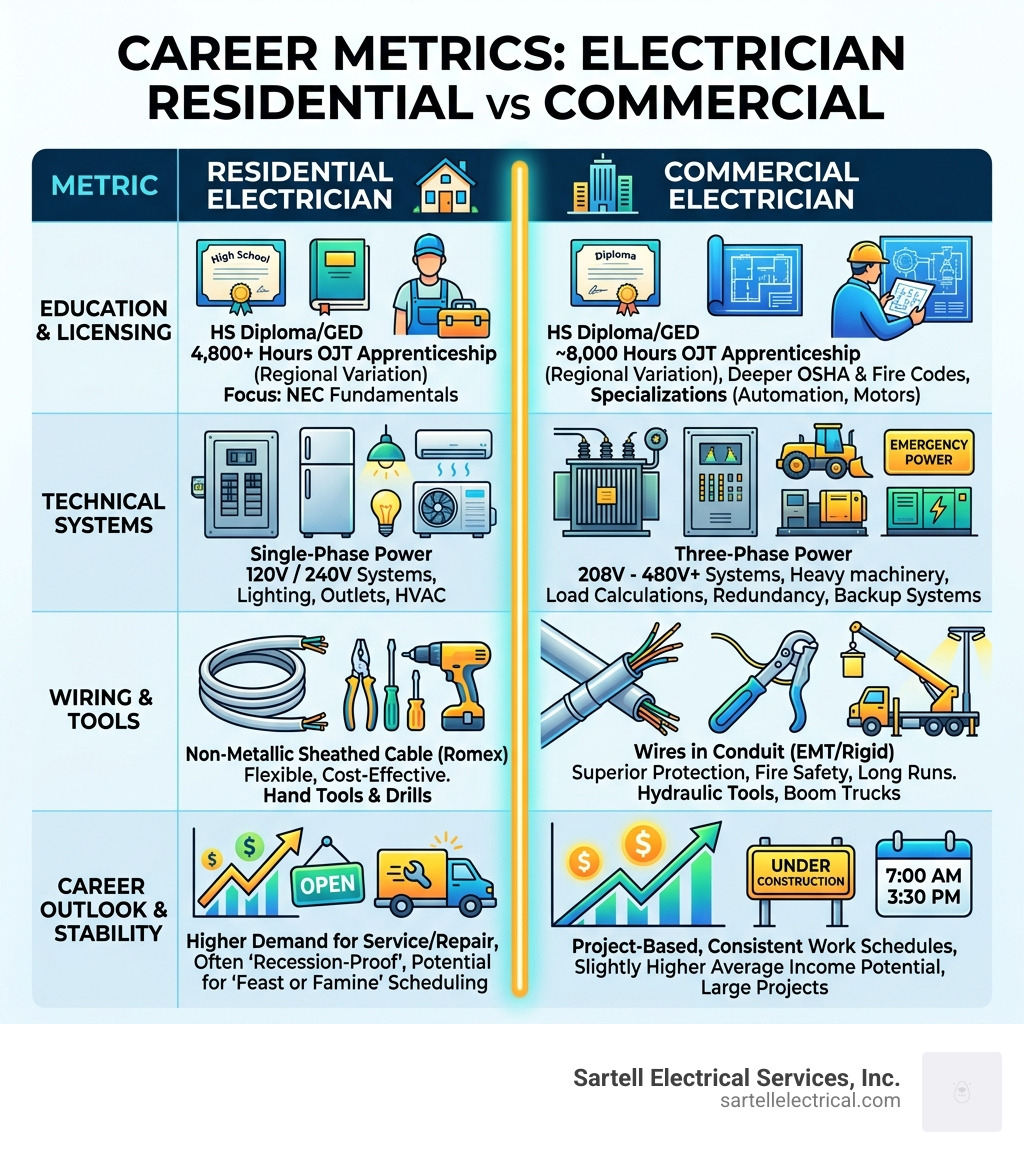
Stability is another factor. Residential work is often "recession-proof" because people always need their lights and heat fixed, but it can be more "feast or famine" based on service calls. Commercial work is often project-based, meaning you might be on the same job site for six months or a year. This provides a very consistent 7:00 AM to 3:30 PM schedule, though some commercial jobs require night or weekend work to avoid disrupting business hours. You can read more about the lifestyle of Commercial Electricians to see if it fits your goals.
Daily Tasks for an Electrician Residential vs Commercial
A day in the life of a residential electrician might involve four different houses. You might start with a panel upgrade in Medford, move to a ceiling fan install in Malden, and end with troubleshooting a flickering light in a kitchen in Melrose. It’s a lot of driving and a lot of talking to people.
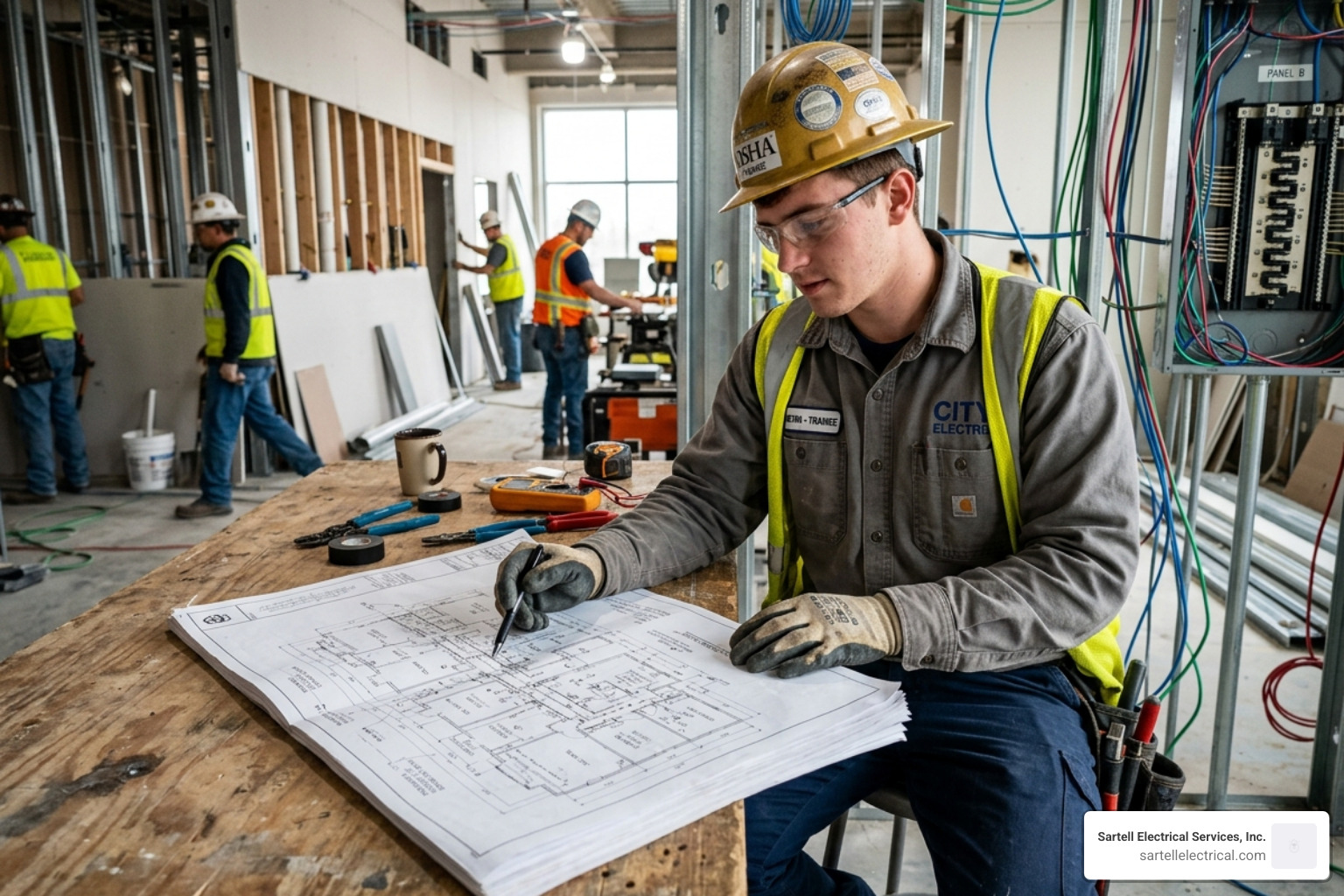
A commercial day is usually more structured. You’ll spend hours reading complex blueprints, running conduit through steel studs, or wiring up a massive power distribution panel for a new office suite. There is less customer small talk and more coordination with other trades. If you prefer variety and moving around, Residential Electrical work might be your calling.
Frequently Asked Questions about Electrical Careers
Which path is better for someone just starting out in 2026?
There is no "wrong" answer, but many apprentices start in residential. It offers faster exposure to basic wiring and hands-on tasks. If you enjoy seeing a finished product quickly and like helping people directly, residential is great. However, if you are mathematically inclined and want to work on massive, complex systems, jumping straight into a commercial apprenticeship can offer higher long-term earning potential.
Can an electrician work in both residential and commercial settings?
Absolutely. Many electricians at Sartell Electrical Services have experience in both. The foundational skills—understanding circuits, grounding, and safety—are transferable. However, as you progress, you may find that the tools and codes become so specialized that it’s more efficient to pick one and master it.
Are the safety regulations different for commercial projects?
Yes, they are generally much stricter. Because you are dealing with higher voltages (up to 480V) and public spaces, the room for error is zero. Commercial projects are subject to OSHA oversight and more frequent inspections by local authorities to ensure fire-rated materials and proper grounding are used throughout.
Conclusion
Deciding between an electrician residential vs commercial path is about more than just a paycheck; it’s about finding the environment where you’ll thrive. Whether you want the personal satisfaction of helping a family in Reading modernize their home or the professional challenge of powering a skyscraper in Boston, the electrical trade offers a future of incredible security and growth.
At Sartell Electrical Services, Inc., we’ve spent over 30 years building a reputation for excellence across all sectors. We know that our leadership in the Massachusetts market comes from our people. If you’re ready to start your journey or looking for a team that values professional advancement, we invite you to explore our Industrial Electrical Services and see how we’re powering the future of the Commonwealth.