What You Need to Know About Commercial Lighting Installation
Commercial lighting installation is one of the highest-impact upgrades a business can make — affecting energy costs, worker productivity, safety, and long-term operating expenses all at once.
Here's a quick overview of what commercial lighting installation involves:
| What | Details |
|---|---|
| What it is | Planning, wiring, and installing lighting systems in commercial buildings |
| Main project types | LED retrofits, full system upgrades, new construction, smart controls |
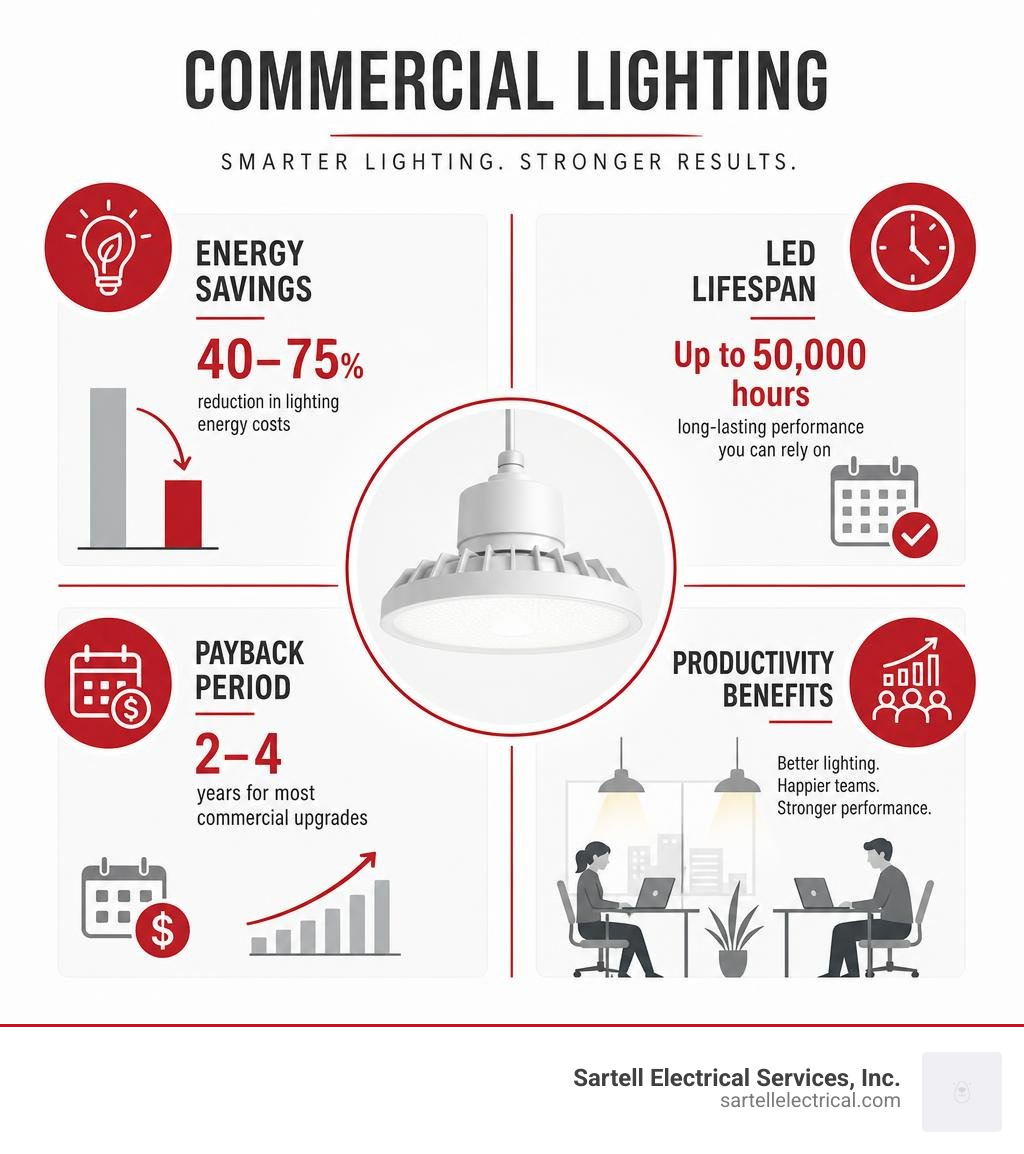
| Energy savings | 40–75% reduction in lighting energy costs vs. traditional systems |
| Typical payback period | 2–4 years for most commercial upgrades |
| Who should install it | Licensed commercial electricians familiar with NEC and local energy codes |
| How long it takes | A few days to several weeks depending on project size |
Lighting typically accounts for 20–40% of total energy consumption in commercial buildings. That makes it one of the most practical places to cut costs — without sacrificing comfort or safety. Yet many businesses still run outdated systems, often because they're unsure where to start or which contractor to trust.
I'm Ed Sartell, President of Sartell Electrical Services, Inc., and I've been leading commercial lighting installation projects across Massachusetts since 1985. In this guide, I'll walk you through everything — from choosing the right fixture types to navigating permits and maximizing your return on investment.
Learn more about commercial lighting installation:
- Commercial building wiring
- Electrical maintenance contracts
- commercial electrical contractors near me
Main Types of Commercial Lighting Projects
Every commercial property has unique layout demands, structural limitations, and operational hours. In our decades of experience serving businesses throughout Middlesex, Essex, and Norfolk counties, we have found that commercial lighting projects generally fall into three distinct categories.
Understanding these project types helps you determine the scope of your project, anticipate budget needs, and plan for minimal operational downtime. For a broader look at how these projects fit into your overall facility maintenance, check out our comprehensive commercial electrical services.
Retrofits and System Upgrades
If your building's existing layout works well but your energy bills are sky-high, an LED upgrade is the ideal solution. A retrofit involves upgrading your current lighting fixtures to energy-efficient LED technology without completely replacing the physical housings.
There are two primary ways we handle retrofits:
- Ballast Bypass (Direct Fit): We remove the old, energy-hungry magnetic or electronic ballasts and rewire the fixtures to run line voltage directly to new LED tubes. This eliminates a common point of electrical failure and slashes future maintenance costs.
- Full Fixture Replacement: In cases where older fixtures are damaged, yellowed, or structurally outdated, we replace the entire housing with modern, integrated LED troffers or architectural fixtures.
By transitioning from fluorescent or metal halide systems to LEDs, businesses routinely see a 50% to 70% decrease in lighting-related energy expenses within the very first year. Working with a specialized commercial lighting installation contractor ensures your retrofit is designed safely and matches your facility's physical requirements.
New Construction Commercial Lighting Installation
Building a new facility from the ground up gives you a blank canvas to design a highly optimized, state-of-the-art electrical system. In new construction, we integrate the lighting design directly into your architectural blueprints. This allows us to plan dedicated electrical circuits, balance the electrical load across your main distribution panels, and position fixtures for perfect light distribution.
Developing a proper layout from day one prevents common layout errors like harsh shadows, computer screen glare, and under-illuminated common areas. It also ensures your building's electrical infrastructure is fully scaled to handle future expansions, EV charging stations, or specialized machinery. To learn more about how we take a project from initial blueprints to the final flip of the switch, read about our commercial electrical design-build process.
Smart Lighting Controls and Automation
A modern lighting system is only as efficient as its controls. Leaving lights blazing in empty conference rooms, vacant storage areas, or unoccupied warehouses is a massive drain on your bottom line. By integrating smart controls, you can automate your energy savings.
- Occupancy and Vacancy Sensors: These sensors automatically turn lights on when someone enters a room and turn them off shortly after they leave. Implementing occupancy-based controls can deliver average lighting energy savings of about 24%.
- Daylight Harvesting: Photosensors detect natural sunlight streaming through windows and automatically dim the adjacent indoor LED fixtures. This maintains a consistent light level while taking full advantage of free, natural light.
- Timers and Schedulers: Perfect for retail shops, offices, and exterior security lighting, timers ensure your lights operate only during designated business hours.
- Dimmers: Dimming controls allow employees to adjust brightness levels to suit their tasks, reducing eye strain and saving energy simultaneously.
Why Professional Installation Matters for Safety and Efficiency
It can be tempting to hire a general handyman or try to handle basic lighting swaps in-house. However, commercial electrical systems operate at much higher voltages (typically 277V or 480V three-phase systems) than residential properties (120V/240V). A single mistake can lead to electrical fires, code violations, or severe workplace injuries.

Professional installation by a licensed commercial electrician guarantees that your system adheres to NEC Article 410 (which governs luminaires, lampholders, and lamps) and supports recognized OSHA electrical safety standards. Furthermore, professional contractors ensure that all fixtures are securely mounted, properly grounded, and wired to prevent circuit overloads. For businesses in the northeastern corner of Massachusetts, working with a licensed commercial electrician ensures local town codes and Massachusetts electrical amendments are met perfectly.
Energy Efficiency and LED Lifespans
The operational differences between traditional lighting (incandescent, metal halide, and fluorescent T12/T8 tubes) and modern LED systems are staggering. LEDs convert nearly all their energy into light rather than heat, which also lowers the load on your facility's air conditioning system during hot Massachusetts summers.
| Performance Metric | Traditional Fluorescent / Metal Halide | Modern LED Systems |
|---|---|---|
| Energy Consumption | High (uses 75-80% more energy than LED) | Low (reduces energy use by 40% to 75%) |
| Average Lifespan | 1,000 to 15,000 hours | 50,000 to 100,000 hours |
| Maintenance Needs | Frequent bulb and ballast replacements | Virtually maintenance-free for years |
| Hazardous Materials | Contains mercury vapor (requires special disposal) | None (100% recyclable and safe) |
| Warm-up Time | 1 to 15 minutes (especially metal halides) | Instant-on, instant-off |
| Heat Emission | High (increases indoor cooling costs) | Minimal heat emission |
Because LED systems installed by professionals last up to 25 times longer than traditional options, your maintenance team won't have to spend their weekends on 20-foot ladders replacing dead bulbs.
Workplace Productivity and Safety Compliance
Lighting has a profound physiological effect on human beings. Poorly lit workspaces with flickering fluorescent tubes can cause chronic headaches, eye strain, and general fatigue among your employees. Conversely, studies show that proper lighting layouts can improve workplace productivity by 15% to 20% in office environments.
When planning your layout, we focus on three major elements:
- Color Temperature (Kelvin): We recommend crisp, clean light temperatures of 4000K to 5000K for task-oriented spaces like offices, manufacturing floors, and classrooms to improve focus. For lobbies, restaurants, and retail spaces, we utilize warmer tones (2700K to 3000K) to create a welcoming, comfortable atmosphere.
- Color Rendering Index (CRI): We select fixtures with a CRI of 80 or higher (often 90+ in retail and medical facilities) to ensure colors look accurate and vibrant under artificial light.
- Glare and Shadow Reduction: Proper spacing and diffuser lenses ensure light is spread evenly across the work plane, eliminating distracting glare on computer monitors.
Safety extends to the exterior of your property as well. Brightly lit walkways, building entryways, and parking lots discourage criminal activity and protect your business from slip-and-fall liability claims. If you are managing a local facility, utilizing specialized parking lot lighting or high-quality commercial outdoor lighting can ensure your exterior perimeters remain secure and welcoming all night long.
Additionally, for seasonal or promotional events, incorporating professional holiday lighting services can enhance your property's public appeal while keeping all temporary wiring safe, weather-resistant, and up to code.
Key Phases of a Commercial Lighting Installation
A successful commercial lighting installation requires careful coordination, precise design, and thorough testing. We follow a highly structured, multi-phase project management process to ensure your project is completed on time, within budget, and with zero surprises.

Phase 1: Assessment and Design-Build Planning
Every project begins with a comprehensive site assessment. We don't just count your current light fixtures; we analyze how your team uses each space, measure your current light levels (in foot-candles), and review your historical utility bills.
From there, we design a customized layout that matches the exact physical demands of your industry. For example:
- Warehouses and Industrial Plants: Require high-bay LED fixtures with narrow beam angles to illuminate deep aisles safely.
- Retail Outlets: Need adjustable track lighting and high-CRI accent fixtures to make merchandise stand out.
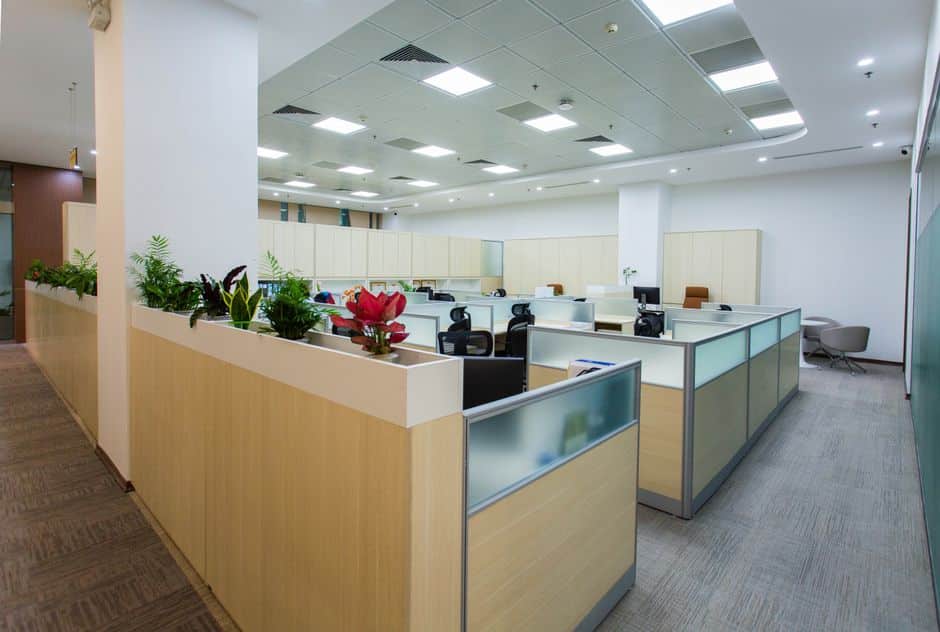
- Offices and Schools: Benefit from flat-panel LED troffers that distribute soft, even light to reduce eye strain.
We also identify and apply for all available utility rebates, grants, and state incentives on your behalf. In Massachusetts, programs like Mass Save offer substantial financial incentives for energy-efficiency upgrades, which can offset a significant portion of your upfront installation costs. Working with a dedicated commercial lighting installation contractor ensures you don't leave any rebate money on the table.
Minimizing Disruption During Commercial Lighting Installation
We understand that your business cannot simply shut down operations for a week while electricians run conduit and hang fixtures. Operational downtime is costly, which is why we specialize in low-impact installations.
To keep your business running smoothly, we utilize several key strategies:
- Off-Hours and Overnight Scheduling: Our crews can perform the bulk of the heavy installation work overnight, during weekends, or during your facility's natural off-hours.
- Phased Installations: We tackle the project in sections or zones. This allows your employees to simply shift to another part of the building while we work, keeping your daily operations active.
- Pre-Assembly Work: We handle as much fixture assembly, prep, and staging off-site as possible, minimizing the time our technicians spend in your active workspaces.
- Safety Barriers and Cleanliness: We establish clear safety zones using barriers to protect your staff and customers from dust or debris, and we clean up thoroughly at the end of every shift.
If your facility is located in the heart of the city, utilizing a team experienced in commercial electrical installation in Boston ensures your project complies with tight urban staging rules, parking constraints, and strict municipal building codes.
Phase 3: Post-Installation Maintenance and ROI
Once your new commercial lighting system is fully installed, we don't just pack up our tools and wave goodbye. We conduct a thorough commissioning phase to test every fixture, calibrate motion sensors, program timers, and verify that your daylight harvesting system is functioning perfectly.
To maximize your long-term return on investment, we recommend a simple, proactive maintenance routine:
- Visual Inspections: Schedule a quick walk-through every 3 to 6 months to check for any physical damage, loose connections, or misaligned exterior fixtures.
- Fixture Cleaning: Dust and dirt accumulation can reduce a fixture's total light output by up to 30% over time. Cleaning your fixtures once or twice a year keeps them shining at peak brightness.
- Sensor Calibration: Periodically check that your occupancy sensors are calibrated correctly so lights don't shut off prematurely while employees are working quietly at their desks.
- Group Relamping: Although LEDs last an incredibly long time, planning to replace fixtures in designated groups as they approach their end-of-life rating (rather than waiting for individual failures) keeps your maintenance costs predictable and your lighting uniform.
Frequently Asked Questions about Commercial Lighting Installation
How long does a commercial lighting installation project typically take?
The timeline depends entirely on the physical size of your facility and the complexity of the design. A straightforward LED retrofit for a mid-sized office building or retail shop can often be completed in 1 to 3 days. Larger industrial warehouses, school campuses, or multi-site commercial properties may take anywhere from one to several weeks. During our initial site assessment, we provide a detailed project schedule so you know exactly what to expect.
What is the average payback period for an LED lighting upgrade?
Most commercial properties achieve full payback on their investment within 2 to 4 years. If your facility operates 24/7 (such as a manufacturing plant, hospital, or parking garage) or if you qualify for substantial Mass Save utility rebates, your payback period can be as short as 12 to 18 months. After the payback period, the ongoing utility savings go straight back into your business's bottom line.
Do lighting systems require regular maintenance after installation?
Yes, but dramatically less than traditional systems. While you will no longer have to deal with monthly bulb burnouts or buzzing ballasts, a basic routine of annual fixture cleaning, visual inspections, and periodic sensor calibration is recommended. This keeps your system running at maximum efficiency and protects your long-term ROI.
Conclusion
Investing in a professional commercial lighting installation is one of the smartest, most cost-effective decisions you can make for your business in 2026. From slashing your monthly utility bills by up to 75% to boosting employee focus and ensuring strict code compliance, the benefits of modern LED and smart control systems are undeniable.
At Sartell Electrical Services, Inc., we have spent over 30 years helping business owners throughout Reading, MA, Greater Boston, and the surrounding communities design and install safe, highly efficient electrical systems. Whether you operate a retail boutique, a busy medical clinic, a school, or a massive industrial warehouse, our team of licensed commercial electricians has the expertise, tools, and commitment to deliver outstanding results with minimal disruption to your daily operations.
Don't let outdated, inefficient lighting drain your company's profits. If you are looking for reliable commercial electrical contractors near me, we are here to help. Schedule a consultation with our commercial electricians today, and let us build a brighter, more efficient future for your business!