
Why Every Facility Manager Should Prioritize Preventive Maintenance of Circuit Breaker Systems
Preventive maintenance of circuit breaker systems is one of the most overlooked — yet most critical — tasks in any commercial, industrial, or institutional facility.
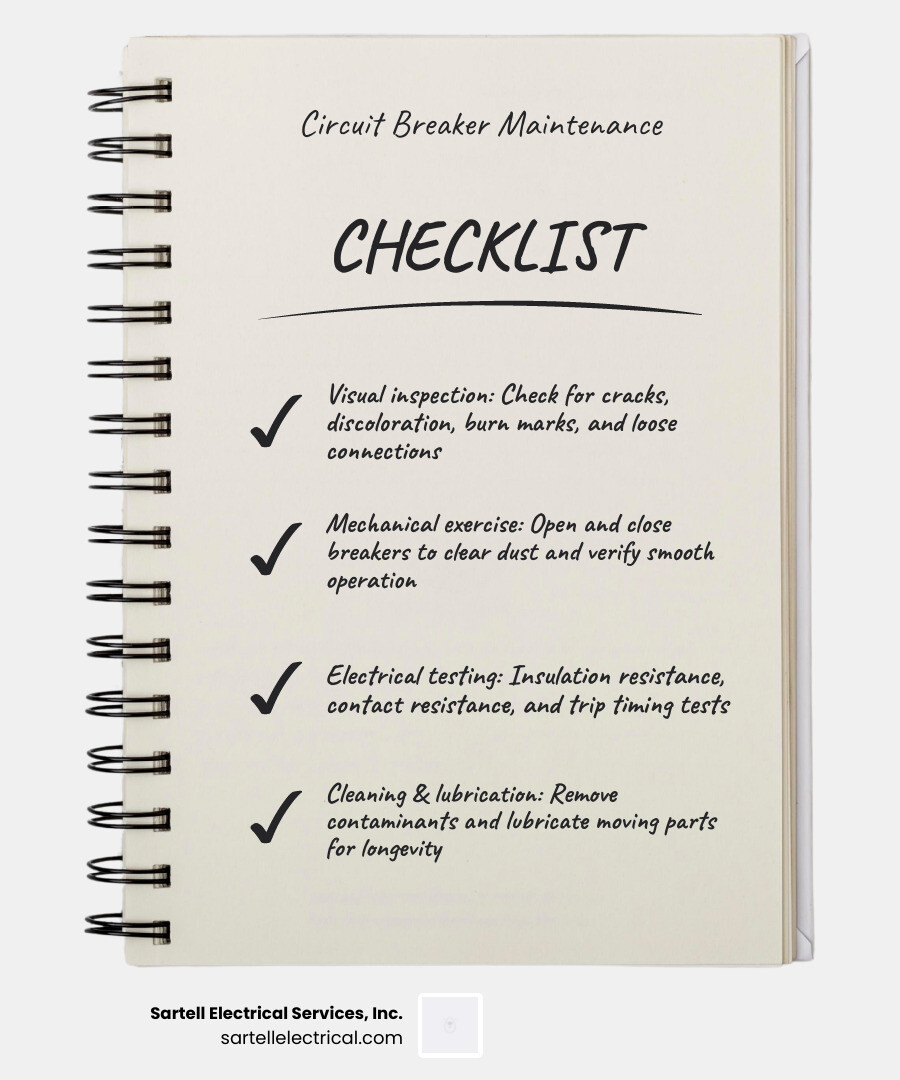
Here's a quick summary of what it involves:
- Visual inspection — Check for cracks, discoloration, burn marks, and loose connections
- Mechanical exercise — Open and close breakers to clear dust and verify operation
- Electrical testing — Run insulation resistance, contact resistance, and trip timing tests
- Cleaning and lubrication — Remove contaminants and lubricate moving parts
- Documentation — Record all findings and test results for trending and compliance
Most facilities should follow this schedule:
| Breaker Type | Minimum Maintenance Frequency |
|---|---|
| Molded Case (MCCB) | Exercise annually; trip test every 3-5 years |
| Low-Voltage Power (LVPCB) | Full inspection every 1-3 years |
| Medium-Voltage (MV) | Annually or every 2,000 operations |
| High-Voltage (HV) | Every 6-12 months |
The problem? Many businesses skip this entirely. Circuit breakers sit idle for months or years, showing no obvious signs of wear — right up until they fail. And when they do, the consequences can be severe: arc flash events, electrical fires, costly downtime, and serious safety risks to personnel.
According to IEEE research, the failure rate of unmaintained circuit breakers is three times higher than those on a regular maintenance program — and failure probability can reach 50% within just five years without proper care.
I'm Ed Sartell, President of Sartell Electrical Services, Inc., and with nearly four decades of hands-on electrical experience across Massachusetts, I've seen how a structured preventive maintenance of circuit breaker program can be the difference between a safe, reliable facility and an unexpected emergency. In the sections below, I'll walk you through exactly what that program should look like.
Preventive maintenance of circuit breaker terms at a glance:
- Electrical Maintenance Services
- Electrical Preventive Maintenance Services
- Electrical Installation and Maintenance
Why Preventive Maintenance of Circuit Breaker Systems is Essential
In our 30+ years serving the Greater Boston area, we’ve seen that the biggest threat to an electrical system isn't always a massive surge—it’s neglect. Circuit breakers are designed to be the "silent guardians" of your facility, but because they often sit idle for years, it’s easy to assume they are in perfect working order.
However, failing to perform regular preventive maintenance of circuit breaker units can lead to catastrophic results. One of the most dangerous risks is an arc flash. When a breaker fails to trip during a fault, the resulting energy release can cause an explosion of heat and light, reaching temperatures hotter than the surface of the sun. This doesn't just destroy equipment; it puts lives at risk.
Beyond safety, there is the issue of Building Electrical Maintenance and equipment longevity. Regular servicing prevents the build-up of dirt, moisture, and corrosion—factors that are particularly prevalent in our Massachusetts climate, from the humid summers in Reading to the salty air in Gloucester.
Implementing a maintenance program also helps you stay in the good graces of your insurance provider. Many commercial policies now require proof of regular electrical inspections. By prioritizing Don't Get Zapped By Neglect With These Electrical Maintenance Tips, you reduce the risk of unscheduled downtime, which IEEE suggests affects 73% of facilities that experience a breaker failure.
Understanding Different Types of Circuit Breakers and Their Needs
Not all breakers are created equal. Depending on whether you are managing a small office in Andover or a large industrial plant in Lawrence, your maintenance needs will vary significantly.
Molded Case Circuit Breakers (MCCB)
These are the most common breakers found in residential and light commercial panels. They are generally considered "low maintenance," but that doesn't mean "no maintenance." We recommend exercising them at least once a year to ensure the mechanical parts don't seize up.
Low-Voltage Power Circuit Breakers (LVPCB)
Commonly found in Industrial Electrical Maintenance settings, these units are more robust and often feature "draw-out" designs that make them easier to service. They require more frequent electrical testing to verify trip settings.
Medium and High-Voltage Breakers (MV & HV)
These are the heavy hitters of the electrical world. Because they handle massive amounts of energy, their maintenance intervals are much tighter. High-voltage units should be inspected every 6 to 12 months to ensure insulation integrity and mechanical speed.
To help you Extend the Life of Your Circuit Breaker: Easy Servicing Steps, we've compiled this comparison table:
| Feature | MCCB | LVPCB | MV/HV Breakers |
|---|---|---|---|
| Primary Environment | Residential / Small Business | Manufacturing / Data Centers | Utilities / Large Industrial |
| Maintenance Focus | Mechanical Exercise | Contact Resistance & Timing | Insulation & Gas/Oil Analysis |
| Typical Interval | Annual Exercise | 1 - 3 Years | 6 - 12 Months |
| Key Risk | Dust/Seizing | Mechanical Wear | Insulation Breakdown |
The Comprehensive Preventive Maintenance of Circuit Breaker Checklist
When we perform Electrical Maintenance Services for our clients in Middlesex or Essex County, we follow a rigorous, step-by-step process. Here is the core checklist we use to ensure nothing is missed.
1. Visual and Mechanical Inspection
Before we even touch a tool, we look for "the tell-tale signs." This includes:
- Checking for cracks or chips in the molded case.
- Looking for discoloration or "bluing" on metal parts, which indicates overheating.
- Inspecting for signs of moisture or rust—a common issue in older Boston basements.
- Verifying that all labels and ratings are legible and correct for the application.
2. Mechanical Exercising
Dust and grime can act like glue over time. By manually opening and closing the breaker several times, we clear off the latch surfaces and ensure the mechanism moves freely. As the Circuit Breaker Maintenance Checklist | ServiceChannel suggests, a breaker that hasn't moved in years is much more likely to fail when you need it most.
3. Cleaning and Lubrication
We use lint-free cloths and non-abrasive cleaners (like alcohol) to wipe down the exterior and the arc chutes. If the manufacturer allows it, we apply a very thin layer of electrically safe grease to moving contact surfaces. Pro tip: Never over-grease; excess lubricant can actually trap dust and lead to future failures.
4. Torque Verification
Connections can loosen over time due to "thermal cycling"—the expanding and contracting of wires as they heat up and cool down. We use calibrated torque wrenches to ensure every terminal meets the manufacturer's specific tightness requirements.
Safety Practices for Preventive Maintenance of Circuit Breaker Tasks
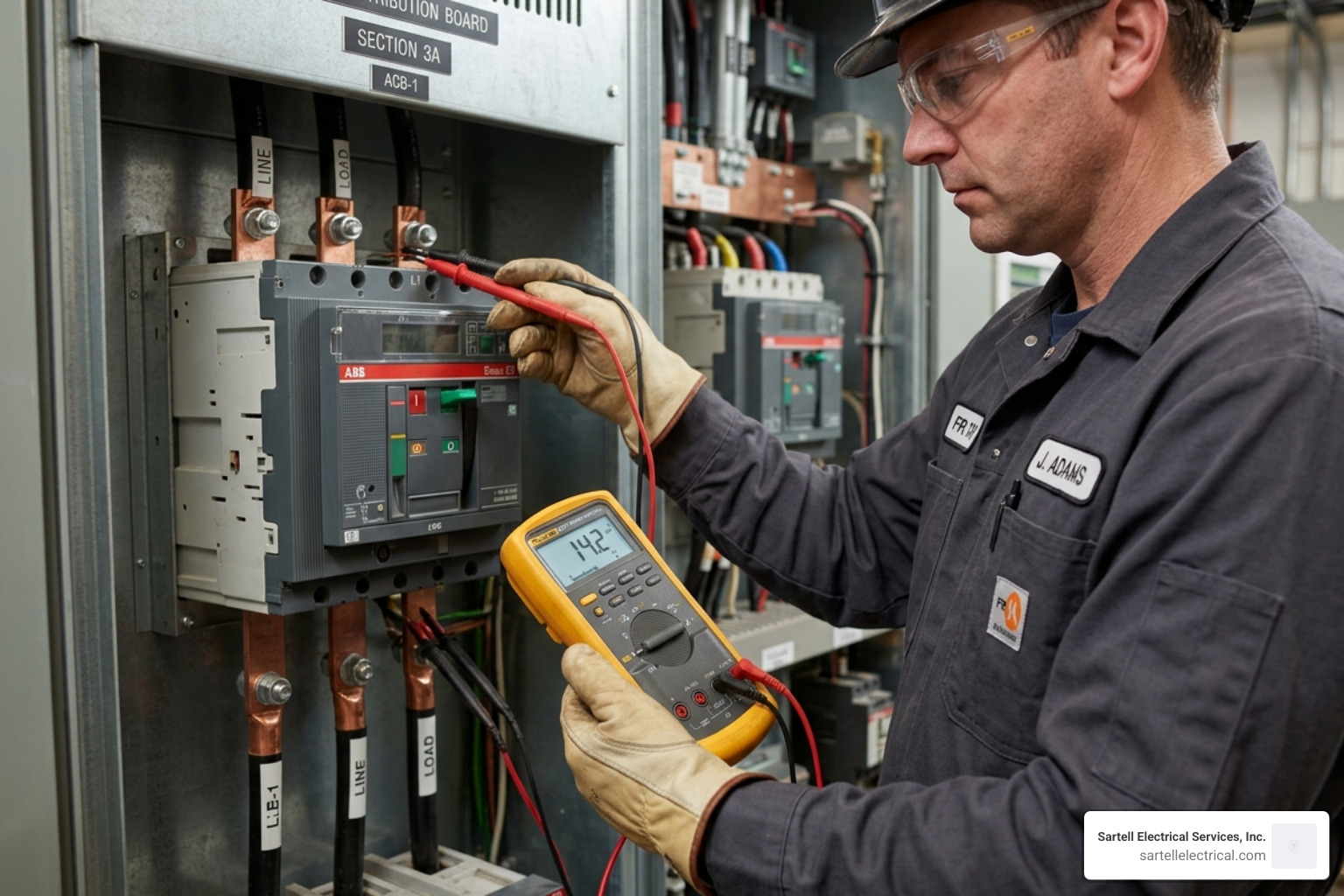
Safety is non-negotiable. Before any Electrical Installation And Maintenance begins, we implement strict Lockout-Tagout (LOTO) procedures to ensure the equipment cannot be accidentally energized while we are working on it.
We also wear appropriate Personal Protective Equipment (PPE), including arc-rated clothing, face shields, and insulated gloves. Even a de-energized breaker should be treated with respect; we always use a properly rated voltage sensing device to confirm the power is truly off before proceeding.
Essential Electrical Testing Procedures
Visual checks only tell half the story. To truly know if a breaker will protect your facility, we perform three primary tests:
- Insulation Resistance (Megger) Testing: We apply a high-voltage, low-current signal to check the integrity of the insulation. We look for values like the Polarization Index (PI). A PI value of less than 1.0 is considered dangerous, while anything over 4.0 is excellent.
- Contact Resistance Testing: Also known as a "Ductor" test, this measures the millivolt drop across the contacts. If one pole shows a resistance much higher than the others (usually >150% of the lowest reading), it’s a sign of erosion or poor alignment.
- Time-Current Tripping Tests: Using a high-current injection kit, we simulate an overload to see if the breaker trips within the manufacturer’s specified time curve. This is the ultimate "final exam" for any circuit breaker.
For those managing power systems, the FIST 3-16 Maintenance of Power Circuit Breakers guide provides even deeper technical standards for high-voltage environments.
Maintenance Frequency and Environmental Influencing Factors
How often should you perform preventive maintenance of circuit breaker systems? The answer often depends on where your facility is located.
In Massachusetts, our weather plays a huge role. Facilities near the coast—such as in Salem or Beverly—face salt-laden air that accelerates corrosion. Meanwhile, industrial sites in towns like Billerica or Peabody might deal with high levels of dust and vibration.
Factors that Require More Frequent Maintenance:
- High Humidity: Moisture leads to insulation breakdown and rusting of mechanical linkages.
- Dust and Contaminants: Dust can settle in the arc chutes, potentially causing a "flashover" during a trip.
- Extreme Temperatures: High heat (common in poorly ventilated electrical rooms) can degrade the lubricants and weaken the springs within the breaker.
- Frequent Operation: If a breaker is used for routine switching (like a light switch), it will wear out much faster than a breaker that only sits in the "on" position.
For most Commercial Electrical System Maintenance, an annual visual inspection and mechanical exercise, paired with a full electrical test every three years, is the gold standard for reliability.
Advanced Technologies and Digital Tools for Maintenance
The days of just "looking and hoping" are over. At Sartell Electrical Services, we utilize advanced Electrical Condition Monitoring to find problems before they cause a shutdown.
One of our most effective tools is Infrared Thermography (Thermal Imaging). By using a specialized camera, we can see heat signatures that are invisible to the naked eye. A "hot spot" on a breaker terminal usually indicates a loose connection or a failing internal contact. The best part? This test is done while the system is under load, meaning there is zero downtime for the initial scan.
We also advocate for the use of a Computerized Maintenance Management System (CMMS). This digital tool allows us to track the history of every breaker in your facility. We can trend test results over time—if a breaker’s contact resistance is slowly creeping up year after year, we can schedule a replacement before it fails.
For a deeper dive into how we monitor modern power grids, check out our Electrical Network Monitoring Complete Guide.
Frequently Asked Questions about Circuit Breaker Care
How often should I perform preventive maintenance of circuit breaker units?
For standard residential or small commercial MCCBs, you should manually exercise the breaker (flip it off and on) once a year. For more critical systems, a professional inspection and trip test should occur every 1 to 3 years. If your equipment is over 20 years old, it might be time to consider a breaker panel upgrade to ensure you are protected by modern safety technology.
What are the most common signs of a failing circuit breaker?
Keep an ear and a nose out for trouble. Common signs include:
- Buzzing or Hissing: This often indicates arcing inside the breaker.
- Burning Smells: An ozone or "burnt plastic" smell is a major red flag.
- Frequent Tripping: If a breaker trips without a clear overload, the internal mechanism may be weakened.
- Hot to the Touch: Breakers should be warm, but never so hot that they are uncomfortable to touch. For specialized outlets, read our guide: Stop The Trip A Guide To Fixing Your Gfci Outlet.
Can I perform preventive maintenance of circuit breaker tasks myself?
Homeowners can safely perform visual inspections and basic mechanical exercising (flipping the switch). However, anything involving opening the panel cover, torqueing terminals, or electrical testing must be left to qualified personnel. The risk of shock or arc flash is simply too high for DIY work.
Conclusion
At Sartell Electrical Services, Inc., we believe that a proactive approach is always better than a reactive one. Whether you are managing a healthcare facility in Boston, a retail space in Burlington, or a home in Reading, preventive maintenance of circuit breaker systems is the most cost-effective insurance policy you can have.
With over 30 years of experience serving Eastern Massachusetts, our team is committed to excellence and safety. We don't just "check the box"—we provide detailed reports and actionable insights to keep your power running smoothly.
Don't wait for a buzzing sound or a dark building to remind you about your electrical system. Contact us today to schedule your professional electrical maintenance services and ensure your facility is protected for years to come.