
Why Quality Electrical Contracting Is the Foundation of Every Successful Project
Quality electrical contracting means more than just running wire and flipping breakers. It's the difference between a project that's safe, on time, and built to last — and one that creates costly problems down the road.
Here's a quick breakdown of what sets quality electrical contractors apart:
- Licensed and insured — verified credentials protect you from liability and ensure code compliance
- Proven experience — contractors with decades of project history deliver fewer surprises
- Clear communication — transparent timelines, updates, and pricing throughout the job
- Safety-first culture — rigorous protocols that protect workers and building occupants
- Code compliance — all work meets or exceeds local and national electrical standards
- Comprehensive services — from pre-construction planning through final inspection
Whether you're managing a commercial build-out, a healthcare facility upgrade, or a complex industrial installation, the contractor you choose directly affects your timeline, your budget, and your safety.
I'm Ed Sartell, President of Sartell Electrical Services, Inc., and I've spent nearly four decades delivering quality electrical contracting to homeowners, builders, and businesses across Massachusetts. That hands-on experience shapes everything we'll cover in this guide.
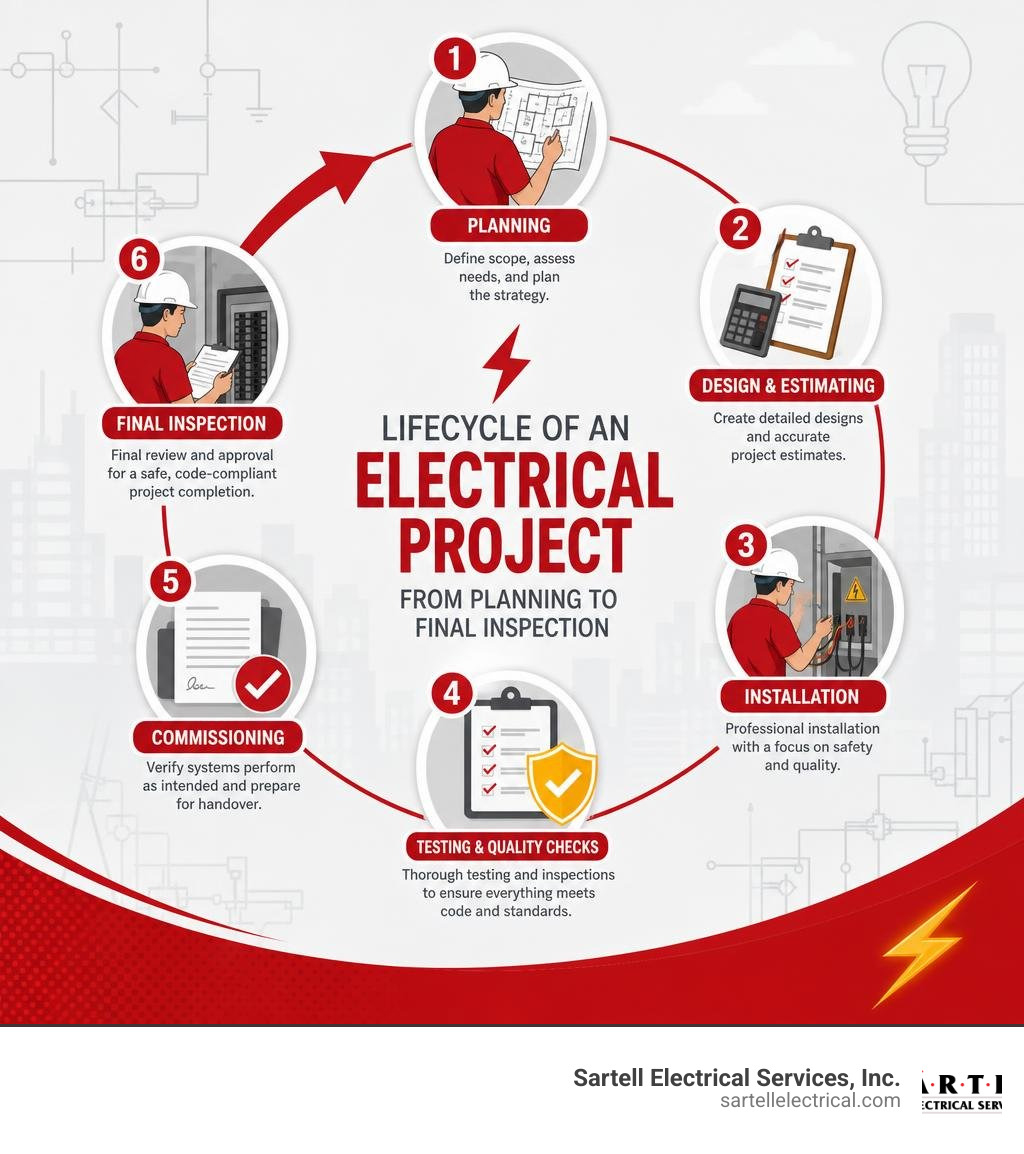
Simple guide to quality electrical contracting terms:
What Defines Quality Electrical Contracting?
When we talk about quality electrical contracting, we are referring to a comprehensive standard of practice. It is not simply about making sure the lights turn on when you flip a switch. True quality represents an alignment of technical mastery, rigorous safety protocols, administrative transparency, and structural reliability. In the electrical trade, shortcuts do not just lead to system failures—they lead to hazardous conditions like electrical fires and severe shock risks.
For any home, business, or industrial facility in Massachusetts, identifying a contractor who embodies these standards is the first step toward a successful installation. A premier contractor approaches every project with a long-term perspective, ensuring that the infrastructure installed today can handle the electrical loads of tomorrow. To understand how to evaluate these professionals without making costly mistakes, you can read our guide on How to Hire the Best Commercial Electrical Contractors Without Getting Zapped.

The Core Pillars of Quality Electrical Contracting
The foundation of exceptional electrical work rests on three core pillars:
- Uncompromising Workmanship: This involves neat, organized wiring, balanced panels, and structural integrity. A clean panel layout is not just aesthetically pleasing; it is essential for future troubleshooting and system safety.
- A Deep-Rooted Safety Culture: High-quality contractors do not view safety as a checklist item. It is integrated into daily tailgates, continuous field training, and strict adherence to protective gear standards.
- High Customer Retention: Companies that have been in business for decades report higher customer retention because they build relationships based on trust. When a contractor consistently delivers excellent commercial and residential solutions, clients do not feel the need to look elsewhere.
To find local professionals who adhere to these high standards, you can search the directory provided by the Find a Contractor – The Boston Chapter of the National Electrical ... .
Why Licensing and Insurance are Non-Negotiable
Hiring an unlicensed or uninsured individual to perform electrical work is one of the most significant risks a property owner can take. Licensing serves as official proof that an electrical contractor possesses the required training, field experience, and theoretical knowledge to execute complex electrical tasks safely.
Furthermore, adequate liability insurance and workers' compensation coverage protect you from financial ruin if an accident occurs on your property. If an uninsured worker is injured while performing installations, the property owner could be held liable. From a regulatory perspective, licensed contractors pull the necessary permits and schedule municipal inspections, ensuring full compliance with the law. For more details on federal safety requirements, you can review the OSHA Electrical Safety Standards and Regulations.
Comprehensive Electrical Services for Residential, Commercial, and Industrial Sectors
An experienced electrical contractor must be versatile. The electrical needs of a local homeowner differ vastly from those of a regional hospital or a heavy manufacturing plant. A high-quality contractor maintains specialized teams capable of addressing the unique engineering requirements of each sector. To learn more about these broad capabilities, check out our Commercial Electrical Services Ultimate Guide.
Residential vs. Commercial Electrical Needs
While both residential and commercial electrical systems rely on the same fundamental principles of physics, their scale, execution, and materials are entirely different. Residential systems typically utilize single-phase power, running through non-metallic sheathed cables behind drywall. Commercial systems, on the other hand, require three-phase power to support heavy machinery, large HVAC systems, and extensive lighting arrays. These systems are usually housed in protective metal conduits to withstand high-use environments.
| Feature | Residential Systems | Commercial Systems |
|---|---|---|
| Power Supply | Single-phase (120V/240V) | Three-phase (120V/208V or 277V/480V) |
| Wiring Method | Non-metallic sheathed cable (Romex) | Metal-clad (MC) cable or conduit |
| Load Requirements | Lower, intermittent household appliances | High, continuous machinery and HVAC loads |
| Safety Codes | Focuses heavily on GFCI/AFCI protection | Focuses on structural fire safety and emergency systems |
To keep your home safe from common hazards, the Electrical Safety Foundation International (ESFI) Home Safety offers excellent resources and checklists.
Specialized Industrial and Telecom Solutions
Industrial environments and telecommunications hubs demand a level of expertise that goes far beyond standard electrical wiring. Industrial contracting involves high-voltage power distribution, motor control centers, and heavy machinery hookups. These facilities require robust systems designed to run continuously without costly downtime.
In the telecom sector, contractors must manage delicate data cabling, fiber optics, server room power distribution, and backup generator systems. This work requires precision, as even a minor power fluctuation can corrupt critical data and disrupt communications across entire networks. If you are looking to understand how these advanced power systems are designed and installed, explore Powering Progress Finding Specialized Electrical Contractors in Boston.
Key Factors in Choosing the Right Electrical Contractor
Selecting the right partner for your project can feel overwhelming. With so many options available in Massachusetts, from local handymen to massive industrial firms, you must evaluate candidates systematically. Making the wrong choice can lead to project delays, budget overruns, and safety hazards. For a detailed guide on making this decision, consult our resource on Who to Call for Commercial Electrical Work in Boston.
Evaluating Experience and Project Portfolios
When vetting an electrical contractor, look closely at their track record.
- Years in Business: Companies with over 30 years of experience have survived economic shifts by maintaining high standards and keeping clients happy.
- Active Project Volume: Contractors handling large-scale commercial or public works projects often manage millions of dollars in active project volume annually. This indicates they have the financial stability, manpower, and supply chain relationships to keep your project moving.
- Industry Standards: Reputable contractors align themselves with industry-leading organizations. You can learn more about these national benchmarks by visiting the National Electrical Contractors Association (NECA) Standards.
Energy Efficiency and Sustainable Electrical Design
Modern electrical contracting is not just about delivering power—it is about managing it intelligently. High-quality contractors help clients reduce their carbon footprints and lower utility bills through sustainable design. This includes implementing LED lighting retrofits, installing smart building automation systems, and setting up electric vehicle (EV) charging infrastructure.
By integrating energy-efficient solutions during the initial design phase, businesses can take advantage of local utility rebates and long-term operational savings. To see how these concepts are integrated into modern builds, read about our Commercial Electrical Design Build methodology.
Safety, Compliance, and Project Management Standards
A successful electrical project requires careful planning, disciplined execution, and continuous communication. From the moment the first conduit is bent to the final sign-off from the local inspector, every step must be managed with precision.
Why Quality Electrical Contracting Matters for Safety and Compliance
The National Electrical Code (NEC) is updated every three years to incorporate new safety findings and technological advancements. A premier electrical contractor ensures that their entire team undergoes regular training to stay up-to-date with these changes.
Failing to comply with local codes can result in failed inspections, delayed occupancy permits, and expensive retrofits. More importantly, code compliance is a matter of life safety. Proper grounding, correct wire sizing, and appropriate overcurrent protection devices prevent catastrophic system failures. To understand the safety codes that govern our industry, you can refer to the National Fire Protection Association (NFPA) Code Standards.
What to Expect During Project Communication
When you partner with a professional contracting firm, you should expect a structured, transparent communication process. This includes:
- Detailed Estimates: Clear, itemized breakdowns of material and labor costs.
- Dedicated Project Management: A single point of contact who coordinates schedules, manages field staff, and addresses your questions.
- Proactive Updates: Regular progress reports that keep you informed of any changes to the project timeline.
To learn more about how we manage communication and maintain high standards on our jobs, visit Sartell Electrical Services - Commercial Electrical Services.
Frequently Asked Questions about Electrical Services
How do electrical contractors handle emergency repairs and 24/7 service needs?
Electrical emergencies do not wait for business hours. Whether it is a sudden power outage at a manufacturing plant or a faulty breaker panel in a residential home, rapid response is crucial. Reputable contractors maintain dedicated service departments with stocked service vehicles and standby technicians ready to dispatch 24/7. These teams focus on quickly troubleshooting the issue, isolating the fault, and restoring safe, reliable power to minimize downtime. If you are facing an urgent electrical issue, you can reach out directly via Sartell Electrical Services - Contact Us.
What warranties or guarantees do reputable electrical contractors typically provide?
A quality contractor stands behind their work. Reputable electrical contracting firms typically offer a comprehensive warranty on their workmanship—often ranging from one to several years—in addition to passing along the manufacturer warranties on installed equipment (such as panels, generators, and lighting fixtures). This guarantee gives you peace of mind, knowing that if any issue arises due to installation errors, the contractor will return to resolve it promptly at no additional cost.
How do contractors ensure compliance with local building codes?
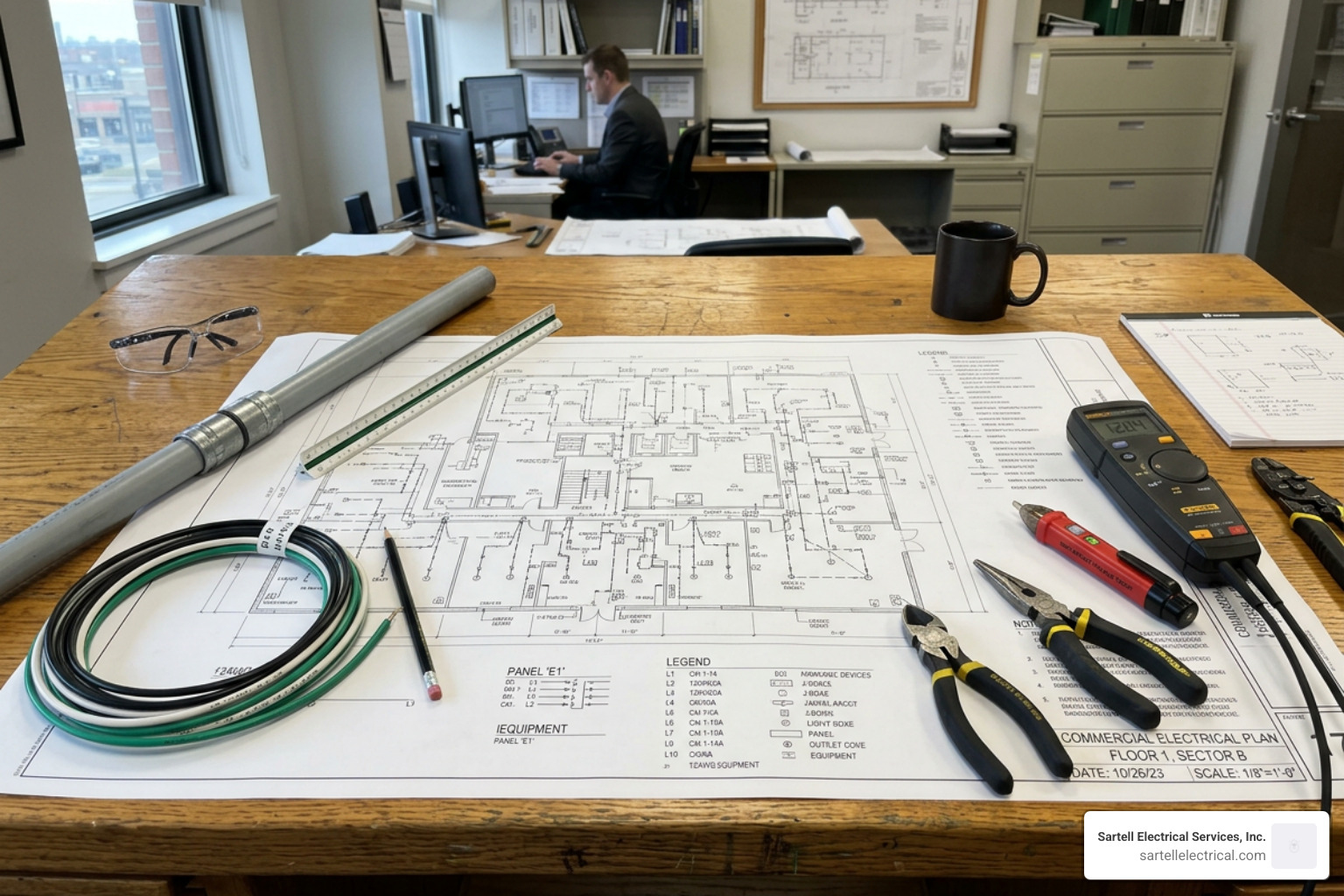
Ensuring compliance starts long before the tools are unpacked. It begins in the pre-construction phase, where engineers and master electricians review blueprints against local and national codes. Contractors handle the entire permitting process with local municipal offices and coordinate with town inspectors for rough-in and final inspections. Staying active in local trade associations helps contractors remain aware of regional amendments to the National Electrical Code. For a deeper look at navigating these regulations in our region, check out our Boston Electrical Contractors Ultimate Guide.
Conclusion
At Sartell Electrical Services, Inc., we believe that quality electrical contracting is built on a foundation of integrity, technical expertise, and outstanding customer service. For over 30 years, our team has been proud to serve communities across Massachusetts—including Middlesex, Essex, Norfolk, and Suffolk counties. From small residential upgrades in Reading to complex commercial and industrial installations in Greater Boston, we bring the same dedication to excellence to every single job.
When you choose to work with us, you are partnering with a team that prioritizes your safety, respects your budget, and delivers guaranteed results. To discuss your upcoming residential, commercial, or industrial project, visit our Electrical Contractor Service page and let us help power your vision.