
Why Knowing How to Repair a Ground Fault Could Save Your Life
Knowing how to repair a ground fault is one of the most important electrical skills a homeowner or facility manager can have. Before ground fault protection became widespread, nearly 1,000 Americans died from electrocution every year. Today, that number is under 200 — largely because of modern GFCI technology that detects current imbalances as small as 5 milliamps and cuts power in roughly 1/40th of a second.
To put that in perspective: it only takes 10 milliamps — less than the draw of a small Christmas bulb — to disrupt your heart's rhythm.
Here's a quick overview of how to repair a ground fault:
- Turn off power at the circuit breaker for the affected circuit
- Unplug all devices connected to the circuit
- Press the RESET button on the GFCI outlet — if it holds, a plugged-in appliance was the cause
- Plug devices back in one at a time to identify the faulty appliance
- Inspect outlets and wiring for loose connections, burn marks, or moisture
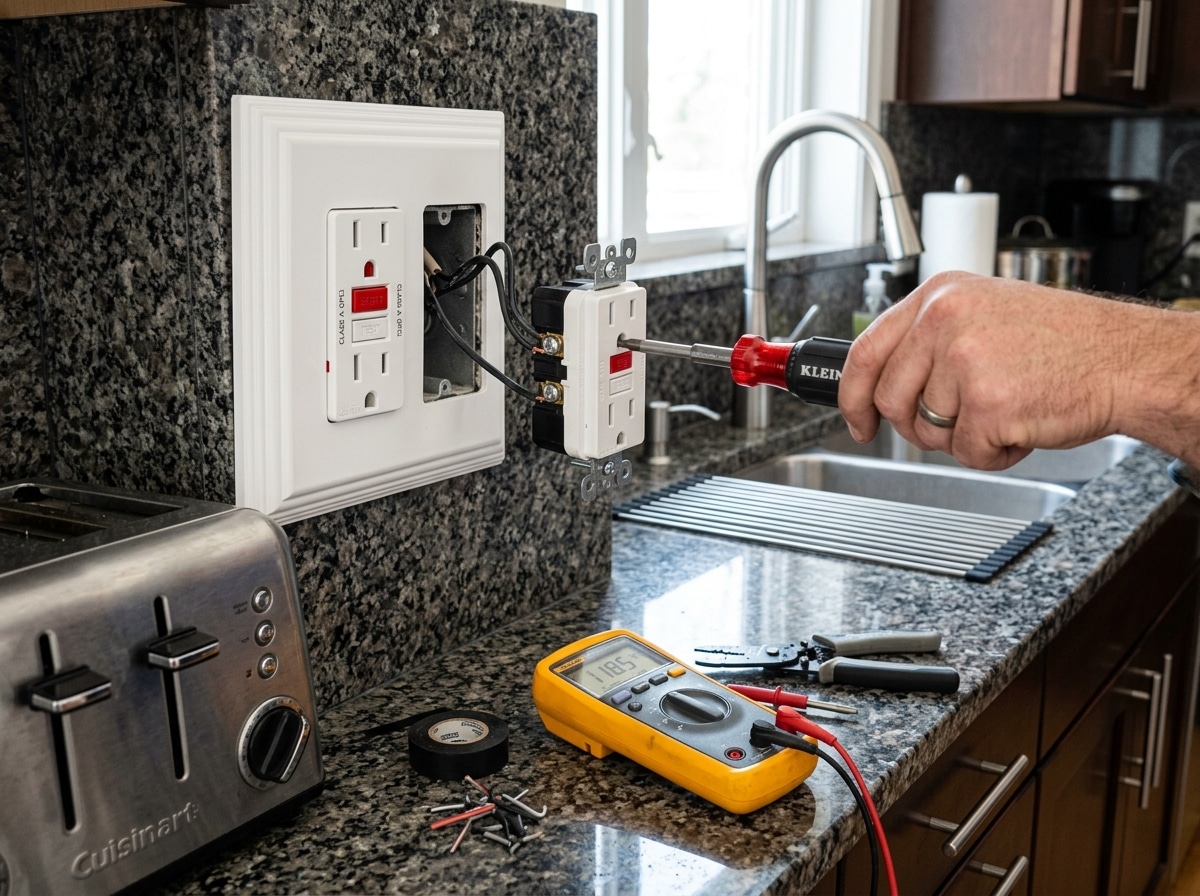
- Use a multimeter to test for continuity between the hot and ground wires
- Tighten loose connections or replace damaged outlets following correct wiring color codes
- Call a licensed electrician if the fault persists, wiring is damaged, or you smell burning
I'm Ed Sartell, President of Sartell Electrical Services, and with nearly four decades of hands-on electrical experience across Massachusetts, I've diagnosed and resolved hundreds of ground fault issues in residential, commercial, and healthcare settings. In this guide, I'll walk you through everything you need to know about how to repair a ground fault — from basic DIY fixes to knowing when it's time to call in a professional.
How to repair a ground fault word list:
Understanding the Danger: Ground Fault vs. Short Circuit
To understand how to repair a ground fault, we first need to define what it actually is. Many people use the terms "ground fault" and "short circuit" interchangeably, but they are technically different problems that require different solutions.
A short circuit occurs when a "hot" wire touches a "neutral" wire. This creates a path of very low resistance, causing a massive surge of electricity that (ideally) trips your standard circuit breaker instantly.
A ground fault, however, occurs when the hot wire touches a grounded portion of the system—such as the metal box, a copper water pipe, or even a person—rather than the neutral wire. This creates an unintended path to the earth. The danger here is that the current leakage might be too small to trip a standard 15-amp or 20-amp breaker, but it is more than enough to cause a fatal 10mA electrocution risk if you become part of that path.
Comparison Table: Ground Faults vs. Short Circuits
| Feature | Ground Fault | Short Circuit |
|---|---|---|
| Definition | Hot wire touches a grounded surface/object. | Hot wire touches the neutral wire. |
| Primary Risk | Electrocution and shock. | Fire and equipment damage. |
| Detection | Ground Fault Circuit Interrupter (GFCI). | Standard Circuit Breaker or AFCI. |
| Common Cause | Water, worn insulation, or loose wires. | Damaged wire insulation or pests. |
Beyond the immediate shock hazard, ground faults can lead to significant fire hazards. "High-impedance" faults are particularly deceptive; they leak just enough current to generate localized heat without tripping a breaker, eventually igniting nearby building materials. In our work across Greater Boston and Middlesex County, we often see these issues in older homes where insulation has become brittle over time.
Essential Tools and Safety for How to Repair a Ground Fault
Safety isn't just a suggestion when working with electricity; it's the foundation of the job. Before you even think about how to repair a ground fault, you must gather the right Personal Protective Equipment (PPE) and diagnostic tools.
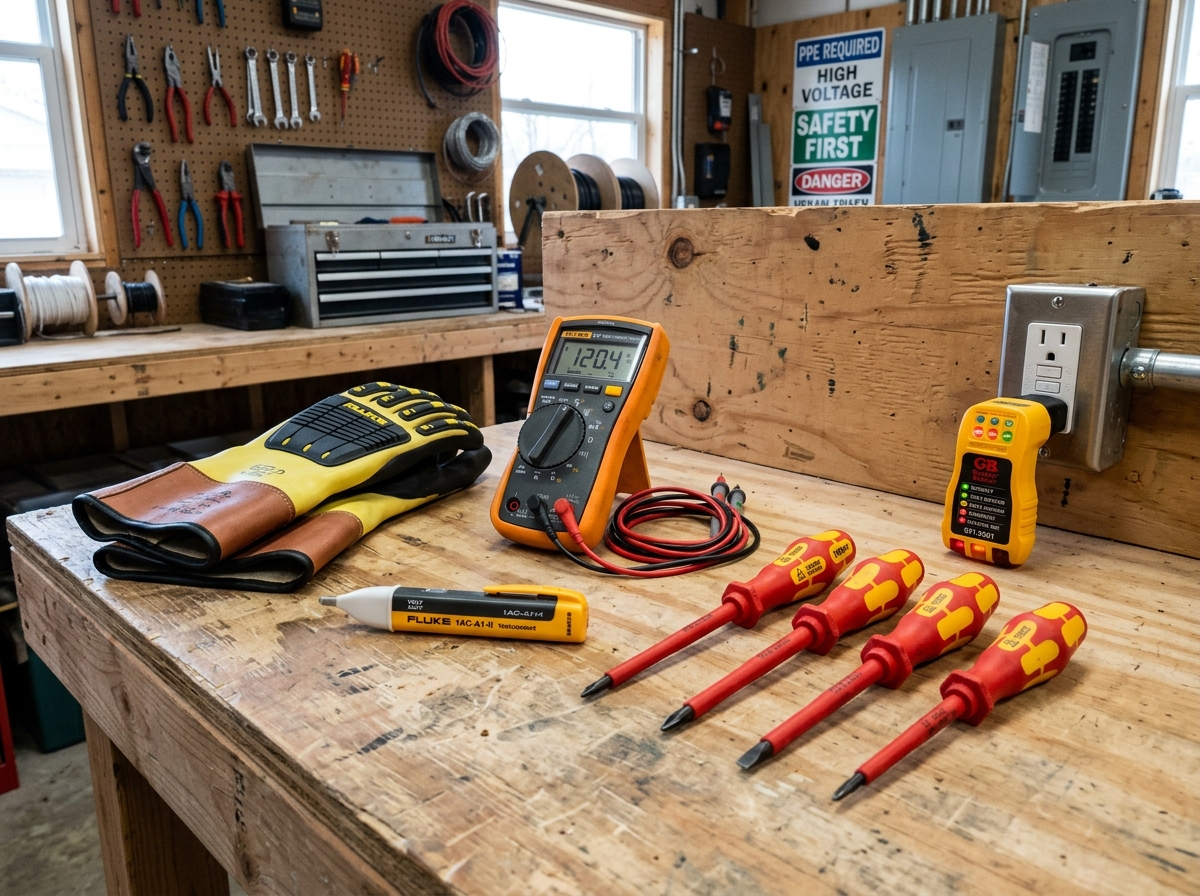
The Essential Toolkit
- Non-contact voltage tester: To verify that power is truly off before you touch a wire.
- Digital multimeter: For testing continuity and measuring voltage.
- Insulated screwdrivers: To prevent accidental contact with live components.
- Outlet tester: A simple three-prong device that can identify "open grounds" or reversed polarity.
- Flashlight: Because you'll likely have the power off while you work!
Critical Safety Precautions
- Lockout/Tagout: If you are working in a commercial setting or a large home, ensure no one else can flip the breaker back on while you are mid-repair.
- PPE: Wear rubber-soled shoes and, if possible, insulated gloves.
- Moisture Detection: Never attempt to repair a ground fault while standing in water. If an outlet in a wet basement is tripping, dry the area thoroughly before investigating.
- Live-Dead-Live Test: Always follow safety precautions for ground wire repair by testing your voltage meter on a known live source, then testing your "dead" circuit, then re-testing on the live source to ensure your meter is working correctly.
Step-by-Step Guide: The Divide and Conquer Method
Finding the source of the leak is often the hardest part of how to repair a ground fault. We recommend a systematic "divide and conquer" approach to isolate the problem.
Phase 1: Isolation
The most common cause of a ground fault isn't the house wiring at all—it’s a faulty appliance.
- Unplug everything: Go to every outlet on the affected circuit and unplug every lamp, toaster, and charger.
- Reset the GFCI: Go to the GFCI outlet or the breaker panel and attempt to reset it.
- Test the circuit: If the GFCI stays reset, the problem is one of your appliances. Plug them back in one by one. The moment the GFCI trips, you’ve found your culprit.
Phase 2: Visual Inspection
If the GFCI trips even when nothing is plugged in, the fault is in the wiring or the outlet itself.
- Turn off the breaker: Verify with your non-contact tester.
- Open the box: Pull the outlet out of the wall. Look for loose wires, "char" marks, or signs of moisture.
- Tighten terminals: Sometimes a ground fault is simply a loose hot wire touching the side of a metal junction box. Ensure all screws are tight and wires are securely looped clockwise around the terminals.
If you find that your GFCI is not resetting even after these steps, the device itself may have reached the end of its 10-to-15-year lifespan. For persistent issues, our team offers professional ground fault repair services throughout Reading, MA, and the surrounding Essex and Middlesex counties.
Using a multimeter for how to repair a ground fault
A multimeter is your best friend when visual inspection fails. It allows you to "see" where electricity is going.
- Continuity Testing: With the power off, set your multimeter to the continuity (ohms) setting. Touch one probe to the hot terminal and the other to the ground screw. You should see "OL" (open loop). If you get a reading or a beep, there is a direct path between hot and ground—a confirmed fault.
- Voltage-to-Ground: With the power on (be extremely careful), a properly functioning outlet should read 120V between hot and ground. If you see 0V, you are likely confirming an open ground, meaning the safety path is broken somewhere upstream.
Addressing Specific Issues: Outdoor Lighting and Open Grounds
Outdoor lighting is a frequent offender when it comes to ground faults in Massachusetts. Our harsh freeze-thaw cycles in areas like Andover and North Reading can wreak havoc on underground wiring.
The Problem with Moisture
Water is a perfect conductor. If moisture enters an outdoor fixture or a buried junction box, it creates a bridge for current to leak to the ground. This is why the National Electrical Code (NEC) requires weatherproof "in-use" covers and GFCI protection for all outdoor circuits.
Fixing "Open Grounds"
An "open ground" occurs when a three-prong outlet is installed but the ground wire isn't actually connected to anything. This is common in older homes (pre-1960s) that were originally wired with only two wires (hot and neutral).
- The Code-Compliant Fix: If you can't run a new ground wire, the NEC allows you to install a GFCI outlet in that spot. While it won't provide a true earth ground for surge protectors, it will provide life-saving shock protection. You must label these outlets "No Equipment Ground."
- Professional Solutions: For a permanent fix, we often help homeowners fix ungrounded outlets by running new Romex cable with a dedicated ground wire back to the panel.
Frequently Asked Questions About Ground Faults
Why does my outdoor lighting keep tripping the GFCI?
The most common reasons include:
- Moisture ingress: Check for cracked gaskets or water pooled inside the light fixture.
- Damaged buried cables: Rodents or garden tools can nick the insulation of underground wires.
- Faulty ballasts: In older fluorescent or HID outdoor lights, a failing ballast can leak current. For more help, check out our stop the trip guide.
How often should I test and replace my GFCI outlets?
You should test your GFCIs monthly by pressing the "Test" button and ensuring the "Reset" button pops out. GFCIs typically last 10 to 15 years, but they can fail much sooner if they are exposed to frequent power surges or harsh outdoor conditions. If the button doesn't pop or won't click back in, it’s time for a replacement.
When to call a professional for how to repair a ground fault?
While DIY troubleshooting is great for simple appliance issues, you should call Sartell Electrical Services immediately if:
- You smell burning or see smoke.
- The GFCI trips even after you've replaced the outlet.
- You have outdated aluminum wiring (common in homes built in the late 60s and early 70s).
- Your electrical panel is buzzing or shows signs of corrosion.
- You are uncomfortable working inside an electrical box.
Conclusion
Understanding how to repair a ground fault is about more than just keeping the lights on—it's about ensuring the safety of your family or employees. Whether it's a simple fix like replacing a damp outdoor extension cord or a complex task like tracing a neutral-to-ground short in a commercial facility, addressing these faults promptly is essential.
At Sartell Electrical Services, we pride ourselves on our 30-year commitment to excellence across Massachusetts, from Boston to the North Shore. We stay up-to-date with the latest National Electrical Code requirements to ensure your home or business is not only functional but fully compliant and safe.
Don't let a persistent trip turn into a major hazard. If you've tried the DIY steps and still have issues, schedule a ground fault repair with our expert team today. We’re here to help you stop the trip and stay safe.