Electrical Panel Change Cost 2025: Smart Guide
Understanding Your Home's Electrical Heart
Electrical panel change cost typically ranges from
$1,300 to $2,500 for most residential upgrades, though costs can vary significantly based on several key factors:
| Panel Size |
Average Cost Range |
Typical Use |
| 100-amp replacement |
$800 - $1,500 |
Older, smaller homes |
| 150-amp upgrade |
$900 - $1,750 |
Mid-sized homes |
| 200-amp upgrade |
$1,500 - $3,000 |
Modern homes, most common |
| 400-amp upgrade |
$2,000 - $4,500 |
Large homes, high demand |
Additional costs may include permits ($50-$500), meter upgrades ($200-$650), new wiring ($6-$10/foot), and drywall repair ($1.50-$3/sq ft).
Your electrical panel is the heart of your home's electrical system. It distributes power throughout your property and protects against dangerous overloads. When it's outdated or undersized, you're not just dealing with inconvenience—you're facing serious safety risks.
Many homeowners don't think about their electrical panel until something goes wrong. Flickering lights, frequently tripped breakers, or a warm panel box are all warning signs that an upgrade may be overdue. With modern homes demanding more power than ever—think electric vehicle chargers, home offices, and smart home systems—an older 100-amp panel simply can't keep up.
The cost to upgrade varies widely based on your home's specific needs. A basic panel replacement might cost $1,500, while a complete service upgrade with extensive rewiring could reach $4,000 or more. Understanding these costs helps you budget appropriately and avoid surprises.
I'm Ed Sartell, and I've been helping homeowners and businesses steer electrical panel change cost decisions since founding Sartell Electrical Services in 1985. Over nearly four decades serving Massachusetts communities, I've overseen hundreds of panel upgrades and understand exactly what drives costs up or down in these critical projects.
Signs You Need an Electrical Panel Upgrade
An outdated or undersized electrical panel can't keep up with modern demands, compromising your home's functionality and safety. Recognizing the warning signs that you need an upgrade is crucial.
Here are some tell-tale signs that it's time to consider an upgrade:
- Flickering or Dimming Lights: If your lights dim or flicker when appliances turn on, it's a classic sign your panel is struggling to distribute enough power.
- Frequently Tripped Breakers: Breakers trip to prevent overloads. If this happens often when using common appliances, your panel is likely overloaded.
- Buzzing or Crackling Sounds: Strange noises from your electrical panel can indicate loose connections or faulty wiring, which are serious fire hazards.
- Burning Smells: A burning odor from the panel indicates overheating wires, demanding immediate attention from a qualified electrician.
- Warm or Hot Panel: An electrical panel that feels warm to the touch suggests significant electrical issues and potential overloads.
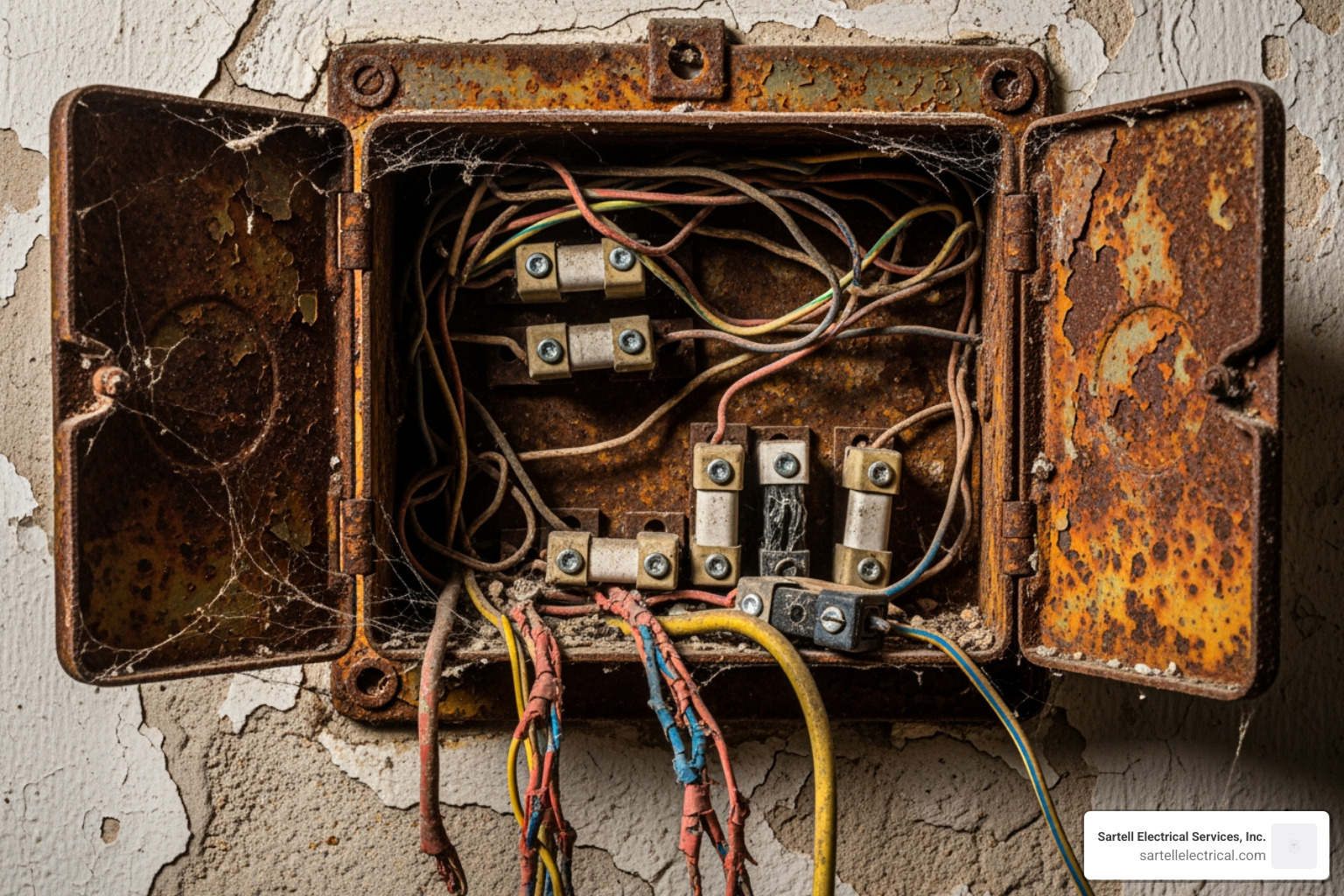
- Outdated Fuse Boxes: If your home still has a fuse box, it's time for an upgrade. Fuse boxes are less safe and cannot handle modern electrical loads. You can learn more on our Fuse Box Replacement page.
- Federal Pacific and Zinsco Panels: If your home has one of these brands, we strongly recommend immediate replacement. They are known to have design flaws that pose a significant fire risk.
- Insufficient Power for Modern Appliances: Modern homes are power-hungry. Air conditioners, electric car chargers, and hot tubs can easily overwhelm an older panel. Your system may struggle to handle the load increased electrical demands.
- Panel is Over 25 Years Old: Panels typically last 25-40 years. If yours is over 25, it's wise to have it inspected, even without obvious problems.
- Messy or Unorganized Wiring: Disorganized or damaged wiring could be a sign of poor installation or age, warranting an expert review.
Ignoring these warning signs can lead to electrical fires, property damage, or serious injury. We can help you assess your current system to determine if an upgrade is necessary to keep your home safe and efficient.
The Average Electrical Panel Change Cost
Understanding the average
electrical panel change cost is the first step in budgeting for this essential home improvement. On average, homeowners in our Massachusetts service areas can expect the cost to upgrade an electrical panel to be around $1,750, with typical ranges for a full replacement falling between $800 and $2,500.
Upgrading your electrical panel is an investment in your home's safety and value. More than 50% of home buyers would pay more for a home with an updated electrical system, as it can support modern appliances and reduces potential future repair costs. For more detailed insights, visit our
Home Electrical Panel Upgrade Cost guide.
National Average Electrical Panel Change Cost
Nationally, the average price for an electrical panel replacement is around $1,350, with a typical range of $520 to $2,200. However, comprehensive projects involving extensive rewiring or panel relocation can cost up to $4,500. Key factors include the panel's amperage, labor rates, and any additional electrical work required. For a deeper dive into these costs, our
Main Panel Upgrade Cost page offers comprehensive details.
Cost to Upgrade from 100 to 200 Amps
One of the most common upgrades is moving from a 100-amp to a 200-amp service to support modern electrical demands like EV chargers and hot tubs. The cost for a 200-amp panel upgrade typically ranges from $1,500 to $3,000. This is considered the modern standard for residential homes, ensuring sufficient capacity for current and future needs. We have a dedicated resource for this specific upgrade:
200 Amp Service Upgrade.
The Electrical Panel Change Cost for a Full Replacement
A full electrical panel replacement is often necessary for homes with outdated fuse boxes or defective panels (like Federal Pacific or Zinsco). The
electrical panel change cost for a full replacement typically ranges from $1,500 to $4,000 or more. This price can vary depending on the complexity, such as replacing a fuse box ($1,100-$4,000) or relocating the panel, which adds significant labor and material costs.
Full replacement is essential when:
- The existing panel is severely damaged or corroded.
- The panel is a known fire hazard (e.g., Federal Pacific or Zinsco).
- The home's infrastructure is outdated and requires extensive rewiring to meet current codes.
- A significant increase in electrical load is needed that the old panel cannot support.
We prioritize safety and efficiency in every replacement, ensuring your new system meets all current safety standards. Learn more about replacement costs on our
Cost to Replace Main Breaker Panel page.
Key Factors That Influence Upgrade Pricing
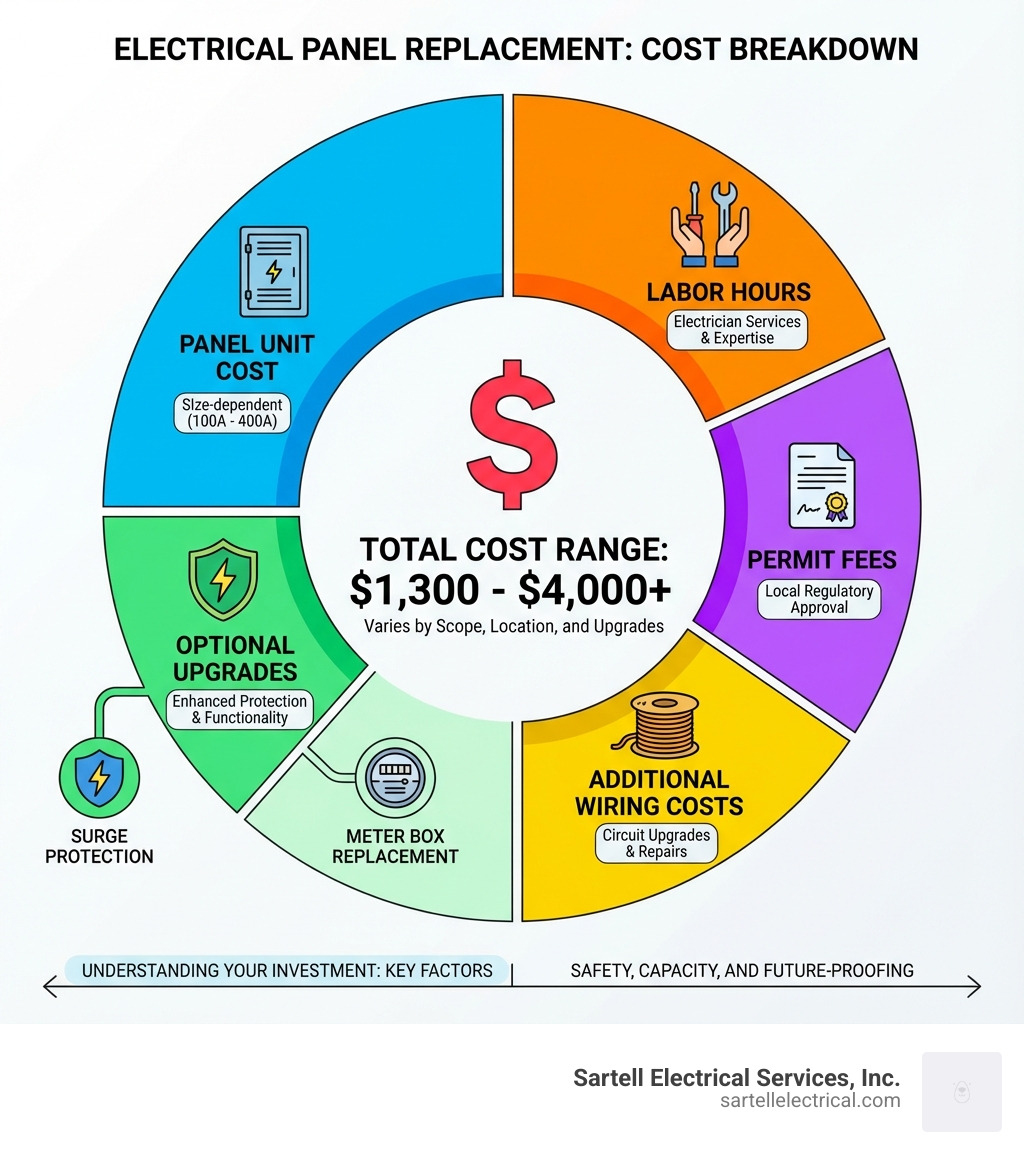
The final price for your
electrical panel change cost depends on several key factors, much like a custom project.
Here's a breakdown of what influences the cost:
- Panel Size and Amperage: The capacity of your new panel is a primary cost driver.
- Labor and Electrician Rates: The expertise and time required for the installation.
- Permits and Additional Work: Regulatory approvals and any supplementary electrical tasks.
- Accessibility of the Panel: How easy or difficult it is to access the panel.
- Condition of Existing Wiring: Deteriorated wiring may need replacement, adding to the cost.
- Relocation of the Panel: Moving the panel increases labor and material costs.
- Type of Breakers: Specialized breakers like GFCI or AFCI cost more than standard ones.
- Material Quality: The brand and quality of the panel and components.
Panel Size and Amperage
The amperage of your electrical panel dictates how much power your home can draw and is a significant factor in the
electrical panel change cost.
- 100-amp panel: A 100-amp panel replacement typically costs $800 to $1,200. These are usually found in older, smaller homes and may struggle with modern electrical demands.
- 150-amp panel: A 150-amp panel replacement costs between $900 to $1,500 and is suitable for mid-sized homes with moderate appliance use.
- 200-amp panel: A 200-amp panel replacement costs between $1,300 to $2,500. This is the standard for most modern homes, providing ample power for HVAC systems and EV chargers.
- 400-amp panel: A 400-amp panel replacement can range from $1,500 to $4,000. These are for very large homes with extremely high electrical demands, such as pools and multiple EV chargers.
We help homeowners assess their electrical load to determine the right size. For a complete guide, visit our
Residential Electrical Service Amps Complete Guide.
Labor and Electrician Rates
Labor is a substantial part of the overall
electrical panel change cost. Licensed electricians in Massachusetts typically charge $50 to $150 per hour. A standard panel replacement takes 4 to 8 hours, but complex jobs with extensive rewiring can take much longer. Factors affecting labor costs include the complexity of the installation (e.g., a fuse box upgrade) and the accessibility of the panel.
Permits and Additional Work
Beyond the panel and labor, several other items can influence the total
electrical panel change cost.
- Permit Fees: Electrical panel upgrades require a permit to ensure compliance with safety codes. Fees in Massachusetts typically range from $50 to $300.
- Meter Base Upgrades: If the existing meter box can't handle the new amperage, an upgrade may be needed, costing $300 to $650.
- New Wiring or Circuits: Replacing old wiring costs $6 to $10 per foot. Adding new circuits can cost between $100 and $250 each, with major rewiring adding $500-$2,000+ to the project.
- Drywall Repair: Cutting into walls may be necessary, with repairs costing $1.50 to $3 per square foot.
- Grounding System Updates: Upgrading an old grounding system to meet current standards can add $200-$500.
- Relocating Panel: Relocating a panel, often required if the current location violates code, typically costs $1,500 to $4,000.
- Subpanels: Adding a subpanel for a specific area (like a workshop) can be a cost-effective solution, typically costing $500 to $1,750.
- Whole-House Surge Protection: We often recommend whole-house surge protection, which costs around $300 to $700 and protects all your electronics.
- Breakers: While standard breakers cost around $10, specialized GFCI or AFCI breakers cost $30-$100 each. Replacing only the main breaker might cost $80-$200.
These additional costs are essential for ensuring your electrical system is safe and compliant. For more information, refer to our
Electrical Service Upgrades Complete Guide.
The Panel Upgrade Process and Finding a Pro
Undertaking an electrical panel upgrade is a significant project, and knowing what to expect can help ease any concerns. Our process is designed to be as smooth and transparent as possible, from initial assessment to final inspection.
What to Expect During Installation
When we start on an electrical panel change, here's a general overview of the steps involved:
- Initial Assessment: We evaluate your current electrical system, discuss your power needs, and identify the best solution for your home.
- Pulling Permits: We handle all the necessary paperwork, securing the required permits from your local Massachusetts building department.
- Scheduling Power Shut-off: We coordinate with you and the utility company to schedule a temporary power shut-off for safety.
- Old Panel Removal: Once power is off, we carefully remove your old electrical panel and any associated outdated wiring.
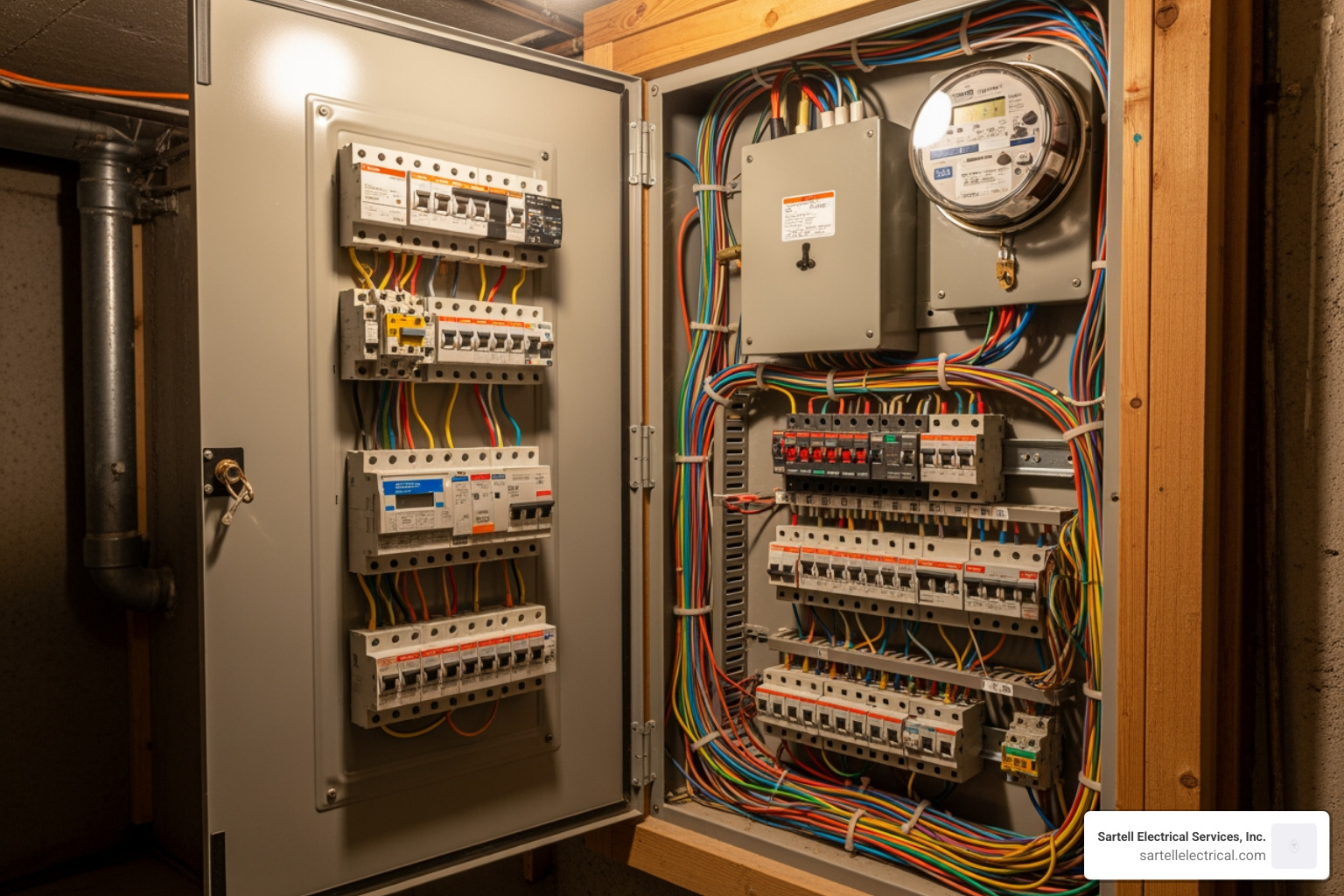
- New Panel Installation: We install your new, higher-capacity electrical panel, ensuring it's securely mounted and properly grounded.
- Wiring Connections: All circuits are carefully connected to the new breakers. This may involve updating wiring to meet modern standards. You can find more information on our House Breaker Panel Wiring page.
- Testing and Inspection: After installation, we test the new panel and all circuits. A final inspection by the local authority confirms the work meets all electrical codes.
- Clean-up: We ensure the work area is clean and tidy before we leave.
The entire process, from start to finish (excluding extensive rewiring), typically takes between four and eight hours.
How to Hire a Licensed Electrician
Hiring a licensed and experienced electrician is non-negotiable for this project. Improper electrical work is dangerous and can lead to fire and costly repairs.
When choosing an electrician in Massachusetts, we recommend the following:
- Check Licenses and Insurance: Verify the electrician is licensed by the state and carries appropriate liability and worker's compensation insurance.
- Read Reviews and Ask for References: Look for electricians with a strong reputation for quality work and excellent customer service.
- Get Multiple Quotes: Contact a few reputable electricians to get detailed quotes to compare pricing for your electrical panel change cost.
- Ask About Code Knowledge: Ensure the electrician is well-versed in the latest National Electrical Code (NEC) and local Massachusetts building codes. A qualified professional will ensure the work meets these standards, which is vital for safety and passing inspections.
- Discuss Permits and Timelines: A professional electrician will handle the permit process and provide a clear timeline for the project.
At Sartell Electrical Services, we pride ourselves on our over 30 years of experience. Our team is fully licensed, insured, and committed to delivering excellence, ensuring your panel upgrade is done safely, efficiently, and up to code.
Frequently Asked Questions about Panel Upgrades
We understand that an electrical panel upgrade can bring up a lot of questions. Here, we address some of the most common inquiries we receive from homeowners in Massachusetts.
What are the benefits of upgrading my electrical panel?
Upgrading your electrical panel offers a multitude of benefits, making it a smart investment:
- Improved Safety: A new panel reduces the risk of electrical fires and shocks by preventing overloads.
- Increased Electrical Capacity: A modern 200-amp panel can handle today's power demands, including EV chargers and smart home systems, without tripping breakers.
- Higher Home Value: An updated electrical system is a significant selling point, as over 50% of buyers would pay more for a home with one.
- Better Energy Efficiency: A new panel ensures efficient power delivery, preventing energy waste from faulty circuits.
- Code Compliance: New panels are installed to the latest electrical codes, ensuring your home meets current safety standards for insurance and home sales.
- Insurance Premium Reduction: Some insurers may offer lower premiums for homes with updated, safer electrical systems.
Are there any rebates or incentives for panel upgrades?
Yes, various programs can help offset the
electrical panel change cost. Homeowners may find rebates or incentives through:
- Federal Tax Credits: The EnergyStar Electric Panel Upgrade Tax Credit is available for qualifying upgrades made through 2032.
- State and Local Rebates: Massachusetts and local municipalities often have programs to encourage energy-efficient home improvements.
- Utility Company Programs: Your local electricity provider may offer incentives for upgrades that improve grid stability.
- Low-Income Programs: Specific programs may offer significant financial assistance for qualifying low-income households.
We encourage you to research current programs or consult with us for guidance on reducing your out-of-pocket expenses.
Can I replace an electrical panel myself?
No. We strongly advise against attempting to replace an electrical panel yourself. This is not a DIY project for several critical reasons:
- Electrocution Hazard: Working with electrical panels carries a severe risk of fatal electrocution.
- Fire Risk: Improper wiring or loose connections can lead to overheating and electrical fires.
- Code Violations: DIY work will not meet strict national and local codes, leading to failed inspections, fines, and mandatory professional repairs.
- Insurance Issues: Home insurance policies typically do not cover damages from unpermitted or improper electrical work.
- Importance of Professional Installation: Licensed electricians have the training, tools, safety gear, and insurance to do the job correctly and safely.
For the safety of your home and family, electrical panel work should always be left to a qualified professional.
Conclusion: Investing in Your Home's Safety and Future
Navigating the
electrical panel change cost can seem daunting, but it's an essential investment in the safety, functionality, and future value of your home. From understanding the warning signs of an outdated system to deciphering cost factors and the installation process, we've aimed to provide you with a comprehensive guide.
Upgrading your electrical panel is about more than just the immediate expense. It's about ensuring your family's safety, accommodating the ever-growing electrical demands of modern life, and potentially increasing your home's resale value. With a new panel, you gain peace of mind, knowing your electrical system is reliable, efficient, and up to code.
At Sartell Electrical Services, we've been proudly serving Massachusetts communities for nearly 40 years, bringing expertise, commitment to excellence, and unparalleled customer service to every project. We understand the unique needs of homes in our service areas, including Middlesex County, Essex County, Norfolk County, Suffolk County, and Greater Boston.
Don't let an outdated electrical panel put your home or family at risk. We're here to help you make an informed decision and ensure your electrical system is ready for today and tomorrow.
Contact us for a professional estimate on your electrical panel change today. Let us help you power your home safely and efficiently.