Electrical solutions for industrial environments: 2025 Success
Why Industrial Electrical Solutions Are Critical for Modern Manufacturing
Electrical solutions for industrial environments form the backbone of today's manufacturing and processing facilities, where specialized systems must handle extreme conditions while maintaining continuous operation. Unlike residential or commercial applications, industrial electrical systems face unique challenges including high power demands, harsh environmental conditions, and the critical need for zero downtime.
Key Industrial Electrical Solutions Include:
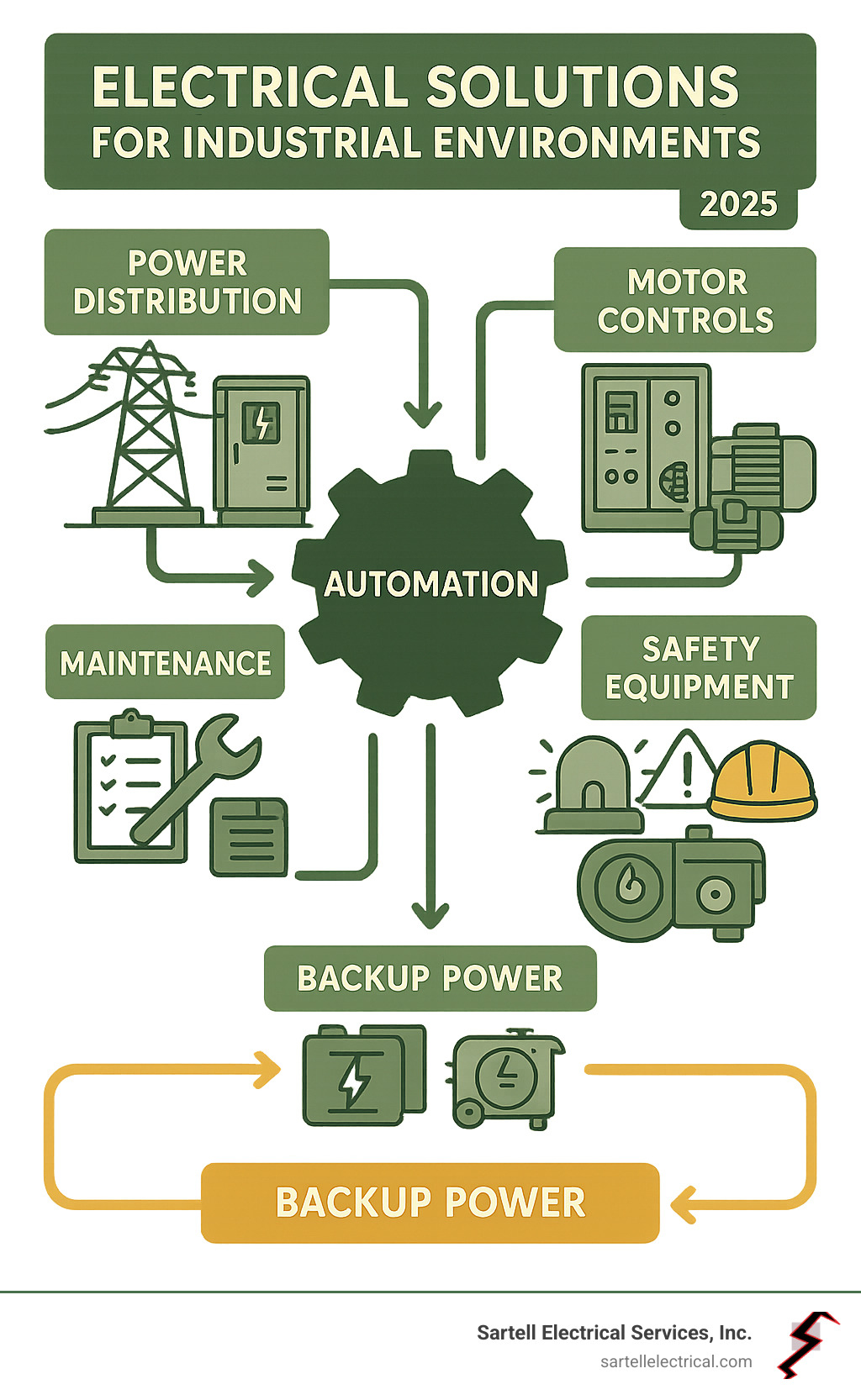
- Power Distribution Systems - High-voltage substations and transformers for heavy machinery
- Motor Control Centers (MCCs) - Variable frequency drives and soft starters for equipment control
- Automation Systems - PLCs, SCADA, and HMI interfaces for process control
- Safety Systems - Arc flash protection, emergency shutdown, and hazardous location wiring
- Backup Power - UPS systems and generators for continuous operation
- Specialized Components - NEMA-rated enclosures, explosion-proof equipment, and corrosion-resistant materials
Industrial environments present demanding conditions that require robust electrical infrastructure. As one industry expert notes,
"Industrial environments present unique challenges that require specialized electrical solutions" - from exposure to dust, moisture, and vibration to the need for systems that can operate 24/7 without failure.
These facilities often house complex machinery requiring precise power management, sophisticated control systems, and safety measures that go far beyond standard electrical work. The stakes are high: electrical failures can result in costly downtime, safety hazards, and significant revenue losses.
I'm Ed Sartell, President of Sartell Electrical Services, and I've been delivering dependable
electrical solutions for industrial environments across Massachusetts since 1985. With nearly four decades of hands-on experience in complex industrial installations, I understand the critical importance of getting these systems right the first time.
Understanding the Unique Electrical Demands of Industry
Industrial electrical systems are fundamentally different from residential or commercial ones. They must withstand demanding, harsh conditions—including dust, moisture, vibration, extreme temperatures, and corrosive agents—while powering complex machinery.
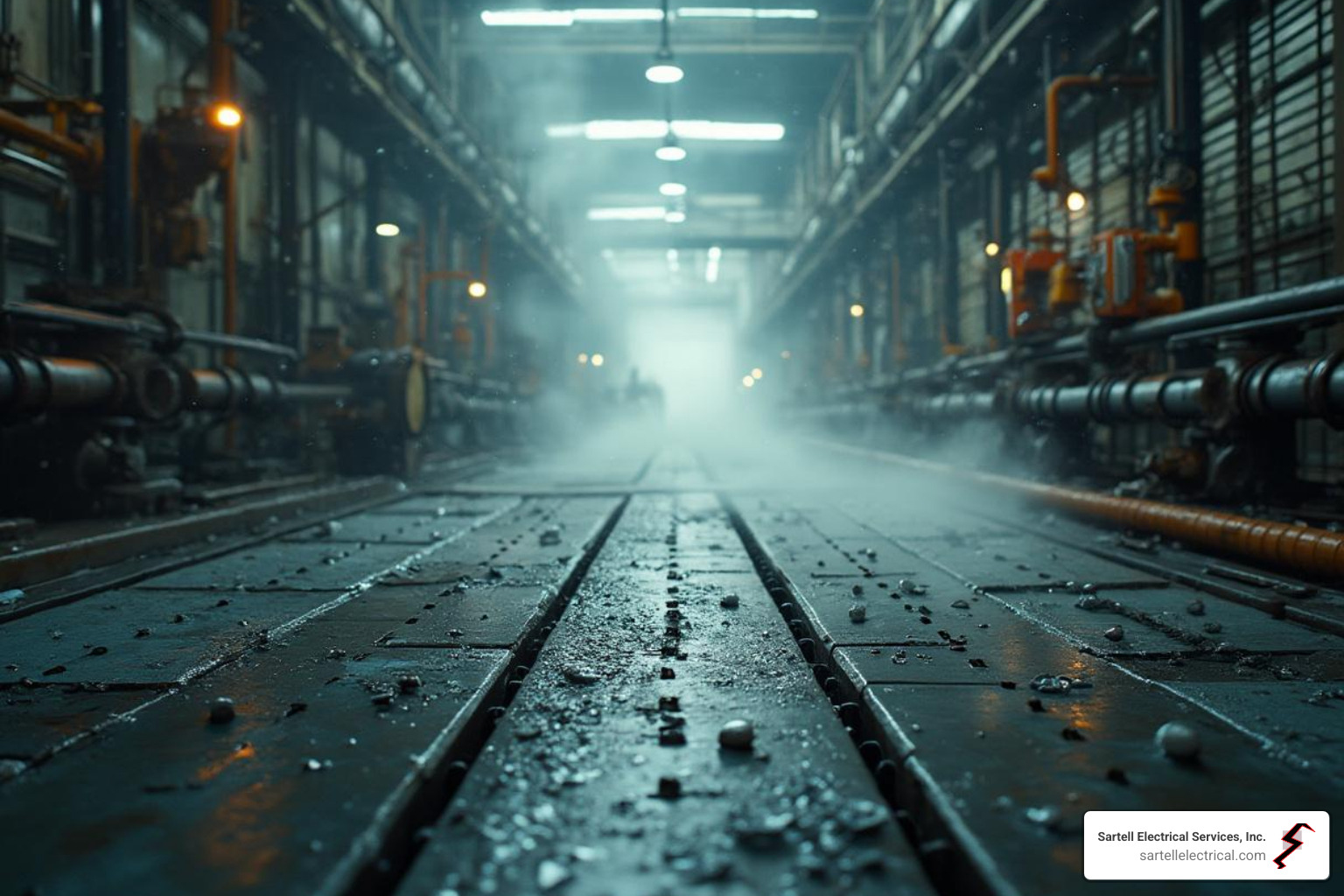
From manufacturing plants to processing facilities, each environment presents unique challenges. Food and beverage plants, for example, are "harsh, challenging environments" requiring solutions that withstand constant cleaning and moisture. Similarly, other sites may operate under "incredibly harsh conditions" that demand components resilient to extreme temperatures and corrosive atmospheres.
The nature of industrial operations dictates high power loads and continuous, uninterrupted operation. Even a brief system failure can lead to significant production losses, equipment damage, or critical safety hazards. Therefore, the reliability and longevity of industrial electrical infrastructure are paramount.
Key Challenges for Industrial Electrical Systems
The unique characteristics of industrial settings translate into several key electrical challenges:
- Heavy Machinery Power Requirements: Powerful equipment like motors, furnaces, and robotics demands substantial and stable power. This necessitates robust power distribution, large transformers, and specialized motor controls.
- Voltage Fluctuations and Power Quality: Industrial loads can create voltage sags, swells, and harmonic distortions that impact sensitive electronics and system efficiency. Maintaining pristine power quality is crucial for protecting equipment and ensuring consistent operation.
- Harsh Operating Environments: Exposure to dust, moisture, chemicals, and extreme temperatures degrades standard electrical components. This calls for durable, NEMA-rated enclosures and corrosion-resistant materials to ensure longevity.
- Downtime Costs: In industrial settings, unplanned downtime directly translates into lost productivity and revenue. Safeguarding critical functions to eliminate downtime is a top priority for maintaining profitability and a competitive edge.
- Regulatory Compliance: Industrial electrical systems must adhere to complex safety regulations like NFPA 70 (National Electrical Code) and OSHA guidelines, plus industry-specific certifications for hazardous locations. Ensuring compliance is critical.
- System Complexity: Modern operations involve intricate networks of integrated automation, communication, and control systems. Managing this complexity requires expert design, installation, and troubleshooting.
Successfully navigating these challenges requires specialized expertise and a deep understanding of industrial processes. At Sartell Electrical Services, we pride ourselves on delivering robust
Industrial Electrical Services that address these unique demands head-on.
Core Components and Essential Services for Modern Operations
Industrial electrical systems function like the circulatory system of a manufacturing facility, where every part must work in harmony.
Electrical solutions for industrial environments require a blend of robust components and specialized services to handle the demanding nature of industrial work.
At the heart of every operation are
power distribution systems delivering electricity to all equipment, working alongside
motor controls that precisely regulate motor function.
Industrial lighting must safely illuminate vast spaces while withstanding harsh conditions.
Emergency power systems, like UPS and generators, provide a critical safety net during outages.
Essential components also include
grounding systems to protect personnel and equipment from electrical faults, and
cable management solutions to keep wiring organized and protected. These elements are fundamental for safe, reliable operations.
Essential Industrial Electrical Services
Integrating these components seamlessly requires specialized expertise. Comprehensive industrial electrical services are essential to prevent unexpected downtime and ensure operational success.
- Power distribution design and installation is the foundation, involving the planning of the entire electrical network, from high-voltage substations to the panelboards and wiring feeding your equipment.
- Motor Control Center (MCC) setup and maintenance centralizes motor controls, simplifying maintenance and improving reliability. We manage initial configuration and ongoing maintenance for peak performance.
- Variable Frequency Drive (VFD) and soft starter installation provides precise motor speed control to reduce energy consumption, while soft starters protect motors by reducing harsh startup currents.
- PLC and automation system integration, working with SCADA and HMI systems, provides real-time operational visibility and automates complex processes.
- High-voltage substation services ensure reliable power for the most demanding equipment in larger facilities.
- Arc flash analysis and mitigation protects personnel by identifying potential hazards and ensuring compliance with safety standards like NFPA 70E.
- Preventative maintenance programs, including regular inspections, testing, and cleaning, prevent costly, unexpected breakdowns that can halt operations.
Selecting Robust Electrical Components
Choosing the right components means selecting equipment that can thrive in harsh industrial conditions.
- NEMA-rated enclosures provide the first line of defense against dust, water, and corrosive substances, protecting sensitive components.
- Watertight connectors are critical in washdown areas or where moisture is present, maintaining reliable connections to prevent production shutdowns.
- Corrosion-resistant materials like stainless steel are essential in chemical plants or marine environments to extend equipment life and reduce maintenance.
- High-amperage plugs and connectors safely handle the substantial power demands of heavy industrial machinery.
- Durable wiring and cabling designed for industrial use withstands physical stress, temperature extremes, and chemical exposure.
As your trusted
Industrial Electrical Contractor Waltham MA, we understand that every component choice impacts your facility's safety, efficiency, and bottom line. Our decades of experience help ensure that your electrical infrastructure supports your operations reliably for years to come.
Advanced Electrical Solutions for Industrial Environments and Future-Proofing
As industrial operations grow more sophisticated, their electrical systems must evolve. Advanced
electrical solutions for industrial environments go beyond solving current issues to improve productivity, optimize resources, and future-proof your facility. This involves leveraging automation, intelligent power management, and technologies like the Industrial Internet of Things (IIoT) to build smarter, more resilient operations.
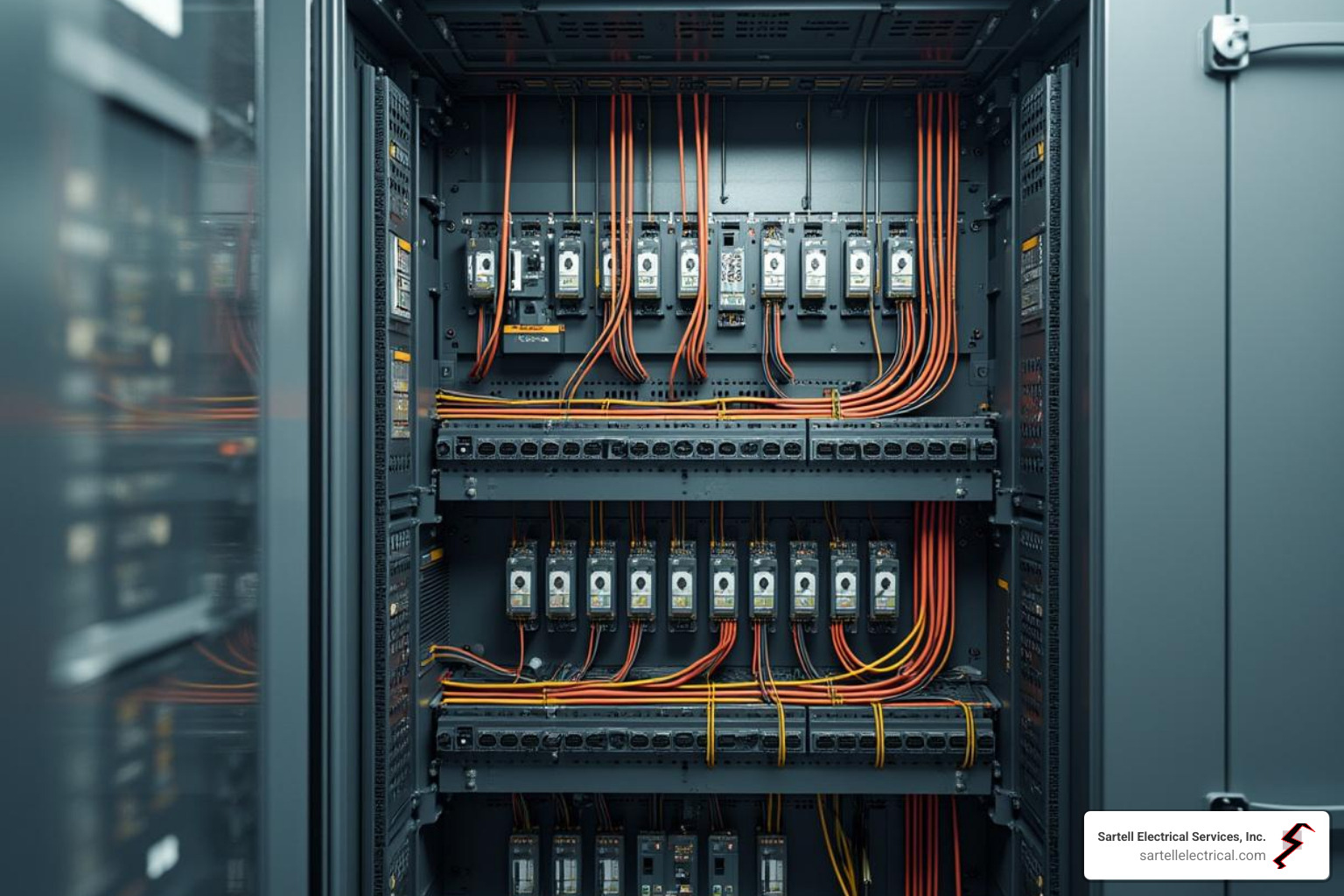
We're proud to bring these forward-thinking solutions to clients, whether you're in Reading, Waltham, or looking for an
Industrial Electrical Contractor Woburn MA.
The Role of Automation and Control Systems
Automation and control systems are the heart of modern industrial efficiency. They replace manual, repetitive tasks with precise, repeatable, and faster automated functions, resulting in significant gains in productivity and safety.
- Programmable Logic Controllers (PLCs): These specialized industrial computers are the brains of the manufacturing process, controlling machinery based on inputs from sensors and other devices to enable seamless system integration.
- Supervisory Control and Data Acquisition (SCADA): SCADA systems provide a centralized, high-level view for monitoring and controlling entire industrial processes. They deliver real-time data, enabling quick, informed decisions.
- Human-Machine Interface (HMI): These user-friendly dashboards allow operators to interact with PLCs and SCADA systems, providing data visualization and easy command input.
The benefits include
increased precision,
reduced manual error,
real-time monitoring, and
improved safety. Innovative solutions like Beckhoff's MX-System offer pluggable, control cabinet-free automation, simplifying wiring and installation for tough environments. You can find
More info about industrial automation.
Optimizing Power Management Strategies
Efficient power management is vital for smooth operations and long-term cost savings.
- VFDs for Energy Savings: Variable Frequency Drives (VFDs) are key to energy optimization. By allowing motors to operate at variable speeds instead of full throttle, VFDs significantly cut energy consumption for equipment like fans, pumps, and compressors.
- Load Balancing: We ensure electrical loads are distributed evenly across all phases. This prevents imbalances that cause wasted energy and unnecessary equipment strain.
- Power Factor Correction: Many industrial machines cause a poor power factor, meaning you pay for electricity you don't efficiently use. We implement Power Factor Correction to improve efficiency, lower energy bills, and free up system capacity.
- Redundant Power Systems: For facilities where downtime is not an option, redundant systems ensure continuous operation. Uninterruptible Power Supplies (UPS) provide immediate, short-term backup power, while Backup Generators kick in for longer interruptions.
Our expertise in power management ensures that your facility, whether you're in Reading MA or looking for an
Industrial Electrical Contractor Burlington MA, operates with maximum efficiency and minimal risk of costly downtime.
How Emerging Technologies Impact Electrical Solutions for Industrial Environments
New technologies are constantly emerging, promising greater efficiency, safety, and connectivity. We stay on top of these advancements to bring you the best
electrical solutions for industrial environments.
- Smart Sensors and Predictive Maintenance: Smart Sensors collect real-time performance data (e.g., temperature, vibration) for Predictive Maintenance. This data allows systems to predict potential failures, enabling proactive repairs that reduce unplanned downtime.
- Decentralized Power Supplies: These can be placed directly on machines or in the field, rather than in a central cabinet. This approach simplifies planning, reduces cable runs, and eases maintenance.
- Wireless Communication: This offers a flexible alternative to complex cabling, allowing for easier equipment placement and data transmission from hard-to-reach areas.
- Powerline Communication: This technology transmits data through existing electrical power lines, offering a cost-effective way to connect industrial devices. You can learn more about Powerline Communication technology.
- Modular Energy Distribution: Systems like Wieland Electric's podis® CON offer flexibility for energy distribution, saving time and money during installation and future expansions.
- Industrial IoT (IIoT) and Digitalization: The Industrial Internet of Things (IIoT) connects machines to share data. Combined with Digitalization, this allows for unprecedented data collection and analysis, leading to optimized processes and informed decisions.
These advanced
electrical solutions for industrial environments are all about building smarter, more resilient, and more productive operations for the long term. We're here to help you steer this exciting landscape!
Ensuring System Longevity: Maintenance, Troubleshooting, and Professional Partnerships
You’ve invested in robust
electrical solutions for industrial environments. That’s fantastic! But just like a well-oiled machine needs regular care, your industrial electrical infrastructure isn't a "set it and forget it" kind of deal. Its long life and dependable performance come from careful, ongoing maintenance and having the right professional partners by your side. It’s all about making sure your initial investment keeps paying off, year after year.
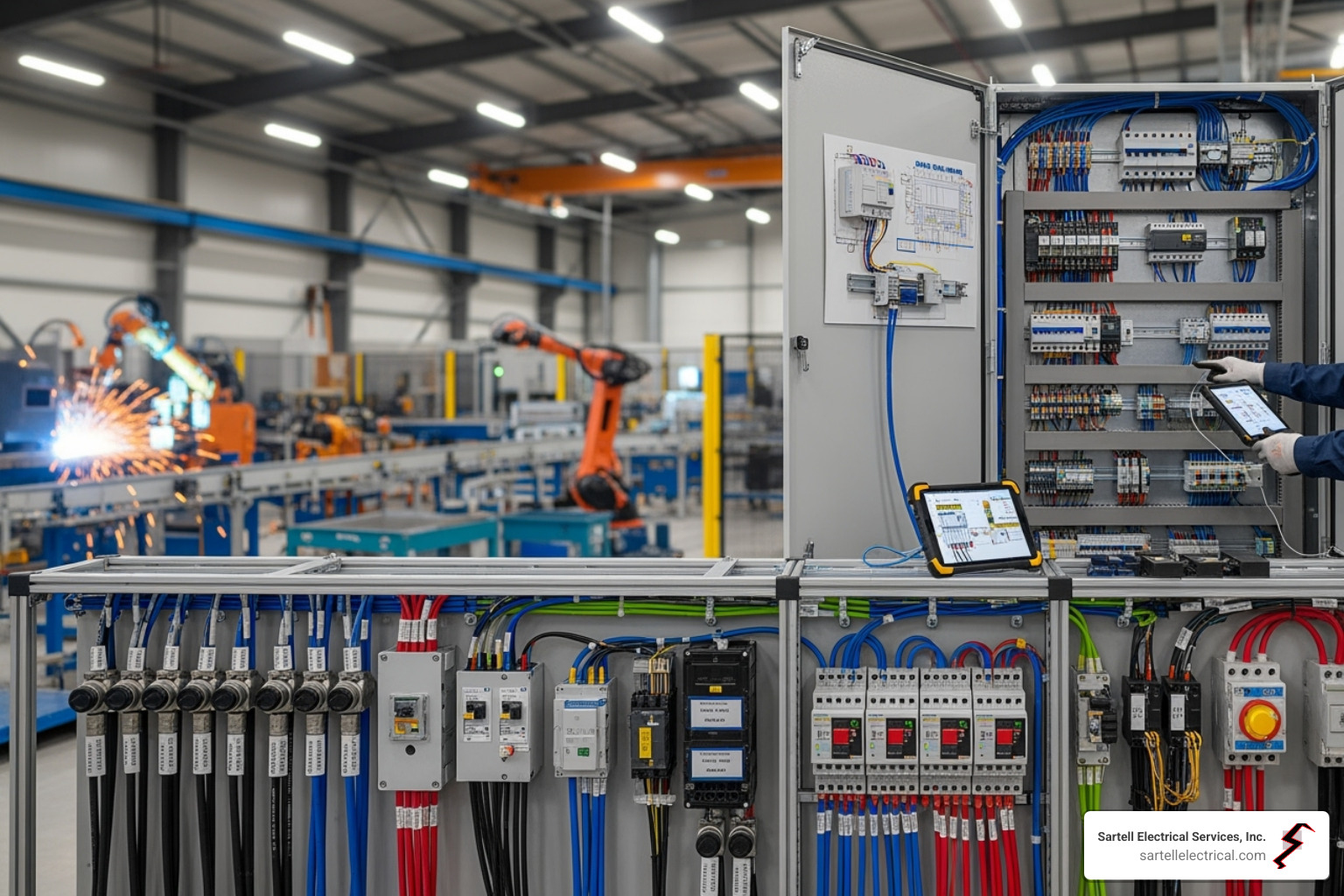
Best Practices for Maintaining Your Electrical Infrastructure
Think of proactive maintenance as your facility's health check-up. It's much smarter (and usually cheaper!) to prevent a problem than to fix a big, unexpected breakdown. By following some key practices, you can significantly boost the lifespan of your systems and avoid frustrating downtime.
Here’s how we recommend keeping your industrial electrical systems in top shape:
- Regular Inspections: Our qualified electricians conduct scheduled visual checks. We're looking for common culprits like loose connections, signs of overheating, corrosion, or simple wear and tear. Catching these early can save you a lot of headaches later.
- Thermal Imaging: This is like giving your electrical panel X-ray vision! We use special thermal cameras to spot "hot spots" – abnormal heat in connections or components. This non-invasive method helps us find potential issues long before they become visible or cause a complete failure. It’s a bit like checking your engine temperature before it boils over.
- Load Testing: We periodically test how much electrical load your circuits and equipment are handling. This confirms that your systems aren’t overworked and can safely manage all your power demands, even during peak times.
- Cleaning and Calibration: Dust, dirt, and even moisture can build up, causing overheating or poor performance. Regular cleaning of panels and components, plus careful calibration of sensitive instruments, keeps everything running just as it should.
- Detailed Documentation: We believe in keeping a clear paper trail (or digital trail!). Having accurate, up-to-date records – including schematics, maintenance history, and equipment details – is super important. It makes troubleshooting faster and future upgrades much smoother.
These practices are a core part of any good preventative maintenance plan. They’re absolutely vital for keeping your equipment running longer and cutting down on those costly, unexpected shutdowns. This focus on continuous care is a hallmark of our work, whether we’re serving an
Industrial Electrical Contractor Peabody MA or anywhere else in our wide Massachusetts service area.
The Value of Partnering with a Specialized Industrial Electrician
While your in-house team might handle some basic electrical needs, industrial systems are a whole different ballgame. They're complex, high-voltage, and critical to your operations. That's why teaming up with a specialized industrial electrical contractor like Sartell Electrical Services offers benefits you just can’t put a price on.
Here’s why a specialized partner makes all the difference:
- Deep Expertise in Complex Systems: Industrial electrical setups are incredibly intricate, with high voltage, advanced controls, and specialized machinery. Our electricians have spent years gaining the in-depth knowledge and hands-on experience needed to truly understand, install, maintain, and troubleshoot these complex electrical solutions for industrial environments.
- Unwavering Safety Compliance (NFPA 70E): Safety isn't just a word for us; it's our top priority in industrial settings. Our specialized electricians are thoroughly trained in critical safety standards like NFPA 70E. This means all work is done safely, your facility stays compliant, and dangerous risks like arc flash are minimized.
- Seamless Project Management: From the first design sketch to installation and ongoing maintenance, we can manage your entire electrical project. We pride ourselves on making sure projects are completed on time, within your budget, and always to the highest standards. Our team is ready for projects of all sizes, showing our commitment to excellence.
- 24/7 Emergency Service: Electrical emergencies don't punch a clock, and neither do we. When an issue strikes, causing costly downtime, you need help fast. As your dedicated industrial electrical contractor, we offer round-the-clock emergency services. This means a rapid response that gets your operations back up and running with minimal disruption.
- Access to Advanced Tools and Technologies: We constantly invest in the latest diagnostic tools, specialized equipment, and stay ahead of emerging technologies. This allows us to offer you the most effective and efficient electrical solutions for industrial environments available today.
Our commitment to excellence, leadership, and outstanding customer service is what drives us. With nearly 40 years of experience, Sartell Electrical Services is your trusted partner for reliable, safe, and efficient industrial electrical solutions across Massachusetts, including
Industrial Electrical Contractor Andover MA and all the other locations in our extensive
Service Area.
Frequently Asked Questions about Industrial Electrical Systems
We know you might have a few questions about keeping your industrial electrical systems running smoothly and safely. Here are some of the most common ones we hear, along with straightforward answers to help you understand these vital
electrical solutions for industrial environments.
How often should industrial electrical systems be inspected?
Think of your industrial electrical system like your car – it needs regular check-ups to stay in top shape! The perfect inspection schedule really depends on a few things: how tough your environment is, how old your equipment is, and how hard you work it.
For those critical components, like your main power distribution gear or big motor control centers, we often recommend a closer look every
quarterly or semi-annually. This helps catch small issues before they become big headaches. For a full-system health check, including advanced techniques like
thermal imaging (which spots overheating parts you can't see!) and
load testing, an
annual or bi-annual audit is usually a great idea. We always follow guidelines like NFPA 70B for best practices, ensuring both safety and reliability. Regular inspections are key to extending the life of your valuable equipment!
What is an arc flash study and why is it important?
An arc flash study might sound technical, but it's really all about keeping your team safe. Imagine a sudden, powerful electrical explosion – that's an arc flash. It happens when electricity jumps from its normal path through the air. This can release incredible heat and light, causing severe burns and even worse.
An arc flash study is a careful assessment that helps us find where these dangers might occur in your electrical system. It calculates how much energy could be released and how far away someone needs to be to stay safe. This study is
vitally important because it tells us exactly what kind of
personal protective equipment (PPE) your workers need for different tasks. It also helps us mark safe working distances and label equipment clearly. By doing an arc flash study and following its recommendations, you're taking a huge step to prevent serious injuries, protect your team, and stay compliant with crucial safety standards like NFPA 70E. It's a non-negotiable part of modern
electrical solutions for industrial environments.
How can I improve the energy efficiency of my industrial facility?
Making your industrial facility more energy-efficient is a smart move – it saves money and helps the environment! There are several excellent ways to tackle this:
First, consider
upgrading to LED lighting. These lights use far less electricity and last much longer than old traditional bulbs, cutting down both your power bills and maintenance costs.
Next, look at your motors. Installing
Variable Frequency Drives (VFDs) on your motors is a game-changer. Instead of motors always running at full speed, VFDs let them adjust to the exact speed needed for a task. This can lead to significant energy savings, especially for things like pumps, fans, and compressors.
Another powerful step is
correcting your power factor. Many industrial machines create "reactive power" which doesn't do any useful work but still costs you money. Power factor correction equipment helps eliminate this waste, lowering your utility bills and even freeing up more electrical capacity for your facility.
Also, think about
implementing a power monitoring system. This lets you see exactly where and when you're using electricity in real-time. It helps you spot wasted energy, manage peak demand charges, and find opportunities to shift energy use to off-peak times.
Finally, don't forget your
compressed air systems. Leaks and old, inefficient compressors can be huge energy drains. Regular maintenance and timely upgrades here can lead to surprising savings.
The best way to figure out the right strategy for your facility is through an
energy audit with a qualified electrical contractor. We can pinpoint the most impactful improvements custom just for you.
Conclusion
In the demanding landscape of modern industry, robust
electrical solutions for industrial environments are not just a necessity; they are the very foundation of safety, efficiency, and productivity. From high-power distribution and intricate motor controls to advanced automation and critical emergency systems, every component plays a vital role in keeping operations running smoothly.
The unique challenges of industrial settings – harsh environmental conditions, continuous operation, and complex machinery – demand specialized expertise. This is why proactive maintenance, embracing emerging technologies, and partnering with a seasoned industrial electrical contractor are non-negotiable for ensuring the reliability and longevity of your infrastructure.
At Sartell Electrical Services, we understand these complexities intimately. With nearly 40 years of experience providing comprehensive
electrical solutions for industrial environments across Massachusetts, we are committed to delivering the excellence, leadership, and customer service that your facility deserves. Let us help you power your success with safe, efficient, and future-proof electrical systems.
Ready to optimize your industrial electrical infrastructure?
Contact us for expert industrial electrical services today.